Security Deposit For Rent
Description

Get your form ready online
Our built-in tools help you complete, sign, share, and store your documents in one place.
Make edits, fill in missing information, and update formatting in US Legal Forms—just like you would in MS Word.
Download a copy, print it, send it by email, or mail it via USPS—whatever works best for your next step.
Sign and collect signatures with our SignNow integration. Send to multiple recipients, set reminders, and more. Go Premium to unlock E-Sign.
If this form requires notarization, complete it online through a secure video call—no need to meet a notary in person or wait for an appointment.
We protect your documents and personal data by following strict security and privacy standards.

Make edits, fill in missing information, and update formatting in US Legal Forms—just like you would in MS Word.

Download a copy, print it, send it by email, or mail it via USPS—whatever works best for your next step.

Sign and collect signatures with our SignNow integration. Send to multiple recipients, set reminders, and more. Go Premium to unlock E-Sign.

If this form requires notarization, complete it online through a secure video call—no need to meet a notary in person or wait for an appointment.

We protect your documents and personal data by following strict security and privacy standards.
Looking for another form?






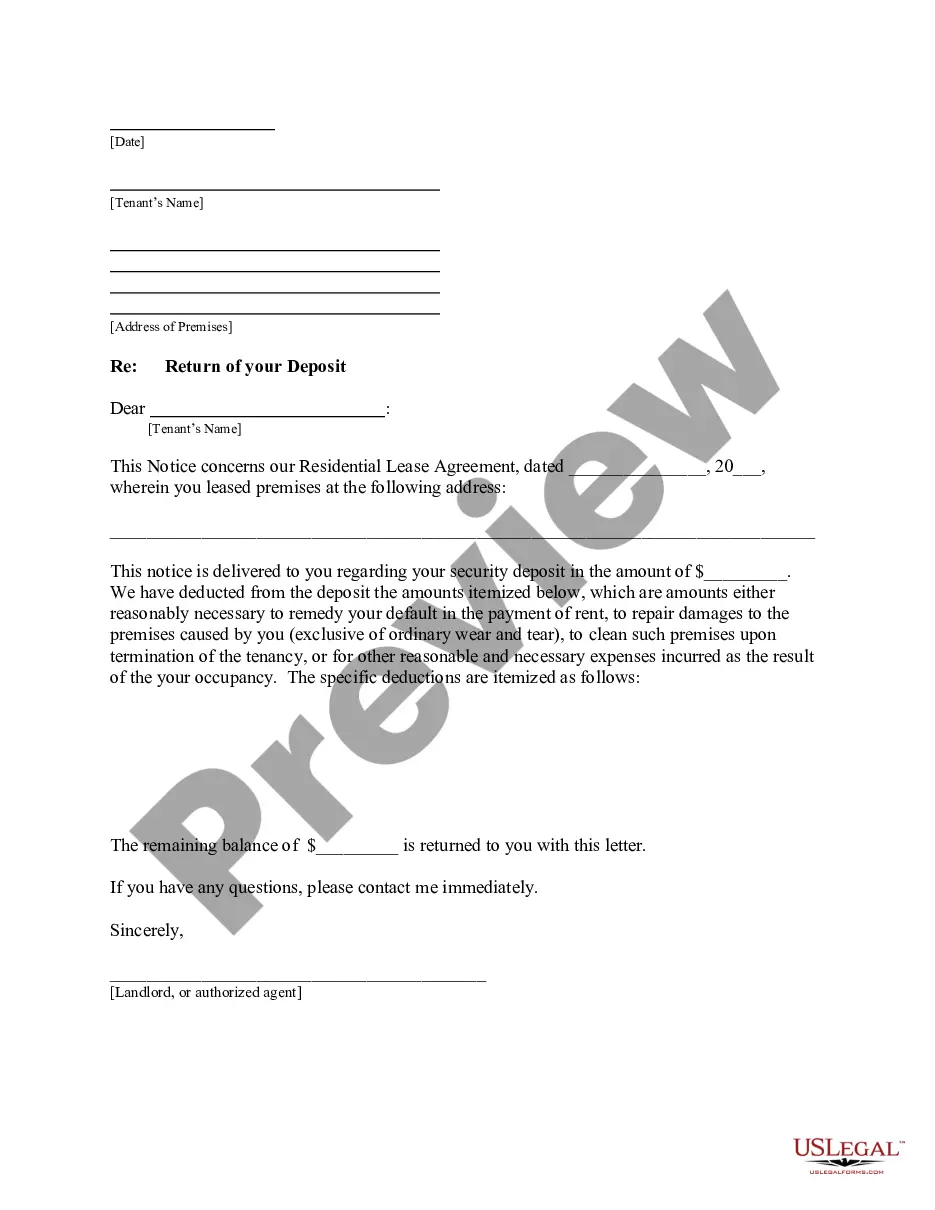
How to fill out Arizona Letter From Landlord To Tenant Returning Security Deposit Less Deductions?
- If you're a returning user, log in to your account and click the Download button to retrieve your form. Ensure your subscription is active, and renew it if necessary.
- For first-time users, start by exploring the Preview mode and form description to find the document that fits your requirements and complies with local laws.
- If there’s any mismatch with the form, use the Search tab to find the correct one that meets your needs.
- Select your document by clicking the Buy Now button, where you can pick from various subscription plans. You'll need to create an account for full access to the library.
- Finalize your transaction by entering your credit card details or utilizing your PayPal account to secure your subscription.
- Download your form to your device for completion. You can also access it in the My Forms section of your profile whenever needed.
US Legal Forms not only provides an extensive library of over 85,000 customizable legal forms but also connects users with premium experts who assist in ensuring that all documents are accurately completed and legally sound.
Take control of your rental agreements today! Start browsing US Legal Forms to find the perfect document for your security deposit needs.
Form popularity
FAQ
Moving without a security deposit can be challenging but not impossible. You can look for rental properties that do not require a deposit or those that offer alternatives, such as renter's insurance. Additionally, platforms like US Legal Forms can assist you in navigating leases and agreements that are flexible on security deposits. Exploring various options will help you find a transition that fits your needs.
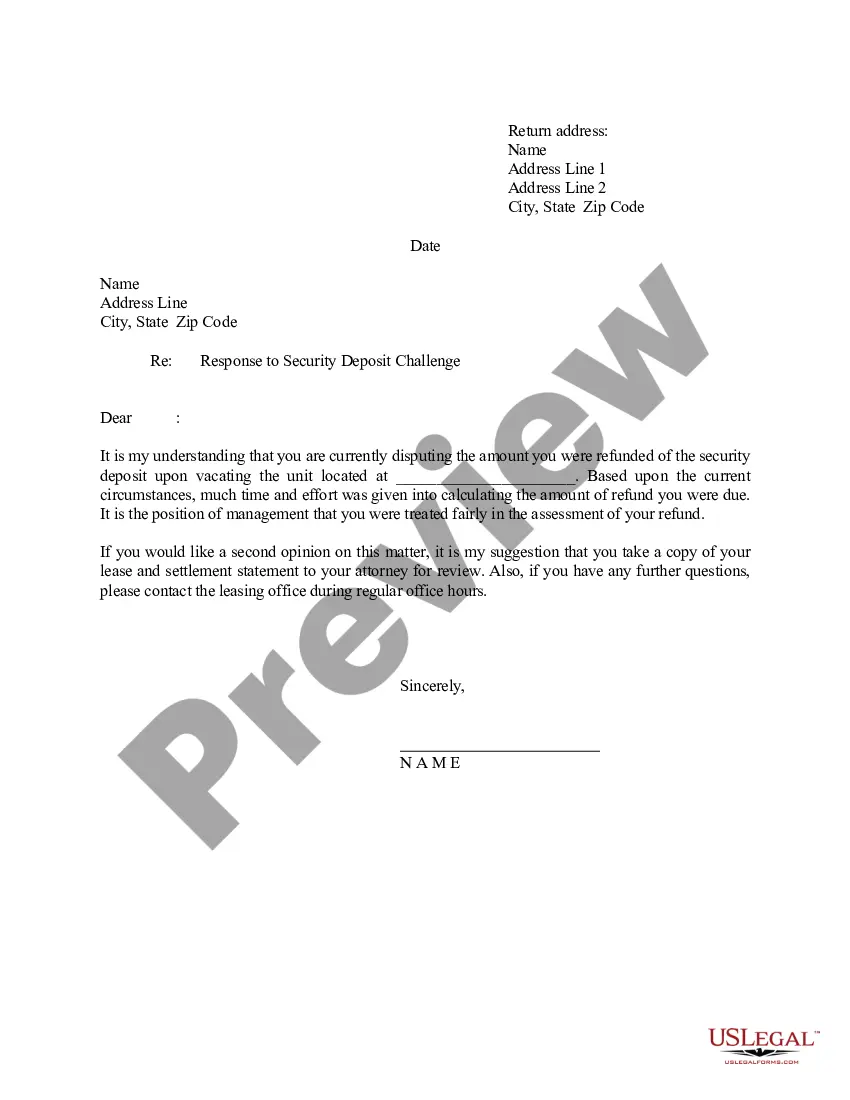
To request a security deposit refund for rent, start with a polite letter or email to your landlord, clearly stating your desire for the deposit refund. Include your address, the amount, and a brief summary of your tenancy. Providing a reminder about the prevailing laws regarding refunds may also help in initiating a smoother process.
An example of a security deposit return for rent is a landlord issuing a refund check to a tenant after they comply with the rental agreement. The landlord may itemize deductions for necessary repairs or cleaning, showing how the final refund amount was calculated. This transparency builds trust and helps maintain a positive landlord-tenant relationship.
Writing a letter to refund a security deposit for rent requires clarity and professionalism. Start by addressing the tenant and including the amount being refunded. Provide a brief explanation of the charges, if any, and conclude with information on how the tenant can receive the funds, ensuring transparency and goodwill.
California law on security deposits for rent permits landlords to collect a deposit of up to two months' rent for unfurnished properties and up to three months for furnished properties. Furthermore, landlords must return the deposit within 21 days after a tenant moves out, detailing any deductions for damages or unpaid rent. This law ensures both tenants and landlords meet their obligations regarding security deposits.
When writing a letter to deposit a refund for a security deposit for rent, start with the date and your information. Clearly indicate the purpose of the letter, stating that you are requesting the deposit amount to be refunded. Include relevant details, such as the original deposit date and any necessary financial details to facilitate the transaction.
Making an entry for a security deposit for rent involves documenting the transaction in a ledger or accounting system. Record the date, amount received, tenant's name, and the address of the rental property. This ensures that you keep accurate financial records in compliance with rental laws.
To write a refund for a security deposit for rent, begin by detailing your contact information and the tenant's information at the top of the letter. Clearly specify the amount being refunded and if any deductions occurred. Utilize a formal tone and include a brief explanation about the status of the rental property upon departure.
In Ohio, the law requires landlords to return the security deposit for rent within 30 days after the tenant vacates the property, unless deductions are necessary. If deductions occur, landlords must provide an itemized statement detailing those charges. While landlords can retain the deposit for specific reasons, they must abide by local regulations to avoid legal complications. Understanding these rules helps both parties navigate their rights and responsibilities efficiently.
The recent changes in California law regarding rental deposits emphasize protecting tenants. The law limits the amount of security deposit for rent that a landlord can collect to two months' rent for unfurnished properties and three months' rent for furnished ones. Additionally, landlords must return the deposit promptly after the tenant moves out, accompanied by an itemized list of deductions if applicable. These measures ensure fair practices and enhance rental housing security.