Beneficiary Transfer Death With Spouse
Description




Get your form ready online
Our built-in tools help you complete, sign, share, and store your documents in one place.
Make edits, fill in missing information, and update formatting in US Legal Forms—just like you would in MS Word.
Download a copy, print it, send it by email, or mail it via USPS—whatever works best for your next step.
Sign and collect signatures with our SignNow integration. Send to multiple recipients, set reminders, and more. Go Premium to unlock E-Sign.
If this form requires notarization, complete it online through a secure video call—no need to meet a notary in person or wait for an appointment.
We protect your documents and personal data by following strict security and privacy standards.

Make edits, fill in missing information, and update formatting in US Legal Forms—just like you would in MS Word.

Download a copy, print it, send it by email, or mail it via USPS—whatever works best for your next step.

Sign and collect signatures with our SignNow integration. Send to multiple recipients, set reminders, and more. Go Premium to unlock E-Sign.

If this form requires notarization, complete it online through a secure video call—no need to meet a notary in person or wait for an appointment.

We protect your documents and personal data by following strict security and privacy standards.
Looking for another form?



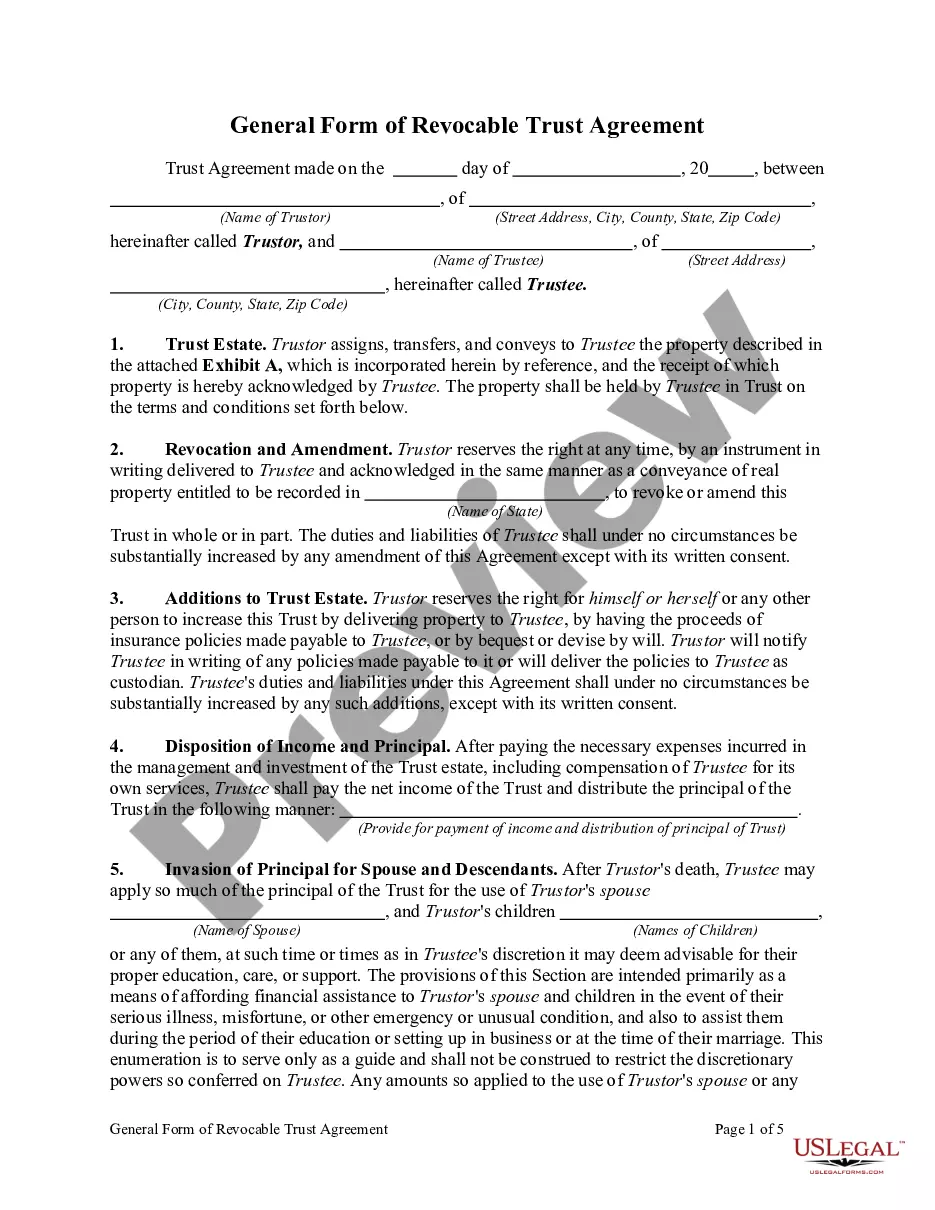
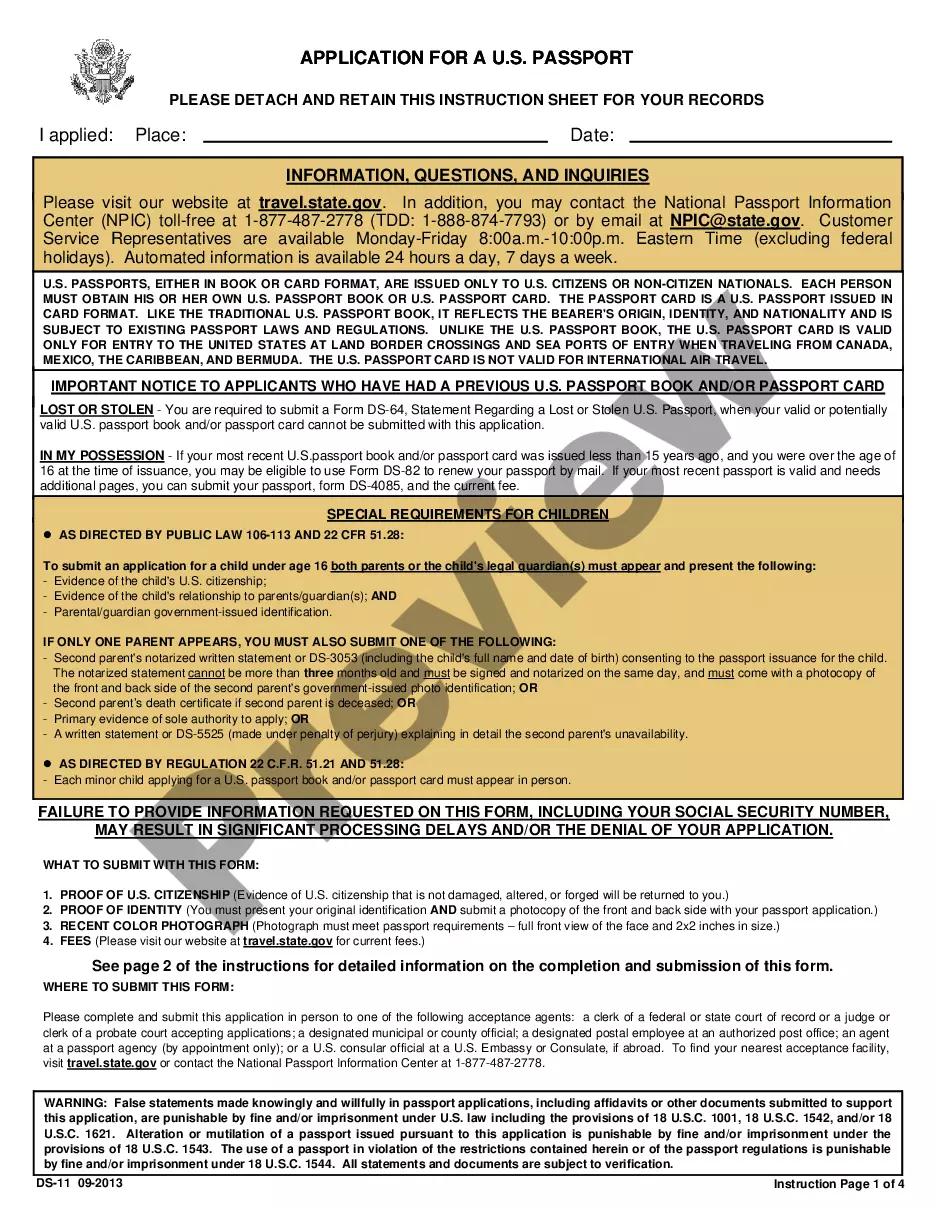





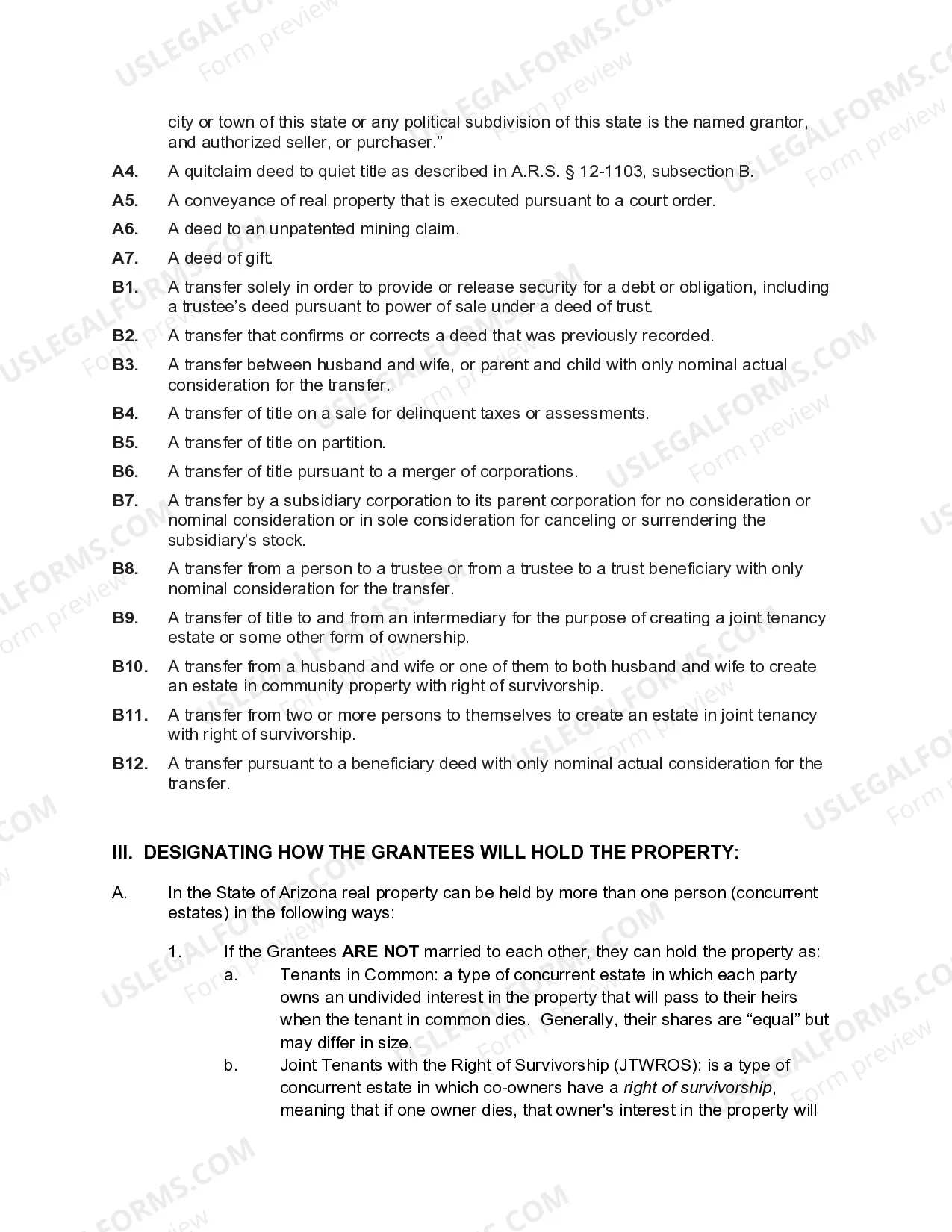
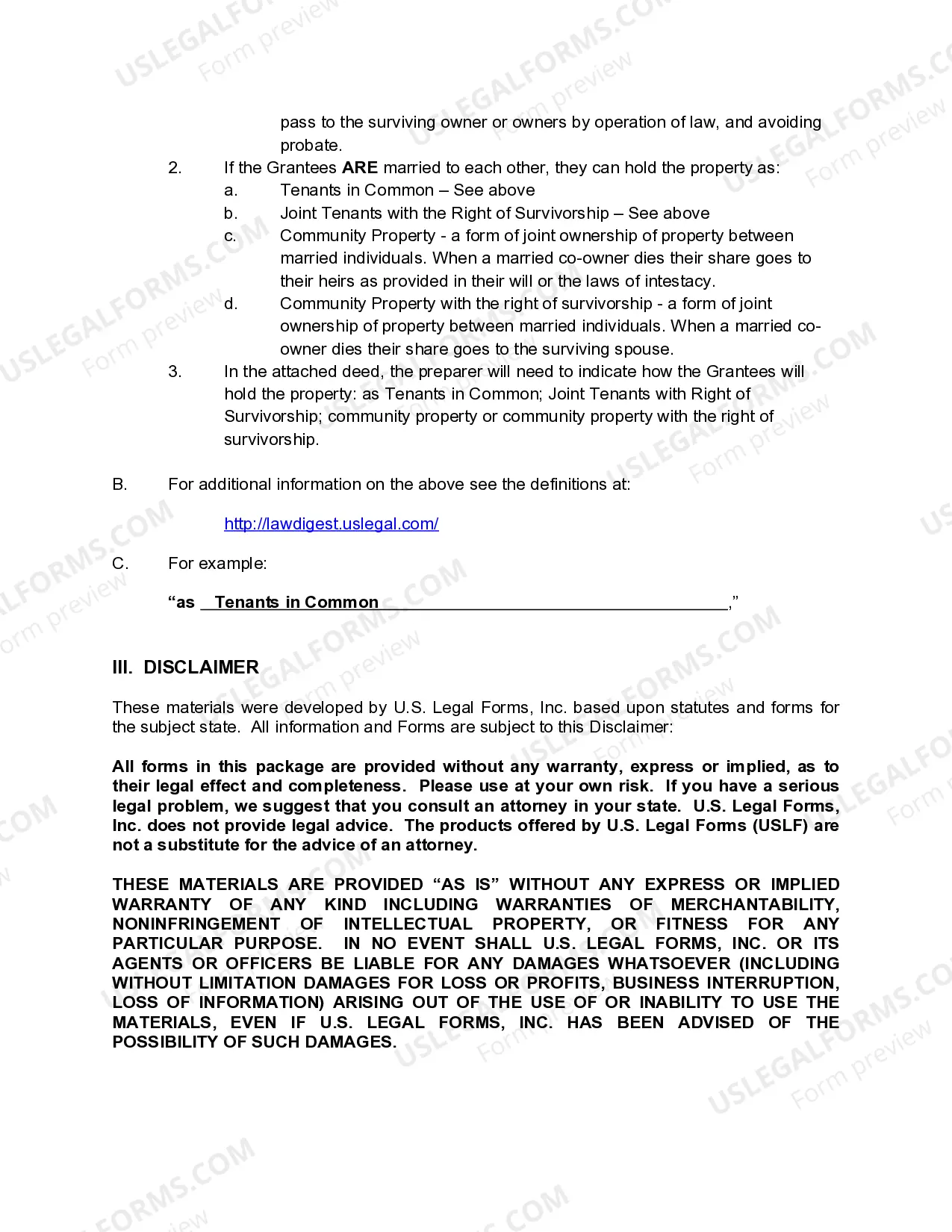
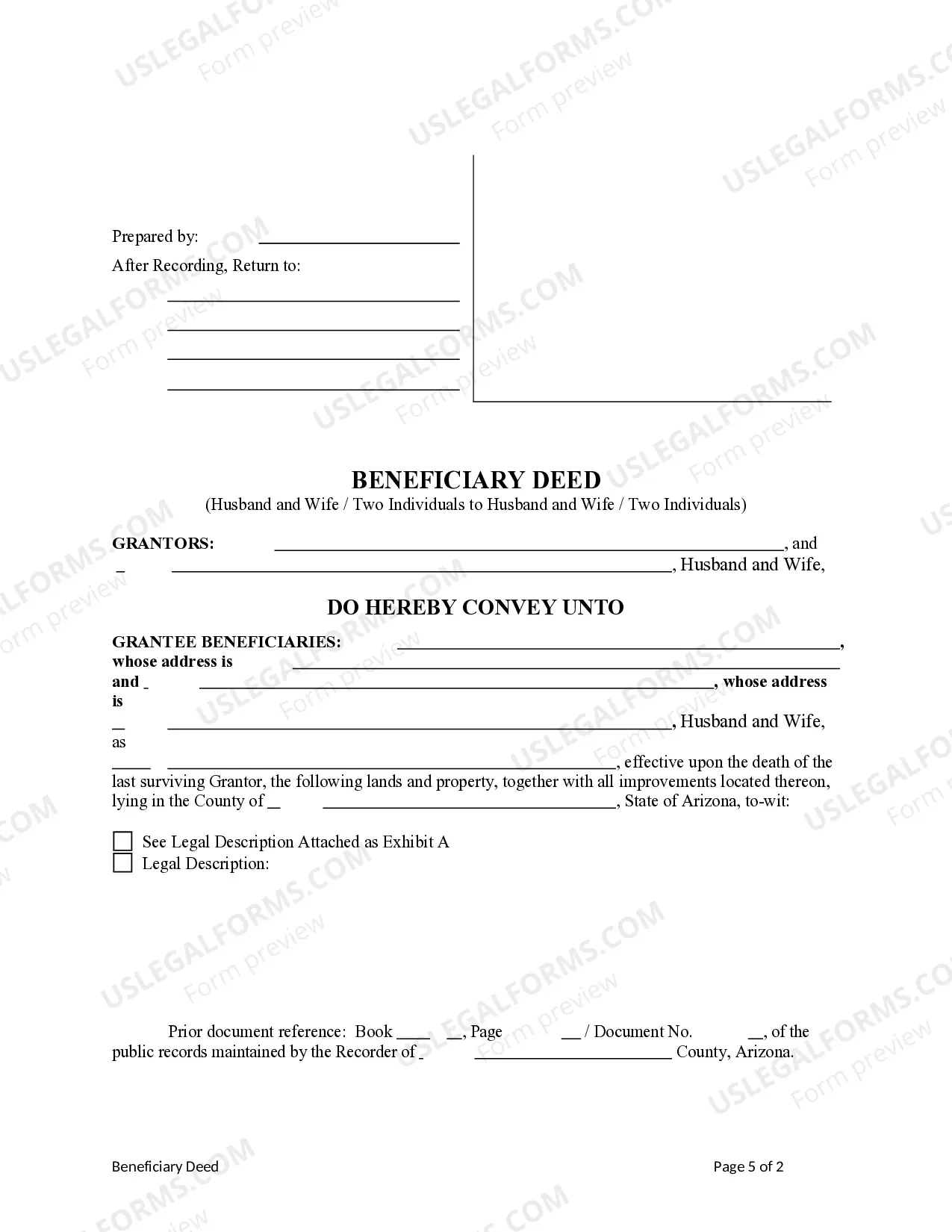
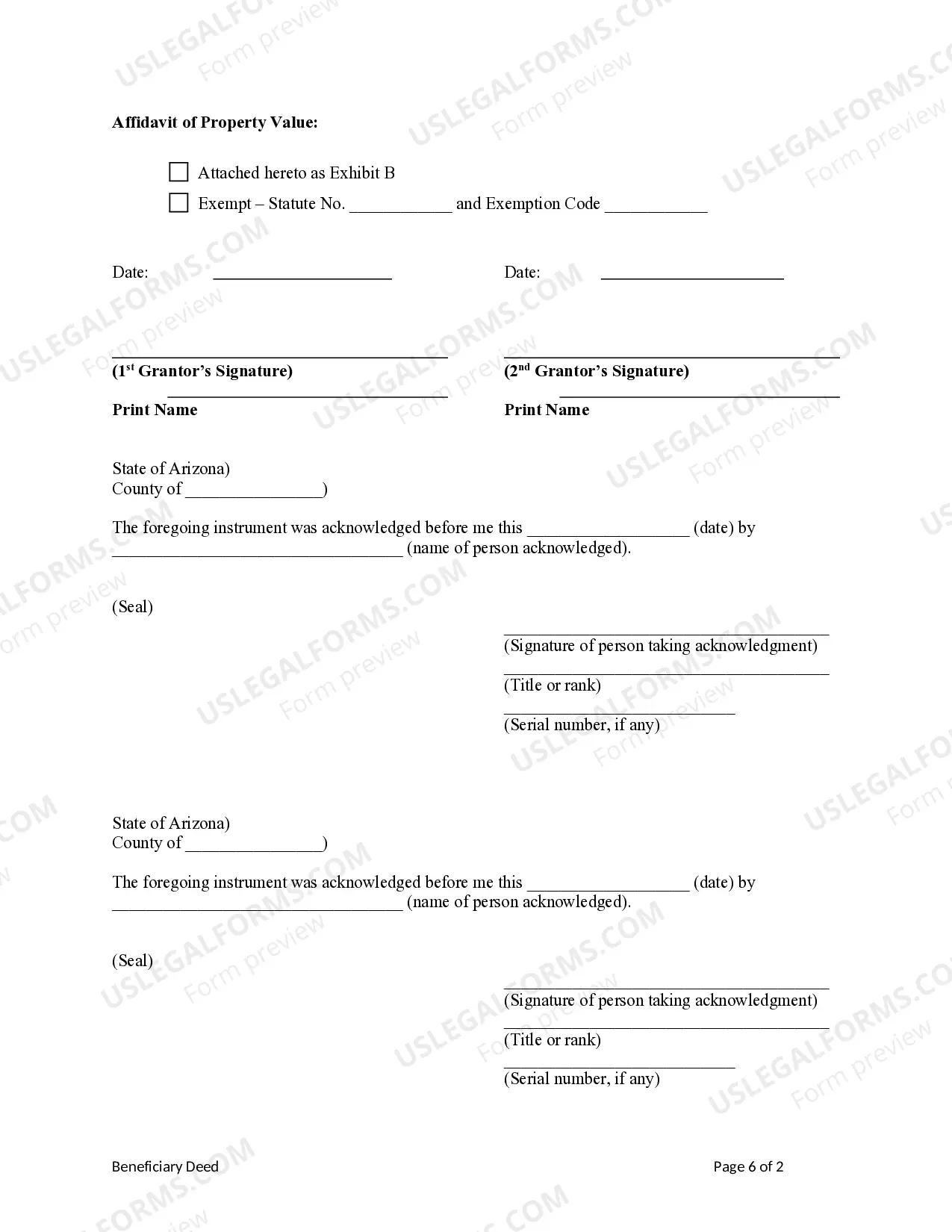
How to fill out Arizona Beneficiary Or Transfer Of Death (TOD) Deed - Husband And Wife / Two Individuals To Husband And Wife / Two Individuals?
- Log in to your US Legal Forms account if you're a returning user, and ensure your subscription is active. Click on the Download button to save the required form template.
- If you are new to the service, begin by browsing the Preview mode to find the appropriate form that aligns with your local requirements.
- If the first template doesn’t match your needs, utilize the Search tab to explore other options, ensuring you find the right document.
- Once you've found the correct form, click on the Buy Now button, select your preferred subscription plan, and create an account for access to the extensive library.
- Complete the purchase by entering your payment details through credit card or PayPal and confirming your subscription.
- After payment, download the form to your device. You can revisit and manage your documents via the My Forms menu in your profile whenever necessary.
By choosing US Legal Forms, individuals and attorneys can quickly and effectively produce legal documents with confidence, backed by a vast collection of resources and expert support.
Start today by visiting US Legal Forms and make your legal documentation process smoother and more efficient. Don't wait; empower yourself with the right tools.
Form popularity
FAQ
A beneficiary refers to a person or entity designated to receive assets upon your death. In contrast, a transfer on death (TOD) is a legal option that allows you to transfer ownership of certain assets directly to a beneficiary without going through probate. Specifically, when you initiate a beneficiary transfer death with spouse, it ensures that your spouse receives your assets automatically, simplifying the process. Understanding these distinctions can help you make informed decisions about your estate planning.
Beneficiaries usually have priority over a spouse when it comes to assets specified in accounts, unless changes have been made legally. This means that named beneficiaries can receive assets ahead of the spouse within certain conditions. It's essential to understand the complexities involved in beneficiary transfer death with spouse to make informed decisions.
Typically, a surviving spouse does not automatically override a named beneficiary unless state laws provide for it or the account is structured differently. Beneficiary designations must be addressed specifically in estate planning. Therefore, it's important to know how beneficiary transfer death with spouse applies to your financial arrangements.
A joint transfer on death account allows two or more individuals to share ownership of the account, with a designated beneficiary being named. Upon the death of one account holder, ownership automatically transfers to the surviving owner or the named beneficiaries. This setup simplifies the beneficiary transfer death with spouse, making it a popular choice for couples.
While a TOD account simplifies asset transfer after death, it may limit your access to liquidate funds during life. Additionally, if not structured properly, it could create conflicts among heirs. For those navigating beneficiary transfer death with spouse, weighing the pros and cons is crucial for effective estate management.
Marriage does not automatically revoke a beneficiary designation on bank accounts or insurance policies. However, a spouse may have legal claims to assets that could affect those beneficiary designations. It is essential to address these considerations in your estate planning to navigate beneficiary transfer death with spouse correctly.
Several factors can override a beneficiary designation, including a divorce or the establishment of a new will. Additionally, if you utilize a joint account with rights of survivorship, the joint owner may inherit the account before the beneficiary. Understanding these elements is essential in managing your beneficiary transfer death with spouse effectively.
In general, a spouse cannot override a named beneficiary on a bank account if the account specifies the beneficiary clearly. However, state laws can impact this situation, as some jurisdictions grant a spouse certain rights to assets. It's wise to consult an estate planning expert to understand how beneficiary transfer death with spouse might influence your specific case.
A transfer on death (TOD) joint account allows funds to pass directly to a designated beneficiary when one owner dies. This feature avoids probate, ensuring a smooth transition of assets. Beneficiary transfer death with spouse is a crucial aspect, especially when considering how joint ownership can simplify estate planning.
The disadvantages of a transfer on death deed include potential disputes among beneficiaries and the lack of provisions for contingent heirs. The TOD deed may also bypass your spouse's rights if not correctly structured. Working through these complexities can be made simpler with resources available at uslegalforms, which offers valuable information on drafting and managing TOD arrangements.