Beneficiary Laws In Arizona For Foreigners
Description



Get your form ready online
Our built-in tools help you complete, sign, share, and store your documents in one place.
Make edits, fill in missing information, and update formatting in US Legal Forms—just like you would in MS Word.
Download a copy, print it, send it by email, or mail it via USPS—whatever works best for your next step.
Sign and collect signatures with our SignNow integration. Send to multiple recipients, set reminders, and more. Go Premium to unlock E-Sign.
If this form requires notarization, complete it online through a secure video call—no need to meet a notary in person or wait for an appointment.
We protect your documents and personal data by following strict security and privacy standards.

Make edits, fill in missing information, and update formatting in US Legal Forms—just like you would in MS Word.

Download a copy, print it, send it by email, or mail it via USPS—whatever works best for your next step.

Sign and collect signatures with our SignNow integration. Send to multiple recipients, set reminders, and more. Go Premium to unlock E-Sign.

If this form requires notarization, complete it online through a secure video call—no need to meet a notary in person or wait for an appointment.

We protect your documents and personal data by following strict security and privacy standards.
Looking for another form?








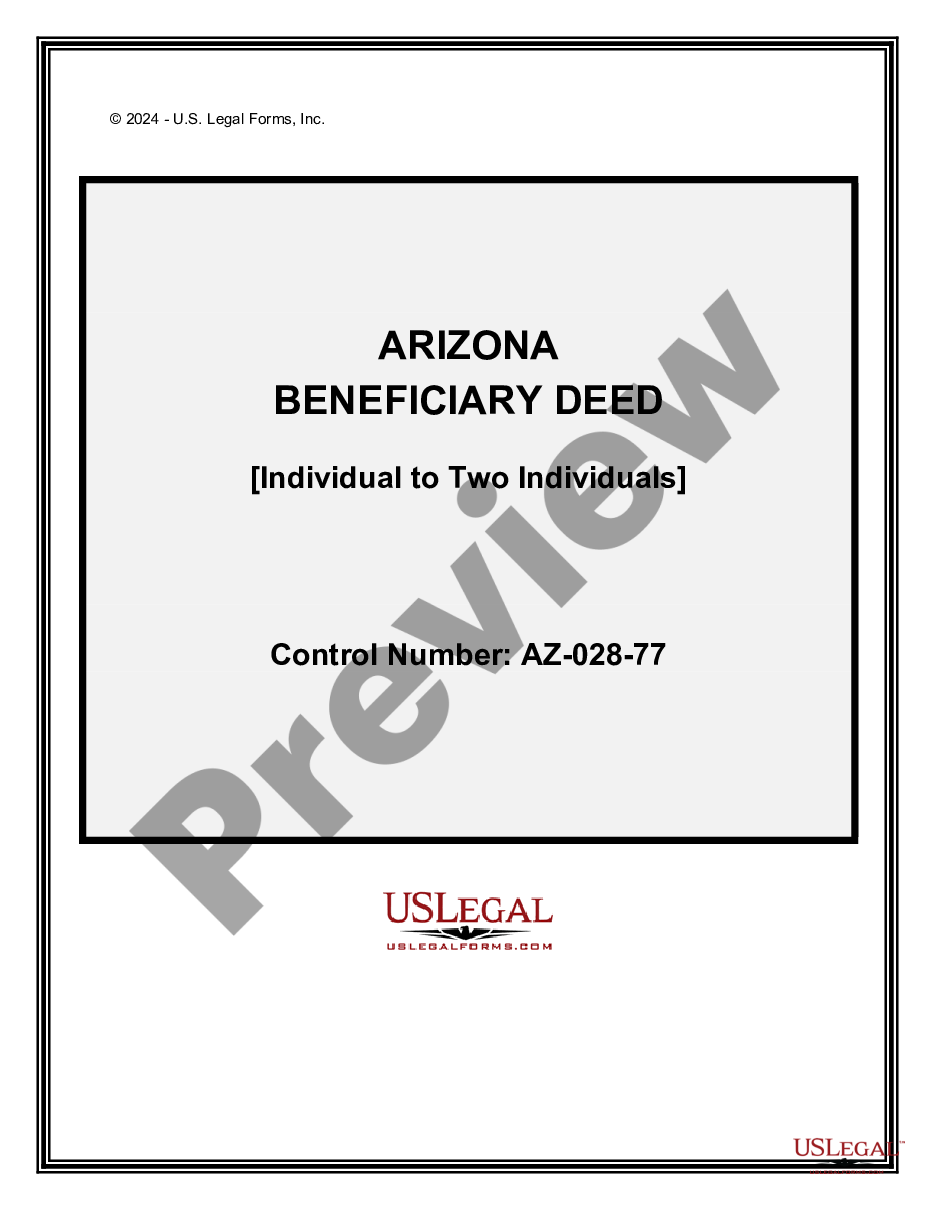
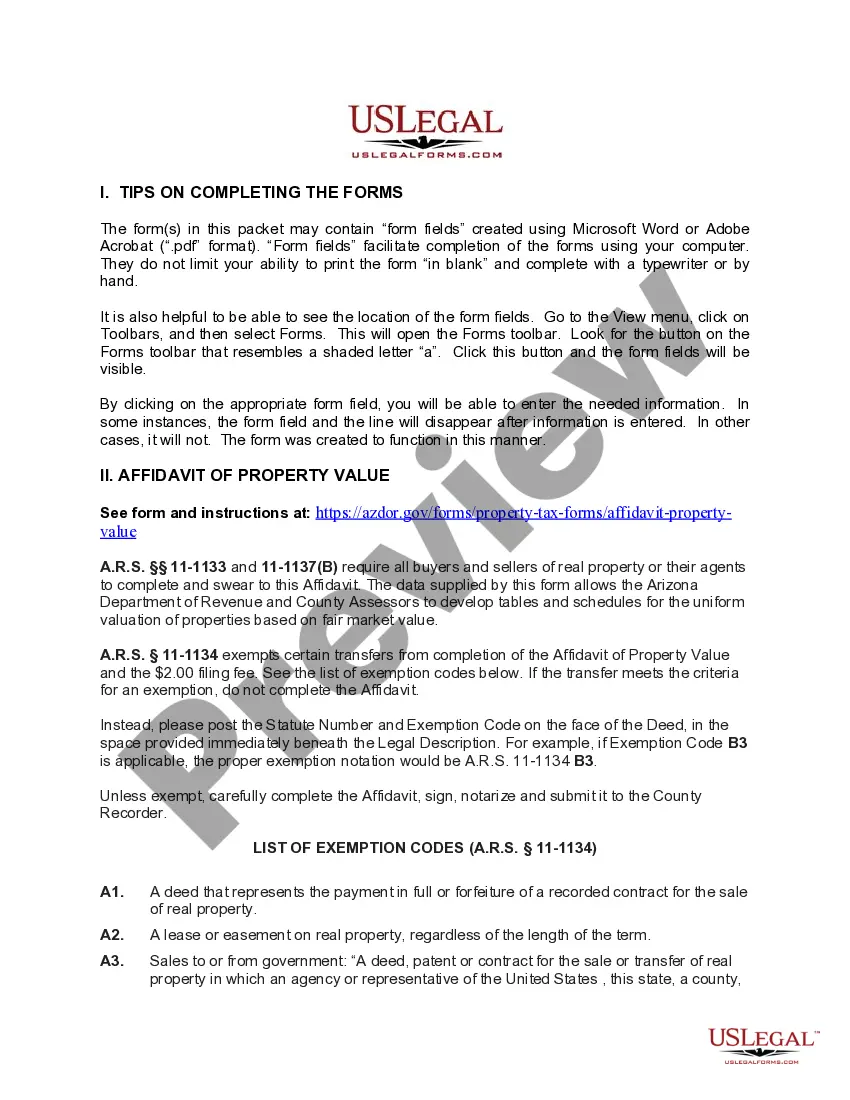
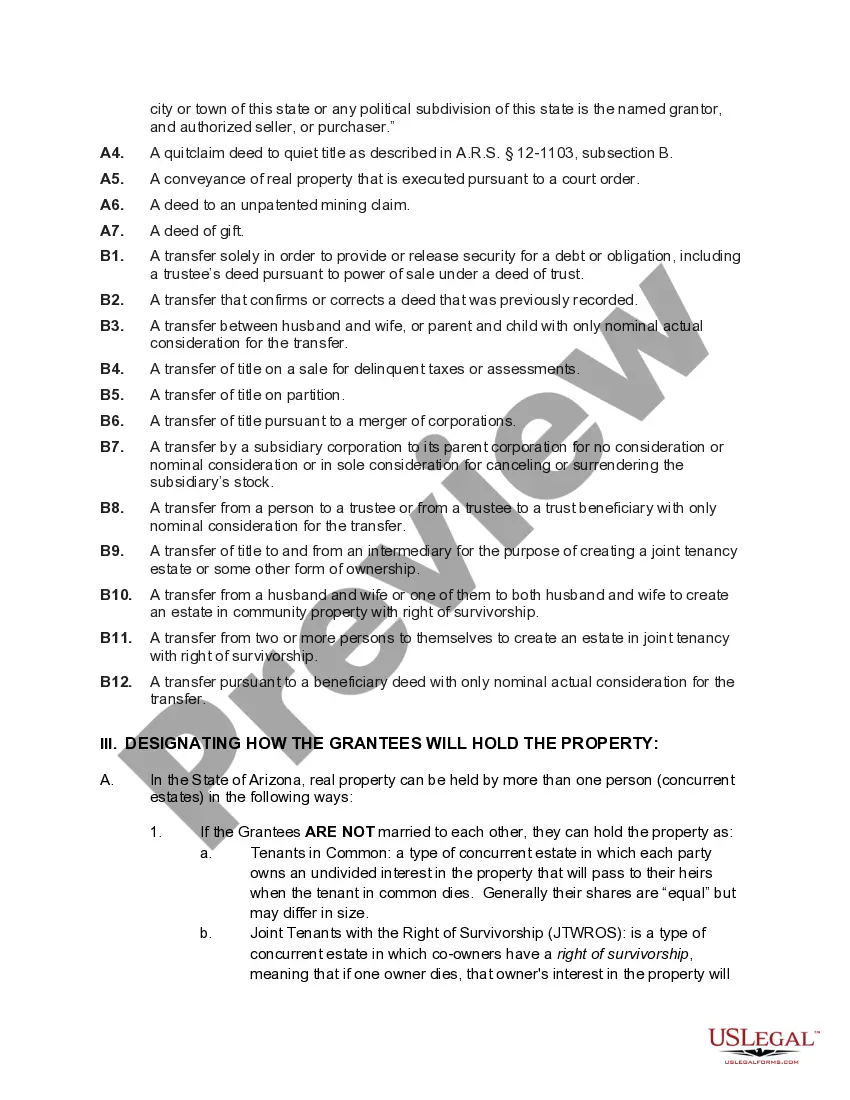
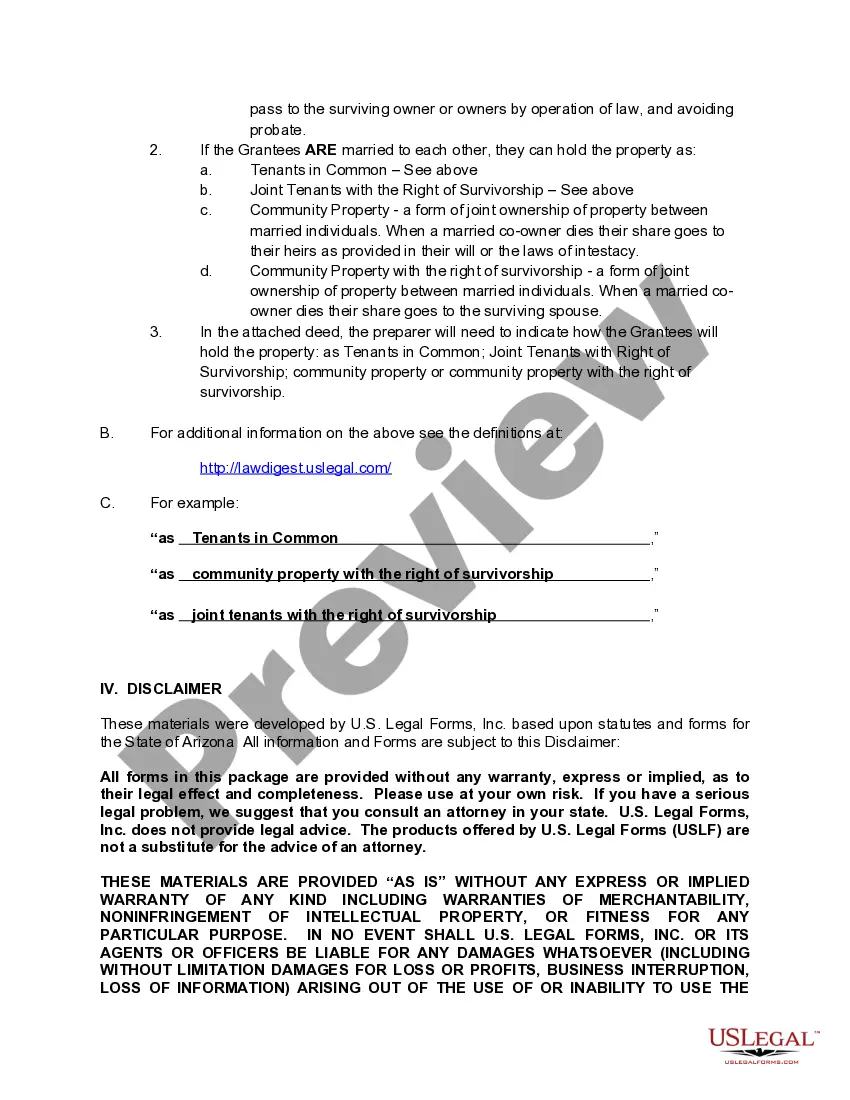
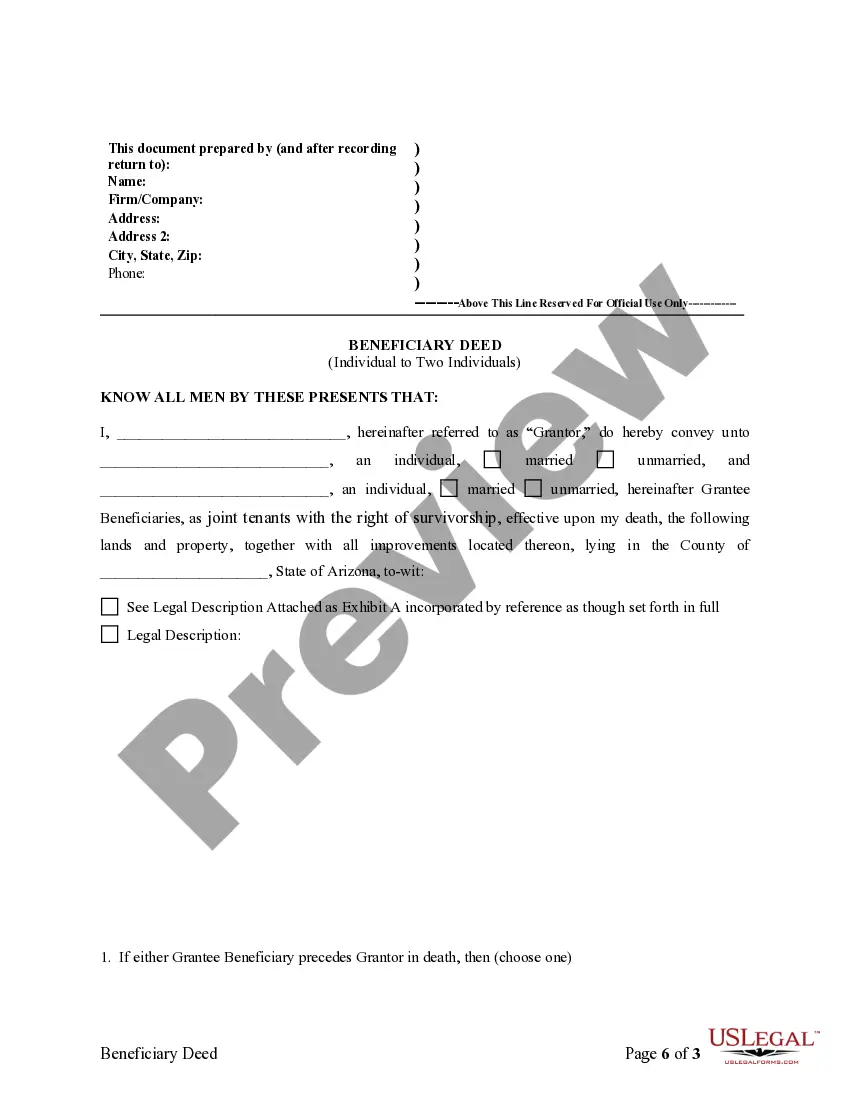
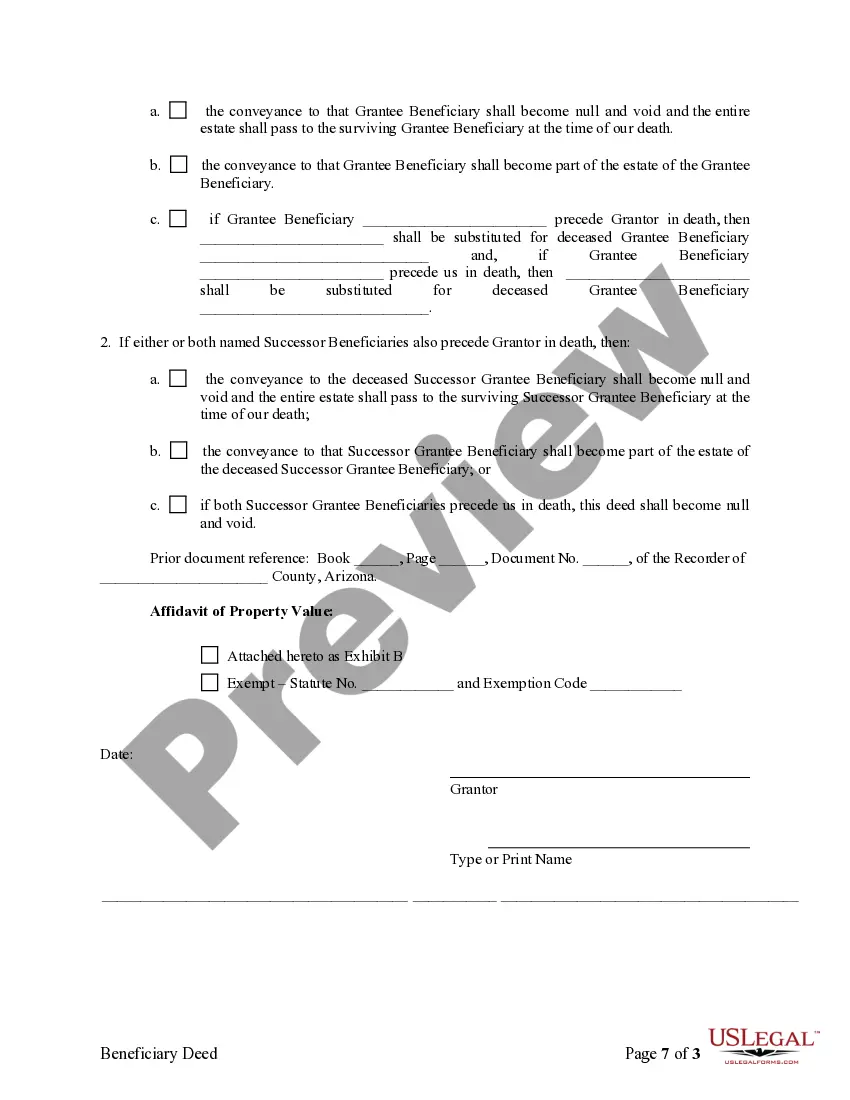
How to fill out Arizona Transfer On Death Deed Or TOD - Beneficiary Deed - Individual To Two Individuals?
It's clear that one cannot transform into a legal expert in a moment, nor can one swiftly understand how to efficiently draft Beneficiary Laws In Arizona For Foreigners without possessing a specialized proficiency.
Assembling legal documents is a lengthy process that demands particular education and expertise. So why not entrust the formulation of the Beneficiary Laws In Arizona For Foreigners to the professionals.
With US Legal Forms, one of the most comprehensive legal template collections, you can locate a variety of documents ranging from court papers to templates for internal office communication.
You can regain access to your forms from the My documents tab anytime. If you're an existing customer, just Log In, and find and download the template from the same tab.
No matter the intention behind your documents—whether they're for financial, legal, or personal reasons—our platform has what you need. Experience US Legal Forms today!
- Start by finding the document you require using the search bar at the top of the website.
- Preview it (if this option is available) and review the accompanying description to ascertain if Beneficiary Laws In Arizona For Foreigners is what you're looking for.
- If you need a different document, restart your search.
- Create a free account and choose a subscription plan to purchase the template.
- Select Buy now. Once the payment is processed, you can download the Beneficiary Laws In Arizona For Foreigners, fill it out, print it, and send or mail it to the relevant individuals or organizations.
Form popularity
FAQ
Most probate documents are public records, however, inventories and accountings filed in estates are confidential and may be viewed only by the personal representative, the personal representative's attorney or an "interested party," as defined in the Florida probate laws.
In Florida, there is no small estate affidavit but Summary Administration can be used instead. Speed and cost savings are the attractions of Summary Administration. Rather than taking months or years as probate can, summary administration can accomplish a transfer of assets almost immediately after someone's death.
No, a Florida will does not need to be recorded to be validly executed. However, your will is probated after you die, and at that point it will be part of the public record. Some legal documents need to be recorded. Recording means making a public record of your transaction.
Florida probate records have been kept by county judges and county clerks in each courthouse. Since 1968 they have been under the jurisdiction of the clerk of the circuit court in each county. The files may include wills, bonds, letters, petitions, order books, inventories, and settlements.
You can access all public dockets and available case documents using the new Appellate Case Information System (ACIS) at .
If property, bank accounts, insurance policies, annuities, 401K plans, and all assets have beneficiaries or joint owners, probate is unnecessary. However, without a will or trust all assets must pass through probate court if no beneficiary or joint owner is named.
Information That Can Be Accessed by the Public After Probate The good news is that Florida courts do not make wills and other probate records available online. If someone wants to see a copy of your will, they will have to physically visit the courthouse to request the information.