Subpoena In Verb Form
Description

Get your form ready online
Our built-in tools help you complete, sign, share, and store your documents in one place.
Make edits, fill in missing information, and update formatting in US Legal Forms—just like you would in MS Word.
Download a copy, print it, send it by email, or mail it via USPS—whatever works best for your next step.
Sign and collect signatures with our SignNow integration. Send to multiple recipients, set reminders, and more. Go Premium to unlock E-Sign.
If this form requires notarization, complete it online through a secure video call—no need to meet a notary in person or wait for an appointment.
We protect your documents and personal data by following strict security and privacy standards.

Make edits, fill in missing information, and update formatting in US Legal Forms—just like you would in MS Word.

Download a copy, print it, send it by email, or mail it via USPS—whatever works best for your next step.

Sign and collect signatures with our SignNow integration. Send to multiple recipients, set reminders, and more. Go Premium to unlock E-Sign.

If this form requires notarization, complete it online through a secure video call—no need to meet a notary in person or wait for an appointment.

We protect your documents and personal data by following strict security and privacy standards.
Looking for another form?




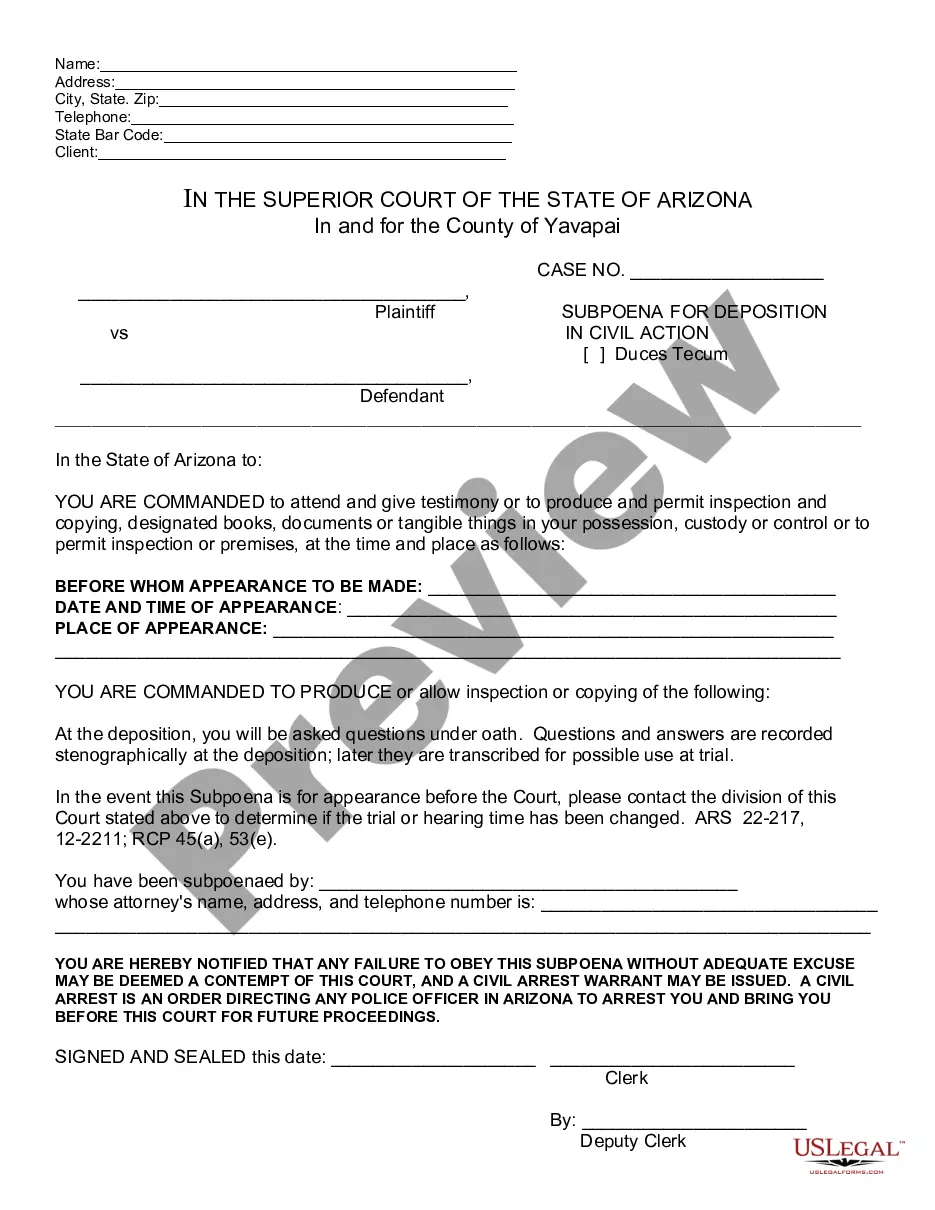
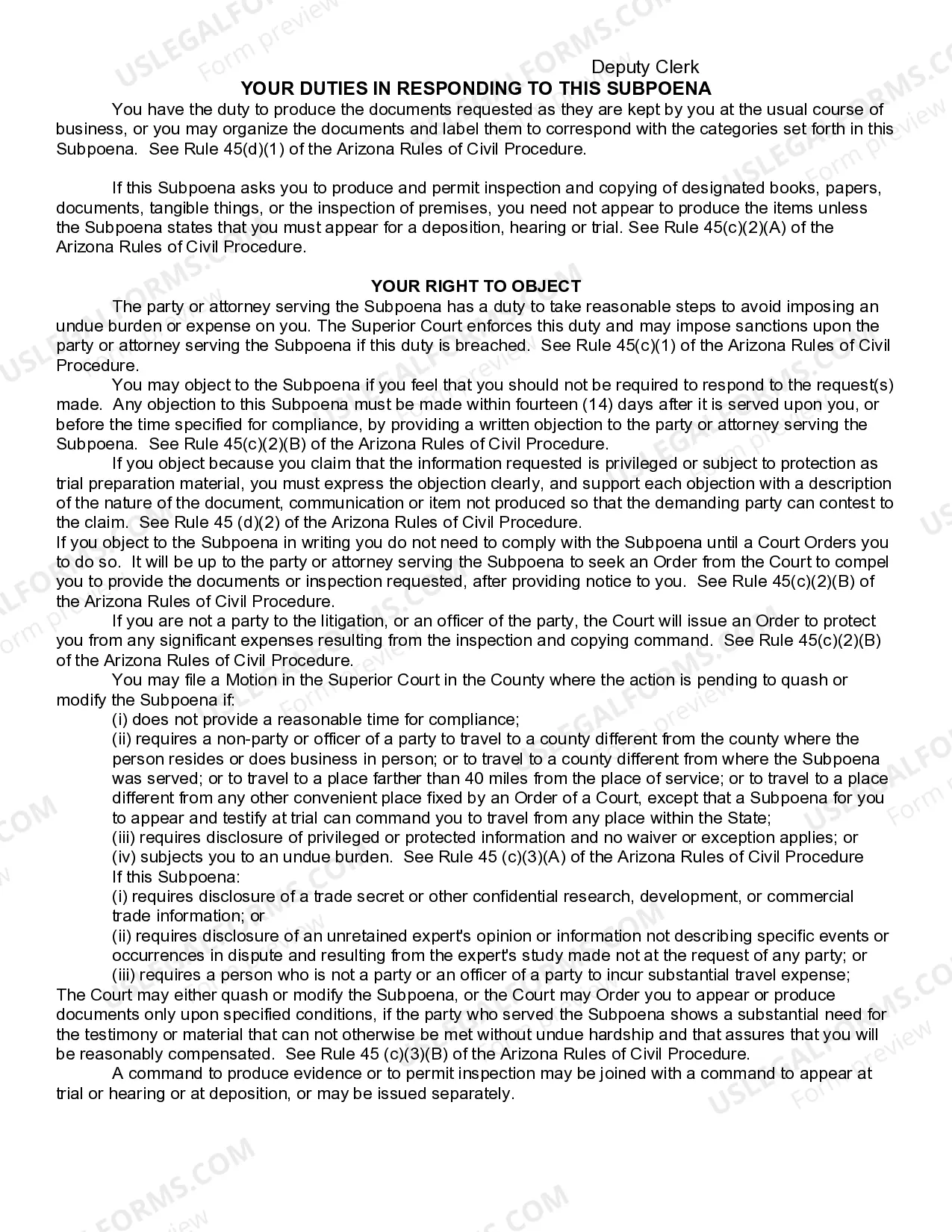
How to fill out Subpoena For Deposition In Arizona For Use In An Civil Action Pending Out Of State?
Precisely composed official documents are one of the crucial assurances for preventing issues and legal disputes, but acquiring them without the assistance of an attorney can require time.
Whether you need to swiftly locate an updated Subpoena In Verb Form or any other templates for employment, family, or business contexts, US Legal Forms is always available to assist.
The procedure is even more straightforward for existing users of the US Legal Forms library. If your subscription is active, you merely need to Log In to your account and click the Download button next to the selected file. Furthermore, you can access the Subpoena In Verb Form at any time later, as all documents ever acquired on the platform are available within the My documents section of your profile. Save time and expenses on preparing official documents. Experience US Legal Forms today!
- Verify that the form is appropriate for your circumstances and locality by reviewing the description and preview.
- If necessary, search for another example through the Search bar in the header of the page.
- When you discover the correct template, click on Buy Now.
- Select the pricing option, Log In to your account or create a new one.
- Choose your preferred payment method to purchase the subscription plan (using a credit card or PayPal).
- Opt for PDF or DOCX file format for your Subpoena In Verb Form.
- Click Download, then print the template to complete it or upload it to an online editor.
Form popularity
FAQ
To type a subpoena, you must follow a specific format and include essential details. Start by stating the title, including the court's name, the parties involved, and the case number. Next, specify the documents required or the testimony expected, and include the deadline for compliance. If you seek guidance through this process, consider using the US Legal Forms platform to ensure accuracy and compliance with legal standards.
The burden of proof for a subpoena lies with the party issuing it. This means the requester must show sufficient ground to support their request for evidence or testimony. Once the subpoena is issued, it becomes the responsibility of the recipient to comply unless they have valid reasons to object. Understanding this aspect is crucial for anyone working within the legal framework.
The plural form of subpoena is subpoenas or subpoenae. When you deal with multiple requests for documents or testimonies, using subpoenas helps you clarify that more than one is involved. Correctly using the plural form ensures effective communication in legal settings. Remember to apply the term consistently as you navigate through your legal documents.
The main difference lies in the type of information each subpoenas. A standard subpoena generally commands someone to appear in court or provide testimony, while a subpoena duces tecum specifically requests documents or records. Understanding this distinction can help clarify the legal process. If you need assistance drafting either type, consider using the US Legal Forms platform.
Attorneys commonly use a subpoena duces tecum to gather essential documents and evidence for their cases. This legal tool helps attorneys effectively subpoena in verb form information that can support their arguments. It is especially valuable during discovery, where both sides exchange relevant information. Using US Legal Forms can simplify the process of issuing these subpoenas.
When an individual ignores a subpoena duces tecum, they may face legal repercussions. The court can hold that individual in contempt, leading to fines or even jail time. It is crucial to understand that a subpoena in verb form compels the recipient to provide specific documents or evidence. To avoid issues, consult a legal professional or explore resources like US Legal Forms for assistance.
Another term used for 'subpoena' is 'court order.' While a court order may encompass a broader scope of legal directives, the term is synonymous with the requirement to comply with a legal request. Understanding the various terms used can be beneficial in legal discussions. The US Legal Forms platform can help you create the necessary documents and clarify legal terms related to subpoenas.
The literal meaning of 'subpoena' comes from Latin, meaning 'under penalty.' This indicates that failing to comply with the subpoena could result in legal consequences. Essentially, it signifies the seriousness of the command to appear before a court or provide documents. For those who require more information about subpoenas or legal procedures, US Legal Forms can provide clarity and assistance.
When a subpoena is issued, it is typically served to you either personally or by certified mail. You may also receive it through a process server. Upon receiving a subpoena, it is essential to take note of the instructions, including deadlines for compliance. If you are unsure about the process, US Legal Forms offers guidance on how to respond appropriately to a subpoena.
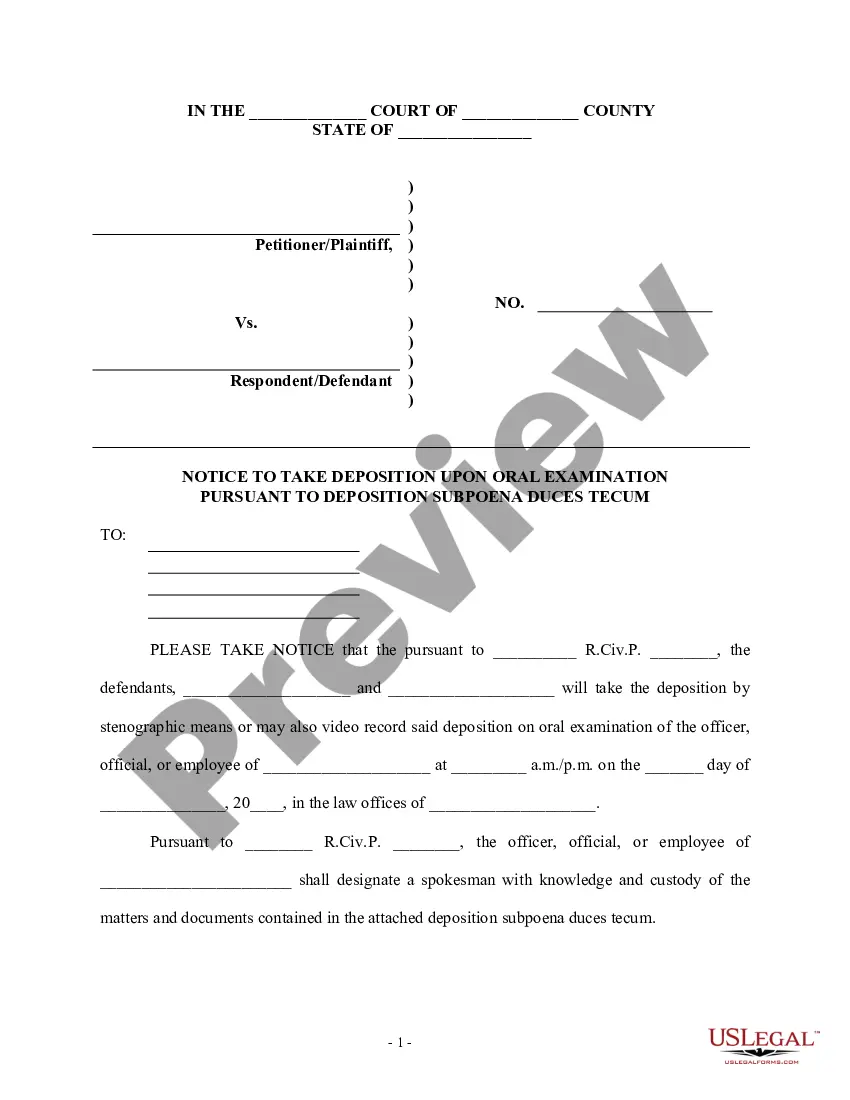
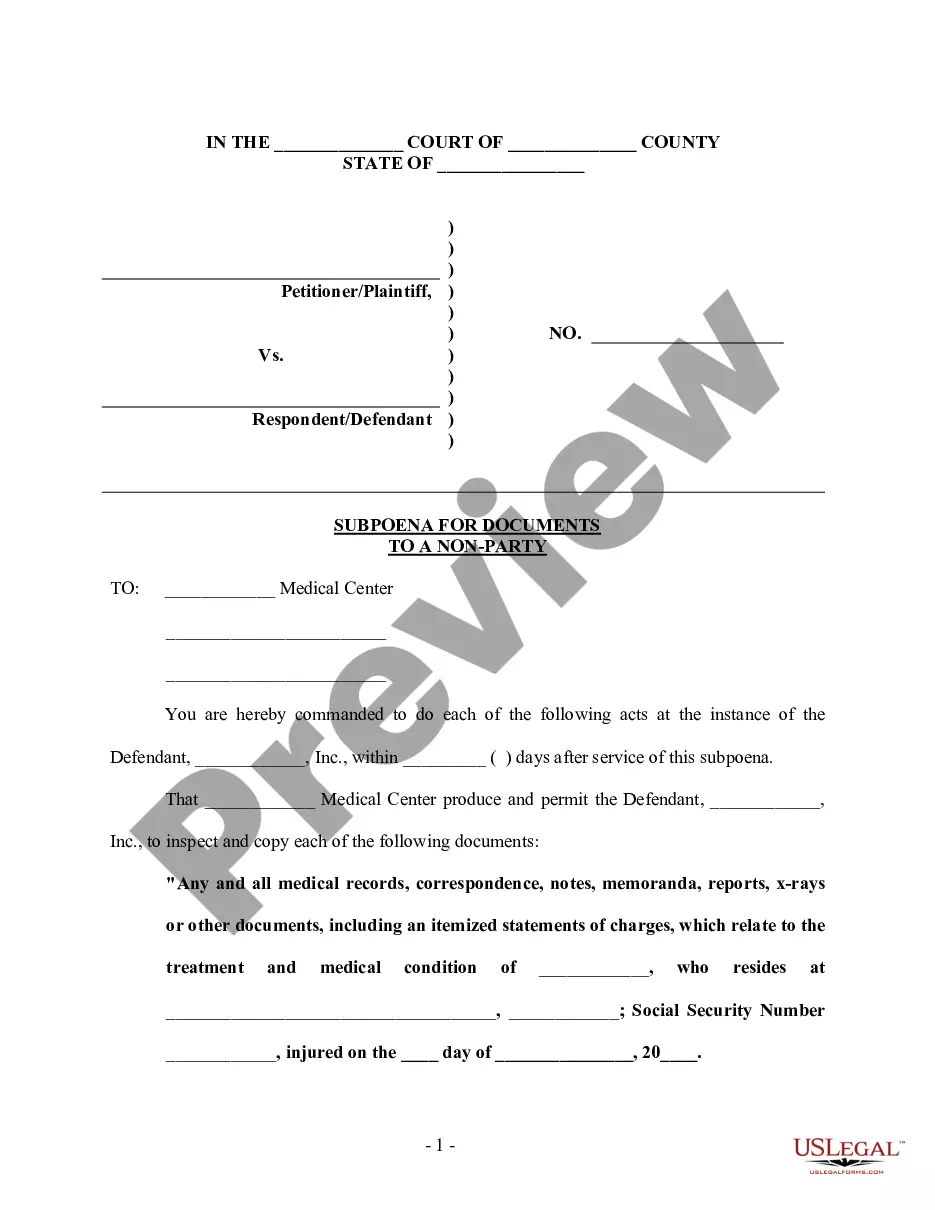
A subpoena specifically requesting documents is referred to as a 'subpoena duces tecum.' This type of subpoena requires the individual to provide specified documents as evidence in a legal matter. Understanding this distinction can be crucial when gathering information for a case. You can find templates for different subpoenas, including this type, at US Legal Forms.