Answer To Writ Of Garnishment Arkansas Form 202
Description
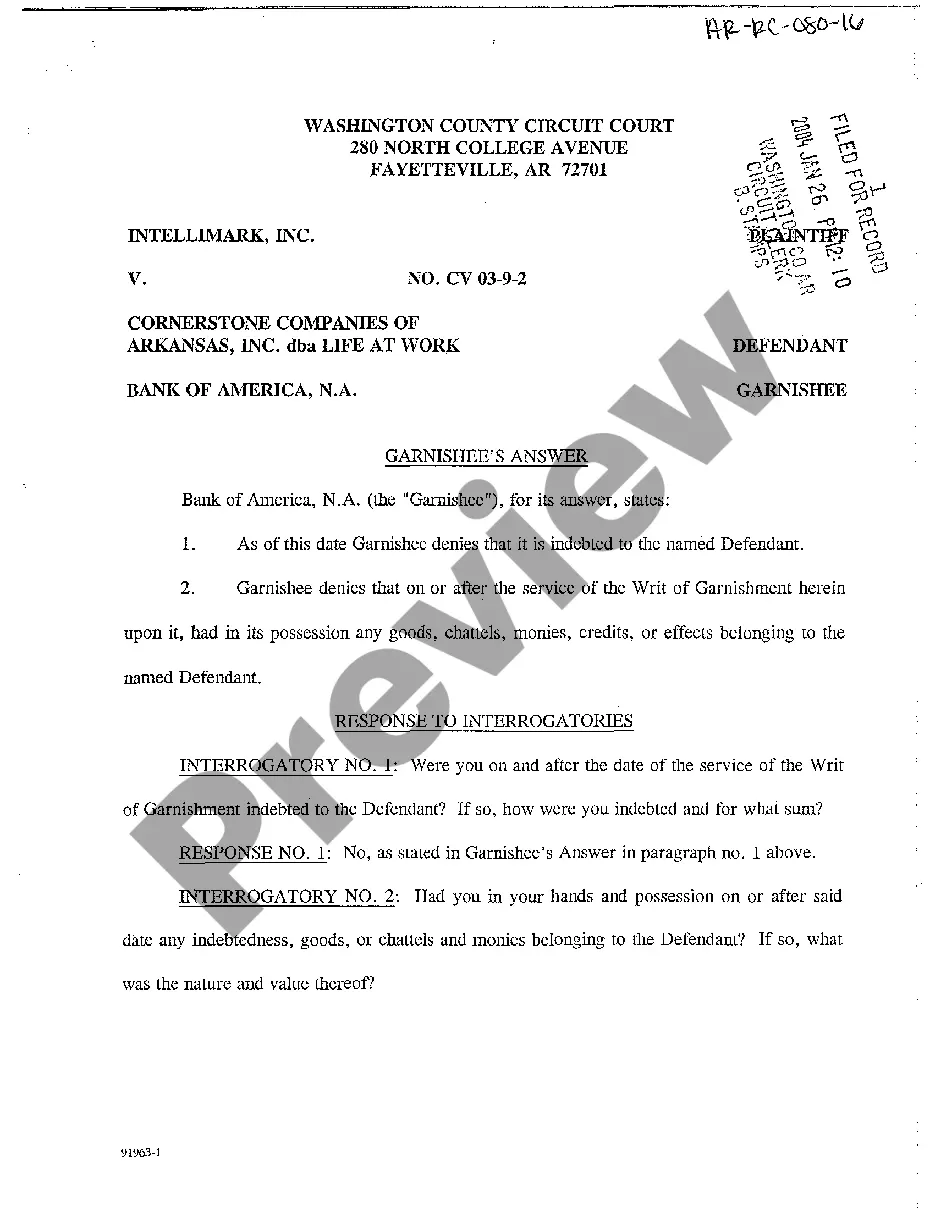
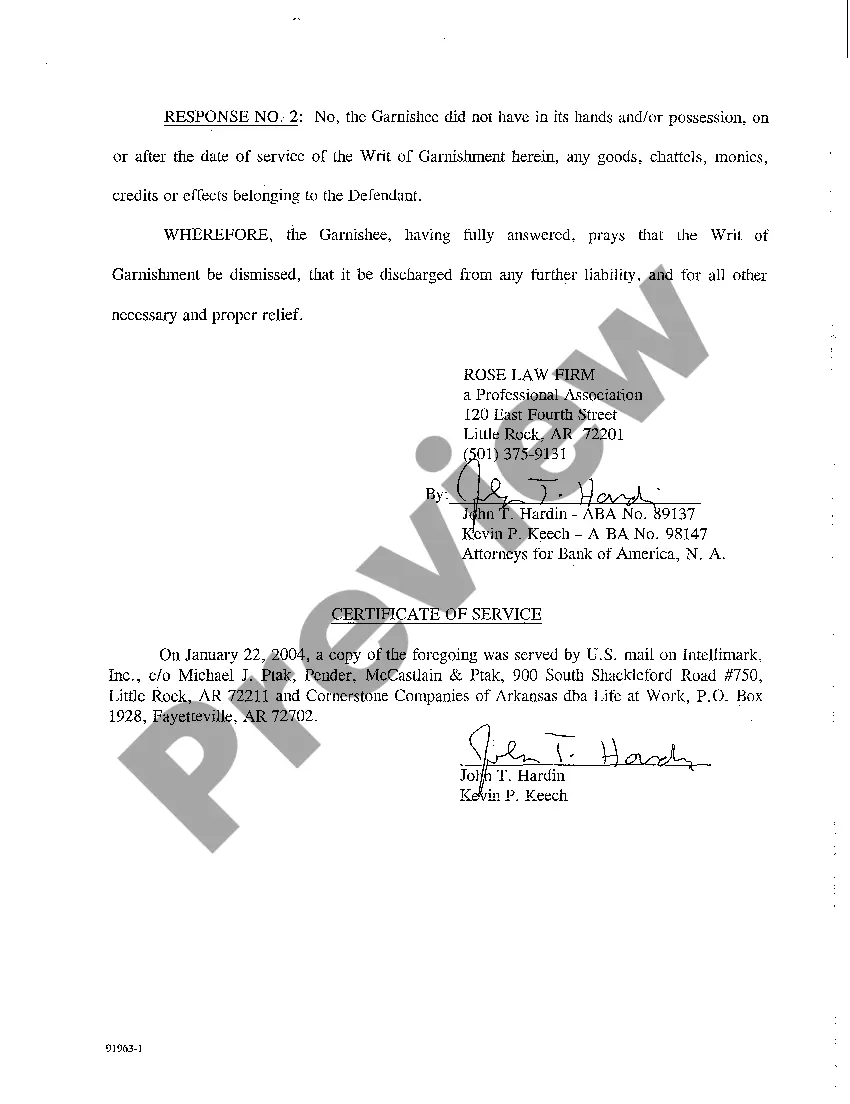
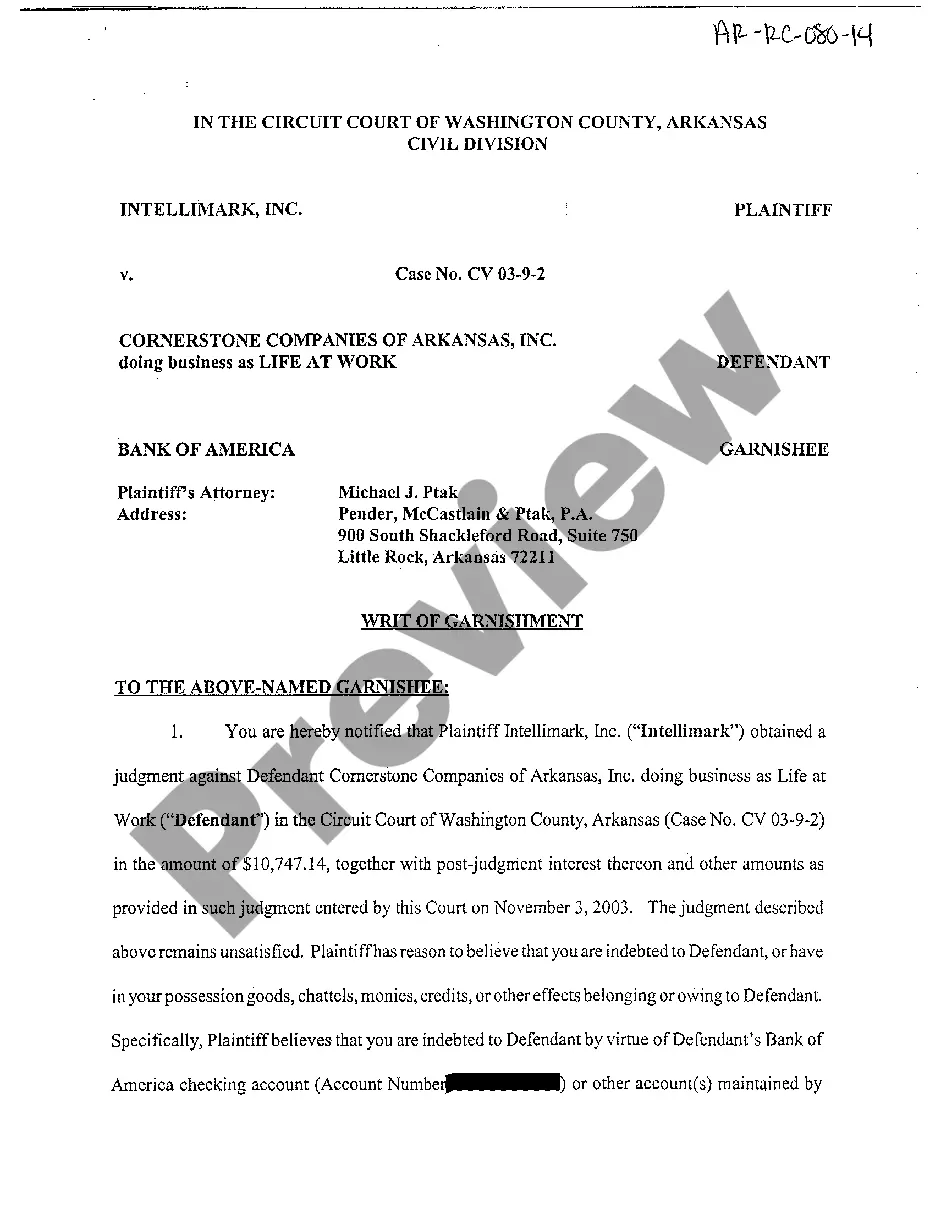
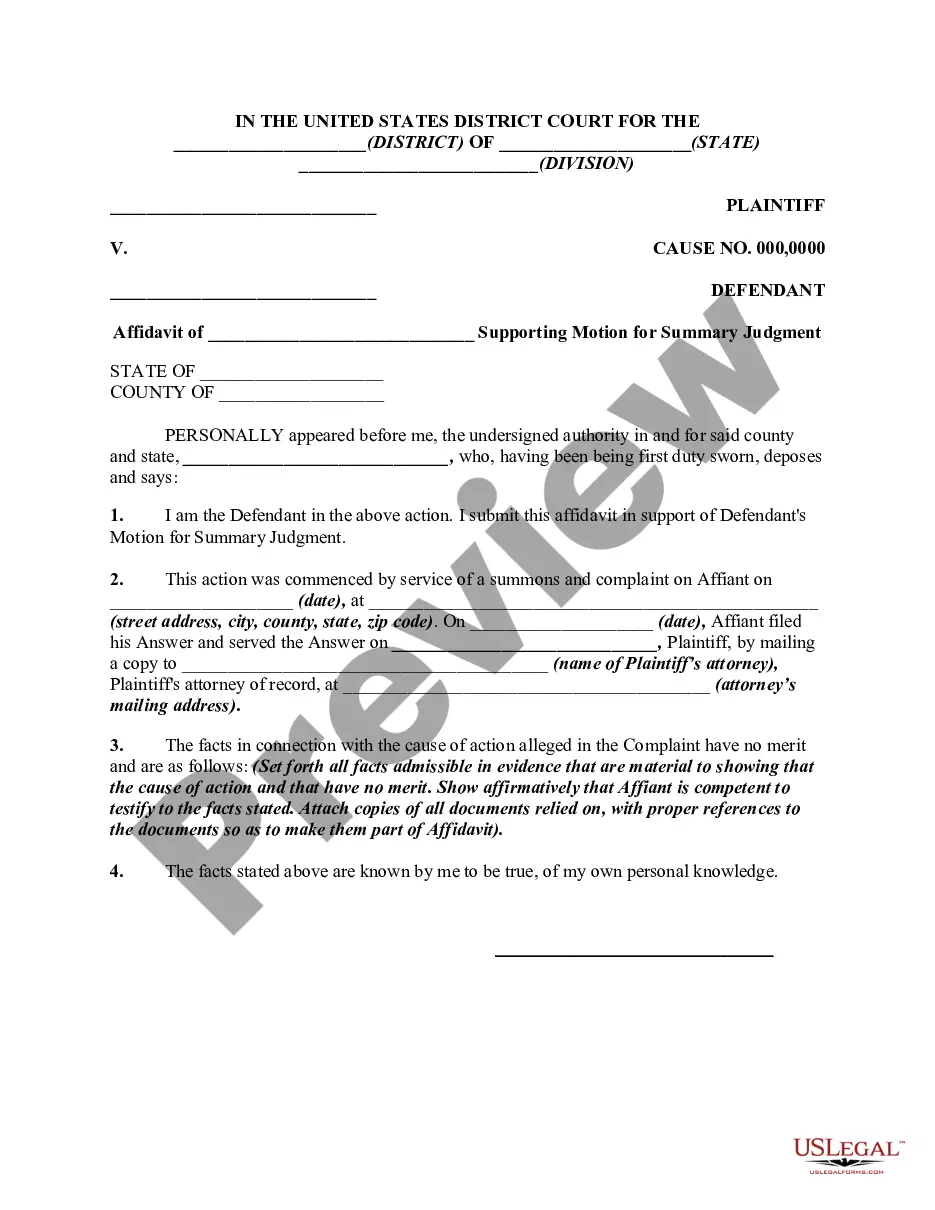
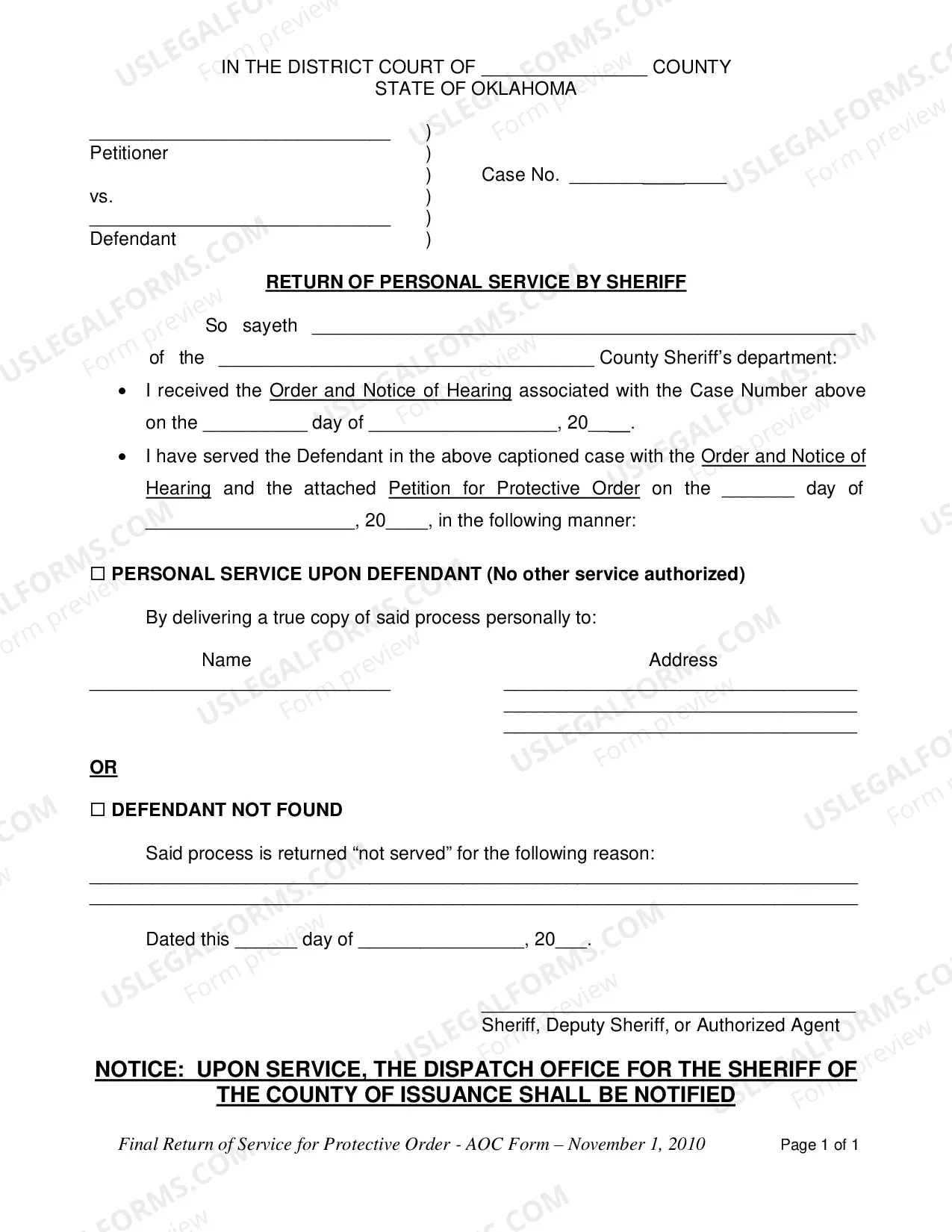
How to fill out Arkansas Garnishee's Answer To Writ Of Garnishment?
Legal administration can be daunting, even for experienced experts. When you are looking for an Answer To Writ Of Garnishment Arkansas Form 202 and lack the time to dedicate to finding the right and up-to-date version, the process can be stressful. A robust online form repository could be a significant advantage for anyone who seeks to handle these matters effectively.
US Legal Forms is a leader in the online legal forms sector, boasting over 85,000 state-specific legal documents available to you at any time.
Access a valuable resource library of articles, guides, and materials related to your situation and needs.
Save time and energy searching for the documents you require, and use US Legal Forms’ sophisticated search and Preview feature to find Answer To Writ Of Garnishment Arkansas Form 202 and obtain it.
Take advantage of the US Legal Forms online library, backed by 25 years of experience and reliability. Transform your daily document management into a seamless and user-friendly process today.
- If you have a monthly subscription, Log In to your US Legal Forms account, search for the form, and obtain it.
- Check your My documents tab to view the documents you have previously saved and to organize your folders as desired.
- If this is your first experience with US Legal Forms, create a free account and enjoy unlimited access to all the platform's benefits.
- Here are the steps to follow after obtaining the form you need.
- Confirm this is the correct form by previewing it and reviewing its details.
- Ensure that the template is valid in your state or county.
- Click Buy Now when you are ready.
- Select a subscription plan.
- Choose the format you need, then Download, complete, eSign, print, and deliver your documents.
- Access state- or county-specific legal and organizational forms.
- US Legal Forms caters to any needs you may have, from personal to business documents, all in one place.
- Utilize advanced tools to complete and manage your Answer To Writ Of Garnishment Arkansas Form 202.
Form popularity
FAQ
By the time the collection process has reached the point of garnishment, most creditors are unwilling to work out any kind of payment plan. The only effective way to legally stop this collection process is by exercising your right under federal law to file either Chapter 7 or Chapter 13 bankruptcy.
In Arkansas, state wage garnishment law is essentially the same as the federal law governing wage garnishment. A wage garnishment should not leave you unable to live, so there are limits to how much can be taken from your pay. In general, garnishments can't exceed 25 percent of your disposable (after deductions) wages.
For a writ of garnishment form, and instructions on how to proceed with a writ of garnishment, contact the district court clerk. At a minimum you will need the following information: The defendant's place of employment and the address and name of his or her bank if you are garnishing his or her bank account.
The Writ of Garnishment or Writ of Execution delivered to you with this Notice means that wages, money, or other property belonging to you has been garnished in order to pay a court judgment against you. HOWEVER, YOU MAY BE ABLE TO KEEP YOUR MONEY OR PROPERTY FROM BEING TAKEN, SO READ THIS NOTICE CAREFULLY.
Ordinary garnishments Under Title III, the amount that an employer may garnish from an employee in any workweek or pay period is the lesser of: 25% of disposable earnings -or- The amount by which disposable earnings are 30 times greater than the federal minimum wage.