Lease Span
Description
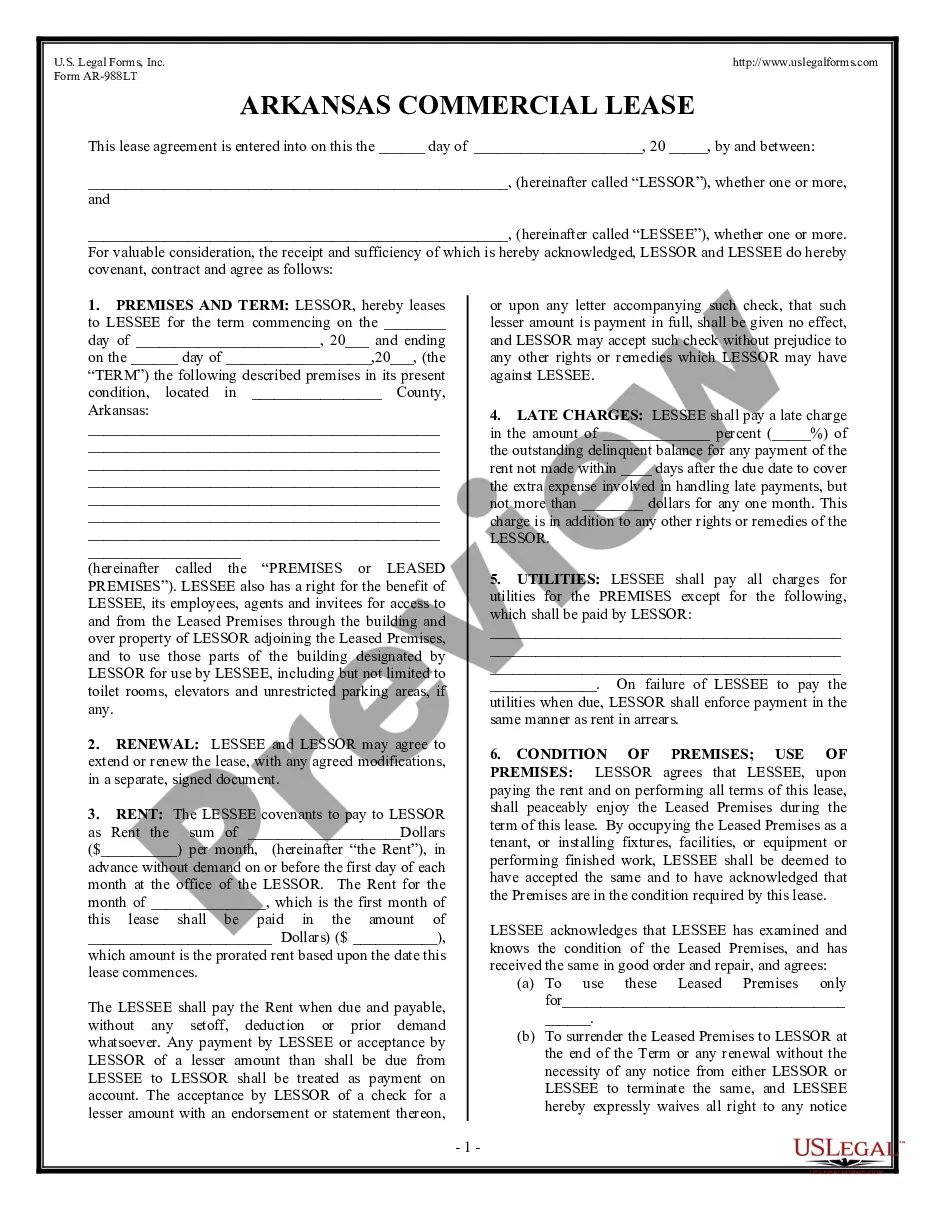
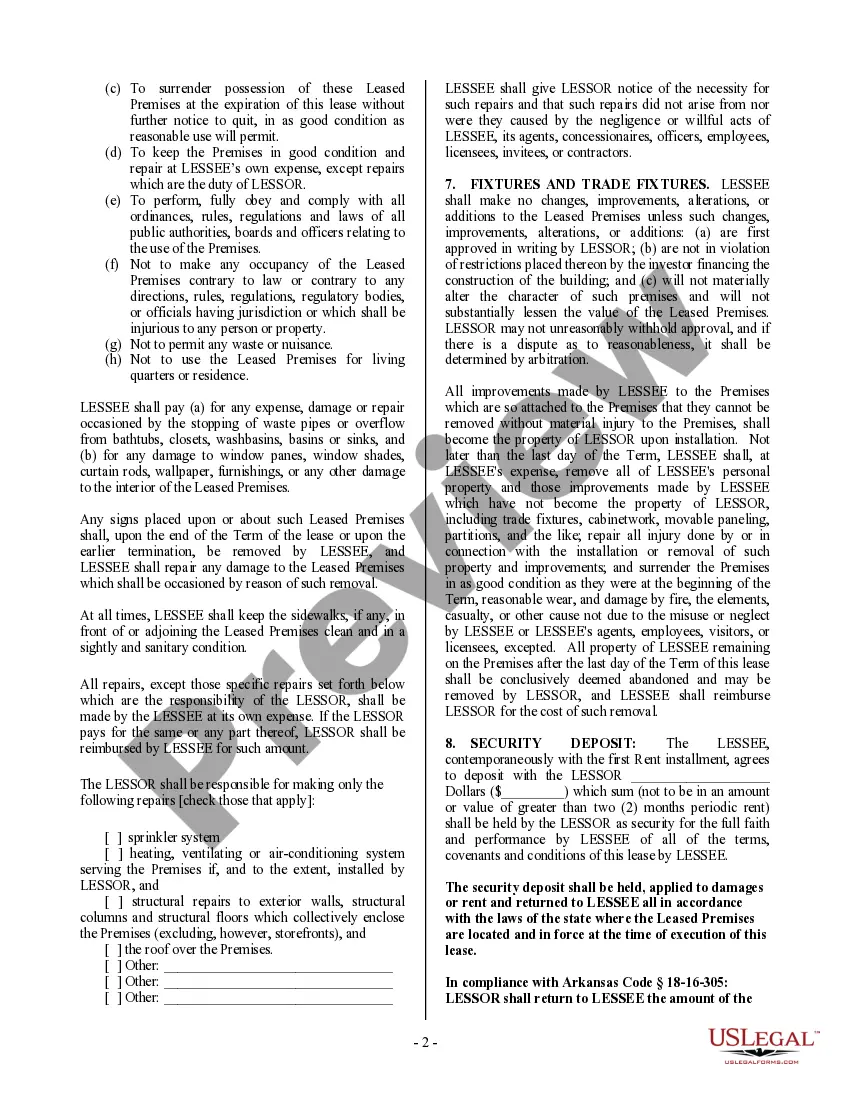
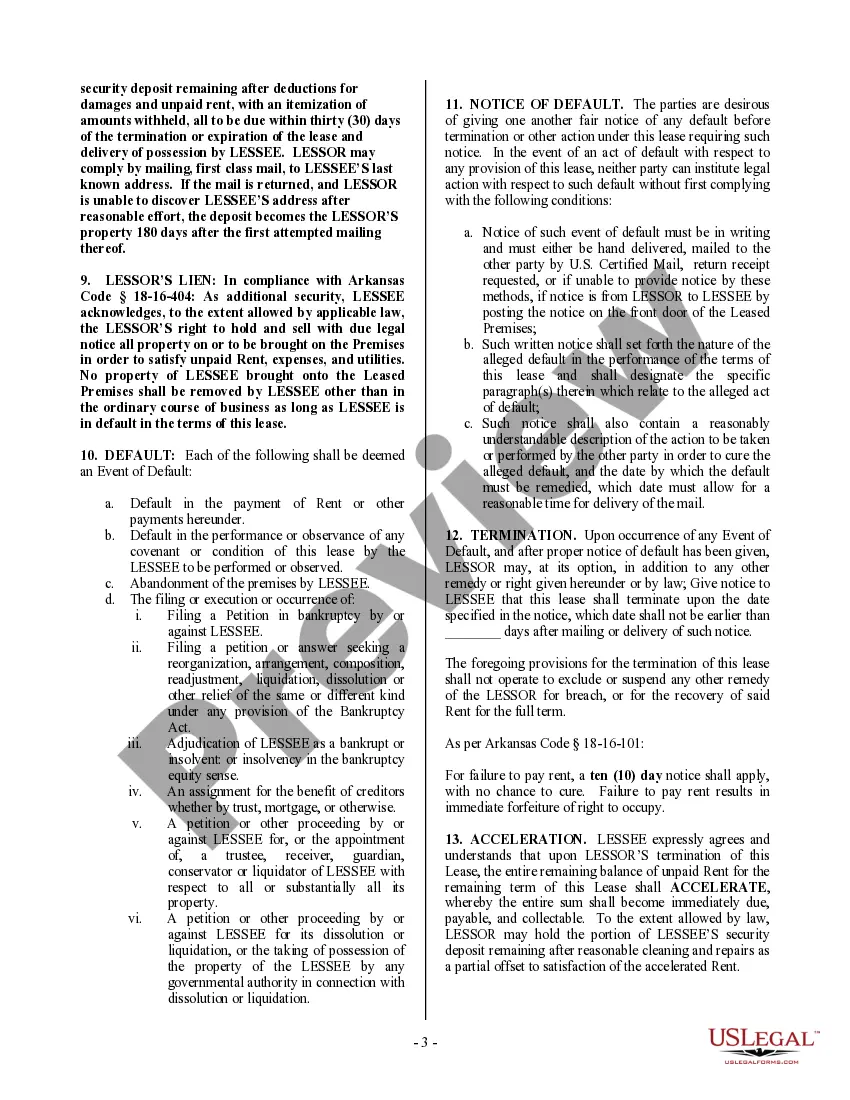
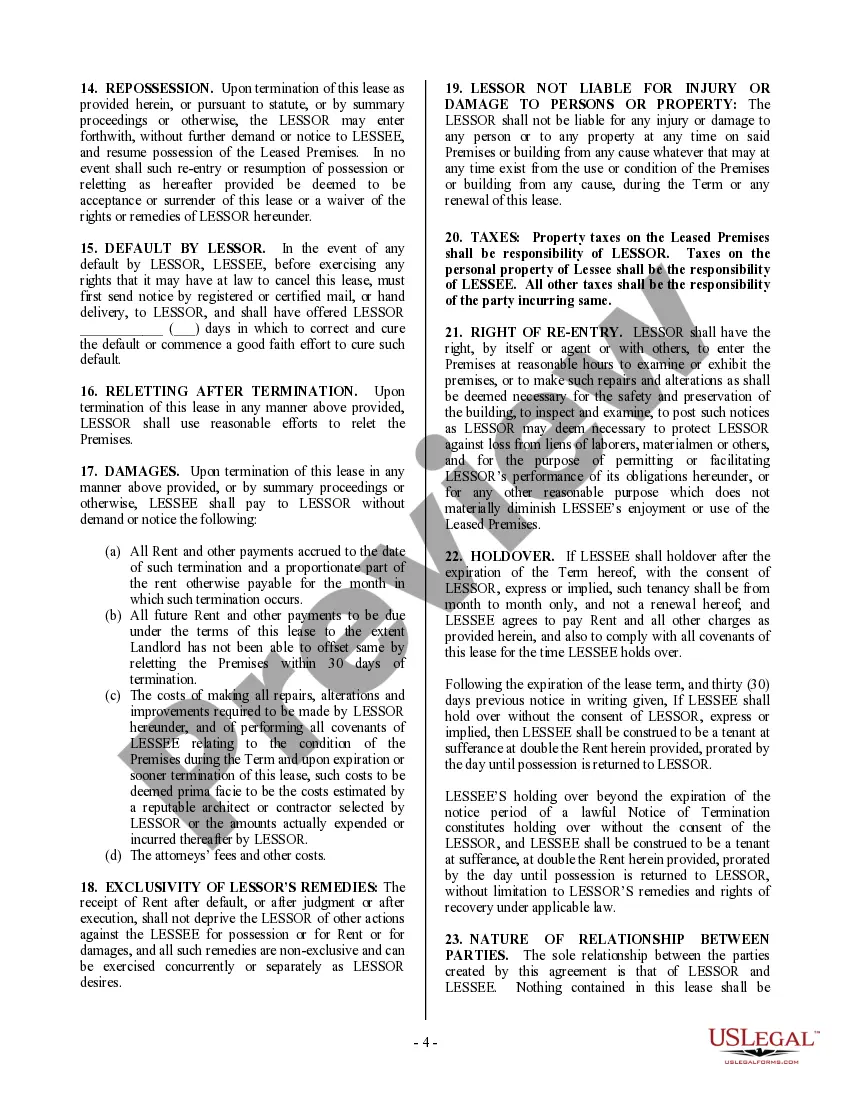
Get your form ready online
Our built-in tools help you complete, sign, share, and store your documents in one place.
Make edits, fill in missing information, and update formatting in US Legal Forms—just like you would in MS Word.
Download a copy, print it, send it by email, or mail it via USPS—whatever works best for your next step.
Sign and collect signatures with our SignNow integration. Send to multiple recipients, set reminders, and more. Go Premium to unlock E-Sign.
If this form requires notarization, complete it online through a secure video call—no need to meet a notary in person or wait for an appointment.
We protect your documents and personal data by following strict security and privacy standards.

Make edits, fill in missing information, and update formatting in US Legal Forms—just like you would in MS Word.

Download a copy, print it, send it by email, or mail it via USPS—whatever works best for your next step.

Sign and collect signatures with our SignNow integration. Send to multiple recipients, set reminders, and more. Go Premium to unlock E-Sign.

If this form requires notarization, complete it online through a secure video call—no need to meet a notary in person or wait for an appointment.

We protect your documents and personal data by following strict security and privacy standards.
Looking for another form?
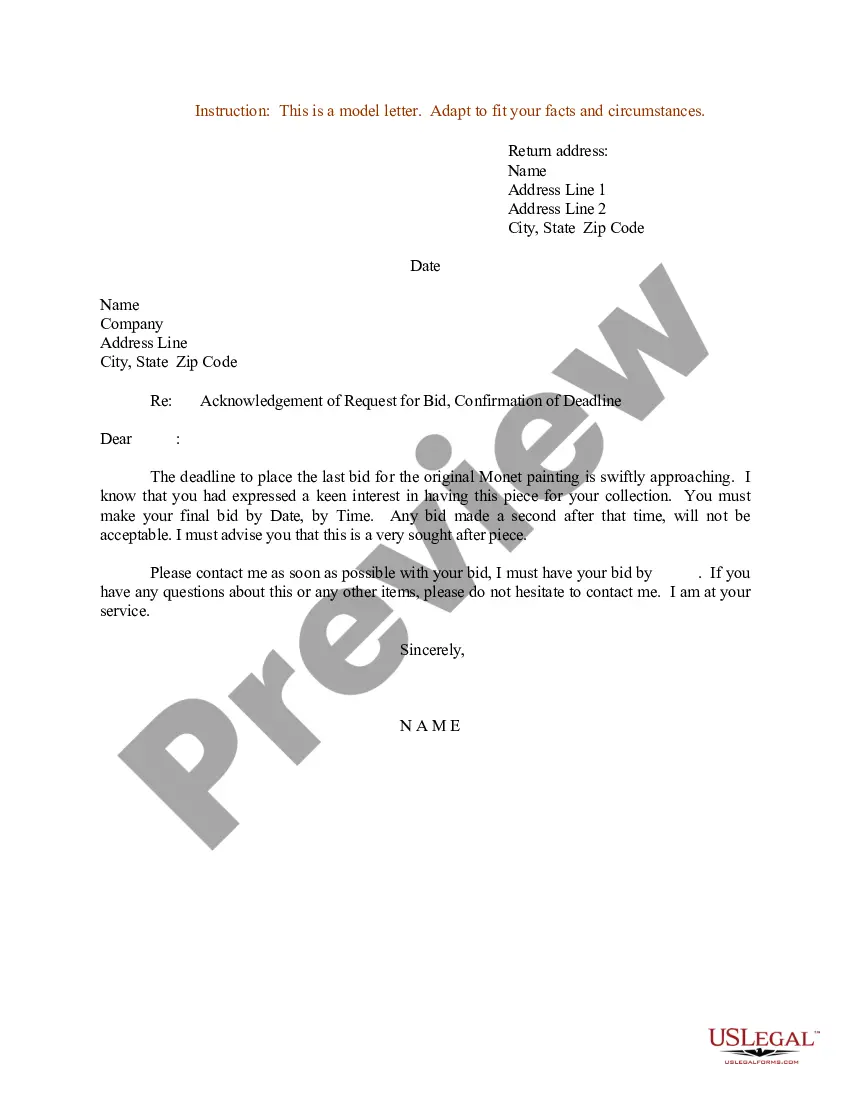

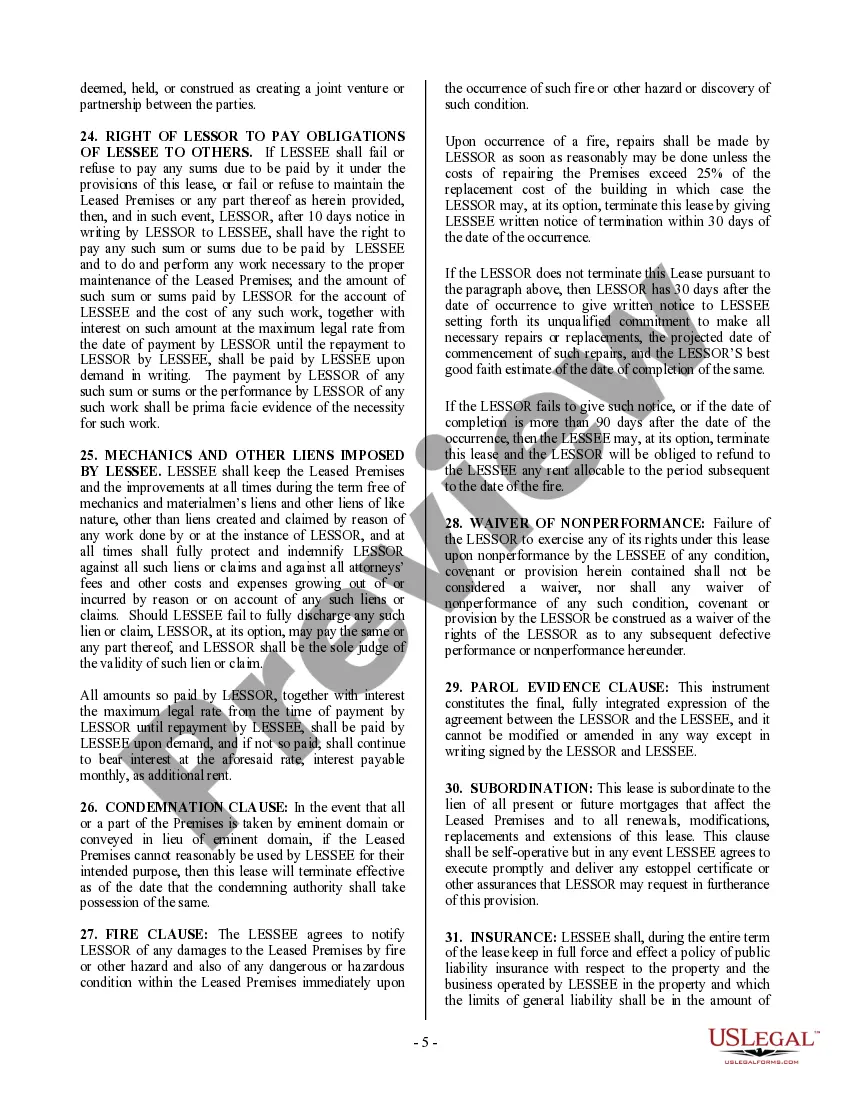
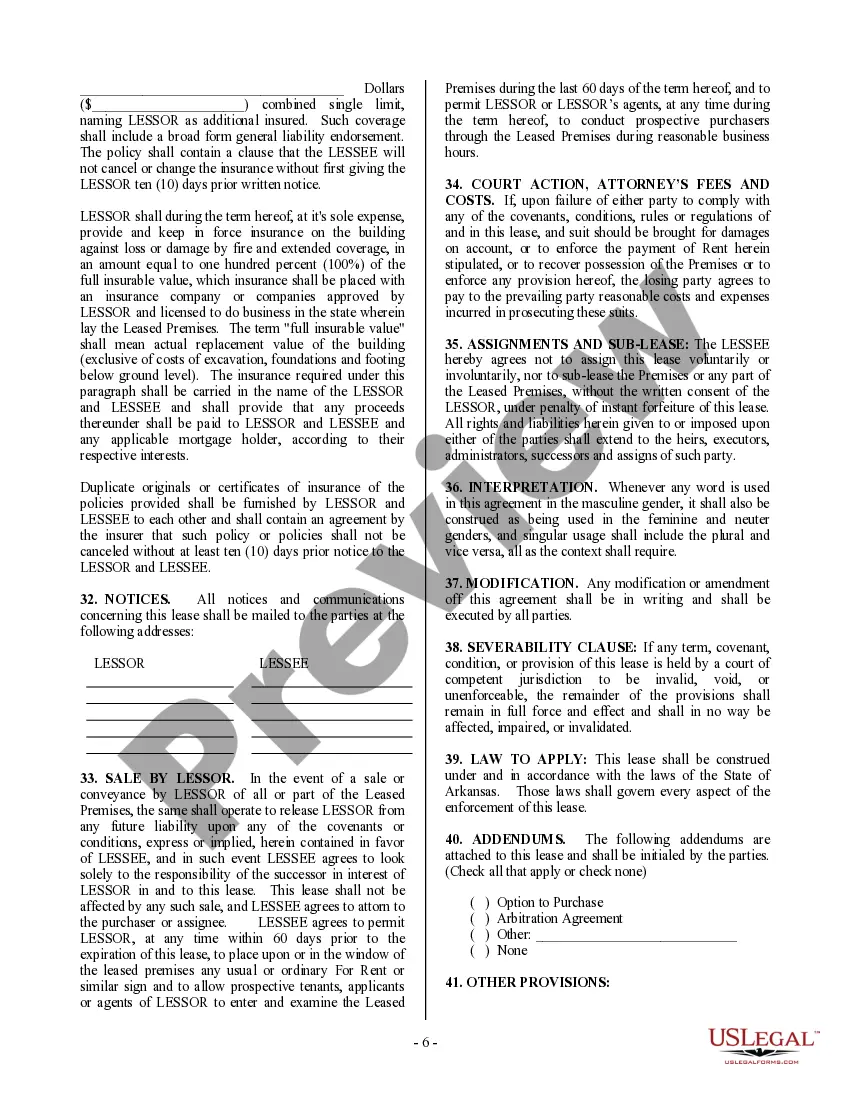
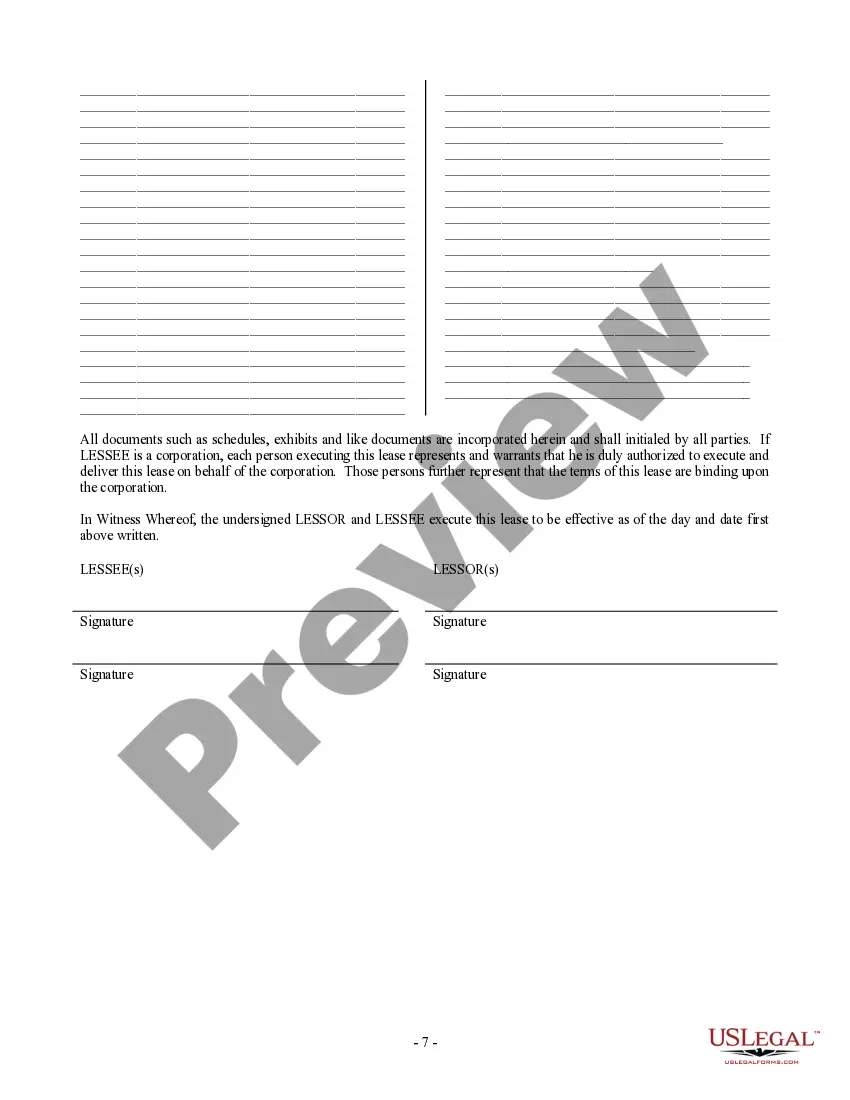
How to fill out Arkansas Commercial Building Or Space Lease?
- If you're already a member, log in to your account and hit the Download button for your required form template. Confirm your subscription status before proceeding.
- For new users, first, browse through the Preview mode and detailed description of the forms available. Make sure to choose the document that aligns with your local jurisdiction's requirements.
- If the initial template isn’t suitable, use the Search feature to explore and locate the correct one that meets your criteria.
- Once you find the desired legal form, click 'Buy Now' and select your preferred subscription plan. You will need to sign up for an account to access the library.
- Complete your purchase by entering your payment details, whether via credit card or PayPal.
- Download your completed form. Save it on your device to ensure accessibility and revisit it anytime through the My Forms section of your profile.
By utilizing US Legal Forms, you’re not only ensuring that your legal documents are accurate and reliable, but you also gain access to over 85,000 legal forms and expert assistance.
Start your journey with US Legal Forms today and experience the convenience of effortless legal document handling.
Form popularity
FAQ
Calculating lease length is straightforward. Measure the time from the lease start date to the end date, generally in months. This straightforward calculation is essential for understanding your lease span, simplifying your planning and budgeting while renting.
To calculate the average lease term, add the total lengths of all your leases and then divide by the number of leases. This will give you a clear picture of your average lease span and help you plan for future housing. Keeping track of this information can aid in making informed decisions.
Red flags in a lease agreement can include unclear terms, excessive fees, or vague maintenance responsibilities. Additionally, watch for a lack of contact information for the landlord or property manager. Identifying these issues early in your lease span can save you from future complications.
The ideal lease length often depends on your living situation and personal preferences. Generally, leases range from six months to a year. For your lease span, consider your future plans and how stable your job situation is, as flexibility may also play a significant role in your decision.
Yes, a lease violation can affect your record. If a landlord takes legal action, it may result in an eviction, which shows up on your rental history. Knowing this, you should address any issues quickly to maintain a clean record during your lease span.
The maximum period of a lease is generally determined by local laws and specific lease agreements. In many cases, leases can last up to 99 years, providing significant security for tenants. Understanding the lease span can enhance your bargaining power and future planning. Explore the US Legal platform to find useful tools and templates that simplify your leasing process.
The maximum length of a lease can vary widely, typically ranging from a few months to 99 years, depending on jurisdiction and property type. A longer lease often provides more stability for tenants, while landlords may benefit from a secured income. Assessing the lease span is vital in making informed decisions about your rental commitments. US Legal offers various templates that can help you draft leases that align with your specific requirements.
The span of a building refers to the distance between supports, which can significantly impact the structure's layout and function. A greater span allows for larger open spaces, which can enhance usability. When considering a commercial lease, it’s crucial to understand how the building's span might affect your activities. US Legal provides resources to help you assess your options based on these building characteristics.
The maximum lease period is typically influenced by local regulations and the agreement terms between the landlord and tenant. While many leases are commonly fixed for one year, some can last much longer, sometimes reaching decades. Knowing the lease span is essential for stable rental arrangements. To find a lease that suits your needs, check out options available on US Legal.
The longest lease you can have often depends on state laws and property type. Generally, a lease can extend up to 99 years, but many landlords offer shorter terms. Understanding the lease span is important, as it affects your rights and responsibilities over time. For tailored information, consider using the US Legal platform to explore suitable lease options for your needs.