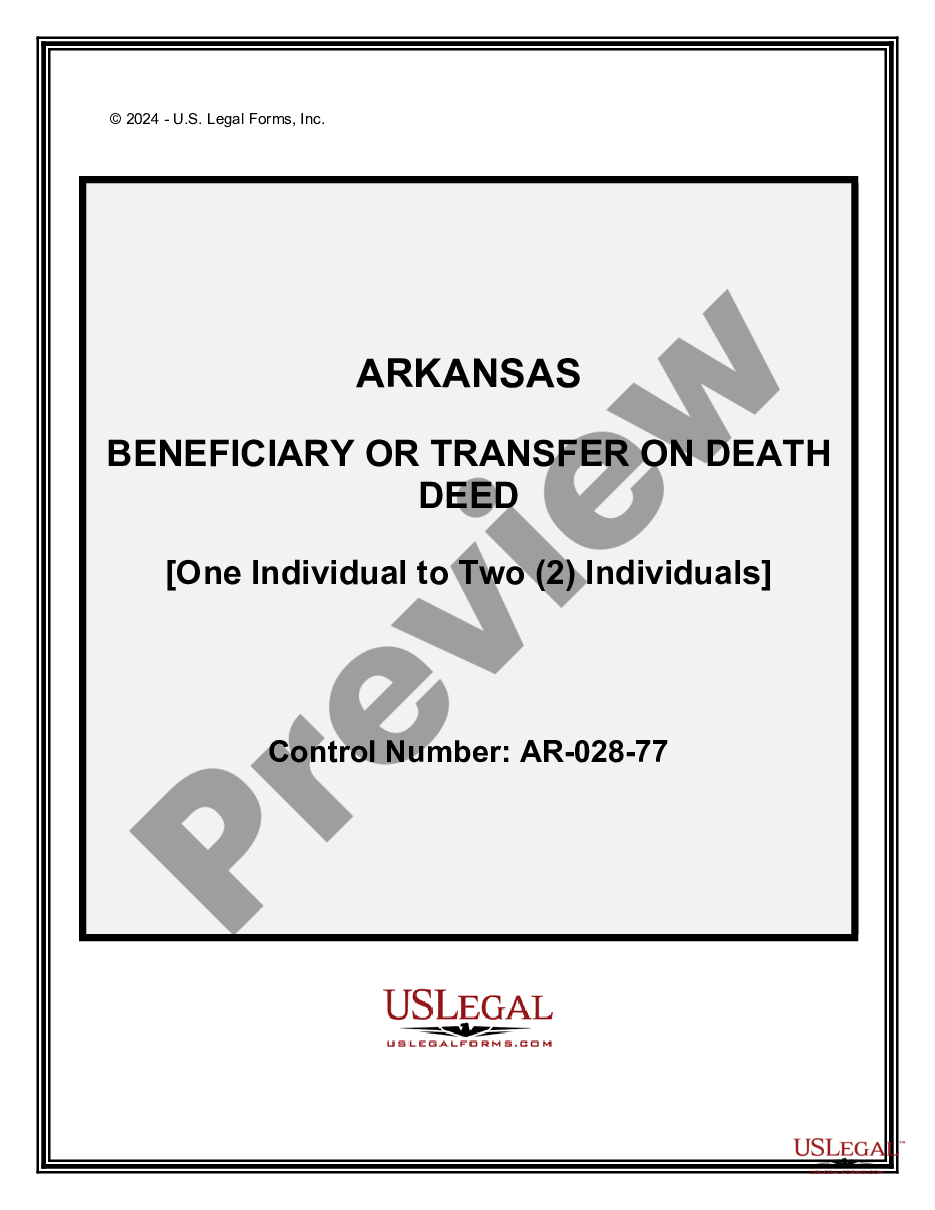
Beneficiary Deed For Arkansas
Description

Get your form ready online
Our built-in tools help you complete, sign, share, and store your documents in one place.
Make edits, fill in missing information, and update formatting in US Legal Forms—just like you would in MS Word.
Download a copy, print it, send it by email, or mail it via USPS—whatever works best for your next step.
Sign and collect signatures with our SignNow integration. Send to multiple recipients, set reminders, and more. Go Premium to unlock E-Sign.
If this form requires notarization, complete it online through a secure video call—no need to meet a notary in person or wait for an appointment.
We protect your documents and personal data by following strict security and privacy standards.

Make edits, fill in missing information, and update formatting in US Legal Forms—just like you would in MS Word.

Download a copy, print it, send it by email, or mail it via USPS—whatever works best for your next step.

Sign and collect signatures with our SignNow integration. Send to multiple recipients, set reminders, and more. Go Premium to unlock E-Sign.

If this form requires notarization, complete it online through a secure video call—no need to meet a notary in person or wait for an appointment.

We protect your documents and personal data by following strict security and privacy standards.
Looking for another form?




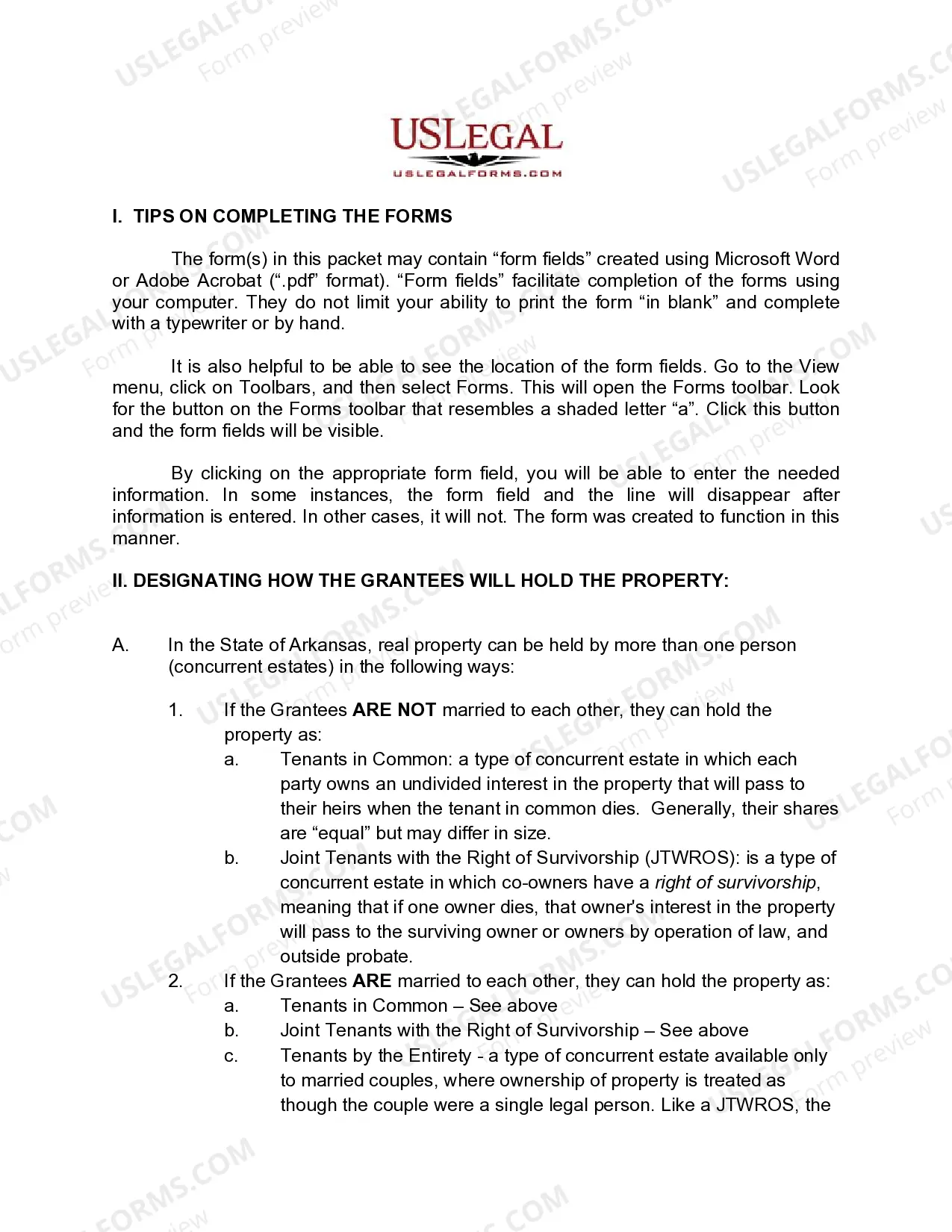
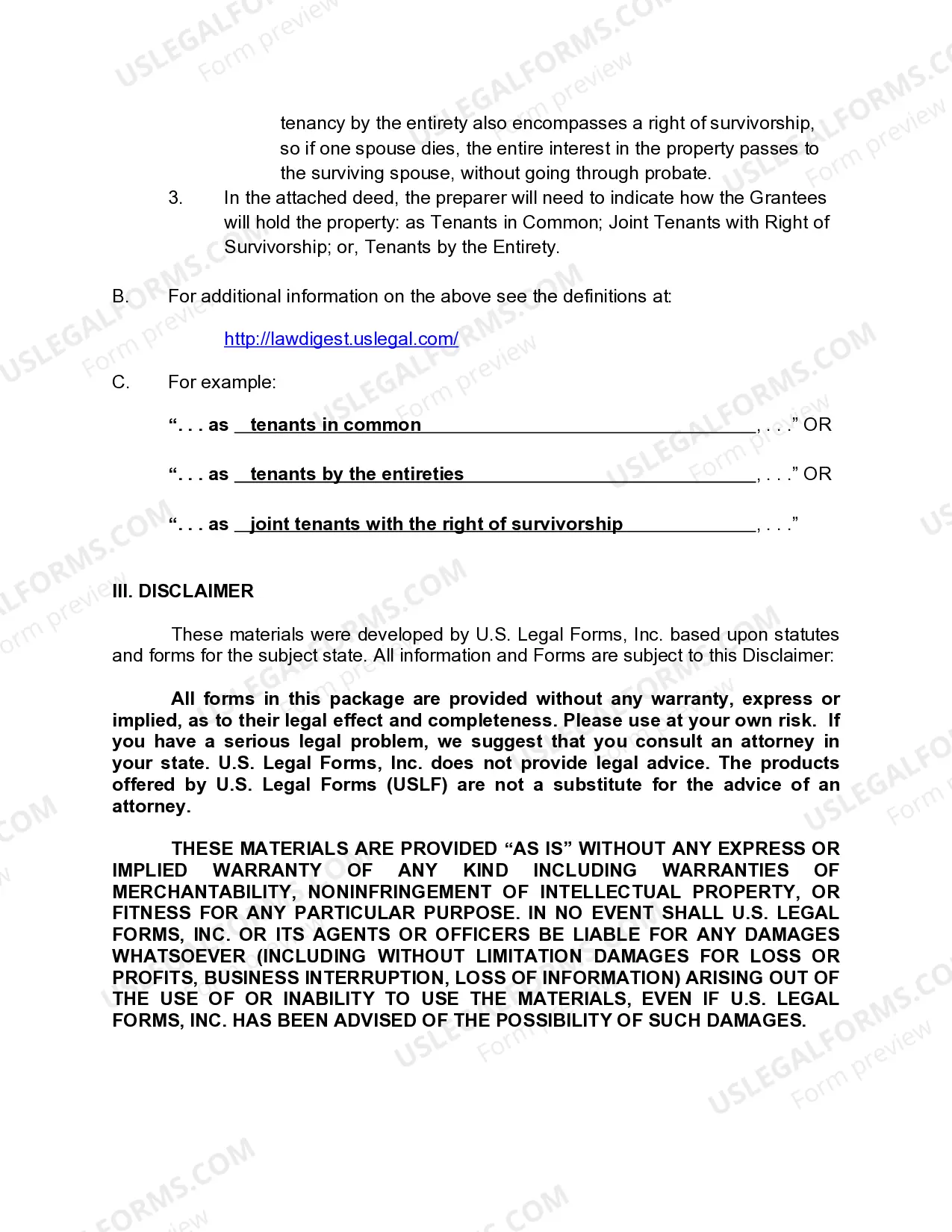
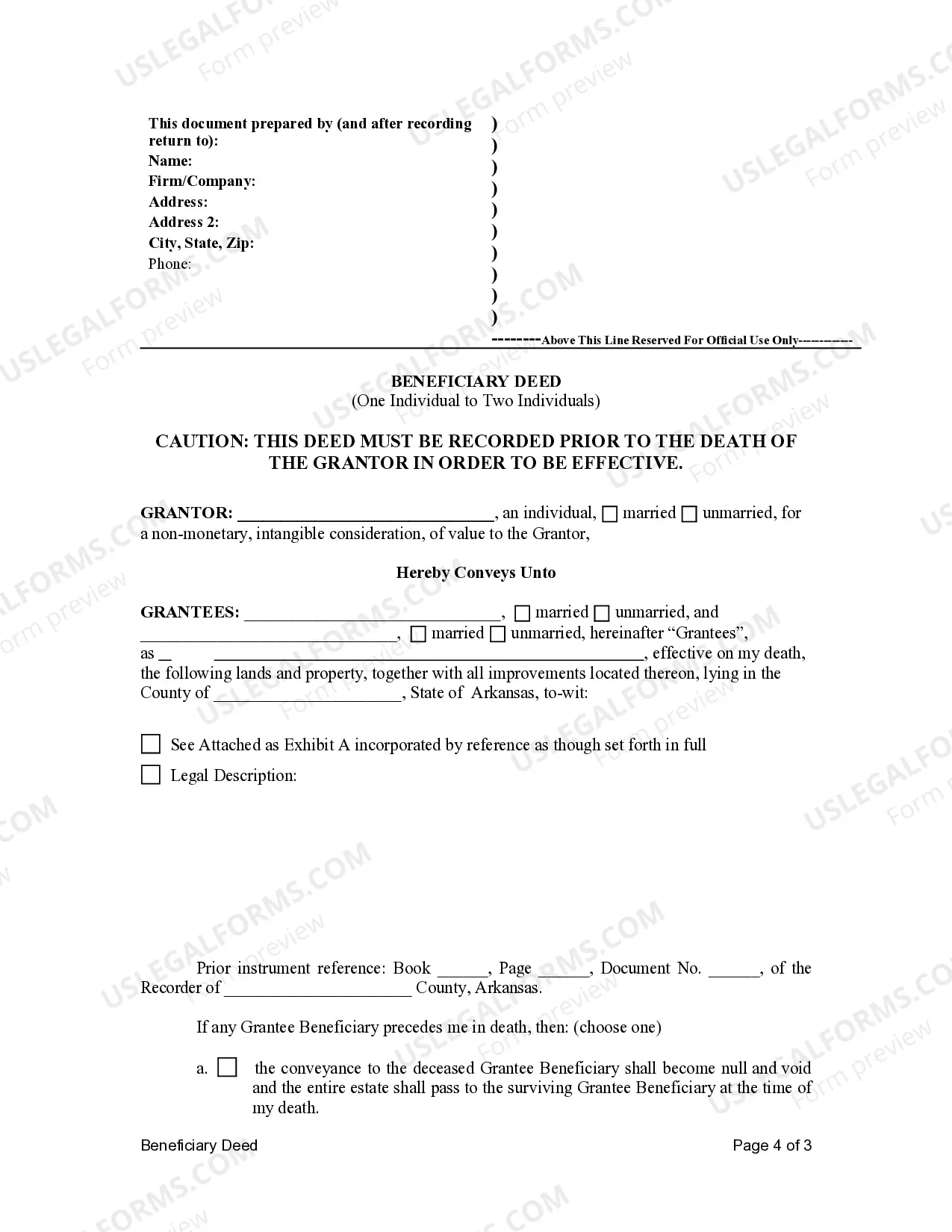
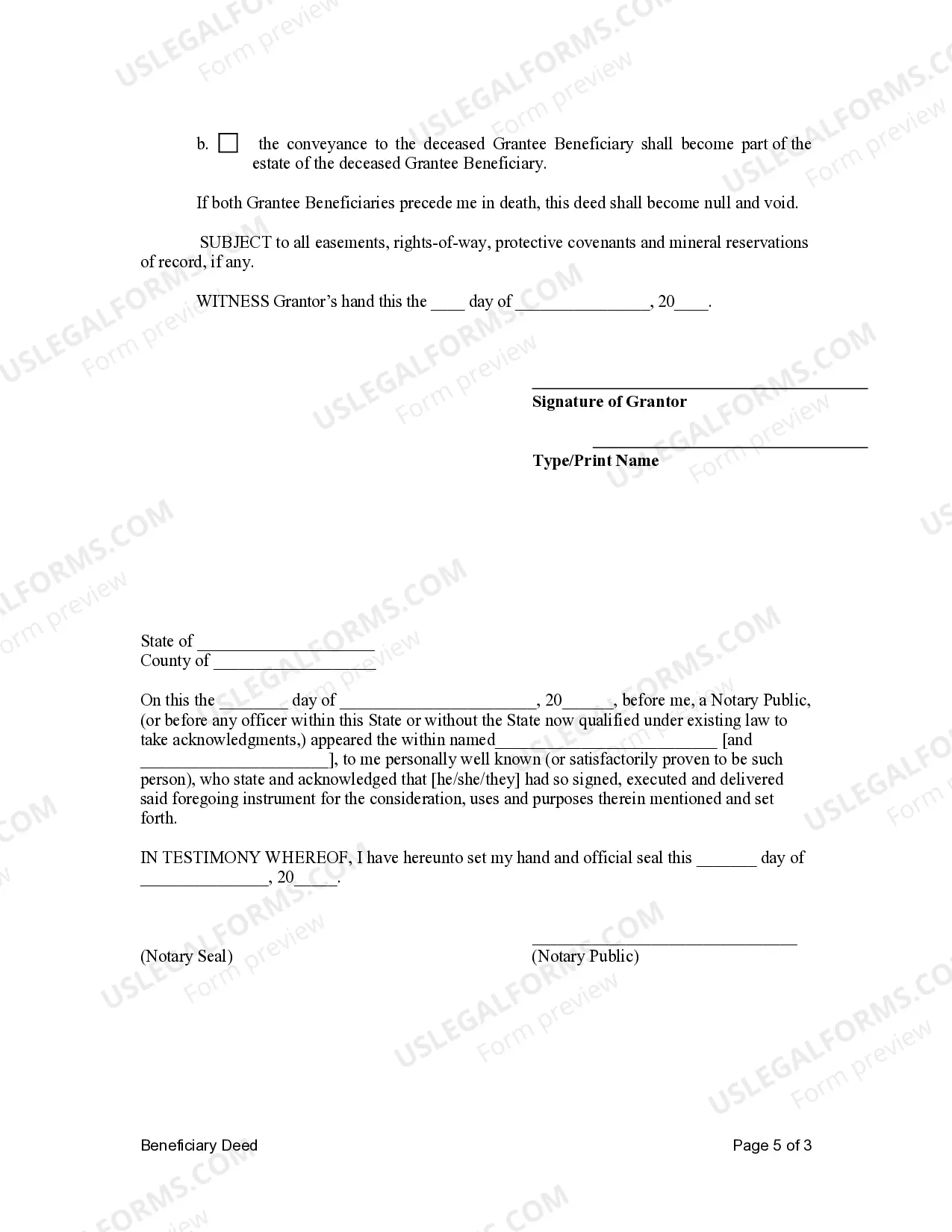
How to fill out Arkansas Transfer On Death Deed Or TOD - Beneficiary Deed For One Individual To Two Individuals?
It’s clear that you cannot become a legal authority instantly, nor can you understand how to swiftly create a Beneficiary Deed For Arkansas without a specialized background.
Drafting legal documents is an extensive process that requires particular education and expertise. So why not entrust the creation of the Beneficiary Deed For Arkansas to the professionals.
With US Legal Forms, one of the largest legal document repositories, you can find everything from court forms to templates for office correspondence. We understand the importance of compliance and adherence to federal and state regulations.
You can regain access to your forms from the My documents section at any time. If you are an existing client, you can simply Log In, and find and download the template from the same section.
Regardless of the purpose of your documents—be it financial, legal, or personal—our website has you covered. Experience US Legal Forms today!
- Locate the form you need by utilizing the search feature at the top of the webpage.
- Preview it (if this option is available) and review the accompanying description to determine if Beneficiary Deed For Arkansas is what you require.
- Initiate your search again if you need another template.
- Create a complimentary account and select a subscription plan to acquire the template.
- Click Buy now. Once the purchase is complete, you can download the Beneficiary Deed For Arkansas, complete it, print it out, and send or mail it to the relevant individuals or organizations.
Form popularity
FAQ
Filling out a beneficiary deed requires you to provide specific information about the property and the beneficiary. You will need to include the legal description of the property, the names of the current owners, and the name of the beneficiary. It is vital to ensure that all details are accurate to avoid complications later. For a straightforward experience, consider using US Legal Forms, which offers templates designed for a beneficiary deed for Arkansas.
To file a beneficiary deed in Arkansas, you first need to complete the deed form accurately. Once you have filled it out, you must sign it in front of a notary public. After notarization, you will file the deed with the county clerk's office in the county where the property is located. Using a reliable platform like US Legal Forms can simplify this process, ensuring you follow all legal requirements for a beneficiary deed in Arkansas.
Getting a beneficiary deed in Arkansas involves a few simple steps. First, gather the required information about your property and the designated beneficiary. Next, utilize resources like US Legal Forms to access templates that simplify the process. After filling out the deed, sign it in front of a notary, and file it with the appropriate county office to finalize the transfer. This method helps you secure your property for your loved ones efficiently.
To obtain a beneficiary deed in Arkansas, you need to complete the necessary paperwork that designates your chosen beneficiary. You can find templates and resources through legal platforms such as US Legal Forms, which offer user-friendly guides. Once completed, you must sign the deed before a notary and record it with the county clerk's office where the property is located. This ensures your beneficiary deed for Arkansas is legally recognized.
Yes, you can create a beneficiary deed for Arkansas without an attorney, but it is recommended to seek professional guidance. While the process is relatively straightforward, legal nuances can arise that may complicate matters. Using a platform like US Legal Forms can simplify the process by providing templates and resources to help you draft a legally sound beneficiary deed. This approach can save you time and ensure compliance with state laws.
While a beneficiary deed for Arkansas offers several benefits, there are also disadvantages to consider. One potential downside is that it may not avoid probate if the beneficiary is not alive at the time of your death. Additionally, if the property is subject to debts or liens, those obligations may still affect the beneficiary after your passing. It's important to weigh these factors carefully and consult legal resources to ensure it aligns with your estate planning goals.
Yes, Arkansas allows transfer on death (TOD) deeds, commonly known as beneficiary deeds. This legal tool enables property owners to designate a beneficiary who will receive the property upon their passing without going through probate. It’s a straightforward way to transfer property while retaining ownership during your lifetime. Understanding how a beneficiary deed for Arkansas works can help you make informed estate planning decisions.