Transfer On Death Deed For Indiana
Description



Get your form ready online
Our built-in tools help you complete, sign, share, and store your documents in one place.
Make edits, fill in missing information, and update formatting in US Legal Forms—just like you would in MS Word.
Download a copy, print it, send it by email, or mail it via USPS—whatever works best for your next step.
Sign and collect signatures with our SignNow integration. Send to multiple recipients, set reminders, and more. Go Premium to unlock E-Sign.
If this form requires notarization, complete it online through a secure video call—no need to meet a notary in person or wait for an appointment.
We protect your documents and personal data by following strict security and privacy standards.

Make edits, fill in missing information, and update formatting in US Legal Forms—just like you would in MS Word.

Download a copy, print it, send it by email, or mail it via USPS—whatever works best for your next step.

Sign and collect signatures with our SignNow integration. Send to multiple recipients, set reminders, and more. Go Premium to unlock E-Sign.

If this form requires notarization, complete it online through a secure video call—no need to meet a notary in person or wait for an appointment.

We protect your documents and personal data by following strict security and privacy standards.
Looking for another form?


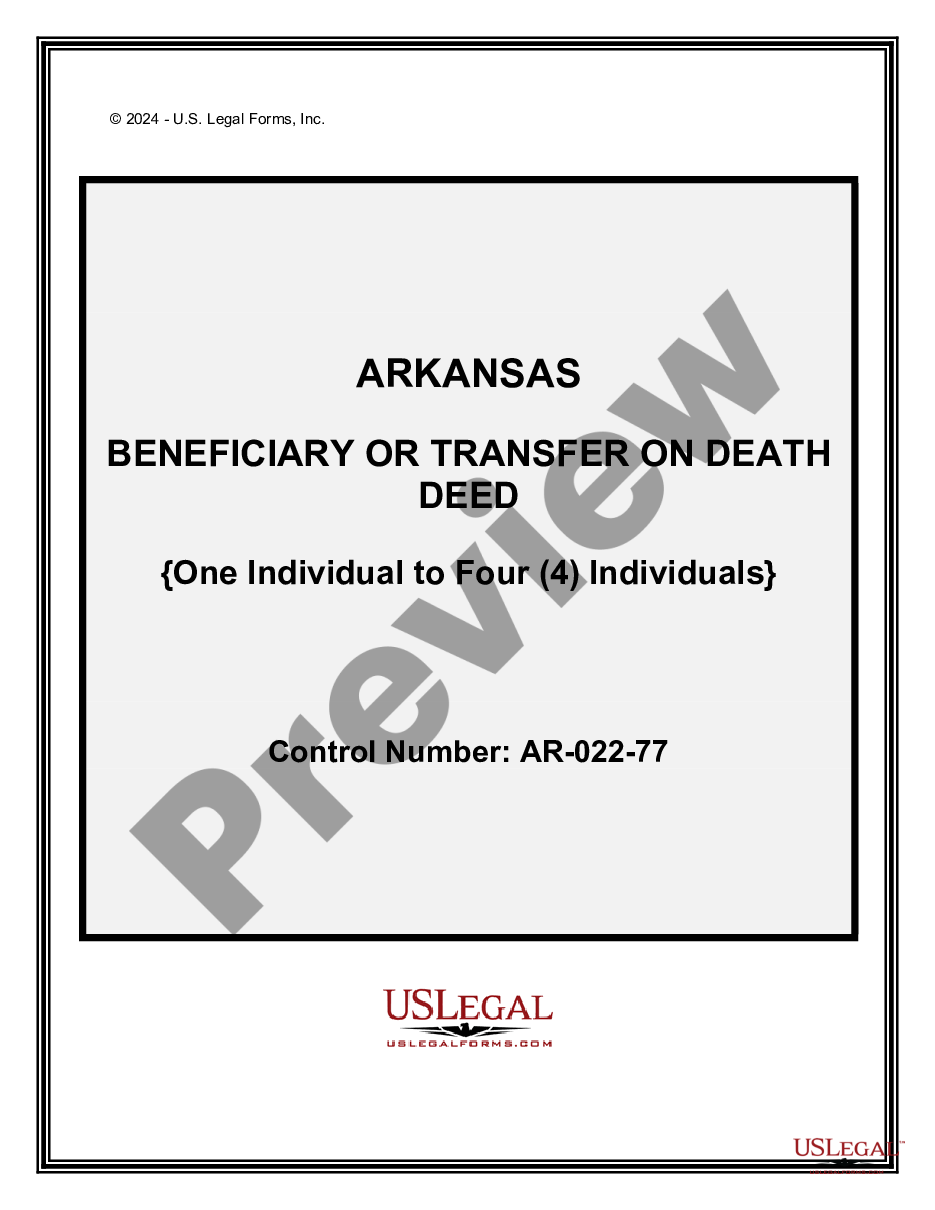
How to fill out Arkansas Transfer On Death Deed Or TOD - Beneficiary Deed For One Individual To Four Individuals?
- Log in to your US Legal Forms account if you're an existing user, ensuring your subscription is valid. If necessary, renew it as per your payment plan.
- Browse the available templates for the transfer on death deed. Check the preview mode and ensure the selected document meets Indiana's legal requirements.
- Use the search feature to find alternative templates if needed, ensuring you have the right document for your situation.
- Once you find the suitable form, click the Buy Now button and select your preferred subscription plan, registering for an account if this is your first visit.
- Complete your purchase by providing your payment details through credit card or PayPal.
- Download the selected template directly to your device. You can access it anytime through the My Forms section of your profile.
In conclusion, obtaining a transfer on death deed for Indiana has never been easier with US Legal Forms. This resource not only offers a robust selection of forms but also assists individuals and attorneys in creating legally binding documents efficiently.
Start your journey towards seamless legal documentation today—visit US Legal Forms and explore our library!
Form popularity
FAQ
To file a Transfer on Death Deed in Indiana, you must complete the deed form, which includes details about the property and the beneficiary. After signing the document, you must have it notarized and then record it with the county recorder’s office where the property is located. This filing officially makes the transfer effective upon your death, allowing the beneficiary to inherit the property without going through probate. Uslegalforms can guide you through the filing process to ensure accuracy and compliance.
No, you cannot transfer a deed to a deceased person. Once an individual passes away, any assets, including property, must be handled through an estate process. In Indiana, if a Transfer on Death Deed was not executed before death, the property will typically go through probate. It is wise to plan ahead with a Transfer on Death Deed for Indiana to avoid these complications in the future.
Transferring ownership of a property in Indiana typically requires a legal document such as a deed. One effective method is to use a Transfer on Death Deed, which allows you to designate a beneficiary who receives the property automatically after your death. This approach avoids the lengthy probate process and provides clarity on ownership transfer. Uslegalforms can assist you in drafting a Transfer on Death Deed for Indiana, ensuring all legal requirements are met.
To transfer ownership of a house in Indiana after the owner has passed away, a Transfer on Death Deed can be a useful tool if one was executed before their death. This deed allows the beneficiary to claim ownership directly after the owner's death without going through probate. If no such deed exists, the process may require probate, which can be time-consuming and costly. Utilizing a Transfer on Death Deed for Indiana helps streamline this process and reduce complications.
When a house owner dies without a will in Indiana, the property goes through intestate succession laws. This means the state will determine how to distribute the property among relatives, which might not align with the deceased's wishes. This process can often lead to disputes among family members and may require probate court involvement. A Transfer on Death Deed for Indiana could prevent such issues by allowing you to specify your preferred beneficiary in advance.
To transfer property after death in Indiana, you can use a Transfer on Death Deed. This deed allows the property owner to designate a beneficiary who will inherit the property automatically upon their death. It is a straightforward process that does not require probate, making it an efficient option for property transfer in Indiana. By utilizing a Transfer on Death Deed for Indiana, you can ensure a smooth transition of ownership without complications.
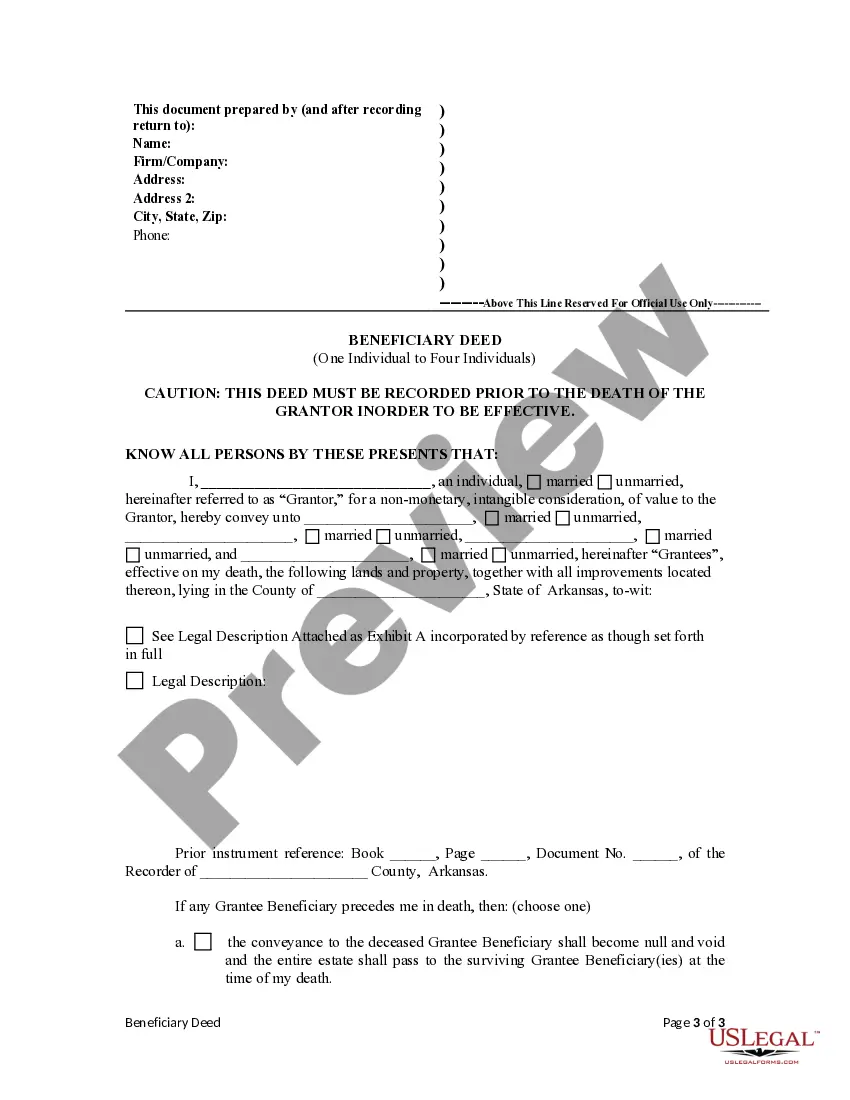
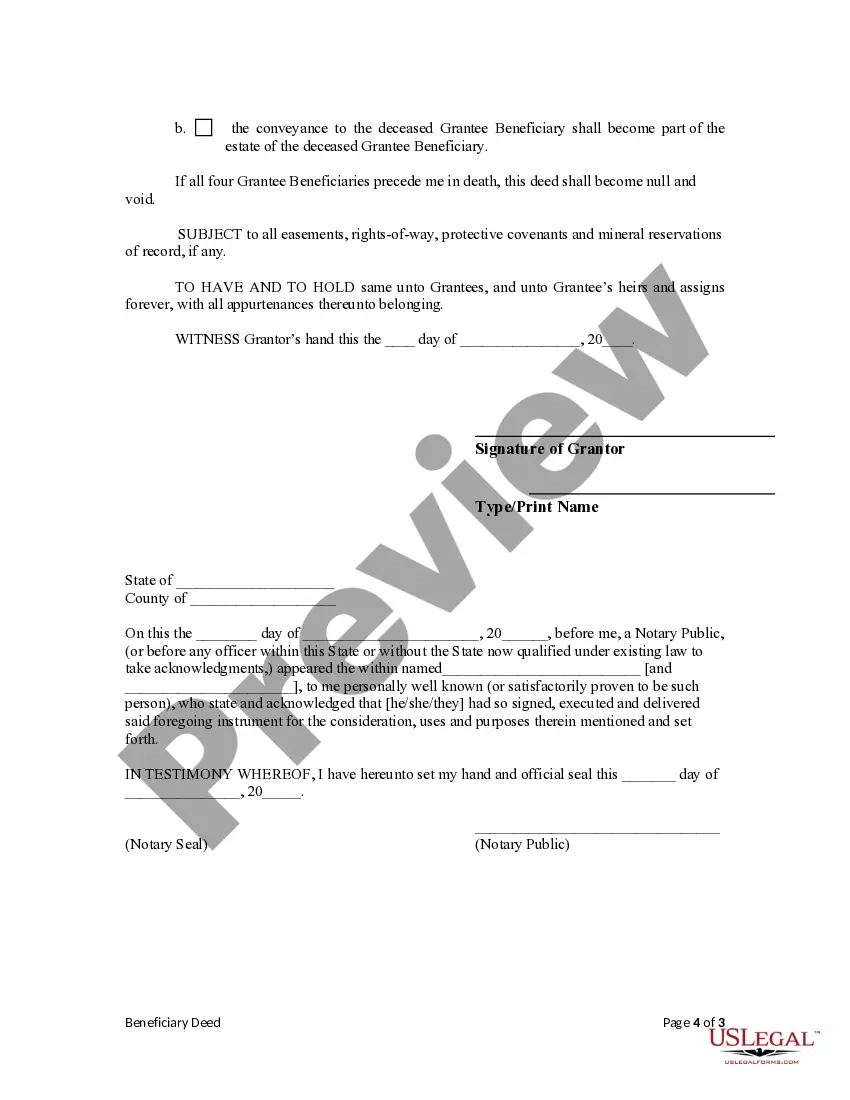
To create a valid transfer on death deed for Indiana, you must meet specific requirements. The deed must be in writing, signed by the property owner, and notarized. You also need to file it with the county recorder’s office where the property is located. Using US Legal Forms can streamline this process, providing templates and guidance tailored to Indiana's requirements.
Choosing between a transfer on death deed for Indiana and naming a beneficiary depends on your specific needs. A TOD deed provides direct transfer of property upon death, potentially avoiding probate, while a beneficiary designation applies to accounts like insurance policies. Evaluating your assets and family dynamics can help determine which option is better for you.
While transfer on death accounts offer benefits, they also come with unique challenges. For instance, if the beneficiary is not prepared or willing to manage the assets, it can create complications. Additionally, there may be no guidance on how to handle disputes among beneficiaries. Using a service like US Legal Forms can simplify the creation and understanding of TOD accounts.
A transfer on death deed for Indiana may help in avoiding probate, but it does not necessarily avoid inheritance tax. The assets transferred using a TOD are still subject to taxation depending on state laws. It is advisable to consult a tax advisor to understand how these laws may impact your estate.