Support Letter For Parole
Description



Get your form ready online
Our built-in tools help you complete, sign, share, and store your documents in one place.
Make edits, fill in missing information, and update formatting in US Legal Forms—just like you would in MS Word.
Download a copy, print it, send it by email, or mail it via USPS—whatever works best for your next step.
Sign and collect signatures with our SignNow integration. Send to multiple recipients, set reminders, and more. Go Premium to unlock E-Sign.
If this form requires notarization, complete it online through a secure video call—no need to meet a notary in person or wait for an appointment.
We protect your documents and personal data by following strict security and privacy standards.

Make edits, fill in missing information, and update formatting in US Legal Forms—just like you would in MS Word.

Download a copy, print it, send it by email, or mail it via USPS—whatever works best for your next step.

Sign and collect signatures with our SignNow integration. Send to multiple recipients, set reminders, and more. Go Premium to unlock E-Sign.

If this form requires notarization, complete it online through a secure video call—no need to meet a notary in person or wait for an appointment.

We protect your documents and personal data by following strict security and privacy standards.
Looking for another form?






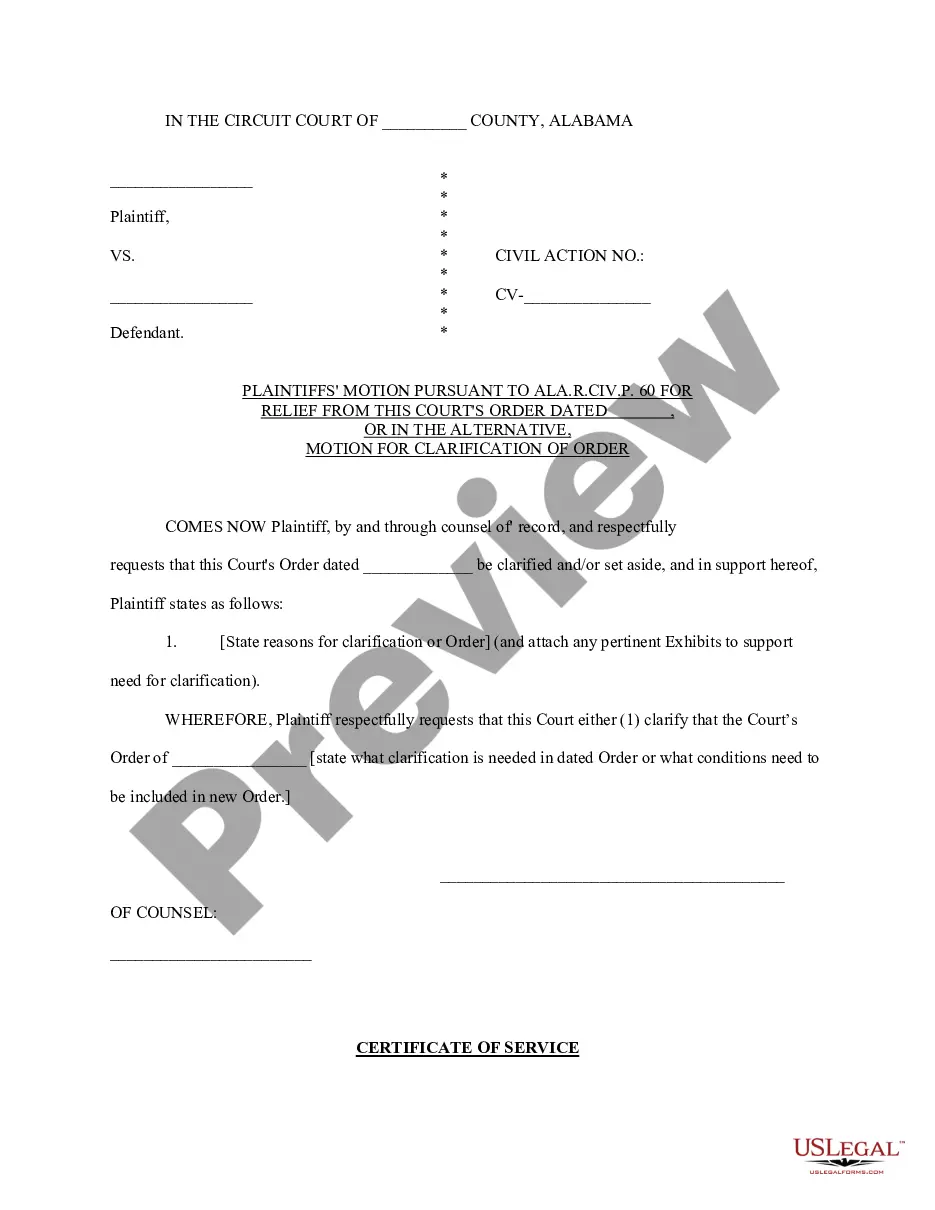
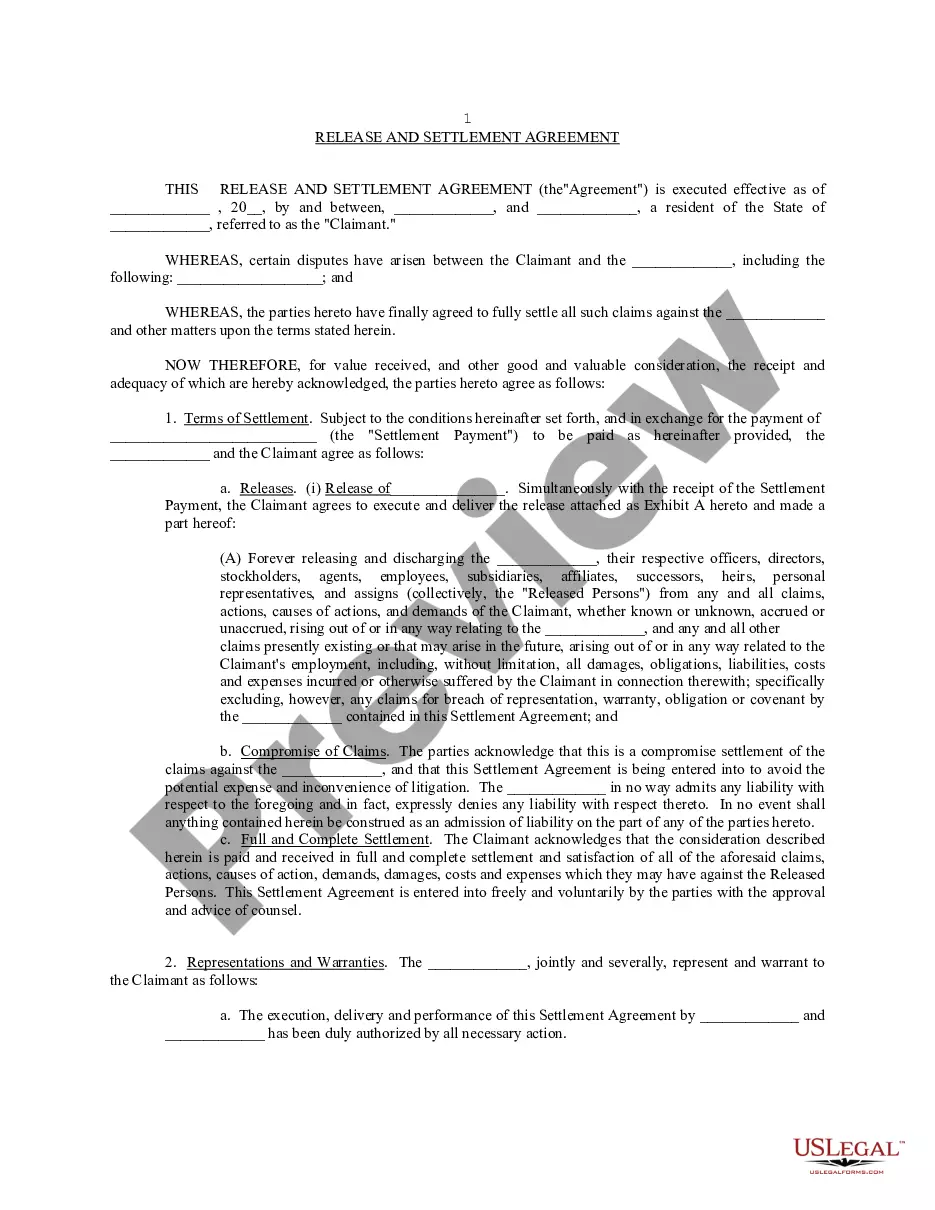
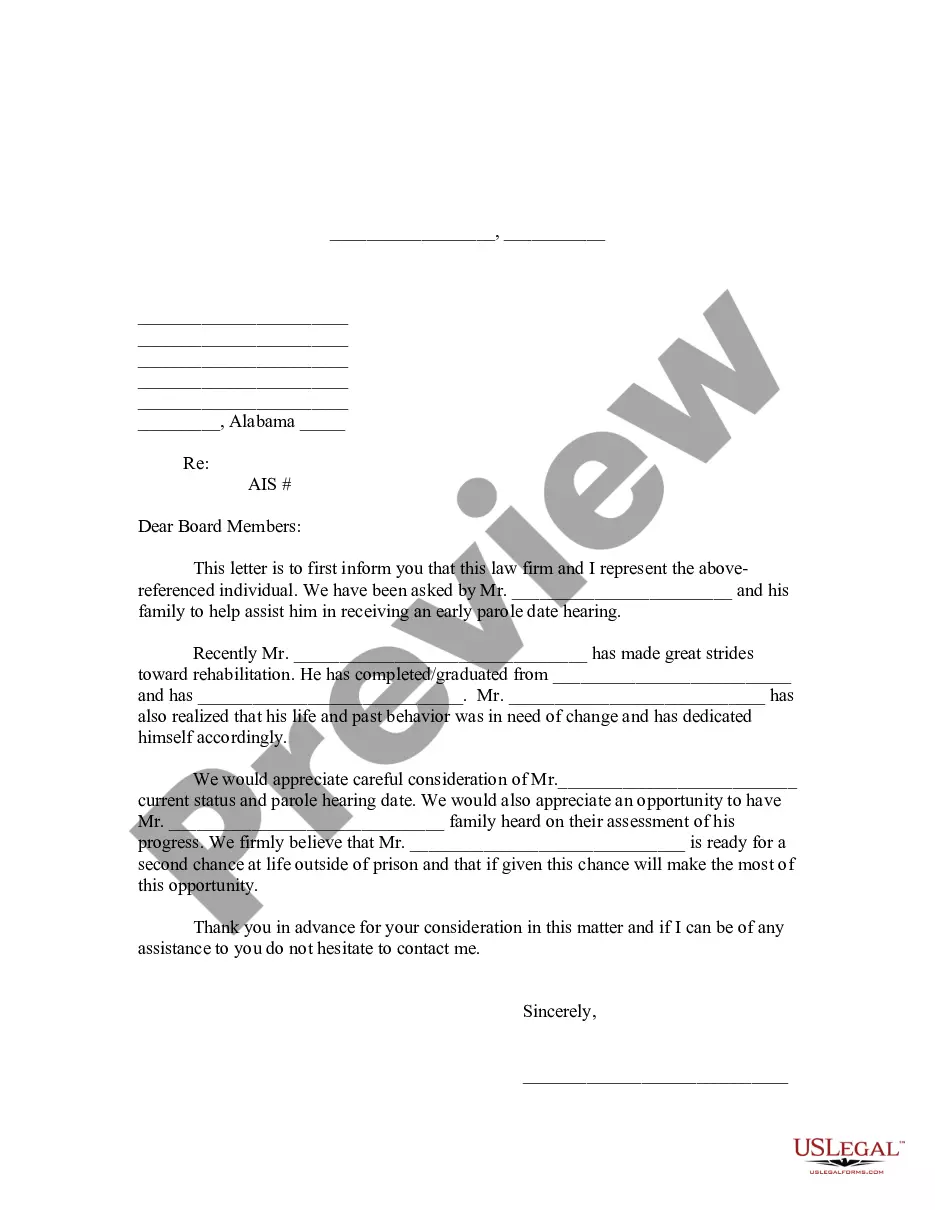
How to fill out Alabama Letter To Parol Board Members By Attorney Requesting Parol Of Inmate For Family?
Managing legal documents can be daunting, even for the most experienced professionals.
When seeking a Support Letter For Parole and lacking the time to search for the correct and updated version, the tasks can become overwhelming.
Obtain state- or county-specific legal and business documents.
US Legal Forms satisfies all your requirements, from personal to business paperwork, all in one location.
If this is your first experience with US Legal Forms, create an account and gain unlimited access to all the resources in the library. Here are the steps to follow after obtaining the form you require.
- Utilize advanced tools to complete and manage your Support Letter For Parole.
- Access a comprehensive resource repository of articles, guides, and materials tailored to your situation and needs.
- Save time and effort in locating the necessary documents by utilizing US Legal Forms’ sophisticated search and Review tool to find Support Letter For Parole and obtain it.
- If you hold a monthly subscription, Log In to your US Legal Forms account, search for the form, and download it.
- Check your My documents tab to view saved documents and manage your files as desired.
- A robust online form library can significantly benefit anyone looking to handle these matters effectively.
- US Legal Forms is a premier provider of digital legal documents, offering over 85,000 state-specific legal forms at any given time.
- With US Legal Forms, you can.
Form popularity
FAQ
To write a good parole support letter, start with a clear introduction that states your purpose and connection to the individual. You should detail the positive actions they have taken while incarcerated, and any plans they have for their future post-release. Incorporating personal anecdotes can also strengthen your claims. Lastly, reiterate your unwavering support and belief in their capability to contribute positively to society.
When addressing a parole letter, start by writing the name of the parole board or the specific parole officer overseeing the case at the top. Always include a proper salutation, such as 'Dear Parole Board Members' or 'Dear Officer's Name.' Being respectful and formal reflects the seriousness of the request, making it more likely for your support letter for parole to be taken seriously.
Writing a strong support letter for parole requires clarity and sincerity. Begin by introducing yourself and your relationship to the individual seeking parole. Then, provide specific examples of their positive behavior, changes they have made, and your belief in their readiness for reintegration. Ending with a clear statement of support can significantly enhance the letter's effectiveness.
To properly end a parole letter, express your sincere hope for a positive outcome. Reinforce your support for the person and briefly restate your belief in their ability to reintegrate successfully. Finally, include a closing phrase such as 'Sincerely' or 'Best regards,' followed by your name and contact information. This not only adds a personal touch but also establishes your willingness to be contacted for further support.
To start a support letter for parole, introduce yourself and your connection to the inmate. Clearly express your intent to advocate for their release early in the letter. This direct approach sets a positive tone and establishes the purpose of your letter right away.
A support letter for an inmate serves as a personal endorsement, providing insight into the inmate's character and potential for rehabilitation. It can influence parole decisions by highlighting the individual's positive traits and contributions. Writing such a letter can be a crucial step in advocating for the inmate's release.
When addressing a parole support letter, use formal salutations. Start with 'Dear Parole Board Name or Specific Recipient,' if known, otherwise 'To Whom It May Concern' is acceptable. Make sure to be respectful and professional, as first impressions are important in formal communication.
Begin your letter of support with a warm greeting and clearly state your purpose at the outset. Introduce yourself and explain your relationship with the inmate, setting the context for your support letter for parole. This establishes credibility and allows the reader to understand your perspective.
Support letters for parole should be sent to the parole board, which is responsible for reviewing the inmate's case. It's also helpful to send copies to relevant officials like judges or attorneys involved in the case. Always check specific guidelines for each jurisdiction to ensure you reach the correct addresses.
When crafting a letter of support for a pardon, focus on the inmate's achievements since their conviction. Highlight any positive changes or contributions they have made to their community. Make it clear why a pardon would benefit not just them, but also society as a whole, enhancing your support letter for parole.