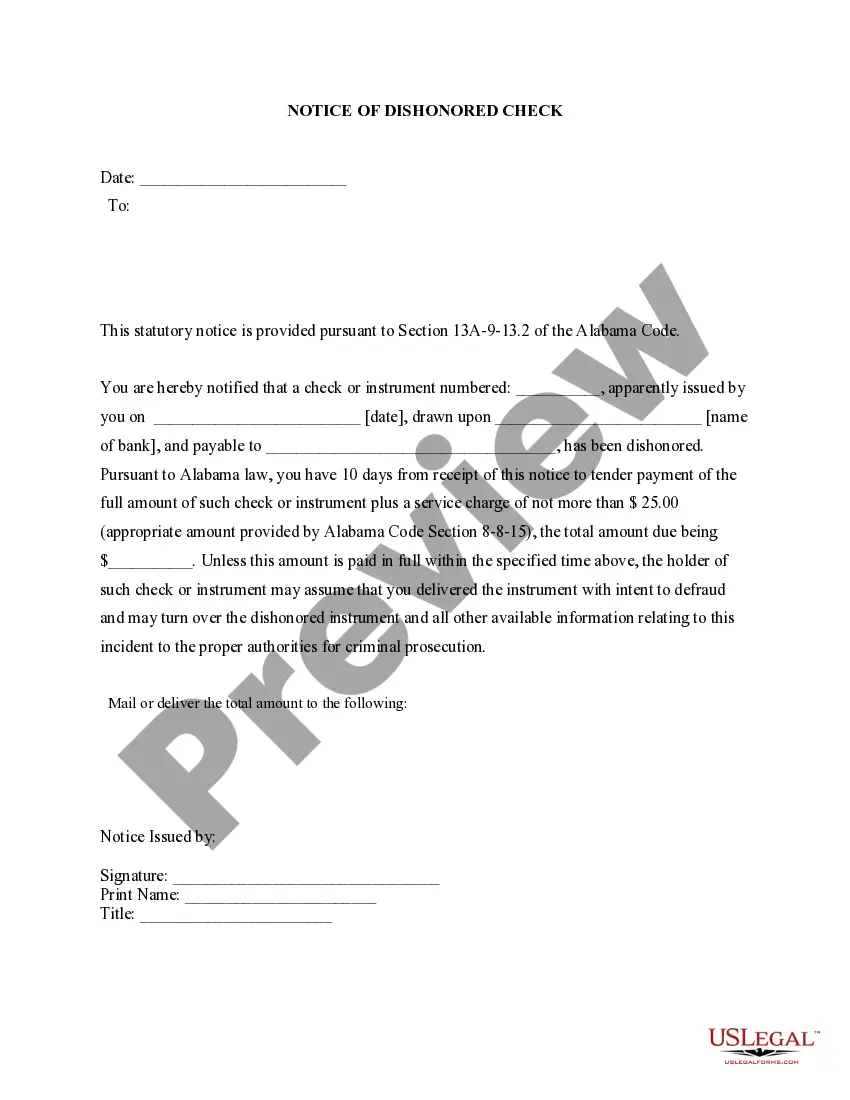
Notice Check Bad For Credit
Description


Get your form ready online
Our built-in tools help you complete, sign, share, and store your documents in one place.
Make edits, fill in missing information, and update formatting in US Legal Forms—just like you would in MS Word.
Download a copy, print it, send it by email, or mail it via USPS—whatever works best for your next step.
Sign and collect signatures with our SignNow integration. Send to multiple recipients, set reminders, and more. Go Premium to unlock E-Sign.
If this form requires notarization, complete it online through a secure video call—no need to meet a notary in person or wait for an appointment.
We protect your documents and personal data by following strict security and privacy standards.

Make edits, fill in missing information, and update formatting in US Legal Forms—just like you would in MS Word.

Download a copy, print it, send it by email, or mail it via USPS—whatever works best for your next step.

Sign and collect signatures with our SignNow integration. Send to multiple recipients, set reminders, and more. Go Premium to unlock E-Sign.

If this form requires notarization, complete it online through a secure video call—no need to meet a notary in person or wait for an appointment.

We protect your documents and personal data by following strict security and privacy standards.
Looking for another form?








How to fill out Alabama Notice Of Dishonored Check - Civil And Criminal - Keywords: Bad Check, Bounced Check?
- Log into your US Legal Forms account if you're a returning user, ensuring your subscription is active to download necessary documents.
- For first-time users, review the preview mode and descriptions of various forms. Confirm that you've selected one that meets your specific requirements and adheres to local jurisdiction standards.
- If you find discrepancies, use the search function to locate an alternative template that suits your needs.
- Select the 'Buy Now' option for the desired document and choose a subscription plan that works best for you. Account registration may be required.
- Complete your purchase by entering your payment details via credit card or PayPal.
- Once purchased, download your form and save it on your device for easy access. You can always revisit it later in the 'My Forms' section of your profile.
In conclusion, US Legal Forms simplifies the often complex process of preparing legal documents. Their extensive library and access to expert guidance ensure that you have the resources needed to execute your documents correctly.
Explore US Legal Forms today to find the documentation you need and safeguard your credit.
Form popularity
FAQ
When writing a letter to remove negative credit, start with your personal information, including your credit report details. Clearly state the negative mark you wish to dispute and provide a thorough explanation of why it should be removed. This letter can serve as a formal notice check, prompting a review that can positively impact your credit report.
Legally removing a negative credit report requires you to first dispute the entry with the credit reporting agency. You will need to provide documentation that supports your claim. If the entry is verified as incorrect, a notice check will ensure it is removed, which can enhance your credit score significantly.
Creating a letter that explains your bad credit involves outlining the factors that contributed to your current situation. Be honest and straightforward, detailing any efforts you made to improve your credit health. You can also mention how the notice check process helps clarify your credit history to prospective lenders.
To request a creditor to remove a negative mark, start with a polite and professional letter. Clearly identify the account in question and explain your reasons for the request, focusing on any mitigating circumstances. Highlight how addressing this issue through a notice check can benefit both parties by reflecting a more accurate credit status.
When writing a letter to remove negative credit, begin by clearly stating your intent and including your personal details. Explain why you believe the entry is inaccurate or unfairly reported and request its removal. Include any supporting documents to strengthen your case, making it clear how a notice check can improve your credit standing.
To put a notice of correction on your credit report, contact the credit reporting agency directly. You will need to provide a written statement explaining why you believe a notice check is necessary. This process allows you to clarify any information that may be misleading or incorrect, helping potential lenders understand your credit situation better.
A goodwill letter is a polite request sent to creditors, asking them to remove a hard inquiry from your credit report. This letter typically explains your situation, ensuring they understand your reason for the request. Using a goodwill letter can be effective, particularly if your credit history shows a positive payment pattern. If inquiries are hindering your score, consider leveraging this method to counteract a notice check bad for credit.
When writing a letter to remove hard inquiries, clearly state your request at the top. Include your personal information, details of the inquiries, and the reason for your request, mentioning any inaccuracies. Be concise but thorough, and attach supporting documentation to strengthen your case. Such an approach can help mitigate the effects of a notice check bad for credit.
To make corrections to your credit report, first obtain a copy from all three major credit bureaus. Review the report for any errors and gather documentation to support your claims. You can then contact the bureaus directly to dispute inaccuracies, providing them with the necessary evidence. Accurate reporting is crucial, especially if you want to avoid a notice check bad for credit.
A 623 letter is a communication sent to creditors or data furnishers under Section 623 of the Fair Credit Reporting Act. This letter requests that creditors provide verification of the information they reported to the credit bureaus, especially if it seems incorrect. If inaccuracies impact your credit, a 623 letter can help in resolving those issues. Utilizing this letter can be part of your strategy in addressing a notice check bad for credit.