Funeral Full
Description
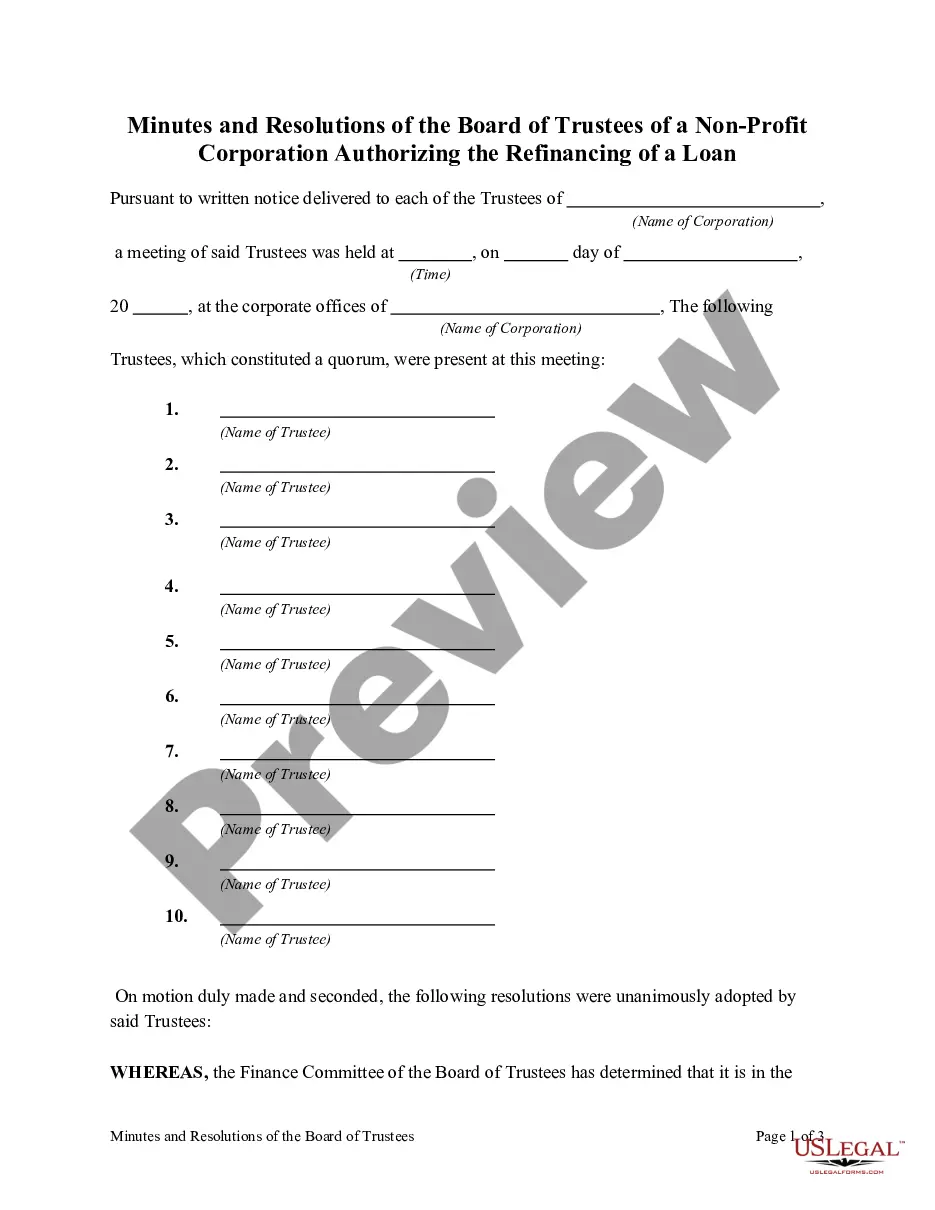
Get your form ready online
Our built-in tools help you complete, sign, share, and store your documents in one place.
Make edits, fill in missing information, and update formatting in US Legal Forms—just like you would in MS Word.
Download a copy, print it, send it by email, or mail it via USPS—whatever works best for your next step.
Sign and collect signatures with our SignNow integration. Send to multiple recipients, set reminders, and more. Go Premium to unlock E-Sign.
If this form requires notarization, complete it online through a secure video call—no need to meet a notary in person or wait for an appointment.
We protect your documents and personal data by following strict security and privacy standards.

Make edits, fill in missing information, and update formatting in US Legal Forms—just like you would in MS Word.

Download a copy, print it, send it by email, or mail it via USPS—whatever works best for your next step.

Sign and collect signatures with our SignNow integration. Send to multiple recipients, set reminders, and more. Go Premium to unlock E-Sign.

If this form requires notarization, complete it online through a secure video call—no need to meet a notary in person or wait for an appointment.

We protect your documents and personal data by following strict security and privacy standards.
Looking for another form?









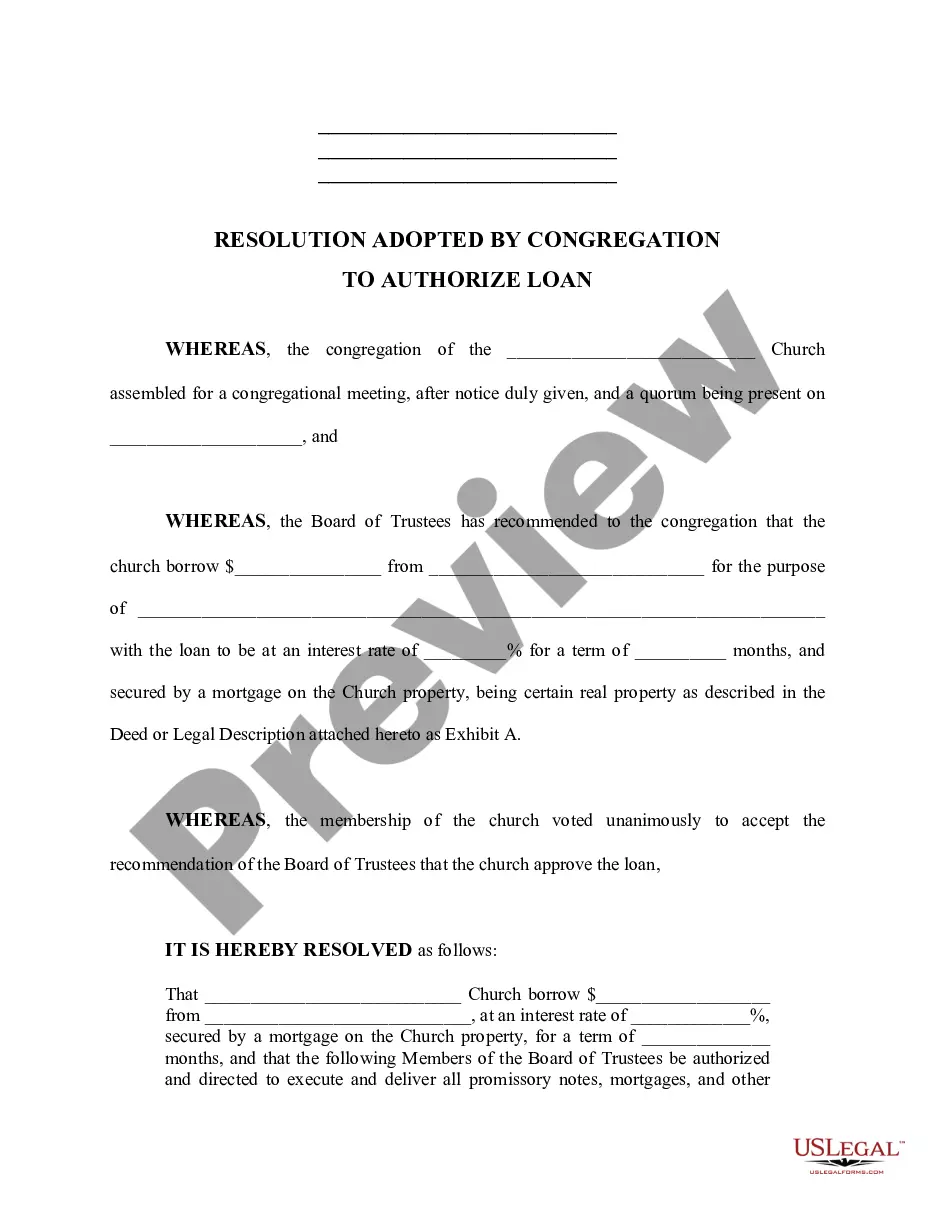
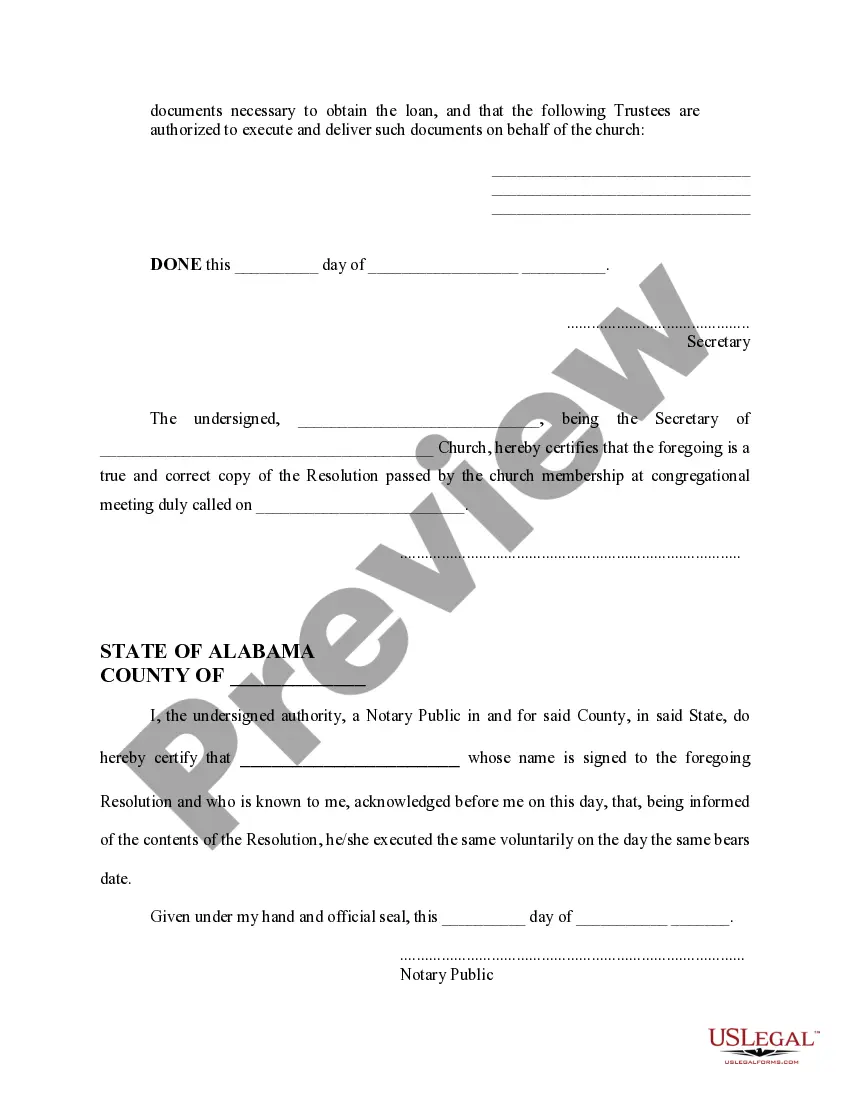
How to fill out Alabama Church Resolution To Authorize Loan?
- Begin by logging into your existing US Legal Forms account. Ensure your subscription is active; if not, renew it based on your payment plan.
- Check the preview and description of the funeral full form. Confirm it aligns with your needs and meets local jurisdiction requirements.
- If you need alternative forms, utilize the search functionality to find the appropriate documents tailored to your situation.
- Select the desired form and click the 'Buy Now' button. Choose the subscription plan that best suits your requirements.
- Complete your purchase by entering your payment details or utilizing your PayPal account for a hassle-free transaction.
- Download the form to your device for completion. You can also access it later through the 'My Forms' section in your profile.
With US Legal Forms, you gain access to an expansive library of over 85,000 forms, ensuring you find the precise documents needed for any situation.
Don’t navigate legal complexities alone! Start using US Legal Forms today to simplify your document needs.
Form popularity
FAQ
When no one can afford a funeral full, local governments often step in to arrange for the disposition of the body. This process may involve a public burial or cremation at taxpayer expense. Moreover, various organizations might offer assistance in such circumstances. Exploring these options earlier can provide peace of mind and support during a challenging time.
Typically, the immediate family of the deceased is responsible for covering the funeral full costs. In many cases, this includes spouses, children, or parents. If there is a pre-existing arrangement or insurance policy, those funds may also contribute significantly to the expenses. It’s important to be proactive about understanding these financial obligations to ensure a respectful farewell.
While $10,000 may be sufficient for a simple funeral, costs can vary significantly depending on location, services selected, and other factors. Families should account for caskets, service fees, and other expenses when planning a funeral full. It's advisable to create a detailed budget to ensure all necessary costs are covered.
According to the FTC Funeral Rule, funeral goods refer to items intended for burial, cremation, or memorialization of the deceased. These include caskets, urns, and burial vaults. Understanding these goods can help families make informed decisions during the funeral full process.
The full order of service for a funeral generally includes an opening welcome, readings, music, eulogies, and reflections about the deceased. It might conclude with a closing prayer or a final farewell. Each service can be personalized to reflect the wishes of the family and the life of the loved one.
Funerals typically include objects such as caskets, urns, and floral arrangements. Some services may also feature tribute displays, personal mementos, and photographs to honor the deceased. Additionally, religious symbols or items relevant to the deceased's life may be present.
To fill out a funeral card correctly, start by writing the name of the deceased clearly at the top. Next, include the date and time of the service, followed by the location. You may also want to add a personal message or a favorite quote to express your condolences.
A traditional full-service burial typically includes a formal ceremony, often following a full funeral service, at the cemetery site. This service includes the burial of the deceased in a grave, often with a casket, and may involve several rituals such as prayers or readings. Families choose this option for its historical significance and the sense of closure it provides. This option can be arranged easily with platforms like USLegalForms for necessary paperwork.
Many people lean toward ‘Amazing Grace’ as the most popular song for funerals due to its comforting message and melody. However, individual preferences can vary considerably, as some may choose songs that had special meaning to the deceased. Regardless, it’s essential to select music that resonates with the feelings of loss and celebration of life. A thoughtful choice can enhance the overall experience during a funeral full service.
The main difference between a memorial Mass and a funeral Mass lies in their timing and focus. A funeral Mass typically takes place shortly after death and includes the body of the deceased, while a memorial Mass is celebrated later, often without the body present. Both services honor the deceased’s life and allow for community support. However, a funeral full service tends to include more liturgical elements focused on the grieving process.