Notice Lessor Law With More
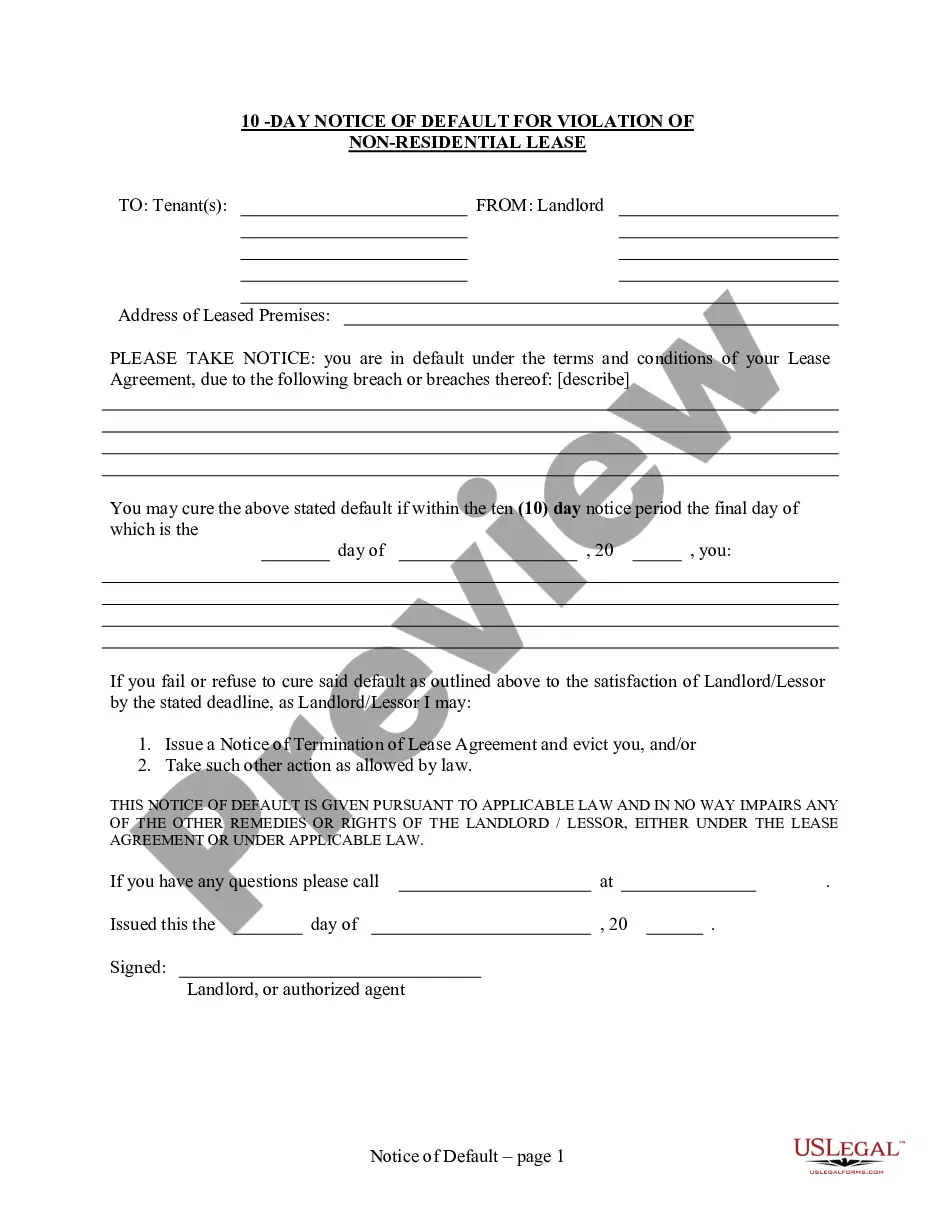
Description

Get your form ready online
Our built-in tools help you complete, sign, share, and store your documents in one place.
Make edits, fill in missing information, and update formatting in US Legal Forms—just like you would in MS Word.
Download a copy, print it, send it by email, or mail it via USPS—whatever works best for your next step.
Sign and collect signatures with our SignNow integration. Send to multiple recipients, set reminders, and more. Go Premium to unlock E-Sign.
If this form requires notarization, complete it online through a secure video call—no need to meet a notary in person or wait for an appointment.
We protect your documents and personal data by following strict security and privacy standards.

Make edits, fill in missing information, and update formatting in US Legal Forms—just like you would in MS Word.

Download a copy, print it, send it by email, or mail it via USPS—whatever works best for your next step.

Sign and collect signatures with our SignNow integration. Send to multiple recipients, set reminders, and more. Go Premium to unlock E-Sign.

If this form requires notarization, complete it online through a secure video call—no need to meet a notary in person or wait for an appointment.

We protect your documents and personal data by following strict security and privacy standards.
Looking for another form?








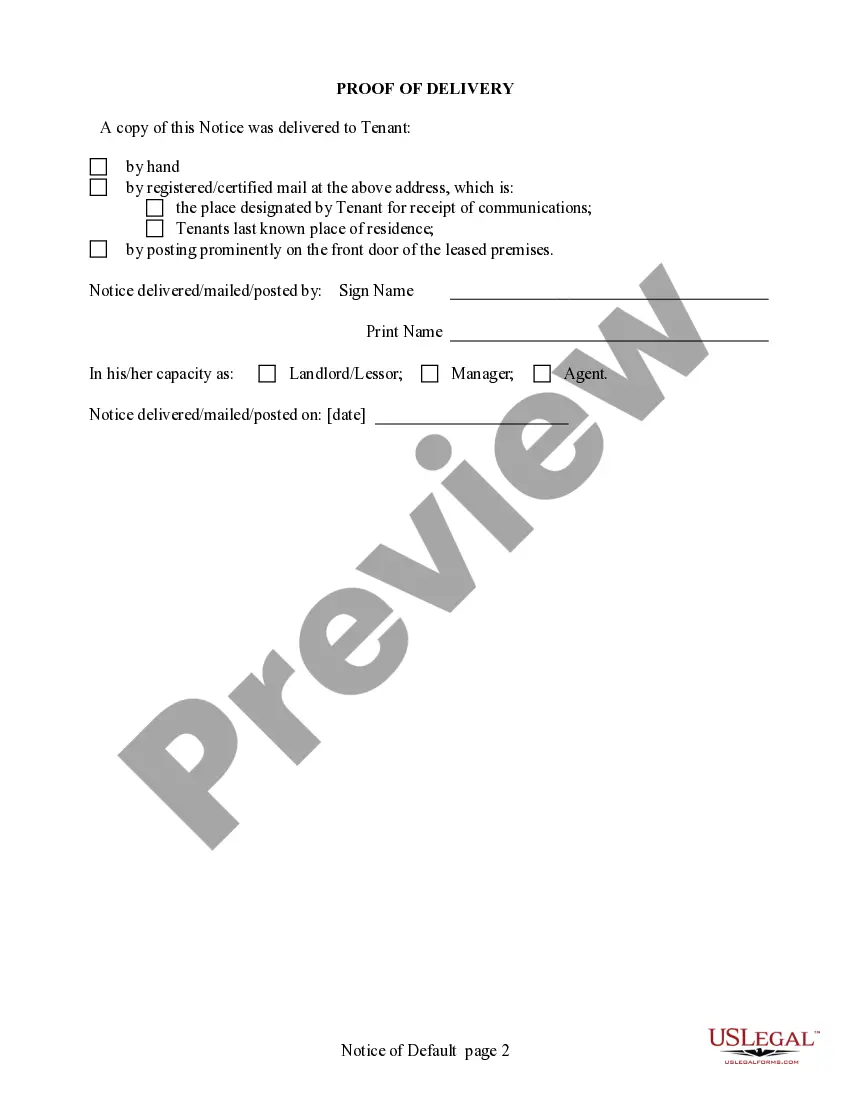
How to fill out Alaska Notice Of Default For Violation Of Lease Or Rental Agreement - Nonresidential - 10 Days Notice?
- Log in to your US Legal Forms account if you've used our service before, or create an account if you're a new user.
- Review the Preview mode and form description to ensure you select a document that aligns with your jurisdiction requirements.
- If necessary, utilize the Search tab to find alternative templates that better fit your needs.
- Choose your document by clicking on the Buy Now button and selecting your preferred subscription plan.
- Complete your purchase by entering your payment information via credit card or PayPal.
- Download the form and save it directly to your device, enabling easy access anytime from your My Forms menu.
By following these steps, you empower yourself to create precise legal documents without hassle. US Legal Forms not only offers a robust collection of templates but also provides users access to experts for assistance.
Get started today and simplify your legal documentation process with US Legal Forms!
Form popularity
FAQ
Evicting a tenant in Massachusetts can be challenging due to legal protections for tenants. The process requires strict adherence to state laws, and any misstep can prolong the eviction. Landlords must prepare for potential challenges, including hearings if the tenant contests the case. To simplify your understanding, consider exploring notice lessor law with more for helpful resources.
The eviction process in Massachusetts can take several weeks to a few months, depending on various factors. After filing the eviction, the court schedules a hearing, which can delay the process. If the tenant contests the eviction, it may extend even longer. Familiarizing yourself with notice lessor law with more can help you navigate this complex procedure.
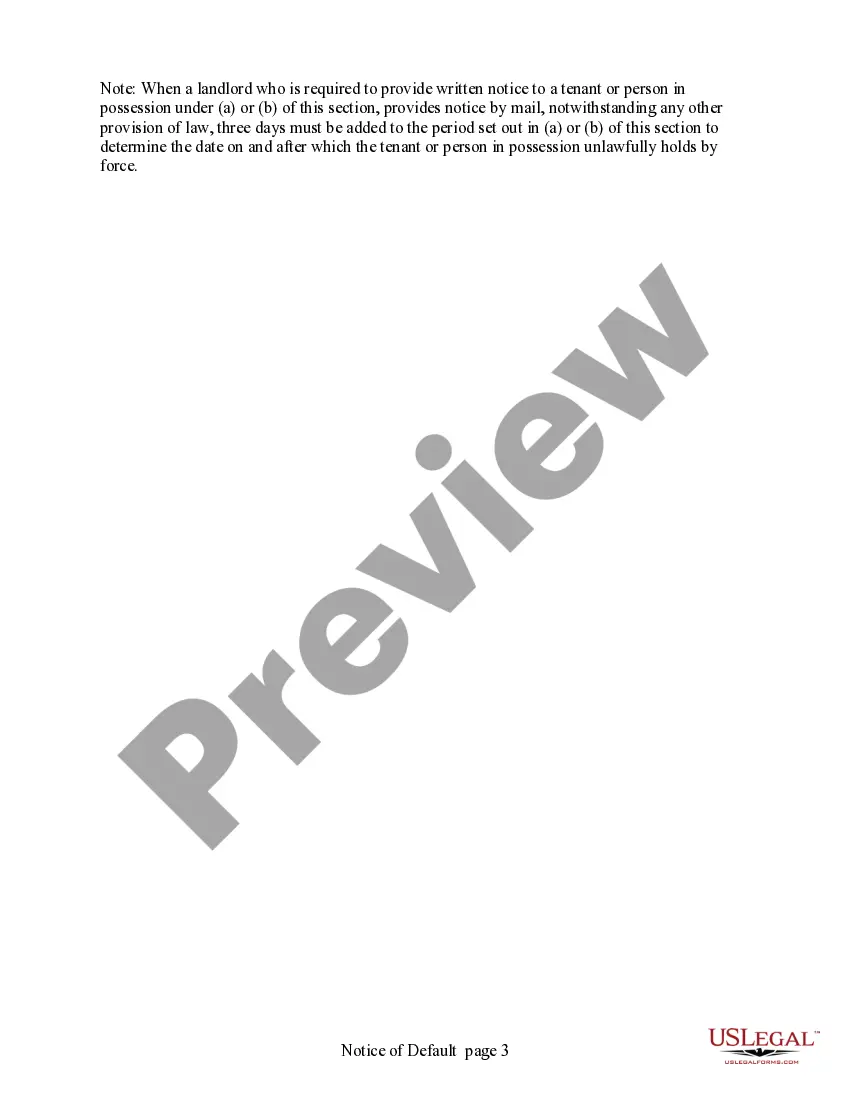
In Massachusetts, the minimum notice a landlord can provide before raising rent or terminating a lease varies based on the lease duration. For a month-to-month lease, a landlord must give at least 30 days' notice. For annual leases, notice requirements differ and may depend on your lease terms. It’s wise to understand the notice lessor law with more to ensure you are adequately informed.
The 5 or more rule in Boston pertains to how many unrelated individuals can live together in a single dwelling. If five or more people are living in a unit, the property may be classified as a lodging house, subject to different regulations. Understanding this rule is essential to ensure compliance with local housing laws. When you need help with such regulations, check out notice lessor law with more.
Being on more than one lease is generally not illegal, but it can have consequences. You should carefully review the terms of each lease. Many landlords include clauses that may restrict subleasing or additional tenants. Consider consulting the notice lessor law with more to navigate your situation effectively.
To politely terminate a lease, approach your landlord with respect and clarity. Start by discussing your reasons, aligning with the notice lessor law with more if applicable. Providing a written notice reinforces your communication and shows professionalism. Utilizing US Legal Forms can help you draft a courteous notice that conveys your intention clearly while maintaining a positive relationship with your landlord.
Writing a 30-day notice letter to your landlord is straightforward. Begin by including your address, the date, and your landlord’s contact information. Clearly state your intention to vacate and cite the applicable notice lessor law with more. Using templates from US Legal Forms can simplify this task, ensuring you include all necessary information for a smooth transition.
Yes, you can terminate your lease early in New Jersey, but specific conditions apply based on the notice lessor law with more. Common reasons include military deployment, domestic violence, or the unit being uninhabitable. Before acting on this, consult your lease agreement and understand your rights as a tenant. US Legal Forms can assist you in navigating the process properly to ensure your rights are protected.
The best excuse to break a lease generally relates to valid circumstances like unpaid property repairs or unsafe living conditions. According to the notice lessor law with more, tenants can often assert their rights when landlords fail to maintain a safe environment. It is critical to document your concerns and communicate them effectively. If you need assistance, US Legal Forms provides templates to help you articulate your situation professionally.
The easiest way to exit a lease often involves reviewing your lease agreement first. Many agreements outline specific terms for early termination under the notice lessor law with more. If you have a legitimate reason, such as job relocation or financial hardship, it may be easier to negotiate an exit with your landlord. Using services like US Legal Forms can help you draft the necessary documents to communicate clearly with your landlord.