Notice Lessor Law For Lease
Description
Get your form ready online
Our built-in tools help you complete, sign, share, and store your documents in one place.
Make edits, fill in missing information, and update formatting in US Legal Forms—just like you would in MS Word.
Download a copy, print it, send it by email, or mail it via USPS—whatever works best for your next step.
Sign and collect signatures with our SignNow integration. Send to multiple recipients, set reminders, and more. Go Premium to unlock E-Sign.
If this form requires notarization, complete it online through a secure video call—no need to meet a notary in person or wait for an appointment.
We protect your documents and personal data by following strict security and privacy standards.

Make edits, fill in missing information, and update formatting in US Legal Forms—just like you would in MS Word.

Download a copy, print it, send it by email, or mail it via USPS—whatever works best for your next step.

Sign and collect signatures with our SignNow integration. Send to multiple recipients, set reminders, and more. Go Premium to unlock E-Sign.

If this form requires notarization, complete it online through a secure video call—no need to meet a notary in person or wait for an appointment.

We protect your documents and personal data by following strict security and privacy standards.
Looking for another form?




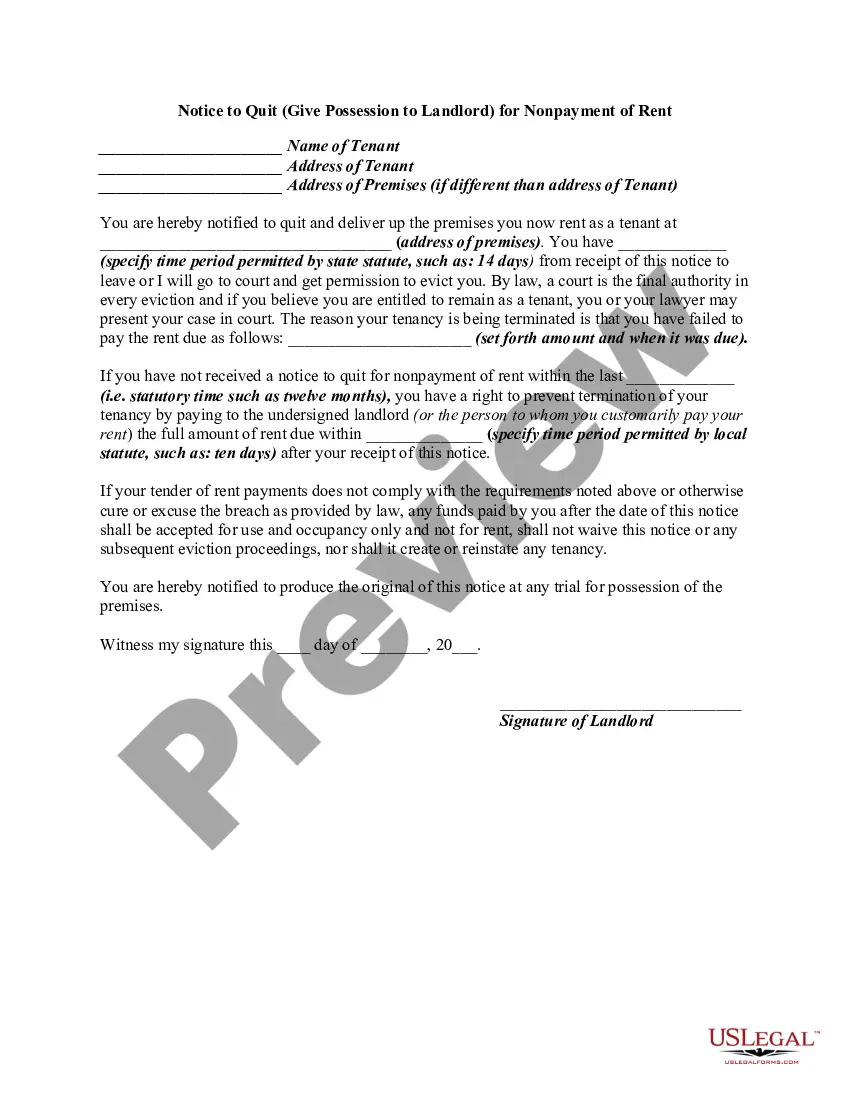



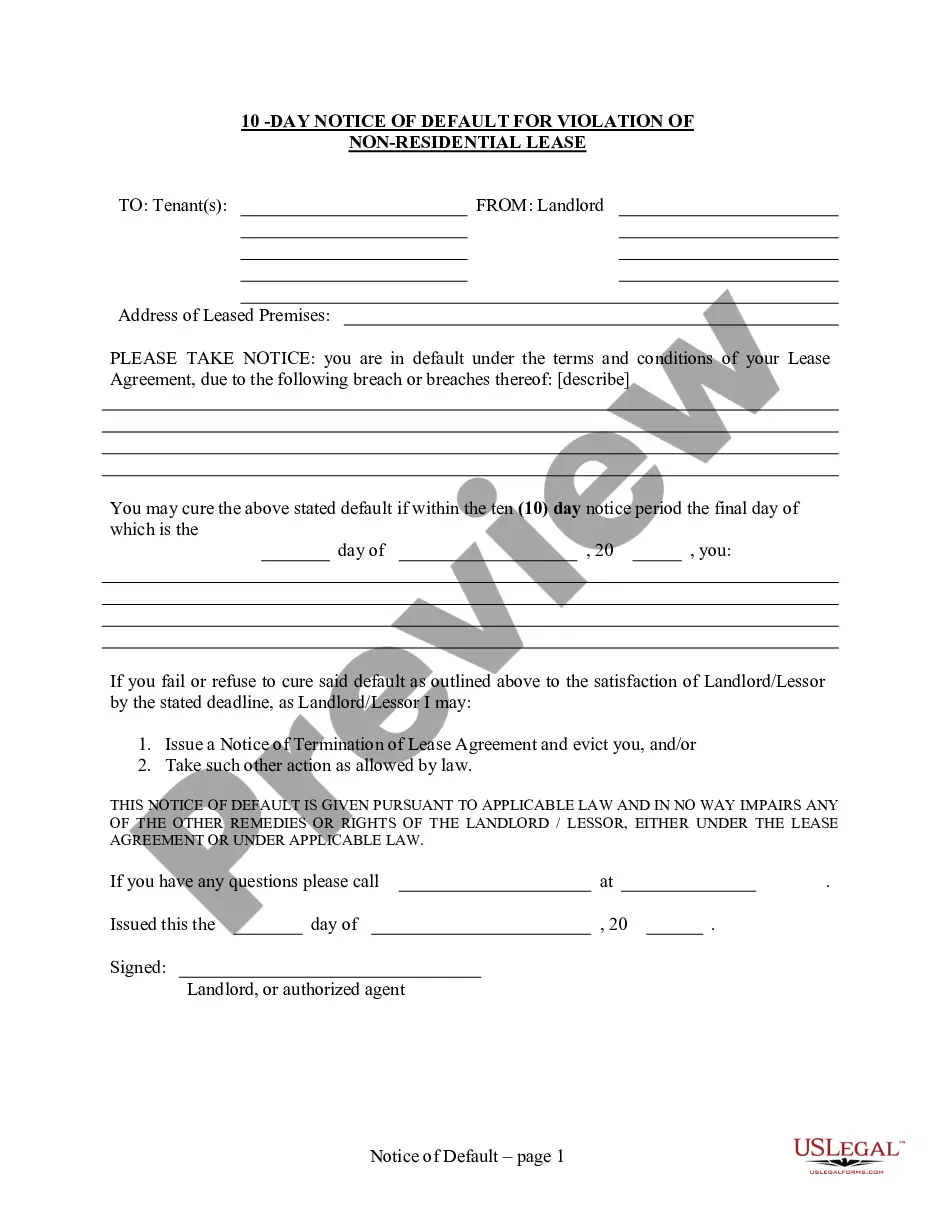
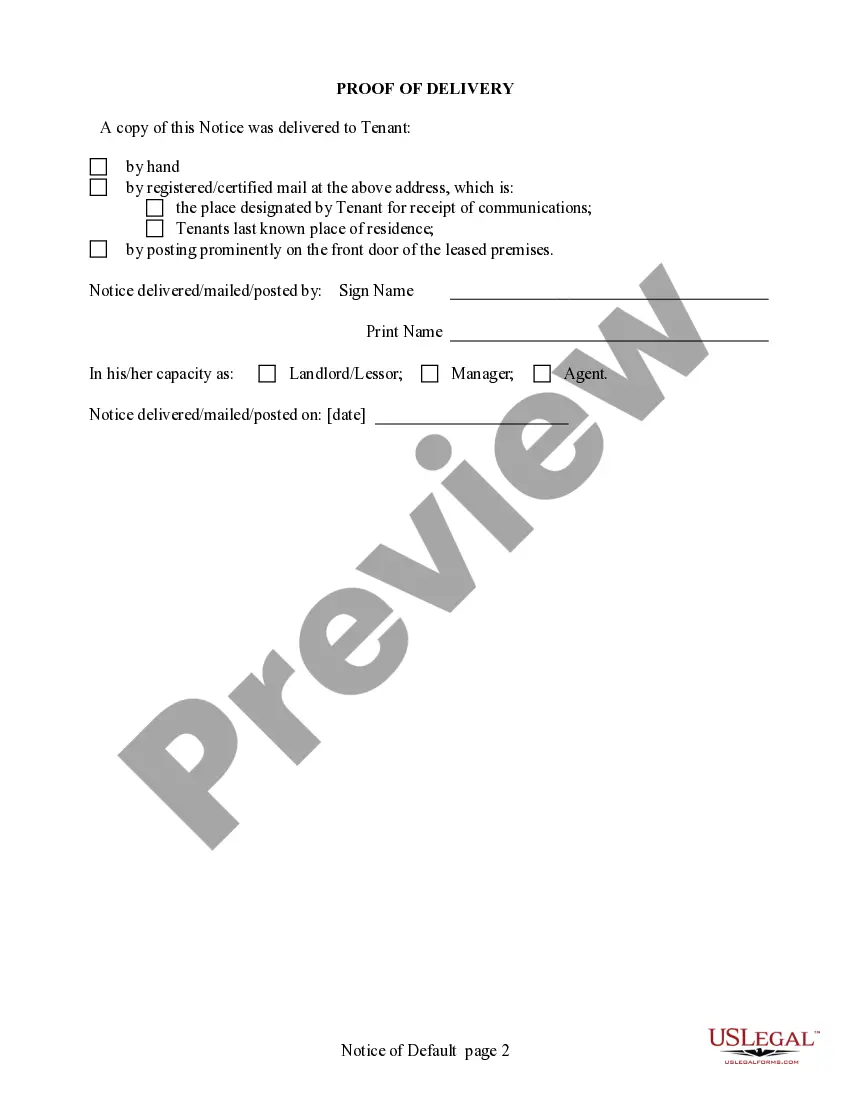
How to fill out Alaska Notice Of Default For Violation Of Lease Or Rental Agreement - Nonresidential - 10 Days Notice?
- If you're a returning user, log in to your account and download the required form template by clicking the Download button. Double-check your subscription status; if it's expired, renew it based on your chosen plan.
- For first-time users, begin by reviewing the Preview mode and form description to ensure you select the correct document tailored to your local jurisdiction's needs.
- Should you need a different template, utilize the Search tab above to locate the right form. Make sure that it meets your specific requirements before proceeding.
- Once you find the correct document, click on the Buy Now button to select your preferred subscription plan. You will need to create an account to navigate the library's extensive resources.
- Complete your transaction by entering your credit card details or using your PayPal account for the subscription purchase.
- After your purchase is confirmed, download the form and save it to your device. You can access it anytime later from the My Forms section.
Using US Legal Forms empowers users to swiftly and accurately execute legal documents. With a collection exceeding 85,000 editable forms, this platform ensures that all documents adhere to legal standards and user specifications.
In conclusion, utilizing US Legal Forms provides individuals and attorneys with essential resources for creating legitimate and precise documents. Explore our services today and ensure your legal needs are met efficiently!
Form popularity
FAQ
When writing a notice to vacate a letter to your landlord, ensure you include essential details like your address, the date you intend to leave, and a statement expressing your decision to vacate. Maintain a respectful tone and provide reasons if comfortable, while referencing the Notice lessor law for lease, which outlines your process and rights as a tenant. This way, you adhere to legal requirements while fostering a positive relationship.
To write a notice from a tenant to a landlord, clearly articulate your message. Start with your name, address, and the date, followed by your landlord's information. Explain the purpose of your notice, whether it's to report a maintenance issue or to give notice to vacate, citing the Notice lessor law for lease to reinforce your rights and responsibilities.
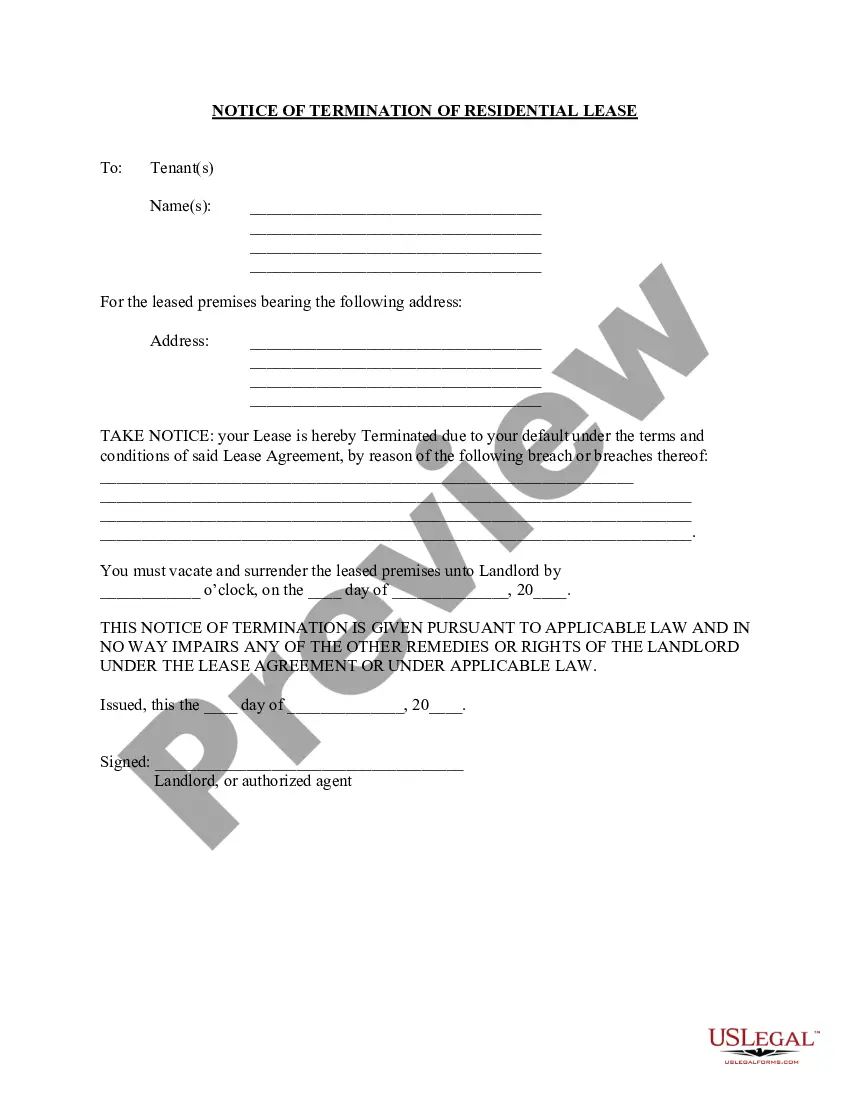
When you need to tell a tenant to move out, approach the conversation with empathy. Explain the reasons for your request clearly and kindly, providing ample time for the tenant to find a new place. Reference the Notice lessor law for lease to show that you are following the appropriate procedures, making for a smoother transition for both parties.
Writing a notice letter to your landlord involves sharing important information succinctly. Begin with your contact information, the date, and your landlord's contact information. Identify the purpose of your letter, mention any relevant details regarding the lease, and refer to the Notice lessor law for lease as a guide to ensure clarity and respect in your communication.
To write a notification letter to your landlord, start by clearly stating your intent. Include the date, your name, your address, and the landlord's address. Use a friendly yet professional tone and be specific about the issue you are addressing, referencing the Notice lessor law for lease to highlight your rights as a tenant.
No, in California, landlords cannot evict tenants without proper notice. The law requires a defined notice period, which varies based on the lease terms and circumstances. Familiarizing yourself with the notice lessor law for lease will protect your rights as a tenant. If you face an unapproved eviction, US Legal Forms can provide you with the necessary legal forms to respond appropriately.
In California, a 60-day notice is necessary only if you have lived in the property for more than a year. This extended period allows your landlord adequate time to find a new tenant. It's essential to understand the notice lessor law for lease to avoid any penalties or complications when leaving. US Legal Forms offers helpful templates for both 30-day and 60-day notices.
In California, tenants are typically required to give 30 days' notice before vacating a rental property. However, if you have lived in the unit for less than a year, a 30-day notice is standard. Familiarizing yourself with the notice lessor law for lease ensures you comply with state regulations. Utilizing platforms like US Legal Forms can help you draft the correct notice.
When you fail to give a 30-day notice to your landlord, you may face penalties. Your landlord could hold you responsible for rent due until the end of the notice period. Additionally, not following the notice lessor law for lease may impact your ability to receive your security deposit back. To navigate these challenges, consider using resources like US Legal Forms for clarity on your rights.
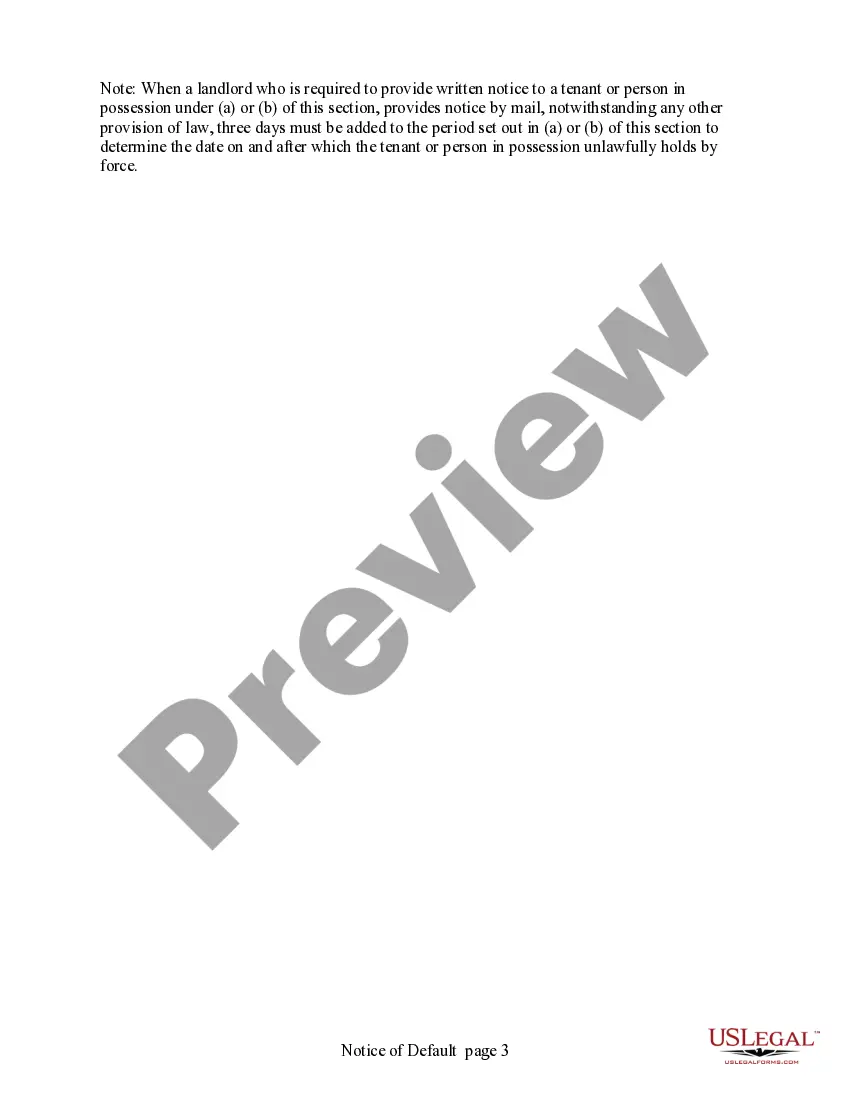
Writing a notice to a tenant involves a few straightforward steps. Start with the date and the tenant's information, followed by a clear statement of the purpose of the notice. It is essential to reference the applicable notice lessor law for lease to ensure compliance and clarity. Conclude with any necessary instructions or deadlines, and remember to keep a copy for your own records.