Florida Last Will and Testament for Married person with Minor Children
Understanding this form
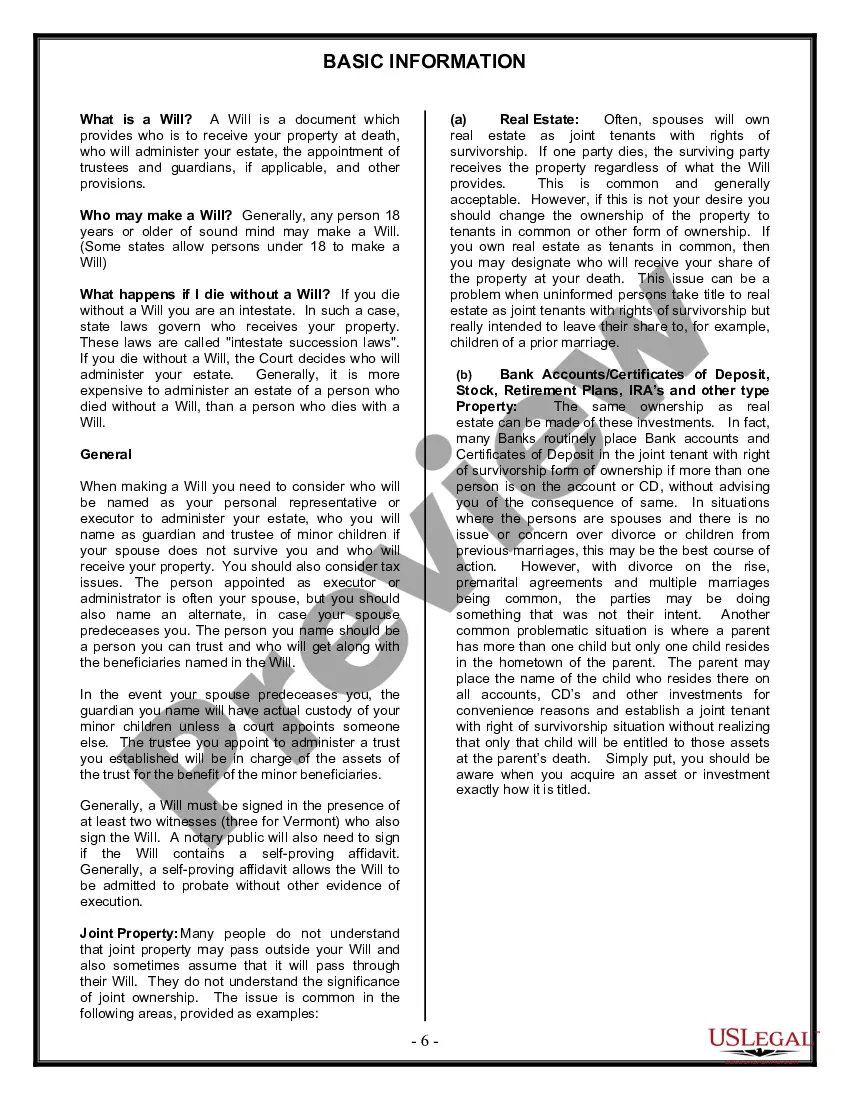
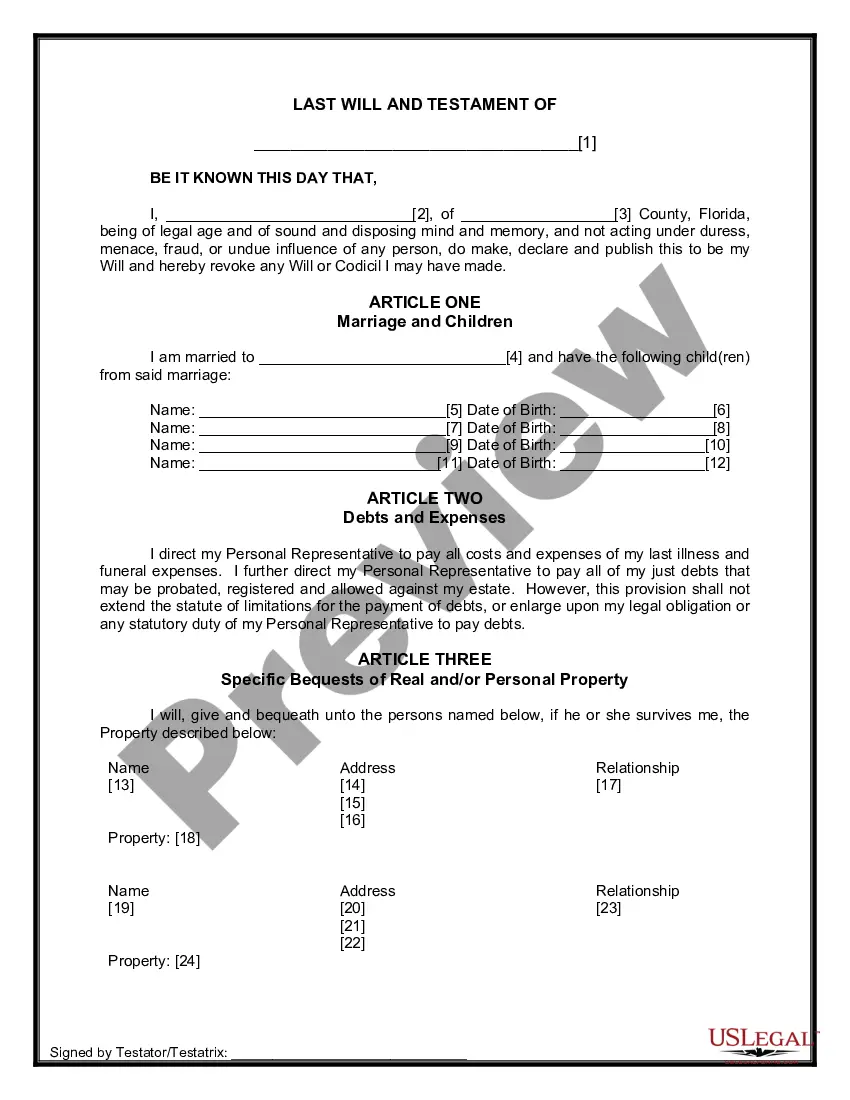
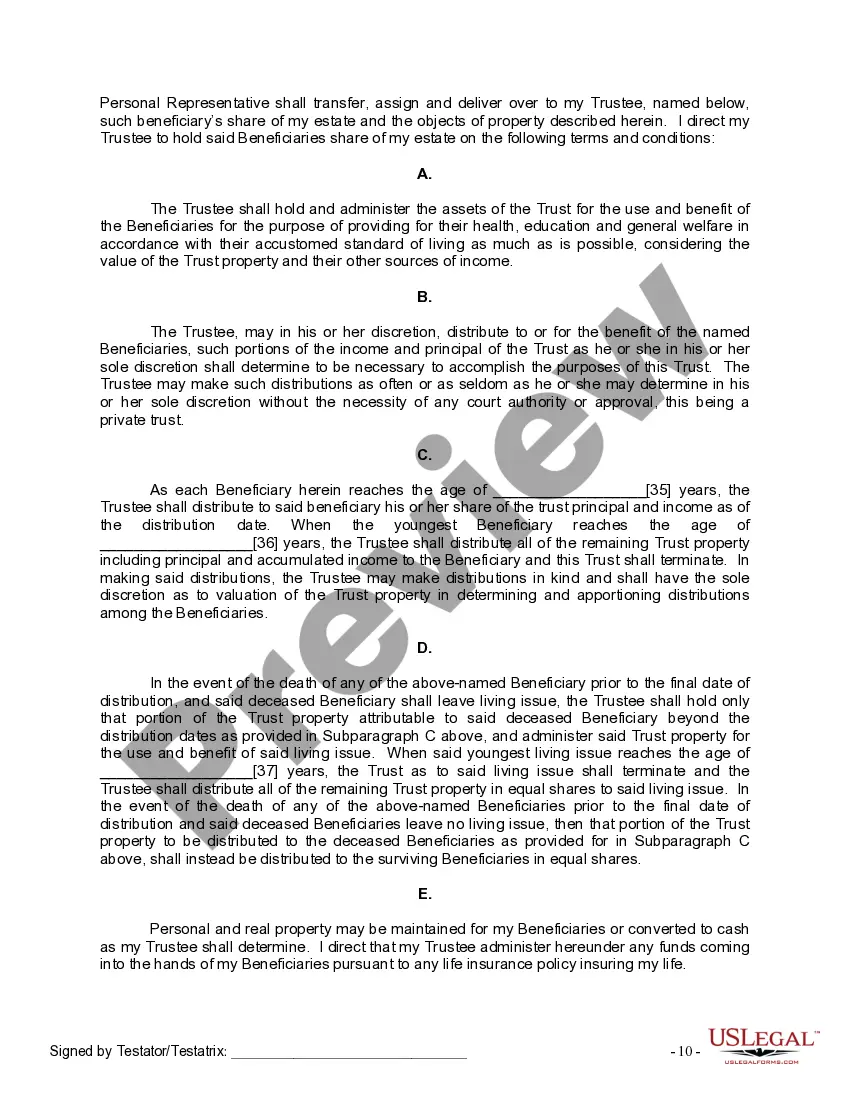
The Last Will and Testament for Married Person with Minor Children is a legal document that outlines your wishes regarding the distribution of your property and the care of your minor children upon your death. This type of will is specifically designed for individuals who are married and have children, providing clauses for appointing an executor, designating beneficiaries, and establishing a trust for minor children. It is distinct from other wills due to its emphasis on protecting the interests of your spouse and children.
What’s included in this form
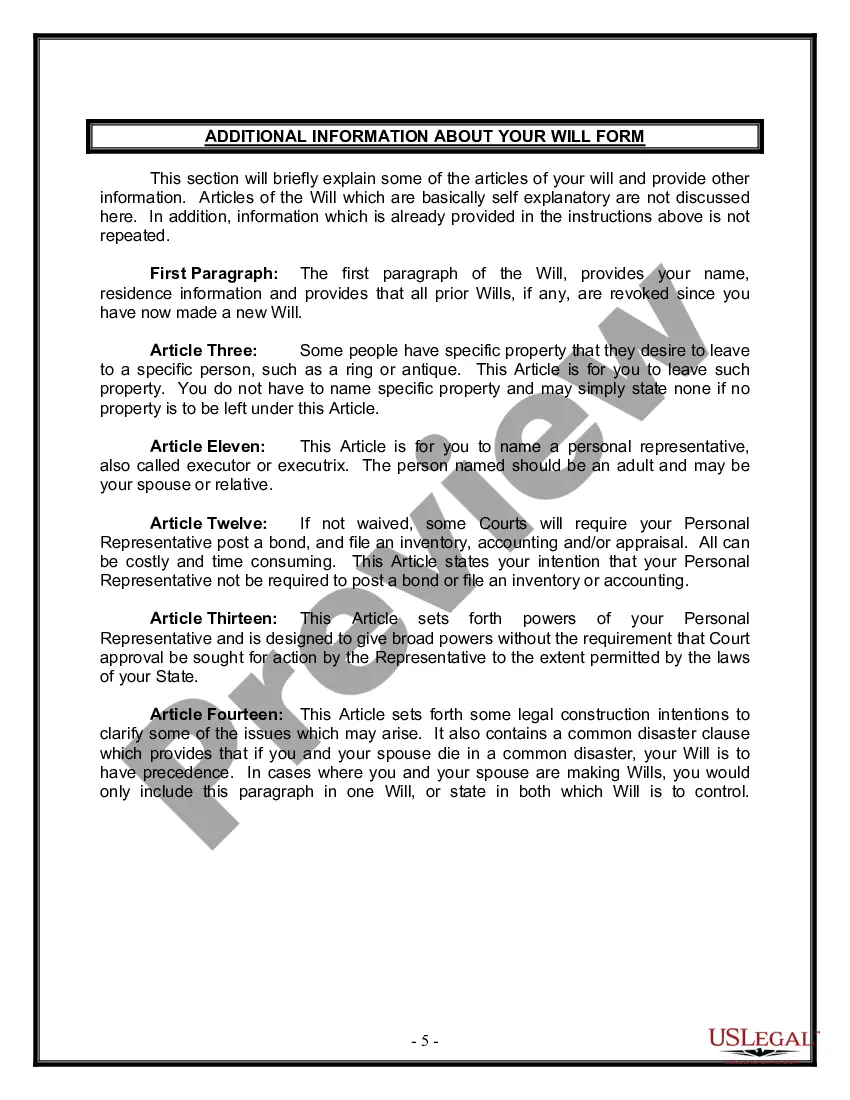
- Personal Representative: Appoint a trusted individual to handle your estate.
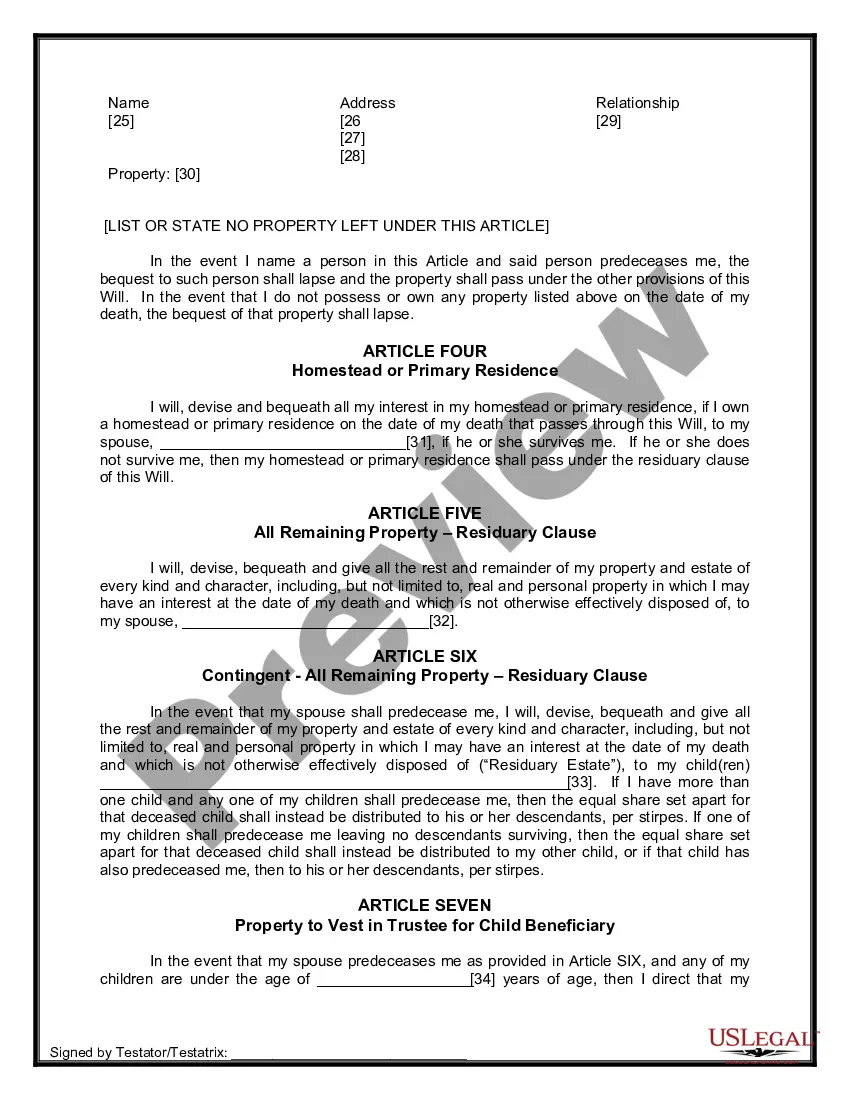
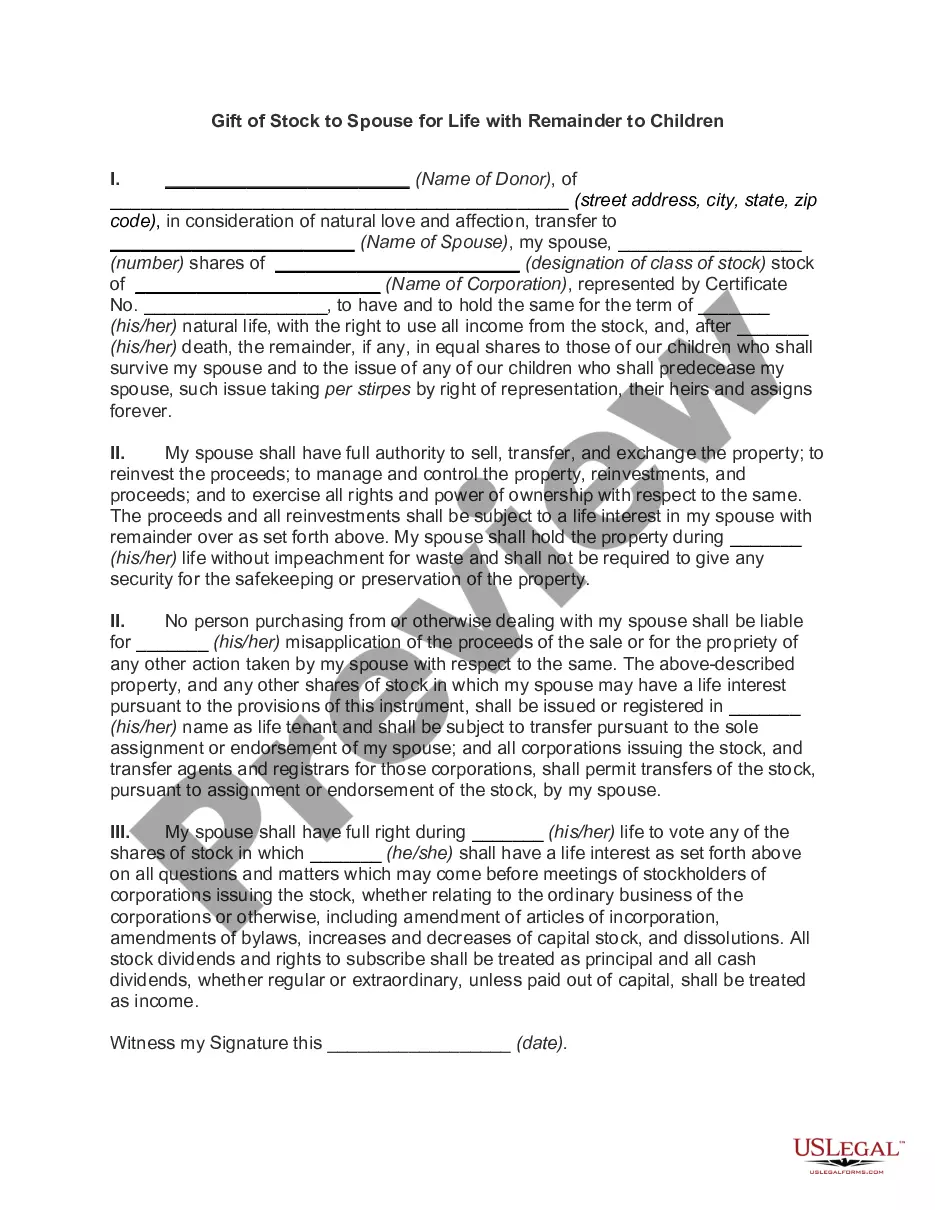
- Beneficiary Designations: Specify who will receive your property and assets.
- Trust Establishment: Set up a trust for minor children to manage their inheritance until they reach a certain age.
- Guardianship Assignment: Designate a guardian for your minor children in the event of your passing.
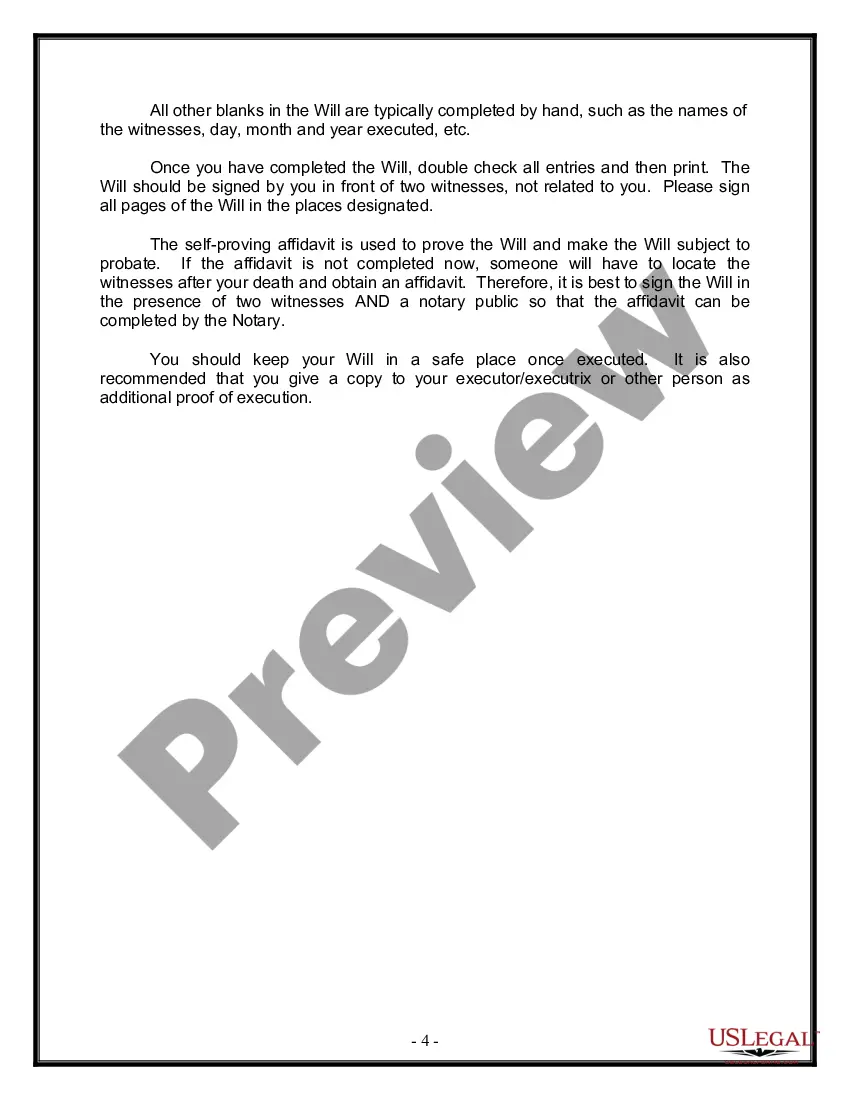
- Signatures and Witnesses: The will must be signed in front of two witnesses to be legally recognized.





When this form is needed
This form is beneficial when you want to ensure that your spouse and children are taken care of after your death. It is particularly important if you have specific wishes about property distribution, appointing guardians for your minor children, or creating a trust to manage their inheritance. Using this will can help prevent potential disputes among heirs and clarify your intentions, thereby providing peace of mind for you and your family.
Intended users of this form
- Individuals who are married and have minor children.
- Those looking to specify distribution of assets to avoid state intestacy laws.
- Parents who wish to appoint guardianship for their minor children.
- People who want to establish a trust to manage assets for their children's benefit until they reach adulthood.
Completing this form step by step
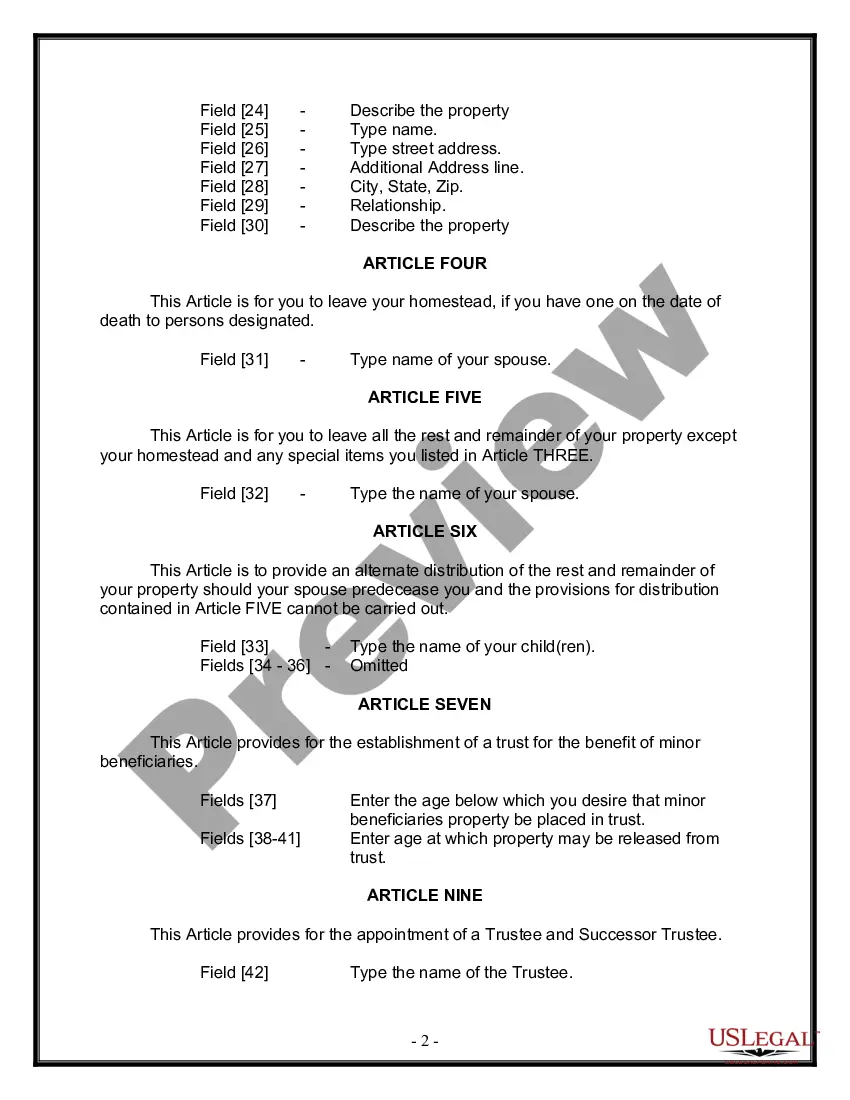
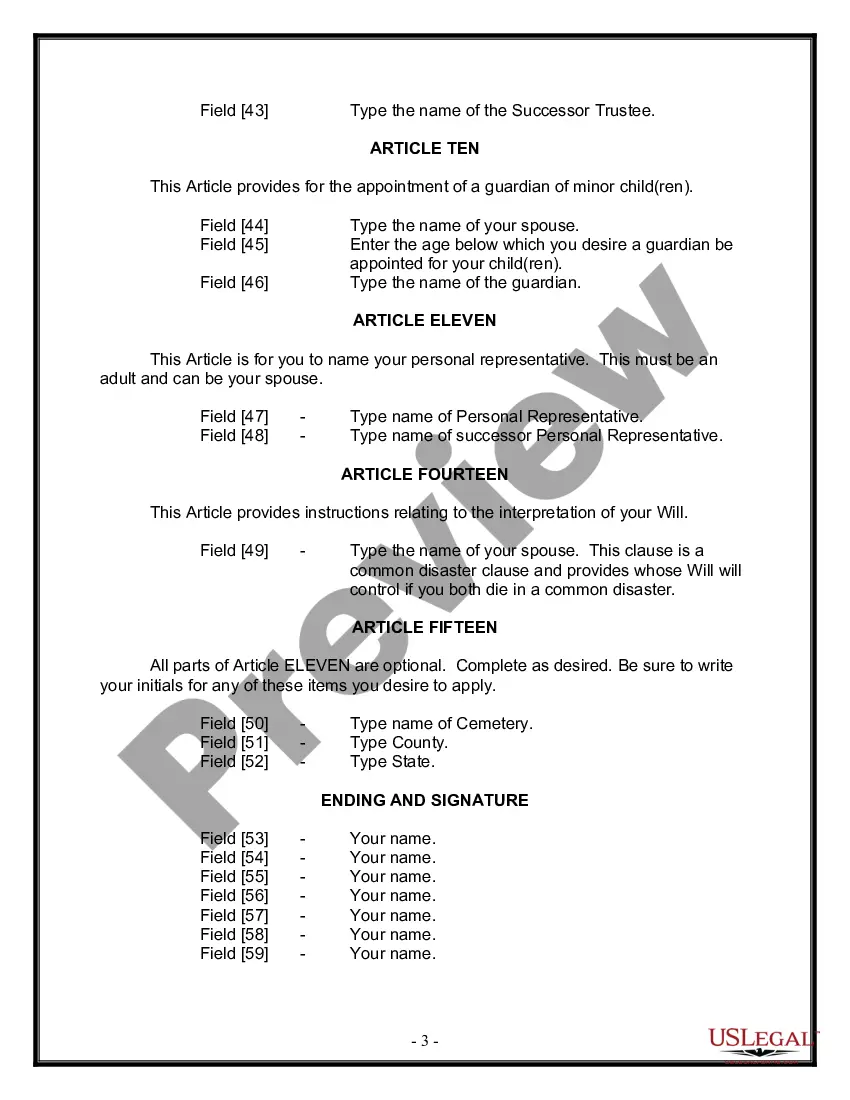
- Identify your name and county of residence at the beginning of the will.
- Appoint a personal representative who will manage your estate.
- Designate your spouse and list your children, including their names and dates of birth.
- Specify any particular property bequests by filling out the appropriate fields.
- Indicate guardianship choices for your minor children in case of your passing.
- Ensure the will is signed in front of two witnesses and follow any additional notarization requirements.
Does this form need to be notarized?
Yes, this form must be notarized to be legally valid. It is recommended to sign the will in the presence of two witnesses and a notary public to ensure the affidavit of self-proving is completed, which simplifies the probate process.
Get your form ready online
Our built-in tools help you complete, sign, share, and store your documents in one place.
Make edits, fill in missing information, and update formatting in US Legal Forms—just like you would in MS Word.
Download a copy, print it, send it by email, or mail it via USPS—whatever works best for your next step.
Sign and collect signatures with our SignNow integration. Send to multiple recipients, set reminders, and more. Go Premium to unlock E-Sign.
If this form requires notarization, complete it online through a secure video call—no need to meet a notary in person or wait for an appointment.
We protect your documents and personal data by following strict security and privacy standards.

Make edits, fill in missing information, and update formatting in US Legal Forms—just like you would in MS Word.

Download a copy, print it, send it by email, or mail it via USPS—whatever works best for your next step.

Sign and collect signatures with our SignNow integration. Send to multiple recipients, set reminders, and more. Go Premium to unlock E-Sign.

If this form requires notarization, complete it online through a secure video call—no need to meet a notary in person or wait for an appointment.

We protect your documents and personal data by following strict security and privacy standards.
Common mistakes to avoid
- Forgetting to name a personal representative or guardian for minor children.
- Not signing the will in front of the necessary witnesses, which can invalidate it.
- Leaving clauses vague, which can lead to disputes among beneficiaries.
- Neglecting to keep the will updated following major life events such as marriage or divorce.
- Assuming that all property will be distributed as intended without specifying it in the will.
Advantages of online completion
- Convenience: Complete the will digitally at your own pace.
- Editability: Make changes easily before finalizing the document.
- Reliability: Utilize a form drafted by licensed attorneys to ensure legal compliance.
- Accessibility: Download and print your will anytime you need it.
Quick recap
- This will is vital for married individuals with minor children to outline their wishes regarding asset distribution.
- Ensure that all provisions, including trusts and guardianship appointments, are clearly stated.
- Two witnesses and a notary are required for the will to be valid.
- Review and update the will regularly to reflect changes in circumstances.
Looking for another form?
Form popularity
FAQ
Yes, a child can inherit their parent's house in Florida if the parent passes away. If the parent has a Florida Last Will and Testament for a married person with minor children, the will determines how the house and other assets are distributed. Engaging with a legal professional can help navigate this process and protect the child's rights in inheriting the family home.
Legally, a minor cannot directly inherit a mortgage obligation in Florida. However, if a married person with minor children passes with a Florida Last Will and Testament, the estate may transfer the mortgage to the child's guardian. It is essential to work with professionals to address such complexities, safeguarding the minor's interests and ensuring proper management of inherited assets.
When a parent dies in Florida, the child is entitled to inherit a portion of the parent's estate, under the laws of intestacy if there is no will. If the parent had a Florida Last Will and Testament for a married person with minor children, the will would dictate the distribution of assets. Generally, children can have a claim on the family's property, ensuring their financial security after the parent's passing.
In Florida, a minor cannot directly claim homestead rights. However, if a married person with minor children passes away, their Florida Last Will and Testament can specify that the homestead passes to the children. This provision can provide security and stability for the family's living arrangements. It is advisable to consult an attorney to ensure the will's execution aligns with state laws.
In Florida, you can limit or exclude a minor child from your will, but you cannot completely disinherit them in certain circumstances. Courts generally protect the rights of minor children, ensuring they have some inheritance rights. Therefore, a carefully crafted Florida Last Will and Testament for a married person with minor children is vital to express wishes while complying with legal standards.
Marriage does not technically override a will in Florida, but it can revoke it under certain conditions. If a person creates a will before marriage and does not update it afterward, the will may no longer accurately reflect their wishes. Thus, it's important for a married person with minor children to draft a new Florida Last Will and Testament to ensure their intentions are clear and legally binding.
Yes, marriage can have a significant impact on a will in Florida. When an individual gets married, their prior will is considered revoked unless the will explicitly states otherwise. Creating a new Florida Last Will and Testament for a married person with minor children is essential to ensure that the new spouse and any children are appropriately included in the estate plan.
In Florida, the length of marriage does not necessarily determine rights to inherit half of everything. The law provides that all marital assets are subject to equitable distribution, which includes assets acquired during the marriage. A Florida Last Will and Testament for a married person with minor children can help clarify asset division and ensure that both spouses receive fair treatment.
A will is crucial for a married couple with a child to ensure that assets are allocated according to their wishes. A properly drafted Florida Last Will and Testament for a married person with minor children will define guardianship for children and clarify asset distribution, protecting their family's interests. This legal document helps prevent disputes and provides clear instructions for the future.
In Florida, a surviving spouse does not automatically inherit everything, but they do receive significant benefits under state law. If there are no surviving children, the spouse inherits the entire estate. However, if there are minor children involved, the distribution may vary, particularly when considering a Florida Last Will and Testament for a married person with minor children.