Florida Landlord Tenant Closing Statement to Reconcile Security Deposit
Overview of this form
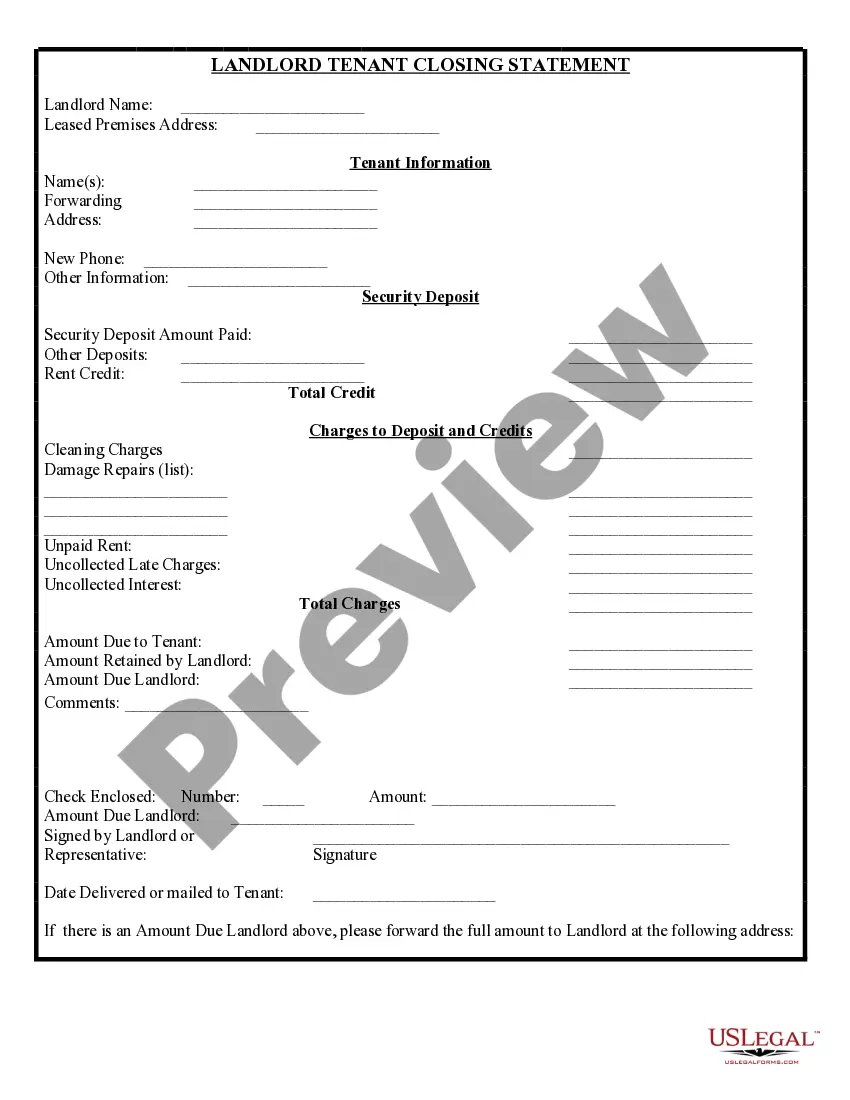
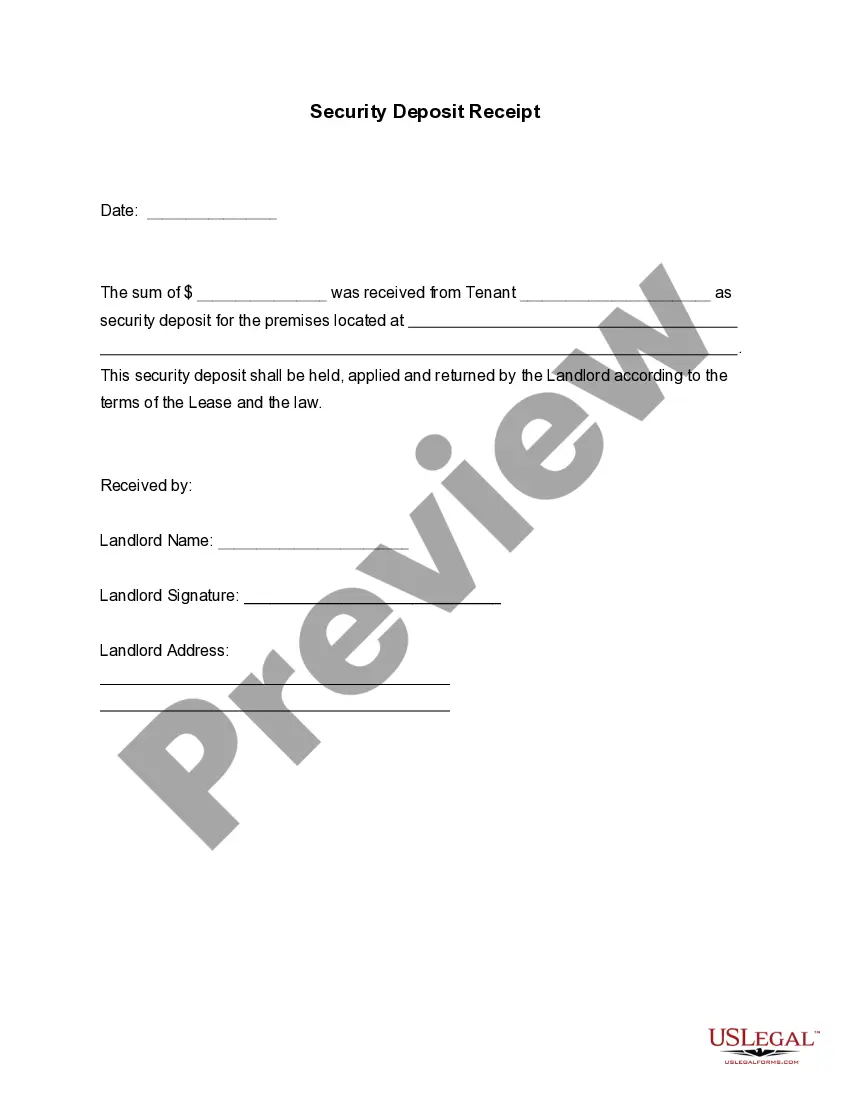
The Landlord Tenant Closing Statement to Reconcile Security Deposit is a legal document used by landlords to detail the security deposits and credits held, along with any deductions made for damages beyond normal wear and tear. This form serves to clarify the financial obligations between landlords and tenants, ensuring transparency about the handling of the tenant's security deposit. Unlike rental agreements or lease forms, this closing statement specifically focuses on the reconciliation of security deposits at the end of a tenancy.
Form components explained
- Identification of parties involved: landord and tenant details.
- Record of deposits: documentation of security deposit amounts received.
- Credits applied: listing any adjustments or credits given to the tenant.
- Deductions: detailed explanation of any amounts deducted for damages.
- Final balance: total sum due to the tenant after reconciling credits and deductions.
- Signatures: acknowledgment and agreement from both parties.
When to use this document
This form is typically used at the conclusion of a lease agreement when a tenant moves out of a rental property. It is necessary to document the final status of the security deposit, ensuring that both parties understand any deductions made for repairs or other expenses. Use this form to provide clarity and legal protection when returning the security deposit, helping to prevent disputes over any charges.
Who can use this document
- Landlords seeking to reconcile security deposits with departing tenants.
- Property managers who oversee rental properties and handle security deposits.
- Tenants who want a clear record of the security deposit reconciliation process.
- Legal representatives advising landlords or tenants in rental disputes.
How to complete this form
- Identify the parties involved by entering the landlord's and tenant's names and addresses.
- Specify the amount of the security deposit initially paid by the tenant.
- List any credits applied to the tenant's account, such as refund for overpayment.
- Detail any deductions taken from the security deposit, including repairs and damages.
- Calculate the final balance due to the tenant after reconciling all amounts.
- Ensure both parties sign the document to acknowledge agreement with the reconciliation.
Notarization guidance
Notarization is generally not required for this form. However, certain states or situations might demand it. You can complete notarization online through US Legal Forms, powered by Notarize, using a verified video call available anytime.
Get your form ready online
Our built-in tools help you complete, sign, share, and store your documents in one place.
Make edits, fill in missing information, and update formatting in US Legal Forms—just like you would in MS Word.
Download a copy, print it, send it by email, or mail it via USPS—whatever works best for your next step.
Sign and collect signatures with our SignNow integration. Send to multiple recipients, set reminders, and more. Go Premium to unlock E-Sign.
If this form requires notarization, complete it online through a secure video call—no need to meet a notary in person or wait for an appointment.
We protect your documents and personal data by following strict security and privacy standards.

Make edits, fill in missing information, and update formatting in US Legal Forms—just like you would in MS Word.

Download a copy, print it, send it by email, or mail it via USPS—whatever works best for your next step.

Sign and collect signatures with our SignNow integration. Send to multiple recipients, set reminders, and more. Go Premium to unlock E-Sign.

If this form requires notarization, complete it online through a secure video call—no need to meet a notary in person or wait for an appointment.

We protect your documents and personal data by following strict security and privacy standards.
Common mistakes
- Failing to include all necessary deductions, which can lead to disputes.
- Not obtaining signatures from both parties, rendering the document unenforceable.
- Neglecting to comply with local laws regarding security deposit handling.
- Using incorrect or outdated form versions that do not reflect current regulations.
Benefits of using this form online
- Convenience of immediate access and download for quick use.
- Editability allows customization to meet specific situations and requirements.
- Reliability from forms drafted and reviewed by licensed attorneys.
- Instant updates reflecting changing laws and regulations in various states.
Legal use & context
- This form serves as a legally binding document once signed by both landlord and tenant.
- It provides a clear record for legal compliance regarding the return of security deposits.
- Helps prevent misunderstandings and potential litigation over security deposit discrepancies.
Quick recap
- The Landlord Tenant Closing Statement reconciles security deposit details at lease termination.
- Ensure compliance with state-specific laws regarding security deposit management.
- Both parties should thoroughly review and understand the deductions and credits before signing.
Looking for another form?
Form popularity
FAQ
A security deposit reconciliation involves reviewing and settling the deductions taken from your security deposit against the final condition of the rental property. The Florida Landlord Tenant Closing Statement to Reconcile Security Deposit serves as a crucial tool, allowing both parties to agree on any deductions and validate the return of the remaining deposit. This process aims to promote transparency and fairness in landlord-tenant relationships.
Under Florida law, landlords must return security deposits within 15 to 30 days after you vacate the property, depending on whether there are deductions. If deductions occur, the landlord must provide a detailed accounting of the charges in the Florida Landlord Tenant Closing Statement to Reconcile Security Deposit. Familiarizing yourself with these laws can help ensure a smoother refund process.
Disputing security deposit charges in Florida begins with reviewing the charges outlined in the Florida Landlord Tenant Closing Statement to Reconcile Security Deposit. You should gather supporting documents like your lease agreement and any proof of the property’s state upon move-out. Communicate your dispute to your landlord promptly, providing your evidence and justifications for your stance.
To get your security deposit back from your landlord in Florida, first ensure that you have fulfilled all lease obligations and returned the property in good condition. Send a formal request for the return of your deposit, referencing the Florida Landlord Tenant Closing Statement to Reconcile Security Deposit. If your landlord does not respond, you may consider pursuing legal action.
Filing a claim against your landlord for a security deposit requires gathering documentation, including the lease, payment receipts, and any communication regarding the deposit. You can initiate the process by completing necessary court forms and filing them in the appropriate jurisdiction. Additionally, using the Florida Landlord Tenant Closing Statement to Reconcile Security Deposit can strengthen your claim.
To dispute security deposit deductions in Florida, start by reviewing your lease agreement and the Florida Landlord Tenant Closing Statement to Reconcile Security Deposit. Collect evidence, such as photos and correspondence with your landlord, to support your case. You can send a written dispute to your landlord, outlining the reasons you believe the charges are unjust and request a reconsideration.
To dispute a security deposit deduction in Florida, begin by reviewing the landlord's notice and the Florida Landlord Tenant Closing Statement to Reconcile Security Deposit for accuracy. Next, you should write a formal dispute letter to your landlord within the 15-day period provided. Clearly state your reasons for disputing the deduction and include any supporting documentation. This process encourages open communication and can often lead to a fair resolution without the need for formal proceedings.
To return a security deposit to a tenant, begin by preparing a detailed Florida Landlord Tenant Closing Statement to Reconcile Security Deposit. This statement should clearly outline any deductions, if applicable, including reasons for those deductions. You can then send the payment and the statement via certified mail to ensure the tenant receives it. Keeping a record of this transaction is vital for both parties in case of any future disputes.
Florida landlords must return the security deposit or send a written notice of claim within 30 days after the tenant vacates the property. This timeframe allows landlords to assess any potential damages and prepare the Florida Landlord Tenant Closing Statement to Reconcile Security Deposit. It’s essential for landlords to be prompt and thorough in handling security deposits, as it builds trust with tenants and minimizes disputes. By adhering to these guidelines, landlords can maintain a positive relationship with their renters.
In Florida, a tenant has 15 days from the day they receive the landlord's notice detailing any deductions from the security deposit to dispute those charges. It is crucial for tenants to carefully review the Florida Landlord Tenant Closing Statement to Reconcile Security Deposit, as it outlines the reasons for any deductions. If you disagree with the deductions, you should formally respond within this timeframe to ensure your rights are protected. Keeping organized communication with your landlord can also help to resolve issues effectively.