Florida Letter from Tenant to Landlord containing Notice to landlord to cease retaliatory threats to evict or retaliatory eviction
Overview of this form
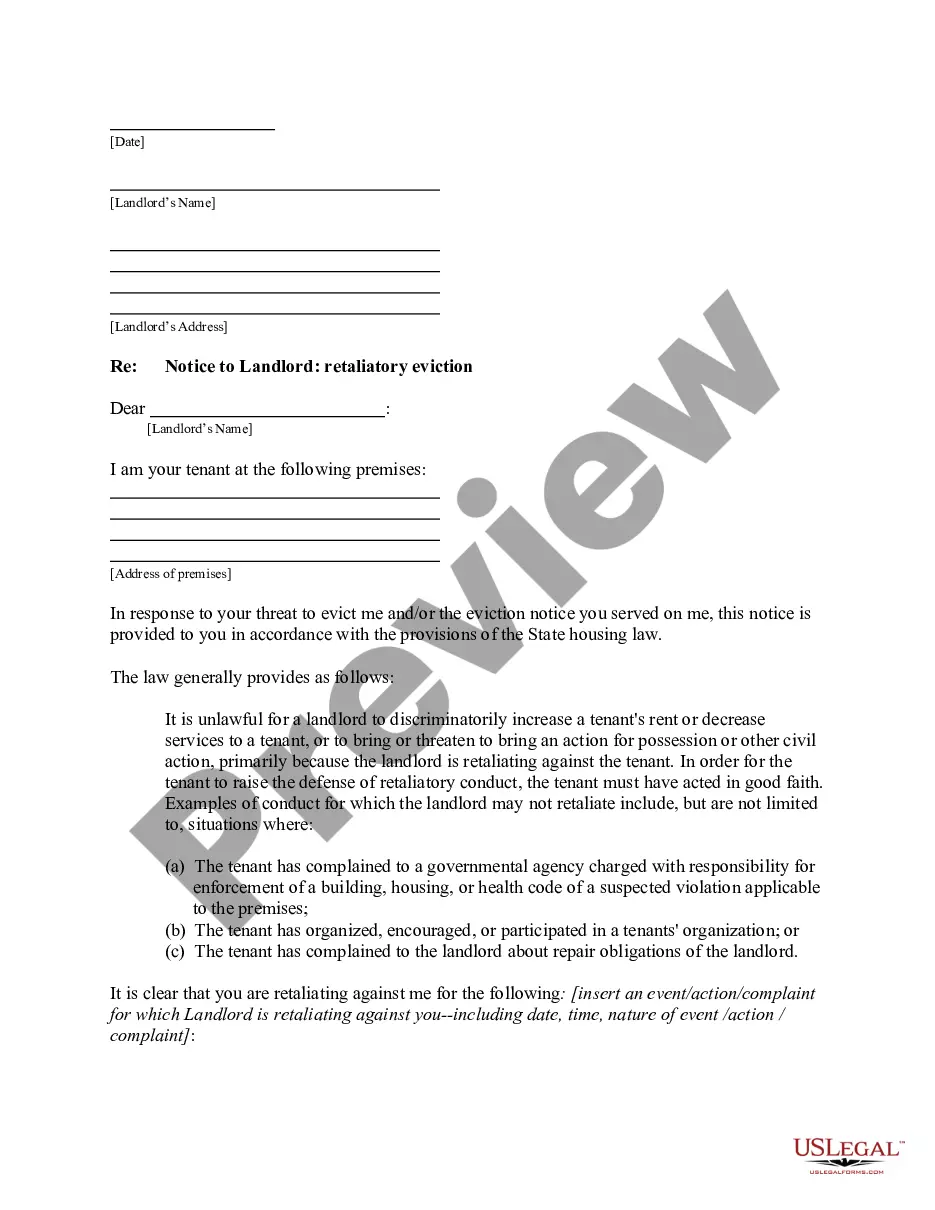
This Letter from Tenant to Landlord containing Notice to landlord to cease retaliatory threats to evict or retaliatory eviction is a legal document that allows a tenant to formally address and contest a landlord's retaliatory threats of eviction. This form highlights the tenant's right to defend against eviction claims that stem from protected activities, such as filing complaints about housing conditions or participating in tenant organizations. It is essential for tenants to understand their rights and use this form to assert them against unlawful retaliatory actions from landlords.
Key components of this form
- Tenantâs statement disputing the landlord's eviction threat.
- Specification of actions taken by the tenant that may have prompted the landlord's actions.
- Citation of applicable state housing laws regarding retaliatory eviction.
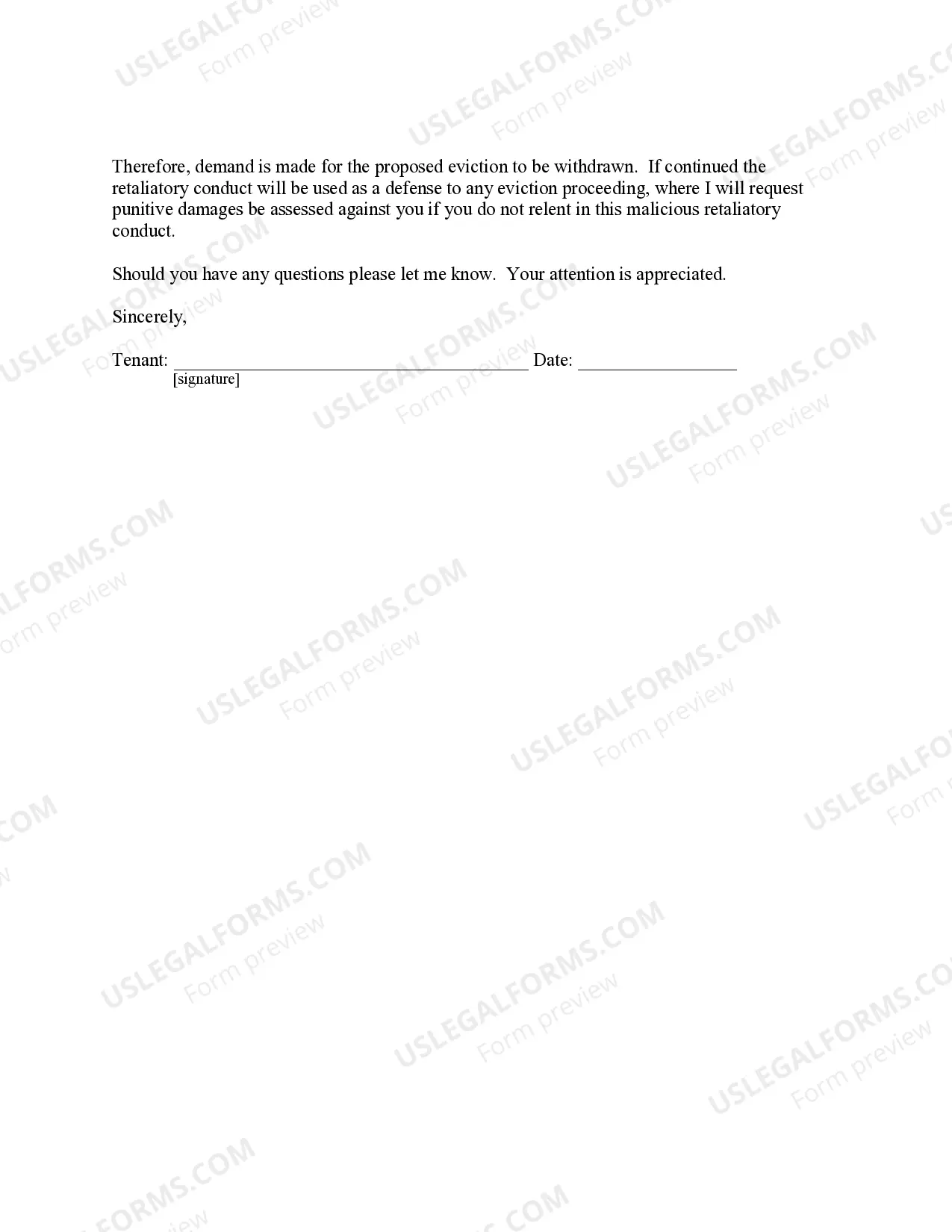
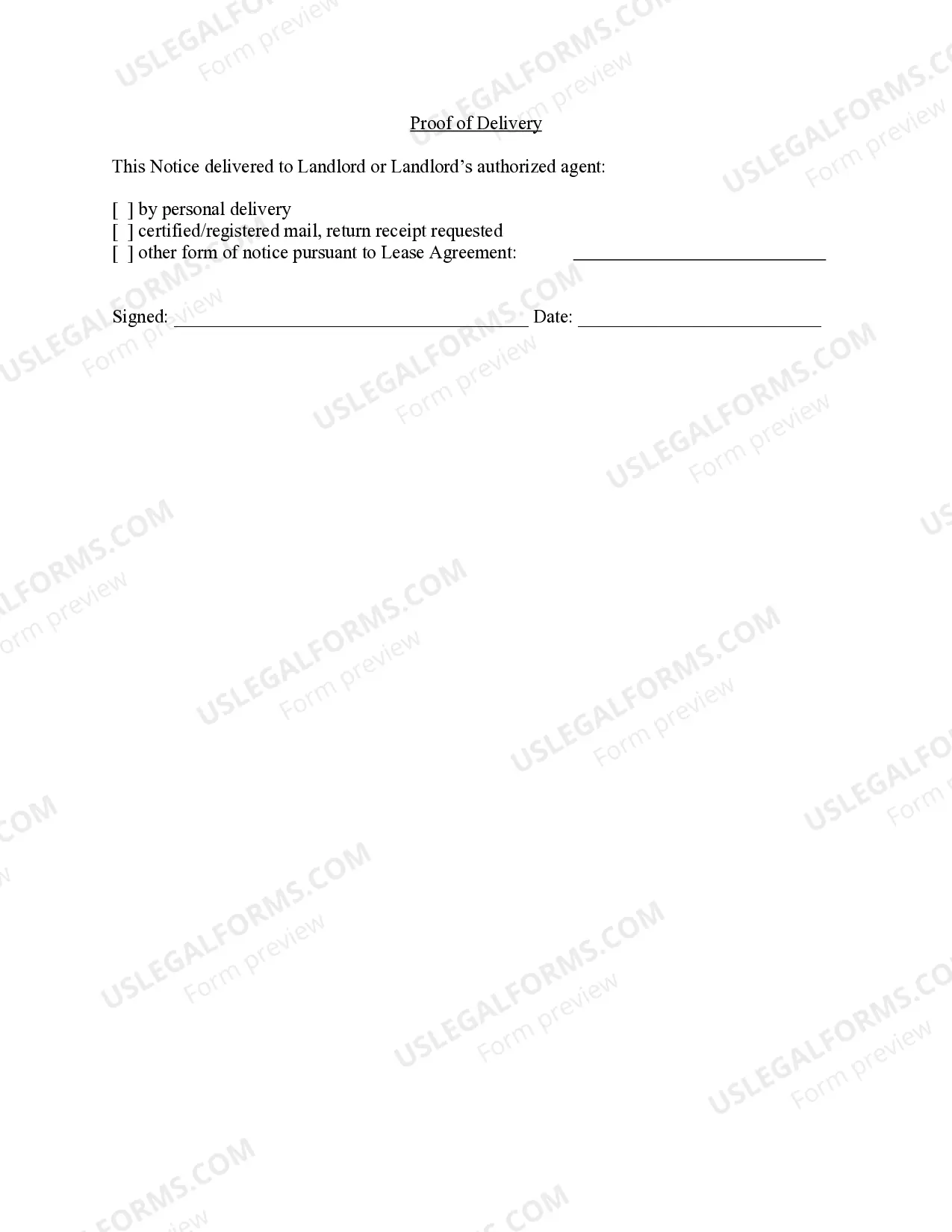
- Date and signature lines for tenant and proof of delivery to the landlord.



When to use this form
This form should be used when a tenant receives a threat of eviction from a landlord that the tenant believes is retaliatory. Situations may include instances where the tenant has recently complained about unsafe living conditions, requested necessary repairs, or participated in tenant advocacy efforts. The form assists tenants in officially documenting their objections and reasserting their legal rights.
Who this form is for
- Tenants who believe they are facing eviction due to retaliatory reasons.
- Individuals who have recently reported code violations or unsafe conditions to authorities.
- Members of tenant organizations who may have engaged in advocacy against their landlord.
How to complete this form
- Identify the parties involved, including the tenant's full name and the landlord's name.
- Clearly state the retaliatory threats made by the landlord and detail the tenant's previous actions that may have triggered these threats.
- Refer to applicable housing laws to support the tenant's arguments against the eviction.
- Enter the date of the notice and provide a signature to validate the document.
- Deliver the notice to the landlord or their authorized agent and document the delivery method used.
Is notarization required?
This form does not typically require notarization unless specified by local law. It is essential to check local regulations to ensure compliance.
Get your form ready online
Our built-in tools help you complete, sign, share, and store your documents in one place.
Make edits, fill in missing information, and update formatting in US Legal Forms—just like you would in MS Word.
Download a copy, print it, send it by email, or mail it via USPS—whatever works best for your next step.
Sign and collect signatures with our SignNow integration. Send to multiple recipients, set reminders, and more. Go Premium to unlock E-Sign.
If this form requires notarization, complete it online through a secure video call—no need to meet a notary in person or wait for an appointment.
We protect your documents and personal data by following strict security and privacy standards.

Make edits, fill in missing information, and update formatting in US Legal Forms—just like you would in MS Word.

Download a copy, print it, send it by email, or mail it via USPS—whatever works best for your next step.

Sign and collect signatures with our SignNow integration. Send to multiple recipients, set reminders, and more. Go Premium to unlock E-Sign.

If this form requires notarization, complete it online through a secure video call—no need to meet a notary in person or wait for an appointment.

We protect your documents and personal data by following strict security and privacy standards.
Common mistakes to avoid
- Failing to provide specific details about the landlord's threats or the tenant's actions.
- Not referencing the correct state housing laws protecting tenant rights.
- Neglecting to keep a copy of the delivered notice for personal records.
- Overlooking the need for a signature to make the document valid.
Benefits of using this form online
- Convenience of downloading and printing from anywhere at any time.
- Editability allows tenants to customize the form to their specific situation easily.
- Reliability through access to forms drafted by licensed attorneys.
Legal use & context
- Enforceable as a formal notice that a landlord's eviction threats are being contested.
- Provides grounds for tenants to defend against potentially unlawful eviction attempts.
- Supports claims under applicable tenant protection laws against retaliation.
What to keep in mind
- Retaliatory eviction threats from landlords can be legally challenged using this form.
- It's important for tenants to assert their rights and document any retaliatory behavior.
- This notification should be delivered in writing to have legal effect.
Looking for another form?

Form popularity
FAQ
It is a formal tenant letter used to dispute eviction threats believed to be retaliatory and to invoke Florida housing laws. The form requires the tenant to state their dispute, describe actions that may have prompted the threat, cite applicable Florida housing laws on retaliatory eviction, and provide date, signature lines, and proof of delivery. Use it after receiving a retaliatory eviction threat.
Retaliatory eviction notice is an eviction threat or action taken in response to a tenant’s protected activities. This form serves as a formal response by documenting the dispute, listing actions the tenant took that may have triggered the threat, and citing applicable Florida housing laws on retaliatory eviction while providing delivery proof.
To use this form to respond to a retaliatory eviction, fill out the tenant’s statement denying the eviction threat, note any housing‑related actions you took, cite Florida housing laws on retaliatory eviction, sign and date the letter, and send it to the landlord with delivery proof for your records.
Florida recognizes protections against retaliatory eviction. This form supports that protection by allowing a tenant to dispute eviction threats and reference applicable Florida housing laws, while including space for delivery date and signatures. It is intended for tenants who recently reported code violations or unsafe conditions and believe threats are retaliatory.
This form is for tenants facing eviction threats believed to be retaliatory—especially those who have recently reported code violations, unsafe conditions, or participated in tenant advocacy. It creates a formal written record, cites Florida housing laws, and requires delivery proof to help protect the tenant’s rights.
This form specifically targets retaliatory eviction threats and includes a citation of applicable Florida housing laws, a sworn tenant statement disputing the threat, actions taken by the tenant, and proof of delivery. A standard eviction notice typically does not address retaliation or cite protections.