Florida Letter from Landlord to Tenant as Notice to remove Wild Animals in Premises
What this document covers
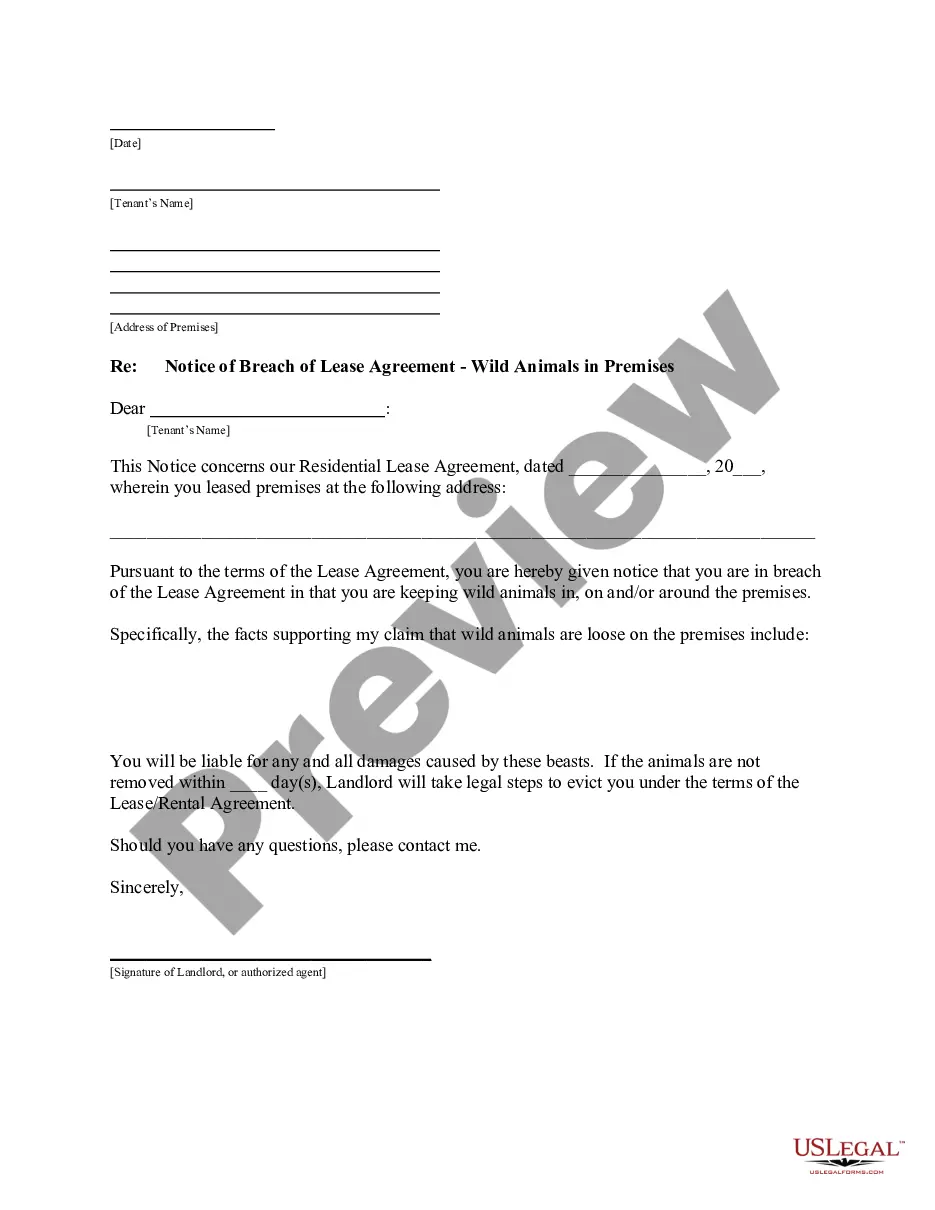
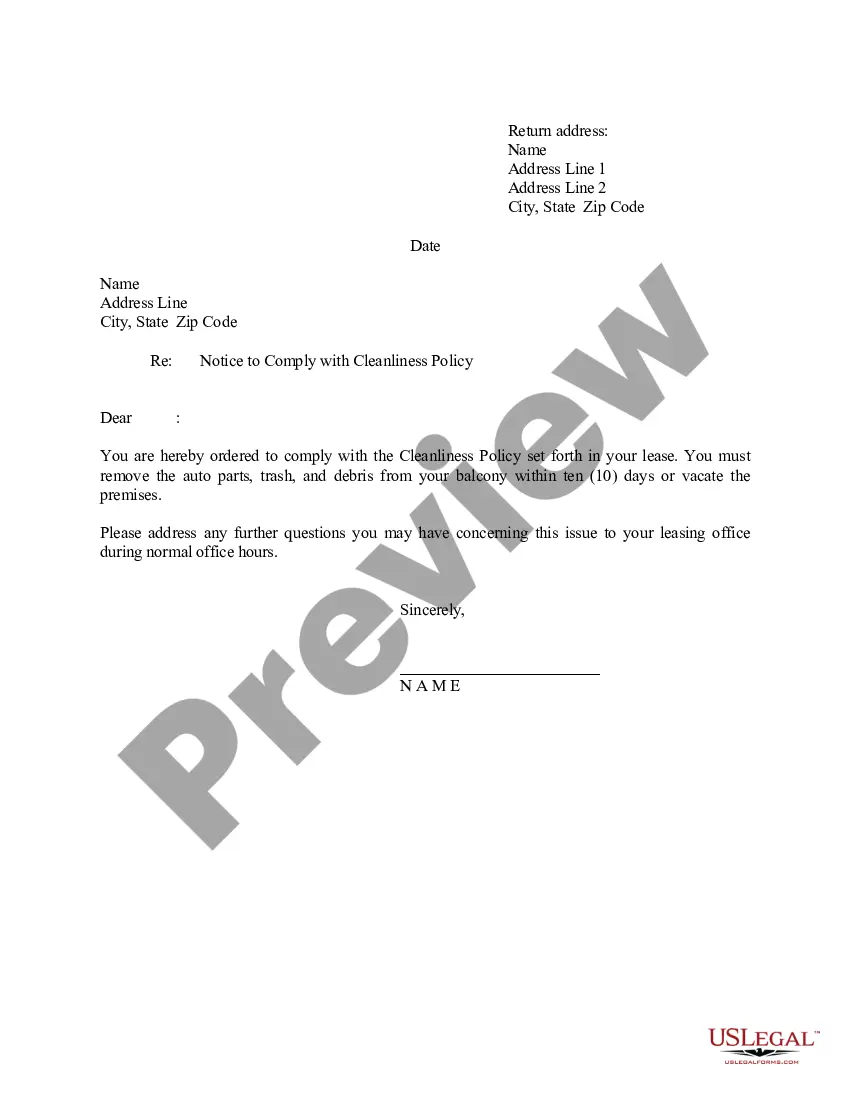
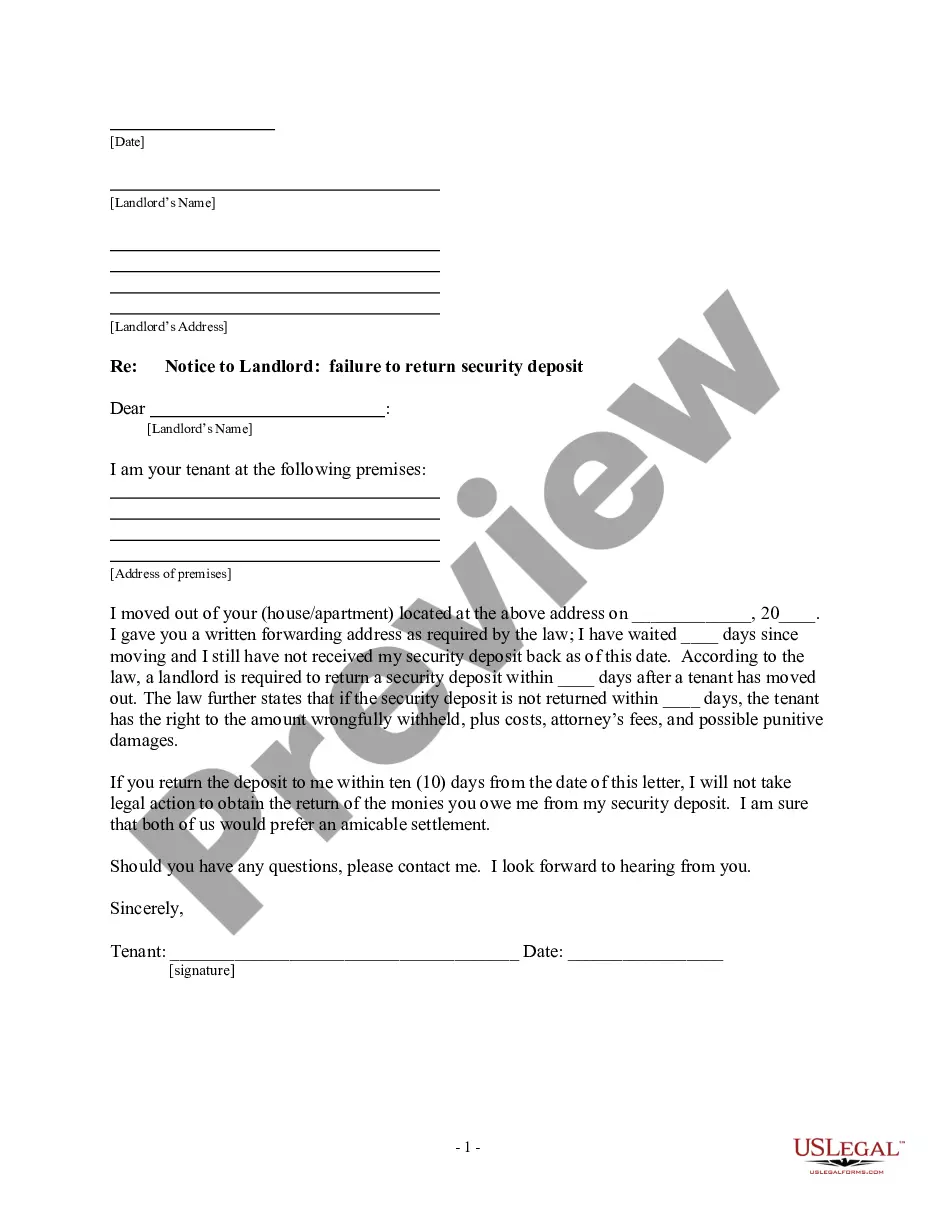
This form is a Letter from Landlord to Tenant as Notice to remove Wild Animals in Premises. It serves as a formal notification to the tenant that they are violating the lease agreement by keeping wild animals on the property. This form provides clear documentation for the landlord about the breach, differentiating it from other tenant notices by specifying animal-related violations explicitly.
Key components of this form
- Identification of the landlord and tenant involved in the lease agreement.
- A statement of the breach of lease terms regarding wild animals.
- Specific details regarding the wild animals' presence on the premises.
- A signature line for the landlord or authorized agent for validation.
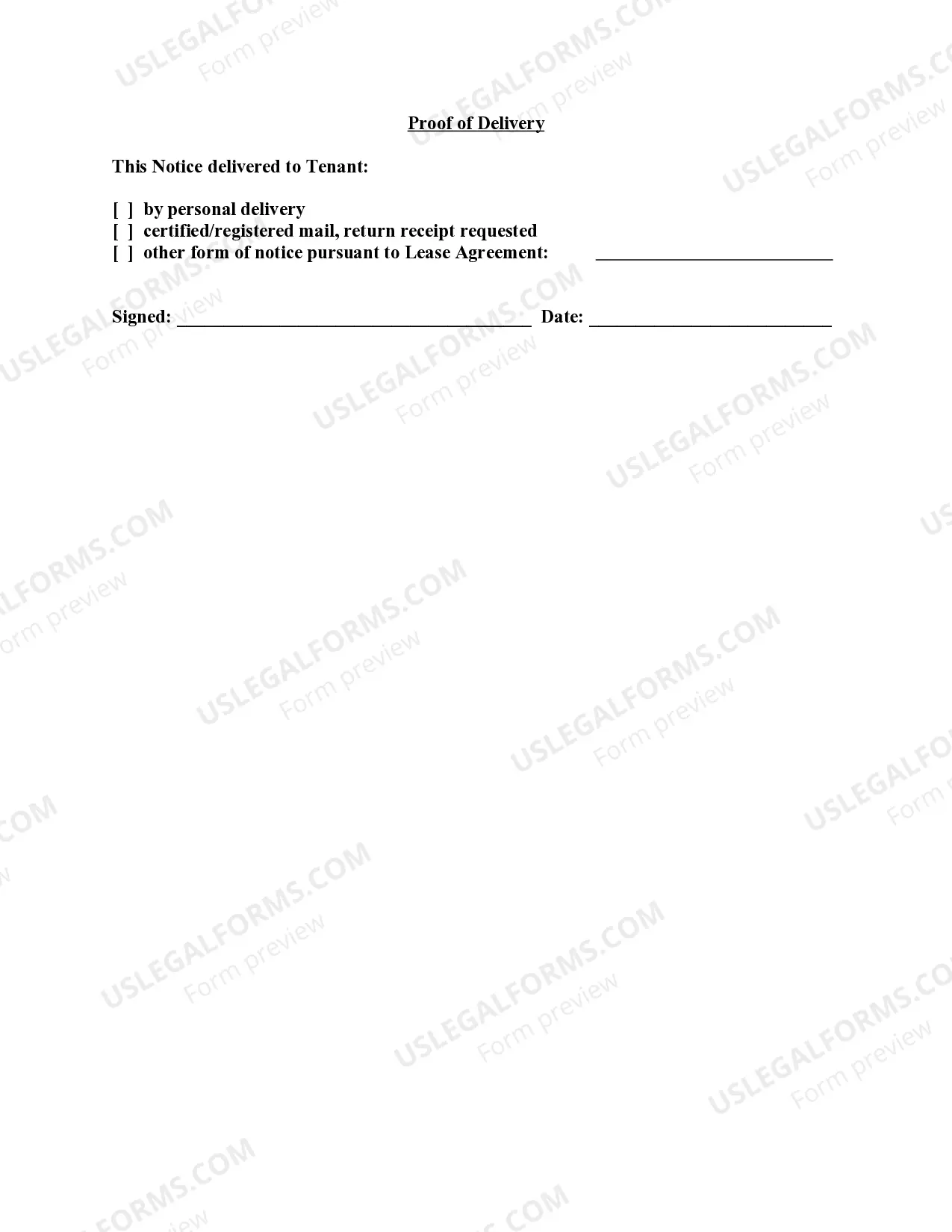
- Proof of delivery methods to ensure the tenant receives the notice.

Common use cases
This form is used when a landlord observes or is informed that a tenant is keeping wild animals on or around the rental property. If the lease agreement explicitly prohibits keeping such animals and the tenant fails to comply, this notice serves to formally address the violation and provide the tenant with an opportunity to rectify the situation.
Who needs this form
This form is intended for:
- Landlords who need to inform tenants about lease violations related to wild animals.
- Property managers responsible for maintaining compliance with lease terms.
- Legal representatives acting on behalf of landlords in property management matters.
Completing this form step by step
- Identify the parties by entering the names of the landlord and tenant.
- Refer to the specific lease agreement mentioning the prohibition of wild animals.
- Detail the breach by stating the type of wild animals and their location on the premises.
- Sign and date the letter, ensuring it is signed by the landlord or authorized agent.
- Choose a proof of delivery method applicable (personal delivery or certified mail) and document it properly.
Notarization guidance
This form does not typically require notarization to be legally valid. However, some jurisdictions or document types may still require it. US Legal Forms provides secure online notarization powered by Notarize, available 24/7 for added convenience.
Get your form ready online
Our built-in tools help you complete, sign, share, and store your documents in one place.
Make edits, fill in missing information, and update formatting in US Legal Forms—just like you would in MS Word.
Download a copy, print it, send it by email, or mail it via USPS—whatever works best for your next step.
Sign and collect signatures with our SignNow integration. Send to multiple recipients, set reminders, and more. Go Premium to unlock E-Sign.
If this form requires notarization, complete it online through a secure video call—no need to meet a notary in person or wait for an appointment.
We protect your documents and personal data by following strict security and privacy standards.

Make edits, fill in missing information, and update formatting in US Legal Forms—just like you would in MS Word.

Download a copy, print it, send it by email, or mail it via USPS—whatever works best for your next step.

Sign and collect signatures with our SignNow integration. Send to multiple recipients, set reminders, and more. Go Premium to unlock E-Sign.

If this form requires notarization, complete it online through a secure video call—no need to meet a notary in person or wait for an appointment.

We protect your documents and personal data by following strict security and privacy standards.
Common mistakes to avoid
- Failing to clearly identify the specific lease terms being violated.
- Not including evidence or observations about the wild animals present.
- Neglecting to sign the letter or provide a signature from an authorized agent.
- Choosing an inappropriate delivery method that lacks proof of receipt.
Advantages of online completion
- Convenient access to legally drafted templates available for immediate download.
- Editable format, allowing landlords to customize the notice to their specific needs.
- Assured compliance with legal standards, crafted by licensed attorneys.
Legal use & context
- This notice serves as a formal documentation of the tenant's lease violation.
- It can be part of a legal process if further action is needed to enforce the lease terms.
- Understanding local laws related to tenant obligations is essential to enforce this notice effectively.
Summary of main points
- This form is crucial for landlords addressing violations related to wild animals.
- Clear identification of the breach and communication with the tenant is essential.
- Utilizing a legally vetted form helps ensure compliance and prepares landlords for potential enforcement actions.
Looking for another form?

Form popularity
FAQ
To give notice to a tenant to vacate in Florida, you must provide a written notice that adheres to state guidelines. Your notification should clearly outline the termination of the lease, referencing the Florida Letter from Landlord to Tenant as Notice to remove Wild Animals in Premises if applicable. Ensure you deliver this letter in person or via certified mail, which provides proof of delivery for your records.
To politely ask a tenant to move out, communicate respectfully and explain the reasons behind your request. Use a formal format, and consider including a Florida Letter from Landlord to Tenant as Notice to remove Wild Animals in Premises to clarify any legal obligations. Offer assistance in their moving process and express appreciation for their tenancy, making the transition as smooth as possible.
An example of a letter for a tenant to move out should begin with a polite greeting, followed by the intent to terminate the lease. Include the property address, date, and that the letter serves as a Florida Letter from Landlord to Tenant as Notice to remove Wild Animals in Premises if necessary. Conclude with a reminder of any final details, like returning the keys and the security deposit process for a smooth transition.
To write a termination letter to a tenant, start by stating the rental property address and specific date of termination. Be clear and concise, and include a Florida Letter from Landlord to Tenant as Notice to remove Wild Animals in Premises if relevant. Make sure to notify the tenant of any obligations they must fulfill before leaving, such as cleaning the unit or removing personal belongings.
The quickest way to evict a tenant in Florida is to follow the state's legal process, which includes serving the tenant a Florida Letter from Landlord to Tenant as Notice to remove Wild Animals in Premises if applicable. You must provide proper notice and reasons for the eviction, ensuring you comply with the local laws. In some cases, tenants may move out voluntarily, which can expedite the process.
Writing a letter to remove a tenant should be done with care and professionalism. Begin by stating the reason for removal, referencing any lease violations, and including a clear request for the tenant to vacate. Additionally, mention applicable laws and include a Florida Letter from Landlord to Tenant as Notice to remove Wild Animals in Premises if needed to reinforce your position.
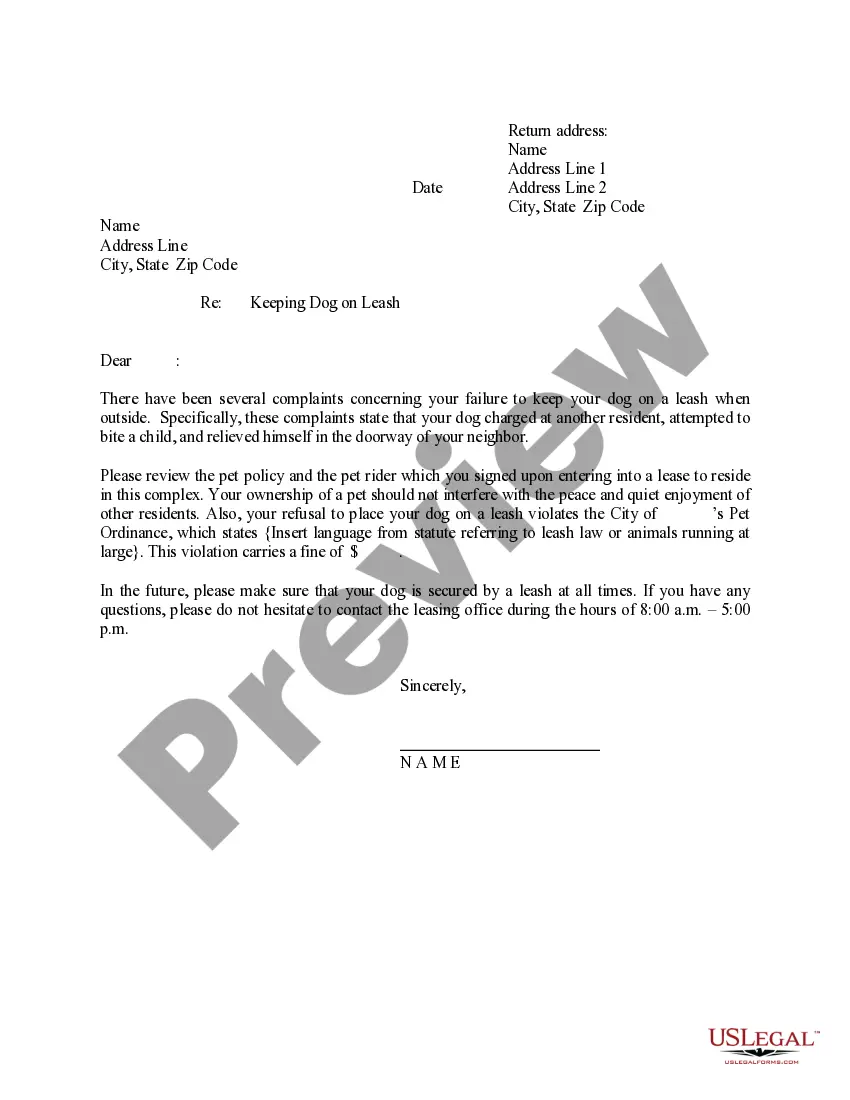
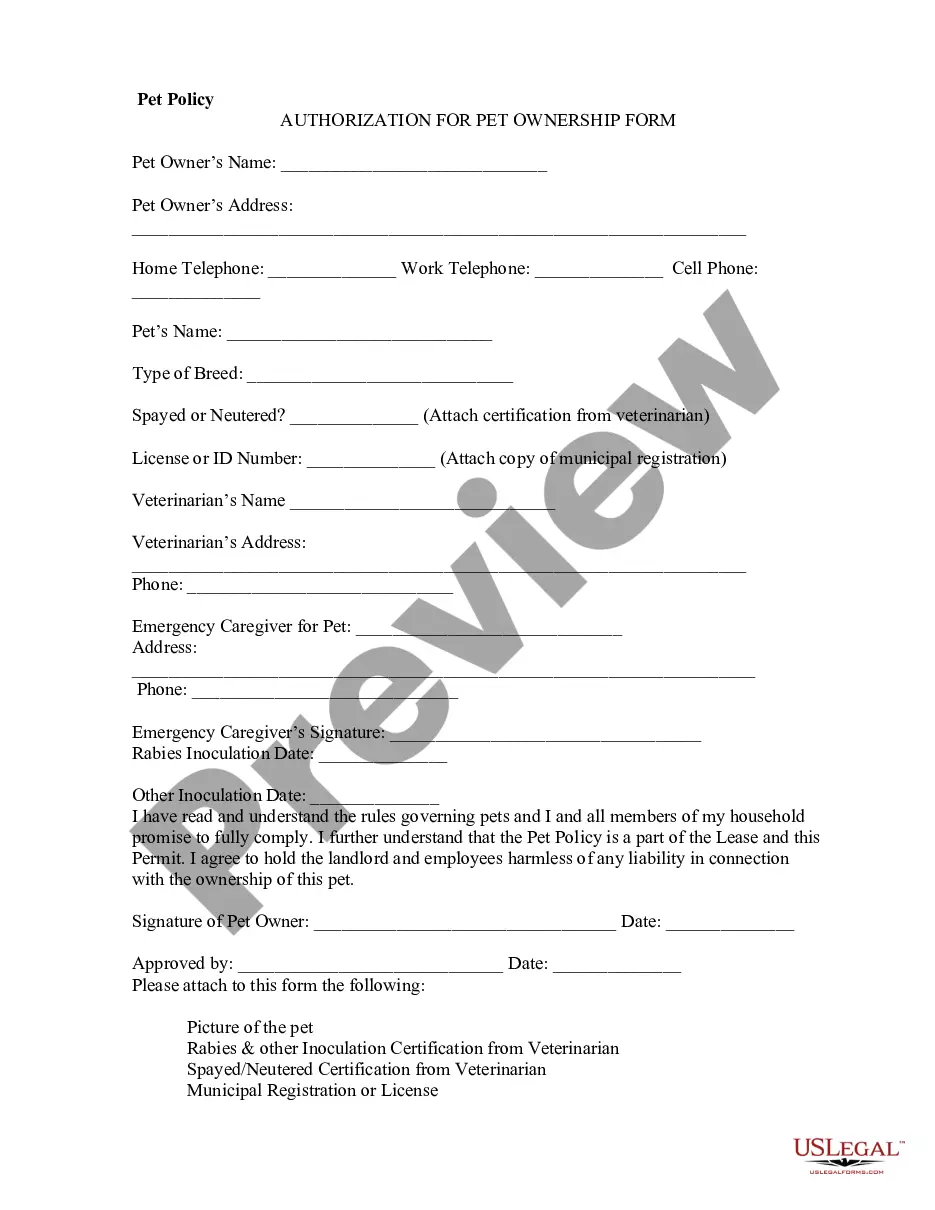
To evict a tenant for having a pet, start by reviewing the lease agreement for clauses concerning pets. If the tenant has violated these terms, draft a Florida Letter from Landlord to Tenant as Notice to remove Wild Animals in Premises. Clearly outline the breach and the necessary steps for the tenant to resolve the issue before considering further action.
In Florida, you can face eviction for having a pet if your lease explicitly forbids it. This rule includes any unauthorized animals considered wild by the landlord. If this situation arises, a Florida Letter from Landlord to Tenant as Notice to remove Wild Animals in Premises may be issued to initiate the eviction process.
Yes, you may face eviction for pet sitting if your lease prohibits pets on the premises. Even short-term pet sitting can violate rental agreements. It is wise to communicate with your landlord and potentially avoid a Florida Letter from Landlord to Tenant as Notice to remove Wild Animals in Premises by ensuring your agreement allows such activities.
When writing a letter to your landlord about pets, start by clearly stating your request or concern. Be polite, and include relevant details, such as your pet's breed and size, if applicable. Mention any compliance with community guidelines, and express your willingness to ensure your pets do not cause issues, thereby avoiding the need for a Florida Letter from Landlord to Tenant as Notice to remove Wild Animals in Premises.