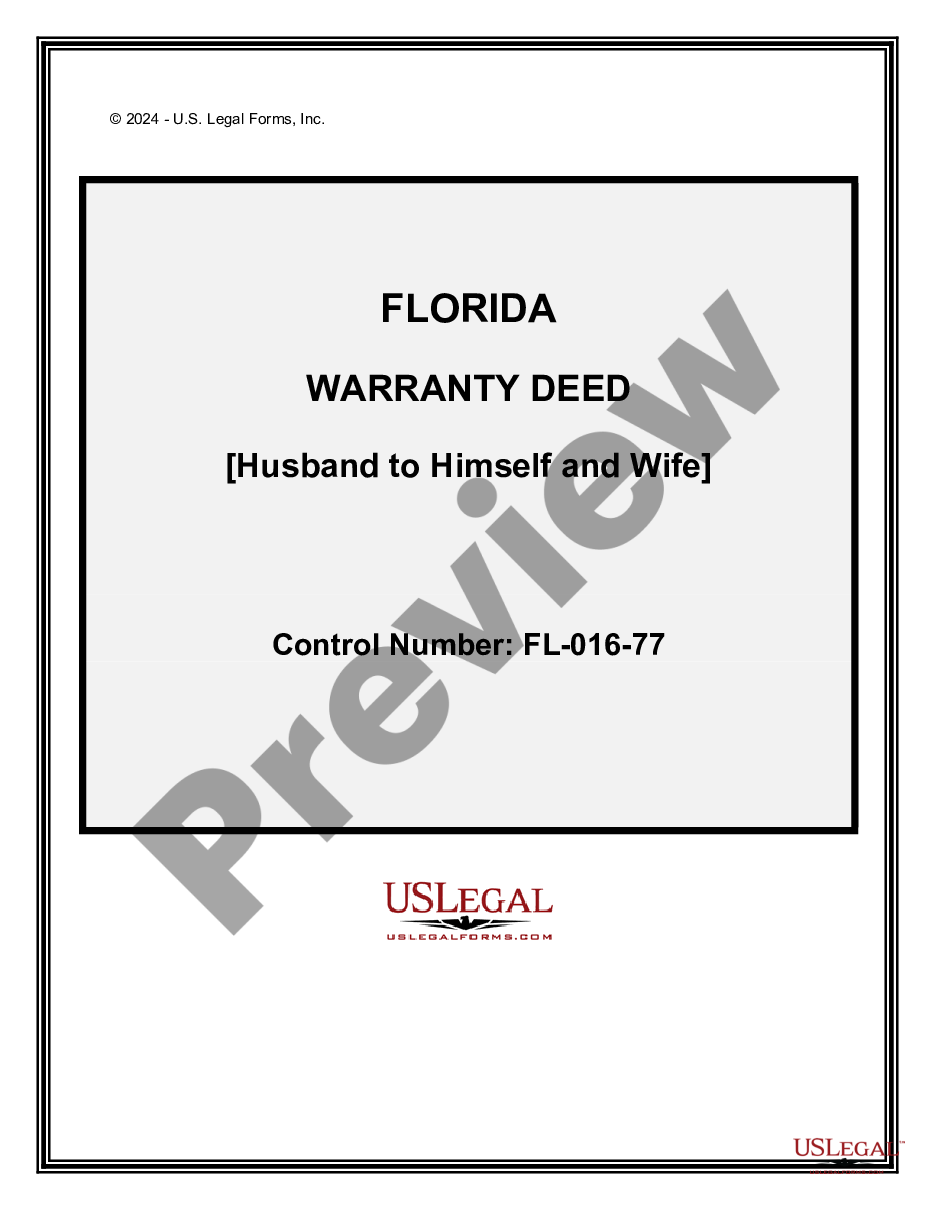
Florida Warranty Deed from Husband to Himself and Wife
What is this form?
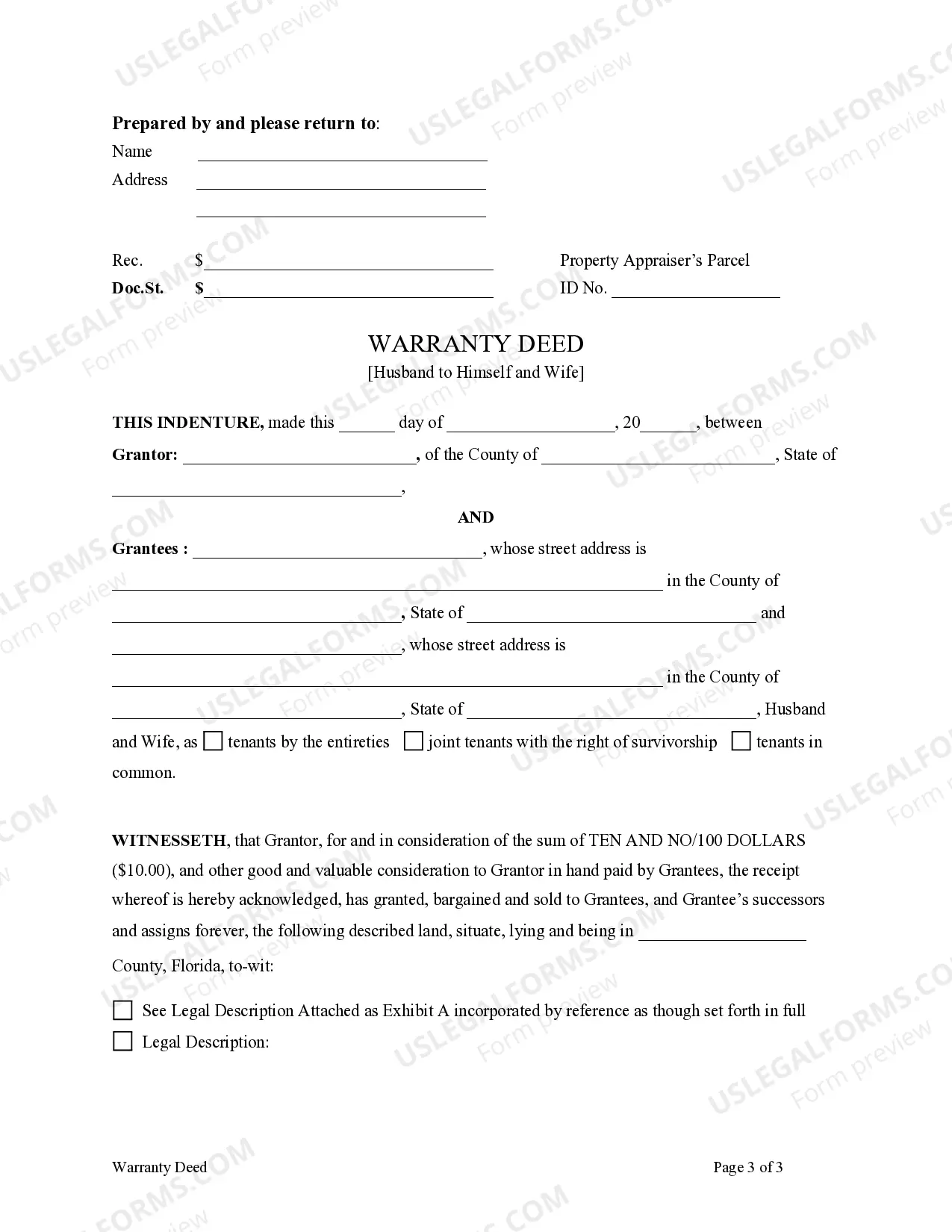
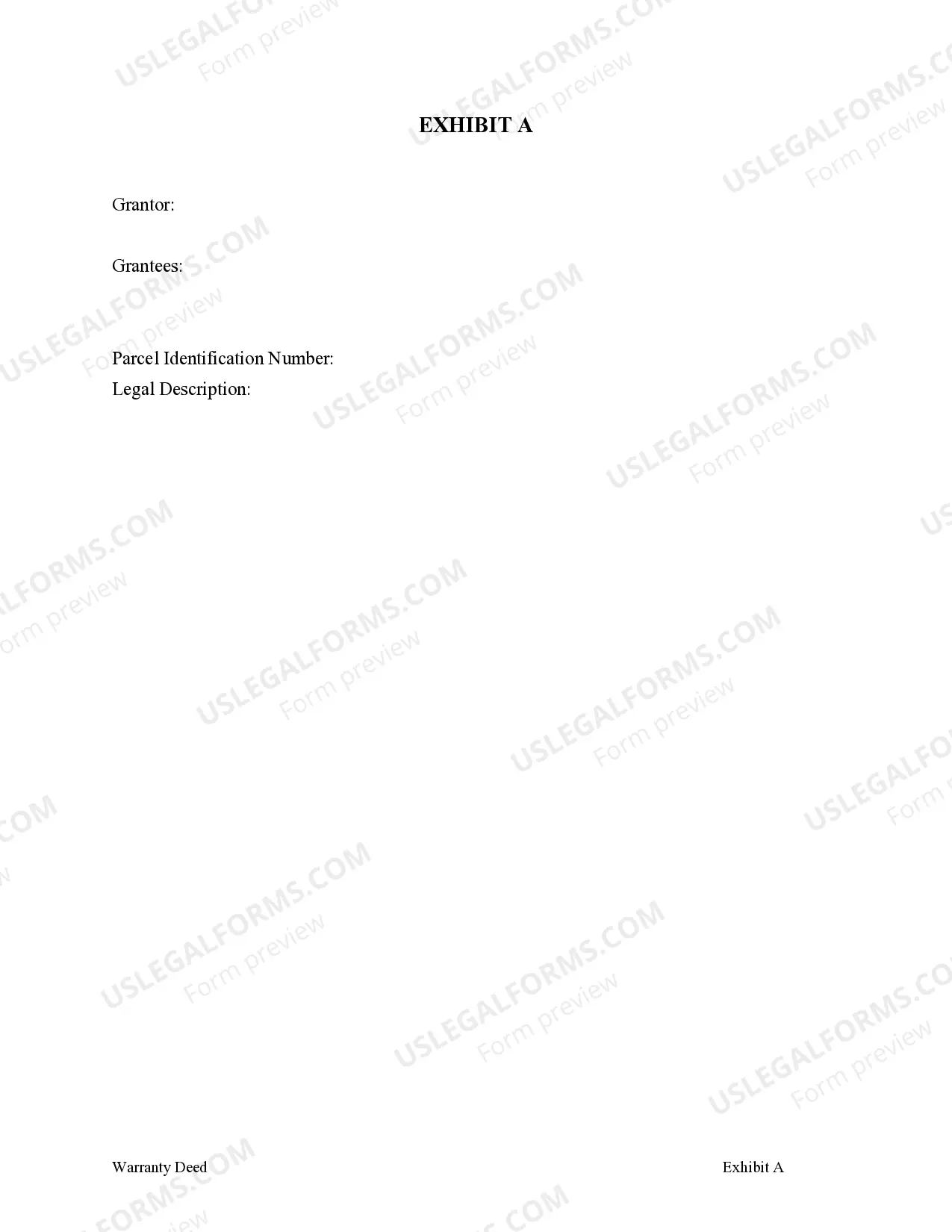
This form is a Warranty Deed where the grantor is the husband, and the grantees are the husband and his wife. This deed transfers ownership of property to them as joint tenants with rights of survivorship, ensuring that in the event of one spouse's death, the surviving spouse automatically inherits the property. Unlike other types of deeds, this Warranty Deed includes a guarantee of clear title, meaning the grantor assures there are no other claims against the property.
Key parts of this document
- Identifying information for the grantor (husband) and grantees (husband and wife).
- Description of the property being conveyed.
- Joint tenancy clause with rights of survivorship.
- Reservation clause for oil, gas, and minerals.
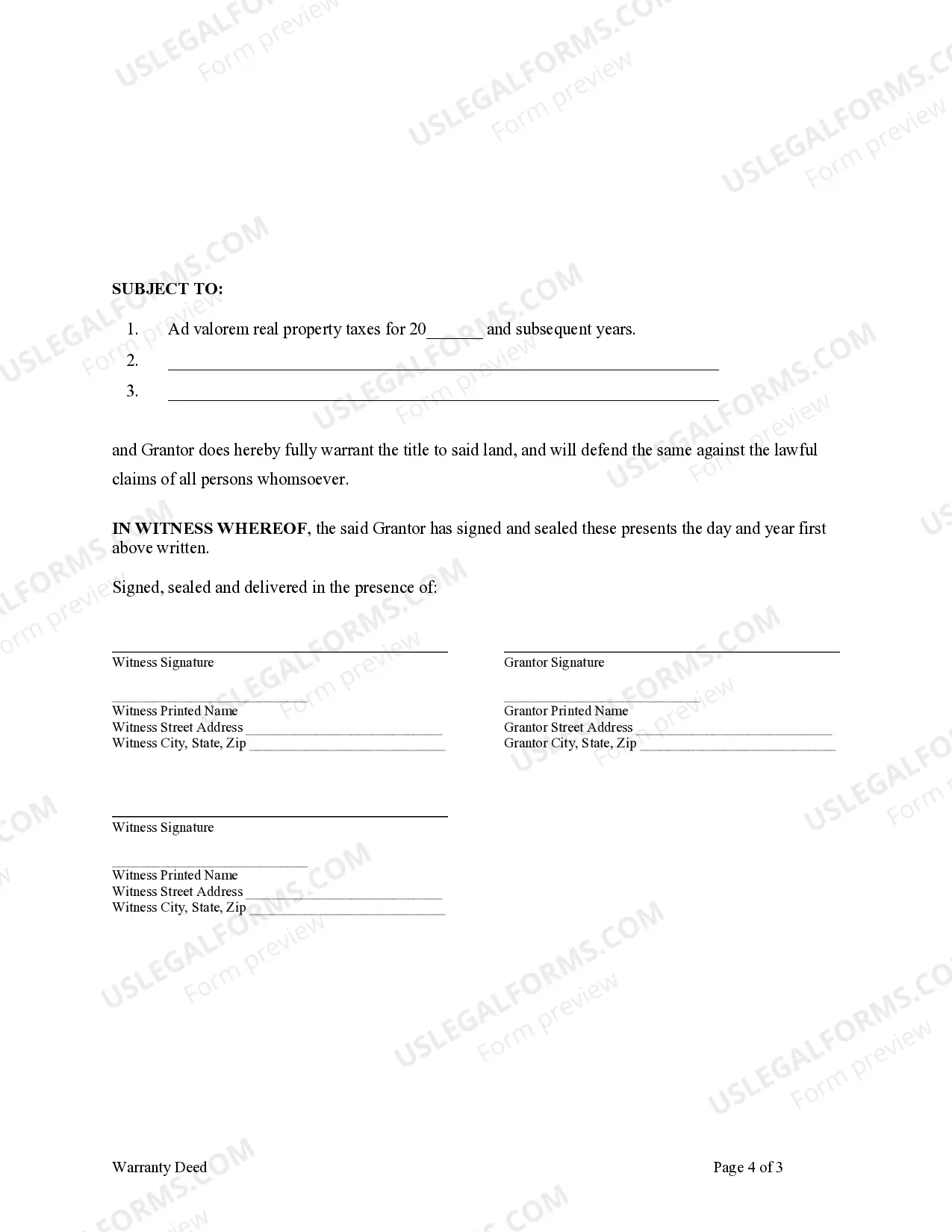
- Signature lines for the grantor and witnesses, if applicable.



When this form is needed
This Warranty Deed should be used when a husband wants to transfer property ownership to himself and his wife. This is often required during marriage to clarify joint ownership or when planning for estate matters, ensuring that the property is passed directly to the surviving spouse without the need for probate.
Who should use this form
- Married couples looking to establish joint ownership of real estate.
- Individuals seeking to formalize property transfers between spouses.
- People wanting to ensure rights of survivorship for their spouse.
Completing this form step by step
- Identify the parties involved: enter the names and addresses of the grantor and grantees.
- Specify the property: accurately describe the property being transferred.
- Include the reservation: note any reserved interests in oil, gas, and minerals.
- Ensure all necessary signatures: have the grantor sign and include witness signatures if necessary.
- File the deed with the appropriate local government office, if required.
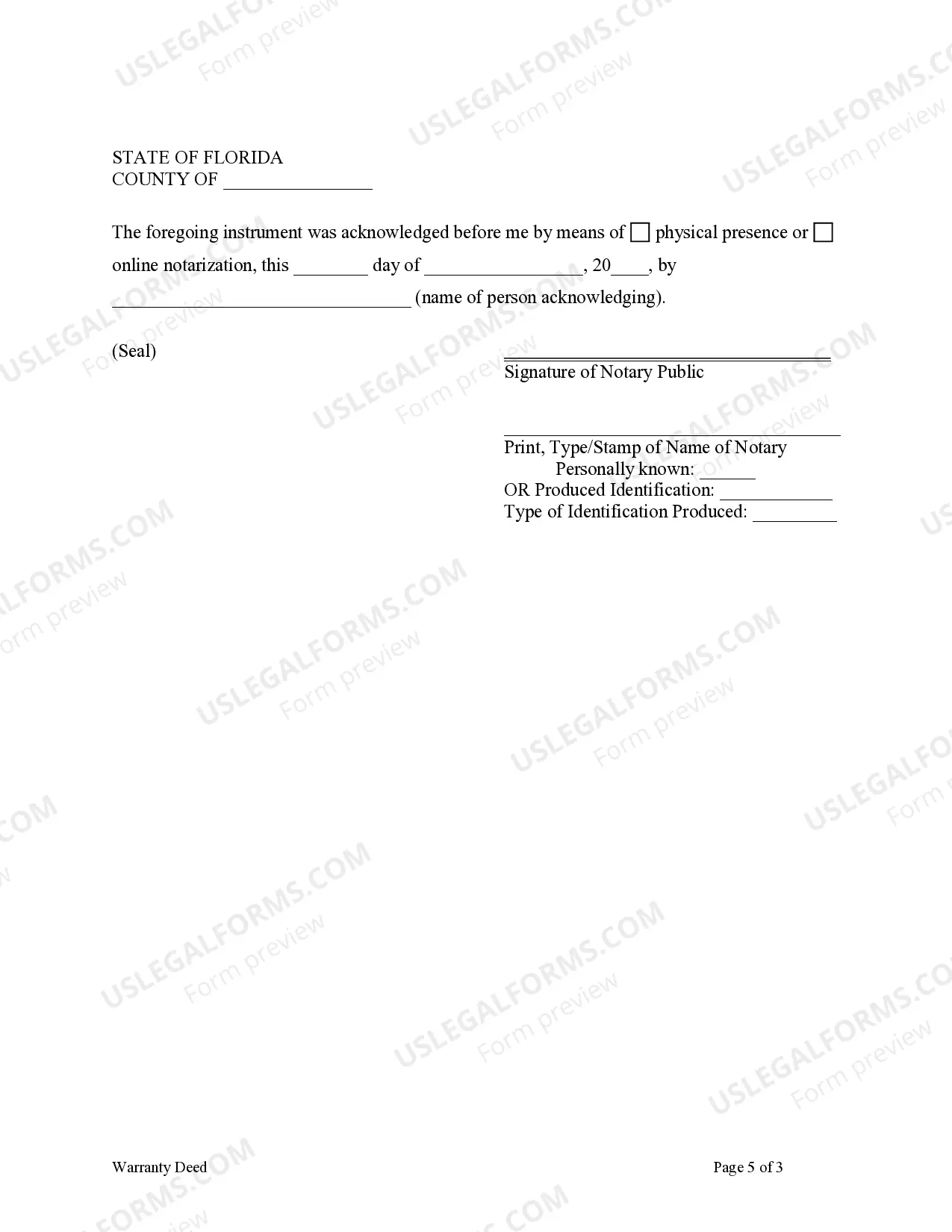
Notarization guidance
This form typically does not require notarization unless specified by local law. However, getting it notarized can help ensure its authenticity and enforceability.
Get your form ready online
Our built-in tools help you complete, sign, share, and store your documents in one place.
Make edits, fill in missing information, and update formatting in US Legal Forms—just like you would in MS Word.
Download a copy, print it, send it by email, or mail it via USPS—whatever works best for your next step.
Sign and collect signatures with our SignNow integration. Send to multiple recipients, set reminders, and more. Go Premium to unlock E-Sign.
If this form requires notarization, complete it online through a secure video call—no need to meet a notary in person or wait for an appointment.
We protect your documents and personal data by following strict security and privacy standards.

Make edits, fill in missing information, and update formatting in US Legal Forms—just like you would in MS Word.

Download a copy, print it, send it by email, or mail it via USPS—whatever works best for your next step.

Sign and collect signatures with our SignNow integration. Send to multiple recipients, set reminders, and more. Go Premium to unlock E-Sign.

If this form requires notarization, complete it online through a secure video call—no need to meet a notary in person or wait for an appointment.

We protect your documents and personal data by following strict security and privacy standards.
Common mistakes to avoid
- Failing to provide a complete property description.
- Not including the reservation of oil, gas, and minerals if applicable.
- Omitting signatures or witness information.
- Not filing the deed with the appropriate governmental authority.
Benefits of completing this form online
- Convenient access to the form anytime and anywhere.
- Easy to edit and customize for specific needs.
- Accurate forms created by licensed attorneys.
- Immediate downloading for printing and filing.
Looking for another form?
Form popularity
FAQ
A spouse might choose to execute a quitclaim deed to simplify the property transfer process, especially in family matters or to address marital agreements. This approach may be necessary to clarify ownership after a significant event, such as a divorce or the acquisition of a new home. Using a Florida Warranty Deed from Husband to Himself and Wife provides an efficient way to manage shared property interests while minimizing complexities.
Yes, quitclaim deeds are often used in divorce settlements to transfer property from one spouse to another. This method allows the transferring spouse to relinquish their rights to the property efficiently. However, it’s essential to ensure that the divorce agreement clearly outlines this transfer. In areas like Florida, couples can utilize the Florida Warranty Deed from Husband to Himself and Wife to facilitate seamless ownership changes post-divorce.
The main disadvantage of a quitclaim deed is the lack of warranty regarding the title's status, which poses risks. Those receiving property through this method might inherit issues such as liens or claims, creating potential complications down the line. Additionally, quitclaim deeds do not protect buyers against any title defects. For more secure transactions, consider a Florida Warranty Deed from Husband to Himself and Wife to provide assurance regarding title clarity.
A quitclaim deed for a wife represents the transfer of a husband's interest in the property to her without any warranties. This deed operates well in situations where trust exists, such as family transfers or when marital property needs clarifying. By utilizing the Florida Warranty Deed from Husband to Himself and Wife, spouses can ensure clear ownership and rights over the property. This type of deed simplifies the process of making changes to ownership titles.
Husbands and wives in Florida typically hold title as joint tenants with the right of survivorship. This arrangement ensures that if one spouse passes away, the other automatically becomes the sole owner of the property. Alternatively, they can choose to hold property as tenants in common, which allows for separate ownership interests. When using a Florida Warranty Deed from Husband to Himself and Wife, understanding these options is crucial.
People often use quitclaim deeds for simple property transfers, particularly among family members or to clear up title issues. This deed allows a party to transfer their interest in a property without making guarantees about the title. In Florida, when a husband transfers the property through a quitclaim deed to himself and his wife, it simplifies ownership. It’s a practical choice for many, including those handling estate matters.
A quitclaim deed is typically not used when transferring property to a buyer in a sale. Instead, a warranty deed is preferred in this situation, as it provides guarantees about the title. Moreover, quitclaim deeds are not suitable for properties with liens or other encumbrances. When considering the Florida Warranty Deed from Husband to Himself and Wife, it is essential to understand the reasons behind choosing the right deed.
Yes, a warranty deed can be transferred to another individual or entity. When executing a Florida Warranty Deed from Husband to Himself and Wife, it is important to follow the proper legal protocols to ensure the transfer is valid. This transfer might involve recording the deed with the local clerk’s office to protect your interests. Working with a platform like US Legal Forms can assist in drafting and completing this process efficiently.
Whether your wife needs to be on the deed depends on your individual circumstances and intentions regarding ownership. Including her on a Florida Warranty Deed from Husband to Himself and Wife ensures that both of you have legal rights to the property. This inclusion can be significant for estate planning and simplifies the transfer of ownership in the event of death. It is important to discuss this with a qualified legal professional.
While it is not legally required to have a lawyer to transfer a deed in Florida, it is highly recommended. A Florida Warranty Deed from Husband to Himself and Wife involves specific legal language that must be correctly applied to avoid future disputes. Having a lawyer ensures that the transfer is completed accurately and legally, providing peace of mind for both parties involved.