Florida Warranty Deed from Individual to a Trust
What this document covers
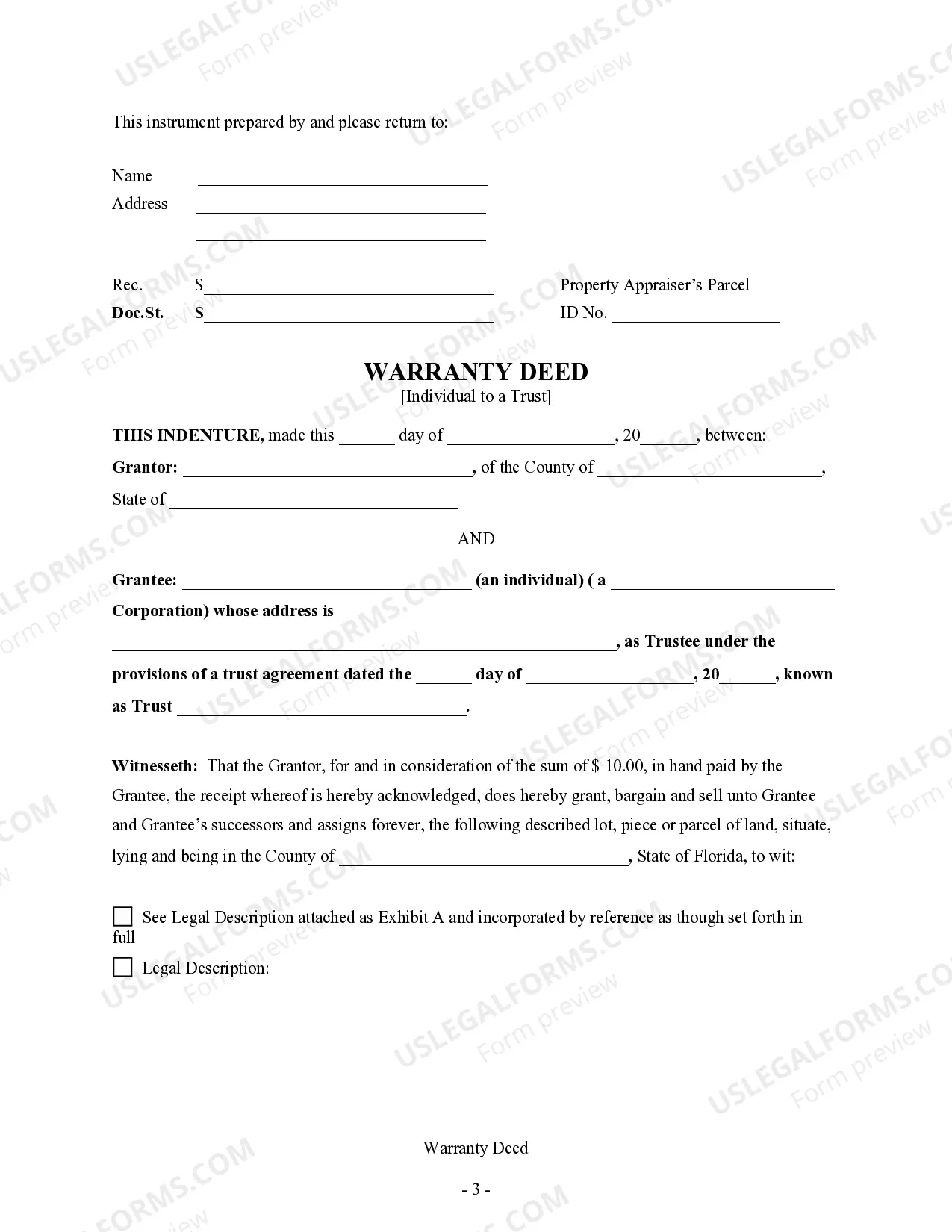
The Warranty Deed from Individual to a Trust is a legal document used to transfer property ownership from an individual (the grantor) to a trust (the grantee). This form guarantees that the property being transferred is free of any claims or encumbrances, with the exception of any oil, gas, and mineral rights that the grantor may retain. It is essential for ensuring that the property is legally conveyed to the trust, distinguishing it from other types of deeds by its warranty assurance and specific use within estate planning and property management.
Key parts of this document
- Identifying information for the grantor and trustee of the trust.
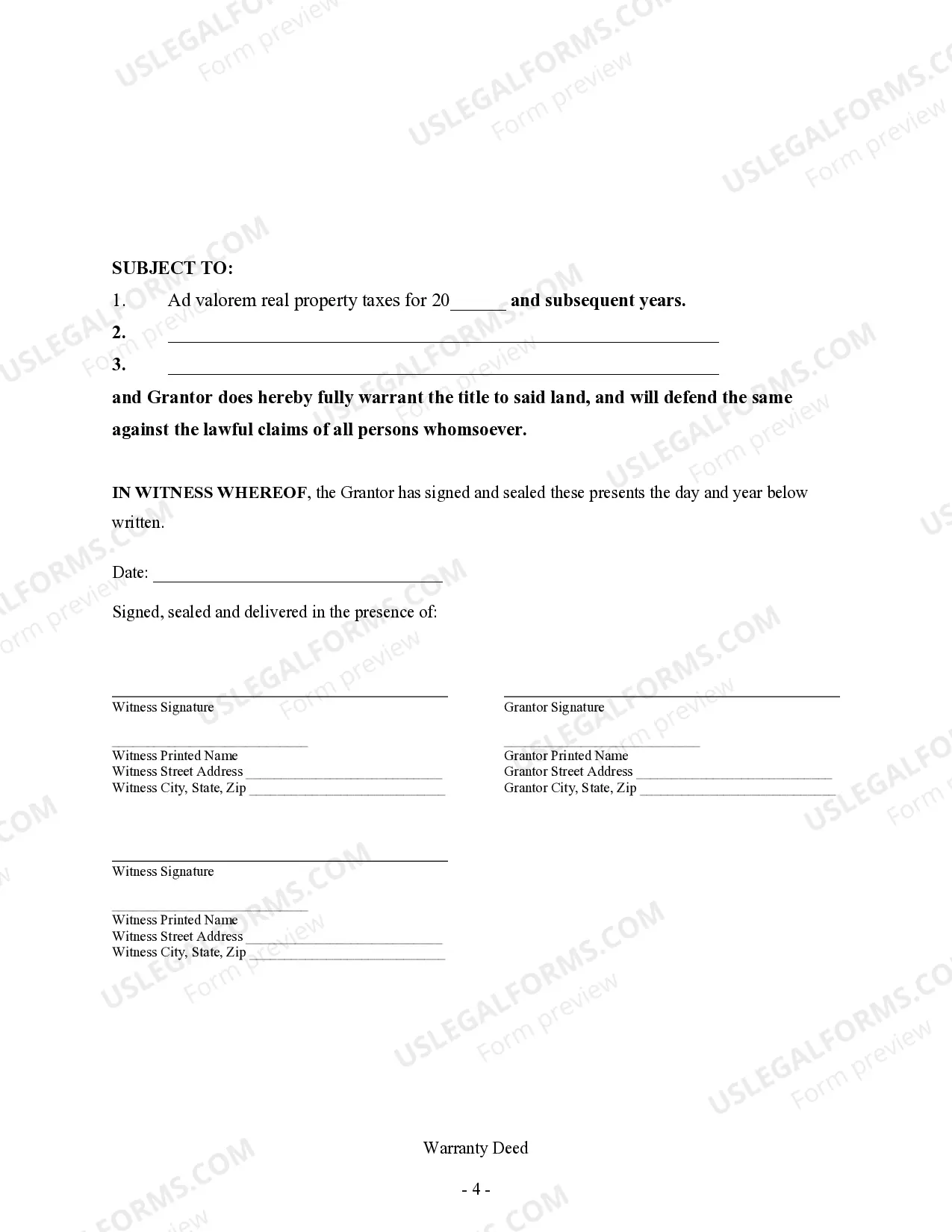
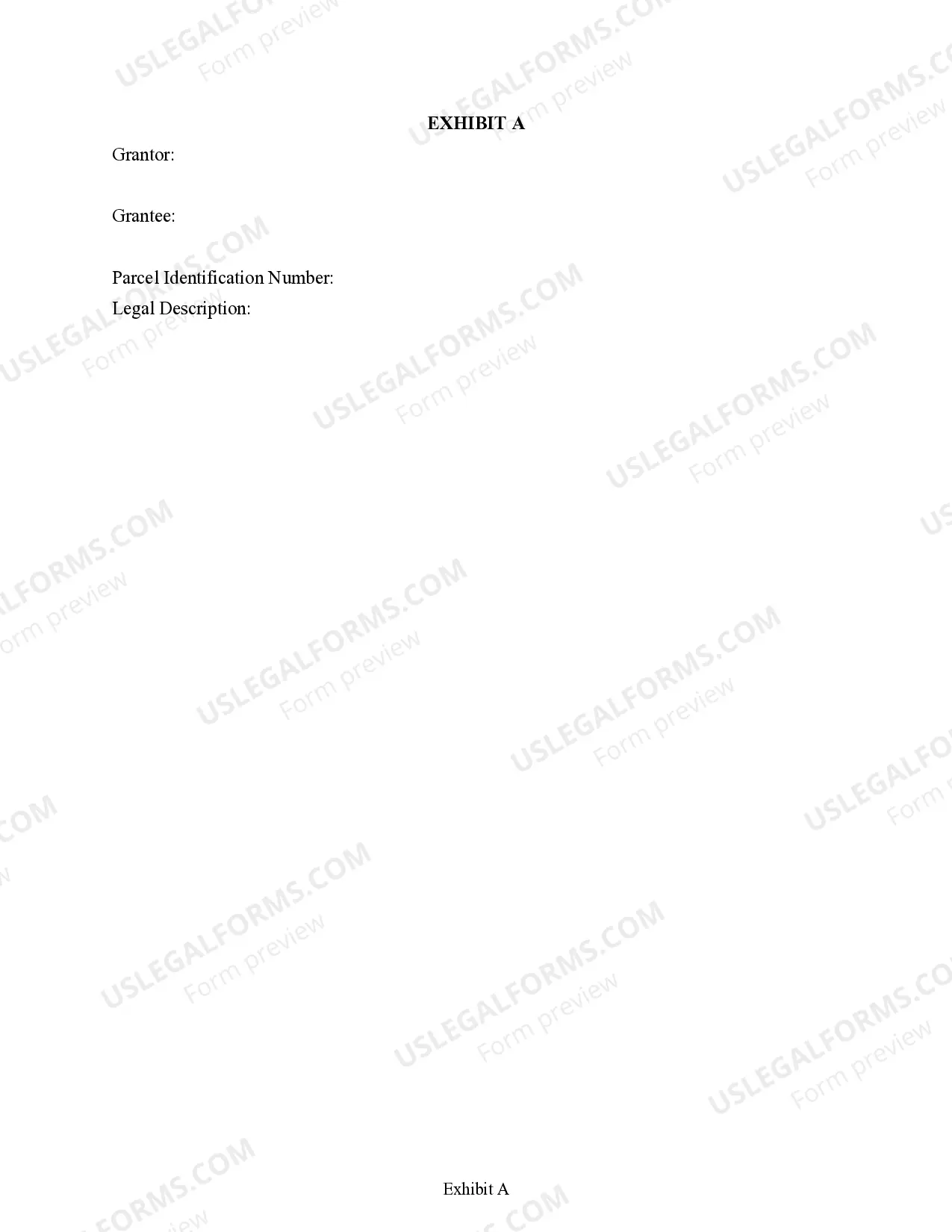
- Description of the property being transferred.
- Clauses indicating the retention of mineral rights by the grantor.
- Warranties provided by the grantor regarding the property.
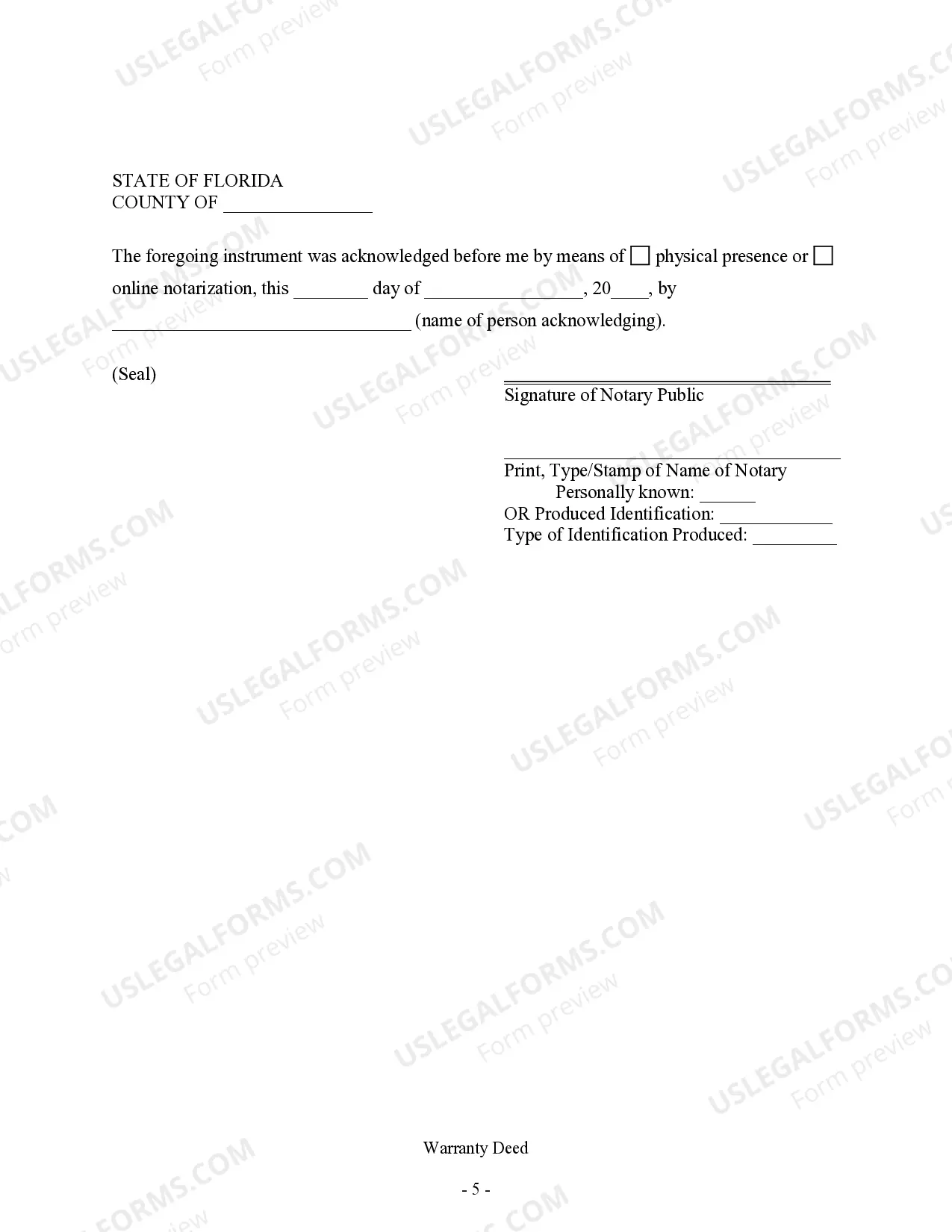
- Signatures and dates for legal enforcement.




When to use this document
This form should be used when an individual wishes to transfer real property to a trust as part of an estate planning strategy. It is appropriate in situations where the trust is set up to manage the property for beneficiaries, protect assets, or streamline the transfer process upon the grantor's passing. Additionally, it is helpful when the grantor wants to retain certain rights over the property, such as mineral rights, while ensuring the trust holds legal title.
Who should use this form
Individuals and entities who may benefit from this form include:
- Property owners looking to transfer their real estate into a trust.
- Trustees who need a legal document to secure property on behalf of a trust.
- Estate planners or attorneys assisting clients in the transfer process.
Steps to complete this form
- Identify and enter the full name and address of the grantor.
- Provide the full name and address of the trust and its trustee.
- Clearly describe the property being transferred, including legal descriptions.
- Indicate any retained rights, such as mineral rights, if applicable.
- Sign the document in the presence of a notary public, if required.
Does this form need to be notarized?
This document requires notarization to meet legal standards. US Legal Forms provides secure online notarization powered by Notarize, allowing you to complete the process through a verified video call, available 24/7.
Get your form ready online
Our built-in tools help you complete, sign, share, and store your documents in one place.
Make edits, fill in missing information, and update formatting in US Legal Forms—just like you would in MS Word.
Download a copy, print it, send it by email, or mail it via USPS—whatever works best for your next step.
Sign and collect signatures with our SignNow integration. Send to multiple recipients, set reminders, and more. Go Premium to unlock E-Sign.
If this form requires notarization, complete it online through a secure video call—no need to meet a notary in person or wait for an appointment.
We protect your documents and personal data by following strict security and privacy standards.

Make edits, fill in missing information, and update formatting in US Legal Forms—just like you would in MS Word.

Download a copy, print it, send it by email, or mail it via USPS—whatever works best for your next step.

Sign and collect signatures with our SignNow integration. Send to multiple recipients, set reminders, and more. Go Premium to unlock E-Sign.

If this form requires notarization, complete it online through a secure video call—no need to meet a notary in person or wait for an appointment.

We protect your documents and personal data by following strict security and privacy standards.
Mistakes to watch out for
- Failing to include a complete legal description of the property.
- Not specifying retained rights accurately, leading to potential future disputes.
- Omitting the signature of either the grantor or trustee.
- Not having the form notarized when required in specific jurisdictions.
Why use this form online
- Convenience of completing the form digitally from any device.
- Editable fields to ensure accuracy and save time during completion.
- Reliable format that complies with legal standards for property transfer.
Looking for another form?


Form popularity
FAQ
While it is not mandatory to hire a lawyer to transfer a deed in Florida, seeking legal advice can provide you with valuable insights and ensure compliance with state laws. A lawyer can assist in preparing the Florida Warranty Deed from Individual to a Trust and help you avoid potential pitfalls. Utilizing platforms like USLegalForms can also simplify the process, ensuring you have the right documents and guidance you need.
Yes, you can put your house in a trust in Florida, often providing various benefits such as avoiding probate and maintaining privacy. Establishing a trust allows you to manage your property effectively and can offer protection from creditors. To facilitate this, a Florida Warranty Deed from Individual to a Trust will be necessary to transfer the ownership from your name to the trust.
To transfer a warranty deed in Florida, you need to prepare a new deed that clearly states the property's new owner, which can be a trust. This process involves filling out the Florida Warranty Deed from Individual to a Trust form correctly and ensuring both the current owner and trustee sign the document. After signing, the deed must be notarized and recorded at the local county's clerk office to finalize the transfer and provide public notice of the change.
A Florida Warranty Deed from Individual to a Trust acts as strong evidence of ownership, as it shows the grantor's intent to transfer property rights. However, it does not serve as conclusive proof against all claims, such as prior liens or disputes over ownership. To ensure your ownership is recognized, it is crucial to properly record the deed in the relevant county office. Consider leveraging uslegalforms to ensure compliance and accuracy.
While it is possible to transfer a Florida Warranty Deed from Individual to a Trust without an attorney, it's not always advisable. The process has specific legal requirements that, if not followed, could lead to complications. By choosing a platform like uslegalforms, you can access templates and guides that simplify the process, but having legal advice is often beneficial.
Yes, a Florida Warranty Deed from Individual to a Trust is transferable, which means you can convey your property rights to another party. However, the deed must be properly executed and recorded to ensure a smooth transfer. When transferring, you should verify that all necessary parties understand their rights and obligations. Consulting with a legal expert can help clarify the process.
One disadvantage of a Florida Warranty Deed from Individual to a Trust is that it provides limited protection against claims on the property. If there are existing liens or encumbrances, these might not be resolved by using a warranty deed. Additionally, if the grantor does not fully own the property, the deed may not transfer clear title. Always consider reviewing your situation with legal assistance.
In Florida, several factors can trigger a property reassessment. These include significant renovations, change in ownership, or the property being sold. A transfer using a Florida Warranty Deed from Individual to a Trust generally does not fall under these triggers. Knowing the rules allows you to plan effectively and maintain your property’s current assessment status.
In most cases, placing property into a trust does not trigger a reassessment in Florida. The Florida Warranty Deed from Individual to a Trust often preserves the property's assessment. However, exceptions may exist depending on the nature of the trust and the ownership structure. Always consult with a legal expert to understand your specific situation.
Placing your house in a trust can have some disadvantages, including potential costs and complexities. For instance, establishing and maintaining a trust requires legal fees and administrative work. Additionally, if you fund the trust incorrectly, it may lead to complications down the line in the transfer process. Understanding these elements is essential when considering a Florida Warranty Deed from Individual to a Trust.