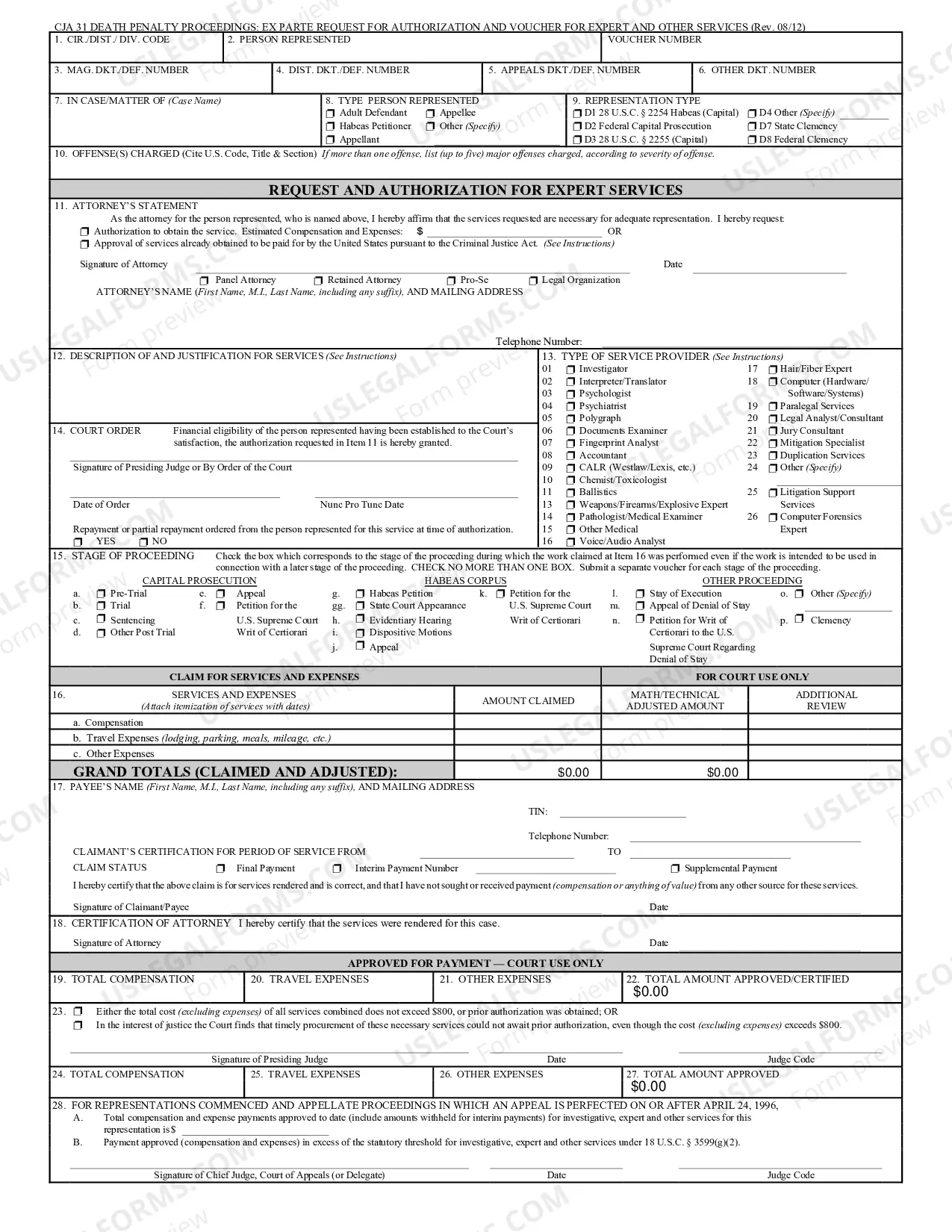
Florida Articles of Incorporation for Domestic Nonprofit Corporation


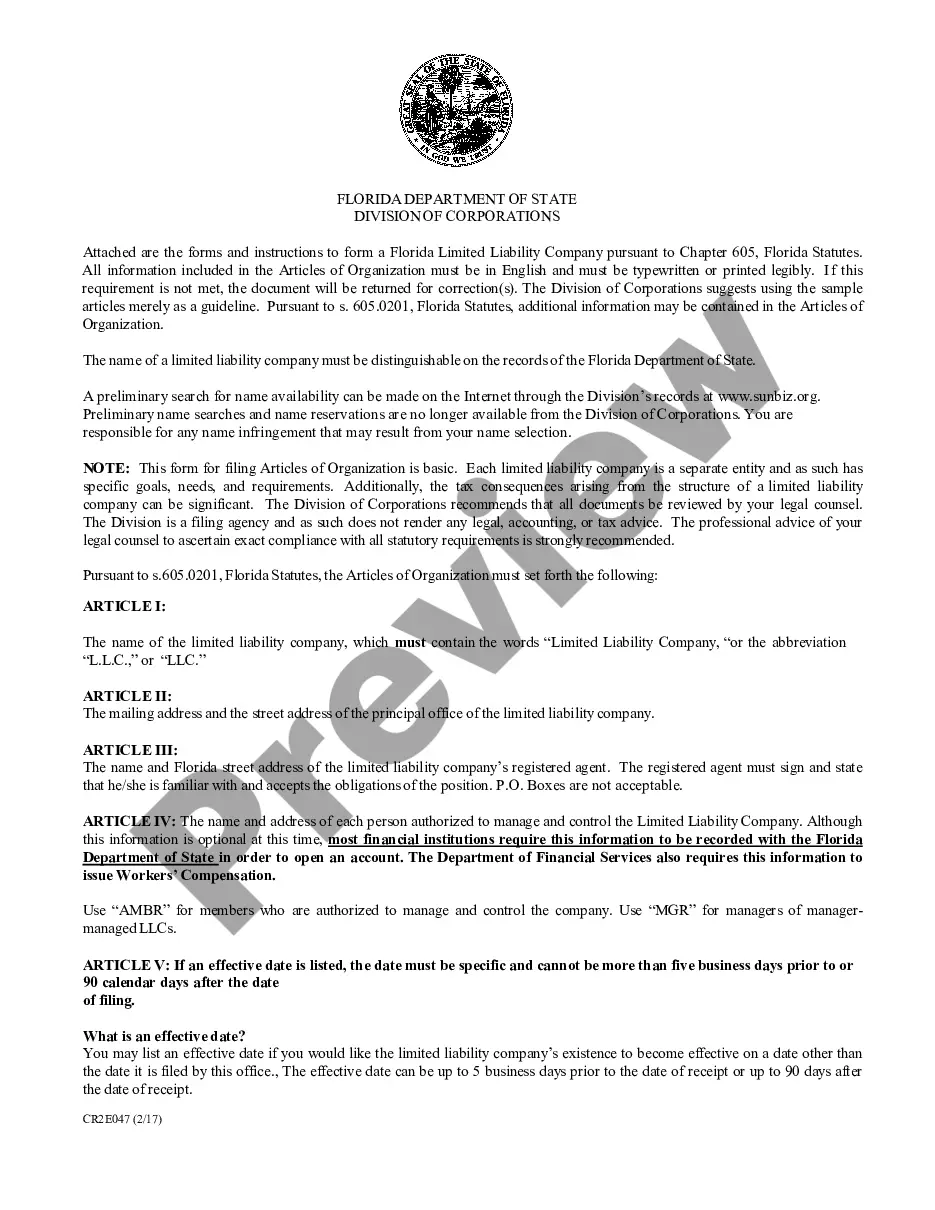
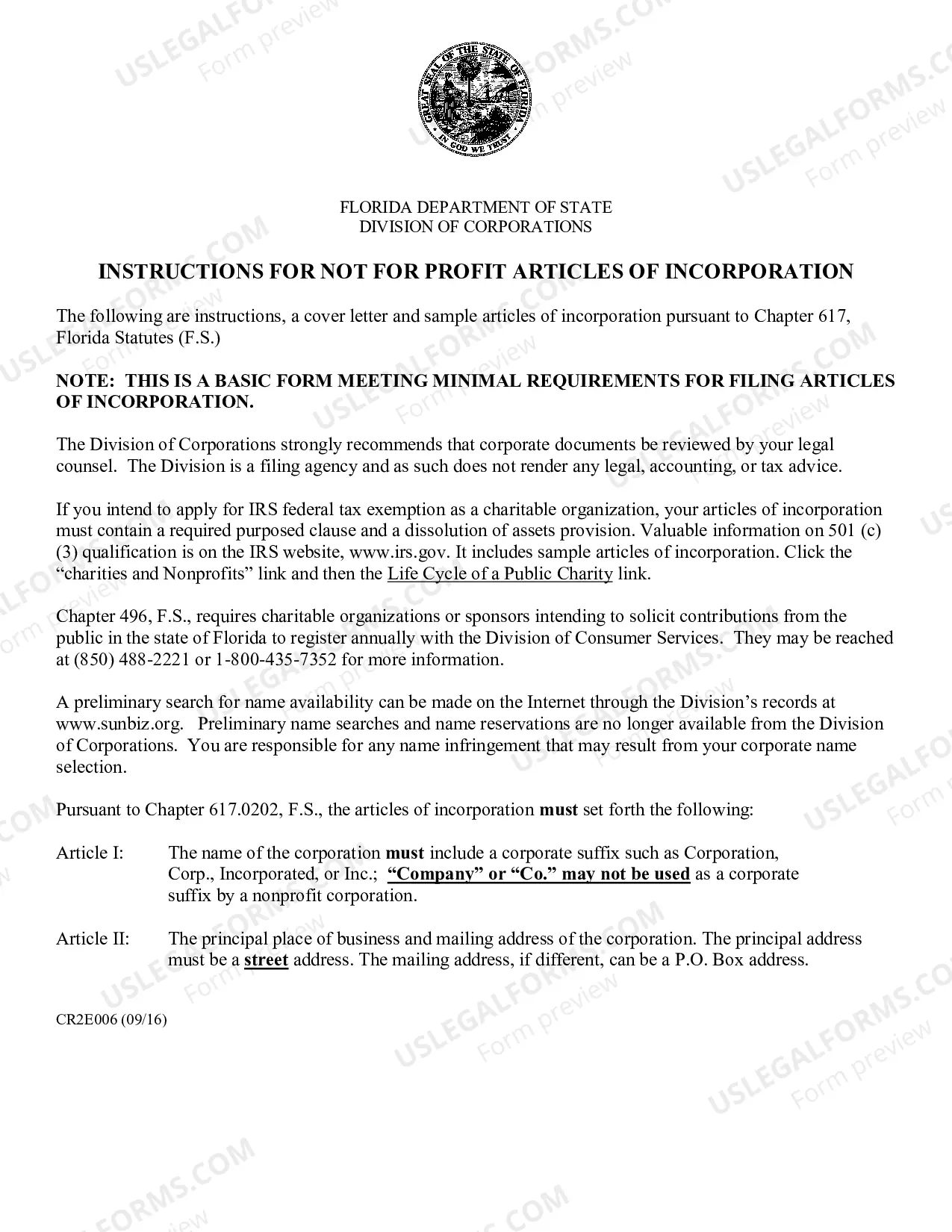
Does this form need to be notarized?
This form does not typically require notarization to be legally valid. However, some jurisdictions or document types may still require it. US Legal Forms provides secure online notarization powered by Notarize, available 24/7 for added convenience.
Get your form ready online
Our built-in tools help you complete, sign, share, and store your documents in one place.
Make edits, fill in missing information, and update formatting in US Legal Forms—just like you would in MS Word.
Download a copy, print it, send it by email, or mail it via USPS—whatever works best for your next step.
Sign and collect signatures with our SignNow integration. Send to multiple recipients, set reminders, and more. Go Premium to unlock E-Sign.
If this form requires notarization, complete it online through a secure video call—no need to meet a notary in person or wait for an appointment.
We protect your documents and personal data by following strict security and privacy standards.

Make edits, fill in missing information, and update formatting in US Legal Forms—just like you would in MS Word.

Download a copy, print it, send it by email, or mail it via USPS—whatever works best for your next step.

Sign and collect signatures with our SignNow integration. Send to multiple recipients, set reminders, and more. Go Premium to unlock E-Sign.

If this form requires notarization, complete it online through a secure video call—no need to meet a notary in person or wait for an appointment.

We protect your documents and personal data by following strict security and privacy standards.
Looking for another form?

Form popularity
FAQ
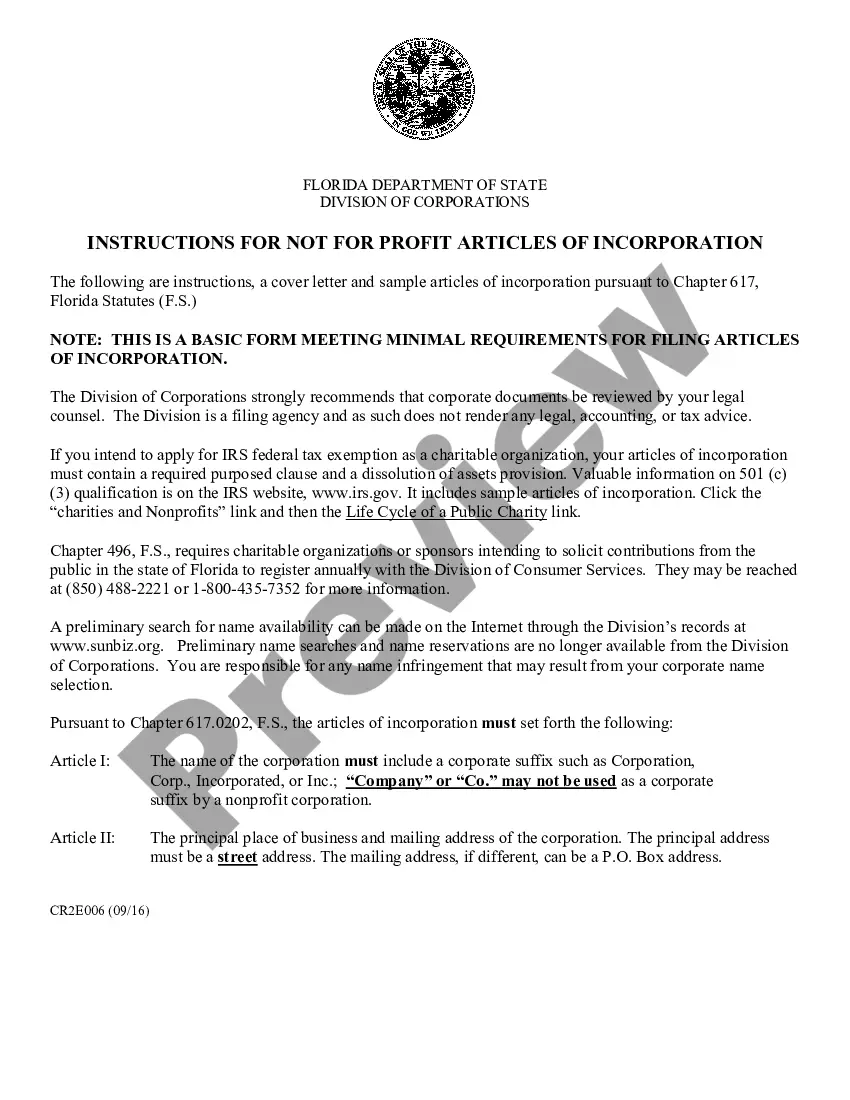
To get your articles of incorporation document, start by visiting the Florida Division of Corporations' online portal. You can enter your nonprofit corporation's name to access your Florida Articles of Incorporation for Domestic Nonprofit Corporation. If you prefer, you can also use services like US Legal Forms to request the document easily and efficiently, ensuring you receive the correct version without any hassle.
The three types of nonprofit corporations include public charities, private foundations, and social advocacy organizations. Public charities often receive funding from the government or public donations, while private foundations mainly rely on investment income. Social advocacy organizations focus on promoting specific causes and influence public policy. Starting any of these types in Florida requires the proper filing, including the Florida Articles of Incorporation for Domestic Nonprofit Corporation.
A domestic non-profit corporation is a nonprofit entity that operates within the state in which it was created. It specializes in serving specific community goals without the intention of making profits for owners or shareholders. Understanding the requirements, such as filing the Florida Articles of Incorporation for Domestic Nonprofit Corporation, is vital in ensuring compliance with state laws and regulations.
To form a nonprofit corporation in Florida, start by selecting a unique name for your organization. Next, you must file the Florida Articles of Incorporation for Domestic Nonprofit Corporation with the Florida Department of State. Additionally, it's important to create bylaws and appoint a board of directors to govern the organization effectively. Using platforms like US Legal Forms can simplify this process by providing the necessary legal documents and guidance.
A nonprofit cooperative corporation is an organization formed to provide a service or benefit to its members, rather than to generate profit. These corporations aim to serve common interests, such as education or community services, and operate under the principles of mutual benefit. If you are looking to establish one in Florida, you will need to prepare your Florida Articles of Incorporation for Domestic Nonprofit Corporation to begin the process.
The key difference between a domestic nonprofit corporation and a nonprofit cooperative corporation lies in their structure and purpose. A domestic nonprofit corporation primarily focuses on charitable, educational, or social causes, while a nonprofit cooperative corporation is created to serve the mutual interests of its members. Both require filing Florida Articles of Incorporation for Domestic Nonprofit Corporation, but their operational goals can differ significantly. Understanding these distinctions can help you choose the right form for your organization.
Filing articles of incorporation for a nonprofit in Florida is straightforward. You need to complete the Florida Articles of Incorporation for Domestic Nonprofit Corporation form and submit it to the state's Division of Corporations. It's important to include all required information, such as the nonprofit's name, purpose, and details about the board of directors. After submission, wait for the approval, which will officially establish your organization.
To register your nonprofit organization in Florida, you begin by filing Florida Articles of Incorporation for Domestic Nonprofit Corporation with the Division of Corporations. This process involves providing your nonprofit's name, purpose, and other essential details. After successful filing, you should obtain an Employer Identification Number (EIN) from the IRS, which is necessary for tax purposes and banking. Having these steps lined up will set a solid foundation for your nonprofit's success.
Yes, nonprofits must register in Florida if they intend to operate within the state. To form your nonprofit, you need to file Florida Articles of Incorporation for Domestic Nonprofit Corporation with the state. This registration is crucial not only for legal recognition but also for potential fundraising and grant opportunities. Remember, starting your nonprofit on the right foot can make all the difference.
A domestic nonprofit corporation is not automatically a 501(c)(3) organization. The 501(c)(3) status is a specific designation from the IRS that grants federal tax-exempt status for charitable organizations. To achieve this status, organizations must apply after filing Florida Articles of Incorporation for Domestic Nonprofit Corporation. This means you can first establish your nonprofit at the state level before pursuing IRS recognition.