Negociación y Redacción de Arrendamientos de Oficinas
Para su conveniencia, debajo del texto en español le brindamos la versión completa de este formulario en inglés.
For your convenience, the complete English version of this form is attached below the Spanish version.
If your landlord says no, you’ll need to respect their decision. You could try discussing alternatives or share why the change is important to you; who knows, they might come around!
Common alterations might include hanging pictures, installing shelves, or replacing light bulbs. Major changes like knocking down walls usually need a big green light from your landlord.
Often, yes. Many leases require you to return the space to how it was when you moved in. Think of it like returning a library book – it's got to be in good shape!
If you go ahead without asking, you might face penalties or even eviction. It’s better to stay on the safe side and communicate with your landlord.
Yes, it's always best to get written permission from your landlord before making any alterations. It's like asking a favor – it keeps the peace!
It depends! Typically, you need to check with your landlord first. Some landlords are okay with a fresh coat of paint, while others prefer to keep things as they are.
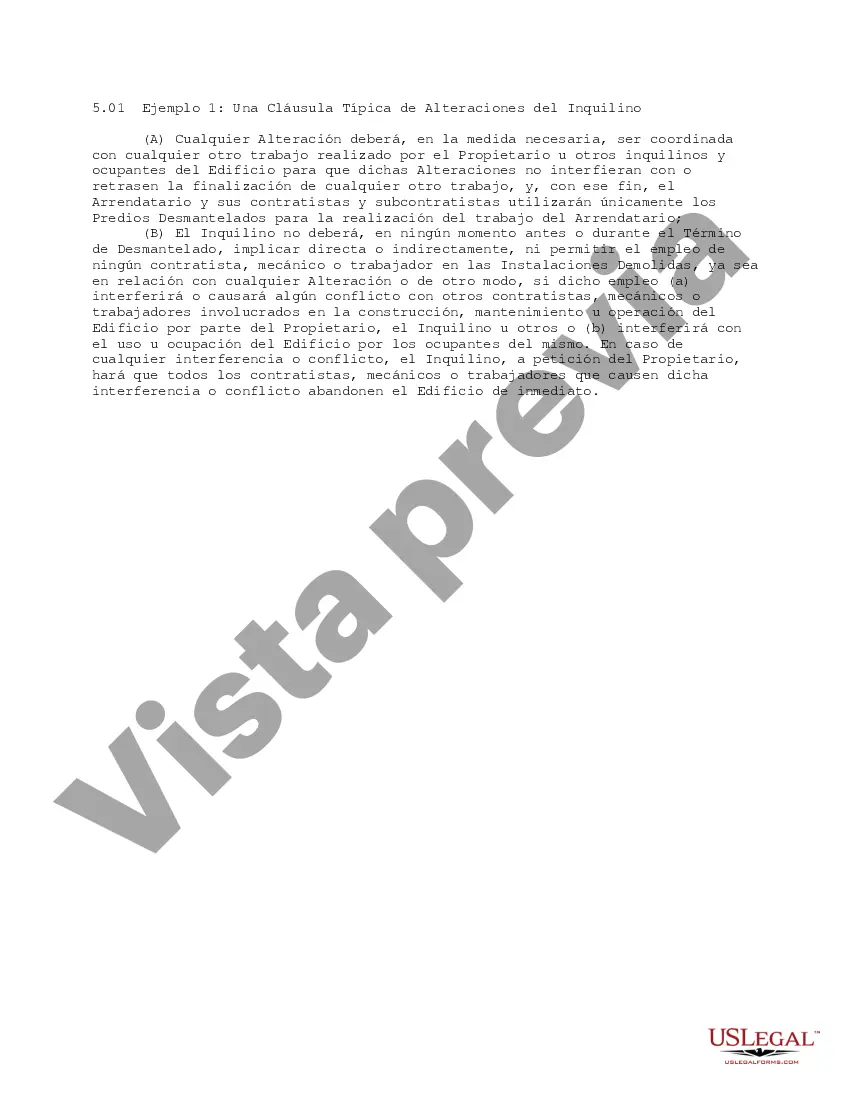
A tenant alterations clause is a part of a lease that explains what modifications or improvements the tenant is allowed to make to the rental property.
Trusted and secure by over 3 million people of the world’s leading companies
Orlando Florida Cláusula de Alteraciones del Inquilino