Wisconsin Fiduciary Deed for use by Executors, Trustees, Trustors, Administrators and other Fiduciaries
What is this form?
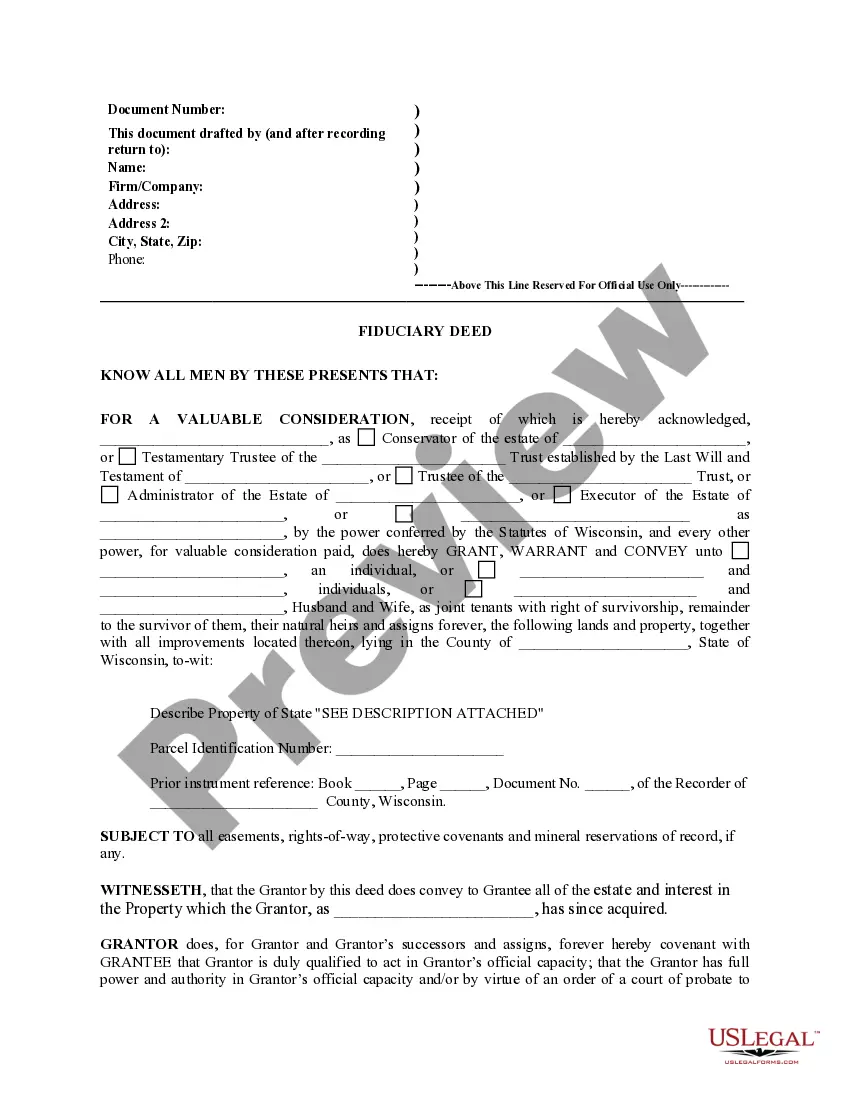
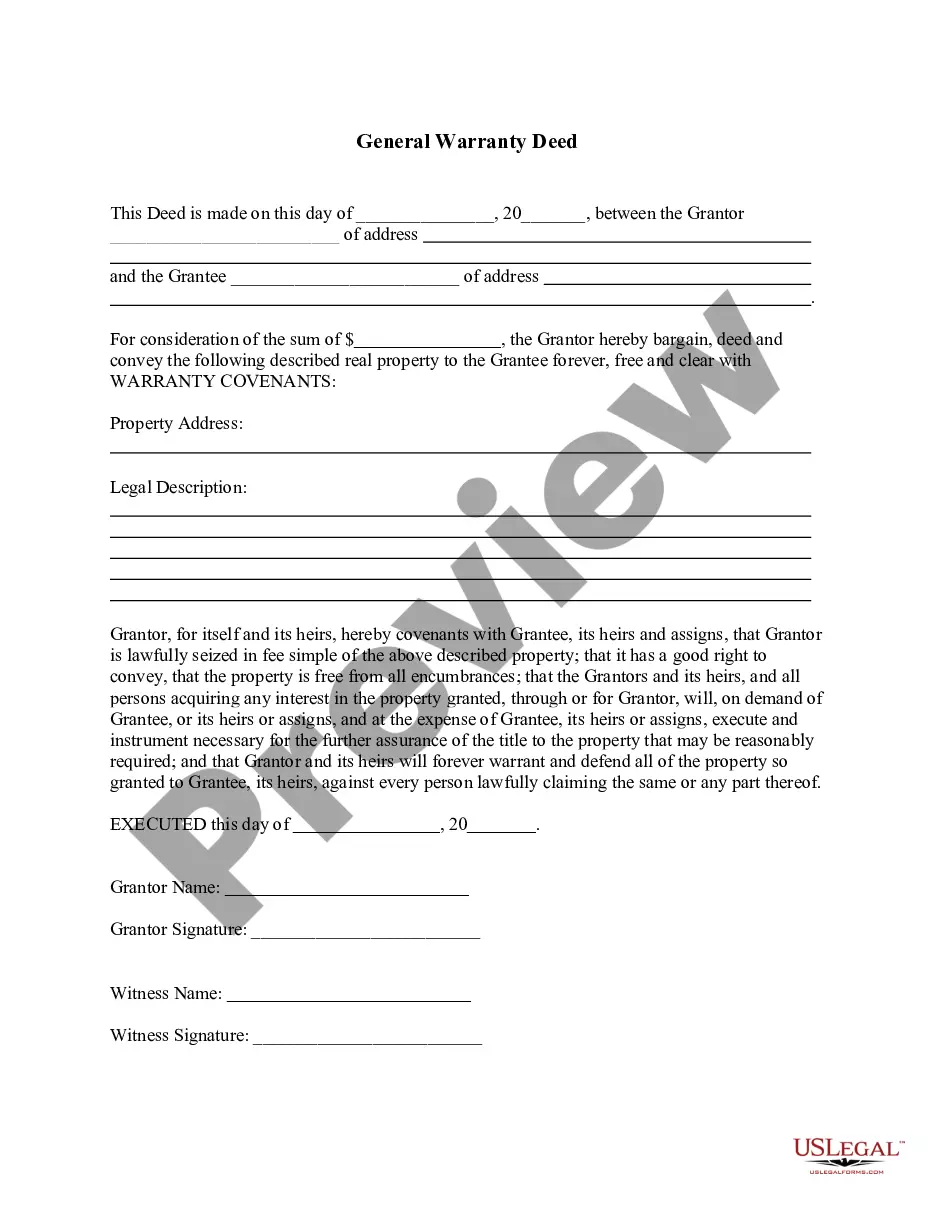
The Fiduciary Deed is a legal document used by fiduciaries such as executors, trustees, and guardians to transfer property title on behalf of another party. This form allows the grantor, who may serve in various fiduciary roles, to convey property interests effectively. It is distinct from regular deeds since it involves fiduciaries acting within their capacities, ensuring trustor intentions are respected during property transfers.
Form components explained
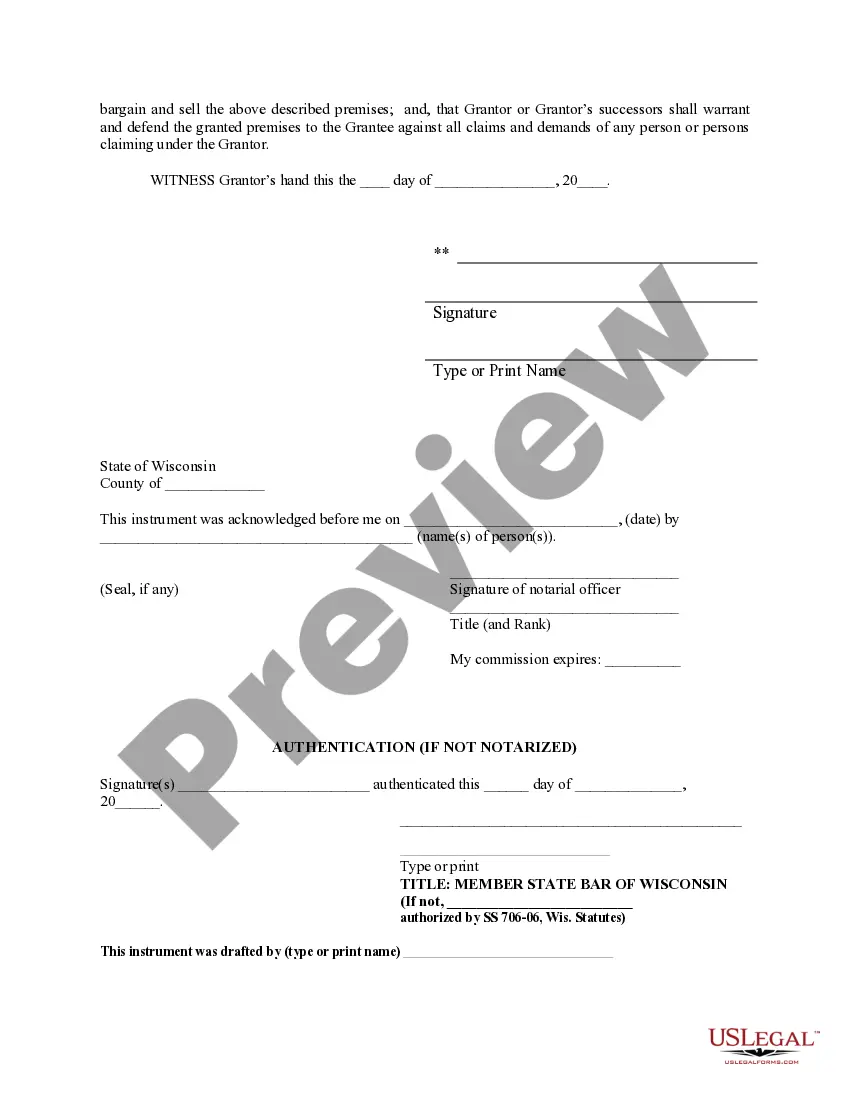
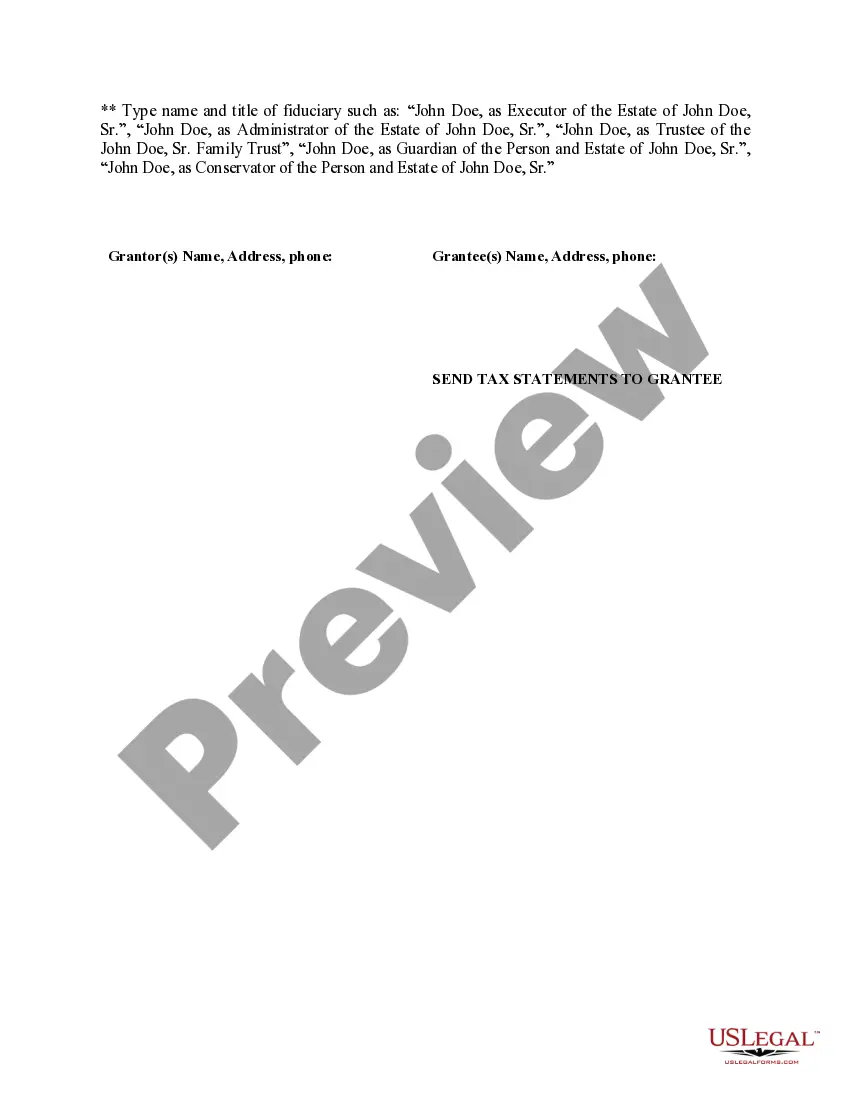
- Identification of the grantor as executor, trustee, administrator, or other fiduciary.
- Detailed description of the property being conveyed.
- Legal acknowledgment section for notary public or authorized individuals.
- Signatures of the fiduciary and any required witnesses.
- Reference to the Wisconsin Real Estate Transfer Return Form.



When this form is needed
This fiduciary deed should be used when a fiduciary is required to transfer property title on behalf of an estate, trust, or another person. Common scenarios include the distribution of real estate after an individual's death, transfer of property held in trust, or when an administrator needs to liquidate estate assets to settle debts. This form helps in legally documenting the transfer to protect all parties' interests.
Who should use this form
- Executors managing an estate under a will.
- Trustees acting on behalf of beneficiaries of a trust.
- Administrators responsible for intestate estates (where there is no will).
- Guardians managing property for minors or incapacitated adults.
- Conservators making property decisions for individuals unable to manage their affairs.
How to complete this form
- Identify the fiduciary and ensure you have their title and role correctly filled in.
- Clearly describe the property being transferred, including any relevant parcel identification numbers.
- Gather necessary signatures from the fiduciary and, if required, witnesses.
- Complete the acknowledgment section for notarization or alternate authentication.
- Attach the Wisconsin Real Estate Transfer Return Form and check for additional local filings if necessary.
Notarization requirements for this form
To make this form legally binding, it must be notarized. Our online notarization service, powered by Notarize, lets you verify and sign documents remotely through an encrypted video session.
Get your form ready online
Our built-in tools help you complete, sign, share, and store your documents in one place.
Make edits, fill in missing information, and update formatting in US Legal Forms—just like you would in MS Word.
Download a copy, print it, send it by email, or mail it via USPS—whatever works best for your next step.
Sign and collect signatures with our SignNow integration. Send to multiple recipients, set reminders, and more. Go Premium to unlock E-Sign.
If this form requires notarization, complete it online through a secure video call—no need to meet a notary in person or wait for an appointment.
We protect your documents and personal data by following strict security and privacy standards.

Make edits, fill in missing information, and update formatting in US Legal Forms—just like you would in MS Word.

Download a copy, print it, send it by email, or mail it via USPS—whatever works best for your next step.

Sign and collect signatures with our SignNow integration. Send to multiple recipients, set reminders, and more. Go Premium to unlock E-Sign.

If this form requires notarization, complete it online through a secure video call—no need to meet a notary in person or wait for an appointment.

We protect your documents and personal data by following strict security and privacy standards.
Typical mistakes to avoid
- Failing to properly identify the grantor's fiduciary role.
- Neglecting to include necessary property descriptions and identification numbers.
- Forgetting to obtain notarization or proper signatures.
- Not filing the required Wisconsin Real Estate Transfer Return.
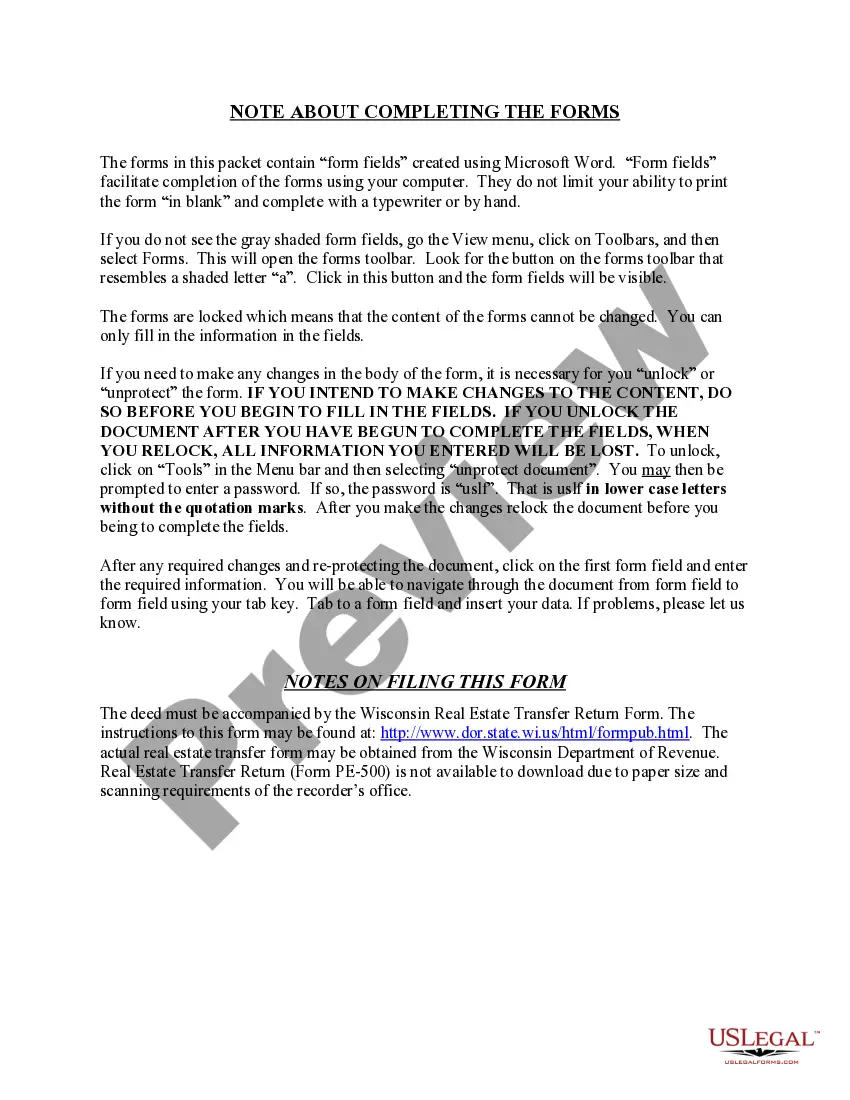
- Making changes to the form after filling in the fields without relocking the document.
Why use this form online
- Convenient downloadable format allows for immediate access and editing.
- Form fields designed for easy completion can improve accuracy.
- Access to legal templates ensures compliance with state laws.
- Ability to make necessary adjustments before finalizing and printing.
- Support from US Legal Forms staff for any issues encountered when completing the form.
Looking for another form?


Form popularity
FAQ
An administrator will take title legally on the estate's assets, and has legal responsibility to file all tax returns and pay all related taxes.In certain cases, the administrator may have personal liability for any unpaid tax amounts due for the estate.
Trustees, executors, administrators and other types of personal representatives are all fiduciaries.Executor - (Also called personal representative; a woman is sometimes called an executrix) An individual or trust company that settles the estate of a testator according to the terms of the will.
Yes an estate can have 2 administrators but it is not likely. If a names co-executors the Court may allow this, but if two people want to serve as co-administrators most Courts say "No" to the future conflicts between adminsitrators.
The trustee is the legal owner of the property in trust, as fiduciary for the beneficiary or beneficiaries who is/are the equitable owner(s) of the trust property. Trustees thus have a fiduciary duty to manage the trust to the benefit of the equitable owners.
Residents of California may wonder what is involved in trust administration. A trust has two parts, income and principal, and the administrator, also known as the fiduciary, is in charge of managing both of those parts.
The trustee acts as the legal owner of trust assets, and is responsible for handling any of the assets held in trust, tax filings for the trust, and distributing the assets according to the terms of the trust. Both roles involve duties that are legally required.
A trustee is the person in charge of a trust. An administrator is the person appointed by the probate court to oversee a decedent's estate when there is no will.Probate is the process to administer a decedent's estate when there is either no will or there is a will but not a trust.
In most situations, it's not a good idea to name co-executors. When you're making your will, a big decision is who you choose to be your executorthe person who will oversee the probate of your estate. Many people name their spouse or adult child. You can, however, name more than one person to serve as executor.
The Executor is responsible for wrapping up the deceased person's affairs and distributing the assets to, or for the benefit of, the persons named in the will (beneficiaries). An Administrator is the person in charge of the estate when my someone dies without a Last Will and Testament.