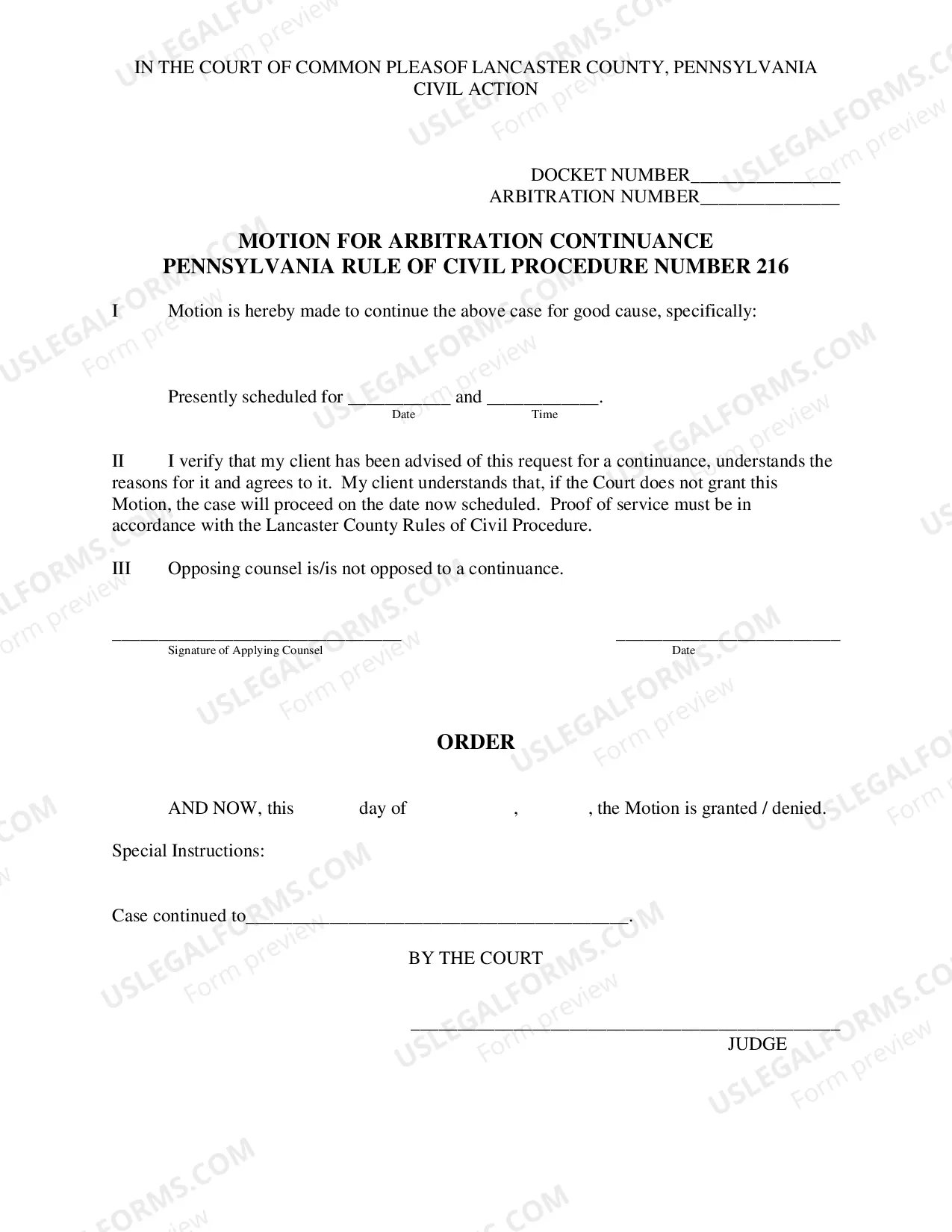
Personal Injury Settlement Statement
About this form
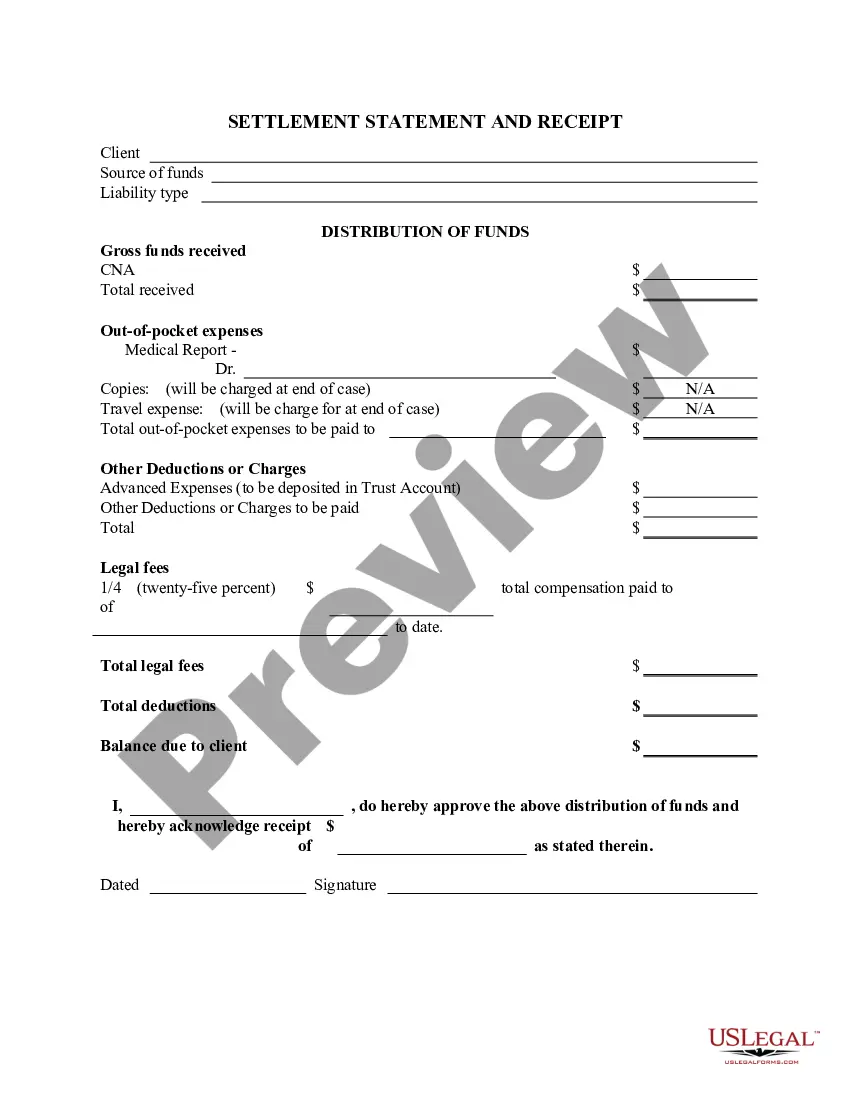
The Personal Injury Settlement Statement is a crucial document prepared by your attorney that outlines the financial details of your settlement. It includes a comprehensive breakdown of expenses, attorney fees, and disbursements from your settlement amount. This form differs from other legal documents by specifically detailing all the deductions applicable to your settlement, ensuring transparency in how your funds are handled.
Form components explained
- Client identification details, including name and date.
- Gross settlement amount and the attorney fee percentage.
- A list of outstanding expenses and court costs.
- Detailed breakdown of specific costs such as travel, investigation, and medical records.
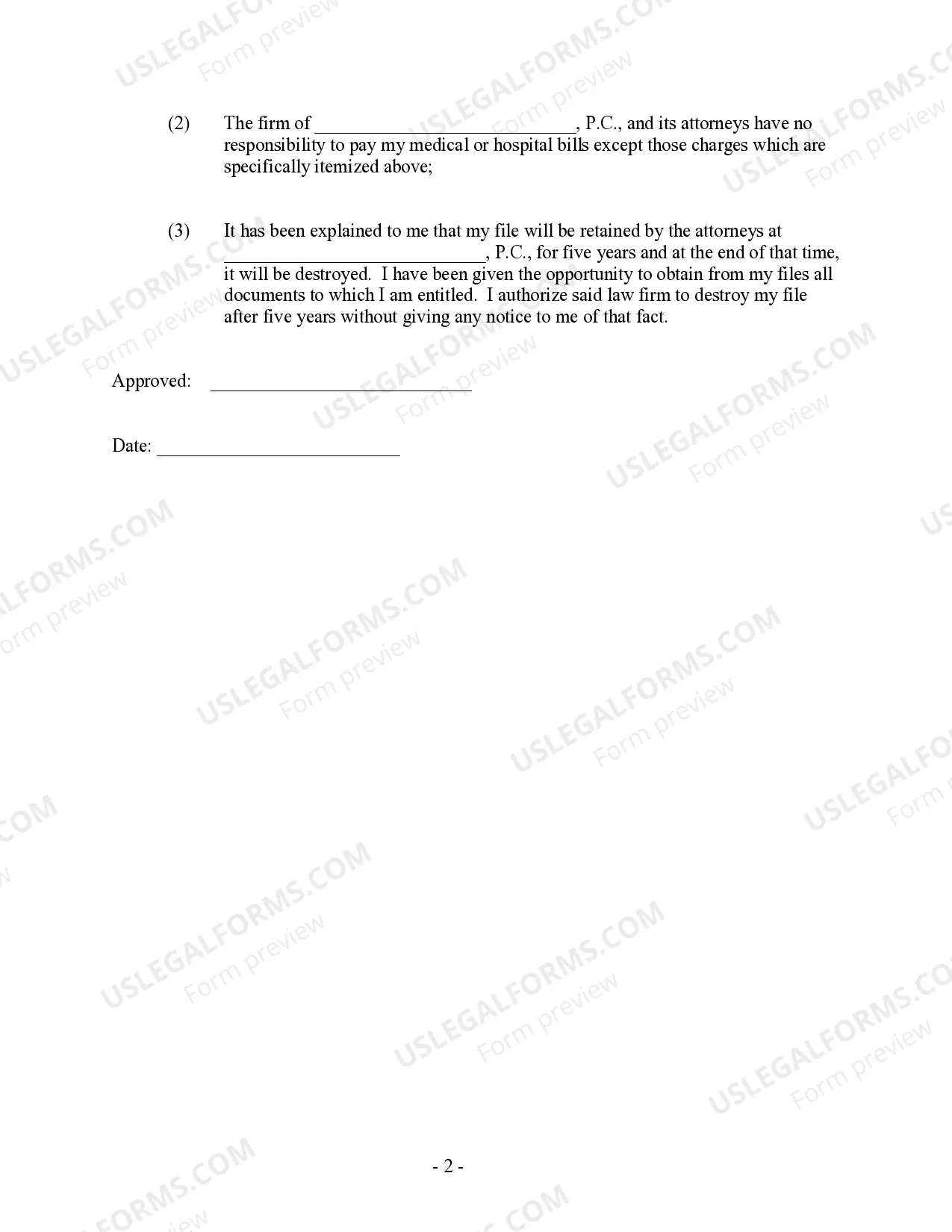
- Declaration of understanding and agreement with the stated deductions.
- Signature and date lines for client approval of the settlement statement.

When to use this document
You should use the Personal Injury Settlement Statement after your attorney has negotiated a settlement for your personal injury case. It is essential for reviewing the financial aspects of your settlement, ensuring that all costs and fees are clearly documented before you authorize disbursement of funds. This form is particularly vital when settling cases involving medical expenses, attorney fees, and other related costs.
Intended users of this form
This form is intended for individuals who have reached a settlement in a personal injury case and need a clear outline of how their settlement funds have been allocated. Specifically, this applies to:
- Clients of personal injury attorneys.
- Individuals seeking transparency regarding their settlement finances.
- Anyone needing to understand their financial obligations related to medical expenses and attorney fees.
Completing this form step by step
- Enter your name and the date at the top of the form.
- Fill in the gross settlement amount and the attorney fee percentage.
- List all outstanding expenses, specifying costs such as medical records and travel expenses.
- Review the deductions carefully and ensure you understand each charge.
- Sign and date the declaration at the bottom of the form, indicating your approval.
Does this document require notarization?
This form does not typically require notarization unless specified by local law. Always check your local regulations to confirm if notarization is necessary for your Personal Injury Settlement Statement.
Get your form ready online
Our built-in tools help you complete, sign, share, and store your documents in one place.
Make edits, fill in missing information, and update formatting in US Legal Forms—just like you would in MS Word.
Download a copy, print it, send it by email, or mail it via USPS—whatever works best for your next step.
Sign and collect signatures with our SignNow integration. Send to multiple recipients, set reminders, and more. Go Premium to unlock E-Sign.
If this form requires notarization, complete it online through a secure video call—no need to meet a notary in person or wait for an appointment.
We protect your documents and personal data by following strict security and privacy standards.

Make edits, fill in missing information, and update formatting in US Legal Forms—just like you would in MS Word.

Download a copy, print it, send it by email, or mail it via USPS—whatever works best for your next step.

Sign and collect signatures with our SignNow integration. Send to multiple recipients, set reminders, and more. Go Premium to unlock E-Sign.

If this form requires notarization, complete it online through a secure video call—no need to meet a notary in person or wait for an appointment.

We protect your documents and personal data by following strict security and privacy standards.
Mistakes to watch out for
- Failing to review all deducted expenses thoroughly.
- Not signing or dating the declaration section.
- Omitting important expense details, which could lead to misunderstandings.
- Assuming all deductions are standard without verification.
Advantages of online completion
- Convenience of immediate access and download from home.
- Editability allows you to customize it to your specific details easily.
- Reliable templates created by licensed attorneys ensure legal compliance.
Legal use & context
- The Personal Injury Settlement Statement is a vital record that can be used in legal discussions regarding the settlement amount.
- It serves as proof of agreement between the attorney and the client regarding financial distributions.
- Failure to properly document expenses and fees can lead to disputes later on.
Key takeaways
- The Personal Injury Settlement Statement outlines all financial aspects of a settlement.
- It's important for clients to understand their net recovery and what expenses have been deducted.
- This form should be accurately completed and stored for future reference.
Looking for another form?


Form popularity
FAQ
The Personal Injury Settlement Statement is a document prepared by your attorney that outlines the financial details of your settlement. It lists the gross settlement amount, the attorney fee percentage, and all expenses and court costs, along with any other disbursements from the settlement. It’s used after settlement negotiations to review and authorize the deduction of funds before disbursement.
The Personal Injury Settlement Statement includes the client’s identification details, the gross settlement amount, and the attorney fee percentage. It also lists outstanding expenses and court costs, plus a detailed breakdown of specific costs such as travel, investigation, and medical records. The document includes a declaration of understanding and agreement with the deductions and a client signature section.
You should use the Personal Injury Settlement Statement after your attorney has negotiated a settlement in a personal injury case. It is essential for reviewing the financial aspects, ensuring that all costs and fees are clearly documented before you authorize disbursement of funds. It is particularly important for cases involving medical expenses and attorney fees.
The Personal Injury Settlement Statement is intended for clients of personal injury attorneys and requires the client to sign and date to acknowledge approval of the deductions. The document includes signature and date lines for client approval, confirming agreement with the stated deductions before funds are disbursed.
The statement shows the gross settlement amount and the attorney fee percentage, which indicates the portion of the settlement allocated to attorney fees. This helps the client see how much is deducted for legal representation alongside other expenses and costs before disbursement.
It differs by specifically detailing all deductions from the settlement, including travel, investigation, medical records, outstanding expenses, and court costs. This explicit breakdown, along with the declaration of understanding and the client signature, promotes transparency in how settlement funds are handled compared with more generic settlement forms.