Massachusetts Trim Carpenter Contract for Contractor
Understanding this form
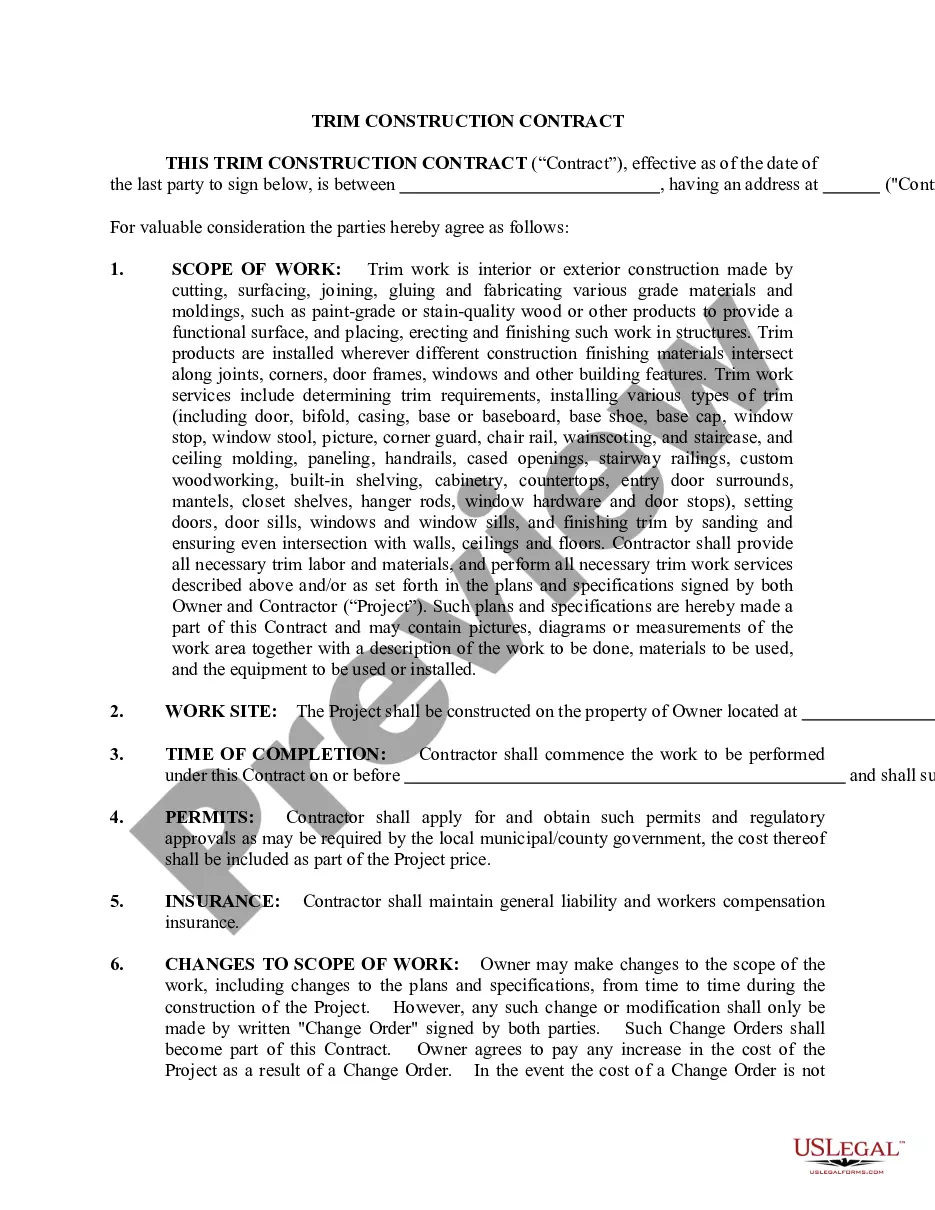
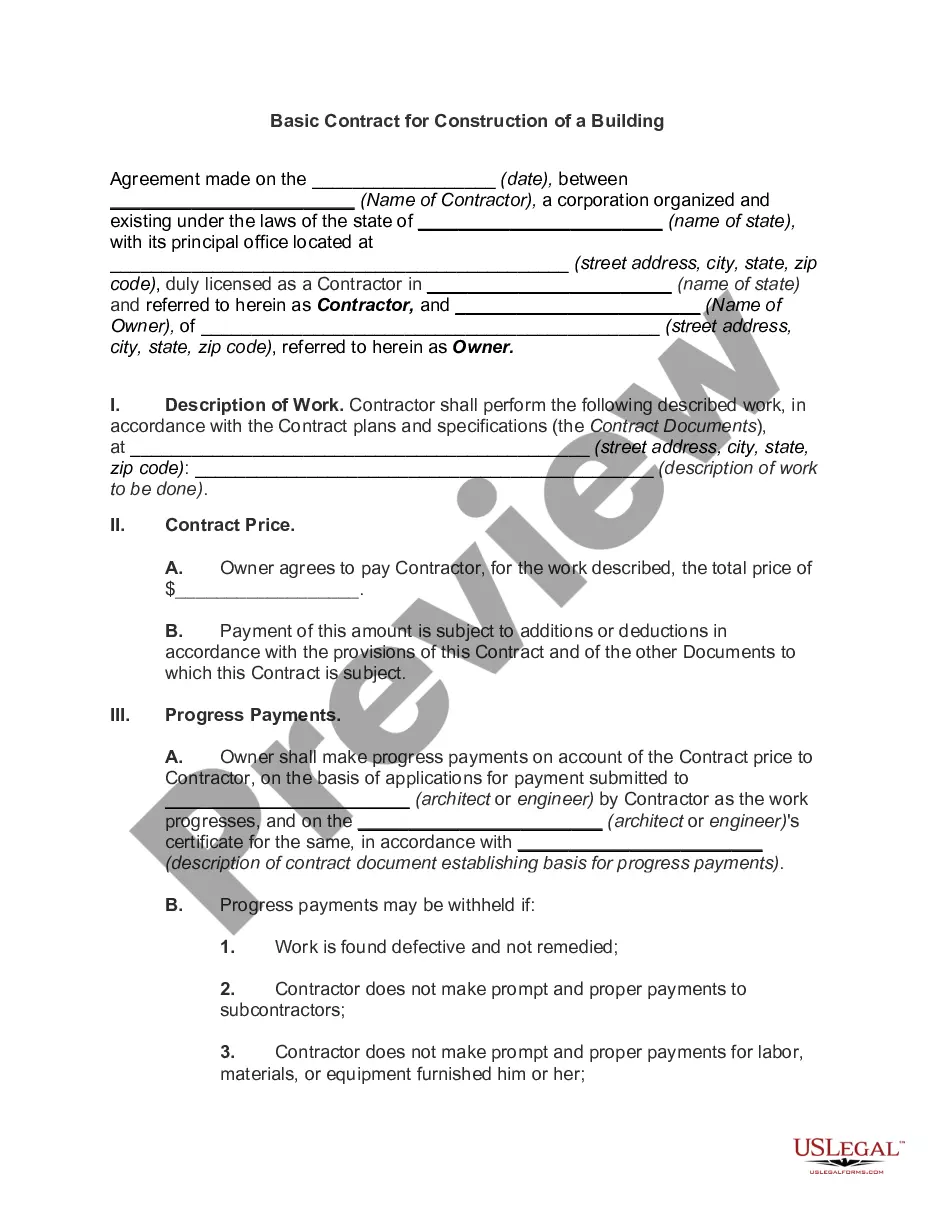
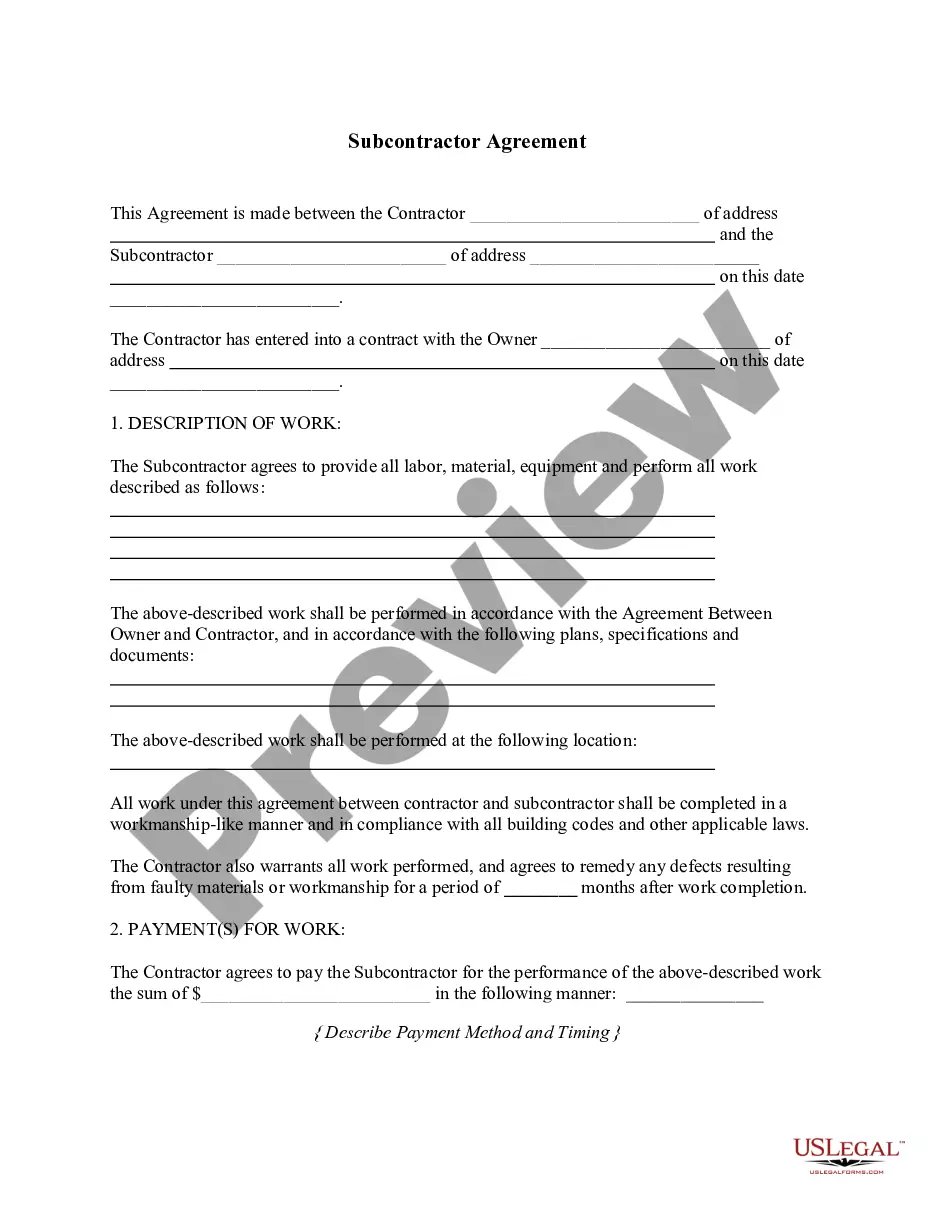
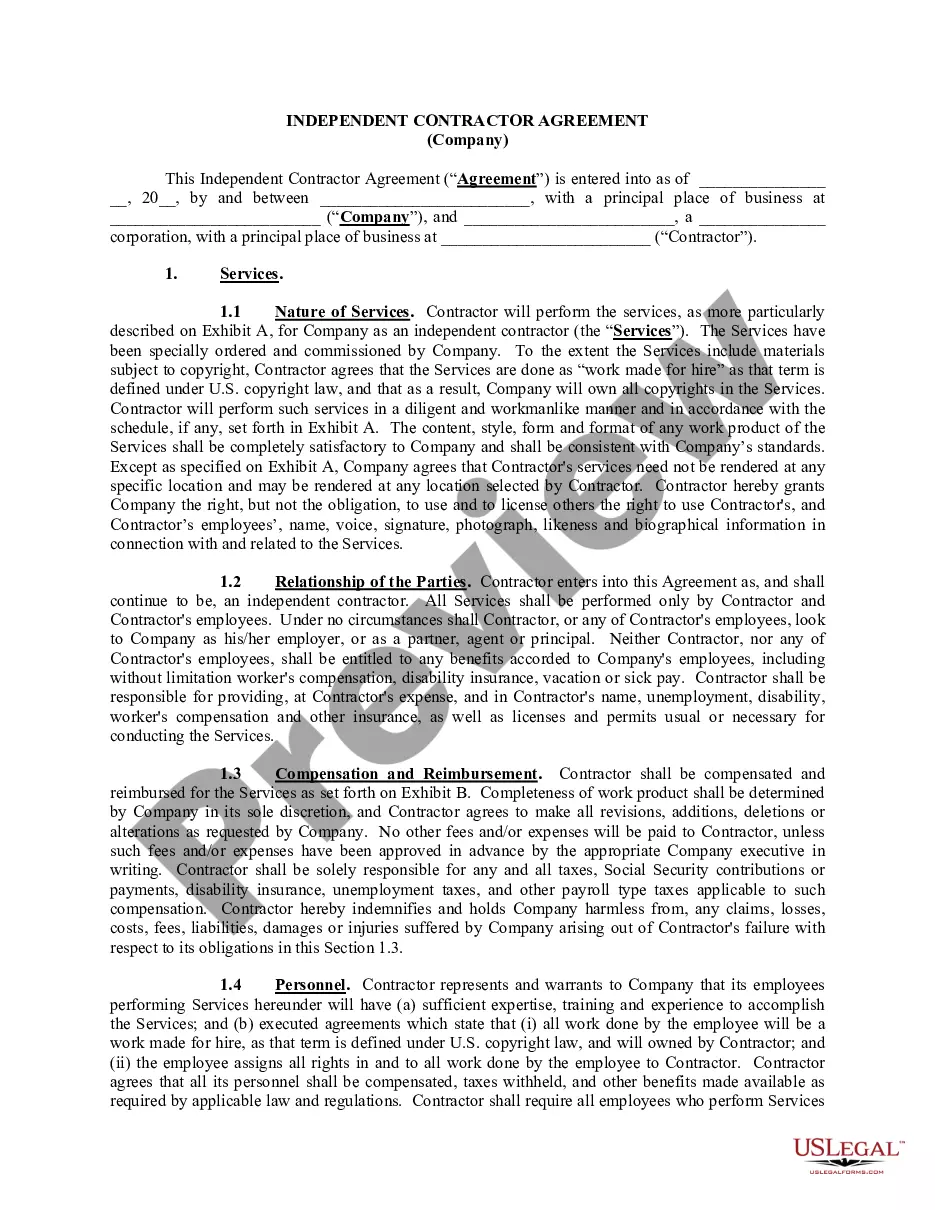
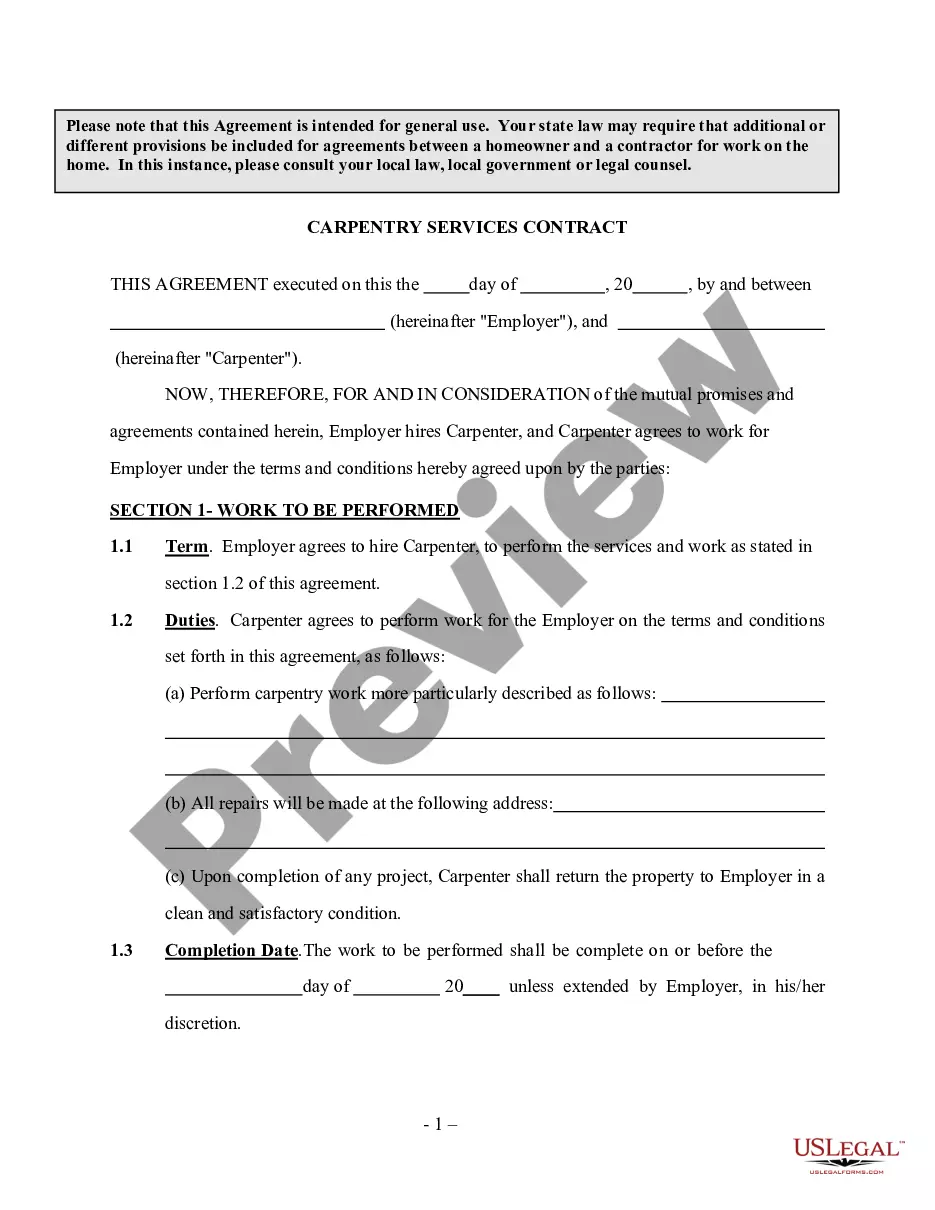
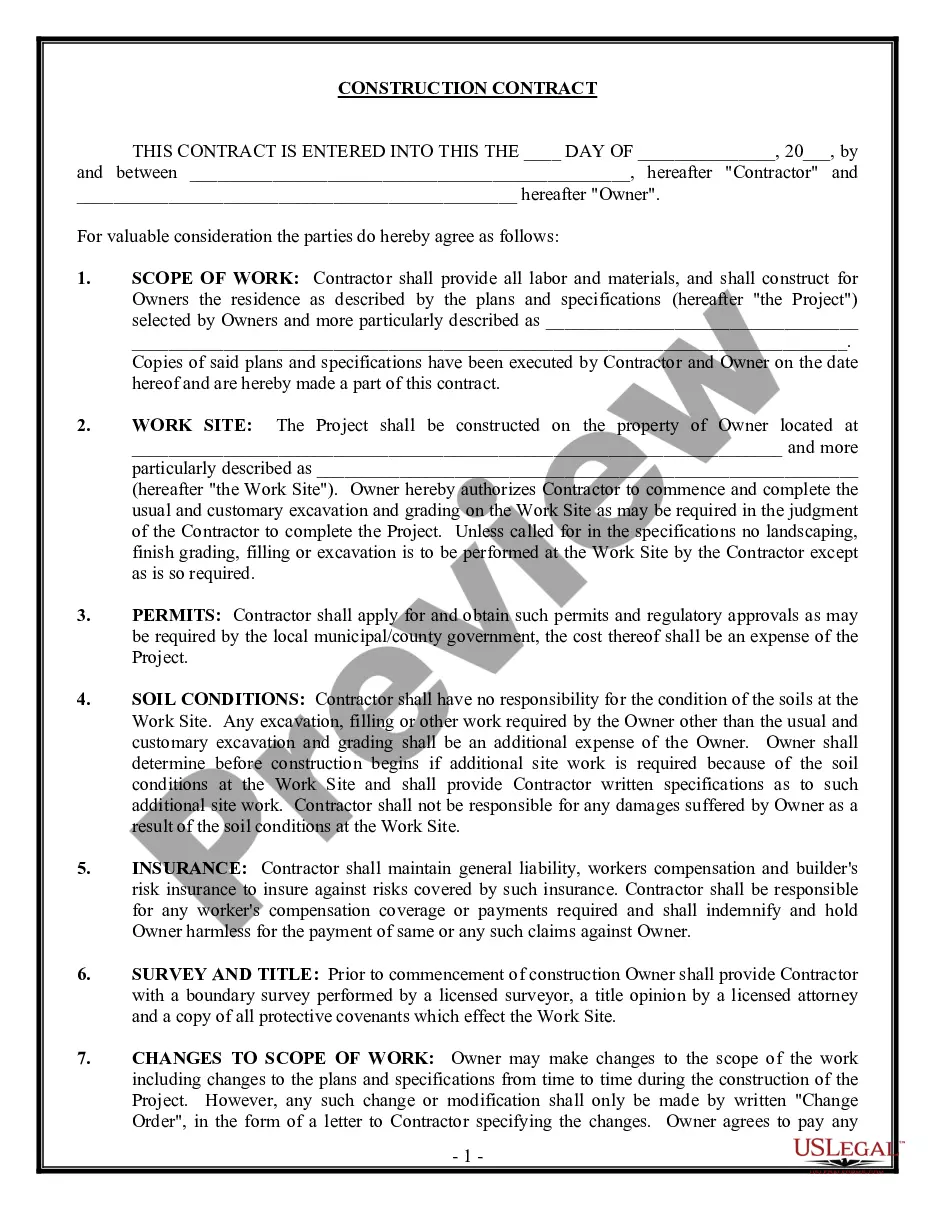
The Trim Carpenter Contract for Contractor is a legally binding agreement between trim carpenter contractors and property owners. This contract facilitates a smooth working relationship through clear terms regarding pricing, scope of work, and essential protections for both parties. By addressing elements such as change orders and insurance requirements, this form distinguishes itself from other general contractor agreements, ensuring compliance with Massachusetts laws.
Key components of this form
- Permits: Details on responsibilities for obtaining necessary permits and approvals.
- Insurance: Requirements for general liability and workers' compensation insurance.
- Changes to scope of work: Procedures for making changes during the project through written change orders.
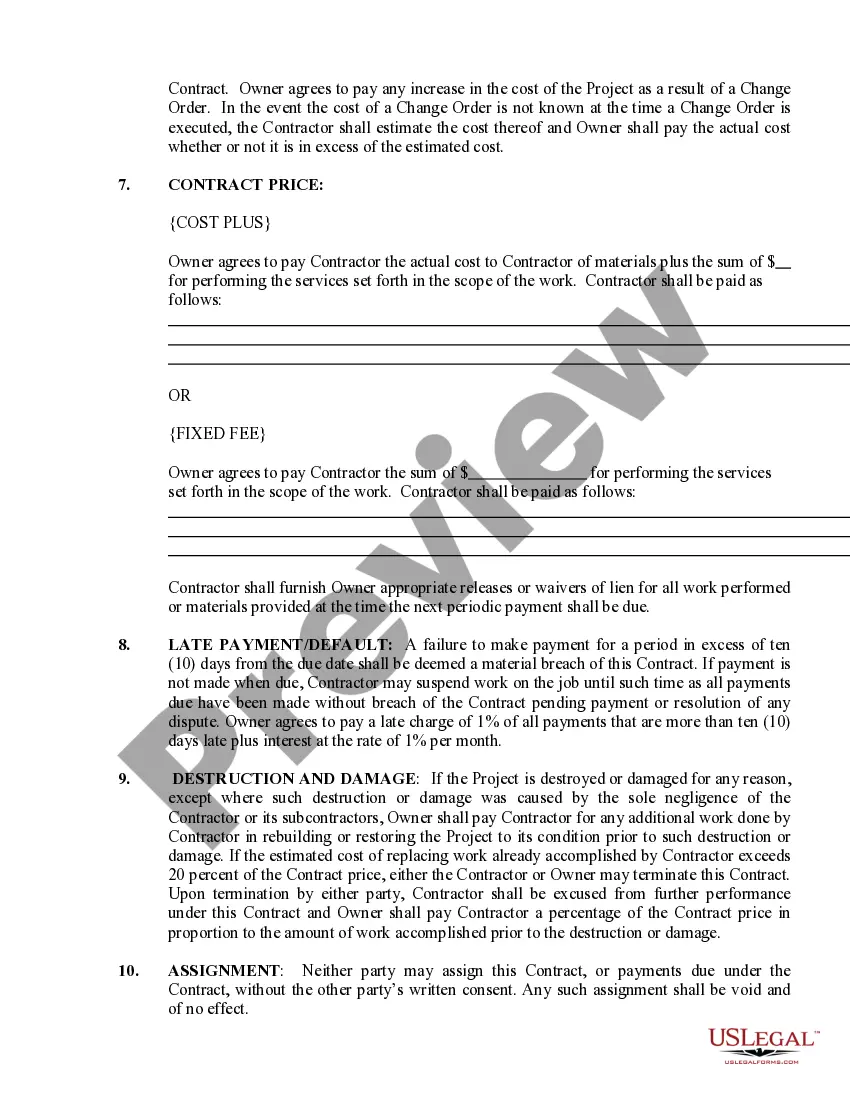
- Contract price: Specifications on payment structures and adjustments for change orders.
- Destruction and damage: Terms covering the project's destruction or damage and procedures for compensation.
- Assignment: Conditions under which the contract can or cannot be assigned to another party.
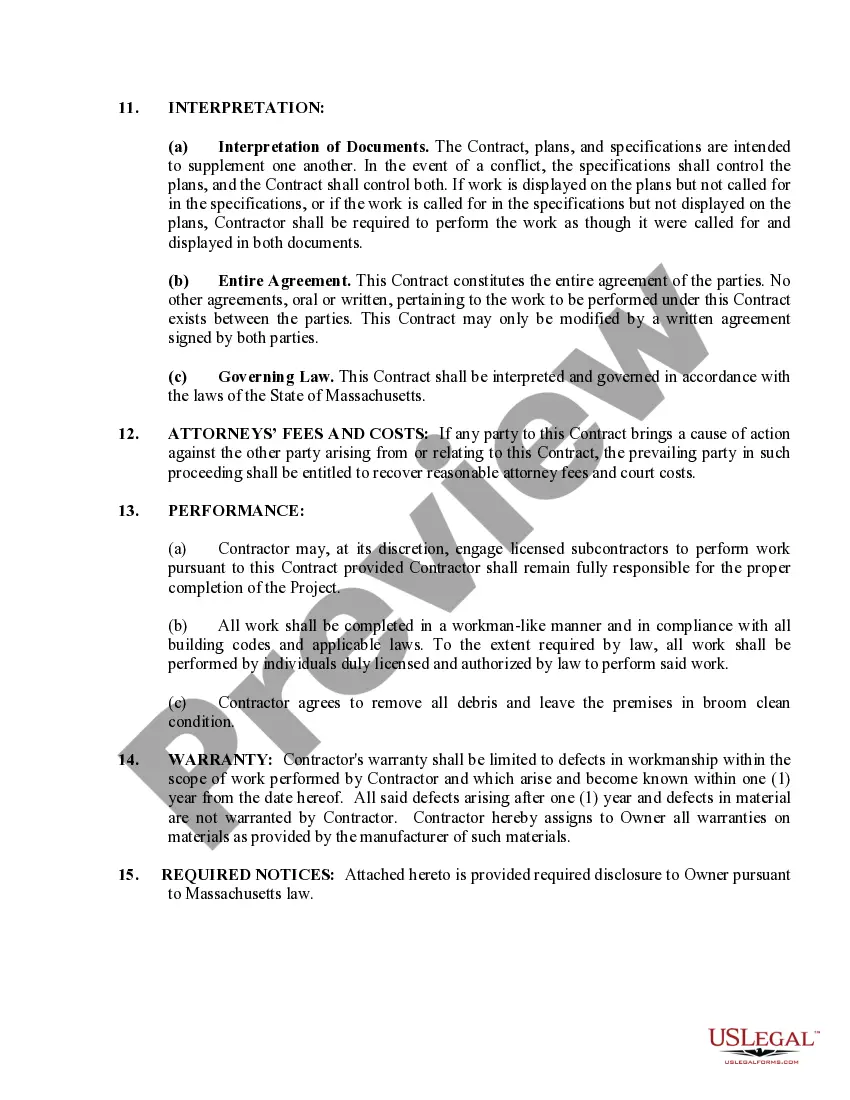
- Entire agreement: Assurance that the contract encompasses all agreements between the parties.
- Governing law: Stipulation that the contract is governed by Massachusetts law.
When to use this form
This form is particularly useful when a property owner engages a trim carpenter contractor for specific projects that require detailed agreements. Scenarios include remodeling projects, custom cabinetry installations, or any construction work needing precise specifications and clarity on legal obligations.
Who this form is for
- Property owners seeking to hire contractors for trim carpentry work.
- Trim carpenter contractors looking for structured contracts to safeguard their work and payment.
- Both parties who want to establish clear terms regarding scope, payment, and responsibilities.
Instructions for completing this form
- Identify the parties: Clearly write the names and contact information of the property owner and the contractor.
- Specify the project: Clearly describe the work to be performed, including details like materials and timelines.
- Determine the payment structure: Indicate whether the contract is a cost-plus or fixed fee arrangement.
- Detail change order procedures: Outline how changes can be made and the requirement for written consent.
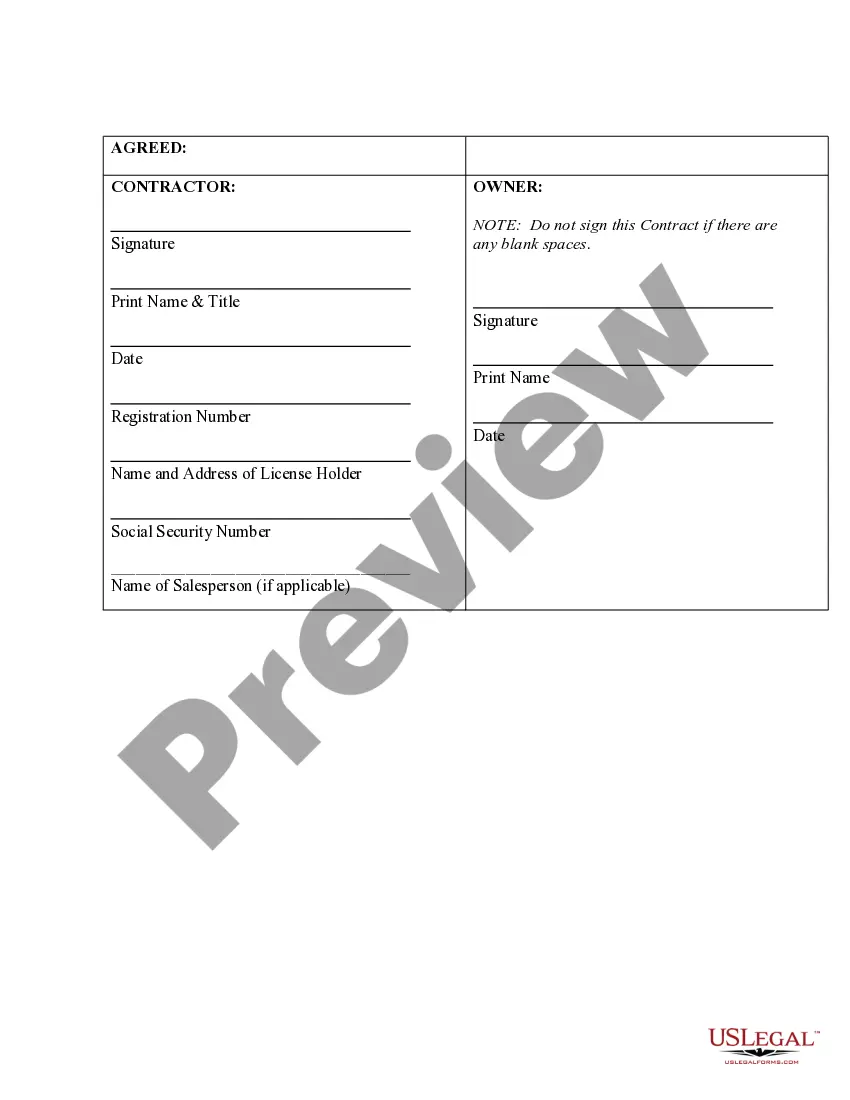
- Sign the contract: Ensure that both parties sign and date the agreement for it to be legally binding.
Is notarization required?
This form usually doesn’t need to be notarized. However, local laws or specific transactions may require it. Our online notarization service, powered by Notarize, lets you complete it remotely through a secure video session, available 24/7.
Get your form ready online
Our built-in tools help you complete, sign, share, and store your documents in one place.
Make edits, fill in missing information, and update formatting in US Legal Forms—just like you would in MS Word.
Download a copy, print it, send it by email, or mail it via USPS—whatever works best for your next step.
Sign and collect signatures with our SignNow integration. Send to multiple recipients, set reminders, and more. Go Premium to unlock E-Sign.
If this form requires notarization, complete it online through a secure video call—no need to meet a notary in person or wait for an appointment.
We protect your documents and personal data by following strict security and privacy standards.

Make edits, fill in missing information, and update formatting in US Legal Forms—just like you would in MS Word.

Download a copy, print it, send it by email, or mail it via USPS—whatever works best for your next step.

Sign and collect signatures with our SignNow integration. Send to multiple recipients, set reminders, and more. Go Premium to unlock E-Sign.

If this form requires notarization, complete it online through a secure video call—no need to meet a notary in person or wait for an appointment.

We protect your documents and personal data by following strict security and privacy standards.
Common mistakes
- Failing to specify details in the scope of work, leading to misunderstandings.
- Not documenting change orders, which can cause disputes over project alterations.
- Overlooking insurance requirements, which can expose either party to risks.
- Not obtaining necessary permits prior to project initiation, risking legal issues.
Advantages of online completion
- Convenience of accessing and filling out the contract from anywhere.
- Editability allows for easy customization to fit the specific needs of the project.
- Reliability, with templates drafted by licensed attorneys to ensure legal compliance.
Looking for another form?

Form popularity
FAQ
Finish carpentry encompasses all work done inside a house after framing, sheathing, wiring, plumbing, insulation and drywall have been installed. This includes door and window installation and trim, fitting interior doors, wood and laminate flooring installation, wainscoting, crown molding and cabinet installation.
Get it in writing. Keep it simple. Deal with the right person. Identify each party correctly. Spell out all of the details. Specify payment obligations. Agree on circumstances that terminate the contract. Agree on a way to resolve disputes.
Name of contractor and contact information. Name of homeowner and contact information. Describe property in legal terms. List attachments to the contract. The cost. Failure of homeowner to obtain financing. Description of the work and the completion date. Right to stop the project.
Determine the type of license you are applying for. Verify your work experience, including documentation. Submit exam registration form. Complete and pass exams. Pay administrative fees. Submit passing exam scores to the State Board of Building Regulations and Standards.
Massachusetts. A carpenter only needs a Home Improvement Contractor Registration to do projects that are considered ordinary repairs on a property, such as repairing an existing deck. You won't need to take an exam for your registration.
Yes, absolutely. Starting work without a signed contract means that your position isn't clear, or even worse it's weak.It also means that the contract is legally enforceable and will be able to support you if you decide to take legal action.
Your general contractor should provide proof of licensing, bonding and insurance before a project starts, but it's better to have it in hand before you sign any contracts. It's important that contractors carry any licensing and/or certification required for the specific trade or skill they practice.
An estimate should be the contractor's best professional assessment, including the cost of hiring any subcontractors, the price of materials, and any other labor involved.
An agreement between private parties creating mutual obligations enforceable by law. The basic elements required for the agreement to be a legally enforceable contract are: mutual assent, expressed by a valid offer and acceptance; adequate consideration; capacity; and legality.