Advance Directive - Durable Power of Attorney
What is this form?
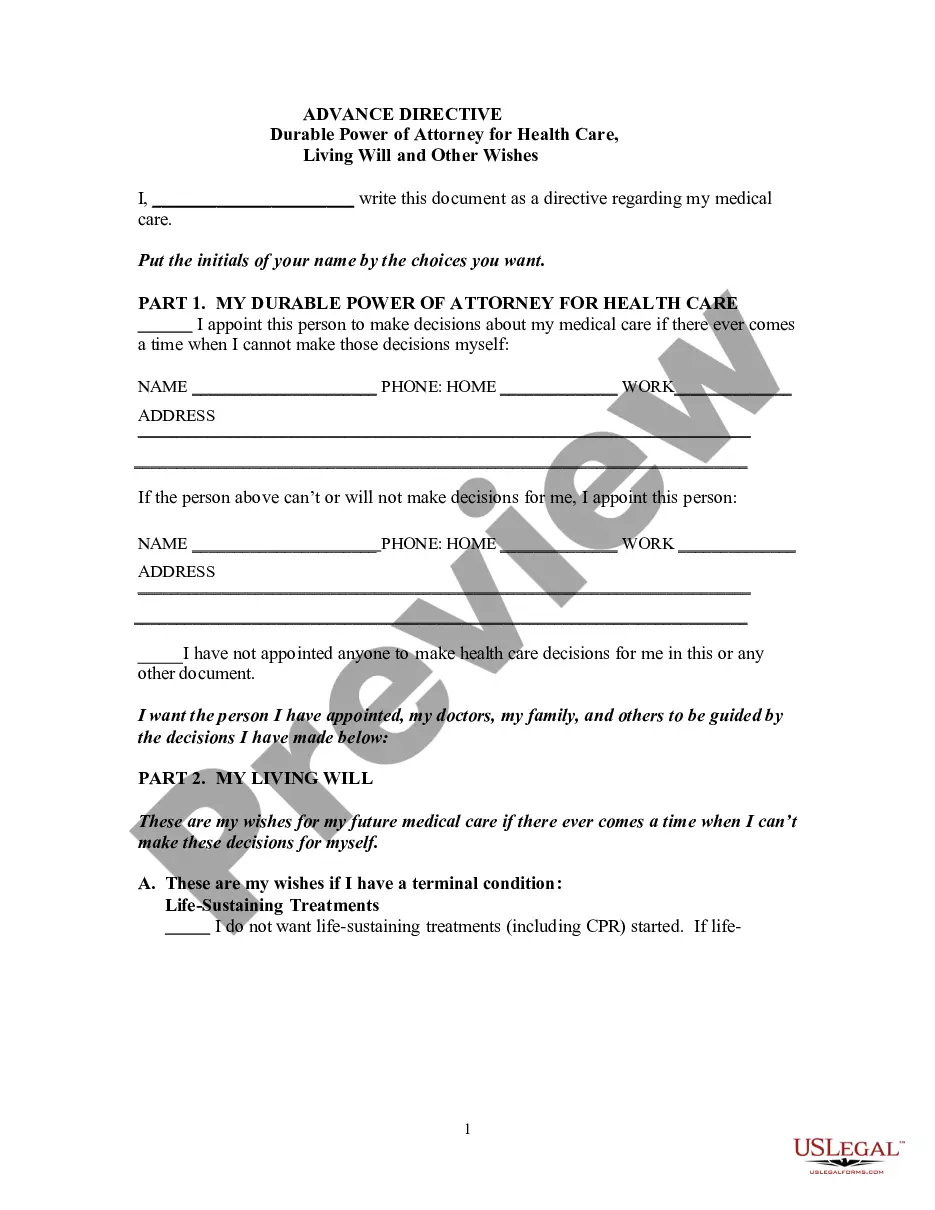
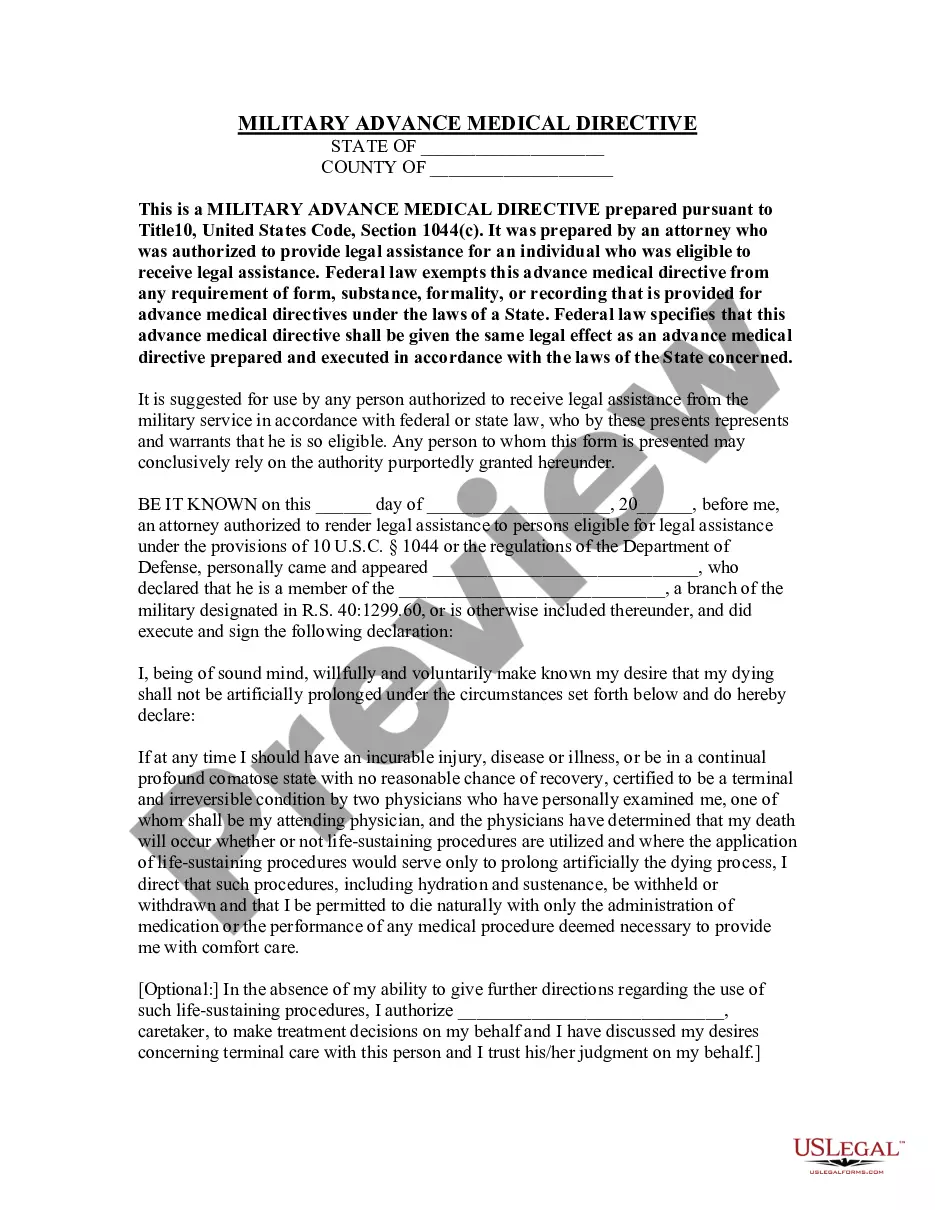
The Advance Directive - Durable Power of Attorney is a legal document that allows you to specify your medical care preferences and appoint someone to make health care decisions on your behalf if you are unable to do so. This form serves a dual purpose: it includes a durable power of attorney for health care and a living will, ensuring that your wishes regarding life-sustaining treatments and other medical decisions are honored. It is essential for individuals looking to ensure that their health care decisions align with their personal values and desires, particularly in end-of-life situations.
What’s included in this form
- Durable Power of Attorney for Health Care: Designate an individual to make health care decisions on your behalf.
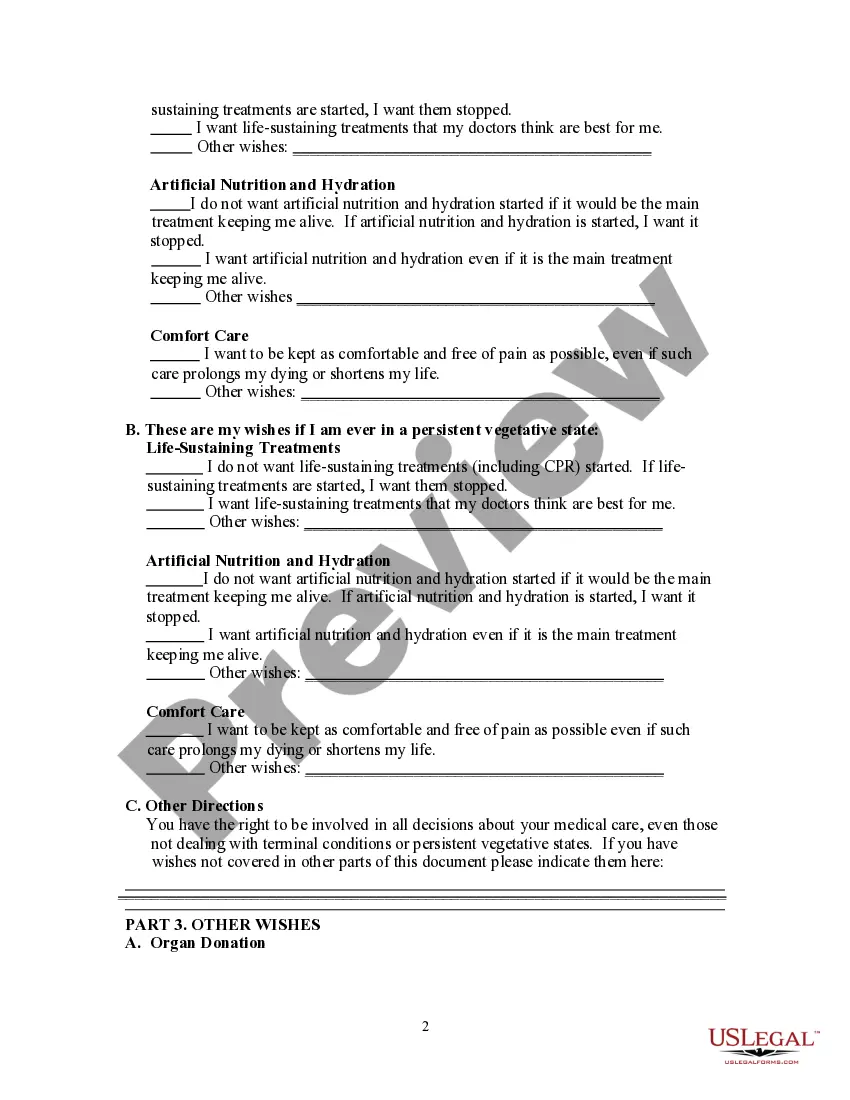
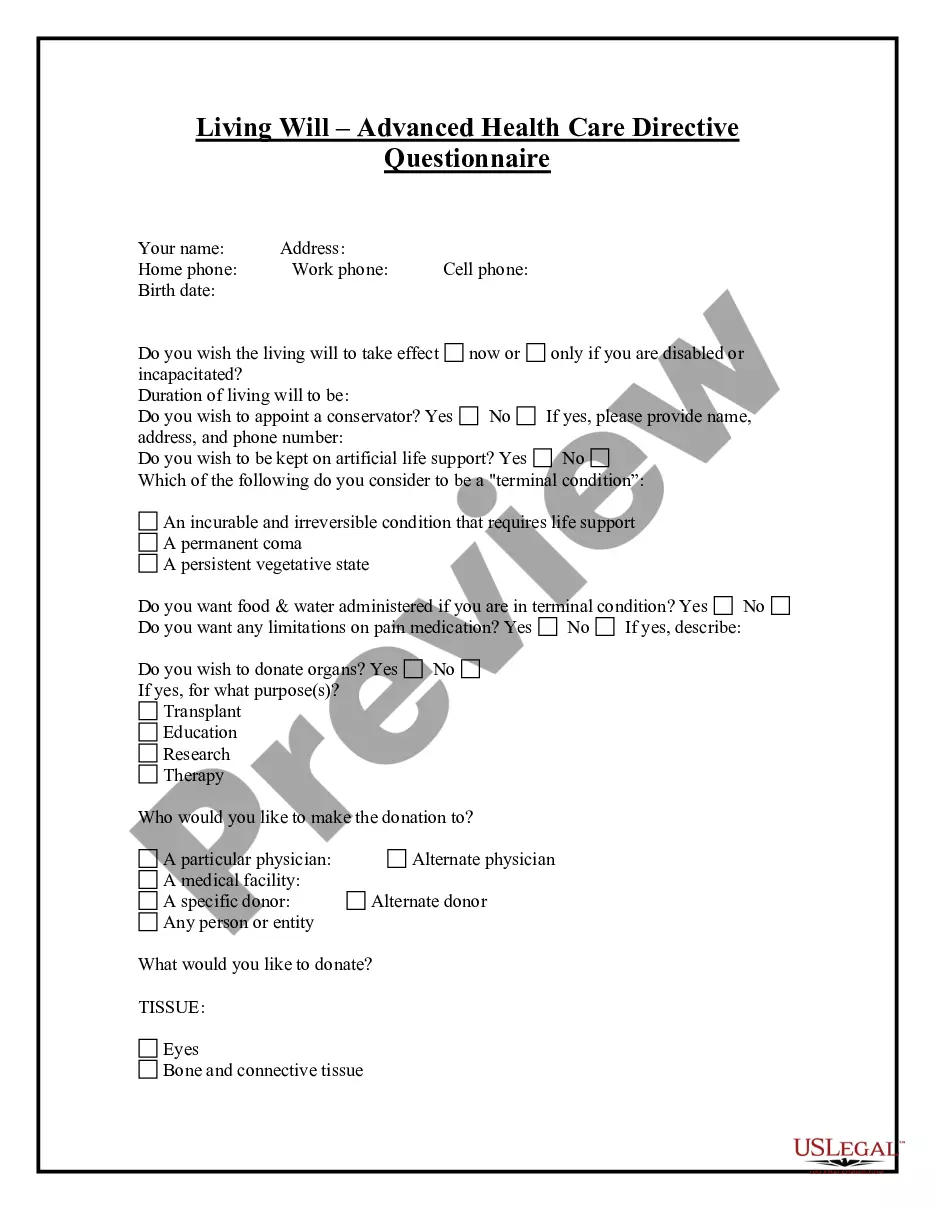
- Living Will Preferences: Outline your wishes regarding life-sustaining treatments, artificial nutrition and hydration, and comfort care.
- Persistent Vegetative State Instructions: Specify your treatment preferences in the event of a persistent vegetative state.
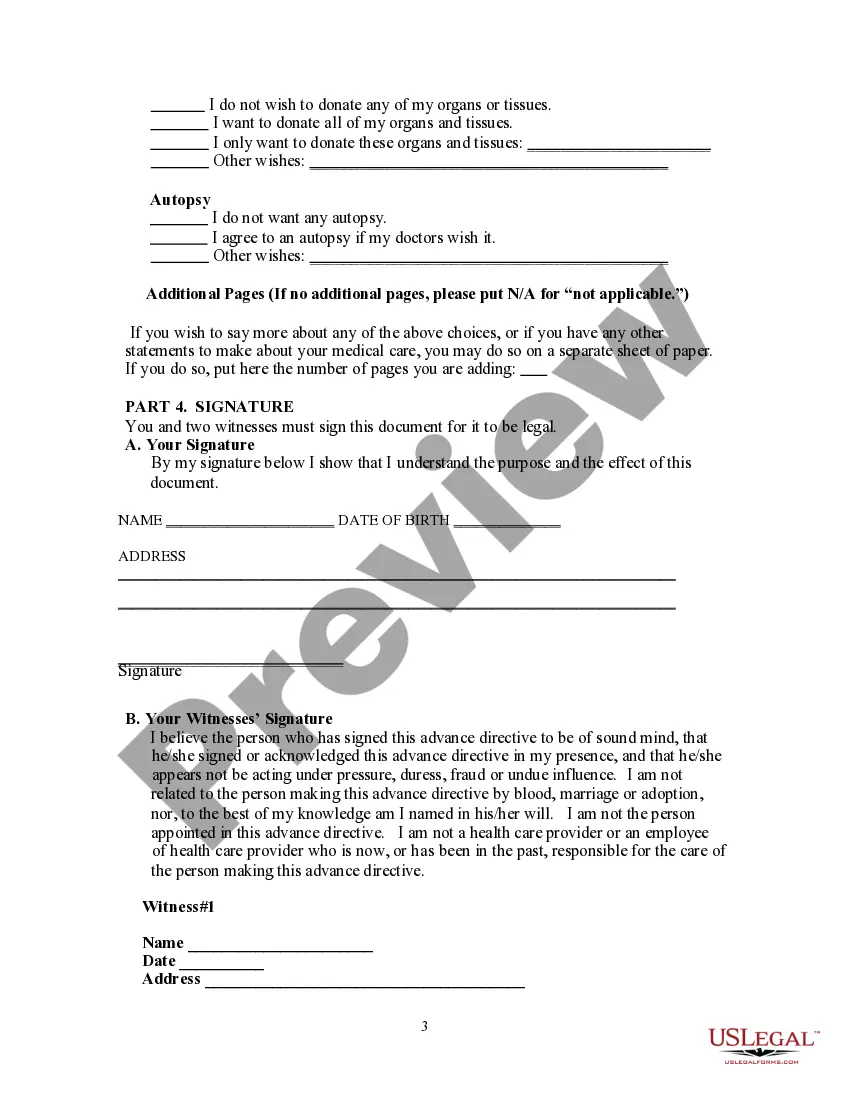
- Organ Donation Wishes: Indicate your preferences regarding the donation of organs and tissues.
- Signature Requirements: Sign the document in the presence of two witnesses to ensure its legal validity.

When to use this form
This form is particularly important when you wish to make advance decisions about your medical care in situations where you may become unable to communicate your preferences. It is commonly used in scenarios such as terminal illnesses, serious injuries, or conditions leading to a persistent vegetative state. By completing this form, you can prevent confusion or disputes among family members and healthcare providers about the care you want to receive.
Intended users of this form
This document is suitable for:
- Individuals of any age who want to plan their medical care in advance.
- Those with serious health conditions who want to clarify their treatment preferences.
- Anyone who wants to ensure that their healthcare decisions align with their personal beliefs and values.
- People looking to appoint a trusted individual to make decisions on their behalf if they are incapacitated.
How to prepare this document
- Identify and appoint your durable power of attorney for health care by providing their name and contact information.
- Clearly outline your wishes concerning life-sustaining treatments in both terminal conditions and persistent vegetative states.
- State your preferences for organ donation and autopsy explicitly.
- Sign the document in the presence of two witnesses who meet the necessary criteria.
- If necessary, attach any additional pages for more detailed instructions or preferences.
Notarization guidance
This form does not typically require notarization unless specified by local law. However, taking extra steps to notarize can add an additional layer of authenticity to your advance directive.
Get your form ready online
Our built-in tools help you complete, sign, share, and store your documents in one place.
Make edits, fill in missing information, and update formatting in US Legal Forms—just like you would in MS Word.
Download a copy, print it, send it by email, or mail it via USPS—whatever works best for your next step.
Sign and collect signatures with our SignNow integration. Send to multiple recipients, set reminders, and more. Go Premium to unlock E-Sign.
If this form requires notarization, complete it online through a secure video call—no need to meet a notary in person or wait for an appointment.
We protect your documents and personal data by following strict security and privacy standards.

Make edits, fill in missing information, and update formatting in US Legal Forms—just like you would in MS Word.

Download a copy, print it, send it by email, or mail it via USPS—whatever works best for your next step.

Sign and collect signatures with our SignNow integration. Send to multiple recipients, set reminders, and more. Go Premium to unlock E-Sign.

If this form requires notarization, complete it online through a secure video call—no need to meet a notary in person or wait for an appointment.

We protect your documents and personal data by following strict security and privacy standards.
Avoid these common issues
- Failing to ensure the document is signed in the presence of two qualifying witnesses.
- Not clearly indicating preferences for life-sustaining treatments.
- Choosing witnesses who do not meet legal requirements (e.g., relatives or health care providers).
- Neglecting to review or update the form as circumstances change.
Why complete this form online
- Convenient access allows you to complete and download the form at your own pace.
- Editability ensures you can revise your wishes whenever necessary.
- Provides peace of mind knowing your health care decisions are documented clearly.
- Ensures compliance with legal standards to enhance the validity of your document.
Looking for another form?

Form popularity
FAQ
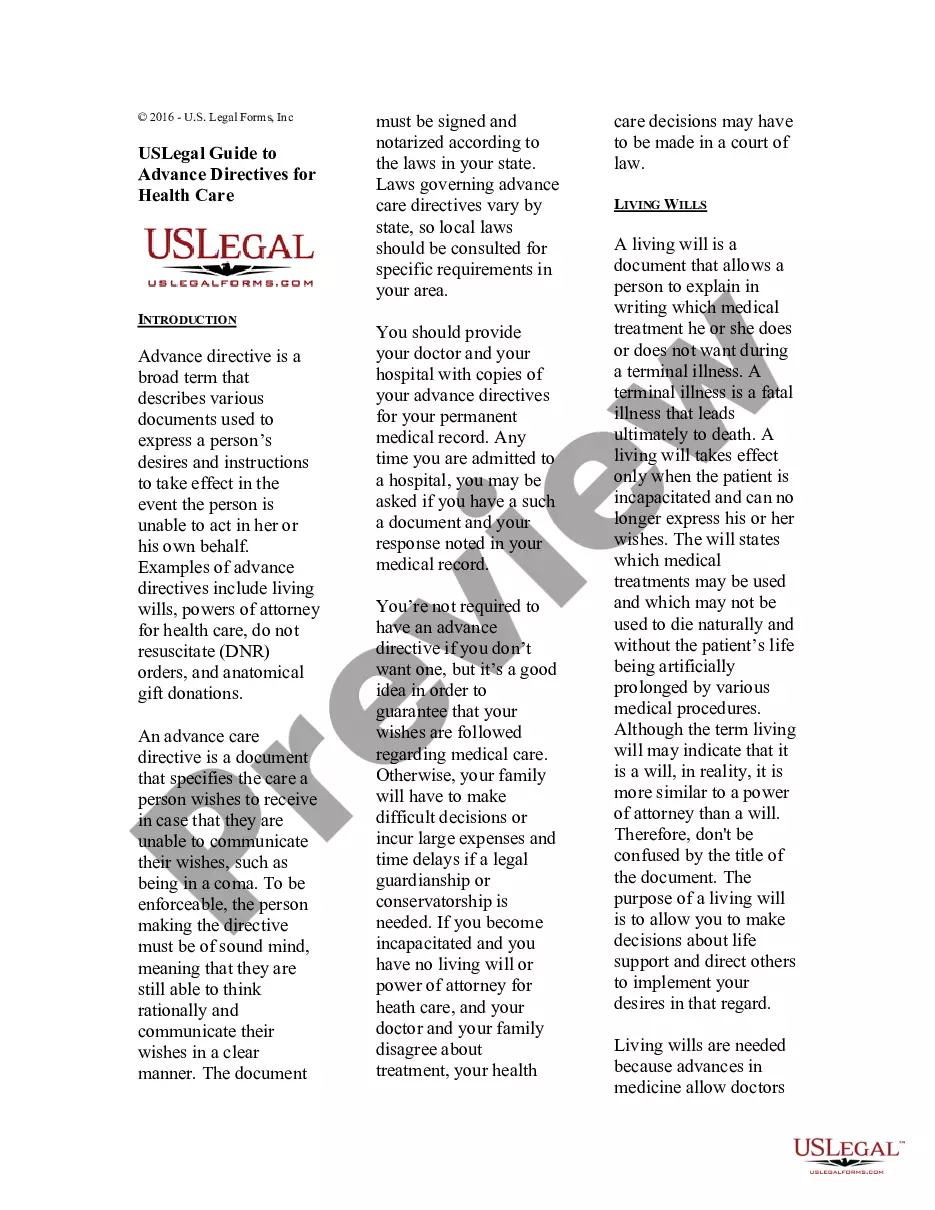
Advance directives are: free?they do not require an attorney to complete; and. remain in effect until you change or revoke them.
This section of the advance directive form is called a Durable Power of Attorney for Health Care. It lets you appoint a specific person to make health care decisions for you in case you can't make decisions for yourself anymore. This person will be called your Health Care Agent.
You must sign your Medical Power of Attorney before two witnesses or have your signature acknowledged by a notary public. You also have to read a disclosure statement that explains what a Medical Power of Attorney does, and you have to sign a statement saying that you read and understood the disclosure statement.
Federal law requires hospitals to give adult patients information on advance directives. Be sure to let your family and doctors know if you have an advance directive. Advance directives do not need to be notarized, only witnessed, signed and dated.
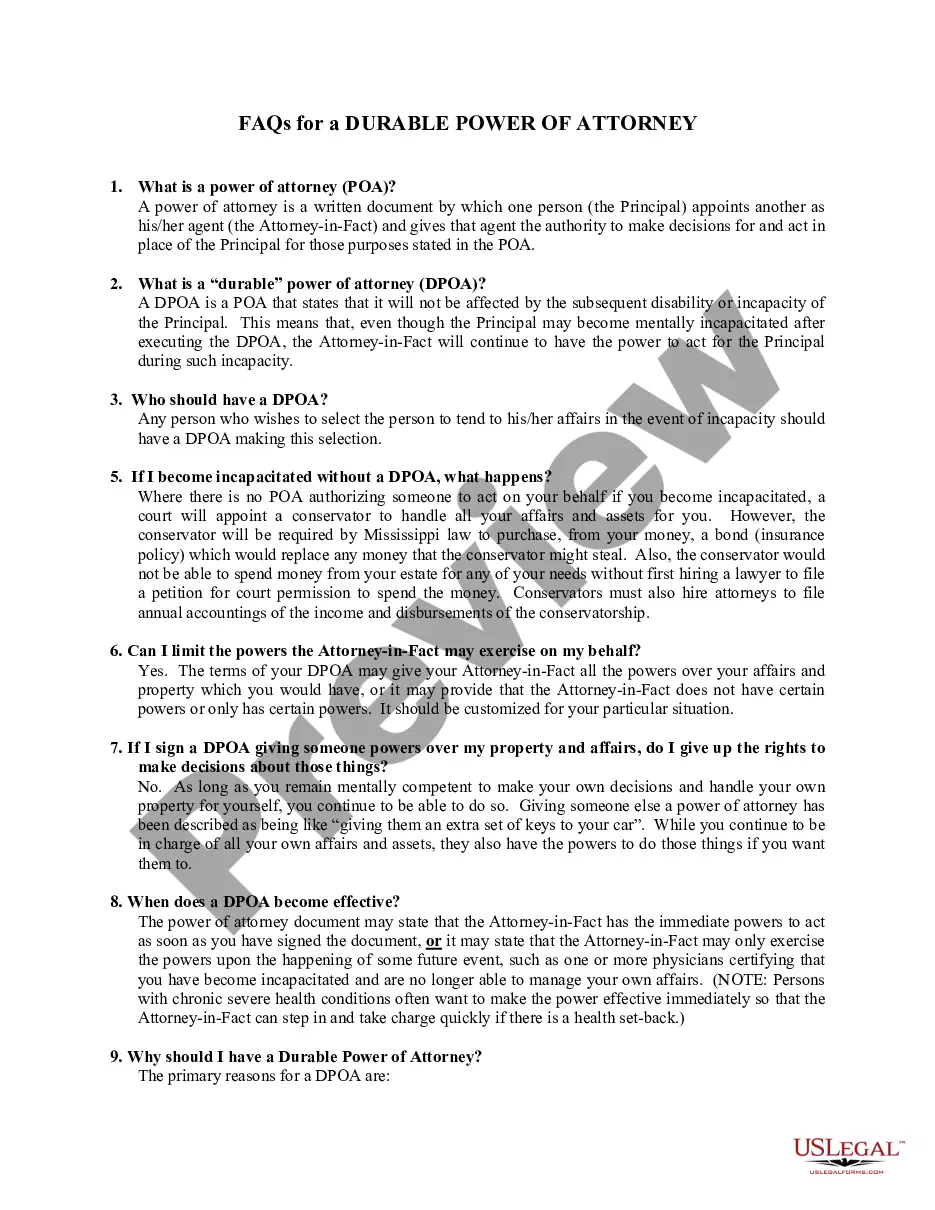
A type of power of attorney. A power of attorney is a legal document that gives one person (such as a relative, lawyer, or friend) the authority to make legal, medical, or financial decisions for another person.
A Medical Power of Attorney becomes operative only if you become incompetent. A Directive does not mean that emergency or other medical care will not be provided to you. Many people have advance directives and are treated for things like stroke and heart attacks everyday.
The two witnesses are not required if the directive is signed in the presence of and is notarized by a notary public. If your directive is not in writing, your doctor and two witnesses (one of which must not be one as named above) must be present.
A Texas advance directive is a document that allows a person to outline their health care treatment preferences if they should become incapacitated. An advance directive is a health planning form that lets a person choose someone else to carry out their treatment requests.