Unit Agreement
What is this form?
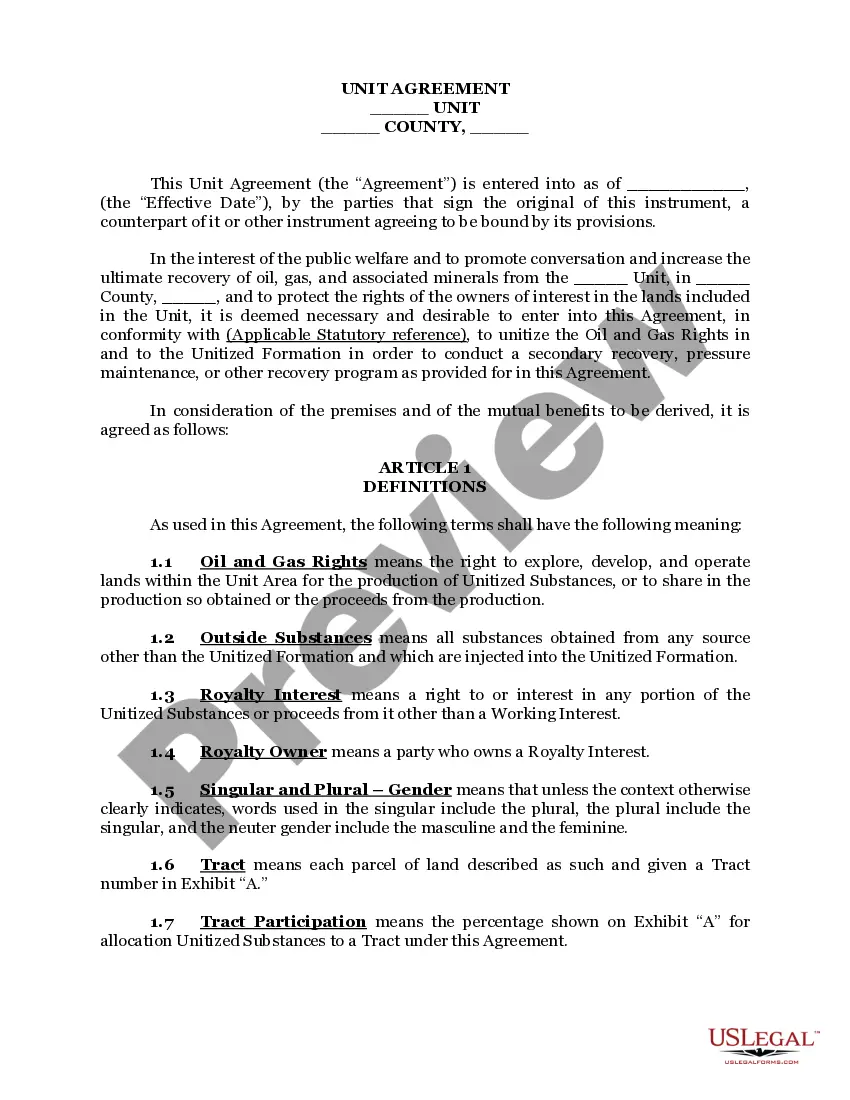
The Unit Agreement is a legal document that facilitates the collaborative management and operation of oil and gas rights among multiple parties. This agreement is specifically designed to unitize the oil and gas rights in a designated area, known as the Unitized Formation. Unlike standard property lease agreements, the Unit Agreement allows for collective efforts in production and resource extraction, optimizing the recovery of oil, gas, and associated minerals while protecting the rights of landowners involved in the unit.
Key parts of this document
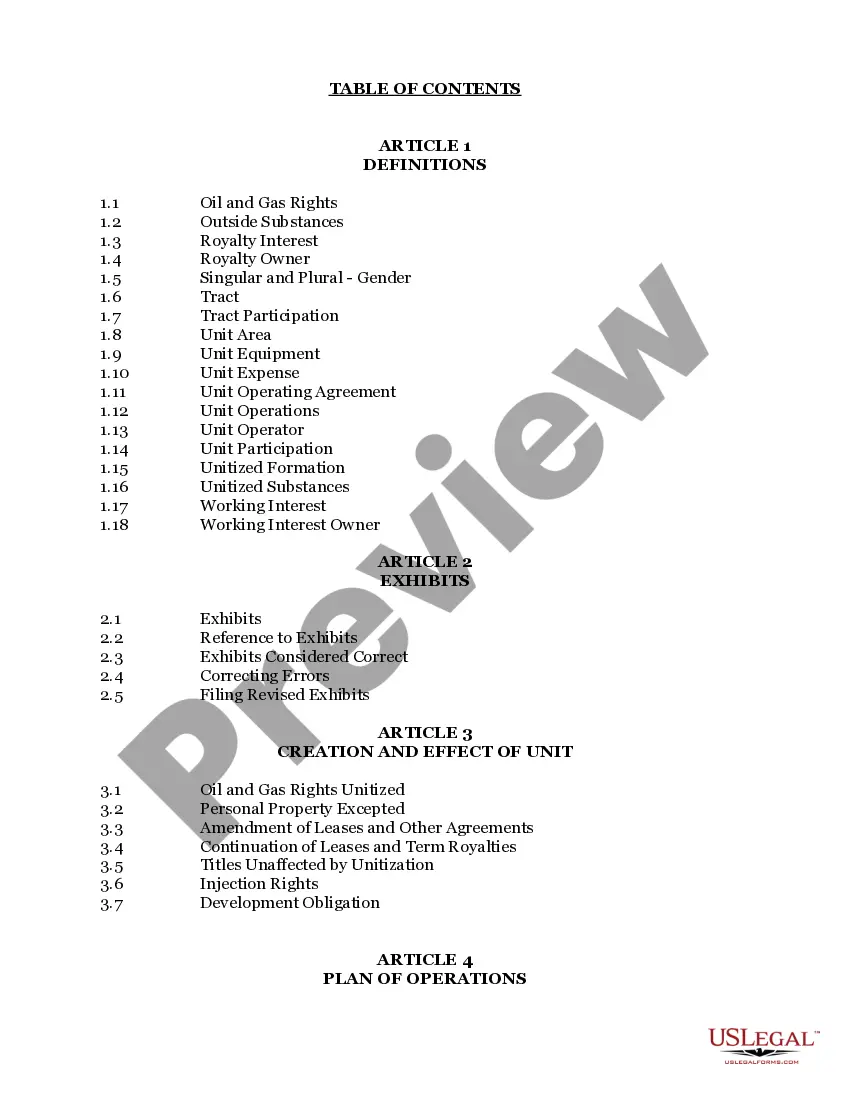
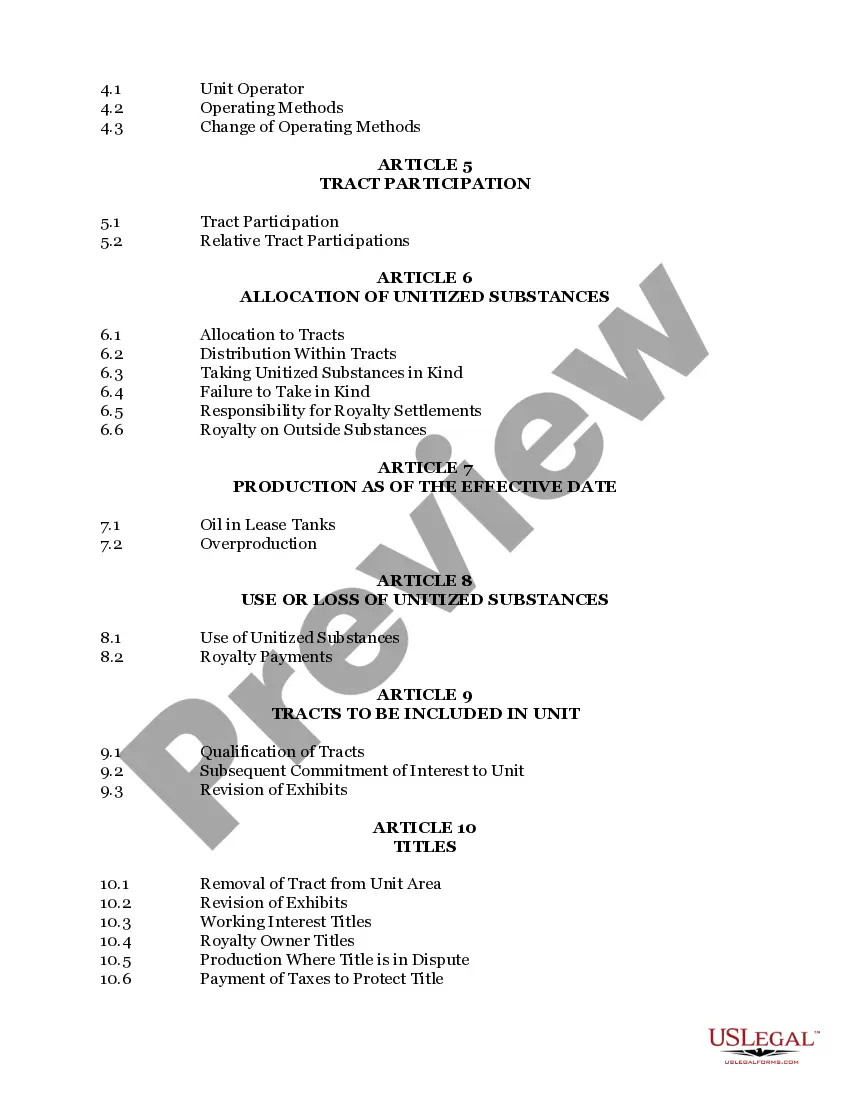
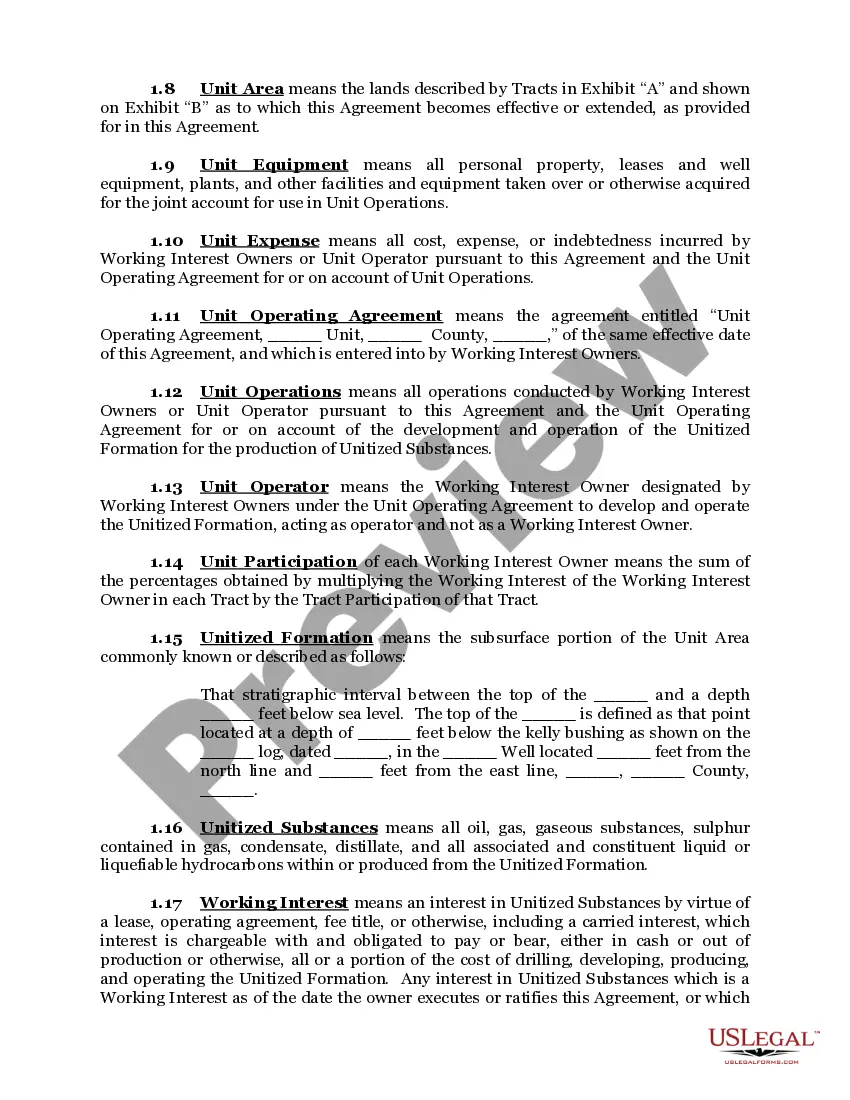
- Definitions of key terms related to oil and gas rights and ownership interests.
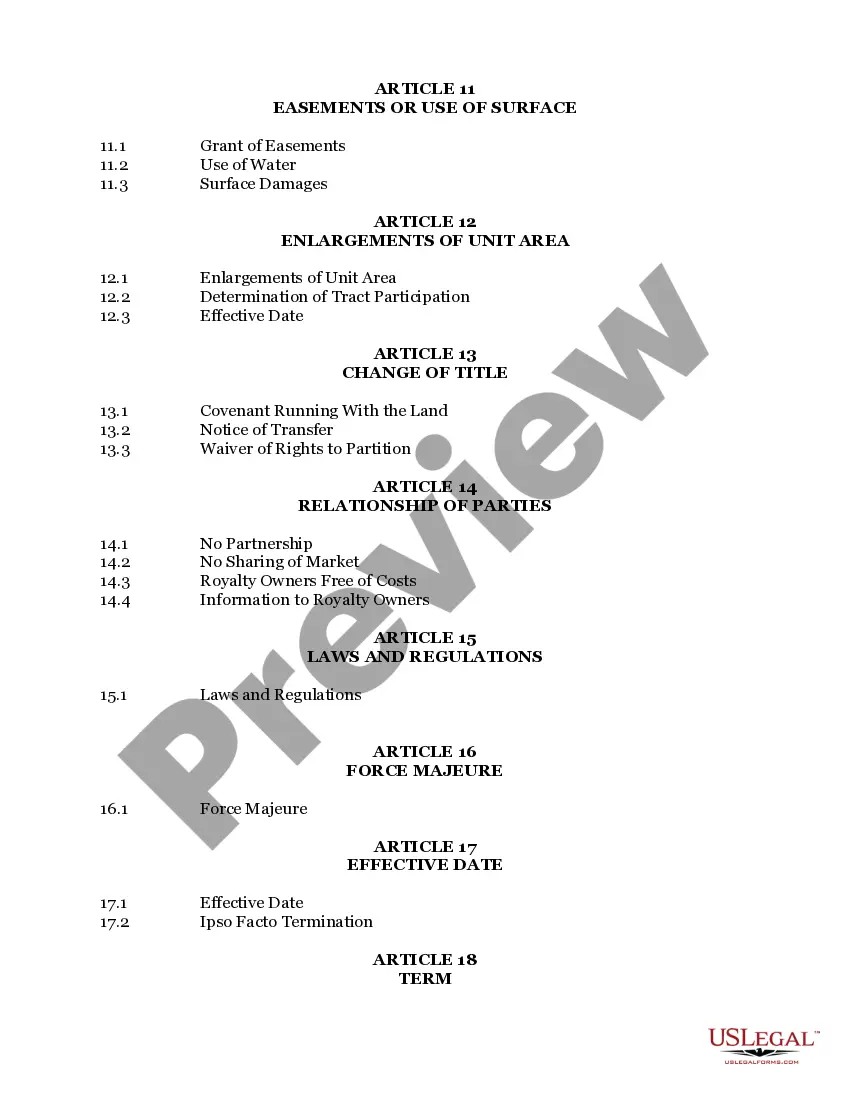
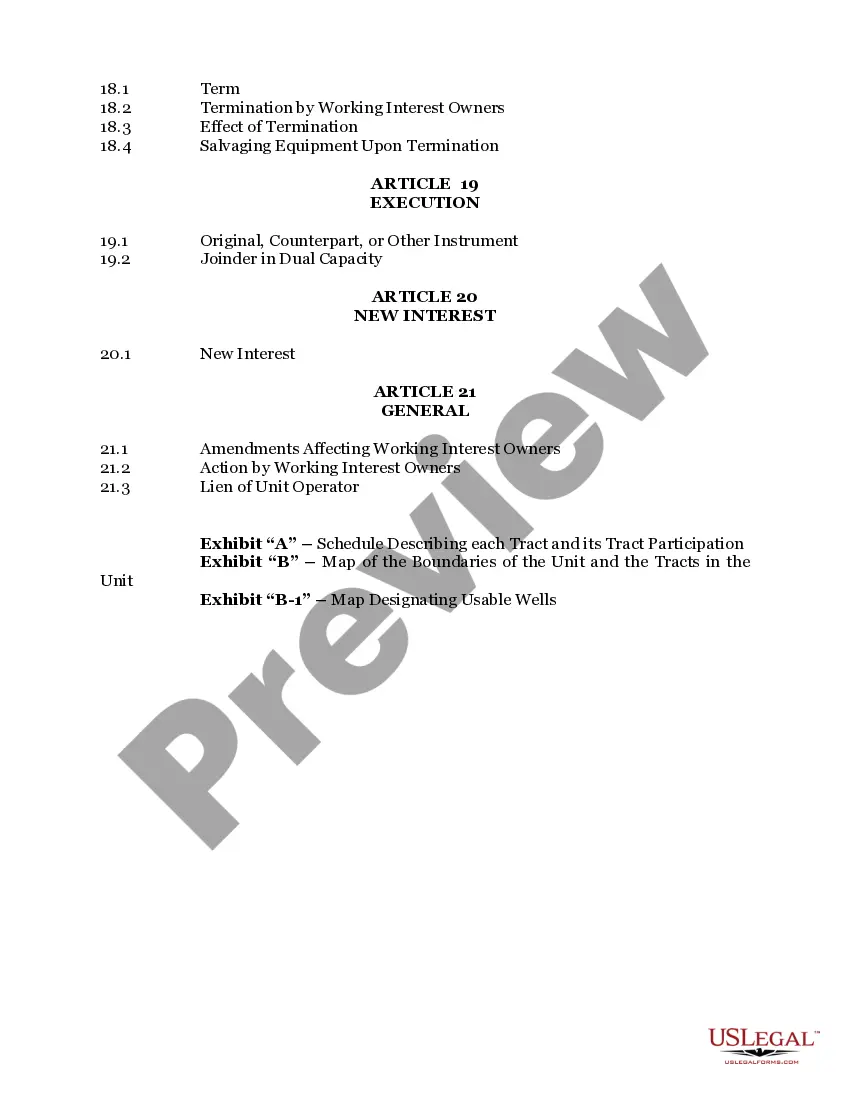
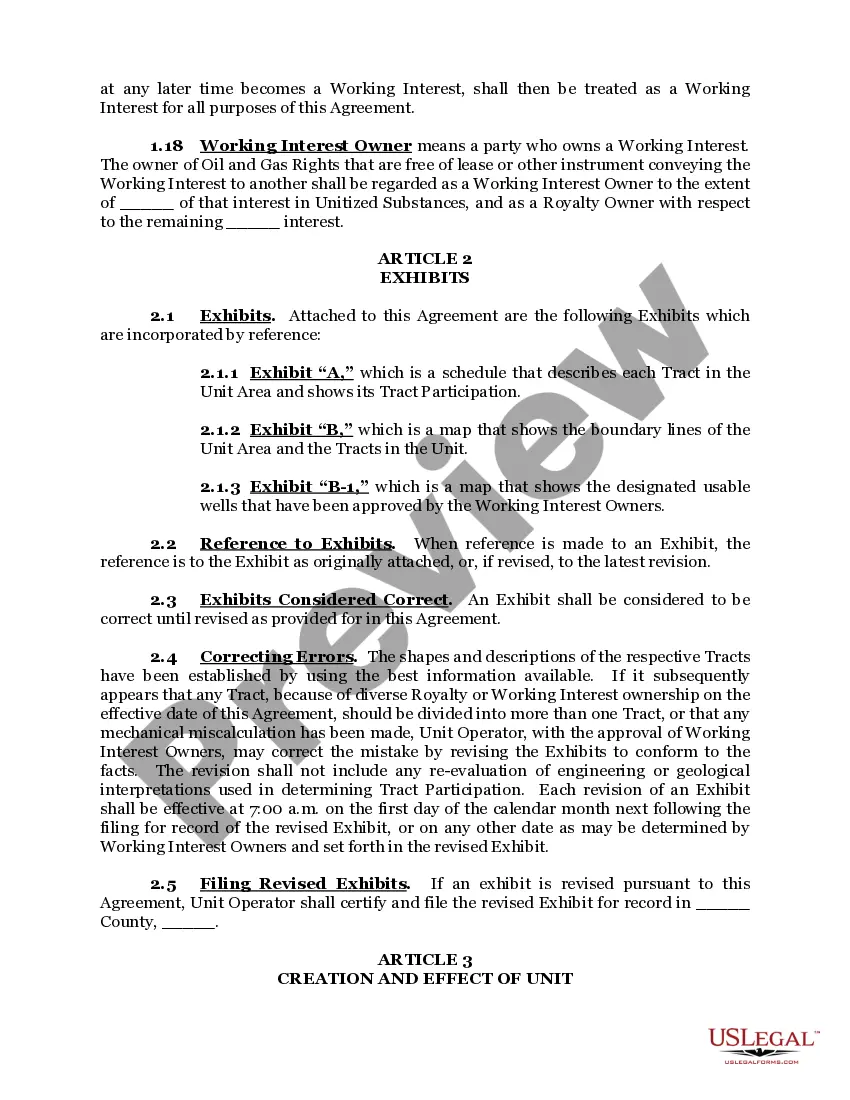
- Exhibits detailing each tract's participation and the boundaries of the unit.
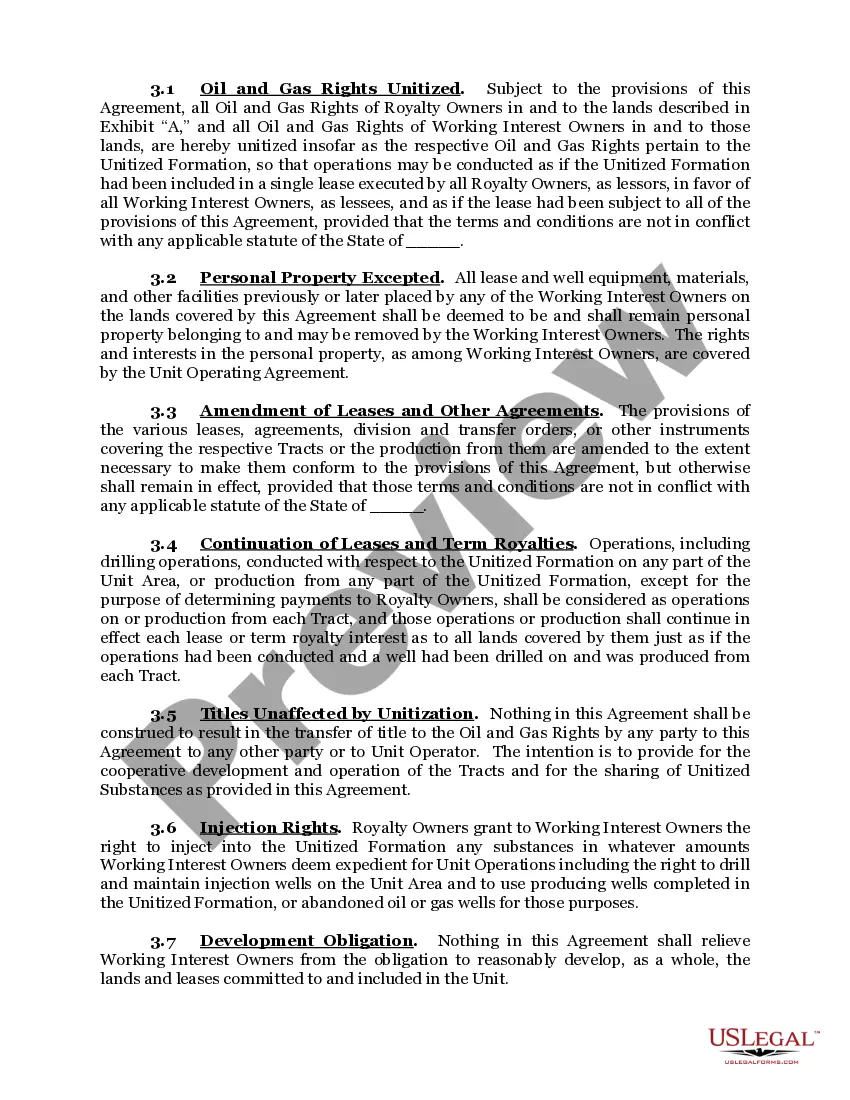
- Sections outlining the creation and effects of the unit, including rights to resources.
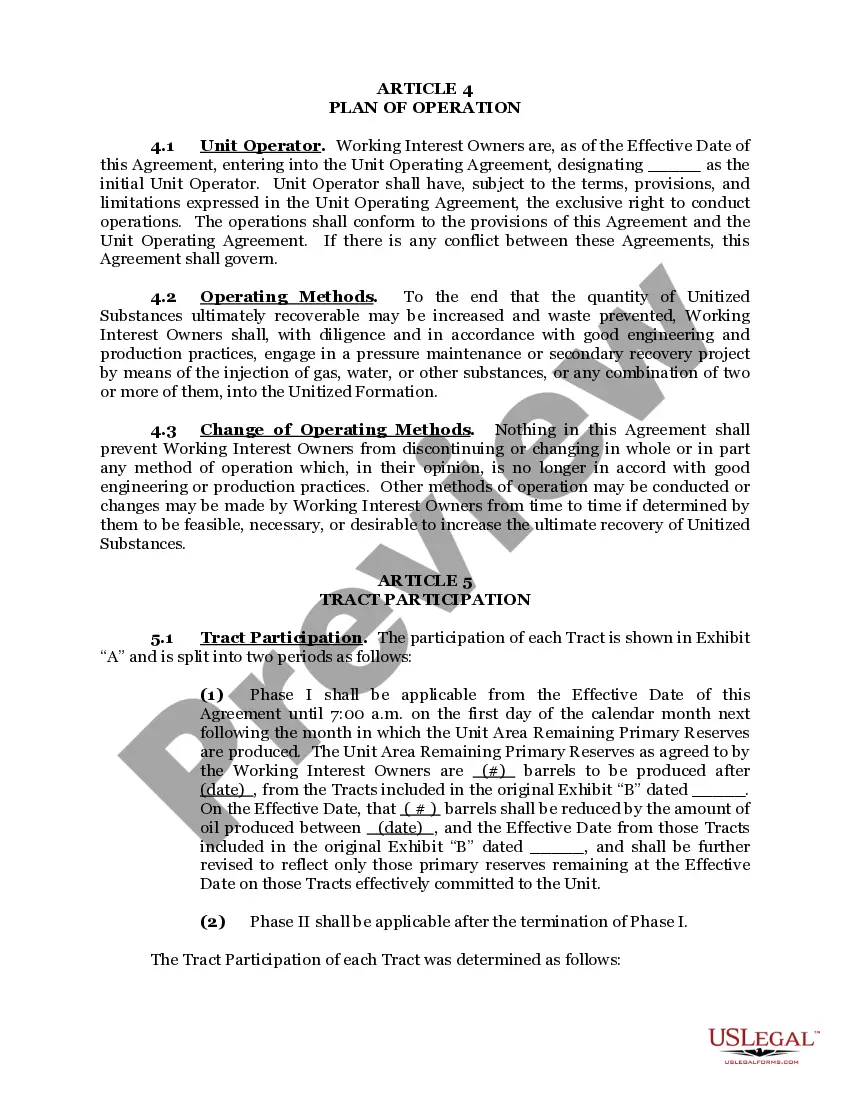
- Plans for operations, including the designation of a Unit Operator responsible for managing production processes.
- Provisions regarding the allocation of unitized substances and royalty payments.

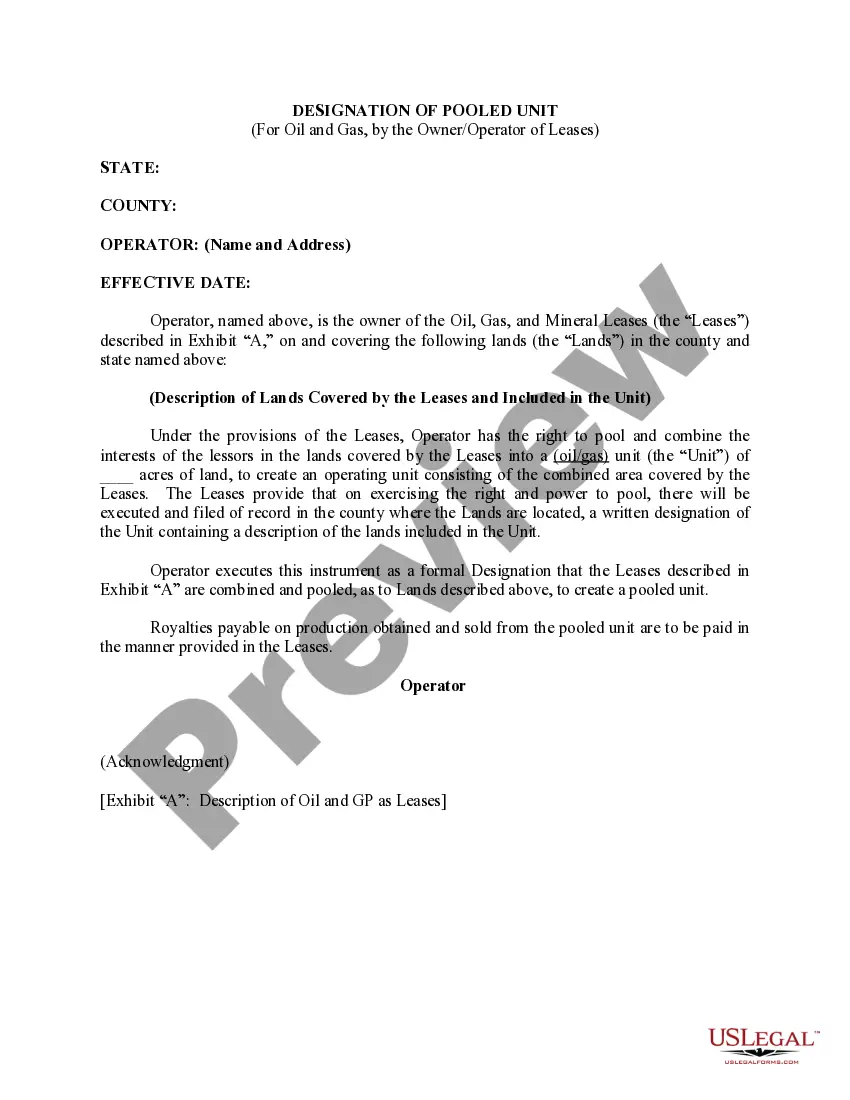
Common use cases
This form should be used when multiple parties hold rights to oil and gas in a shared area and wish to consolidate their interests for effective resource management. It is appropriate in situations requiring secondary recovery efforts, enhancing production efficiency, or when landowners want to safeguard their legal rights while operating as part of a collective unit.
Who can use this document
- Landowners and energy companies involved in oil and gas exploration and production.
- Parties looking to establish clear terms for collaboration and resource management in a specified area.
- Individuals or entities holding royalty or working interests in a unitized formation.
Completing this form step by step
- Identify all parties involved in the agreement and their respective interests.
- Specify the Unitized Formation and its boundaries in the appropriate exhibit sections.
- Input the calculated recoverable reserves for each tract as required.
- Define the operating methods and designate a Unit Operator responsible for managing operations.
- Obtain signatures from all parties to validate the agreement.
Does this document require notarization?
In most cases, this form does not require notarization. However, some jurisdictions or signing circumstances might. US Legal Forms offers online notarization powered by Notarize, accessible 24/7 for a quick, remote process.
Get your form ready online
Our built-in tools help you complete, sign, share, and store your documents in one place.
Make edits, fill in missing information, and update formatting in US Legal Forms—just like you would in MS Word.
Download a copy, print it, send it by email, or mail it via USPS—whatever works best for your next step.
Sign and collect signatures with our SignNow integration. Send to multiple recipients, set reminders, and more. Go Premium to unlock E-Sign.
If this form requires notarization, complete it online through a secure video call—no need to meet a notary in person or wait for an appointment.
We protect your documents and personal data by following strict security and privacy standards.

Make edits, fill in missing information, and update formatting in US Legal Forms—just like you would in MS Word.

Download a copy, print it, send it by email, or mail it via USPS—whatever works best for your next step.

Sign and collect signatures with our SignNow integration. Send to multiple recipients, set reminders, and more. Go Premium to unlock E-Sign.

If this form requires notarization, complete it online through a secure video call—no need to meet a notary in person or wait for an appointment.

We protect your documents and personal data by following strict security and privacy standards.
Mistakes to watch out for
- Failing to ensure all parties sign the agreement, resulting in disputes over rights.
- Incomplete descriptions of tracts or boundary areas, leading to confusion in operations.
- Omitting critical definitions or operational details that can lead to misunderstandings.
Benefits of using this form online
- Convenience of accessing and completing the form at any time from any location.
- Editable templates allow for easy adjustments to meet specific legal needs.
- Reliability of attorney-drafted content that adheres to legal standards and requirements.
Looking for another form?

Form popularity
FAQ
Unit Agreement means any agreement for the development or operation of all or any portion of the Leased Lands with other lands as a single unit without regard to separate ownership and for the allocation of costs and benefits on a basis as defined in such agreement.
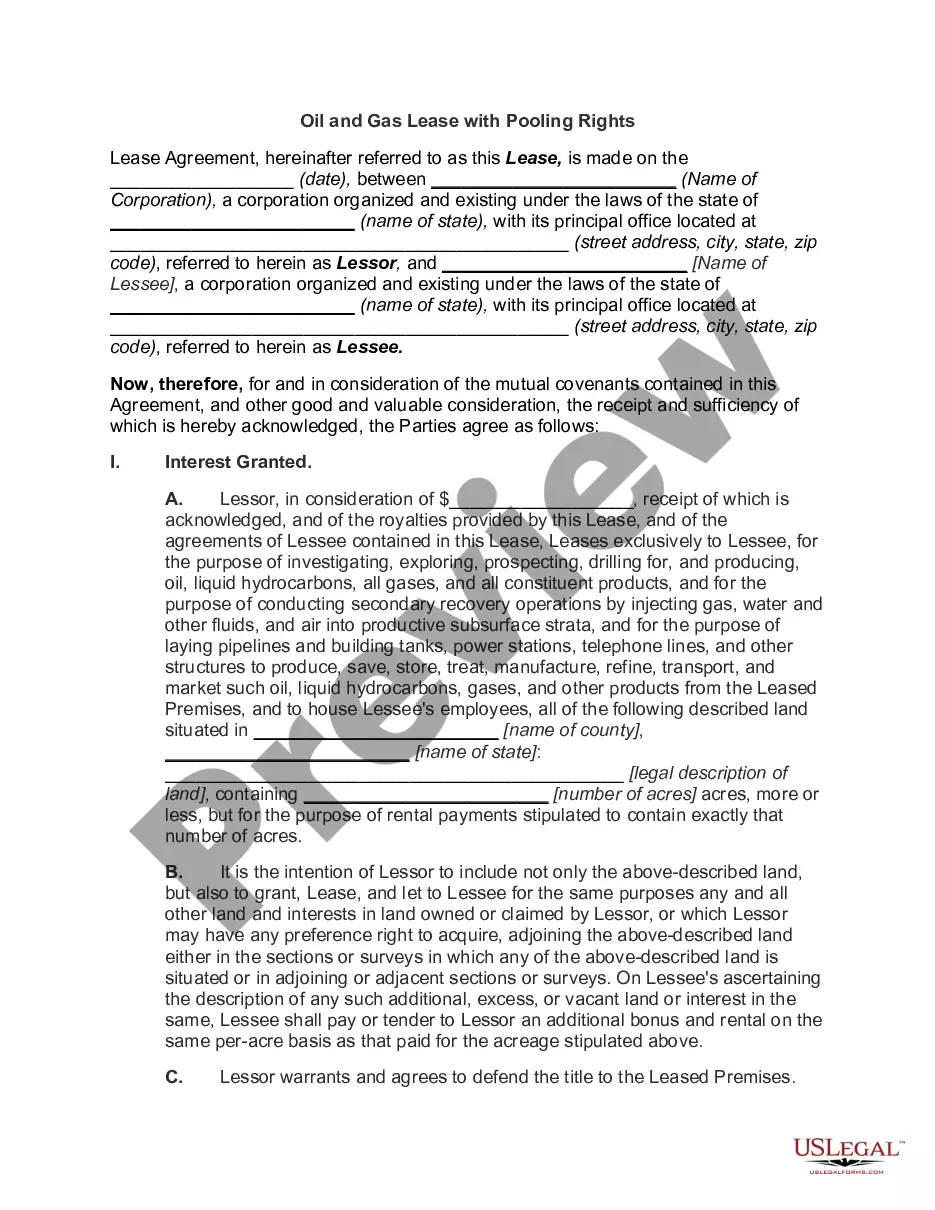
Pooling is the combination of all or portions of multiple oil and gas leases to form a unit for the drilling of a single oil and/or gas well.The oil and gas company can lease these under separate leases and separate terms and then pool these parcels to drill the well.
Oil and gas lease is an agreement between a mineral owner (lessor) and a company (lessee) in which the owner grants the company the right to explore, drill and produce oil, gas, and other minerals below the surface of the earth.
As noted above, while pooling focuses on efficiently combining lands for the purpose of obtaining a drilling permit to drill a single well, unitization focuses on the combination of interests covering a larger area to facilitate development of all or part of a common source of supply (i.e. a field/reservoir).
Unitization is the agreement to jointly operate an entire producing reservoir or a prospectively productive area of oil and/or gas. The entire unit area is operated as a single entity, without regard to lease boundaries, and allows for the maximum recovery of production from the reservoir.
It also records a "Declaration of Pooling" or similarly named document in the land records office at the local Courthouse. The declaration shows the boundaries of the pooling unit and identifies all the landowners and amount of property each landowner actually has in the unit.
A Pugh Clause is meant to prevent a lessee from declaring all lands under an oil and gas lease as being held by production, even if production only occurs on a fraction of the property.