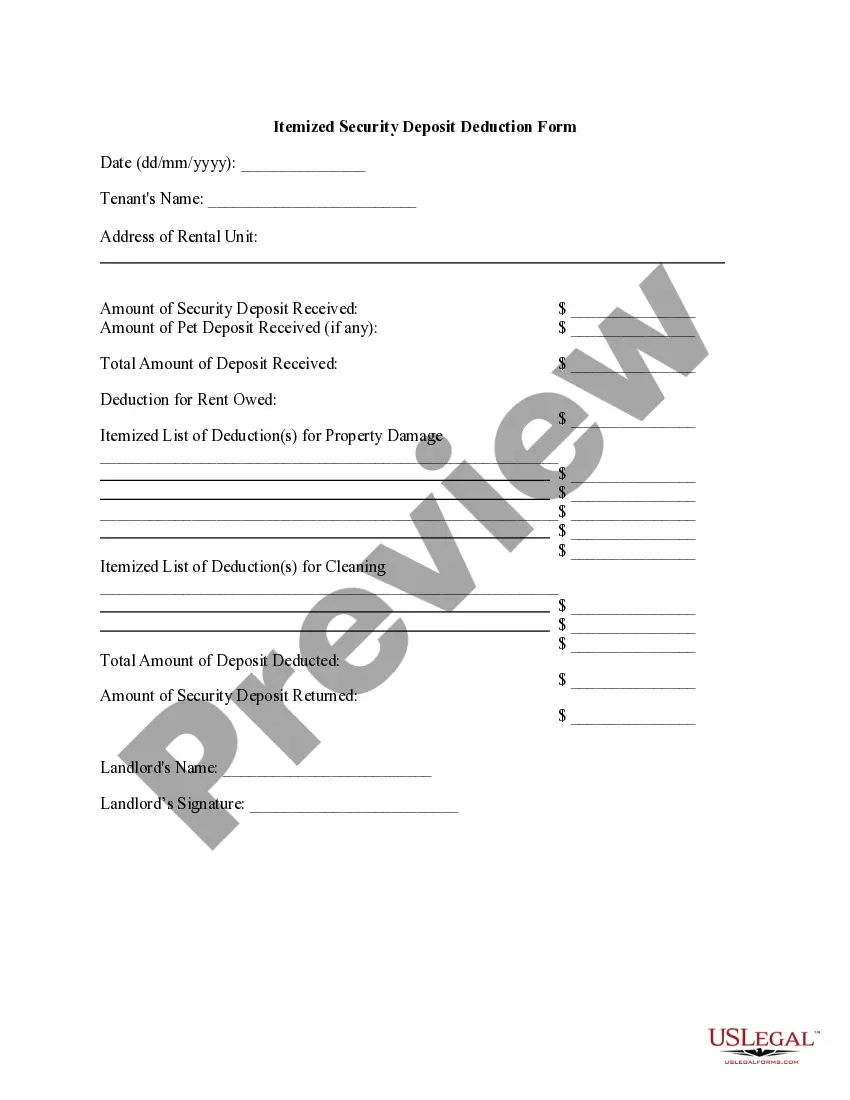
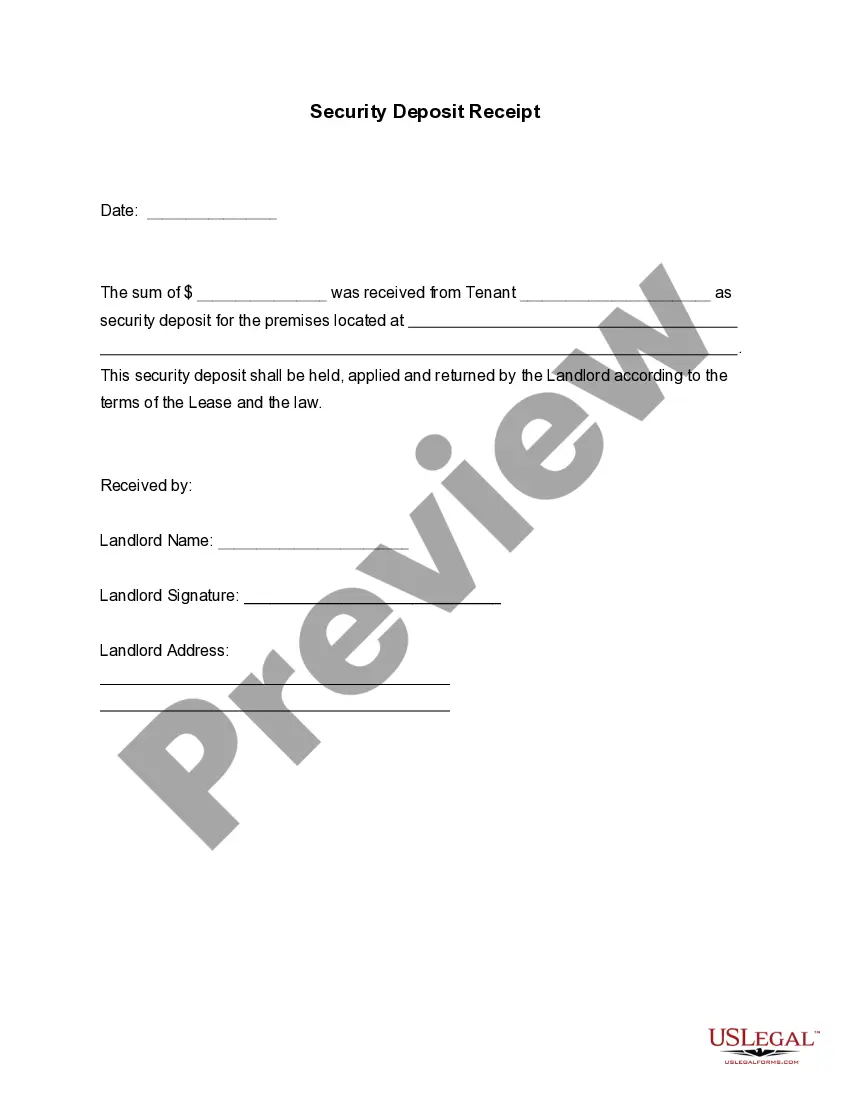
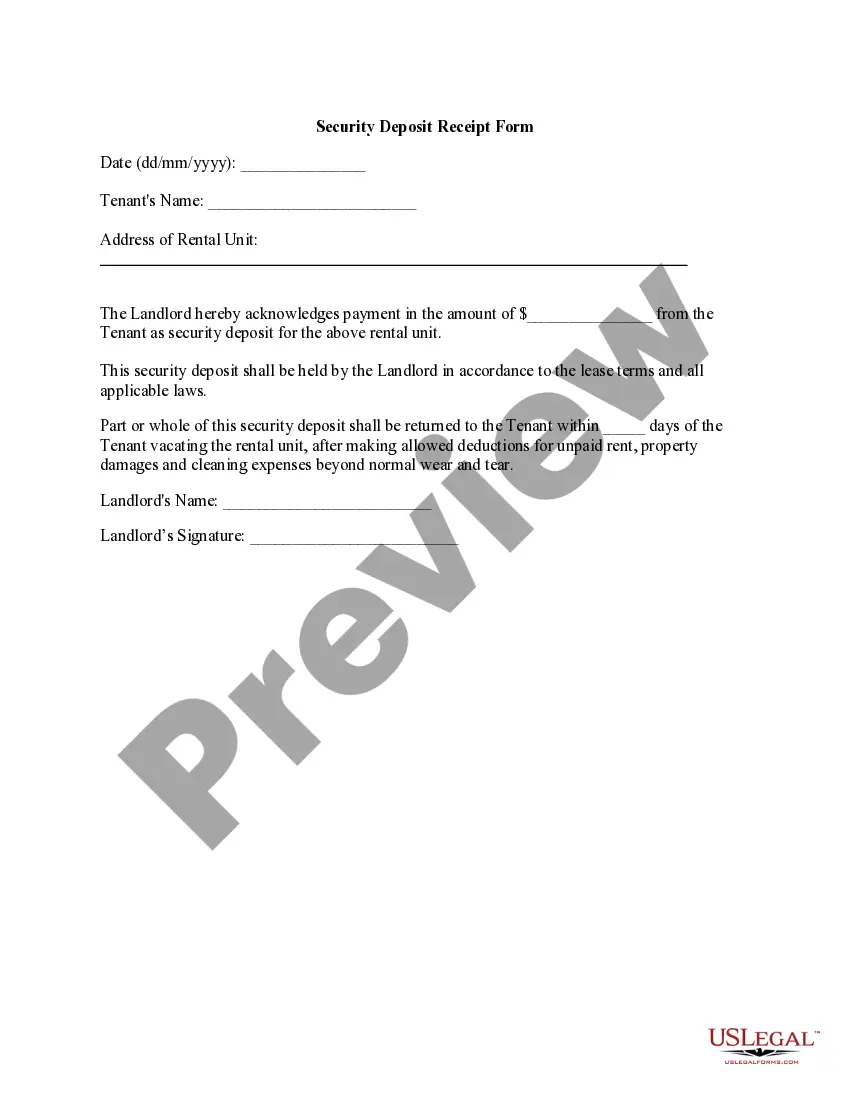
An Itemized Security Deduction Form is a document used by employers to track and report employee deductions for security and safety purposes. This form is used to record and track employee deductions for security and safety purposes, such as security deposits or fees, background checks, drug tests, and any other deductions related to security or safety. It includes details such as the type of deduction, the amount of the deduction, the date of the deduction, and the employee's signature. There are two types of Itemized Security Deduction Forms: voluntary and mandatory. Voluntary forms are used when an employee voluntarily agrees to pay a security or safety deduction or fee for a certain purpose. Mandatory forms are used when an employer requires the employee to pay a security or safety deduction or fee.
Itemized Security Deduction Form
Description
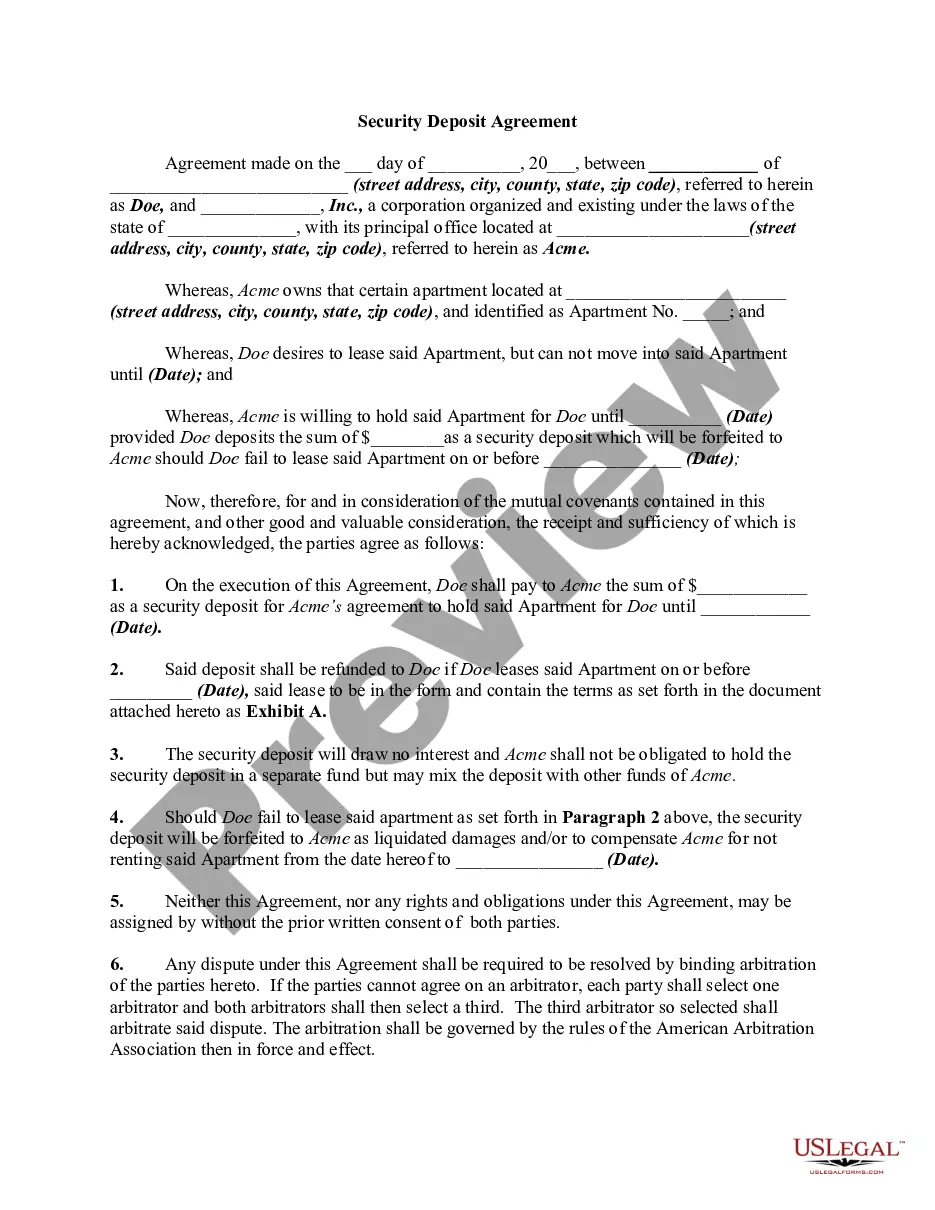
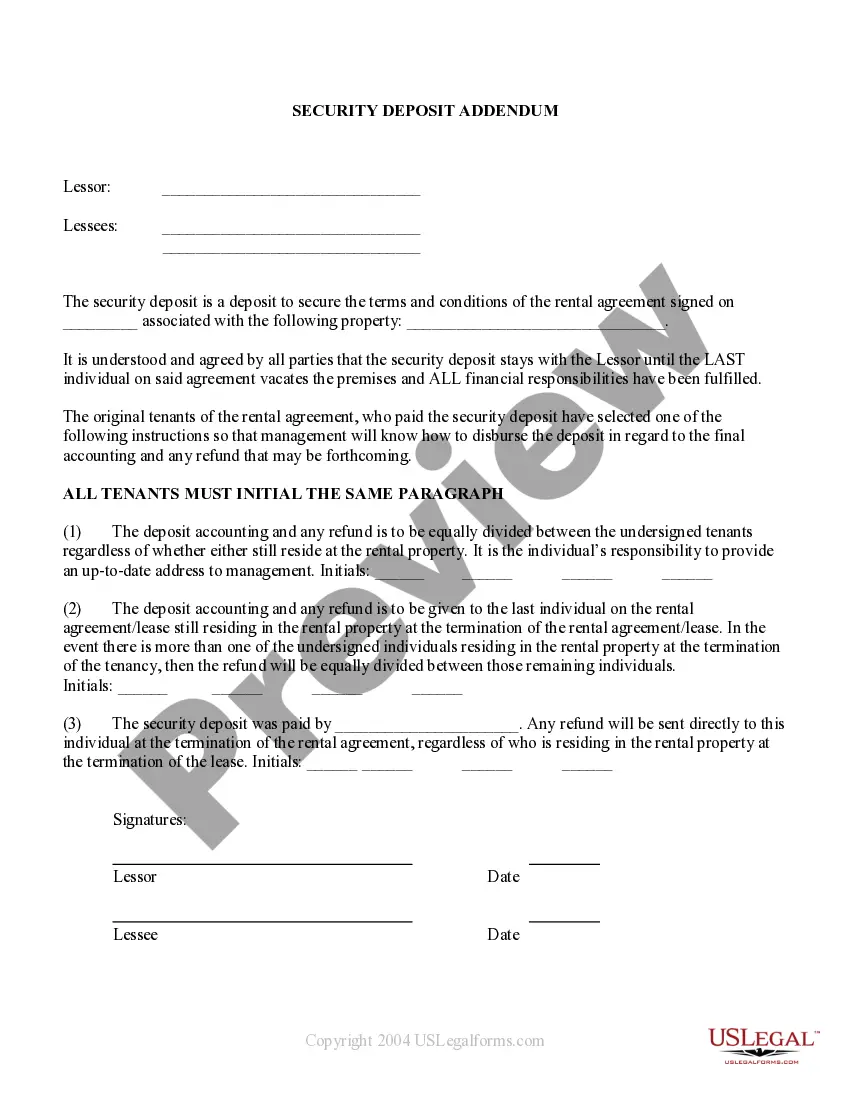
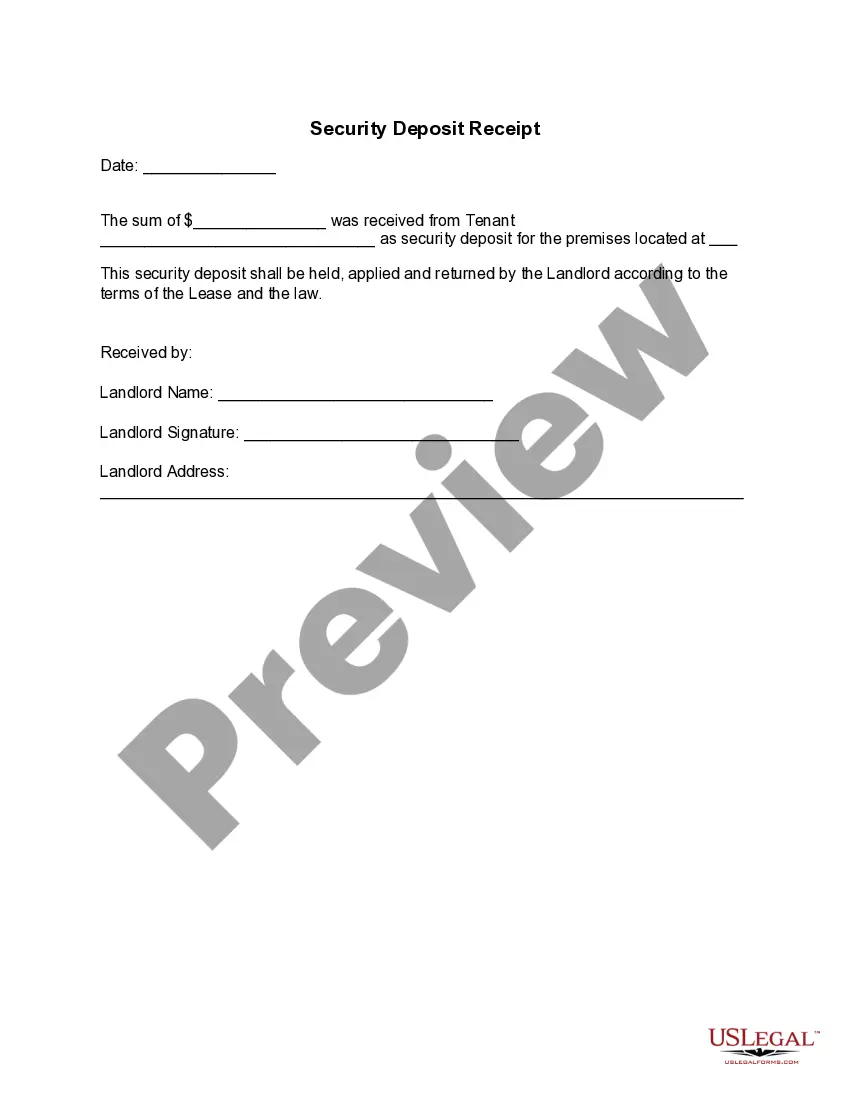
Get your form ready online
Our built-in tools help you complete, sign, share, and store your documents in one place.
Make edits, fill in missing information, and update formatting in US Legal Forms—just like you would in MS Word.
Download a copy, print it, send it by email, or mail it via USPS—whatever works best for your next step.
Sign and collect signatures with our SignNow integration. Send to multiple recipients, set reminders, and more. Go Premium to unlock E-Sign.
If this form requires notarization, complete it online through a secure video call—no need to meet a notary in person or wait for an appointment.
We protect your documents and personal data by following strict security and privacy standards.

Make edits, fill in missing information, and update formatting in US Legal Forms—just like you would in MS Word.

Download a copy, print it, send it by email, or mail it via USPS—whatever works best for your next step.

Sign and collect signatures with our SignNow integration. Send to multiple recipients, set reminders, and more. Go Premium to unlock E-Sign.

If this form requires notarization, complete it online through a secure video call—no need to meet a notary in person or wait for an appointment.

We protect your documents and personal data by following strict security and privacy standards.
Looking for another form?




How to fill out Itemized Security Deduction Form?
Preparing legal paperwork can be a real burden unless you have ready-to-use fillable templates. With the US Legal Forms online library of formal documentation, you can be certain in the blanks you find, as all of them comply with federal and state regulations and are examined by our experts. So if you need to prepare Itemized Security Deduction Form, our service is the best place to download it.
Getting your Itemized Security Deduction Form from our catalog is as simple as ABC. Previously registered users with a valid subscription need only log in and click the Download button after they find the proper template. Afterwards, if they need to, users can use the same document from the My Forms tab of their profile. However, even if you are new to our service, registering with a valid subscription will take only a few minutes. Here’s a quick instruction for you:
- Document compliance verification. You should carefully examine the content of the form you want and make sure whether it satisfies your needs and meets your state law requirements. Previewing your document and reviewing its general description will help you do just that.
- Alternative search (optional). If you find any inconsistencies, browse the library through the Search tab above until you find a suitable blank, and click Buy Now once you see the one you want.
- Account creation and form purchase. Sign up for an account with US Legal Forms. After account verification, log in and choose your preferred subscription plan. Make a payment to continue (PayPal and credit card options are available).
- Template download and further usage. Select the file format for your Itemized Security Deduction Form and click Download to save it on your device. Print it to complete your paperwork manually, or take advantage of a multi-featured online editor to prepare an electronic version faster and more effectively.
Haven’t you tried US Legal Forms yet? Subscribe to our service today to obtain any formal document quickly and easily any time you need to, and keep your paperwork in order!
Form popularity
FAQ
Section 92.104 of the Texas Property Code describes what a landlord may deduct from a security deposit: Before returning a security deposit, the landlord may deduct from the deposit damages and charges for which the tenant is legally liable under the lease or as a result of breaching the lease.
Primary tabs. Reasonable wear and tear is the damage to property resulting from ordinary use and exposure over time. Also referred to as ordinary wear and tear or natural wear and tear. The term is commonly used in landlord-tenant law to limit the tenant's liability for damage to the property.
Today's date is date, and I have received no word from you. Therefore, I will expect my full deposit in the amount of $ by date of your choice. If I do not receive my deposit by date, I have the right to ask for twice my deposit amount in small claims court.
Stained carpet, holes in the yard, and scratched or chewed floors, walls, or doors are not generally considered normal wear and tear and can all come out of the tenant's security deposit.
Normal wear and tear generally refers to the expected deterioration of a unit caused by a tenant's everyday use. This could include things like wobbly doorknobs, worn carpet, or small scratches on walls and flooring.
Usually, there isn't a legal upper limit on damage-related fees, as the cost is largely determined by the kind of repair that's needed to bring the unit back into the same state it was in before the tenant moved into the unit.
Some examples of fair wear and tear are worn carpets, faded curtains, minor scuffs and scrapes on walls, worn keys and dirty windows.
What to Include in a Security Deposit Demand Letter the address of your rental and the dates you rented from. how much you paid for a security deposit. why you are entitled to a return of a portion or all of the deposit. the state laws that require a return of the deposit in a timely manner.