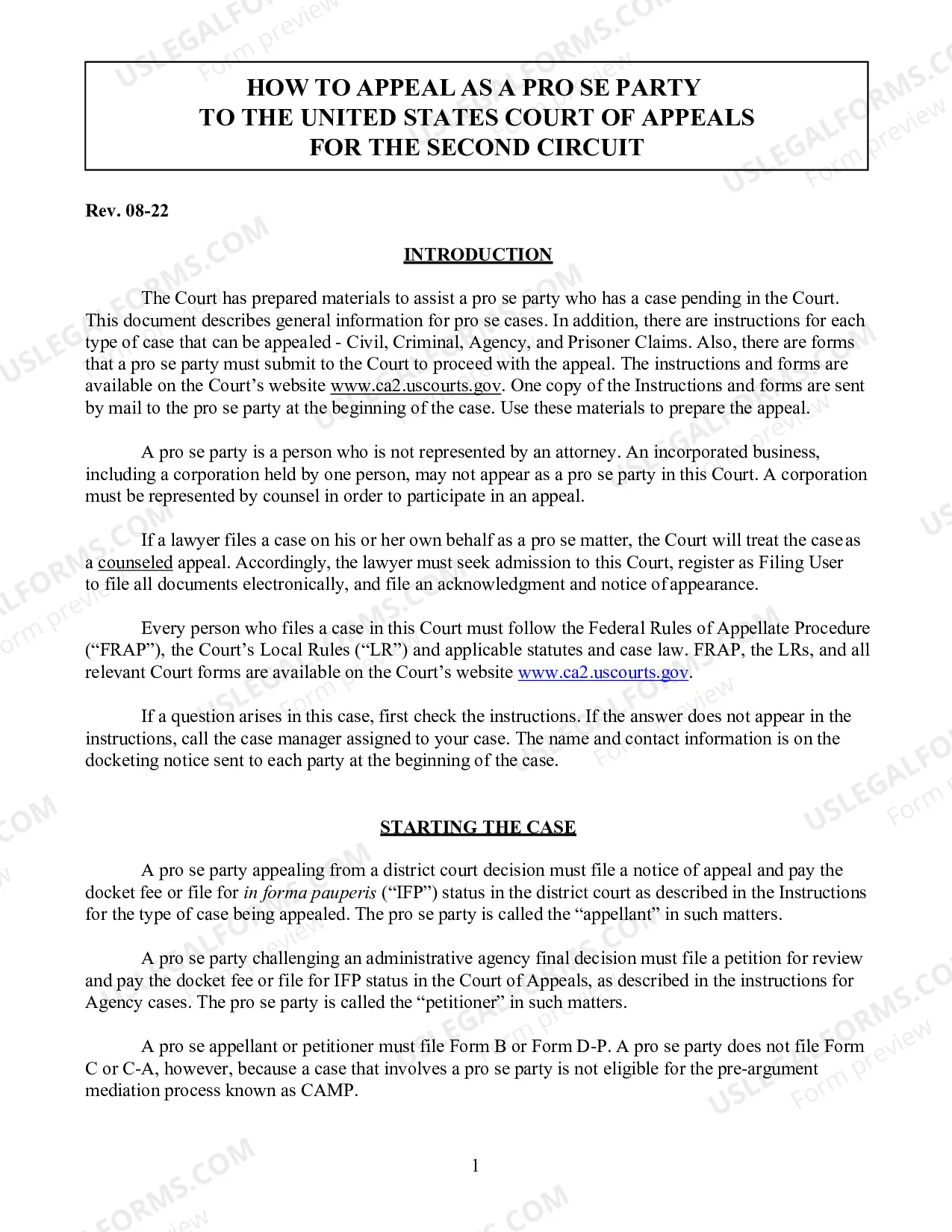
Engagement Agreement for Joint Client Representation
Understanding this form
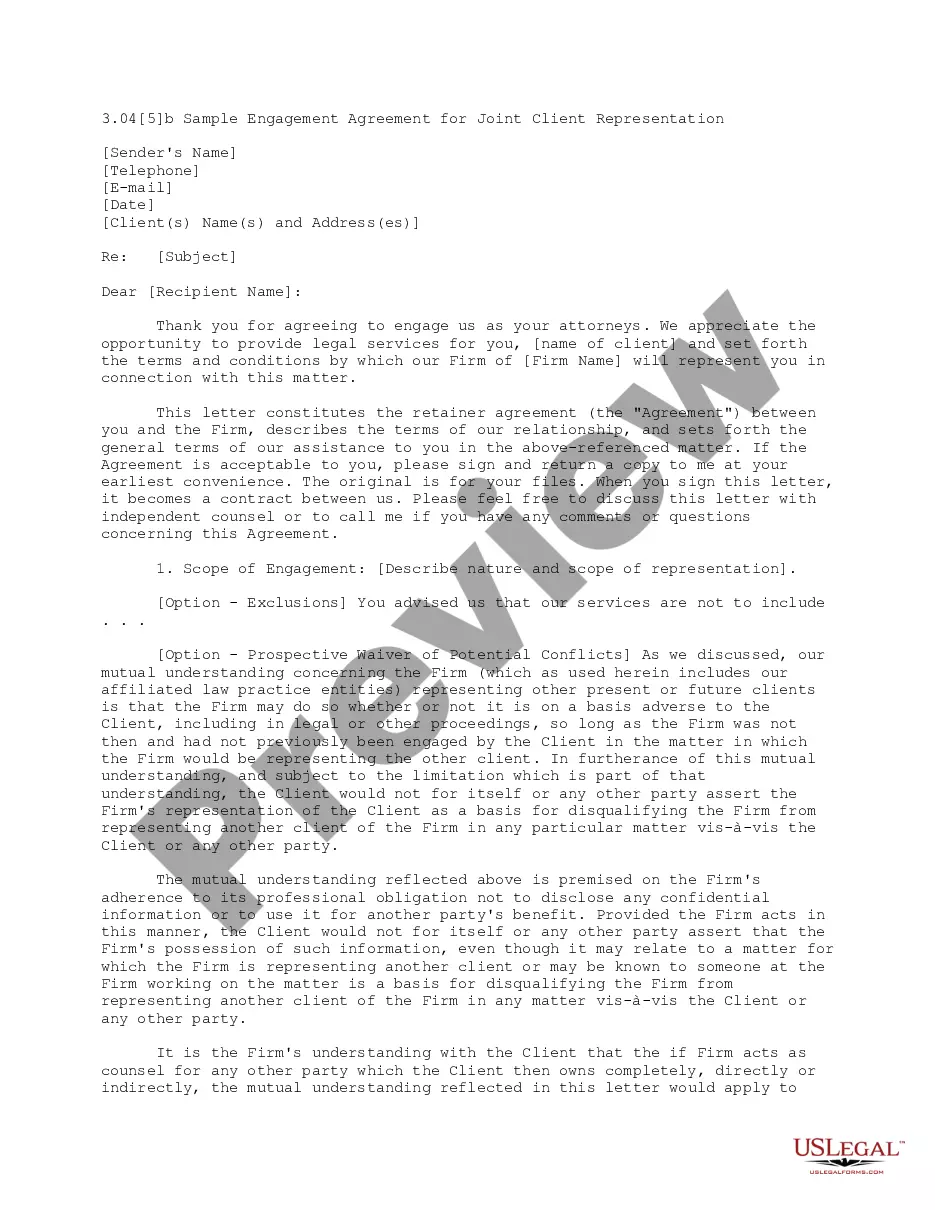
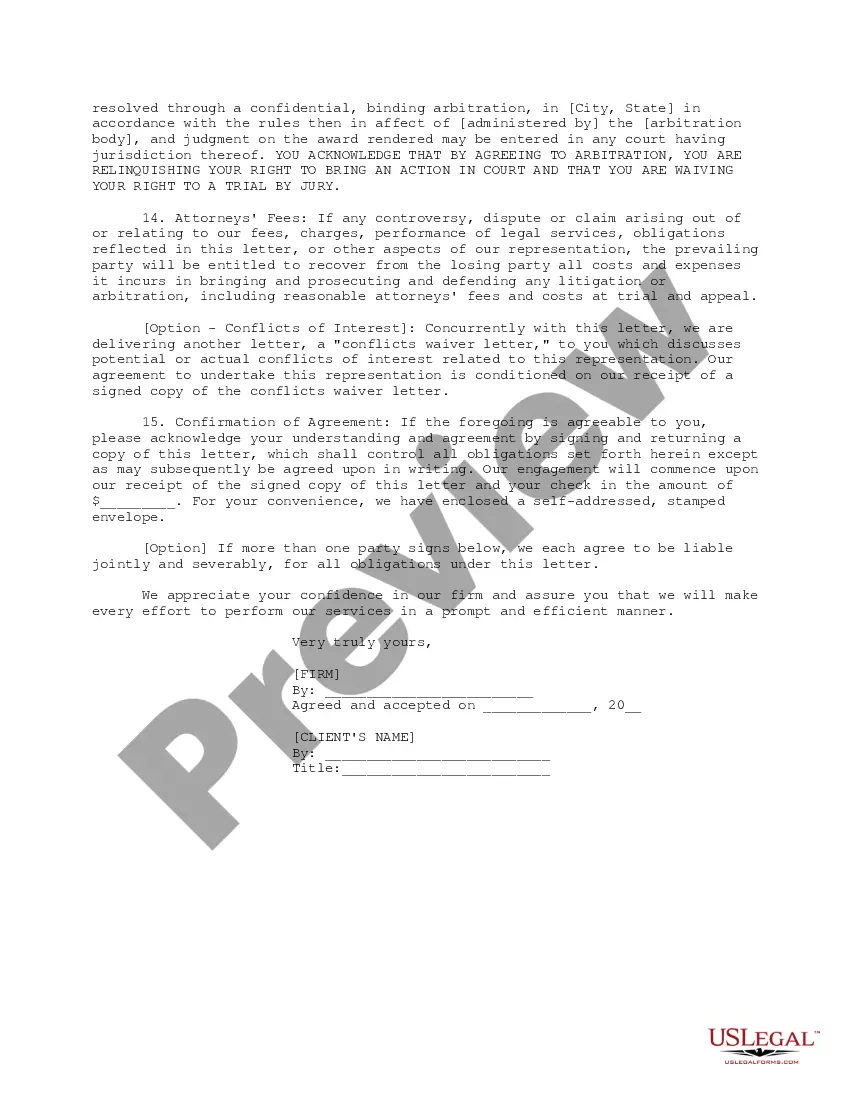
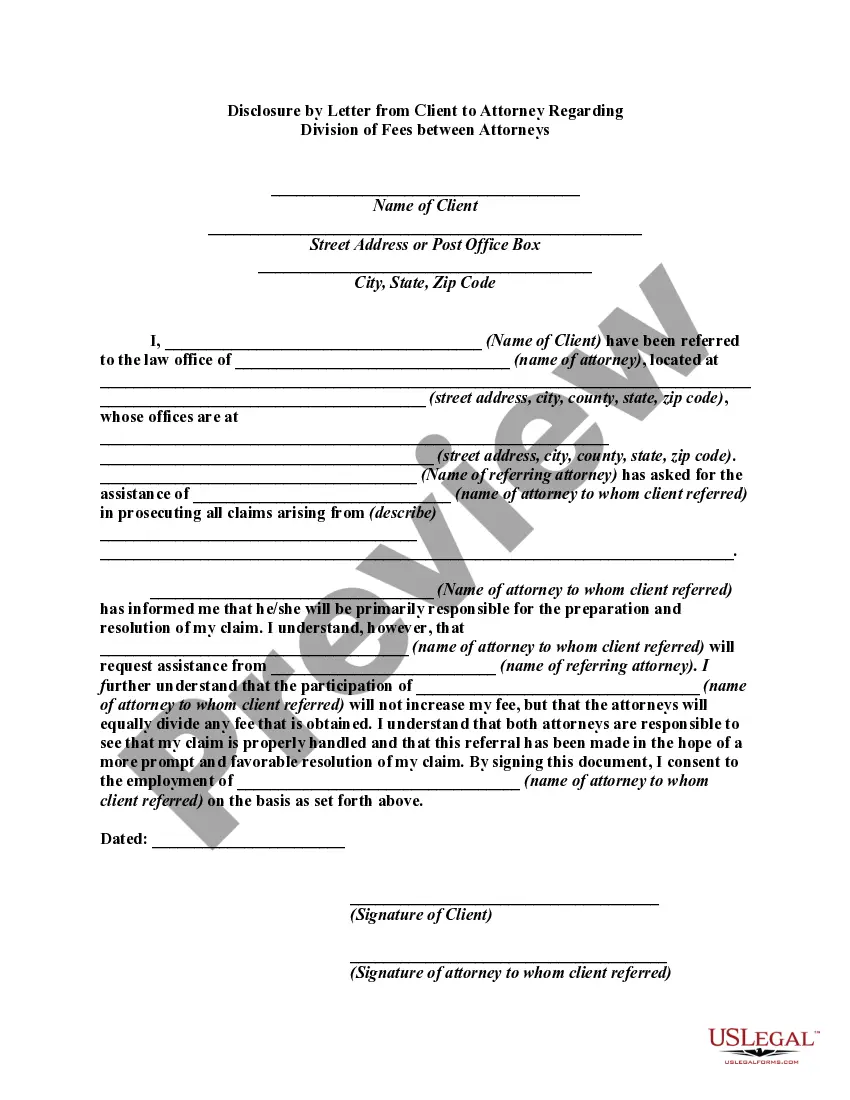
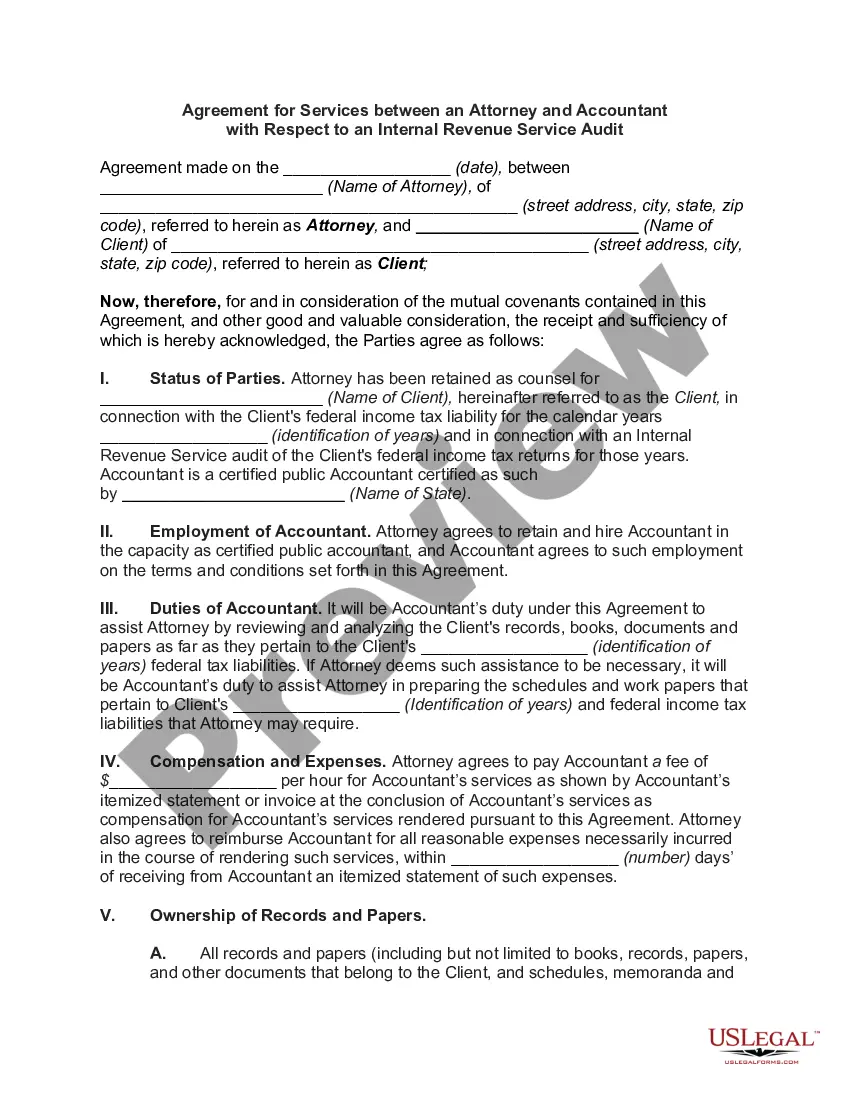
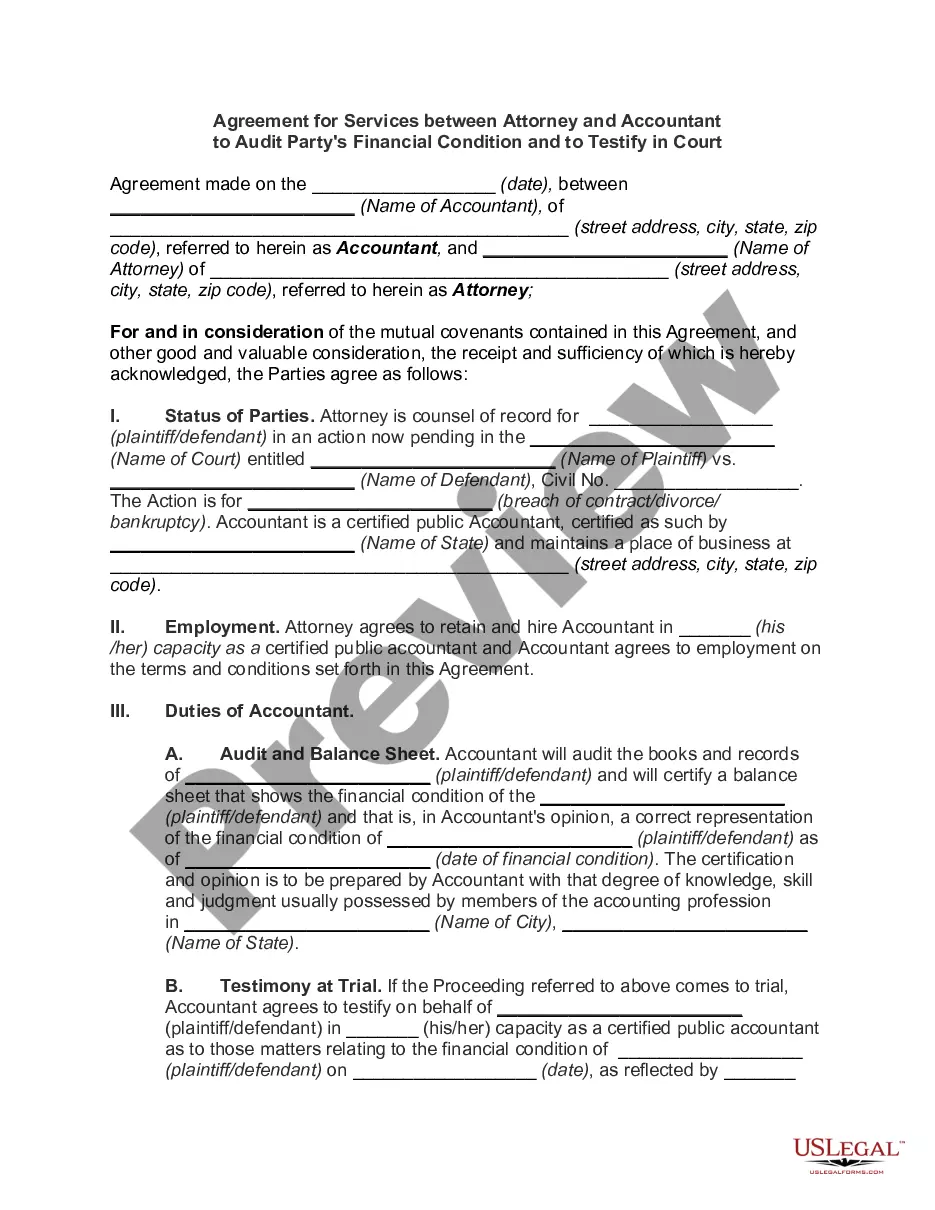
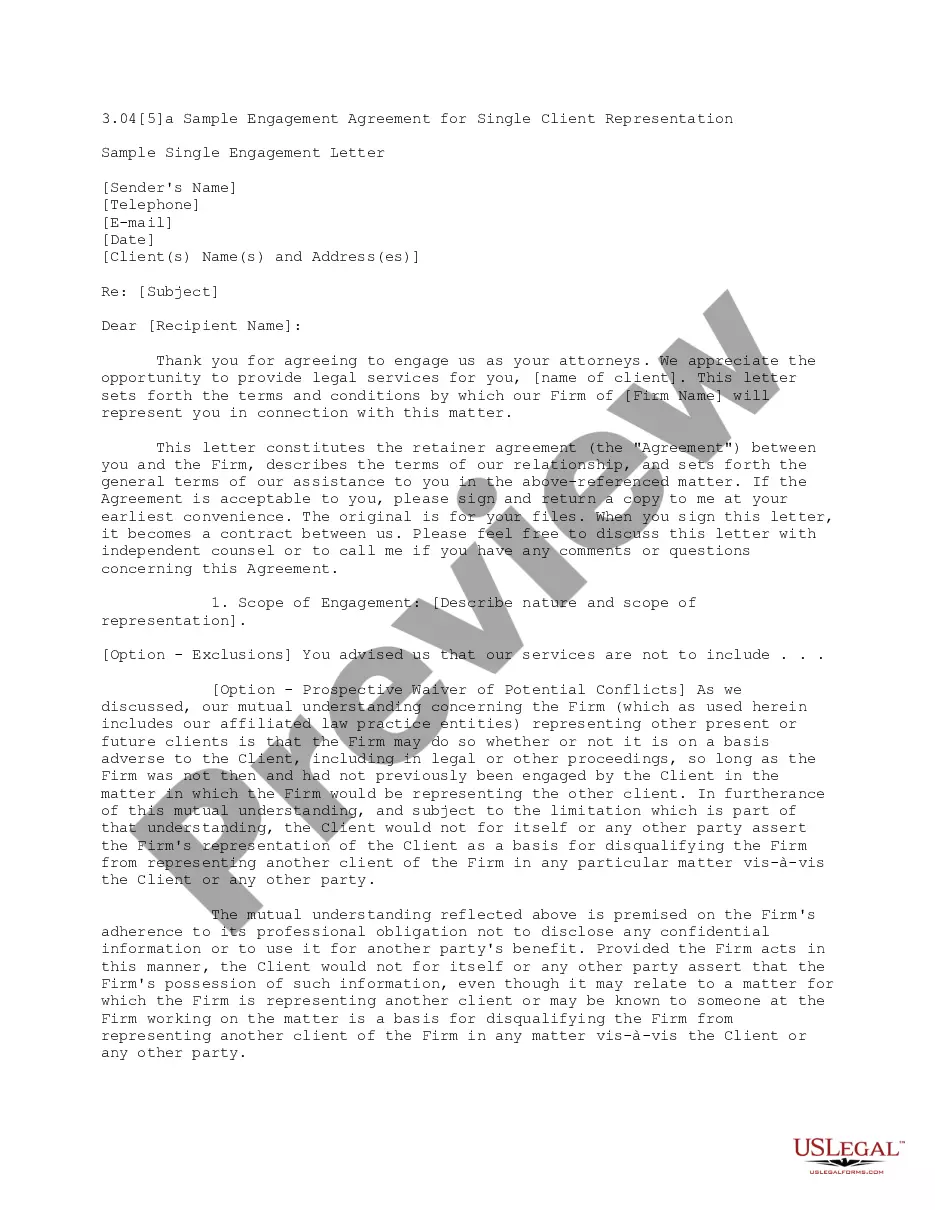
The Engagement Agreement for Joint Client Representation is a legal document that outlines the terms under which shared clients can receive legal representation from a law firm. This agreement clarifies the scope of representation, retainer details, fee structures, and the responsibilities of all parties involved. It is specifically designed for situations where multiple clients are represented jointly, establishing the legal framework necessary to navigate potential conflicts of interest and ensure effective communication among clients. This form differs from individual engagement agreements by addressing the unique considerations that arise during joint representation.
Form components explained
- Scope of Engagement: Defines the nature and limits of the legal services provided.
- Joint Representation: Details the shared responsibilities and rights of all clients under joint representation.
- Retainer Agreement: Specifies the upfront charges and billing structure.
- Fees and Costs: Outlines the attorney fees and additional expenses incurred during representation.
- Confidentiality and Communications: Addresses how information is shared and the implications of joint representation on confidentiality.
- Termination Clause: Covers the conditions under which the representation can be ended by either party.




Common use cases
This form should be used when multiple clients wish to engage the same legal representation for a specific matter, such as a joint legal defense in litigation or a collaborative negotiation. It is particularly useful in scenarios where clients have aligned interests and can benefit from shared legal strategies while understanding the implications involved in joint representation.
Who this form is for
This form is intended for:
- Businesses or organizations with multiple stakeholders needing joint legal counsel.
- Individual clients involved in a shared legal issue.
- Attorneys representing groups of clients facing similar legal challenges.
How to complete this form
- Identify the parties: Enter the names and contact information of all clients involved.
- Specify the representation: Clearly outline the scope of the legal services to be provided.
- Detail the retainer: Indicate the agreed retainer amount and how it will be managed.
- Include payment information: Address the fee structure and any additional costs clients should expect.
- Sign the agreement: Ensure all clients sign the document to formalize the engagement.
Notarization requirements for this form
This form does not typically require notarization unless specified by local law. Clients should check their jurisdiction for any such requirements.
Get your form ready online
Our built-in tools help you complete, sign, share, and store your documents in one place.
Make edits, fill in missing information, and update formatting in US Legal Forms—just like you would in MS Word.
Download a copy, print it, send it by email, or mail it via USPS—whatever works best for your next step.
Sign and collect signatures with our SignNow integration. Send to multiple recipients, set reminders, and more. Go Premium to unlock E-Sign.
If this form requires notarization, complete it online through a secure video call—no need to meet a notary in person or wait for an appointment.
We protect your documents and personal data by following strict security and privacy standards.

Make edits, fill in missing information, and update formatting in US Legal Forms—just like you would in MS Word.

Download a copy, print it, send it by email, or mail it via USPS—whatever works best for your next step.

Sign and collect signatures with our SignNow integration. Send to multiple recipients, set reminders, and more. Go Premium to unlock E-Sign.

If this form requires notarization, complete it online through a secure video call—no need to meet a notary in person or wait for an appointment.

We protect your documents and personal data by following strict security and privacy standards.
Common mistakes
- Failing to clarify the scope of representation, which may lead to misunderstandings later.
- Not discussing potential conflicts of interest openly among clients before signing.
- Leaving out essential details regarding fees and retainer arrangements.
Advantages of online completion
- Convenience of online access allows clients to obtain and fill out forms at their own pace.
- Editable forms ensure that legal agreements can be customized to fit specific needs.
- Reliable templates drafted by licensed attorneys provide peace of mind that the documents meet legal standards.
Key takeaways
- The Engagement Agreement for Joint Client Representation is vital for establishing terms of shared legal representation.
- Understanding the implications of joint representation is crucial to avoid conflicts and ensure effective communication.
- Each client retains the right to seek separate counsel if their individual interests diverge.
Looking for another form?





Form popularity
FAQ
An attorney has no authority to simply sign a settlement for a client by virtue of being an attorney. The client must do all agreements and signing.
The lawyer's job is therefore to select the means to complete the client's goals. They are responsible for tasks involving legal procedures, strategies and court tactics. Even still, the lawyer is required to consult with the client about the course of action to be taken according to the law.
An attorney, also called a lawyer, advises clients and represents them and their legal rights in both criminal and civil cases. This can begin with imparting advice, then proceed with preparing documents and pleadings and sometimes, ultimately, appearing in court to advocate on behalf of clients.
Advise and represent clients in courts, before government agencies, and in private legal matters. Communicate with their clients, colleagues, judges, and others involved in the case. Conduct research and analysis of legal problems. Interpret laws, rulings, and regulations for individuals and businesses.
No matter which state you live in, or how well you know your attorney, you should always enter into a written representation agreement (sometimes called a fee agreement) with your lawyer.
As advisor, a lawyer provides a client with an informed understanding of the client's legal rights and obligations and explains their practical implications. As advocate, a lawyer zealously asserts the client's position under the rules of the adversary system.
An attorney shall protect the interests of clients, using only the means that are in accordance with the law, with the dignity of the legal profession and good customs and that are not contrary to the attorney's conscience. 9. In representing a client, an attorney shall preserve his or her independence.
A legal malpractice attorney can represent you at trial without a written contract. A written agreement is not required for an attorney to represent someone. However, an attorney cannot collect a "contingency fee" without a written contract with you.