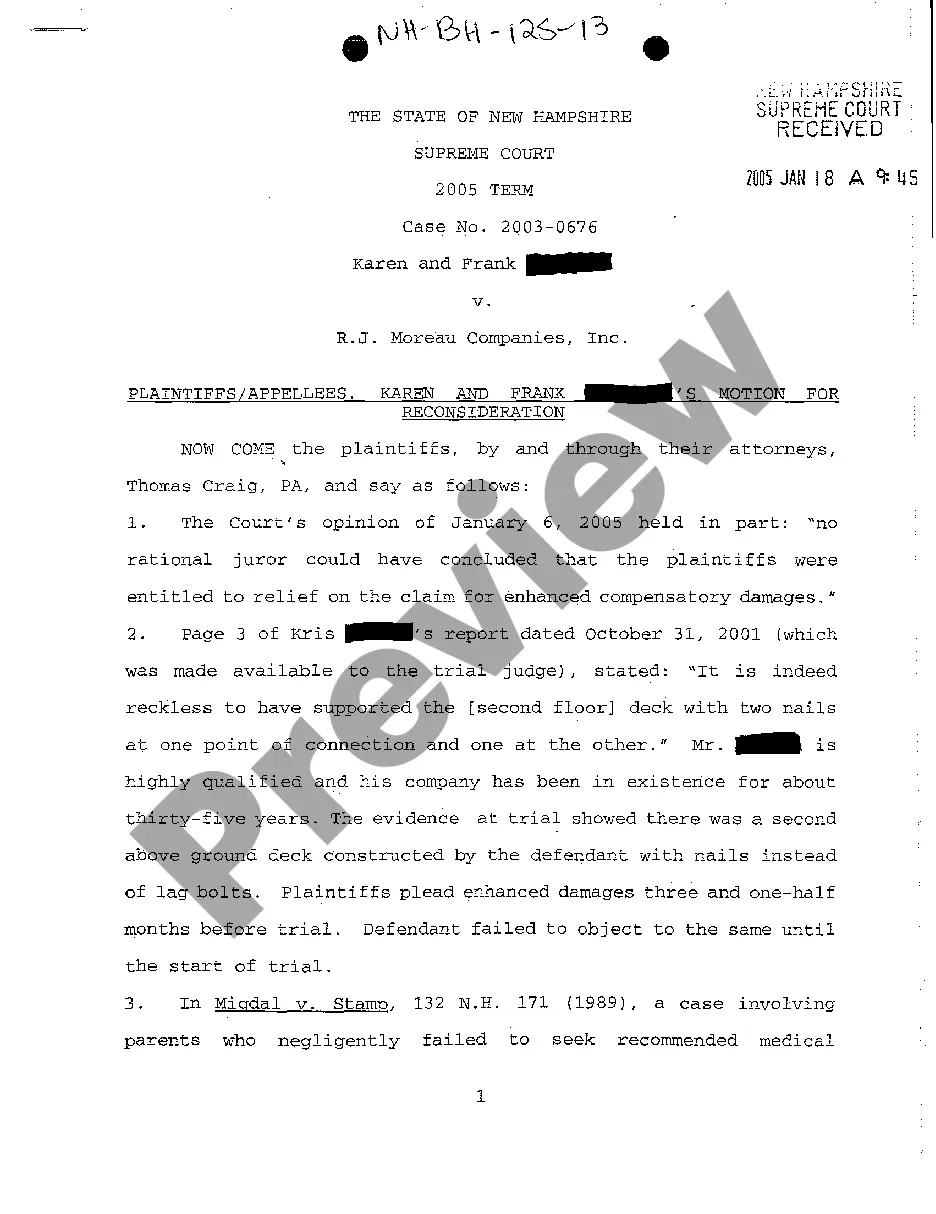
Abstract of Judgment
What this document covers
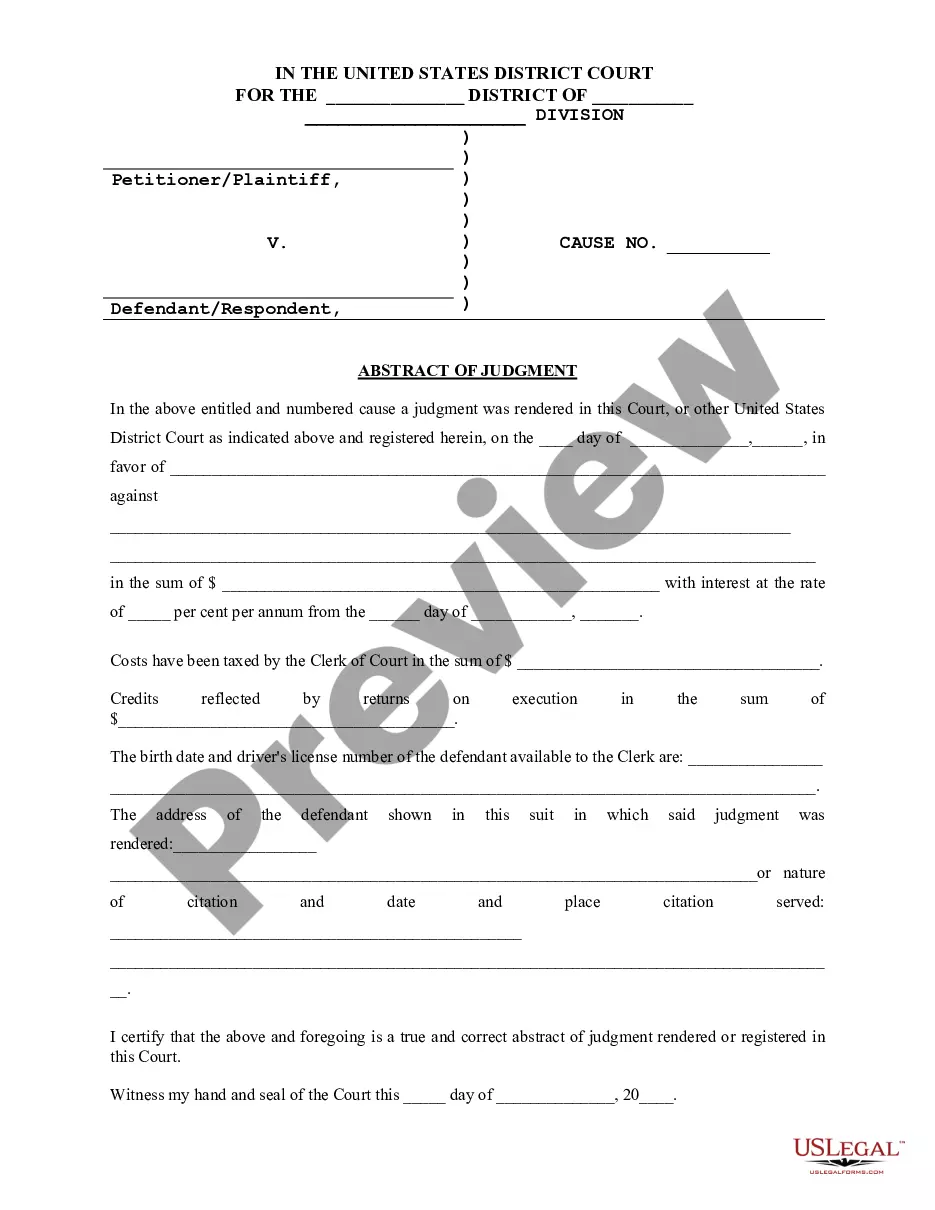
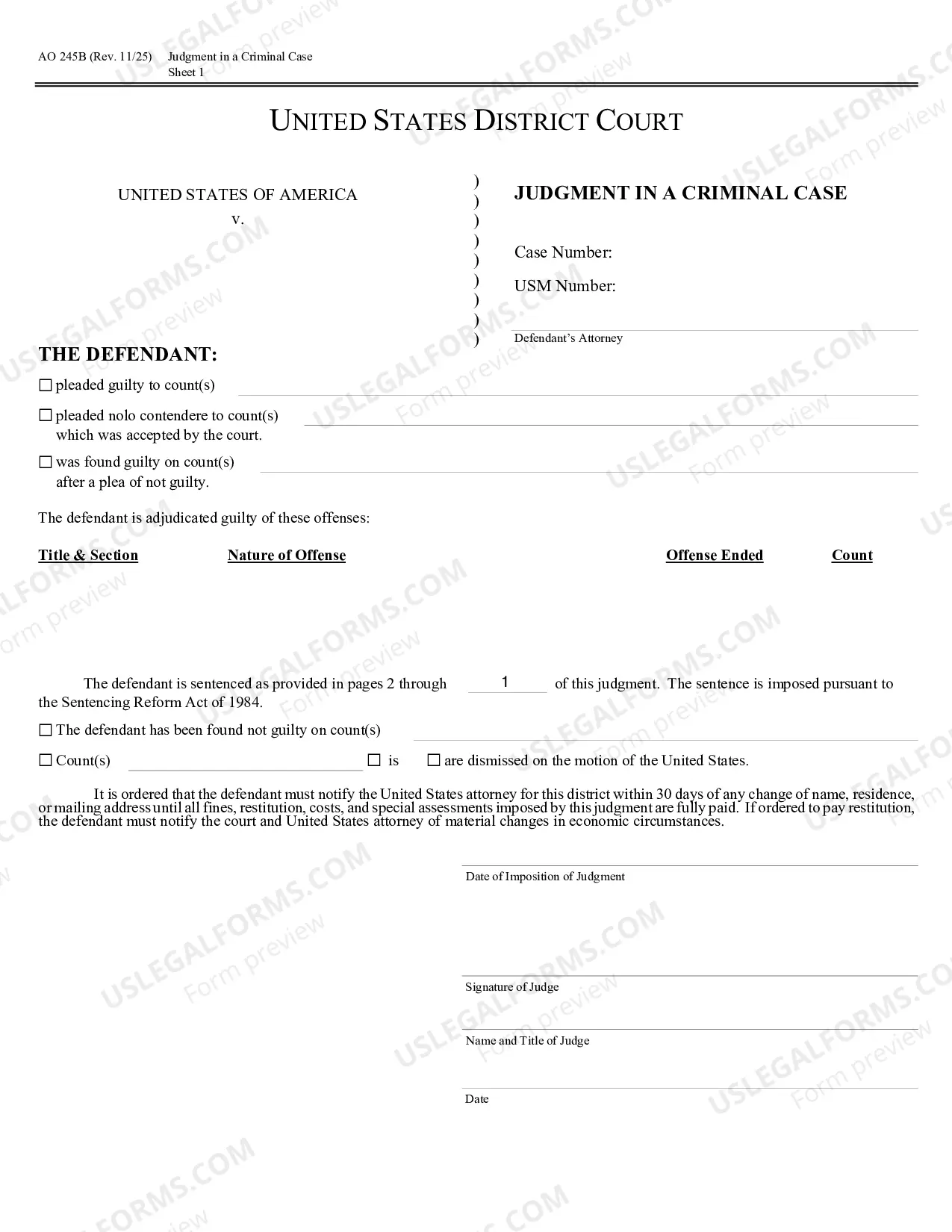
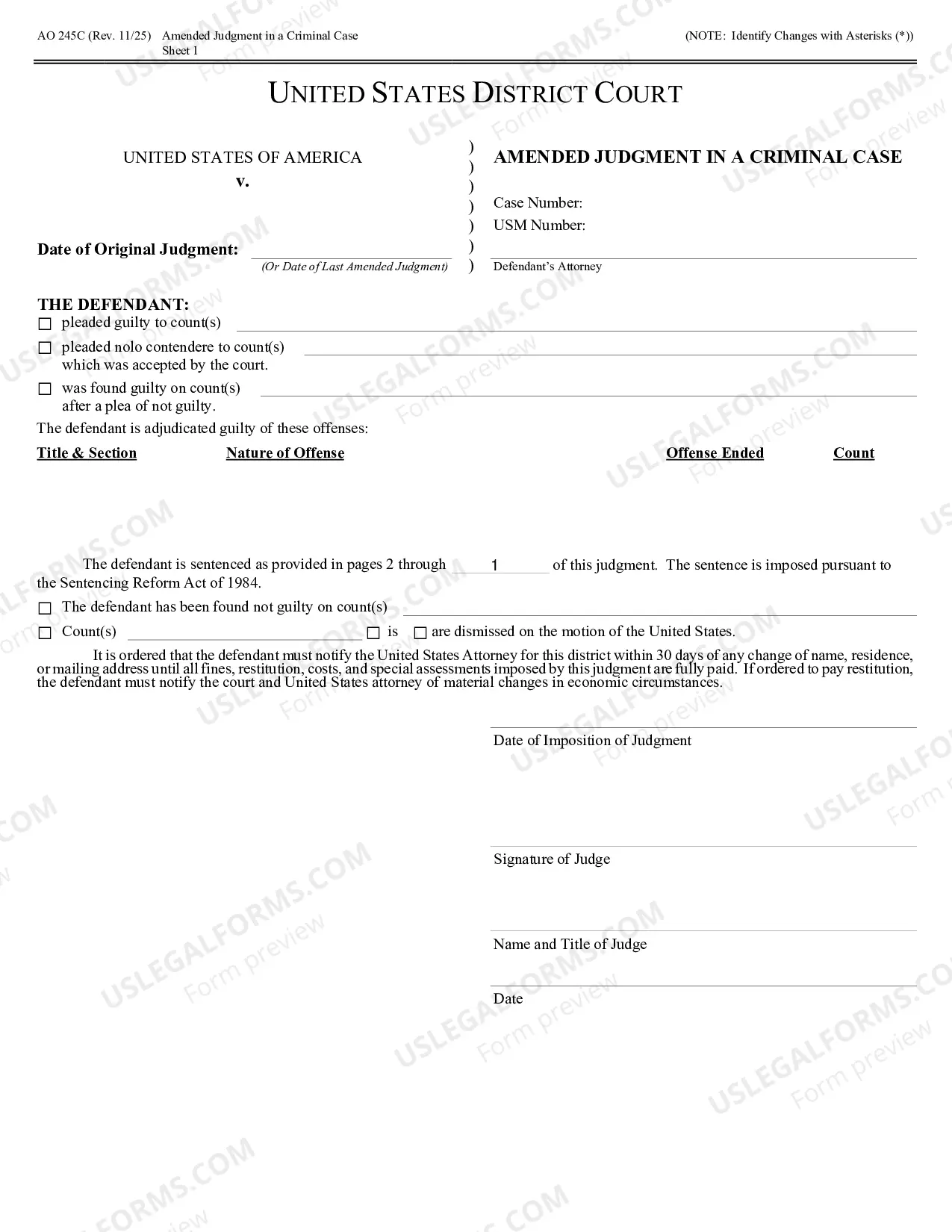
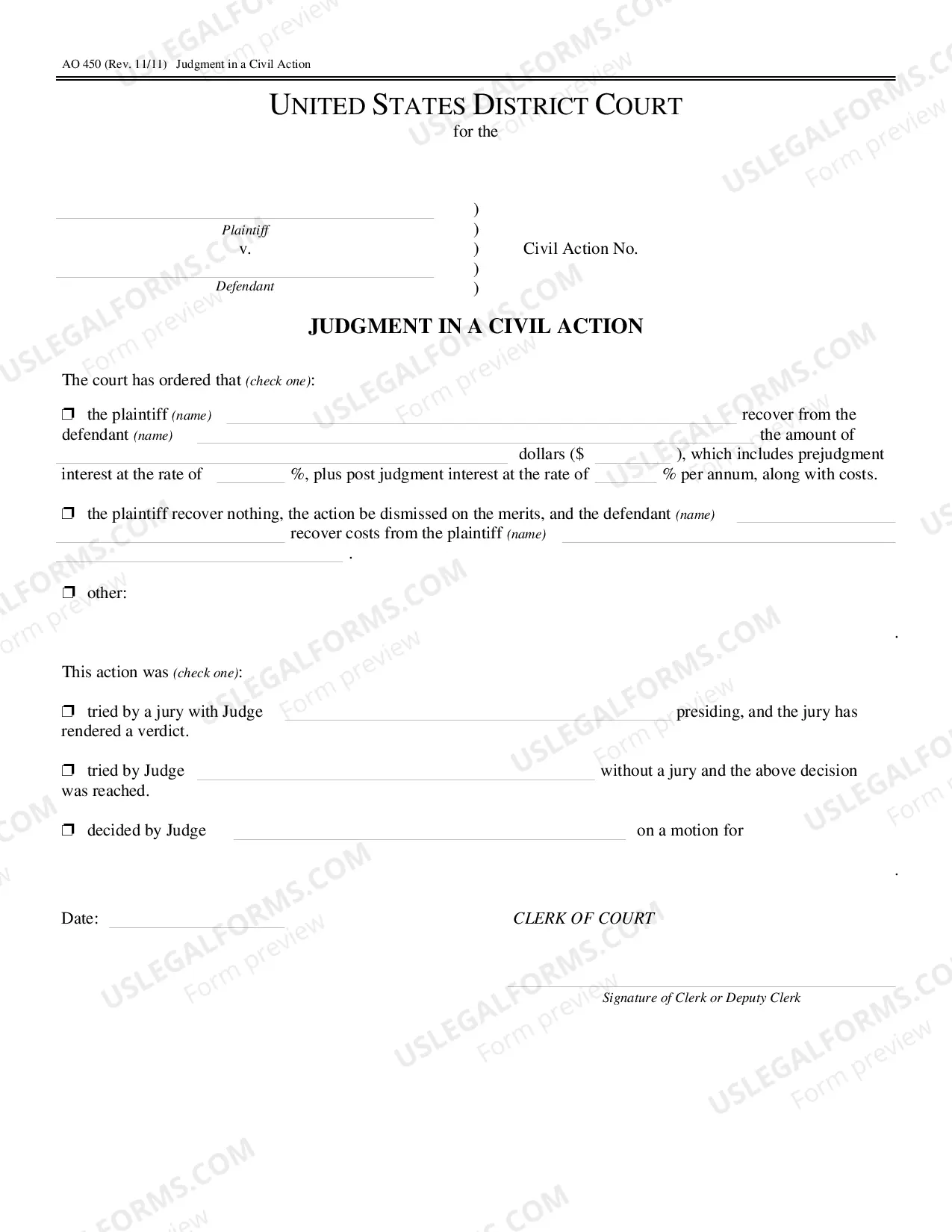
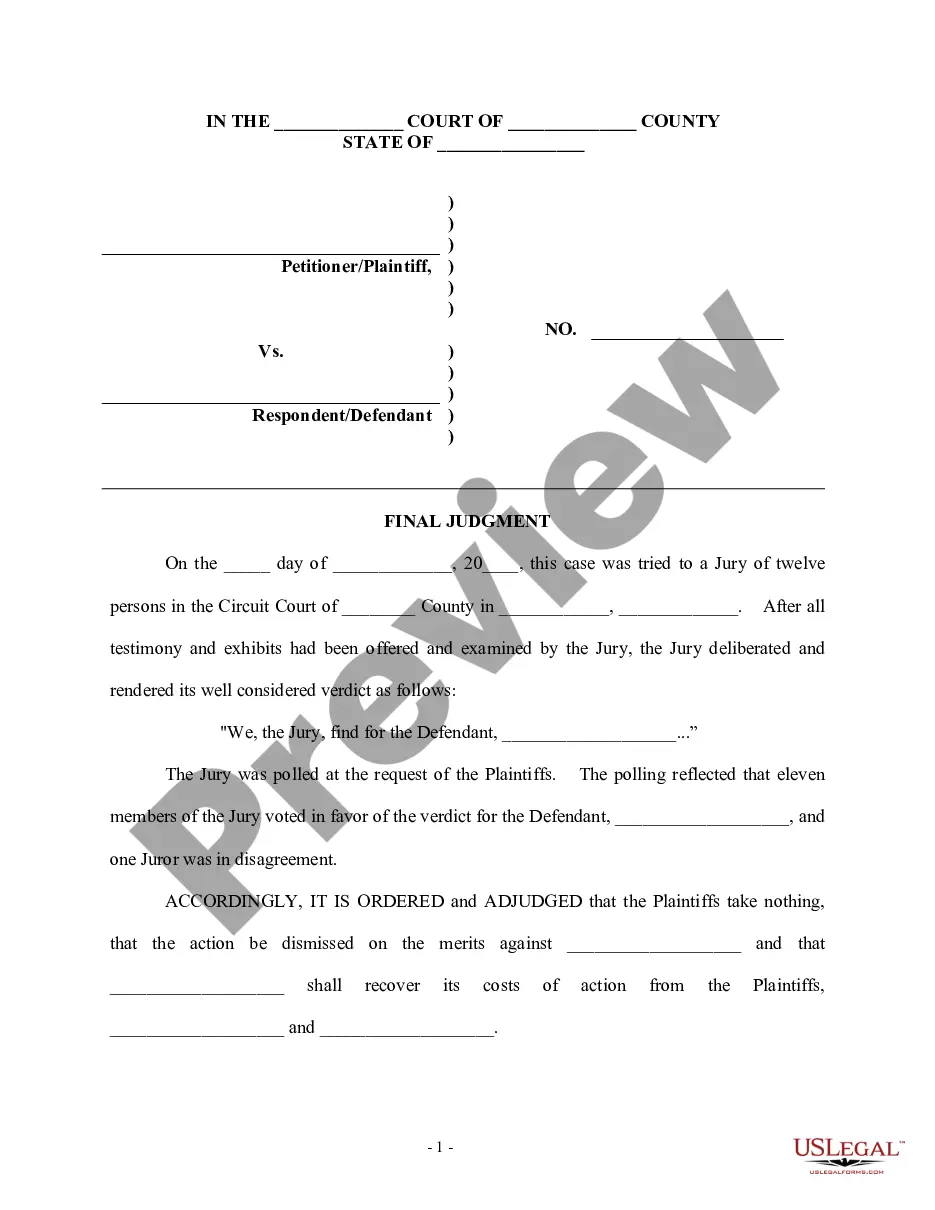
The Abstract of Judgment is a legal document that summarizes a court's judgment in a civil case. This form serves as a record of the monetary amount awarded by the court, including any interest accrued and associated costs. It is essential to create this abstract to enforce the judgment against the debtor, distinguishing it from other forms such as the judgment itself, which details the court's decision but does not emphasize the financial aspects. This form is valuable for creditors to document and register their rights to claim payment from a debtor across various jurisdictions.
Form components explained
- Case title and number to identify the legal proceeding.
- Date of judgment indicating when the court issued the decision.
- Name of the plaintiff (creditor) who was awarded the judgment.
- Name of the defendant (debtor) against whom the judgment was rendered.
- Total judgment amount, including principal and any awarded interest.
- Details of any court costs and credits recorded on execution returns.
- Defendant's identifying information, such as birth date and driver's license number.
- Address and citation information relevant to the judgment.
- Certification statement from the Clerk of Court for authenticity.
When this form is needed
You should use the Abstract of Judgment when you have obtained a final judgment in a lawsuit and need to formalize this record for enforcement purposes. This form is particularly useful when you wish to pursue collection actions against a debtor or when you need to create a lien on the debtor's property. It can also be crucial for determining the validity of the judgment in case it is challenged in the future.
Who this form is for
- Creditors who have successfully obtained a court judgment and need documentation for enforcement.
- Attorneys representing clients in collection actions.
- Individuals seeking to collect debts in civil cases.
- Parties involved in disputes requiring formal recognition of judgment amounts.
How to complete this form
- Identify the case title and number at the top of the form.
- Enter the date the court rendered the judgment.
- Fill in the names of the plaintiff and defendant accurately.
- Specify the total amount awarded, including interest rates and dates.
- Provide the defendant's details, such as date of birth and driver's license number.
- Complete the certification section to validate the abstract with the Clerk's information.
Is notarization required?
This form does not typically require notarization unless specified by local law. Always check your local regulations to ensure compliance.
Get your form ready online
Our built-in tools help you complete, sign, share, and store your documents in one place.
Make edits, fill in missing information, and update formatting in US Legal Forms—just like you would in MS Word.
Download a copy, print it, send it by email, or mail it via USPS—whatever works best for your next step.
Sign and collect signatures with our SignNow integration. Send to multiple recipients, set reminders, and more. Go Premium to unlock E-Sign.
If this form requires notarization, complete it online through a secure video call—no need to meet a notary in person or wait for an appointment.
We protect your documents and personal data by following strict security and privacy standards.

Make edits, fill in missing information, and update formatting in US Legal Forms—just like you would in MS Word.

Download a copy, print it, send it by email, or mail it via USPS—whatever works best for your next step.

Sign and collect signatures with our SignNow integration. Send to multiple recipients, set reminders, and more. Go Premium to unlock E-Sign.

If this form requires notarization, complete it online through a secure video call—no need to meet a notary in person or wait for an appointment.

We protect your documents and personal data by following strict security and privacy standards.
Mistakes to watch out for
- Failing to accurately record the case title and number.
- Omitting crucial details like the total judgment amount or interest rates.
- Using incorrect or outdated identification information for the defendant.
- Not certifying the form with the Clerk's signature.
Why use this form online
- Convenience of downloading and printing the form from home or office.
- Editability allows for accurate completion before finalizing.
- Access to forms drafted by licensed attorneys for legal compliance.
- Time-saving with immediate access to necessary legal documents.
Summary of main points
- The Abstract of Judgment is essential for collecting debts and establishing liens.
- Accurate completion of the form is crucial for enforceability.
- This form is usable across multiple states, but check local requirements.
Looking for another form?

Form popularity
FAQ
In order to vacate a judgment in California, You must file a motion with the court asking the judge to vacate or set aside the judgment. Among other things, you must tell the judge why you did not respond to the lawsuit (this can be done by written declaration).
An Abstract of Judgment is a court issued document that may allow a claimant (creditor) to place a lien on Real Property owned by another (debtor).From that information, California Title Company will have to determine if the judgment debtor is the same person as the property owner.
Contact the creditor that filed the lien. Make payment arrangements if you cannot pay in full. Pay the lien amount in full or as agreed. Request a satisfaction of lien. File the satisfaction of lien if mailed to you. Consult a bankruptcy attorney.
The purpose of an abstract of judgment is to create a public record and create a lien or claim if necessary on any real estate property owned or later acquired by the defendant located in the county in which the abstract of judgment is recorded.
An Abstract of Judgment is a judgment lien against real property that the debtor currently owns, or may try to purchase in the future.The form asks for information regarding the debtor's name, last known address, driver's license number, and the amount of money the debtor owes you.
California allows the judgment to last ten years and it can be renewed for an additional ten years if the creditor files the required forms in a timely fashion. Failure to renew the judgment prior to the ten-year time limit voids the judgment forever.
The debtor must get a discharge or release of the abstract of judgment to remove the lien from the home. Contact the judgment creditor shown on the abstract. Arrange to pay the debt in full or negotiate payments. Ask the creditor for a discharge if paying in full.
The wise judgment creditor will make sure it is renewed at least every 10 years or it will expire. Note that any liens created by filing and recording an Abstract of Judgment must also be renewed.When the judgment is renewed, the interest that has accrued will be added to the principal amount owing.