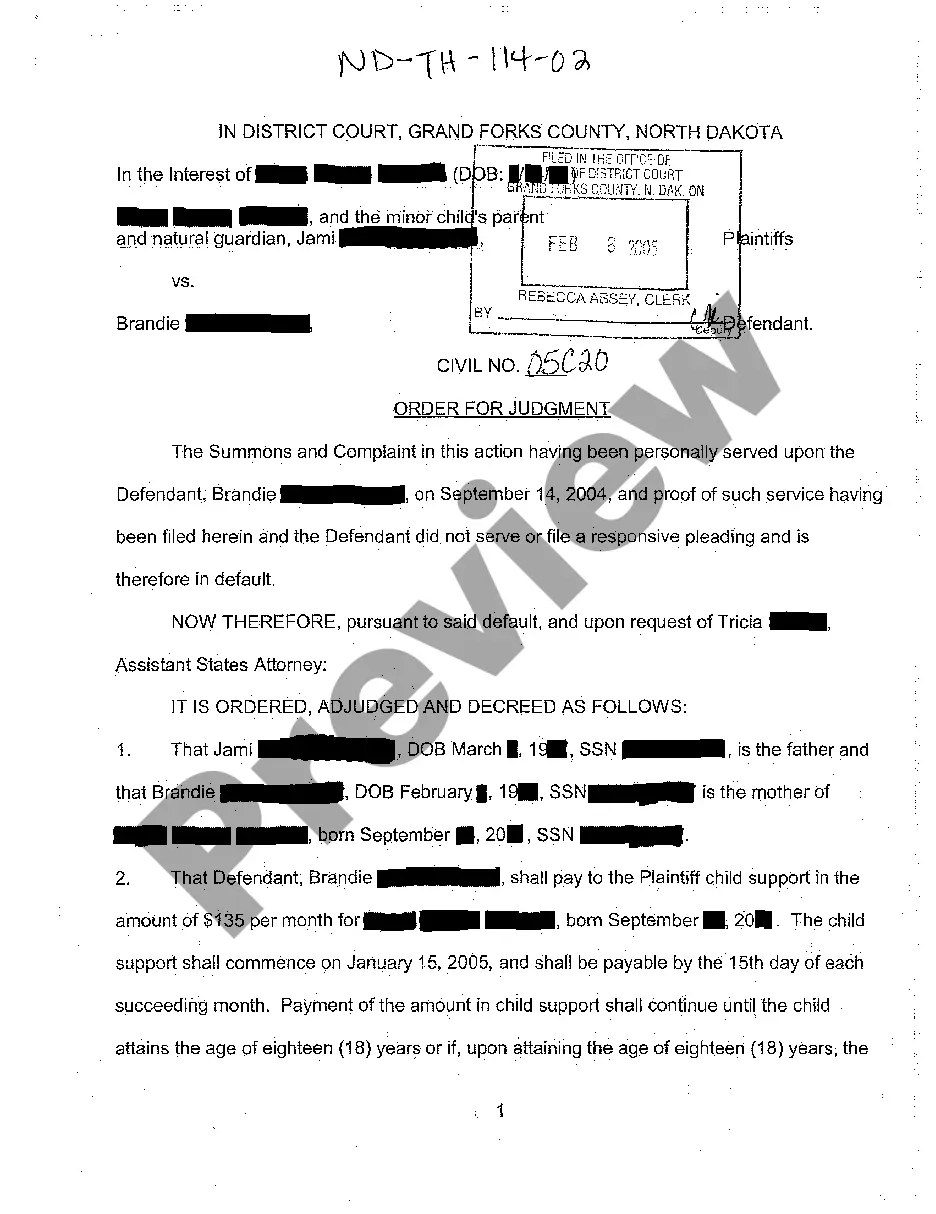
Closing Agreement
Understanding this form
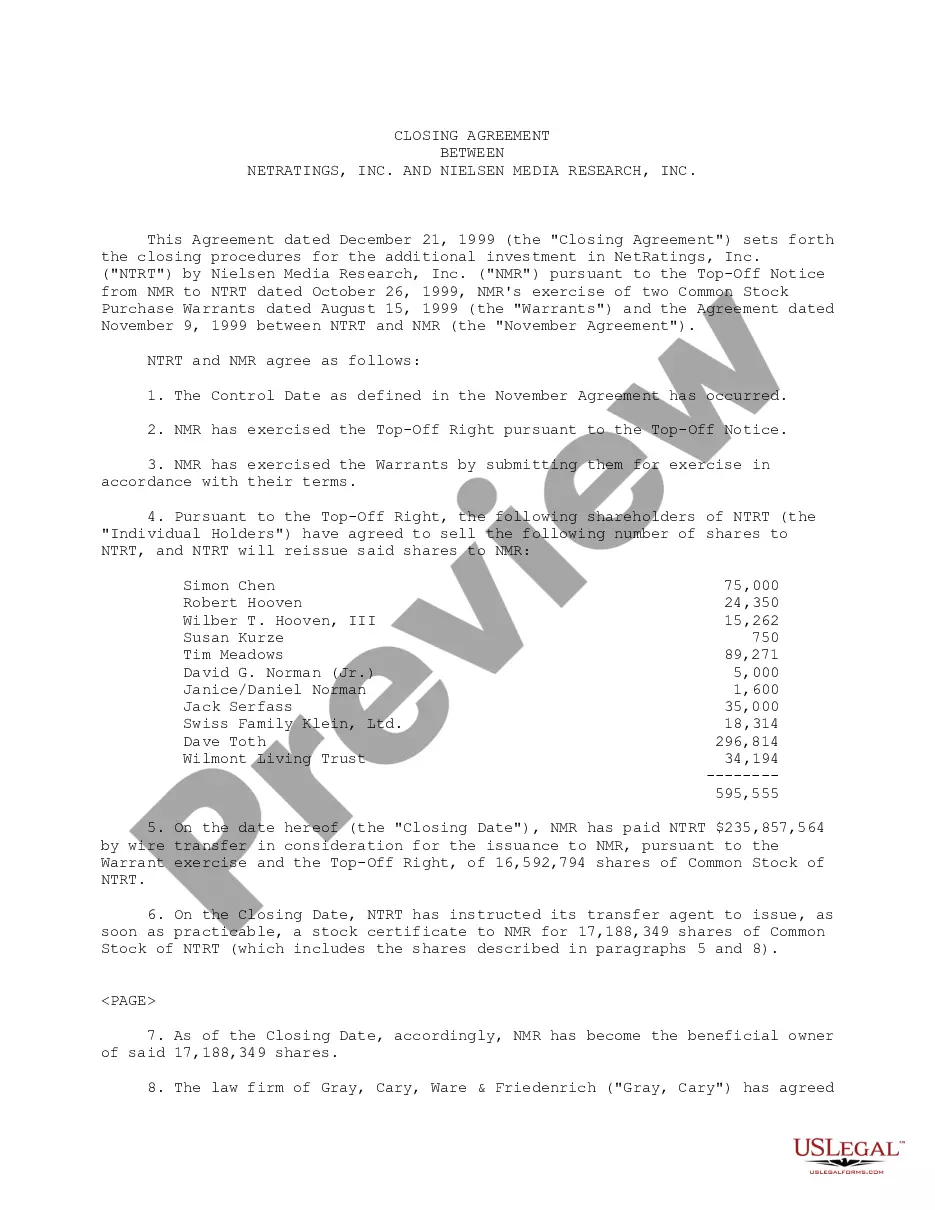
The Closing Agreement is a legal document that outlines the procedures and terms for completing a transaction between two parties, in this case, NetRatings, Inc. and Nielsen Media Research, Inc. This form clarifies the details surrounding additional investments and share transfers. It serves a crucial role in finalizing agreements and is distinct from other legal forms, such as investment contracts or share purchase agreements, by providing specific closing guidelines and shareholder details.
What’s included in this form
- The Control Date acknowledgment and its implications.
- Details of the Top-Off Right exercised by Nielsen Media Research, Inc.
- An outline of shares being sold by individual shareholders.
- The financial considerations involved, including payment terms.
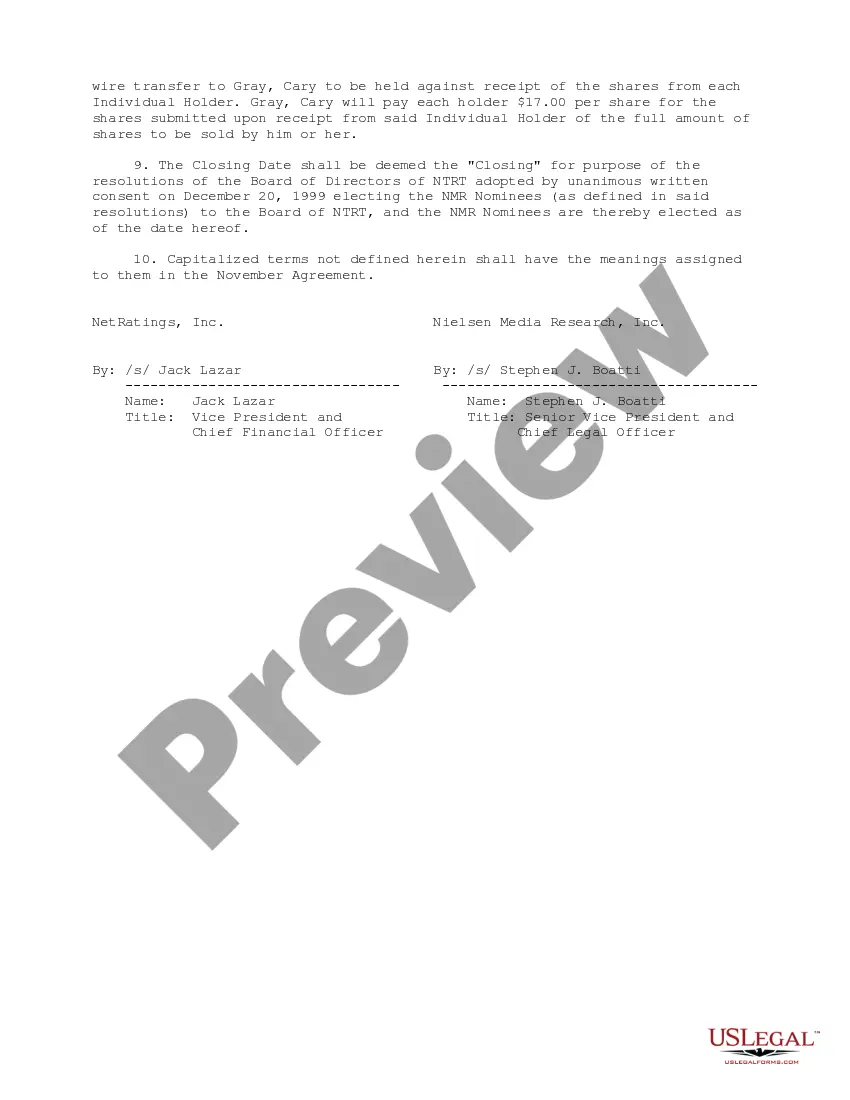
- Escrow arrangement for the shares and procedural specifics.
- Board resolutions related to share issuance and elections.
When to use this form
This form should be used when two companies are formalizing an investment transaction that involves the purchase and transfer of shares. It is particularly relevant when additional investments are being made following an established agreement. For instance, if a company wants to secure additional funding from an investor and needs to outline the closing process for those transactions, the Closing Agreement serves as the necessary documentation.
Who can use this document
- Companies looking to formalize investment agreements.
- Investors involved in capital contributions to a business.
- Corporate lawyers drafting or overseeing investment transactions.
- Shareholders engaged in the buying or selling of shares as part of a funding round.
How to complete this form
- Identify the parties involved: Ensure that both NetRatings, Inc. and Nielsen Media Research, Inc. are correctly mentioned.
- Confirm the investment details: Include specific share amounts and the financial terms agreed upon.
- List the individual shareholders: Clearly outline which shareholders are selling shares and the corresponding quantities.
- Document the payment transfer: State the specific amount paid and the date of transaction.
- Include signatures: Ensure that all necessary representatives from both parties sign the agreement to make it legally binding.
Notarization guidance
This form usually doesn’t need to be notarized. However, local laws or specific transactions may require it. Our online notarization service, powered by Notarize, lets you complete it remotely through a secure video session, available 24/7.
Get your form ready online
Our built-in tools help you complete, sign, share, and store your documents in one place.
Make edits, fill in missing information, and update formatting in US Legal Forms—just like you would in MS Word.
Download a copy, print it, send it by email, or mail it via USPS—whatever works best for your next step.
Sign and collect signatures with our SignNow integration. Send to multiple recipients, set reminders, and more. Go Premium to unlock E-Sign.
If this form requires notarization, complete it online through a secure video call—no need to meet a notary in person or wait for an appointment.
We protect your documents and personal data by following strict security and privacy standards.

Make edits, fill in missing information, and update formatting in US Legal Forms—just like you would in MS Word.

Download a copy, print it, send it by email, or mail it via USPS—whatever works best for your next step.

Sign and collect signatures with our SignNow integration. Send to multiple recipients, set reminders, and more. Go Premium to unlock E-Sign.

If this form requires notarization, complete it online through a secure video call—no need to meet a notary in person or wait for an appointment.

We protect your documents and personal data by following strict security and privacy standards.
Common mistakes
- Failing to include all necessary parties involved in the transaction.
- Not accurately detailing the amounts being invested or the shares being transferred.
- Neglecting to sign the document, rendering it unenforceable.
- Using outdated versions of the agreement that do not reflect current laws.
Benefits of using this form online
- Convenience of downloading and completing the form from anywhere.
- Editability allows for customization to fit various transaction needs.
- Access to forms drafted by licensed attorneys ensures quality and legality.
- Quick retrieval of documents simplifies the investment closing process.
Looking for another form?



Form popularity
FAQ
What is the most important document in a real estate transaction and why? Contract of sale because it determines virtually all the important aspects of the transactionprice and other terms, property interest conveyed, grantee(s), conditions of the transaction.
The last step of the closing process is the actual legal transfer of the home from the seller to you. The mortgage and other documents are signed, payments are exchanged, and finally, the waiting is over: you get the keys. If you have any unanswered questions, this is your last chance.
Closing on a home is a stressful endeavor. Proof Of Homeowners Insurance. Closing Disclosure. Loan Application. Loan Estimate. Mortgage Note. Deed Of Trust. Initial Escrow Statement.
Closing disclosure. Credit: Diamond Law Group. Note. Credit: Diamond Law Group. Mortgage. Credit: Diamond Law Group. First payment letter. Credit: Diamond Law Group. Initial escrow account disclosure statement. Credit: Diamond Law Group. Deed. Credit: Diamond Law Group. Title insurance policy. Homeowner's insurance policy.
Your Agent or Lawyer. It is important to have an advocate who understands the intricacies of the home-buying process. A Photo ID. Of course, buying a home requires you to first prove that you are who you say you are. A Copy of the Purchase Agreement. Proof of Homeowners Insurance. A Certified or Cashier's Check.
Open an Escrow Account. Title Search and Insurance. Hire an Attorney. Negotiate Closing Costs. Complete the Home Inspection. Get a Pest Inspection. Renegotiate the Offer. Lock in Your Interest Rate.
The Deed: public record of the ownership of the property It often includes a description of the property and signed by both parties. Deeds are the most important documents in your closing package because they contain the statement that the seller transfers all rights and stakes in the property to the buyer.
The HUD-1 settlement statement. The closing agent prepares this accounting of all the money involved in the transaction. Certificate of title. The deed. Loan payoff. Mechanic's liens. Bill of sale. Statement of closing costs. Statement of information.
The most important originals are the purchase agreement, deed, and deed of trust or mortgage. In the event originals are destroyed, you might be able to get certified copies of these documents from the lender or closing company, but you don't want to rely on others' recordkeeping systems unless you have to.