Trust Agreement Reference Trust Agreement between Dean Witter Reynolds, Inc. and The Bank of New York regarding Select Equity Trust
About this form
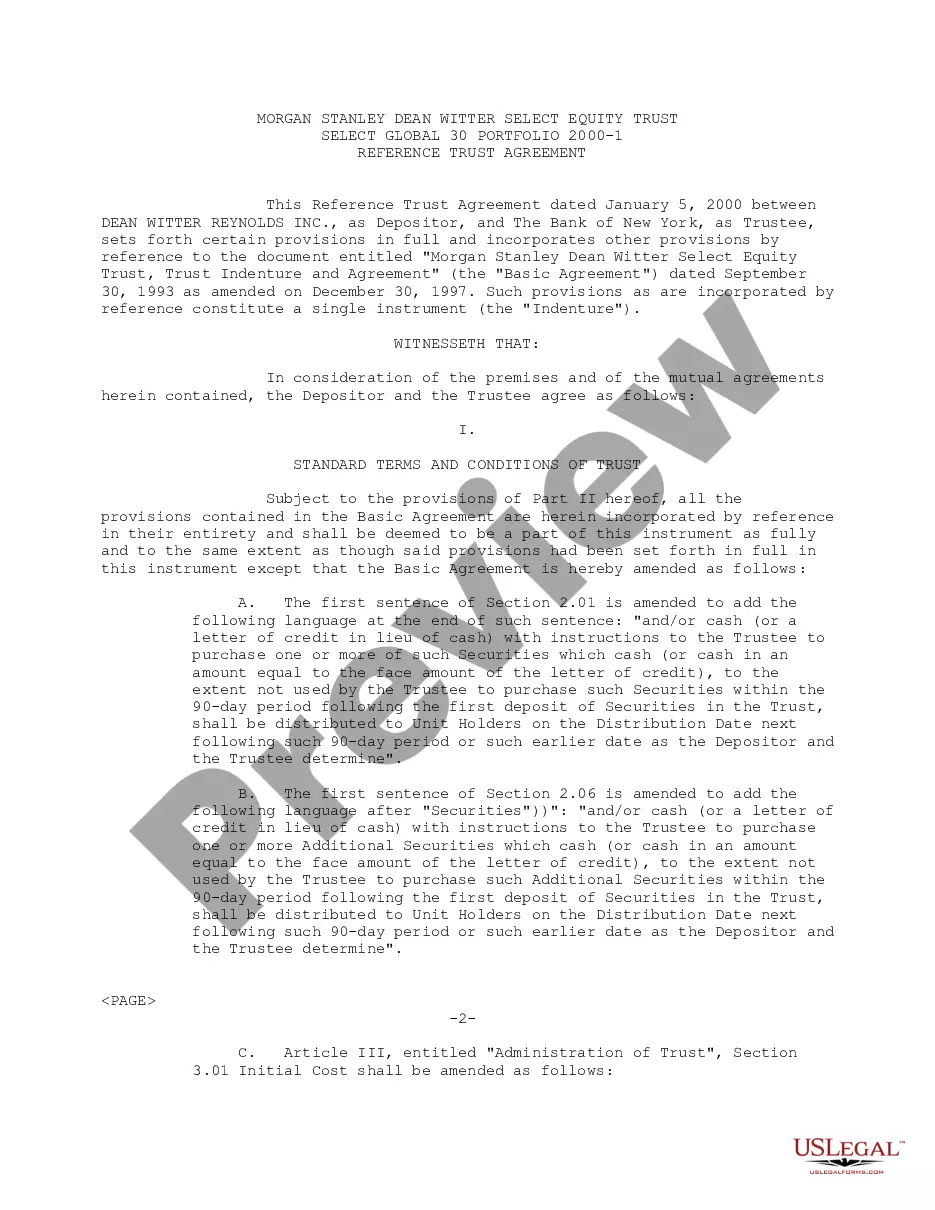
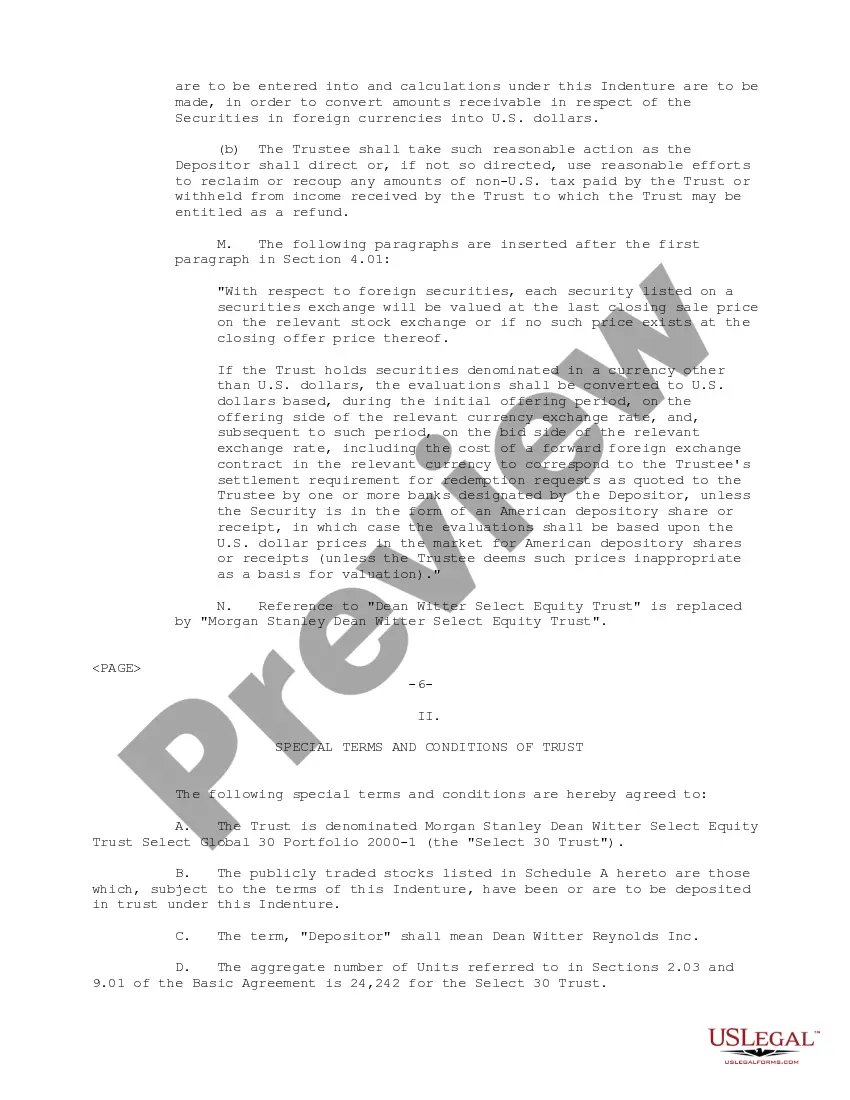
The Trust Agreement Reference Trust Agreement is a legal document that establishes the terms and conditions under which a reference trust operates. This particular form, between Dean Witter Reynolds, Inc. and The Bank of New York regarding the Select Equity Trust, outlines the governance of the Select Global 30 Portfolio 2000-1. It serves to clarify the roles and responsibilities of the depositor and trustee while detailing the management of trust assets, making it distinct from other trust agreements by focusing on a specific portfolio managed for unit holders.
Main sections of this form
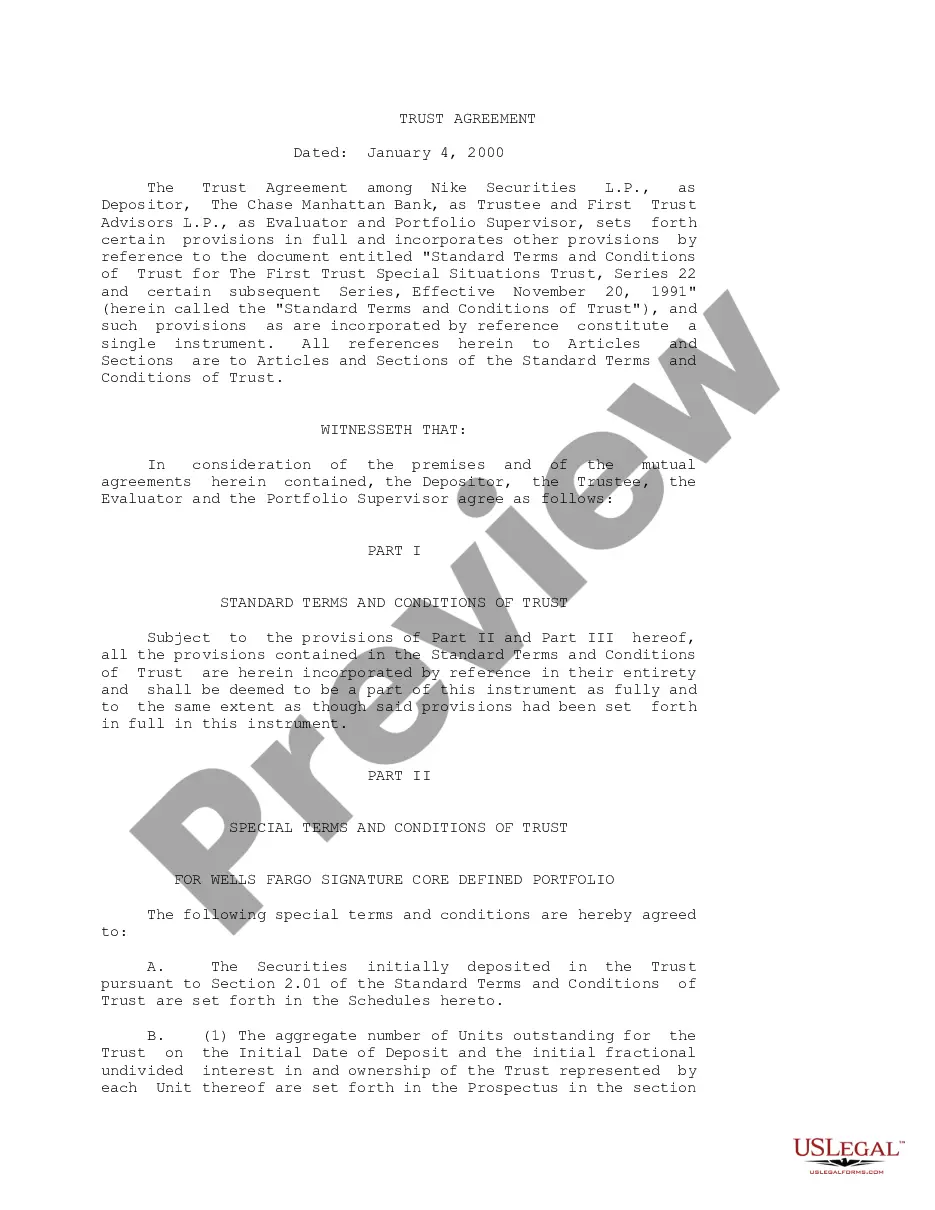
- Standard terms and conditions of trust: Incorporates provisions from the Basic Agreement and includes amendments specific to this trust.
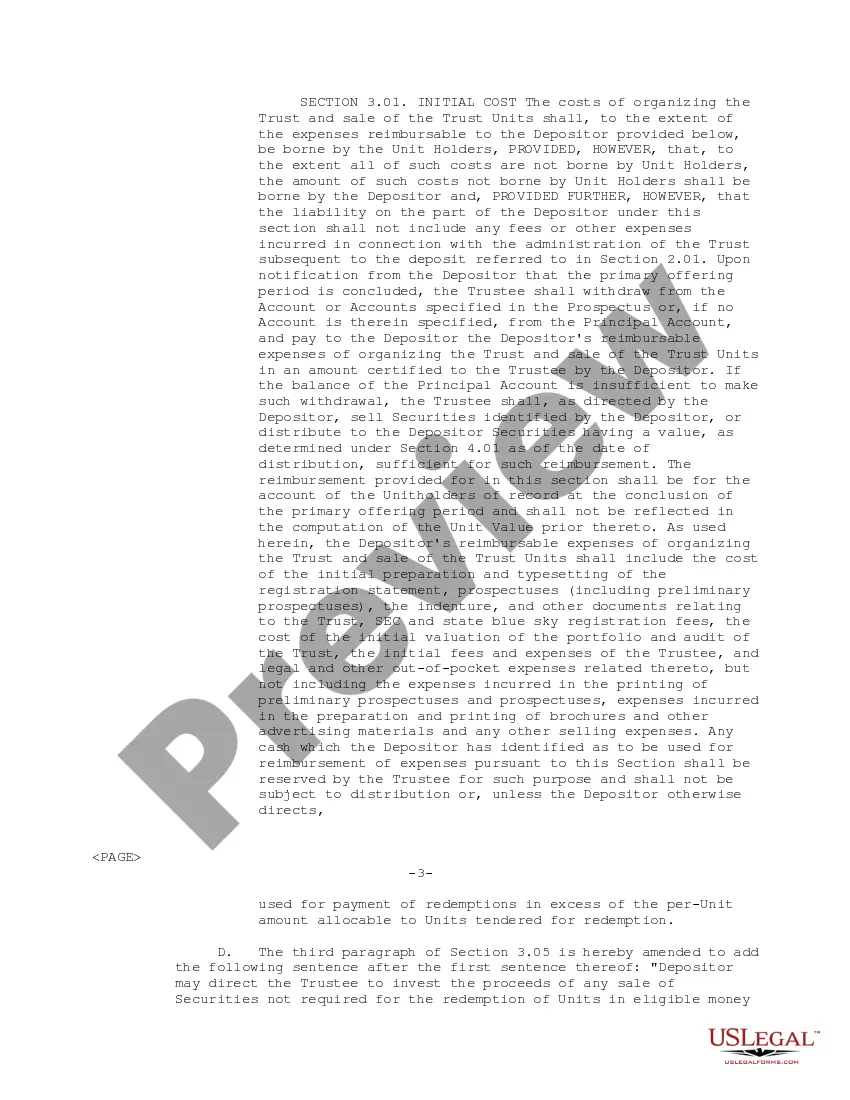
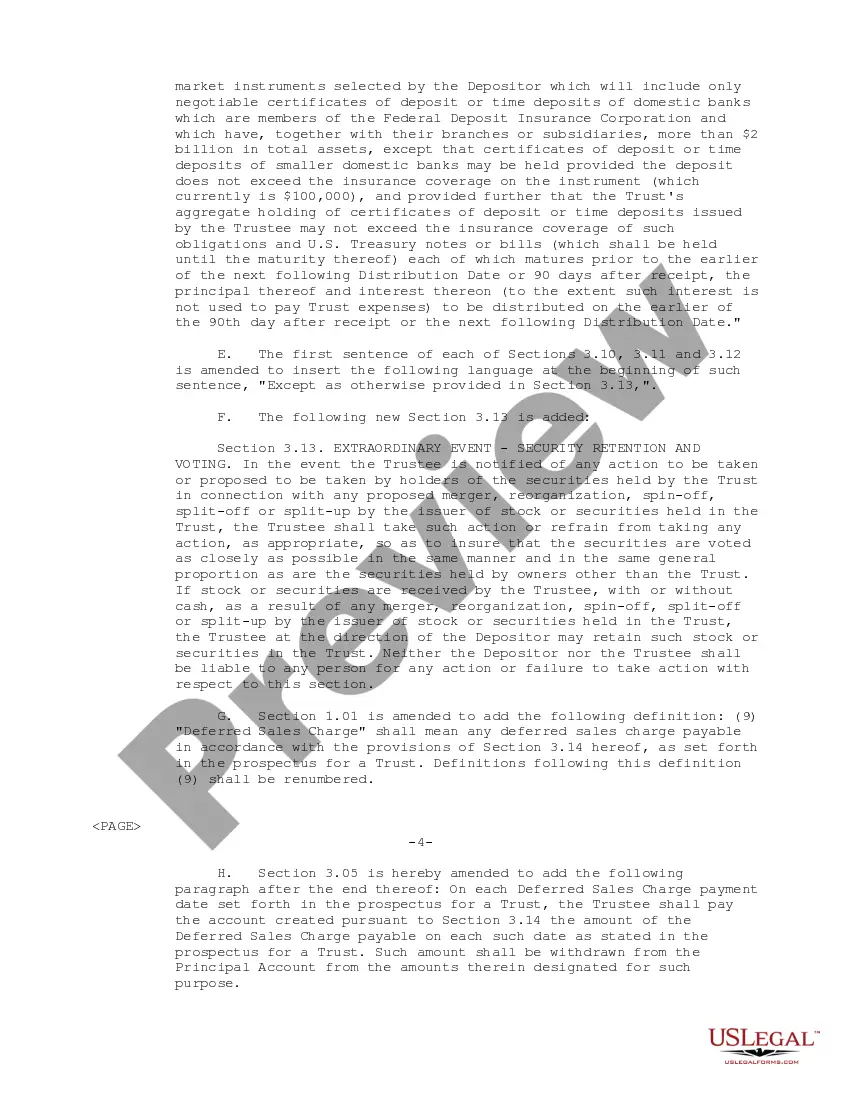
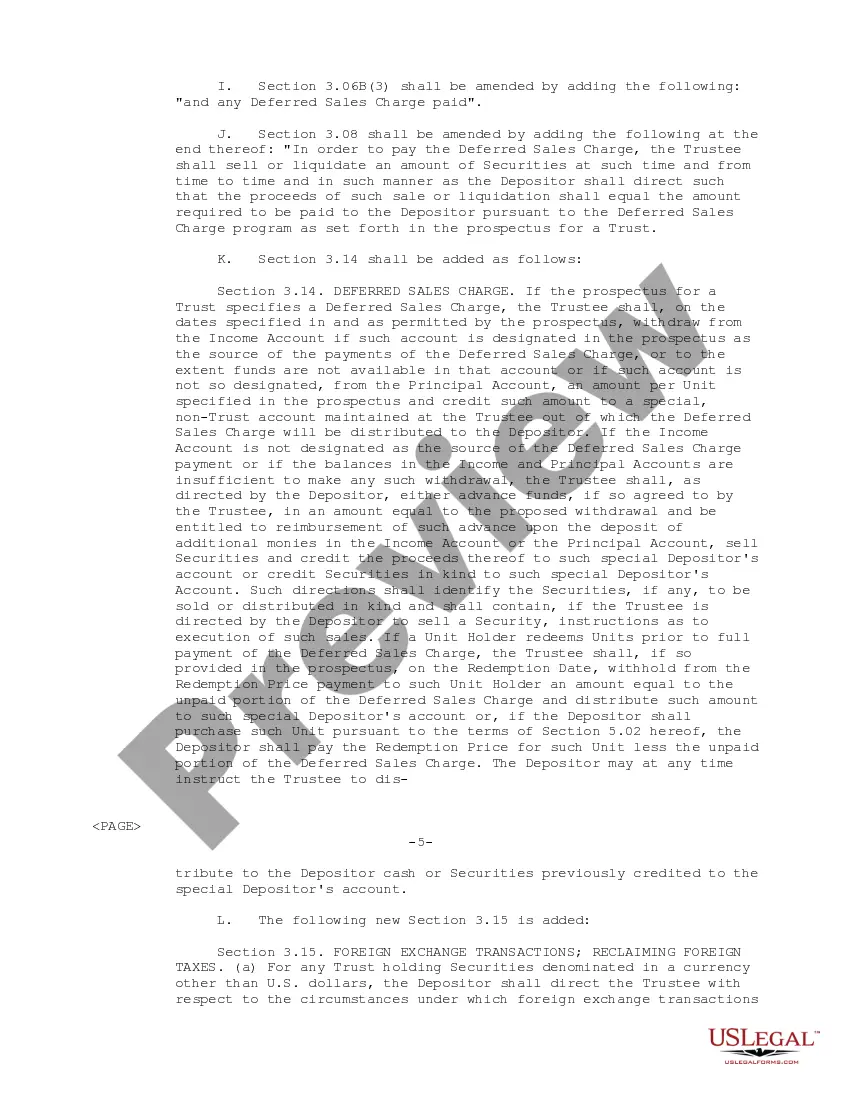
- Amendments to financial provisions: Details adjustments related to cash management, securities purchases, and cost allocations.
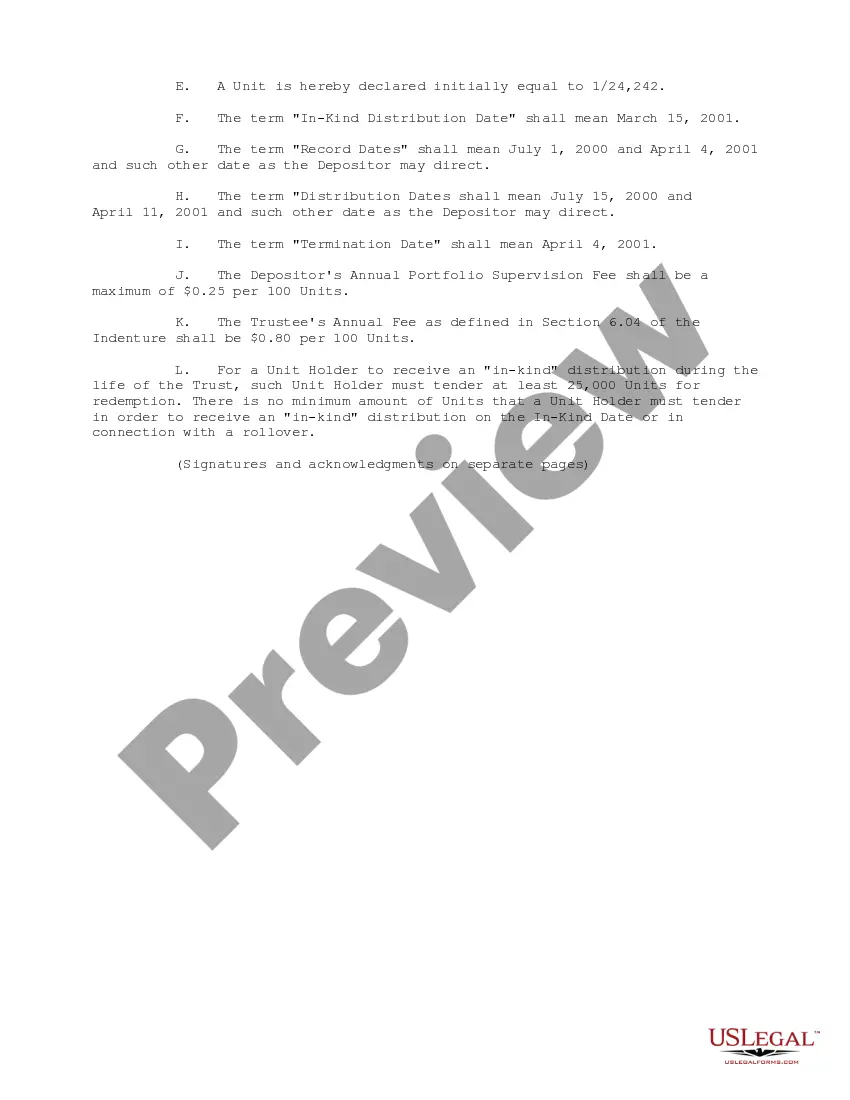
- In-kind distribution: Outlines conditions for unit holders to receive in-kind distributions of securities.
- Financial management: Includes stipulations for handling deferred sales charges and managing foreign exchange transactions.
- Fees and charges: Specifies annual fees for the depositor and trustee.
When this form is needed
This form should be used when establishing a reference trust for a specific portfolio of securities. It is applicable in situations where a depositor intends to set guidelines for managing the trust's assets, including making distributions to unit holders and addressing costs associated with the operation of the trust. This agreement is essential for both the parties involved, ensuring transparent governance and secure management of investor interests.
Who this form is for
- Investment firms or entities looking to establish a trust for managing client investments.
- Trustees responsible for managing and distributing trust assets.
- Unit holders who wish to understand the terms under which their investments are managed.
- Legal professionals assisting clients in creating or managing trust agreements.
Completing this form step by step
- Identify the parties involved: Specify the names of the depositor (Dean Witter Reynolds, Inc.) and trustee (The Bank of New York).
- Incorporate relevant financial provisions: Ensure amendments to financial management clauses are properly detailed.
- Define the trust terms: Set clear conditions for unit holders regarding distributions, fees, and charges.
- Ensure compliance with legal standards: Review the document to align with applicable state regulations and trust law.
- Provide signatures: Ensure all parties sign the document to validate the trust agreement.
Notarization guidance
Notarization is not commonly needed for this form. However, certain documents or local rules may make it necessary. Our notarization service, powered by Notarize, allows you to finalize it securely online anytime, day or night.
Get your form ready online
Our built-in tools help you complete, sign, share, and store your documents in one place.
Make edits, fill in missing information, and update formatting in US Legal Forms—just like you would in MS Word.
Download a copy, print it, send it by email, or mail it via USPS—whatever works best for your next step.
Sign and collect signatures with our SignNow integration. Send to multiple recipients, set reminders, and more. Go Premium to unlock E-Sign.
If this form requires notarization, complete it online through a secure video call—no need to meet a notary in person or wait for an appointment.
We protect your documents and personal data by following strict security and privacy standards.

Make edits, fill in missing information, and update formatting in US Legal Forms—just like you would in MS Word.

Download a copy, print it, send it by email, or mail it via USPS—whatever works best for your next step.

Sign and collect signatures with our SignNow integration. Send to multiple recipients, set reminders, and more. Go Premium to unlock E-Sign.

If this form requires notarization, complete it online through a secure video call—no need to meet a notary in person or wait for an appointment.

We protect your documents and personal data by following strict security and privacy standards.
Common mistakes to avoid
- Failing to incorporate necessary amendments or updates to the basic agreement.
- Not clarifying the roles and responsibilities of the trustee and depositor clearly.
- Ignoring state-specific requirements that may affect the enforceability of the trust agreement.
- Omitting essential details about fees or distributions to unit holders.
Benefits of completing this form online
- Convenience of immediate download and access, enabling timely completion.
- Editability allows customization of the form to suit specific trust agreements.
- Access to reliable templates drafted by licensed attorneys, ensuring legal compliance.
Looking for another form?

Form popularity
FAQ
A trust agreement is a document that allows you (the trustor) to legally transfer the ownership of specific assets to another person (trustee) to be held for the trustor's beneficiaries.Assets controlled in the trust.
To manage and control spending and investments to protect beneficiaries from poor judgment and waste; To avoid court-supervised probate of trust assets and be private; To protect trust assets from the beneficiaries' creditors;To reduce income taxes or shelter assets from estate and transfer taxes.
A trust agreement is a document that spells out the rules that you want followed for property held in trust for your beneficiaries. Common objectives for trusts are to reduce the estate tax liability, to protect property in your estate, and to avoid probate.
Personal trusts are further divided into either 1) Under Declaration of Trust (U/D/T) meaning the grantor and the trustee are the same person and the grantor controls the trust assets, and 2) Trust Under Agreement (U/A) meaning the grantor and the trustee are different persons and the trustee controls the trust assets.
The owner, called the settlor, transfers the trust property to an intermediary, the trustee, to hold it for the beneficiaries.Either way, the deal between settlor and trustee is functionally indistin- guishable from the modem third-party-beneficiary contract. Trusts are contracts.
A trust is traditionally used for minimizing estate taxes and can offer other benefits as part of a well-crafted estate plan. A trust is a fiduciary arrangement that allows a third party, or trustee, to hold assets on behalf of a beneficiary or beneficiaries.
The owner, called the settlor, transfers the trust property to an intermediary, the trustee, to hold it for the beneficiaries.Trusts are contracts.
When signing anything on behalf of the trust, always sign as John Smith, Trustee. By signing as Trustee, you will not be personally liable for that action as long as that action is within the scope of your authority under the trust.