Complaint for Medical Malpractice regarding Surgical Procedure
What this document covers
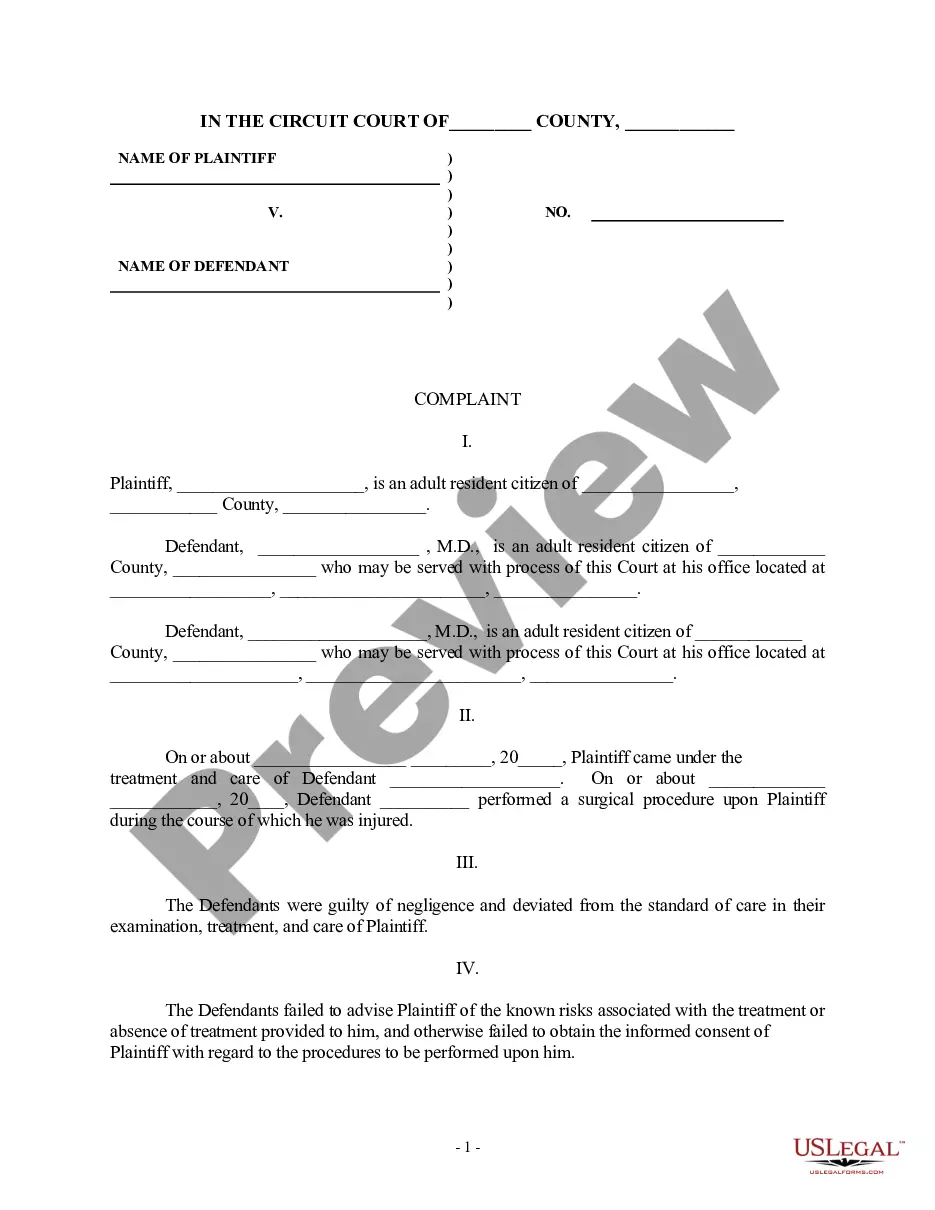
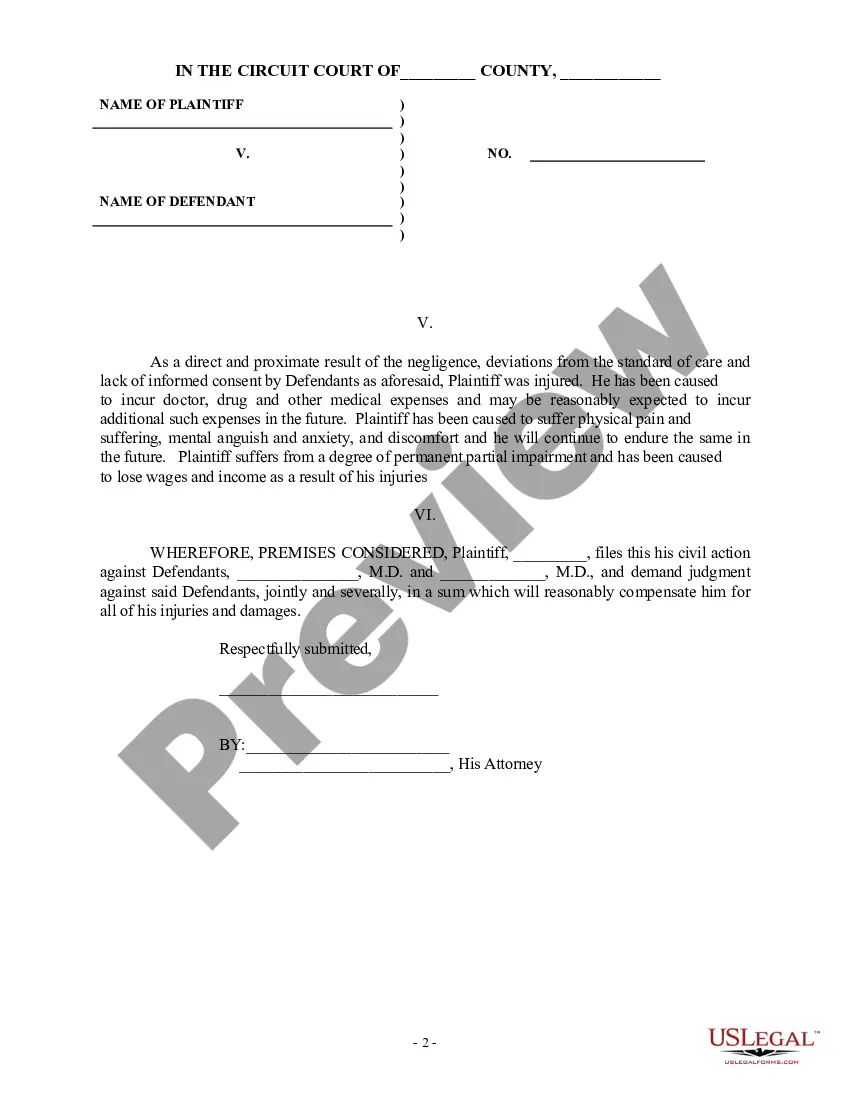
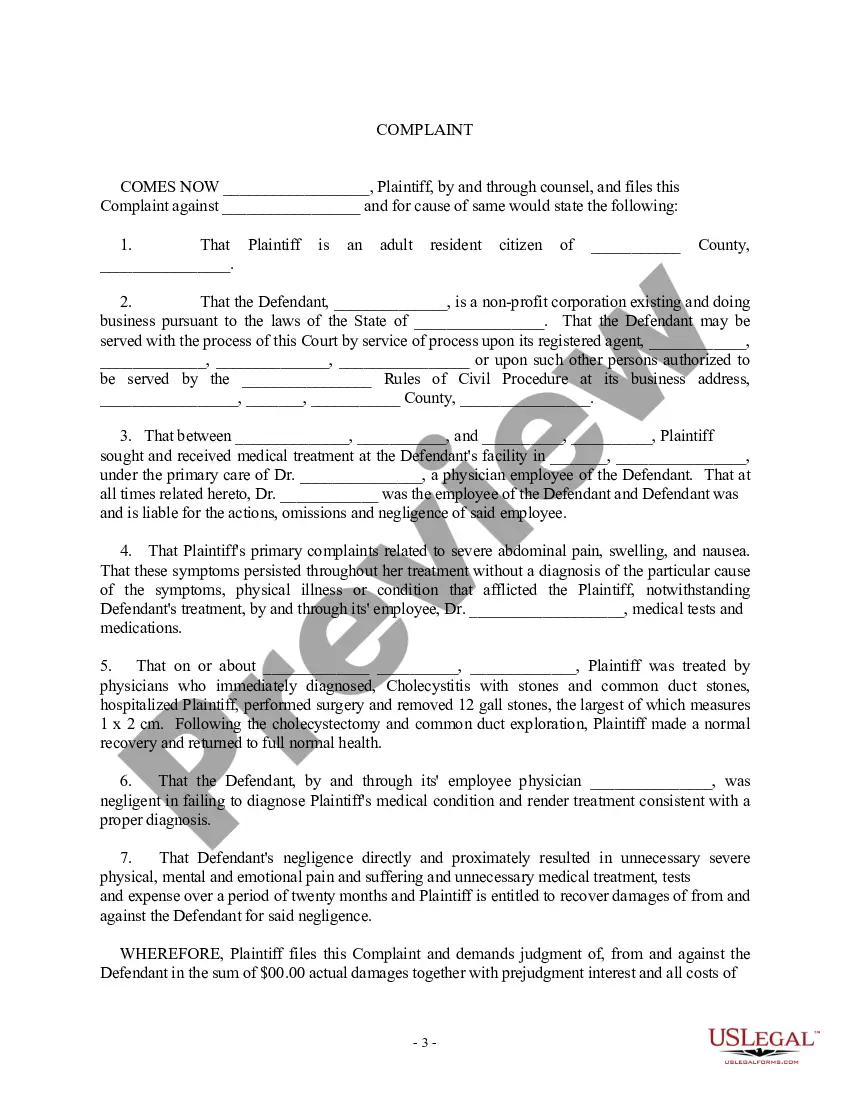
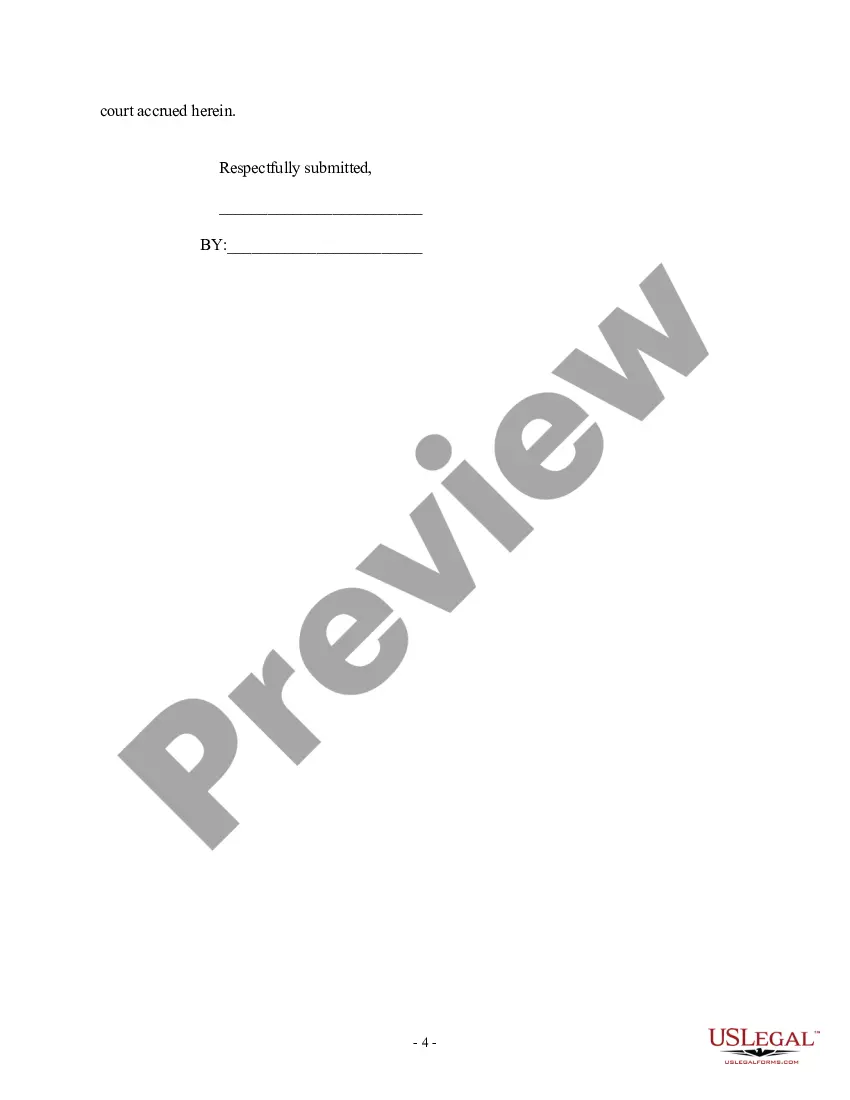
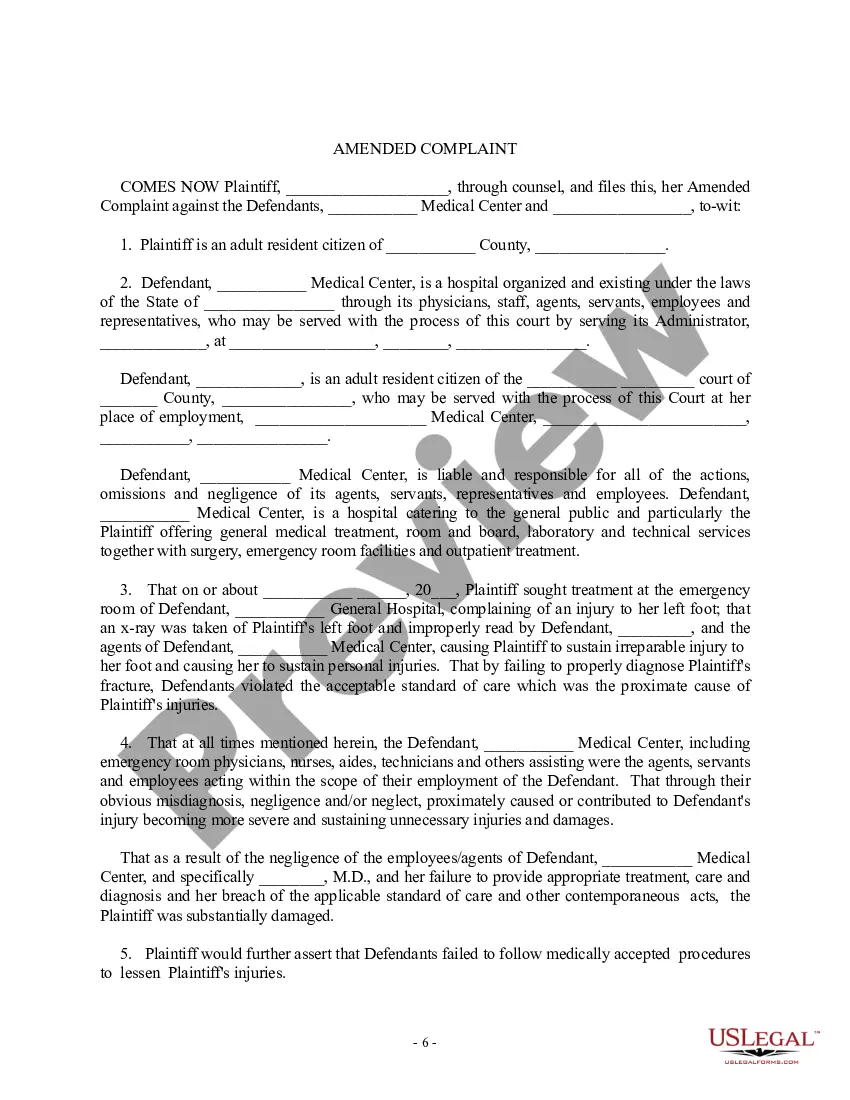
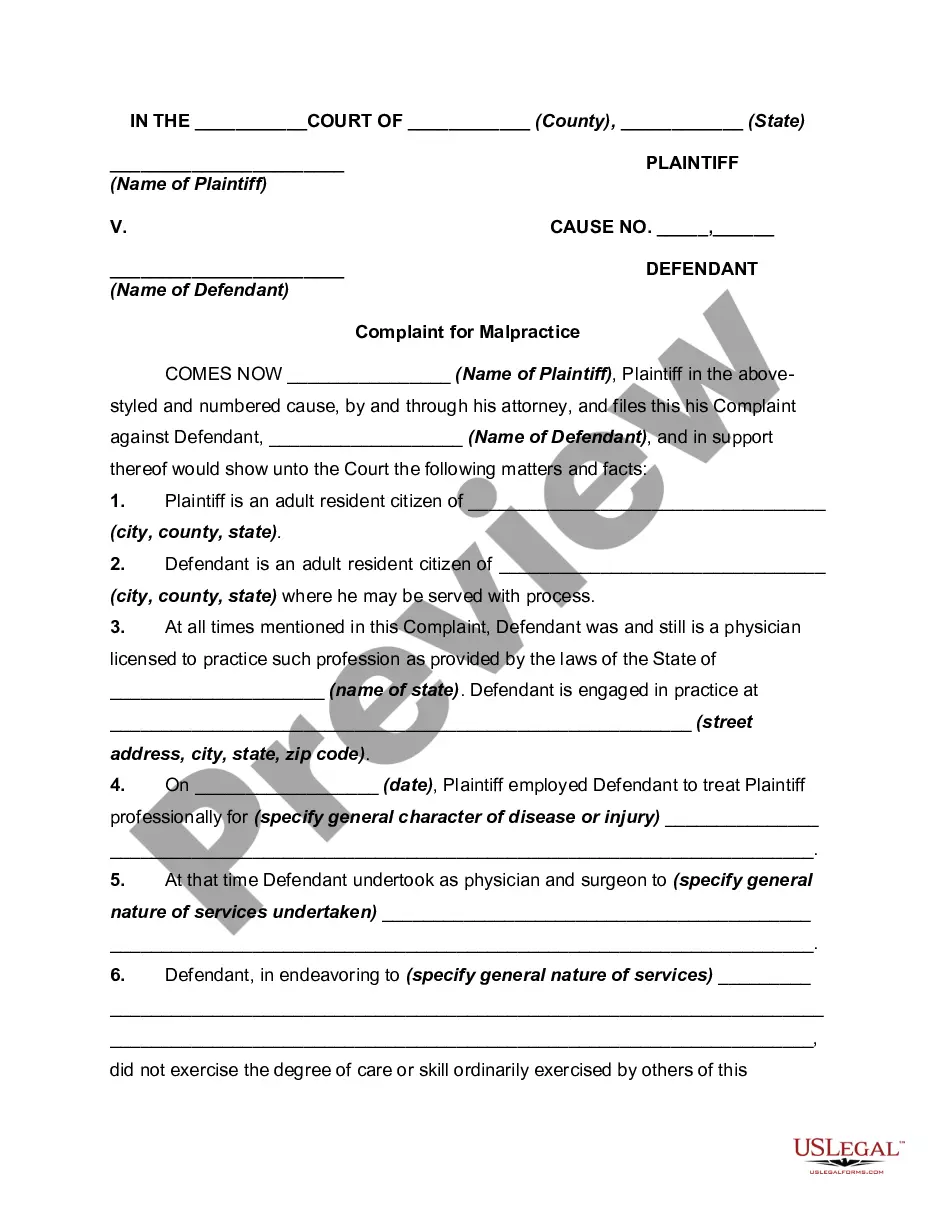
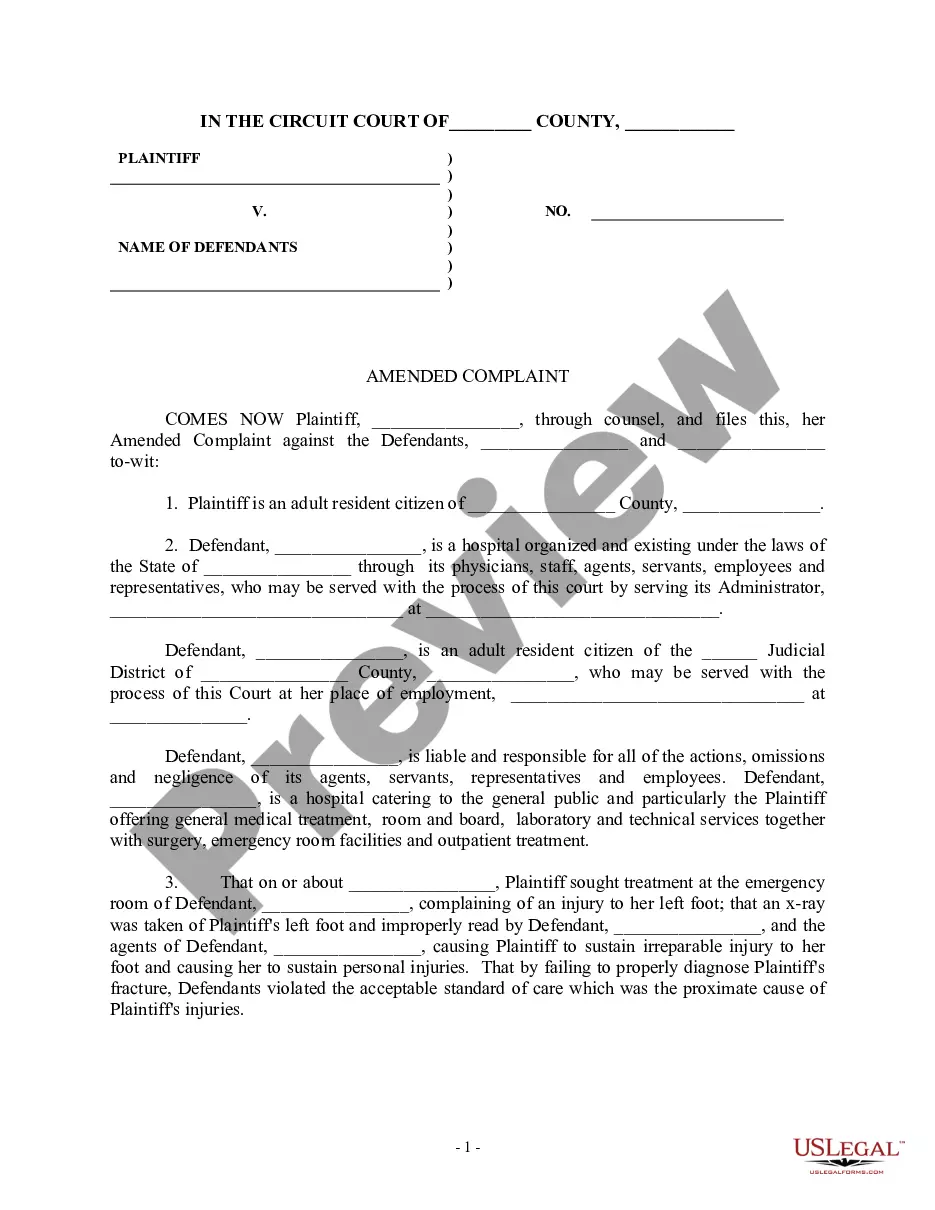
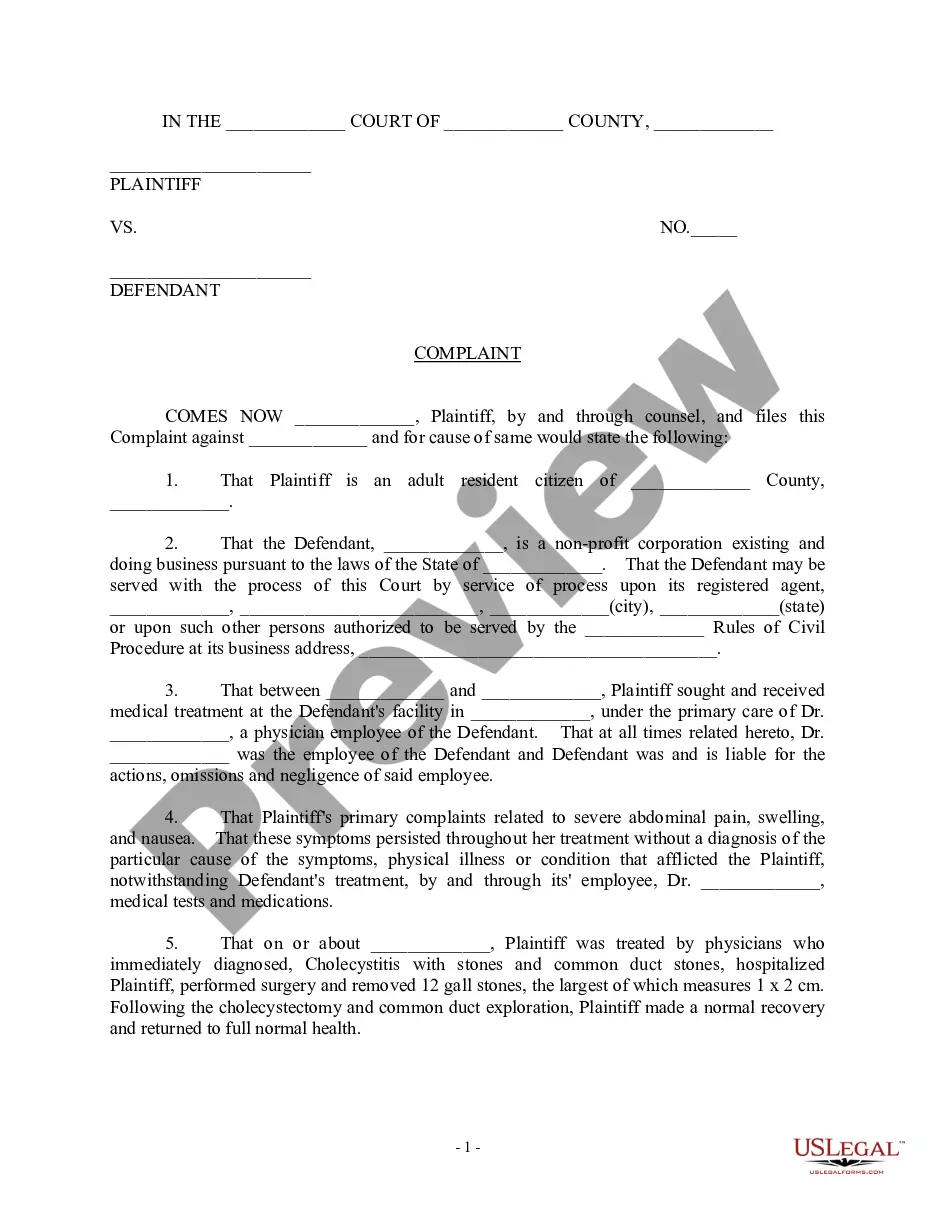
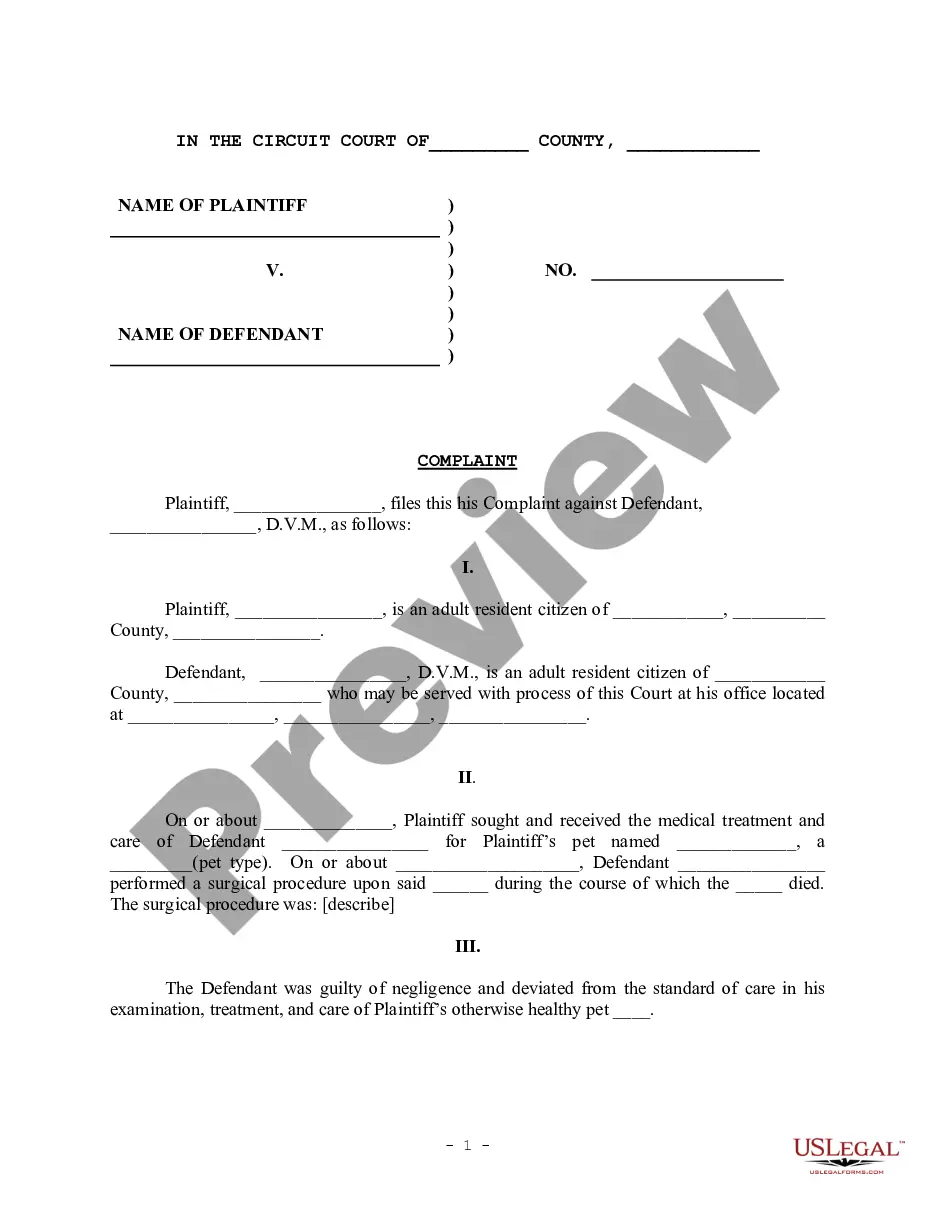
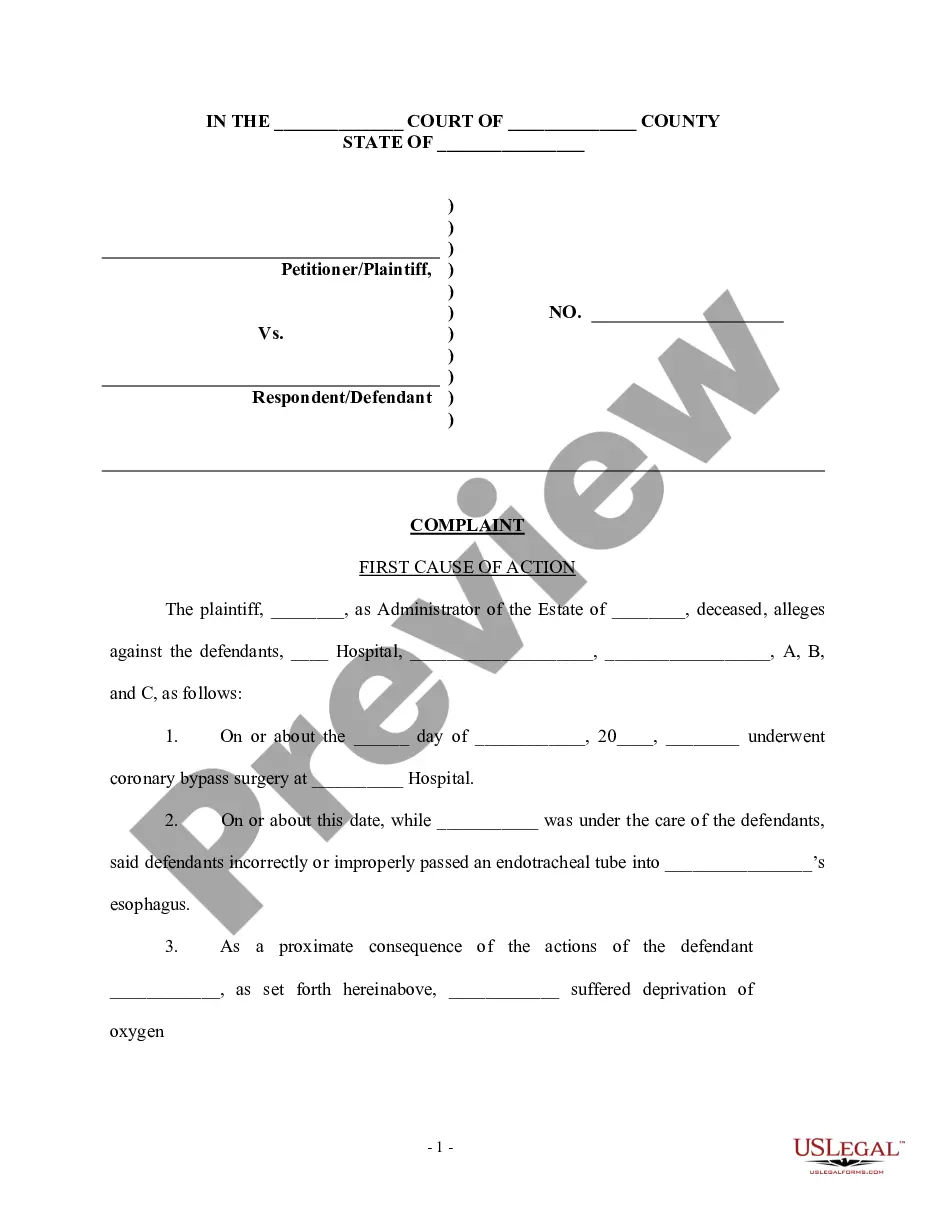
The Complaint for Medical Malpractice regarding Surgical Procedure is a legal document used to initiate a civil lawsuit against healthcare providers or facilities for negligence related to surgical procedures. This form serves as a formal complaint detailing the alleged malpractice, allowing the plaintiff to seek compensation for any resulting damages. It is specifically designed for situations where the standard of care expected from medical professionals has not been met, leading to injury or harm to the patient. Unlike general complaint forms, this one focuses exclusively on issues related to medical malpractice in the surgical context.
Key parts of this document
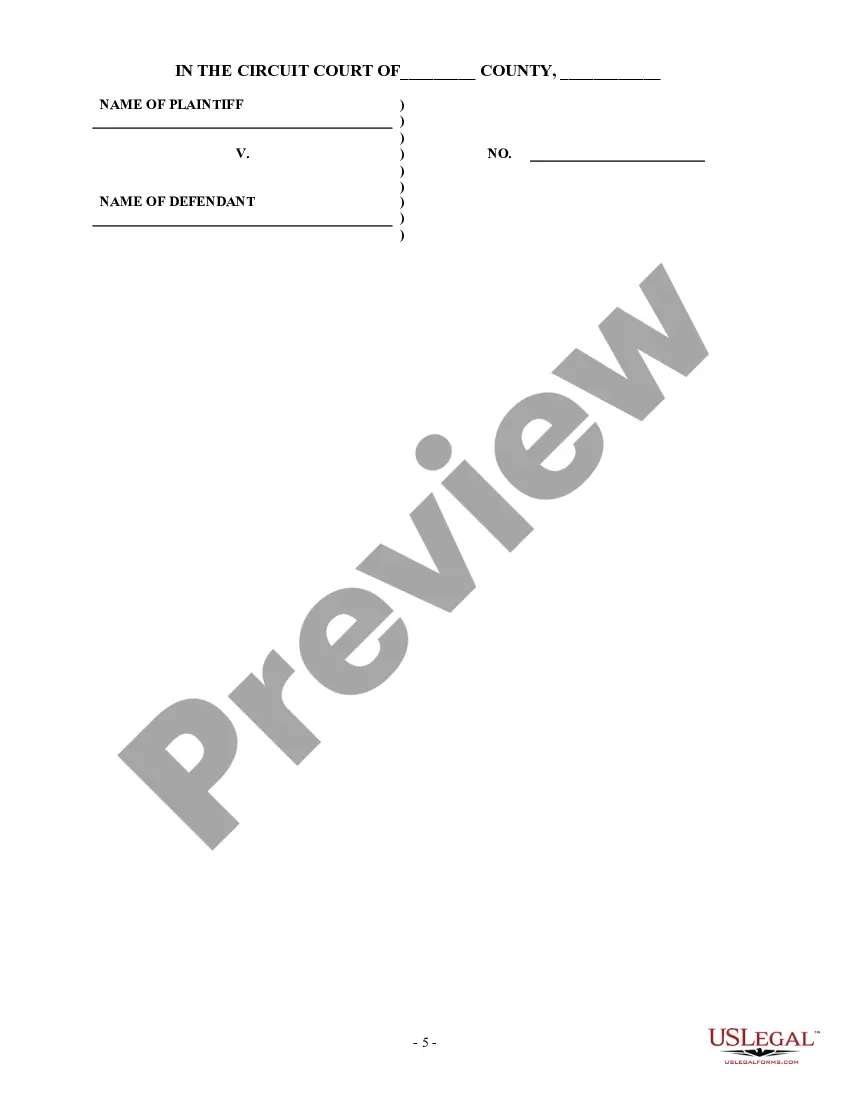
- Identification of parties: Names and addresses of the plaintiff and defendants involved.
- Date of treatment: Specific dates when the alleged malpractice occurred.
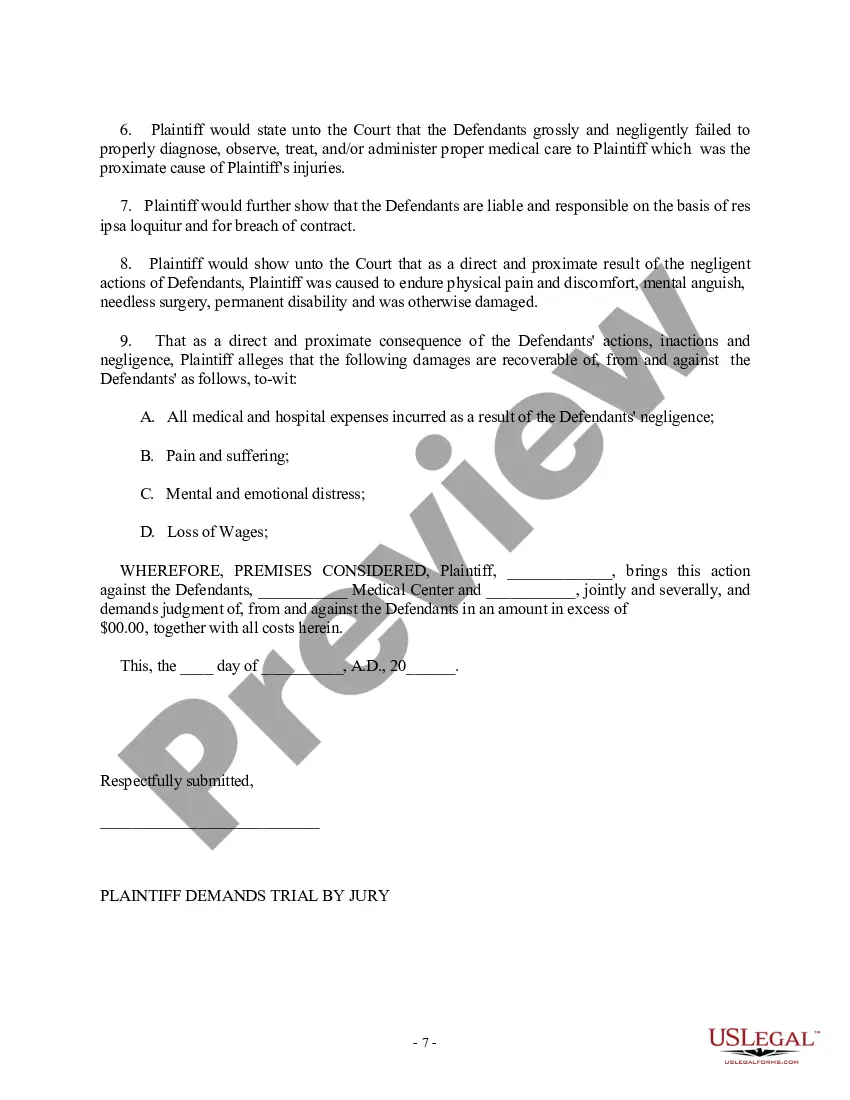
- Description of negligence: Detailed accounts of how the defendants deviated from standard medical practices.
- Informed consent issues: Statements regarding the failure to provide adequate information about risks associated with the procedure.
- Claims for damages: A request for compensation based on financial losses, pain, suffering, and emotional distress.
When to use this document
You should use this Complaint for Medical Malpractice when you believe that a surgical procedure performed on you or a loved one resulted in injury due to negligence. Common situations include incorrect diagnoses leading to improper treatment, complications from surgery that were not disclosed, or injuries caused by a failure to perform the procedure correctly. This form is essential for anyone seeking legal remedies for wrongdoing by healthcare professionals in a surgical context.
Who needs this form
- Patients who have suffered injuries or complications following a surgical procedure.
- Individuals who believe they did not give informed consent due to inadequate information regarding surgical risks.
- Family members filing on behalf of a loved one who is unable to do so due to medical injuries.
Instructions for completing this form
- Identify the parties involved by filling in the names and addresses of the plaintiff and defendants.
- Enter the dates of the treatment and procedure related to the malpractice claim.
- Provide details about the alleged negligence and how it deviated from standard medical practices.
- Include any relevant information regarding informed consent and risks not disclosed.
- Describe the damages incurred, including medical expenses, pain, and suffering.
Does this document require notarization?
This form does not typically require notarization unless specified by local law. It is advisable to check with a legal expert or your stateâs regulations to confirm whether notarization is necessary in your case.
Get your form ready online
Our built-in tools help you complete, sign, share, and store your documents in one place.
Make edits, fill in missing information, and update formatting in US Legal Forms—just like you would in MS Word.
Download a copy, print it, send it by email, or mail it via USPS—whatever works best for your next step.
Sign and collect signatures with our SignNow integration. Send to multiple recipients, set reminders, and more. Go Premium to unlock E-Sign.
If this form requires notarization, complete it online through a secure video call—no need to meet a notary in person or wait for an appointment.
We protect your documents and personal data by following strict security and privacy standards.

Make edits, fill in missing information, and update formatting in US Legal Forms—just like you would in MS Word.

Download a copy, print it, send it by email, or mail it via USPS—whatever works best for your next step.

Sign and collect signatures with our SignNow integration. Send to multiple recipients, set reminders, and more. Go Premium to unlock E-Sign.

If this form requires notarization, complete it online through a secure video call—no need to meet a notary in person or wait for an appointment.

We protect your documents and personal data by following strict security and privacy standards.
Common mistakes
- Failing to provide accurate and complete information about the parties involved.
- Neglecting to include specific dates associated with the treatment.
- Using vague language instead of clear descriptions of negligence and injuries.
- Ignoring state-specific rules that could affect the validity of the claim.
- Not fully explaining the extent of damages suffered as a result of the alleged malpractice.
Why complete this form online
- Immediate access to a professionally drafted legal document.
- Convenient electronic formatting allows for easy editing and personalization.
- Reliability, knowing the form is created by licensed attorneys and complies with legal standards.
- Download and print the completed form anytime, facilitating fast legal action.
Looking for another form?


Form popularity
FAQ
It starts a civil lawsuit against a healthcare provider for negligence related to a surgical procedure. The form collects the plaintiff's identity, the treatment date, a description of the alleged negligence, any informed consent issues, and damages sought, aligning with the form's five key components to support a malpractice claim.
To sue, use this form to initiate a civil action in the appropriate court. It requires identifying the plaintiff and defendants, the date of treatment, a description of negligence, and any informed consent issues, plus a damages claim. After completing, file with the court and serve the defendants; deadlines vary by state.
Within this form, surgical malpractice means harm caused by deviation from the standard of care in performing or managing a surgical procedure. The complaint supports this with a 'Description of negligence' and may include failed informed consent. The form is designed to document how the surgical care fell below accepted standards and caused injury.
Examples include wrong-site or wrong-procedure surgery, negligent surgical technique, leaving surgical instruments behind, anesthesia errors, or failure to disclose risks. The form’s 'Description of negligence' and 'Informed consent issues' sections are used to describe such events and connect them to resulting damages, supporting a malpractice claim in a surgical context.
Suing a surgeon for malpractice is usually a complex process that requires proving negligence, causation, and damages. This form helps by organizing the complaint around the surgical context and the five key components. Outcomes depend on evidence, the jurisdiction, and expert input; consult a licensed attorney for guidance on state-specific steps and deadlines.
This form is tailored to surgical procedures, emphasizing the surgical context and related risks. It requires dates of treatment, and addresses informed consent and negligence specifically in surgery. A general medical malpractice complaint lacks these surgery-focused elements, whereas this form directly aligns with surgical care to support a malpractice claim.