Irrevocable Reversionary Inter Vivos Medical Trust
Understanding this form
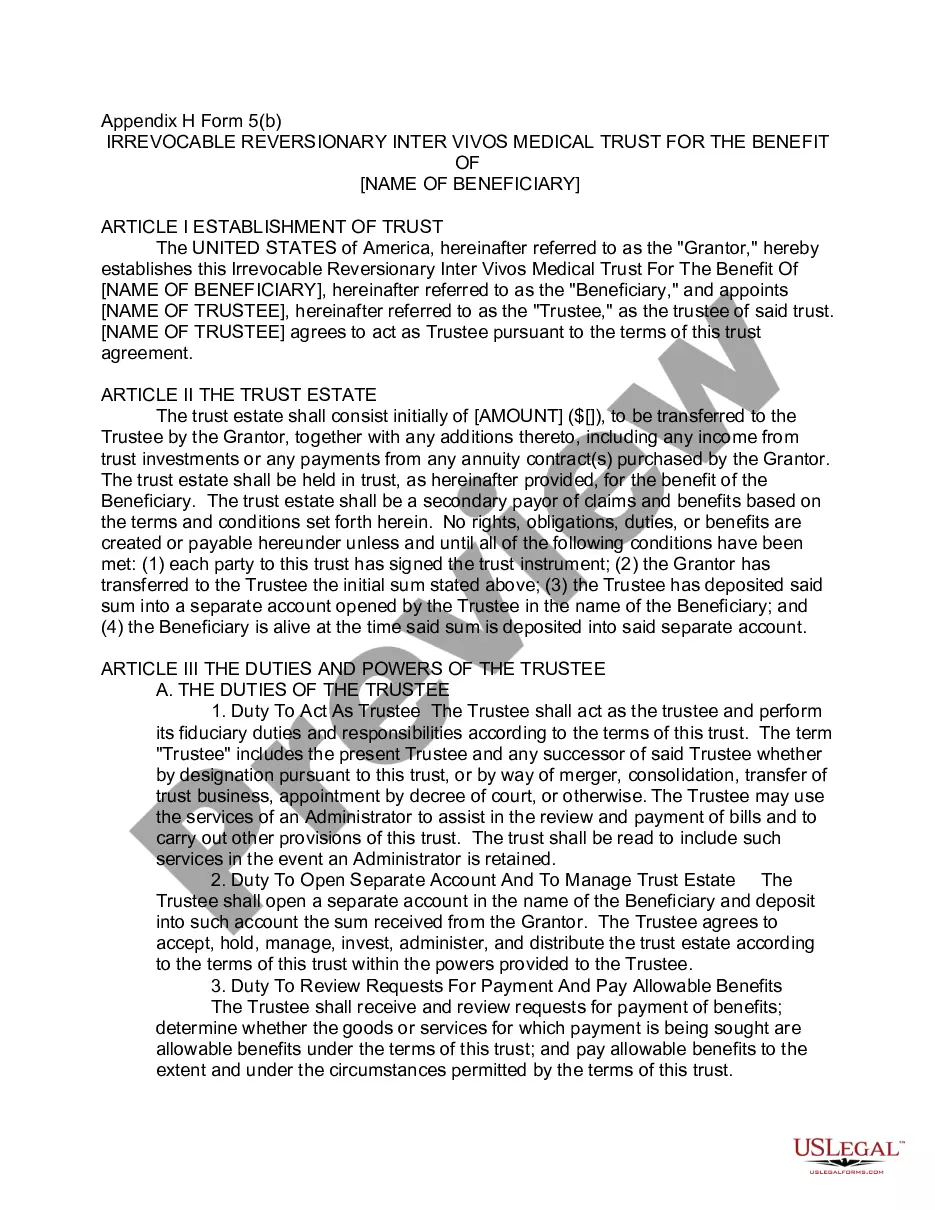
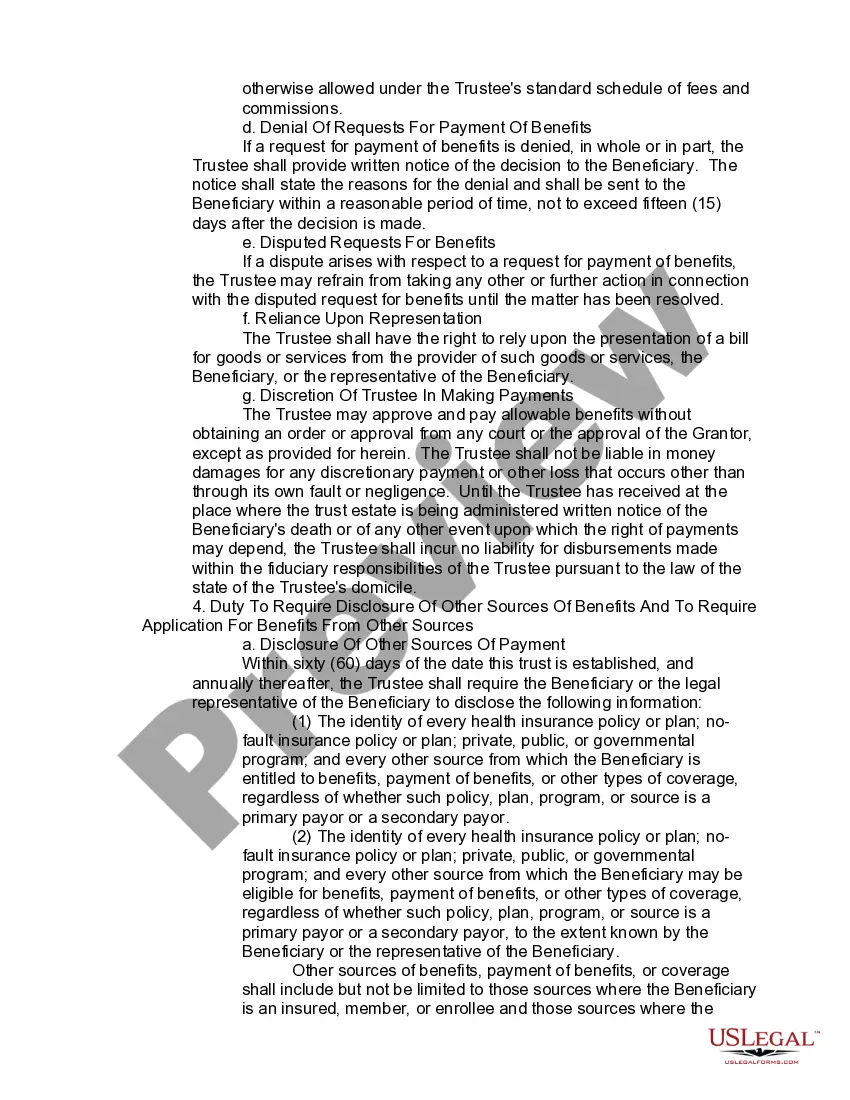
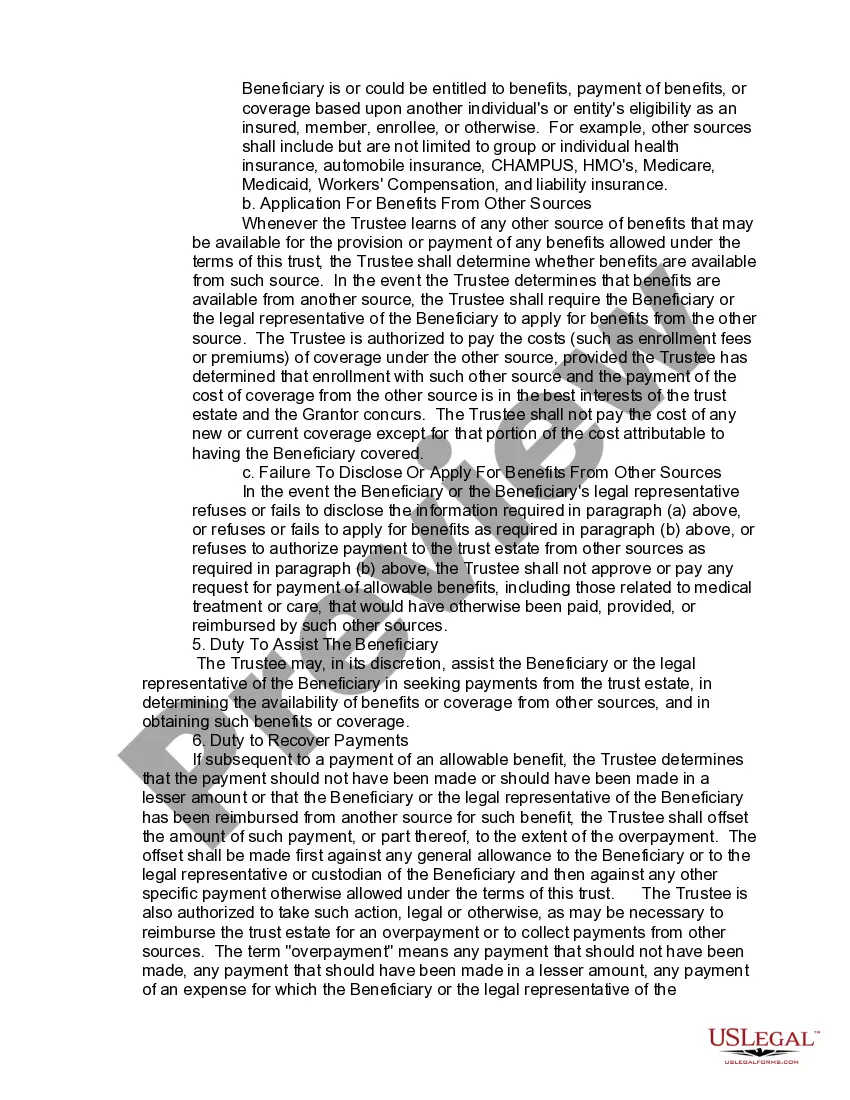
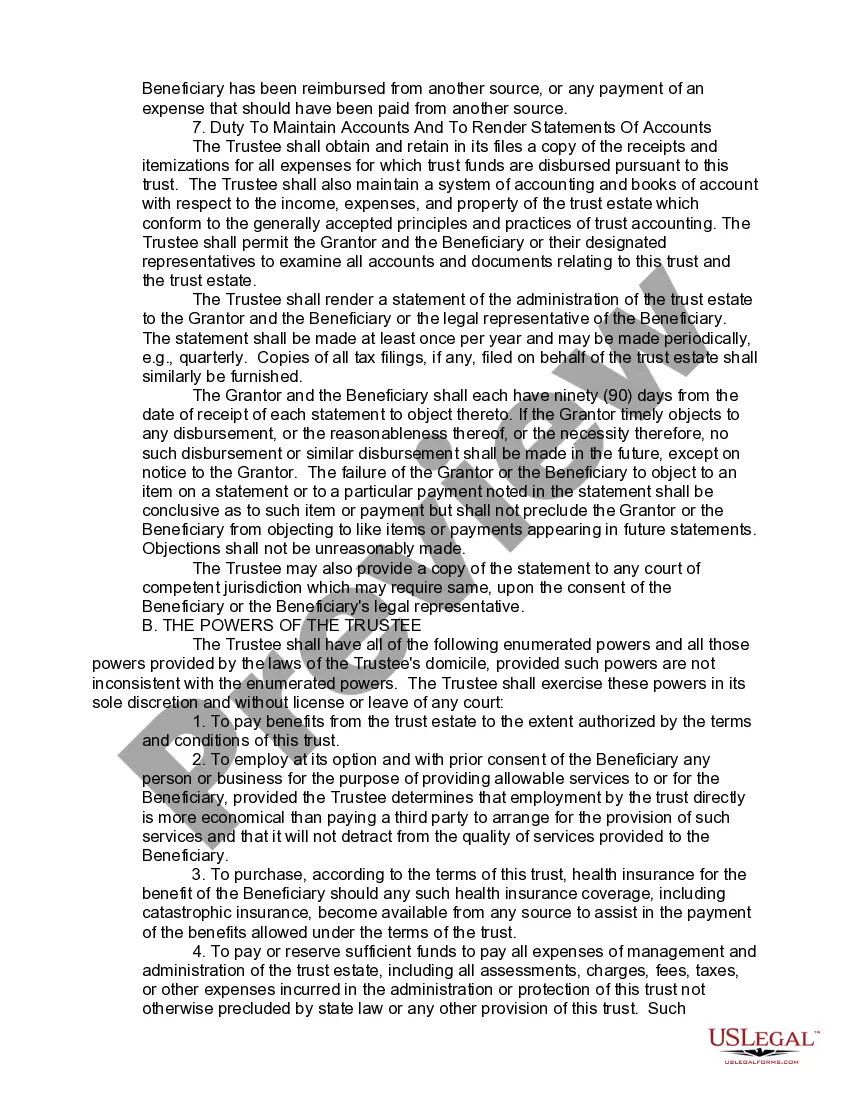
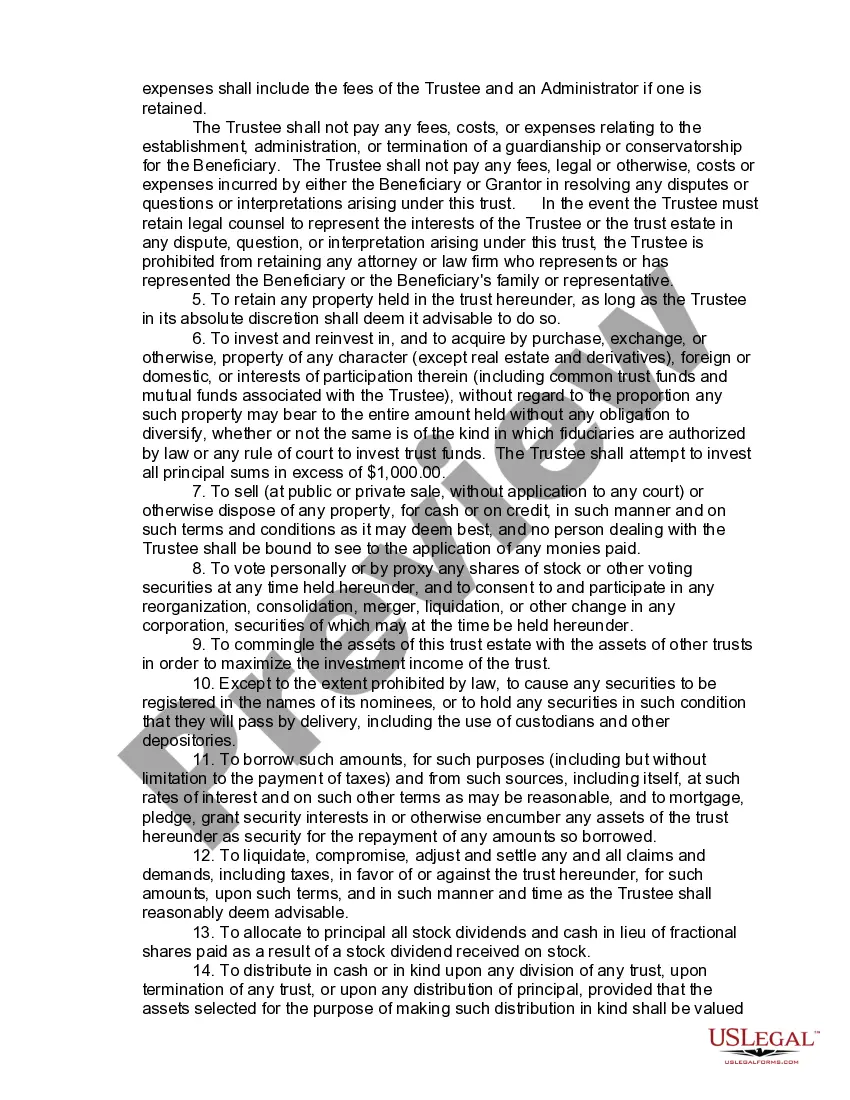
The Irrevocable Reversionary Inter Vivos Medical Trust is a legal document designed to establish a trust for medical benefits. Unlike other trusts, this specific type is irrevocable and serves as a secondary payer for medical expenses of the beneficiary. It ensures that medical payments are made from the trust while outlining the terms under which funds are disbursed.
Form components explained
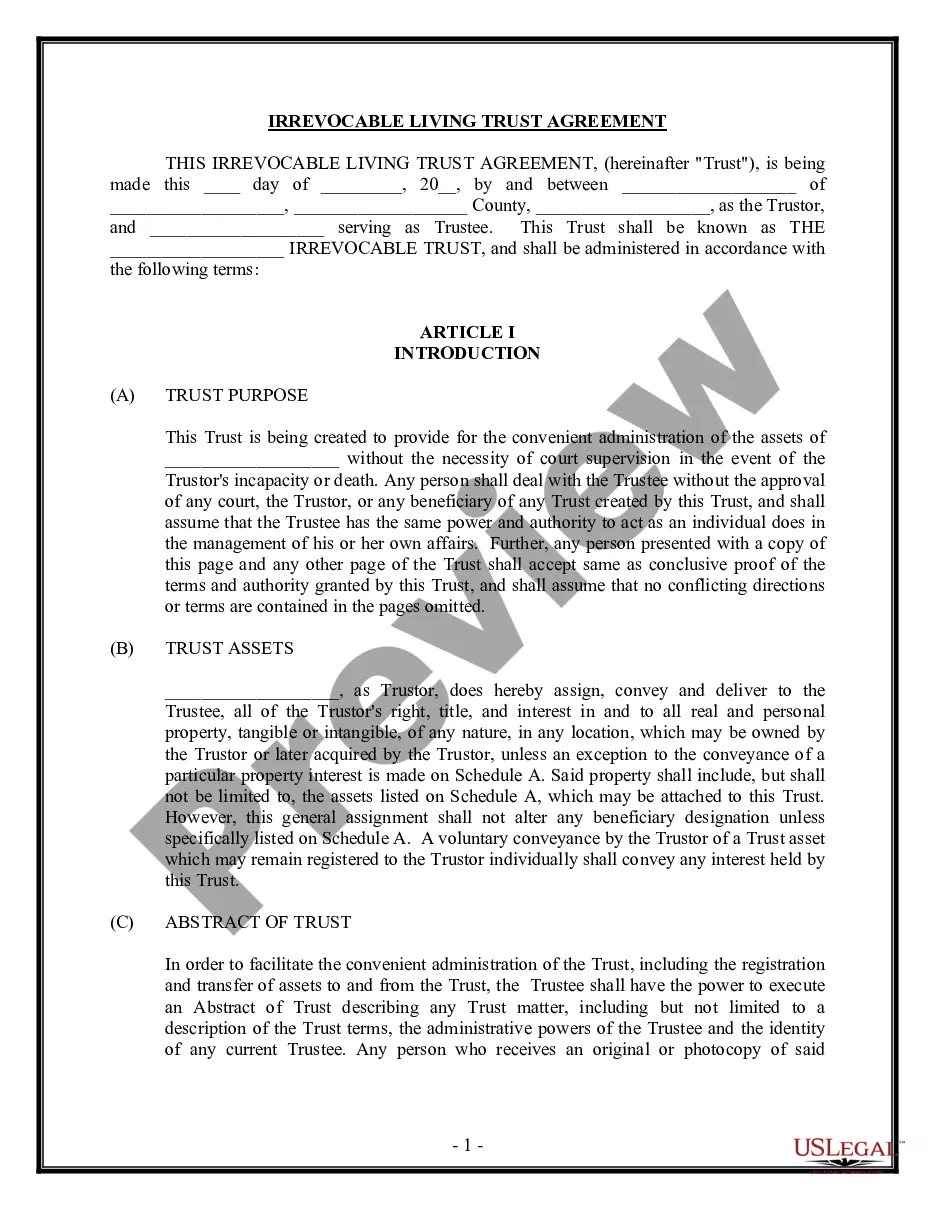
- Establishment of Trust: Details regarding the Grantor, Trustee, and Beneficiary.
- Trust Estate: Initial funding and conditions for accessing funds.
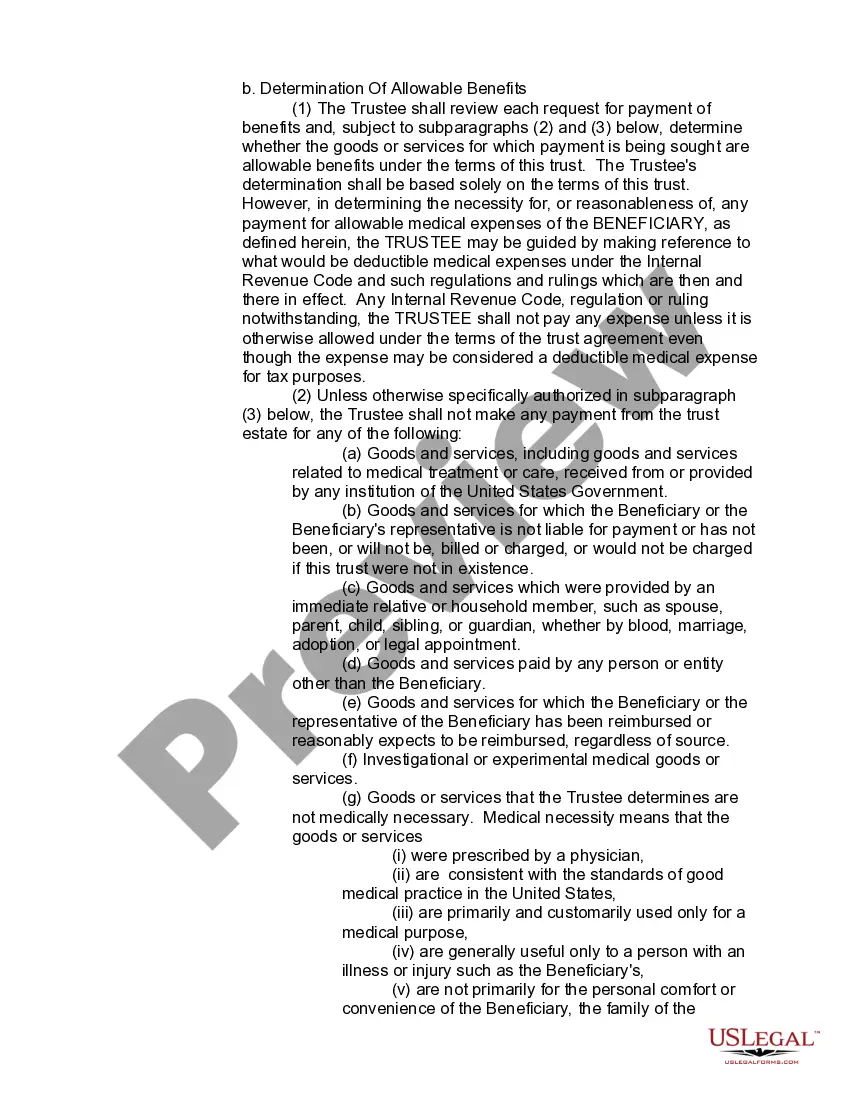
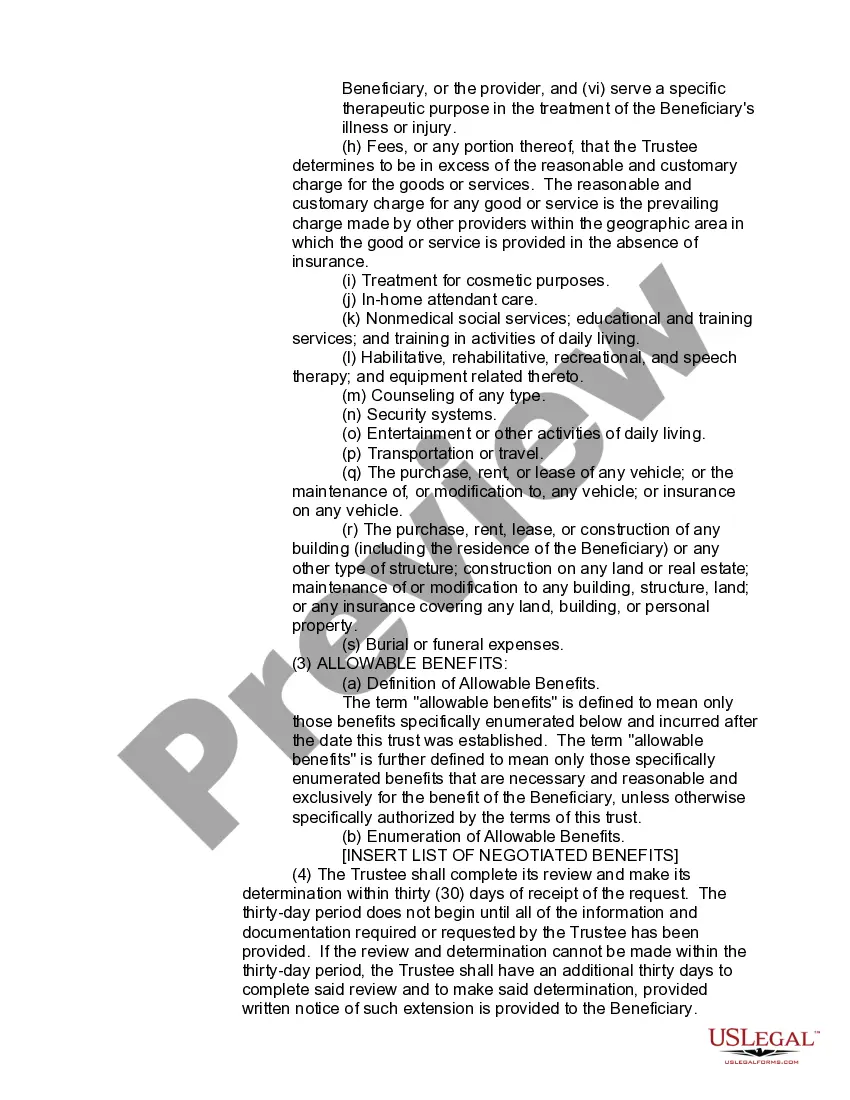
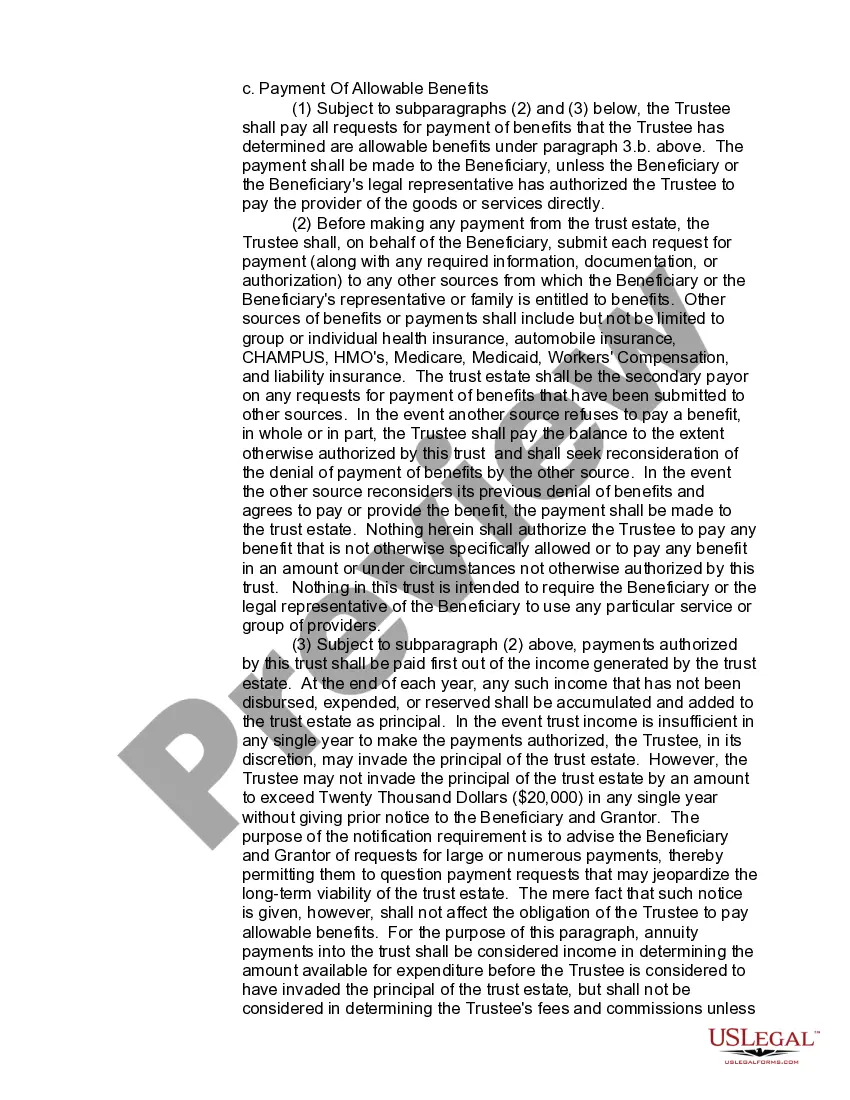
- Duties of the Trustee: Responsibilities for managing the trust and paying allowable medical expenses.
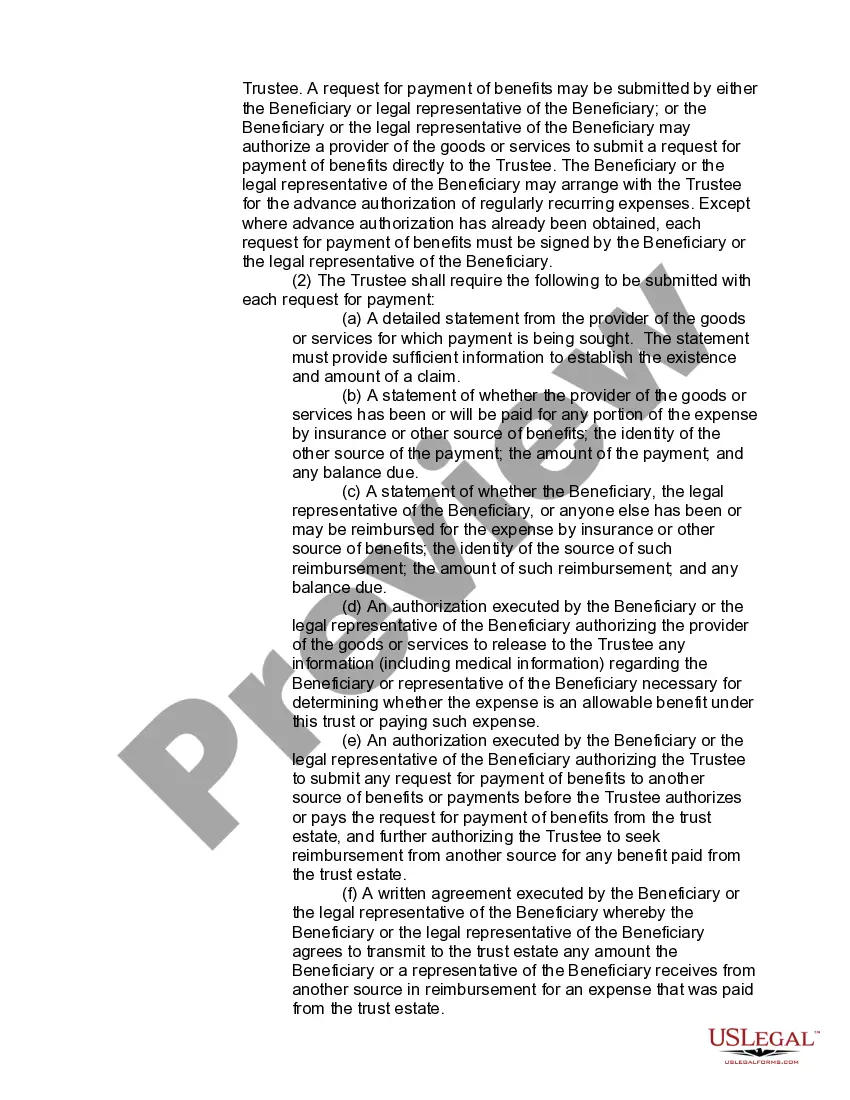
- Payment of Benefits: Guidelines for requesting and processing payments for medical services.
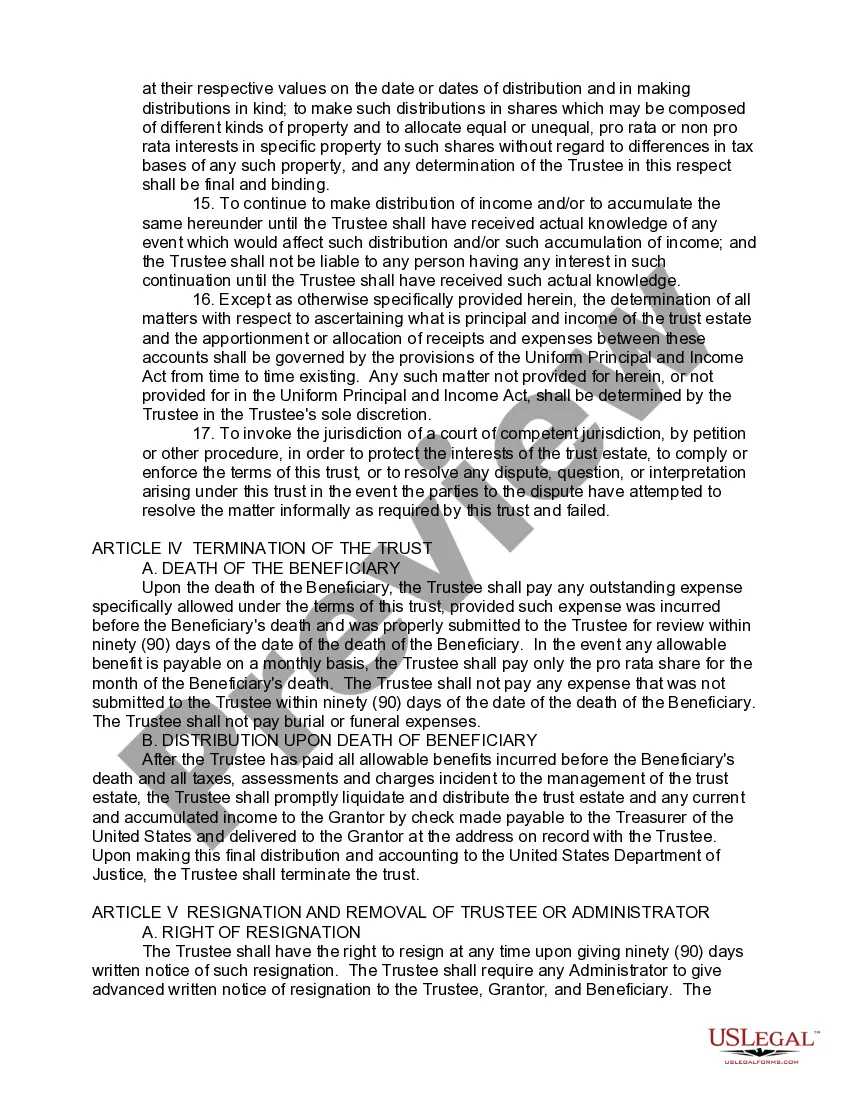
- Termination Conditions: Processes to follow after the death of the beneficiary or when the trust ends.

When to use this form
This form is used when an individual wants to set up an irrevocable trust to provide for medical expenses. It is particularly beneficial for beneficiaries who may rely on secondary payment sources for their healthcare needs, ensuring compliance with possible insurance regulations while protecting their assets.
Intended users of this form
- Individuals wanting to provide for a beneficiary's medical expenses.
- Families managing medical expenses for a loved one with significant health needs.
- Legal representatives acting on behalf of individuals requiring structured medical benefit support.
How to prepare this document
- Identify the parties involved: the Grantor, Trustee, and Beneficiary.
- Specify the initial funding amount for the trust estate.
- Document the responsibilities of the Trustee regarding payment of medical expenses.
- Outline the process for requesting payments and the necessary authorizations.
- Submit all required signatures to finalize the trust agreement.
Is notarization required?
This form does not typically require notarization unless specified by local law. It's advisable to review state-specific regulations to ensure compliance.
Get your form ready online
Our built-in tools help you complete, sign, share, and store your documents in one place.
Make edits, fill in missing information, and update formatting in US Legal Forms—just like you would in MS Word.
Download a copy, print it, send it by email, or mail it via USPS—whatever works best for your next step.
Sign and collect signatures with our SignNow integration. Send to multiple recipients, set reminders, and more. Go Premium to unlock E-Sign.
If this form requires notarization, complete it online through a secure video call—no need to meet a notary in person or wait for an appointment.
We protect your documents and personal data by following strict security and privacy standards.

Make edits, fill in missing information, and update formatting in US Legal Forms—just like you would in MS Word.

Download a copy, print it, send it by email, or mail it via USPS—whatever works best for your next step.

Sign and collect signatures with our SignNow integration. Send to multiple recipients, set reminders, and more. Go Premium to unlock E-Sign.

If this form requires notarization, complete it online through a secure video call—no need to meet a notary in person or wait for an appointment.

We protect your documents and personal data by following strict security and privacy standards.
Avoid these common issues
- Failing to properly document the initial funding of the trust.
- Neglecting to obtain necessary signatures from all parties.
- Not providing complete information when requesting payments for medical benefits.
Benefits of using this form online
- Conveniently set up a legally binding trust that protects medical benefits for a beneficiary.
- Provides peace of mind knowing that medical expenses will be covered.
- Prevents the loss of assets to creditors through the use of an irrevocable trust.
- Facilitates the management and payment of medical expenses by a trusted trustee.
What to keep in mind
- The Irrevocable Reversionary Inter Vivos Medical Trust serves as an important tool for managing medical expenses.
- This trust is irrevocable, meaning its terms cannot be changed once established.
- Proper completion and management of the trust are crucial for ensuring healthcare costs are covered.
Looking for another form?




Form popularity
FAQ
Special needs trusts pay for comforts and luxuries -- "special needs" -- that could not be paid for by public assistance funds. This means that if money from the trust is used for food or shelter costs on a regular basis or distributed directly to the beneficiary, such payments will count as income to the beneficiary.
At the beneficiary's death, in most cases the SNT will be terminated. The trustee is responsible for dissolving the trust and fulfilling the instructions laid out in the trust document.In addition, the SNT will owe money to the state if the person with special needs received Medicaid benefits during her lifetime.
An irrevocable trust is taxed as a legally independent entity, in much the same way as an individual taxpayer is taxed in terms of income tax rates and available deductions. Contributing income-earning property to an irrevocable trust means that the IRS will treat the resulting income as trust income, not your income.
Frankly, just about any asset can be transferred to an irrevocable trust, assuming the grantor is willing to give it away. This includes cash, stock portfolios, real estate, life insurance policies, and business interests. Of course, some assets are better to place in trust than others.
Failure to set up a special needs trust might affect them, even if not as much as another person who receives, say, SSI and Medicaid. Even someone receiving Medicare will have some effect from having a higher income.
The trustee of an irrevocable trust can only withdraw money to use for the benefit of the trust according to terms set by the grantor, like disbursing income to beneficiaries or paying maintenance costs, and never for personal use.
Special needs trusts pay for comforts and luxuries -- "special needs" -- that could not be paid for by public assistance funds. This means that if money from the trust is used for food or shelter costs on a regular basis or distributed directly to the beneficiary, such payments will count as income to the beneficiary.
The trust can pay for any amount of medical costs, as long as the trust pays the expenses directly to the medical provider or institution. Just remember that the terms of the trust are irrevocable regardless of how much you transfer into the trust's name.
The main downside to an irrevocable trust is simple: It's not revocable or changeable. You no longer own the assets you've placed into the trust. In other words, if you place a million dollars in an irrevocable trust for your child and want to change your mind a few years later, you're out of luck.