Revenue Procedure 93-34
About this form
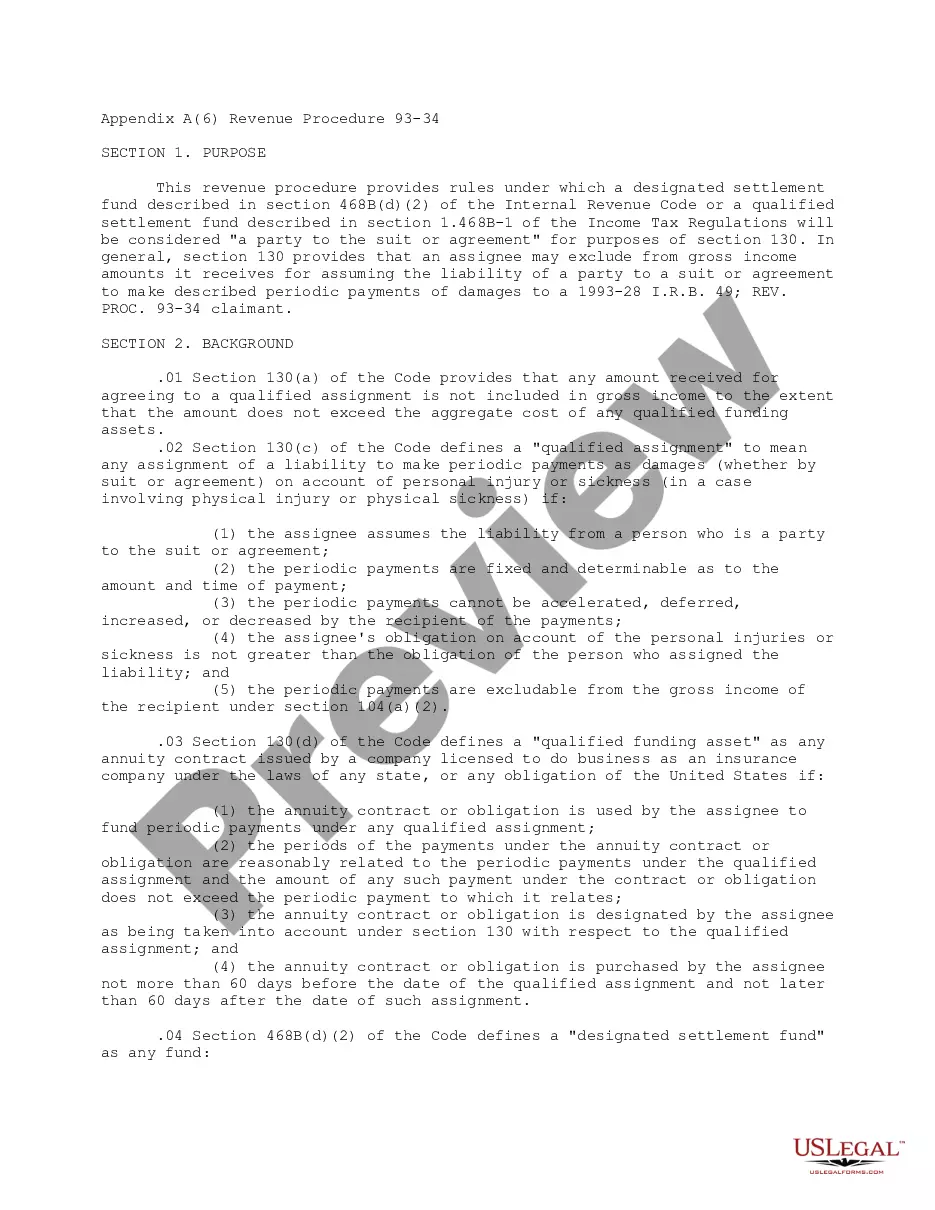
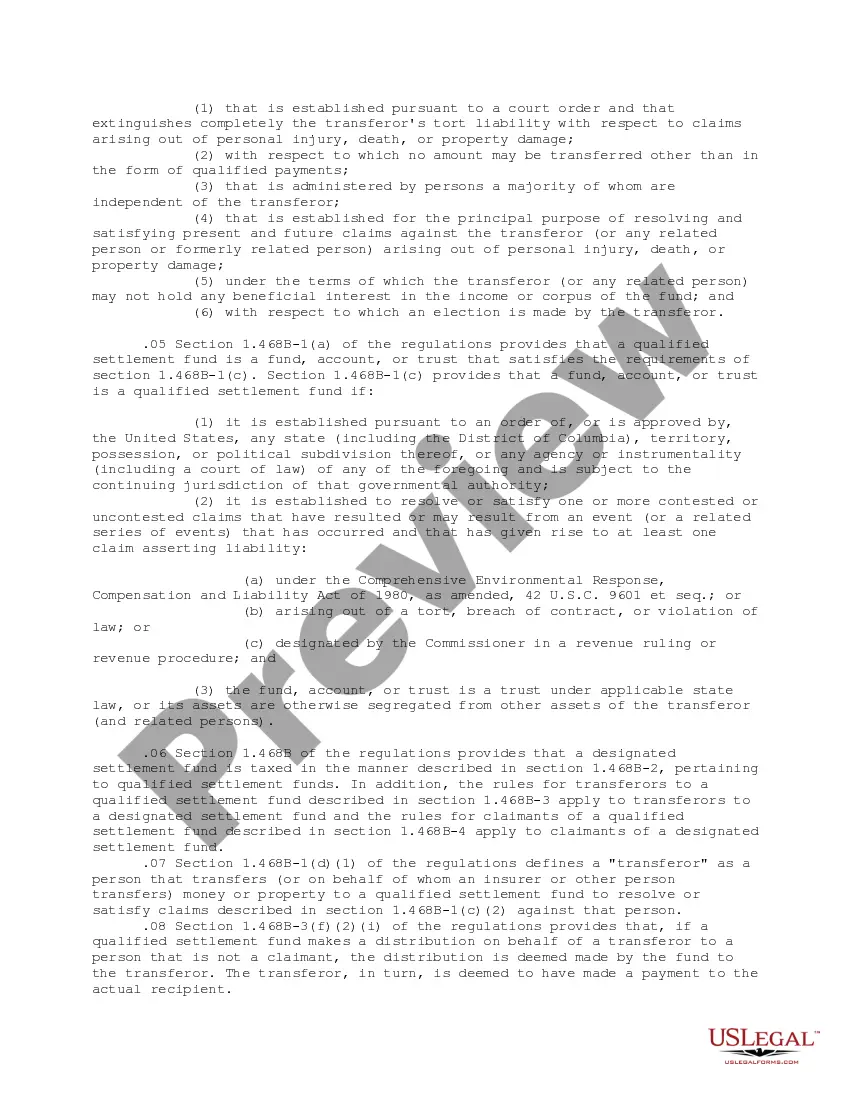
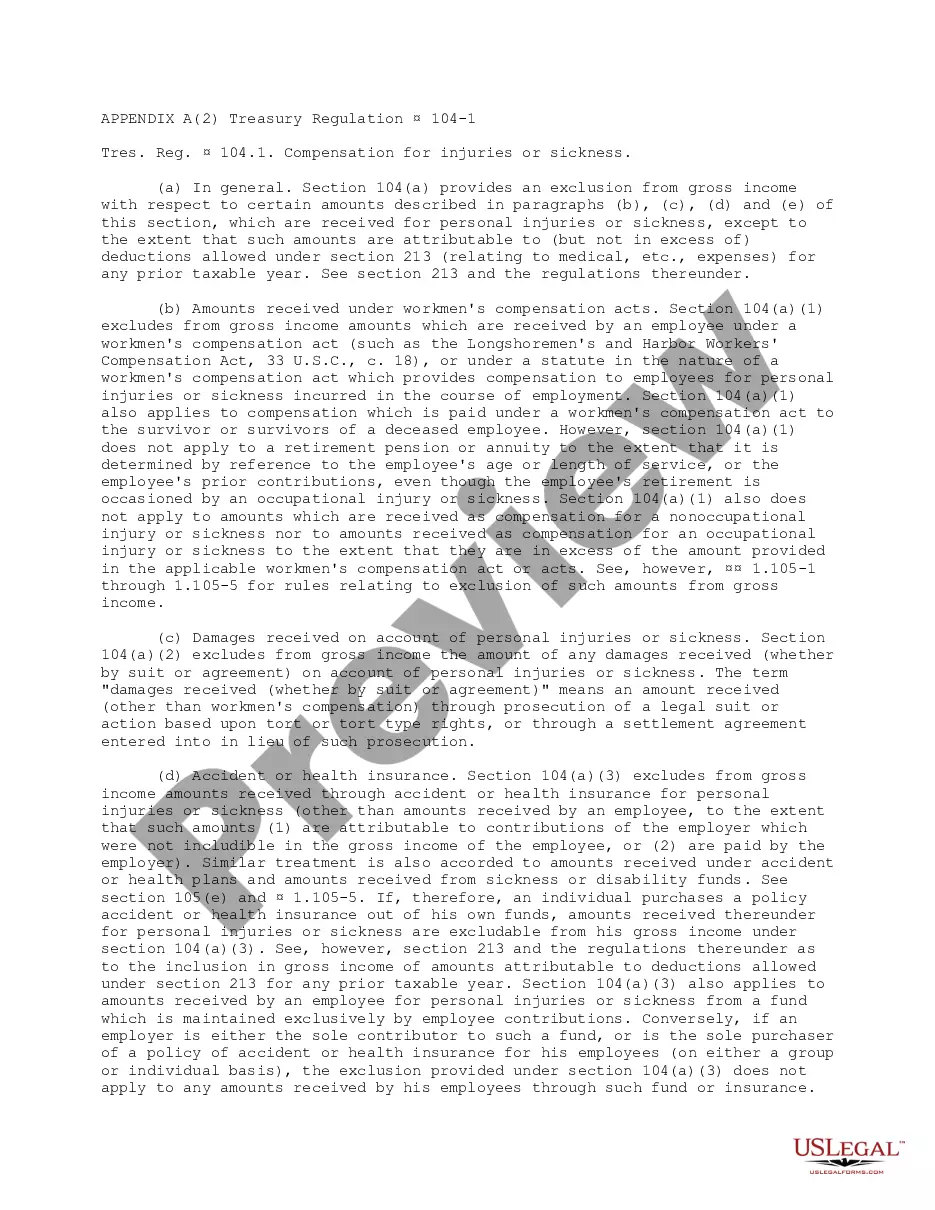
The Revenue Procedure 93-34 provides guidelines for designated settlement funds and qualified settlement funds under specific sections of the Internal Revenue Code. This revenue procedure outlines how these funds are considered "parties to the suit or agreement" for tax purposes, specifically in relation to periodic payments made for damages resulting from personal injury or sickness claims. Unlike other legal forms, this procedure addresses the tax implications of liability assignments and establishes clear criteria for the treatment of these funds under the law.
Key parts of this document
- Defines designated settlement funds and qualified settlement funds.
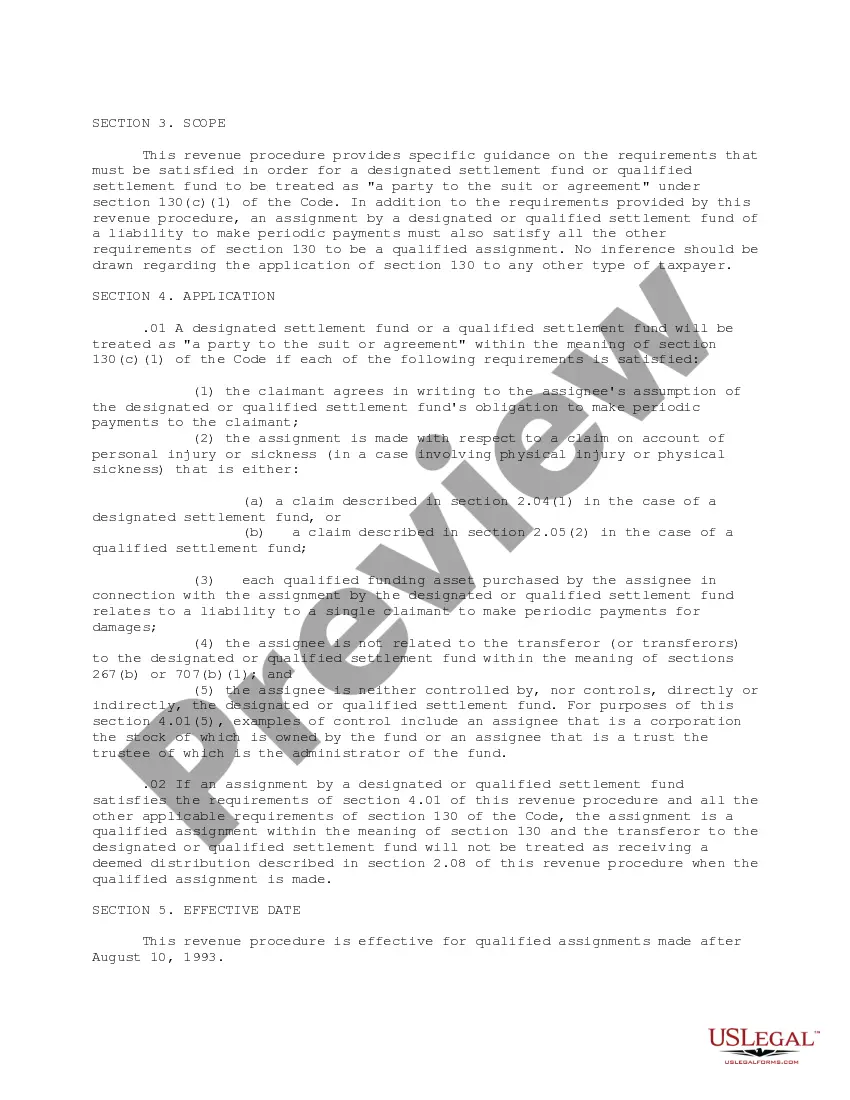
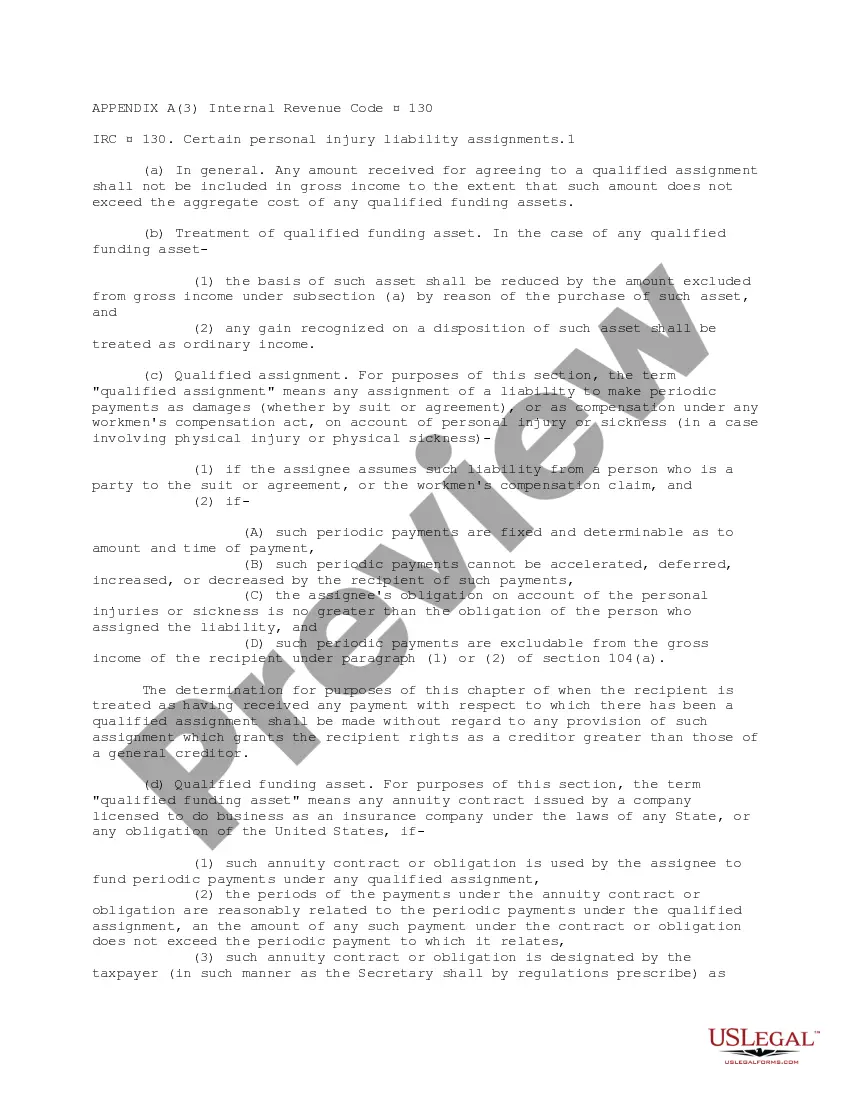
- Outlines the requirements for a qualified assignment under section 130 of the Internal Revenue Code.
- Specifies criteria for the acceptance of periodic payments by these funds.
- Clarifies the obligations and limitations of assignees and transferors.
- States effective date and applicability of the revenue procedure.
When this form is needed
This form is used in situations where parties are seeking to establish a designated settlement fund or a qualified settlement fund as part of resolving personal injury or sickness claims. It is particularly relevant when an assignee intends to take on the liability to make periodic payments for damages, and it helps ensure compliance with tax regulations regarding these payments.
Who should use this form
- Plaintiffs seeking to resolve personal injury or sickness claims through periodic payments.
- Attorneys representing clients involved in lawsuits with structured settlement agreements.
- Insurance companies handling claims that require designation of a settlement fund.
- Entities establishing qualified or designated settlement funds for litigation purposes.
How to prepare this document
- Identify the parties involved in the claim and their respective roles.
- Clearly outline the details of the personal injury or sickness claim.
- Ensure that all parties agree in writing to the assignee's assumption of payments.
- Designate the qualified funding assets to be used for periodic payments.
- Review and confirm that all assignments meet the criteria specified in section 130 of the Internal Revenue Code.
Does this document require notarization?
Notarization is generally not required for this form. However, certain states or situations might demand it. You can complete notarization online through US Legal Forms, powered by Notarize, using a verified video call available anytime.
Get your form ready online
Our built-in tools help you complete, sign, share, and store your documents in one place.
Make edits, fill in missing information, and update formatting in US Legal Forms—just like you would in MS Word.
Download a copy, print it, send it by email, or mail it via USPS—whatever works best for your next step.
Sign and collect signatures with our SignNow integration. Send to multiple recipients, set reminders, and more. Go Premium to unlock E-Sign.
If this form requires notarization, complete it online through a secure video call—no need to meet a notary in person or wait for an appointment.
We protect your documents and personal data by following strict security and privacy standards.

Make edits, fill in missing information, and update formatting in US Legal Forms—just like you would in MS Word.

Download a copy, print it, send it by email, or mail it via USPS—whatever works best for your next step.

Sign and collect signatures with our SignNow integration. Send to multiple recipients, set reminders, and more. Go Premium to unlock E-Sign.

If this form requires notarization, complete it online through a secure video call—no need to meet a notary in person or wait for an appointment.

We protect your documents and personal data by following strict security and privacy standards.
Common mistakes to avoid
- Failing to secure written agreements from all parties regarding assignments.
- Not verifying that the periodic payments meet the requirements outlined in section 130.
- Neglecting to identify and document the qualified funding assets appropriately.
- Overlooking compliance with both federal and state-specific regulations.
Why complete this form online
- Convenience of accessing a comprehensive legal resource at any time.
- Editable templates that allow users to customize forms according to specific needs.
- Reliable legal language drafted by licensed attorneys, ensuring compliance with relevant laws.
Legal use & context
- This form provides a structured approach to managing settlement funds in compliance with IRS regulations.
- It ensures that the assignee and transferor fulfill their obligations under the law.
- The efficient handling of personal injury claims can contribute to better financial outcomes for all parties involved.