Intellectual Property and Confidentiality Agreement
About this form
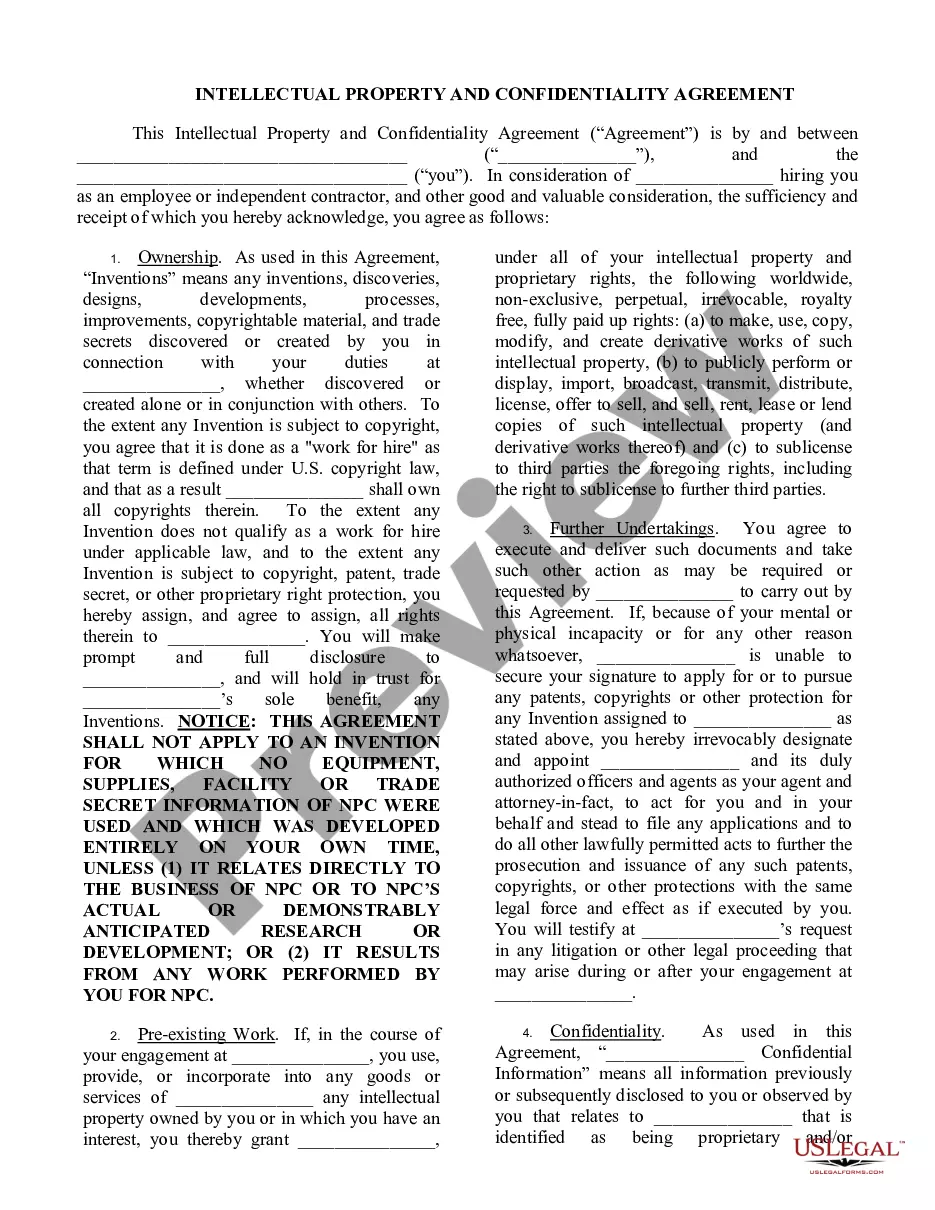
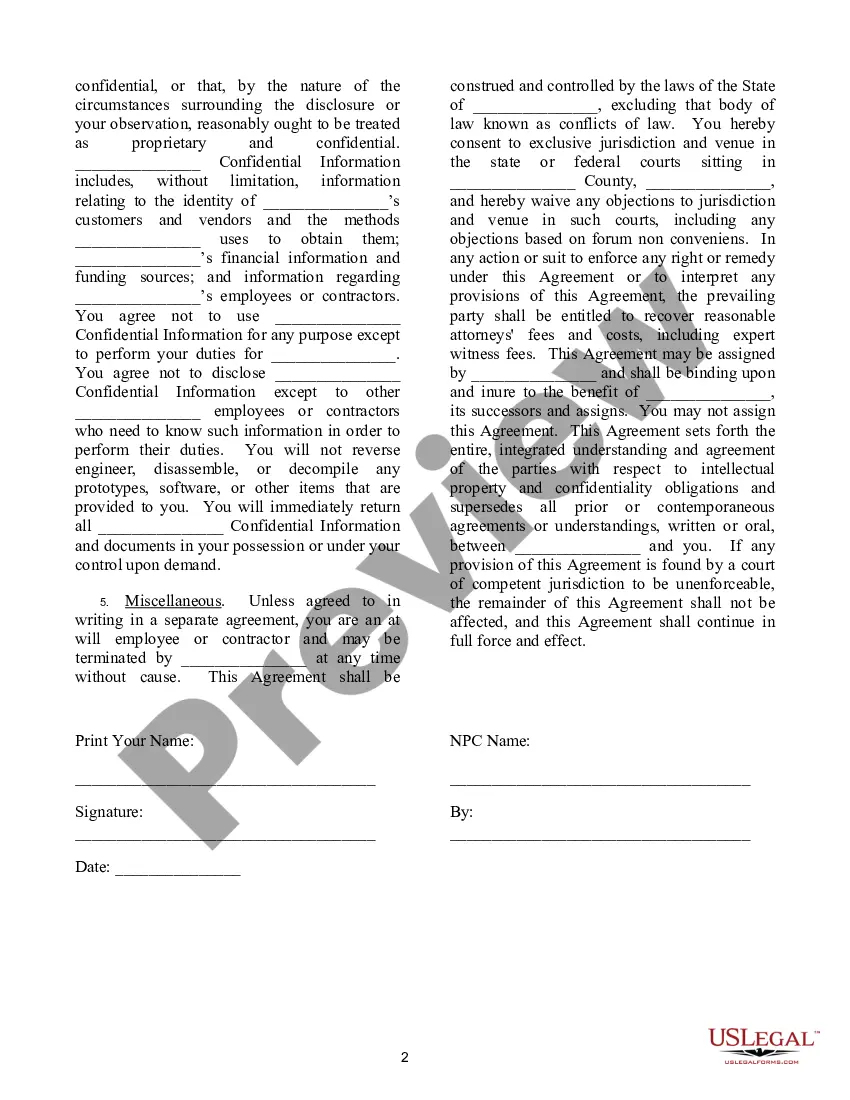
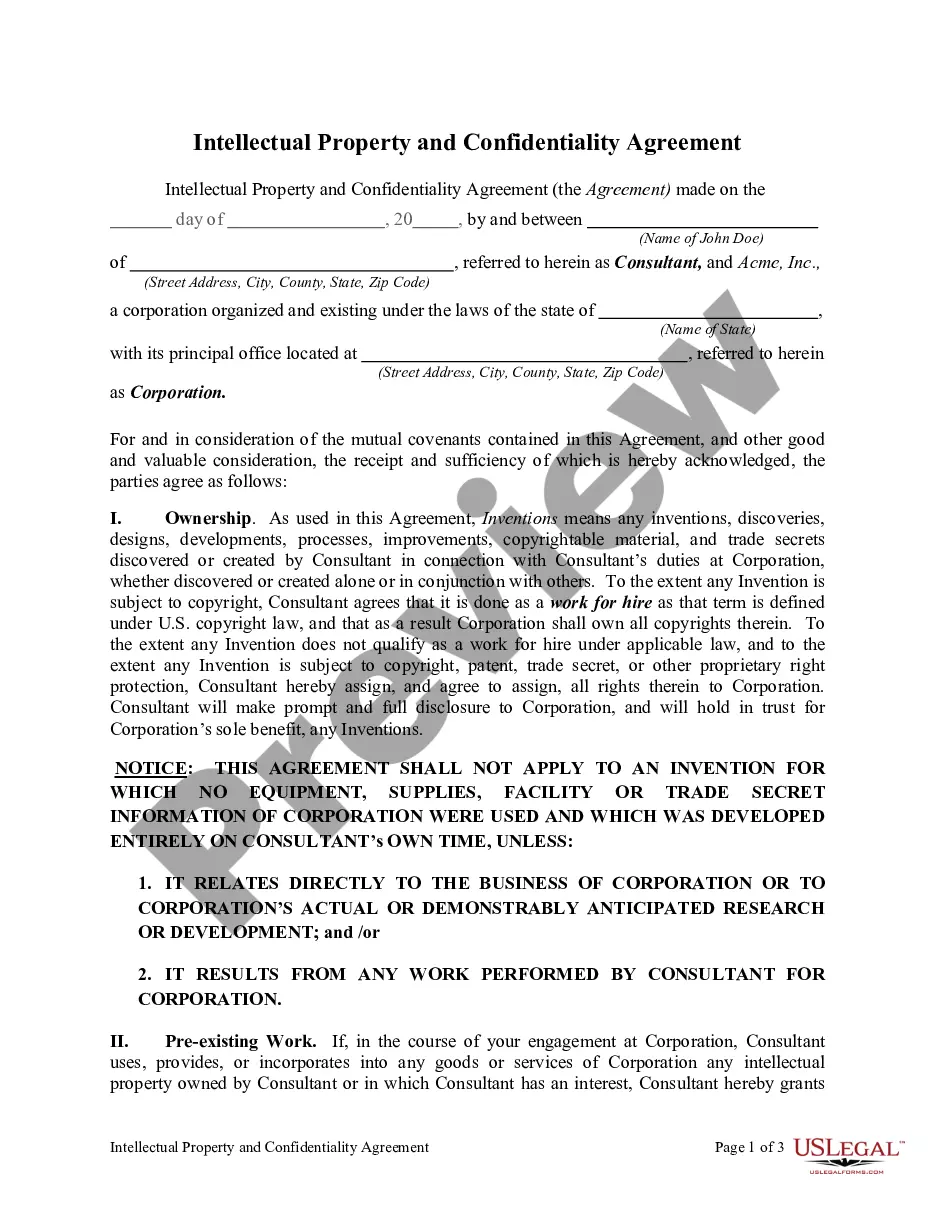
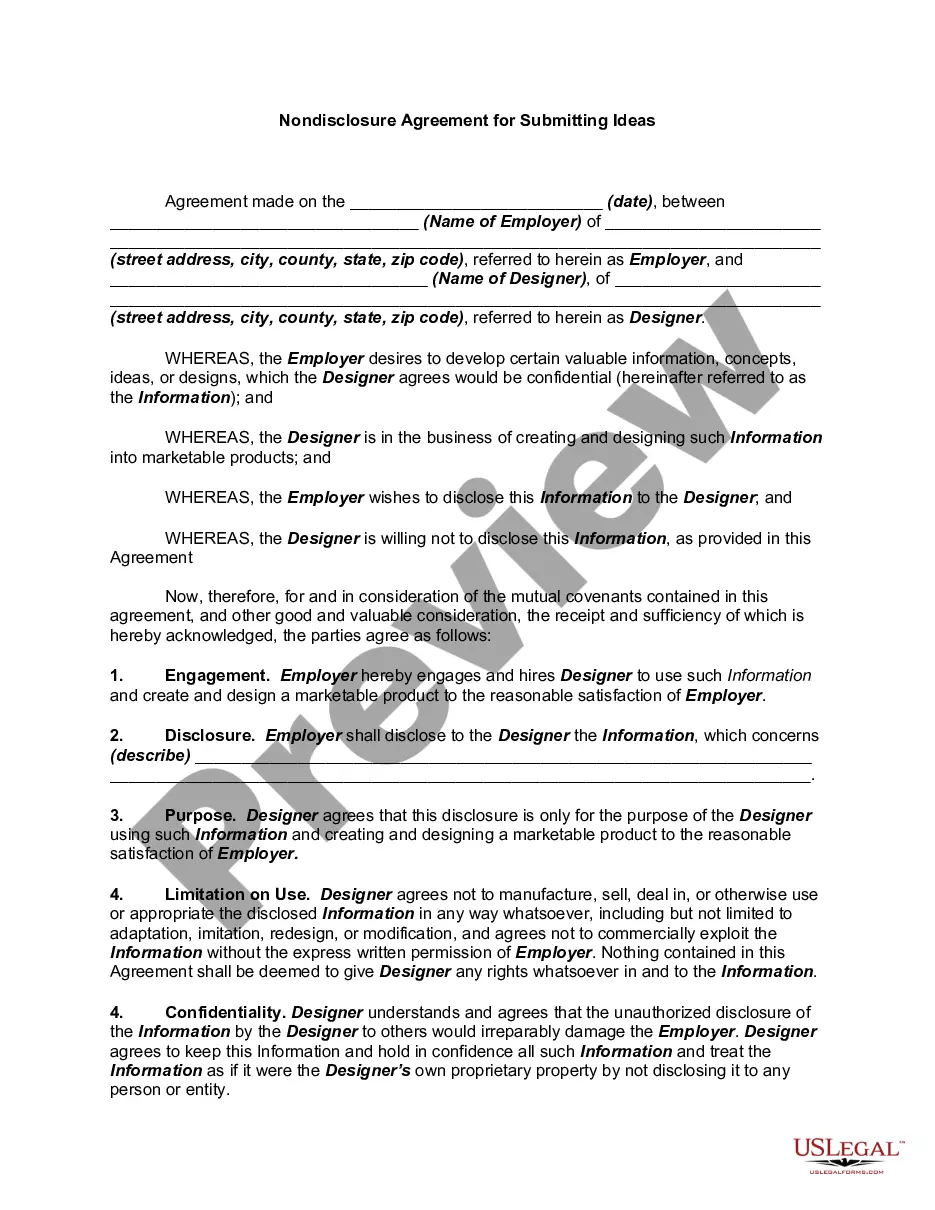
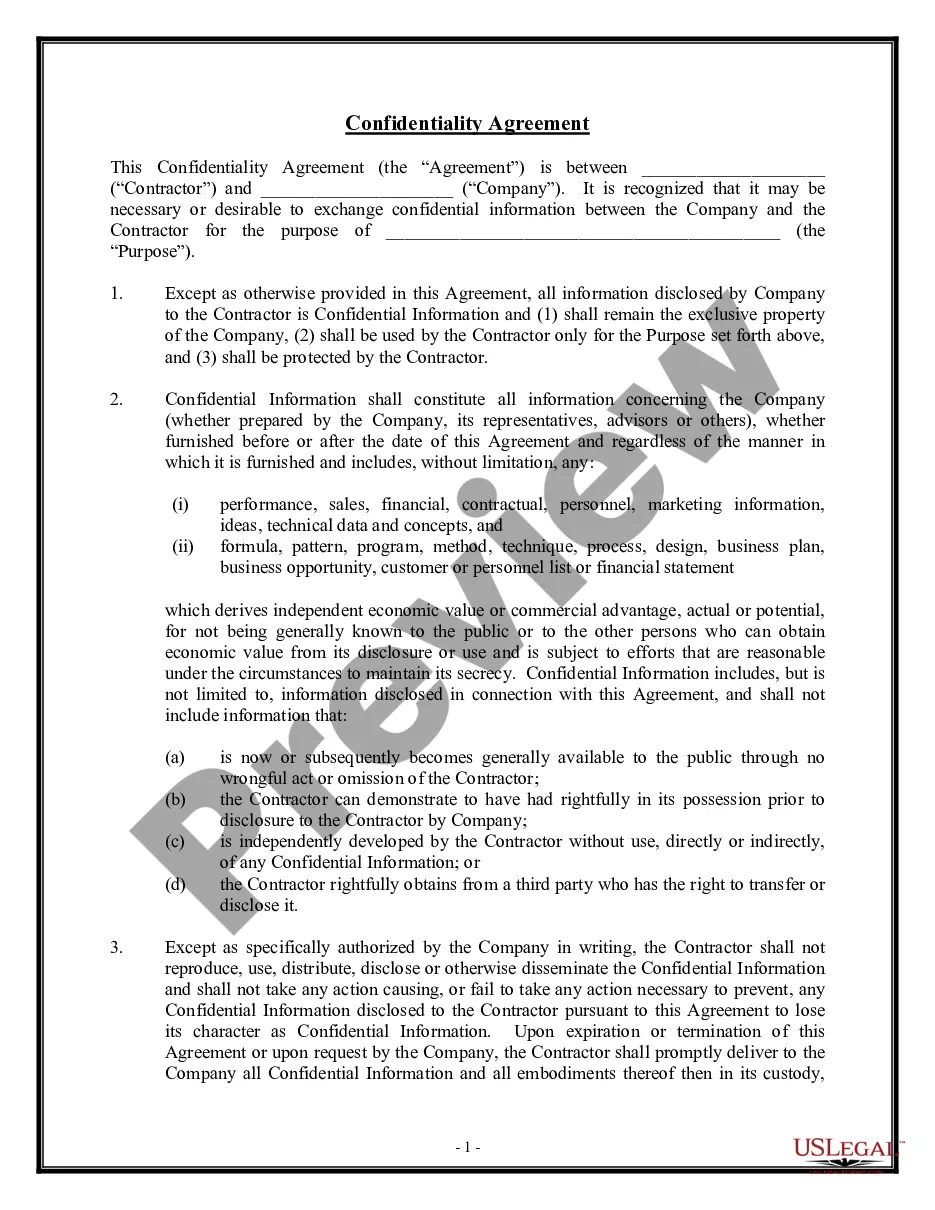
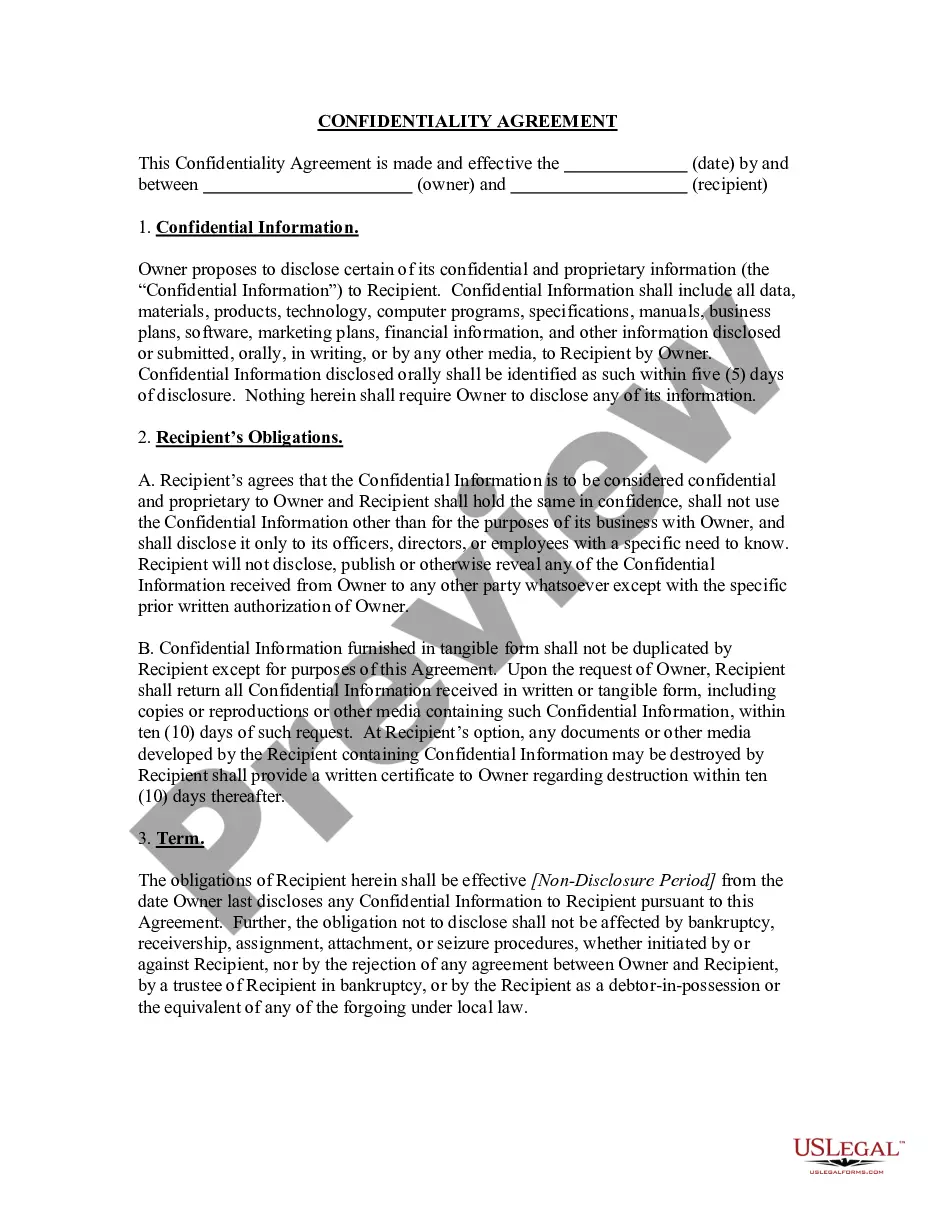
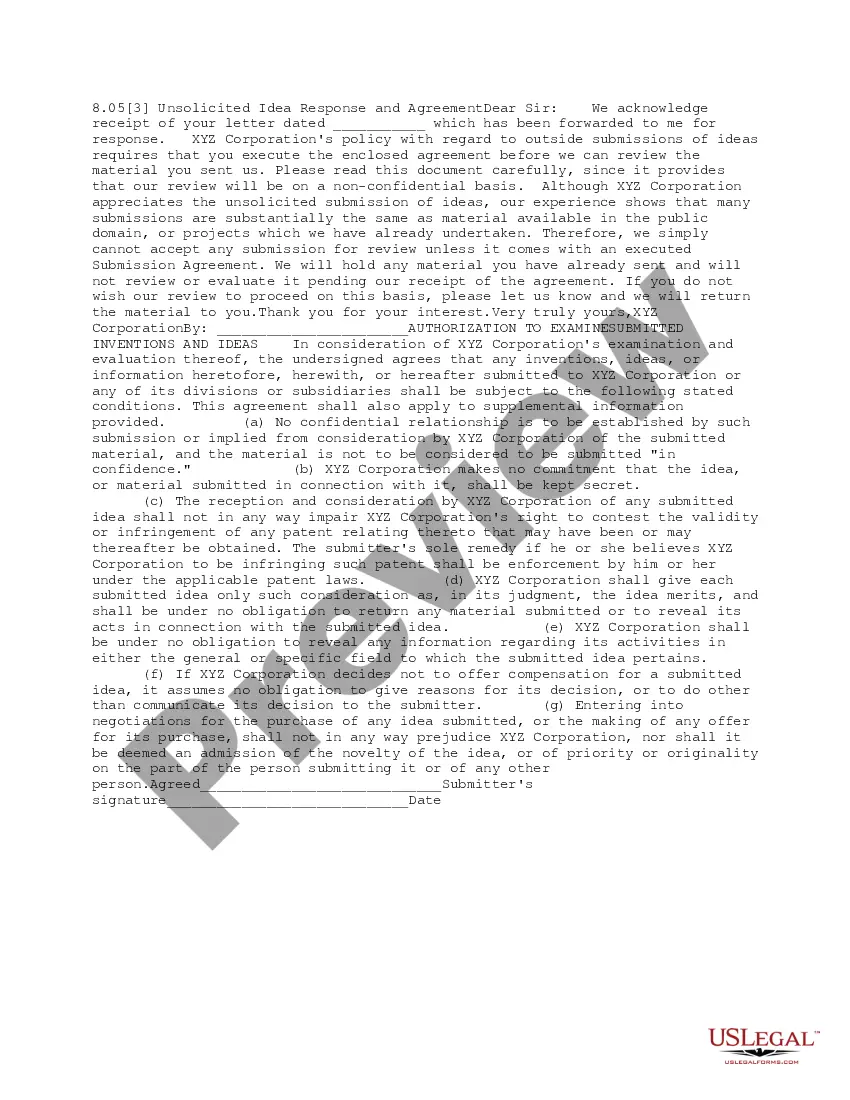
The Intellectual Property and Confidentiality Agreement is a legal document designed to protect intellectual property rights and maintain confidentiality for both individuals and companies. This form outlines the obligations of the parties involved, ensuring that any inventions or proprietary information developed in the course of work remain the sole property of the employer or contracting company. It serves a distinct purpose compared to general non-disclosure agreements by focusing specifically on intellectual property and inventions created during the engagement period.
Key parts of this document
- Ownership of inventions, including definitions of intellectual property and work-for-hire provisions.
- Requirements for disclosure of inventions to the employer or contractor.
- Confidentiality clauses specifying restrictions on the use and sharing of proprietary information.
- Assignment of rights ensuring all intellectual property developed during the engagement is owned by the employer.
- Provisions for handling pre-existing work and intellectual property prior to the agreement.
When to use this form
This form should be utilized when an organization hires an employee or independent contractor who will have access to proprietary information or will be creating intellectual property. It is essential to set clear expectations around ownership and confidentiality, particularly in fields such as technology, design, consulting, research, or any role where innovation or sensitive data is involved.
Intended users of this form
Individuals or organizations that can benefit from this agreement include:
- Employers hiring employees involved in creative or research-based jobs.
- Companies engaging independent contractors for projects that involve developing new products or services.
- Entrepreneurs looking to protect their ideas when collaborating with others.
- Startups seeking to safeguard their intellectual property as they develop their business.
Completing this form step by step
- Identify the parties involved by entering the names of the employer and the employee or contractor.
- Clearly define the intellectual property and inventions that will be covered under this agreement.
- Specify any pre-existing works that are owned by the employee or contractor and include necessary rights transfers.
- Insert clauses that outline confidentiality obligations and limit the use of proprietary information.
- Ensure all parties sign and date the agreement to validate its terms.
Does this form need to be notarized?
This form does not typically require notarization unless specified by local law. Ensure that all parties fully understand and agree to the terms before signing.
Get your form ready online
Our built-in tools help you complete, sign, share, and store your documents in one place.
Make edits, fill in missing information, and update formatting in US Legal Forms—just like you would in MS Word.
Download a copy, print it, send it by email, or mail it via USPS—whatever works best for your next step.
Sign and collect signatures with our SignNow integration. Send to multiple recipients, set reminders, and more. Go Premium to unlock E-Sign.
If this form requires notarization, complete it online through a secure video call—no need to meet a notary in person or wait for an appointment.
We protect your documents and personal data by following strict security and privacy standards.

Make edits, fill in missing information, and update formatting in US Legal Forms—just like you would in MS Word.

Download a copy, print it, send it by email, or mail it via USPS—whatever works best for your next step.

Sign and collect signatures with our SignNow integration. Send to multiple recipients, set reminders, and more. Go Premium to unlock E-Sign.

If this form requires notarization, complete it online through a secure video call—no need to meet a notary in person or wait for an appointment.

We protect your documents and personal data by following strict security and privacy standards.
Common mistakes
- Failing to specify the scope of covered inventions or disclosures.
- Not including provisions addressing pre-existing intellectual property.
- Neglecting to have both parties sign and date the agreement.
- Overlooking the need for clarity in confidentiality obligations.
Benefits of completing this form online
- Convenient access and the ability to download instantly.
- Editability to tailor the agreement to specific needs and circumstances.
- Reliability with professionally drafted templates ensuring legal compliance.
Looking for another form?
Form popularity
FAQ
A confidentiality agreement is a standard written agreement that is used to protect the owner of an invention or idea for a new business. It is also an important document between two companies that are contemplating a merger or a commercial transaction that must be withheld from public knowledge.
NDA vs confidentiality agreement: What is the difference? A confidentiality agreement binds all parties to keep secret information confidential, while an NDA upholds secrecy by creating a confidential relationship between the parties who sign it.
Can you use an NDA to protect your intellectual property? It is possible to make use of an NDA to protect your intellectual property. They can be used to protect confidential or sensitive information that you may need to share with a third party for example.
Non-disclosure agreements (NDAs) are frequently used to enable the sharing of confidential information in the context of Intellectual Property (IP) deals. For example, businesses will enter into NDAs prior to discussing new inventions with potential investors.
Non-Disclosure Agreement: An Overview A non-disclosure agreement, also referred to as a confidentially agreement, allows a business to share intellectual property rights with others without the risk of having it stolen by that party.
Non-disclosure agreements are an important legal framework used to protect sensitive and confidential information from being made available by the recipient of that information. Companies and startups use these documents to ensure that their good ideas won't be stolen by people they are negotiating with.
Trade secrets are intellectual property (IP) rights on confidential information which may be sold or licensed. In general, to qualify as a trade secret, the information must be: commercially valuable because it is secret, be known only to a limited group of persons, and.
This agreement is made between ("Employee") and Company Name on 20. Employee will perform services for Company Name that may require Company Name to disclose confidential and proprietary information ("Confidential Information") to Employee.