Issues-Interference with Contractual Relationship or Business Expectancy-Burden of Proof
Understanding this form
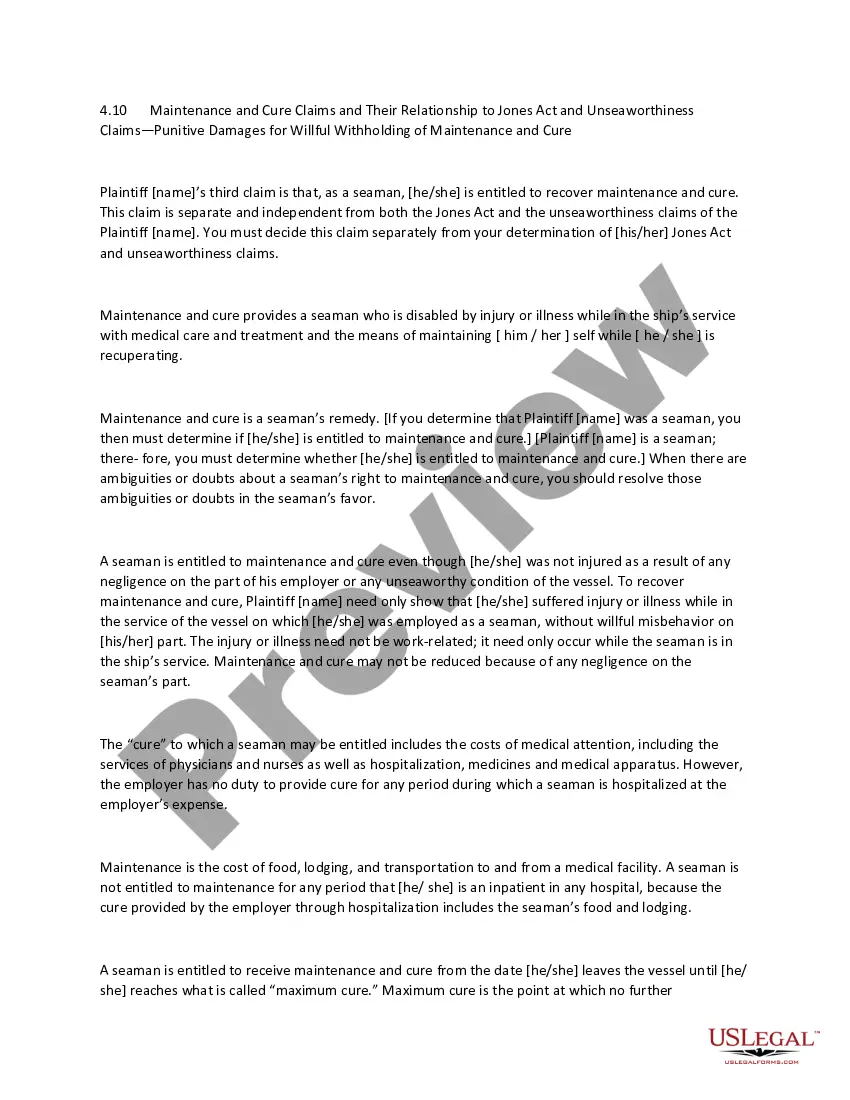
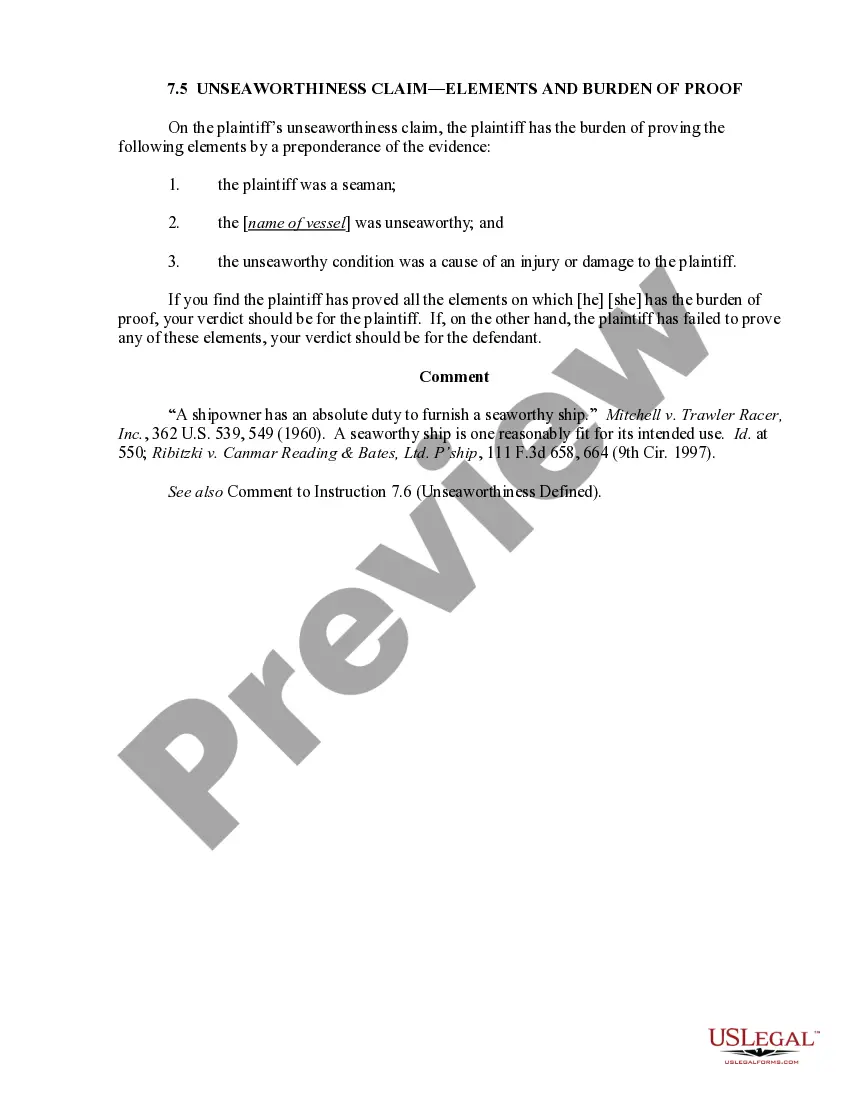
The Issues-Interference with Contractual Relationship or Business Expectancy-Burden of Proof form is a legal document used to establish the standards of proof required to show that one party interfered with another's contractual relationships or business expectancy. This form is crucial when pursuing claims related to tortious interference, distinguishing itself from other legal documents by focusing specifically on the burden of proof involved in such cases.
Key parts of this document
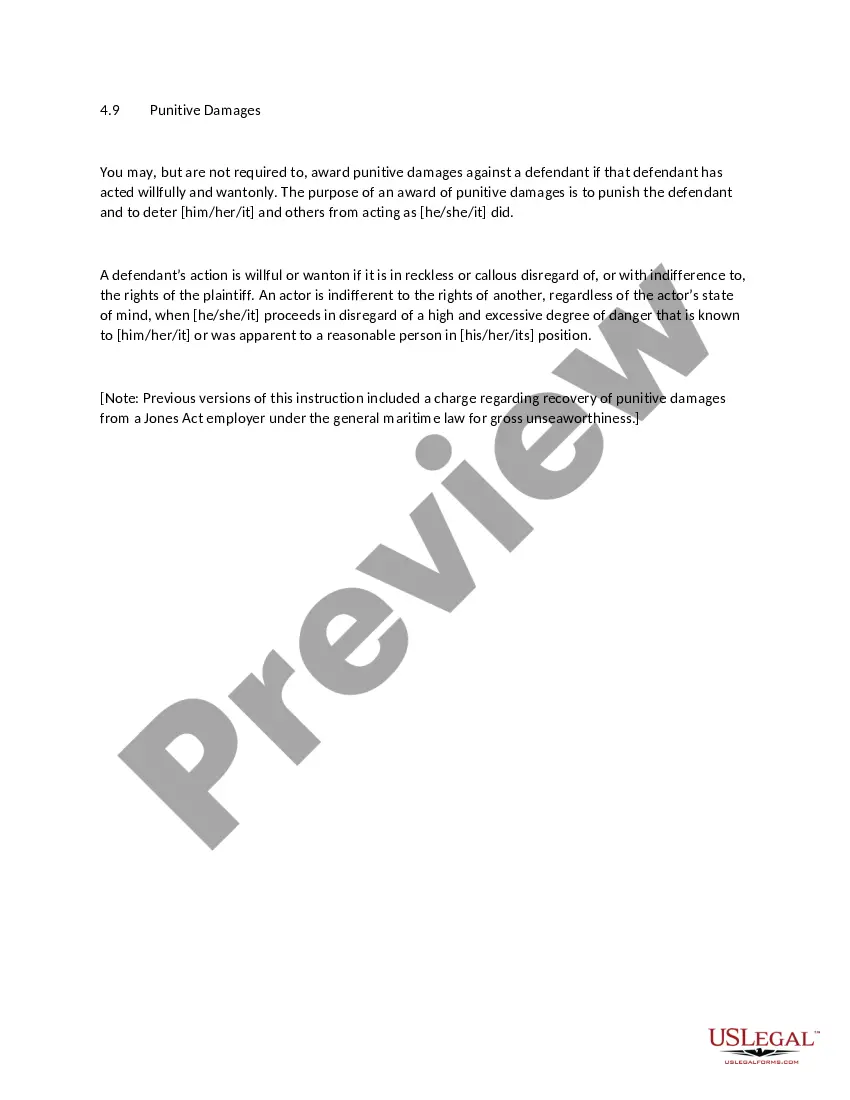
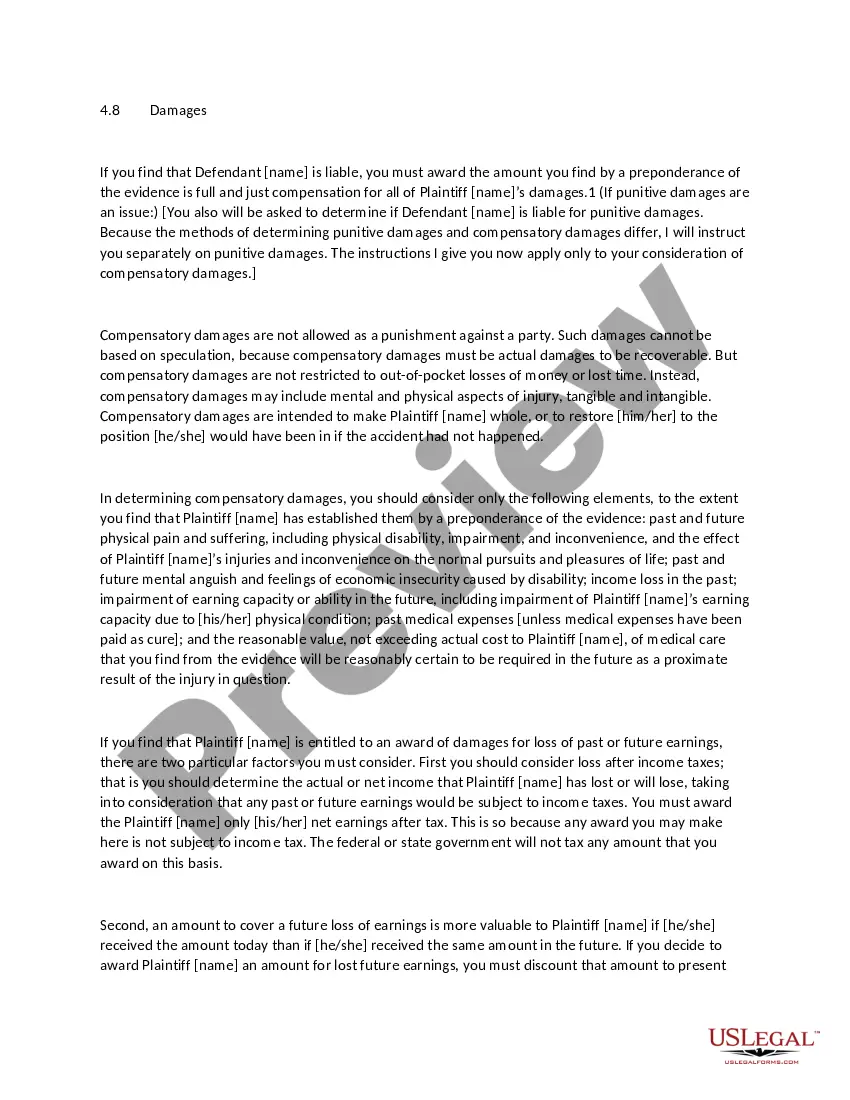
- Definition of punitive damages and their purposes.
- Criteria for willful or wanton actions by the defendant.
- Explanation of the plaintiff's rights in relation to the defendant's actions.
- Instructions for reporting the degree of harm or damages incurred.
When to use this document
This form is essential when a party believes that another party has interfered with their contractual relationships or business expectations, leading to financial harm. For instance, you might use this form if a competitor knowingly breaches your business contract or persuades a client to break their engagement with your business, resulting in lost revenue.
Who this form is for
- Individuals or businesses seeking to enforce their contractual rights.
- Parties involved in a dispute over business relationships.
- Legal professionals representing clients in tortious interference cases.
How to complete this form
- Identify the parties involved in the contractual relationship.
- Specify the type of interference that occurred.
- Detail the damages or harm suffered as a result of the interference.
- Provide evidence supporting your claims of willfulness or wantonness.
- Enter signatures and dates as required by your jurisdiction.
Does this form need to be notarized?
This form does not typically require notarization unless specified by local law. However, consulting with a legal professional is advisable to ensure that you comply with all necessary requirements.
Get your form ready online
Our built-in tools help you complete, sign, share, and store your documents in one place.
Make edits, fill in missing information, and update formatting in US Legal Forms—just like you would in MS Word.
Download a copy, print it, send it by email, or mail it via USPS—whatever works best for your next step.
Sign and collect signatures with our SignNow integration. Send to multiple recipients, set reminders, and more. Go Premium to unlock E-Sign.
If this form requires notarization, complete it online through a secure video call—no need to meet a notary in person or wait for an appointment.
We protect your documents and personal data by following strict security and privacy standards.

Make edits, fill in missing information, and update formatting in US Legal Forms—just like you would in MS Word.

Download a copy, print it, send it by email, or mail it via USPS—whatever works best for your next step.

Sign and collect signatures with our SignNow integration. Send to multiple recipients, set reminders, and more. Go Premium to unlock E-Sign.

If this form requires notarization, complete it online through a secure video call—no need to meet a notary in person or wait for an appointment.

We protect your documents and personal data by following strict security and privacy standards.
Mistakes to watch out for
- Failing to clearly define the nature of the interference.
- Not providing sufficient evidence of damages incurred.
- Submitting the form without proper signatures or dates.
Why use this form online
- Convenient access to legal forms at any time.
- Editable templates that allow customization for specific cases.
- Reliable, attorney-drafted forms that enhance compliance with legal standards.
Looking for another form?









Form popularity
FAQ
To prevail on the claim, plaintiff must prove four elements: (1) that a valid contract existed, (2) that defendant had knowledge of the contract, (3) that defendant acted intentionally and improperly, and (4) that plaintiff was injured by the defendant's actions.
A tortious interference with contract California claim allows the recovery of damages for intentional or negligent acts resulting in economic damage. Tortious interference is also known in California as "economic interference."
To recover for intentional interference with contractual relations or inducing breach of contract, a plaintiff must be able to prove he or she suffered damages as a result of the defendant(s)' actions. Such damages can include: Loss of profits, Expenses incurred, or.
Elements of a Wrongful Interference Business Case The defendant can prove a valid relationship or contract existed. Such valid contract/relationship was willfully violated. The interference was not authorized in any way. Financial or other damages must have been the result of such interference.
Tortious interference with contract or business expectancy occurs when a person intentionally damages the plaintiff's contractual or other business relationship with a third person.
If successful, a tortious interference claim can lead to compensation for economic loss, including expenses, lost profits and prospective profit; punitive damages if the plaintiff can be shown to have acted with ?oppression, fraud or malice?; and injunctive relief (which is basically a cease-and-desist order).
Since tortious interference with a contract is essentially a breach of contract claim, the damages can be varied based on each situation. The plaintiff is entitled to recover compensatory damages, and, in some instances, they may be awarded punitive damages.
For example, the interference could involve the sale of a business. It could also happen if a vendor offers a business unreasonably low prices, causing the buyer to breach a contract with another vendor. Interference must be intentional to result in a legal suit.