Hostage Taking
About this form
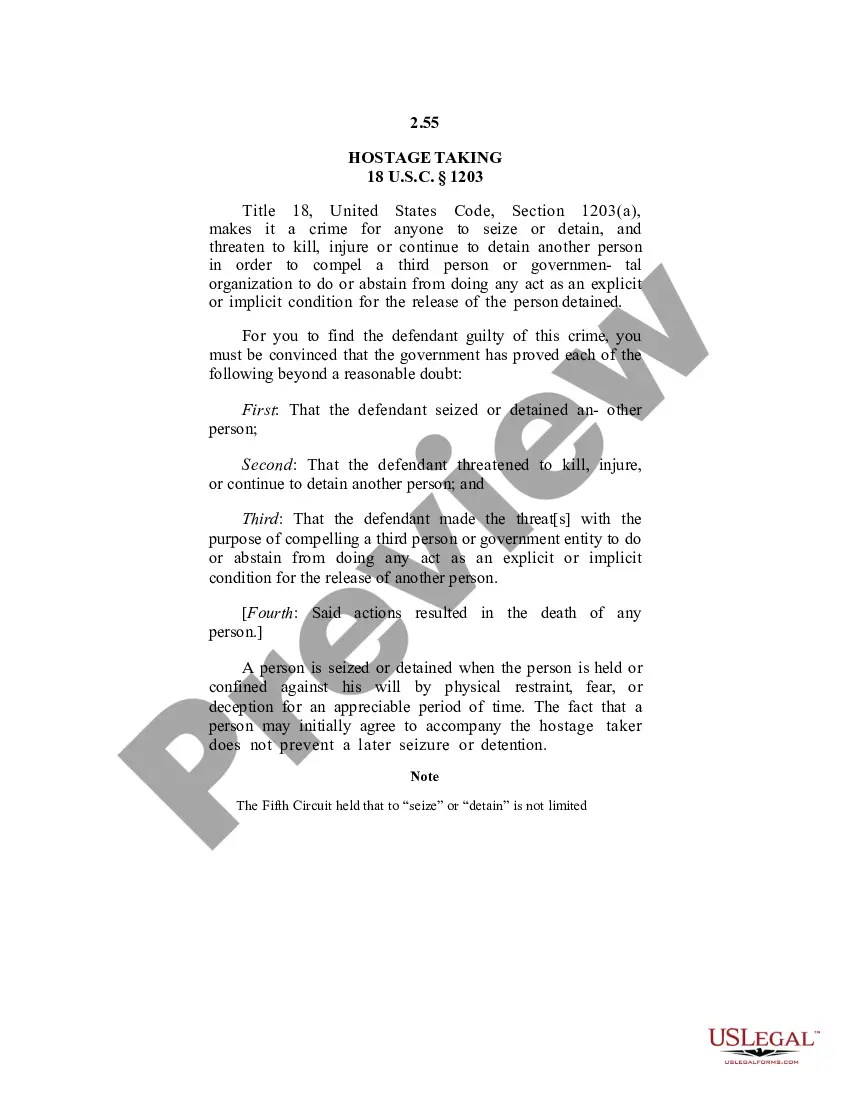
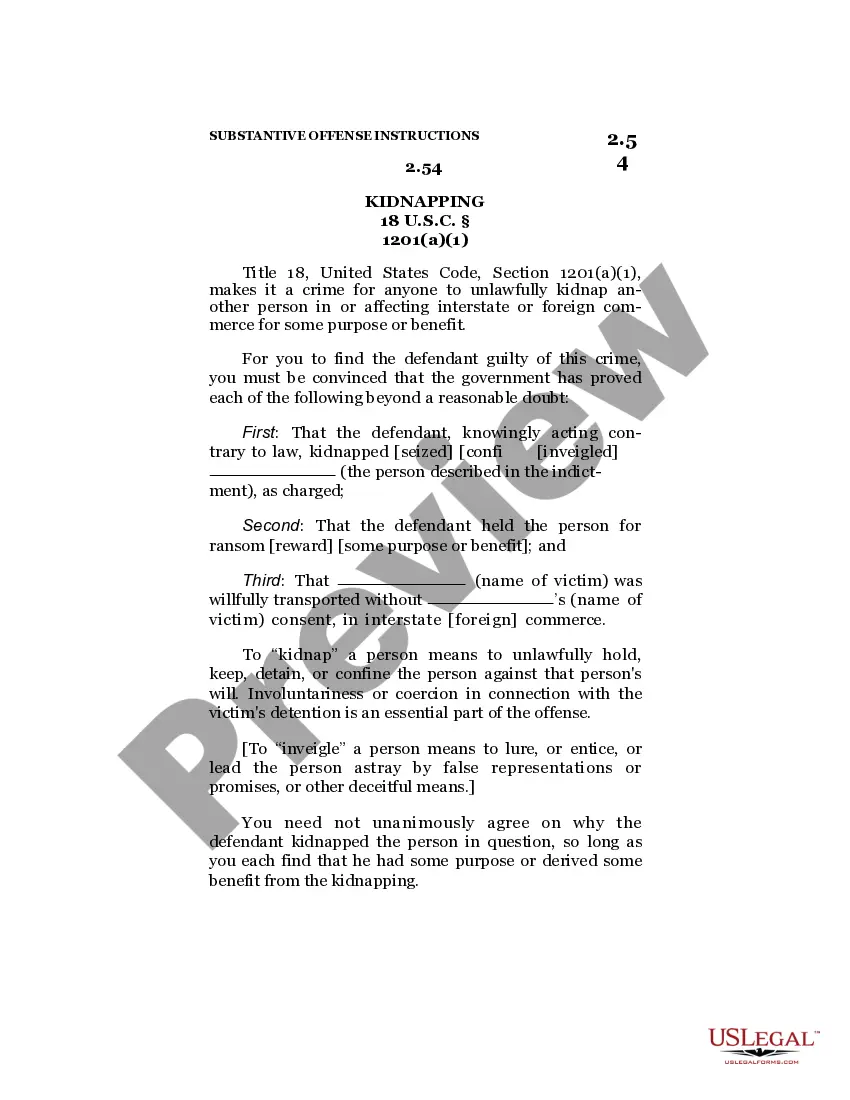
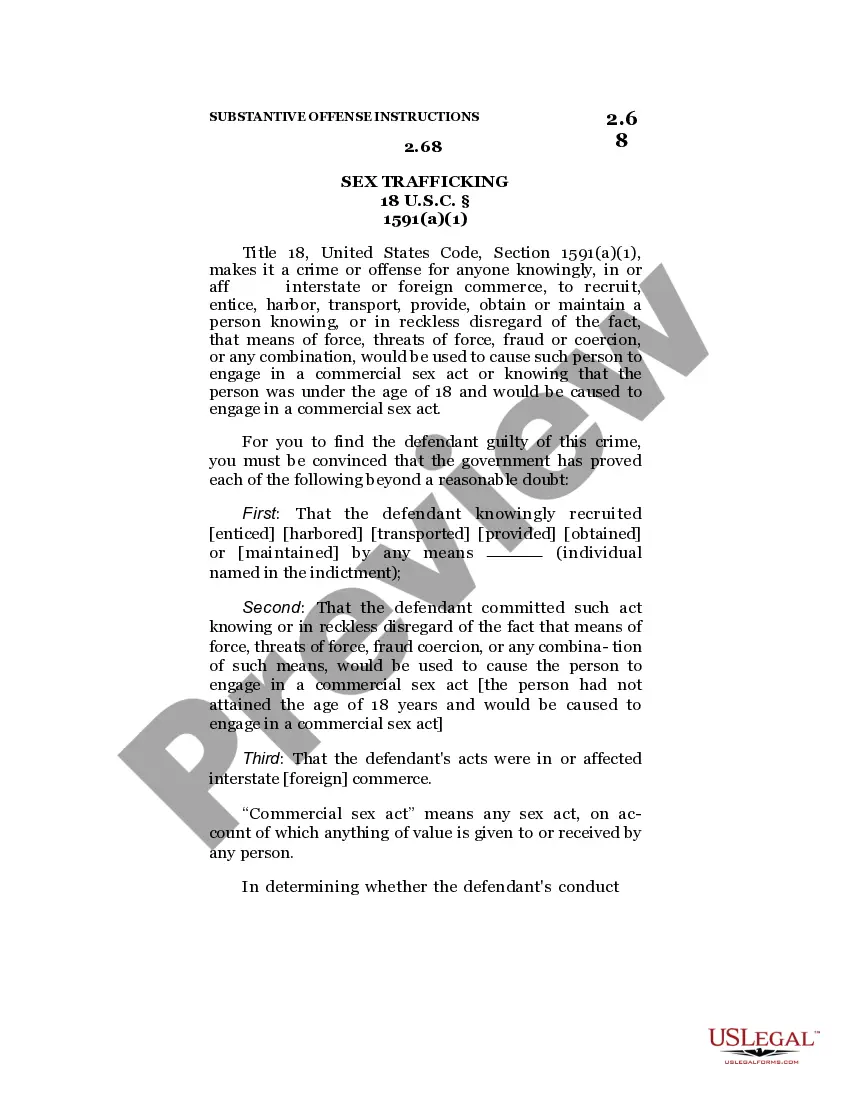
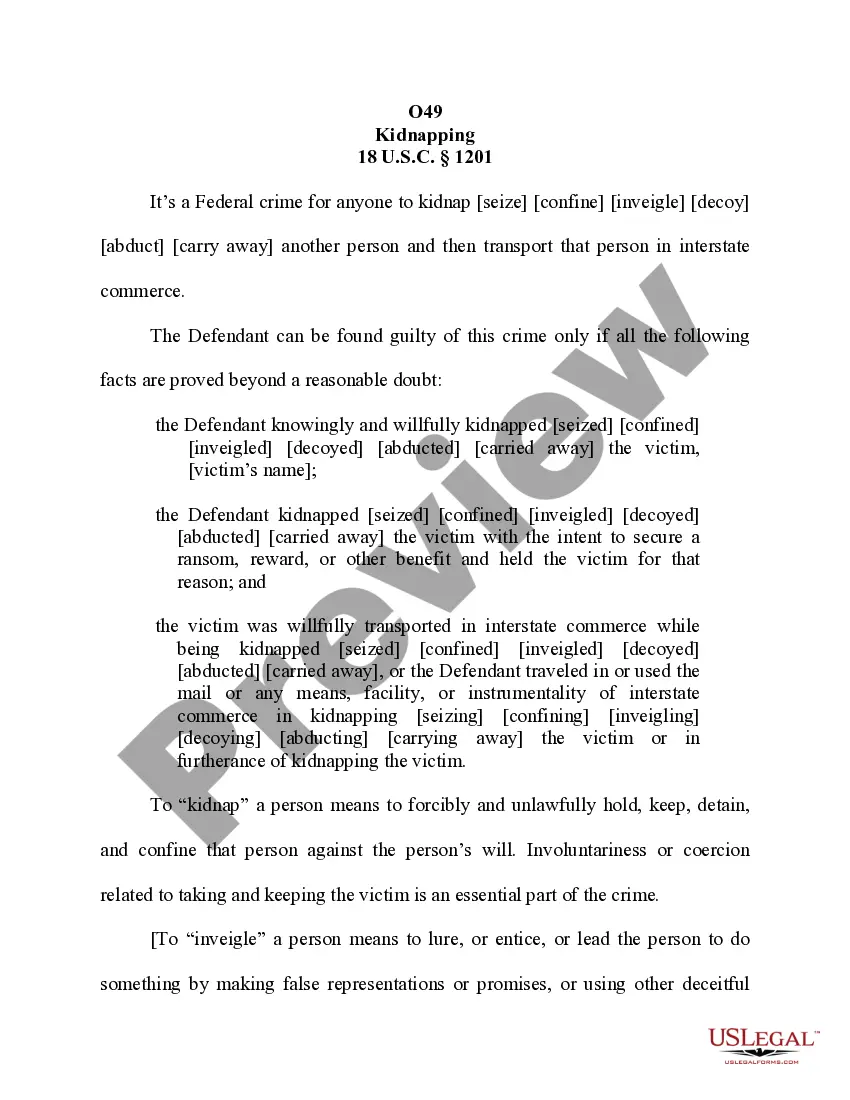
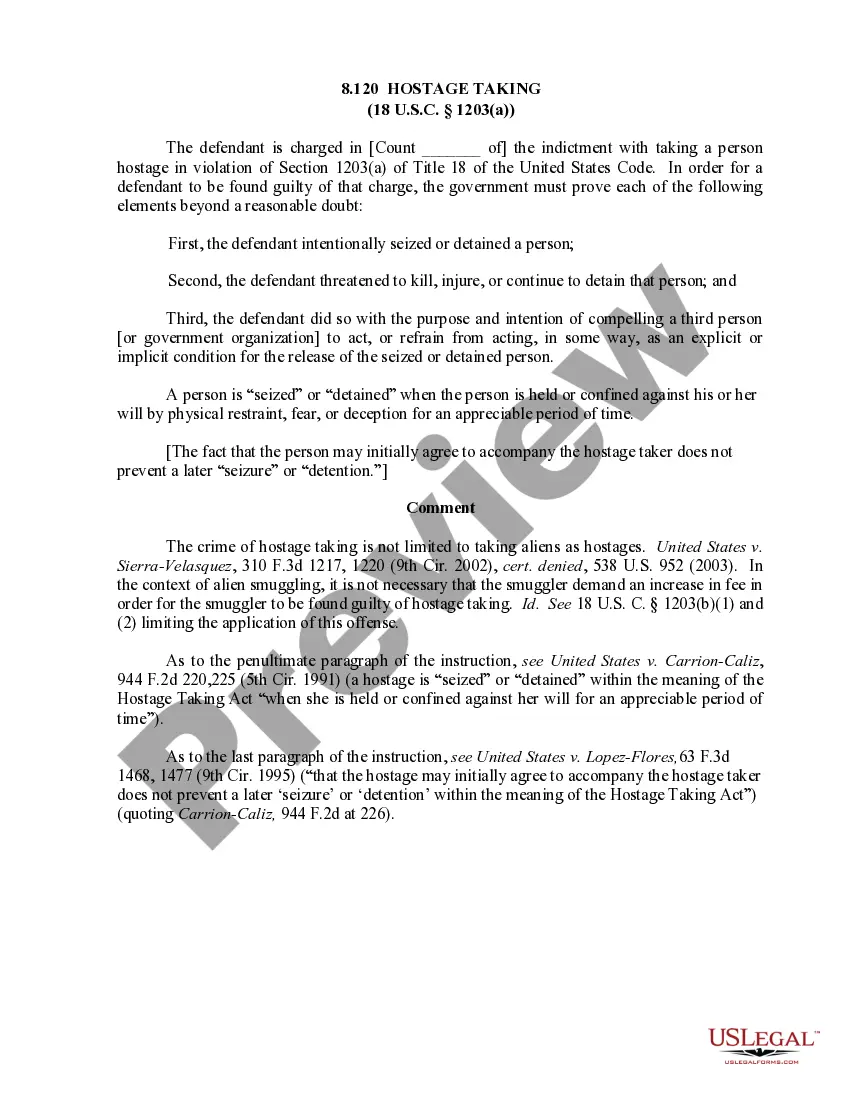
The Hostage Taking form addresses the legal framework defined under Title 18, United States Code, Section 1203. It specifically pertains to the criminal act of seizing or detaining an individual with the intention to compel a third party to act or refrain from acting. This form serves as a critical legal document for understanding the charges related to hostage situations and distinguishes itself from other criminal forms by detailing specific elements required for prosecution, such as threats and the involvement of a government entity.
What’s included in this form
- Definition of the crime and relevant legal provisions.
- Elements necessary to prove guilt, including seizure, threats, and intent.
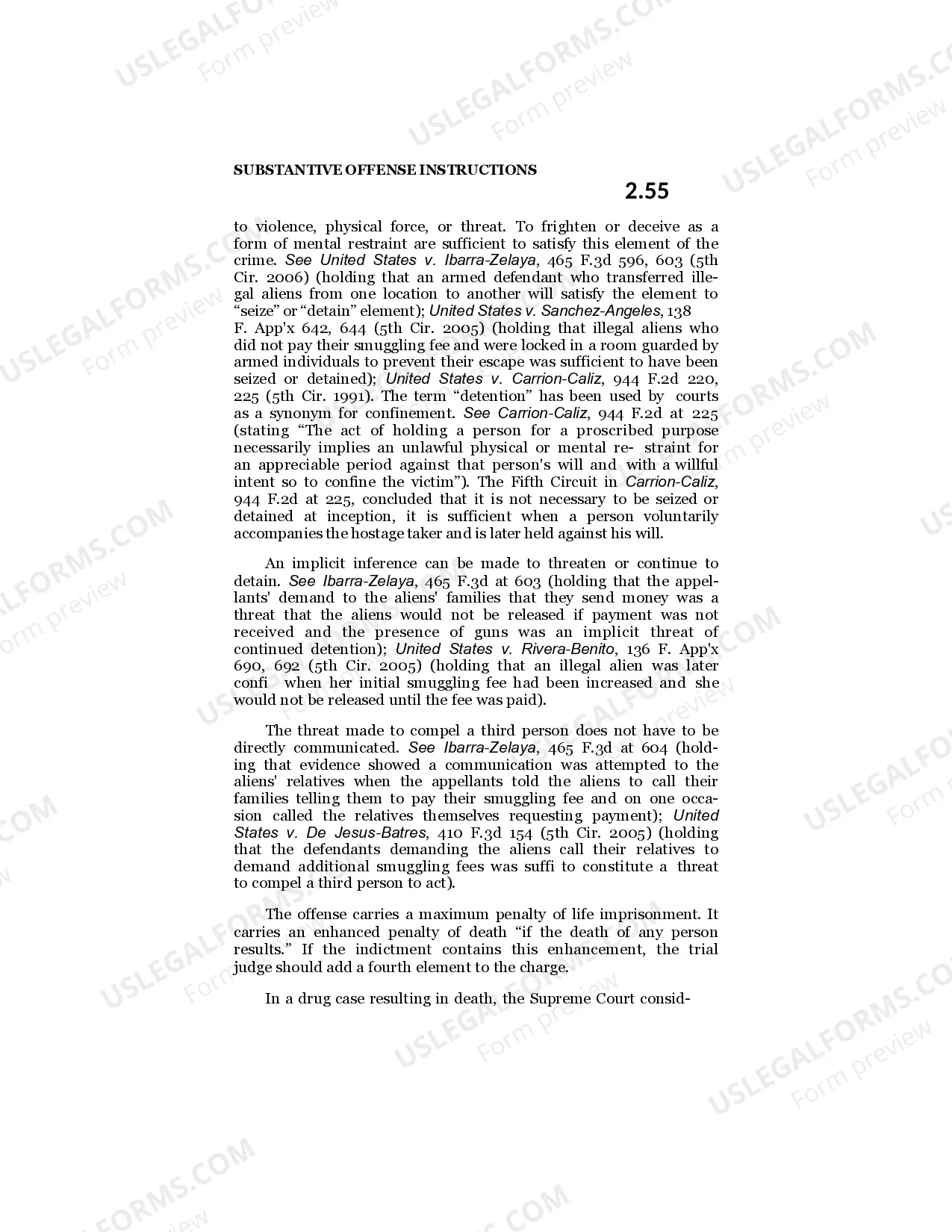
- Explanation of detention, including mental and physical restraint.
- Potential penalties, including maximum sentences and enhancements for resulting deaths.
- Legal precedents related to the interpretation of seizure and threats.

When to use this document
This form should be used in legal situations where an individual is charged with hostage taking or related offenses. It is relevant during criminal proceedings to understand the charges, build a defense, or assess the implications of such charges. Legal counsel may utilize this form to educate defendants about the nature of the accusations and their rights.
Who this form is for
- Legal professionals representing clients in hostage taking cases.
- Individuals accused of hostage taking seeking to understand their legal position.
- Law enforcement officials needing clarity on the legal elements of the crime.
- Victims of hostage situations wanting to be informed about their legal rights.
Steps to complete this form
- Review the legal definitions provided in the form.
- Identify whether the charged individual meets the criteria for seizure or detention.
- Evaluate the evidence related to threats made by the accused.
- Analyze the intent behind the actions specified in the form.
- Consult relevant case law to understand judicial interpretations of similar cases.
Notarization requirements for this form
This form does not typically require notarization unless specified by local law. However, consulting with a legal professional can provide clarity on any unique jurisdictional requirements.
Get your form ready online
Our built-in tools help you complete, sign, share, and store your documents in one place.
Make edits, fill in missing information, and update formatting in US Legal Forms—just like you would in MS Word.
Download a copy, print it, send it by email, or mail it via USPS—whatever works best for your next step.
Sign and collect signatures with our SignNow integration. Send to multiple recipients, set reminders, and more. Go Premium to unlock E-Sign.
If this form requires notarization, complete it online through a secure video call—no need to meet a notary in person or wait for an appointment.
We protect your documents and personal data by following strict security and privacy standards.

Make edits, fill in missing information, and update formatting in US Legal Forms—just like you would in MS Word.

Download a copy, print it, send it by email, or mail it via USPS—whatever works best for your next step.

Sign and collect signatures with our SignNow integration. Send to multiple recipients, set reminders, and more. Go Premium to unlock E-Sign.

If this form requires notarization, complete it online through a secure video call—no need to meet a notary in person or wait for an appointment.

We protect your documents and personal data by following strict security and privacy standards.
Avoid these common issues
- Failing to clearly define the elements of the crime being charged.
- Misunderstanding the nature of threats and detention under the law.
- Overlooking state-specific regulations that may affect the case.
Why complete this form online
- Convenient access to legal information at any time.
- Downloadable format allows for easy record keeping and editing.
- Reliable templates drafted by licensed attorneys that meet legal standards.
Legal use & context
- The form is grounded in federal law, specifically 18 U.S.C. § 1203.
- Understanding this form is crucial for both defendants and legal practitioners.
- Legal definitions can vary by jurisdiction, influencing the application and interpretation of the law.
- A thorough comprehension of the context can aid in legal defense strategies.
Looking for another form?



Form popularity
FAQ
The hostage taking act is a subsection of the 1979 United Nations General Assembly Sixth Committee's treaty, International Convention Against the Taking of Hostages. It became enforceable in the United States on January 6, 1985.
?the act of capturing somebody and holding them prisoner, usually threatening to injure or kill them if people do not meet certain demands.
Iran hostage crisis, international crisis (1979?81) in which militants in Iran seized 66 American citizens at the U.S. embassy in Tehr?n and held 52 of them hostage for more than a year.
On November 4, 1979, Iranian militants stormed the United States Embassy in Tehran and took approximately seventy Americans captive. This terrorist act triggered the most profound crisis of the Carter presidency and began a personal ordeal for Jimmy Carter and the American people that lasted 444 days.
A person, often one of a group, who captures someone and holds them prisoner, and who may injure or kill them if people do not do what the person is asking The hostage-takers soon issued their demands. Look up any word in the dictionary offline, anytime, anywhere with the Oxford Advanced Learner's Dictionary app.
Articles on the kinds of people who take hostages 1 usually list four major types of hostage takers (HT's): 1) "Mentally disturbed" persons; 2) Criminals trapped during the com- mission of crime; 3) Prisoners who are revolting; 4) Political terrorists attempting to produce social change through the threat or use of
Hostage-takers can be grouped into three categories. Professional criminals are the easiest for the police to handle. Psychotics are unpredictable and require the involvement of psychologists or psychiatrists.
The seven distinct categories of hostage takers are political extremists, fleeing criminals, institutionalized or incarcerated persons, estranged persons, wronged persons, religious fanatics, and mentally disturbed persons.