Character Evidence
About this form
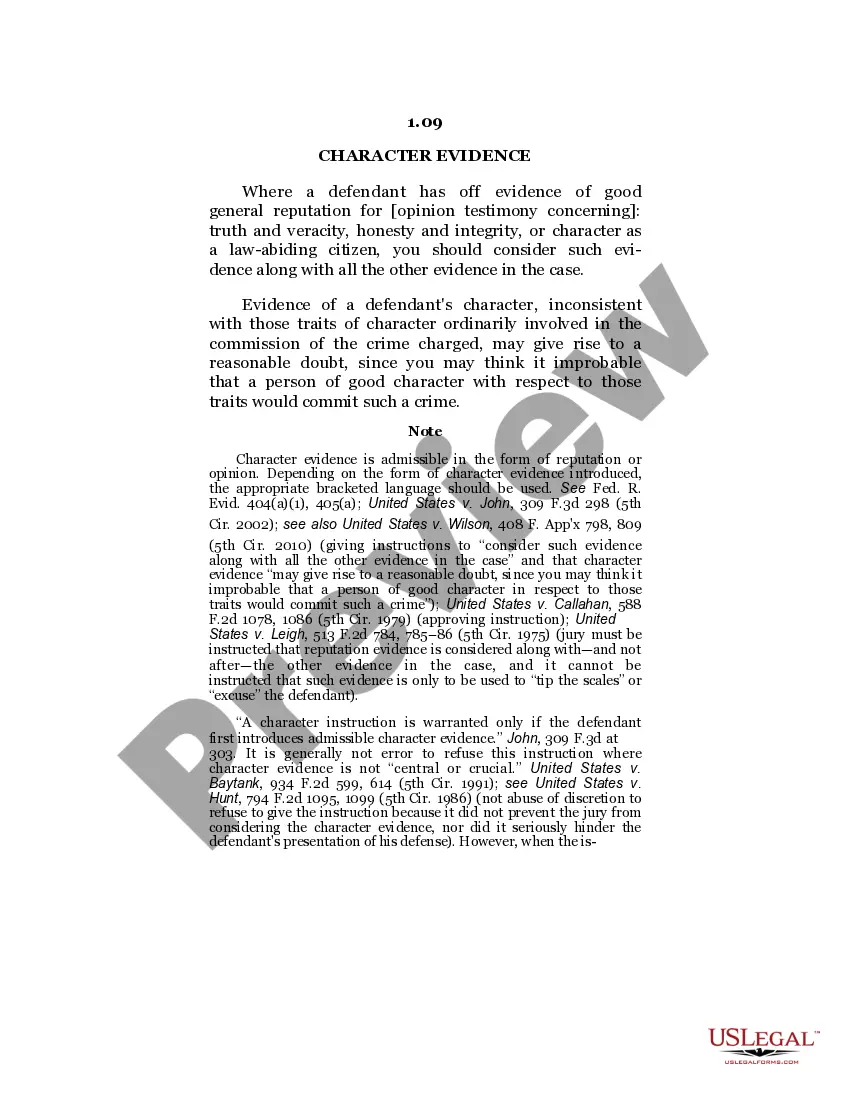
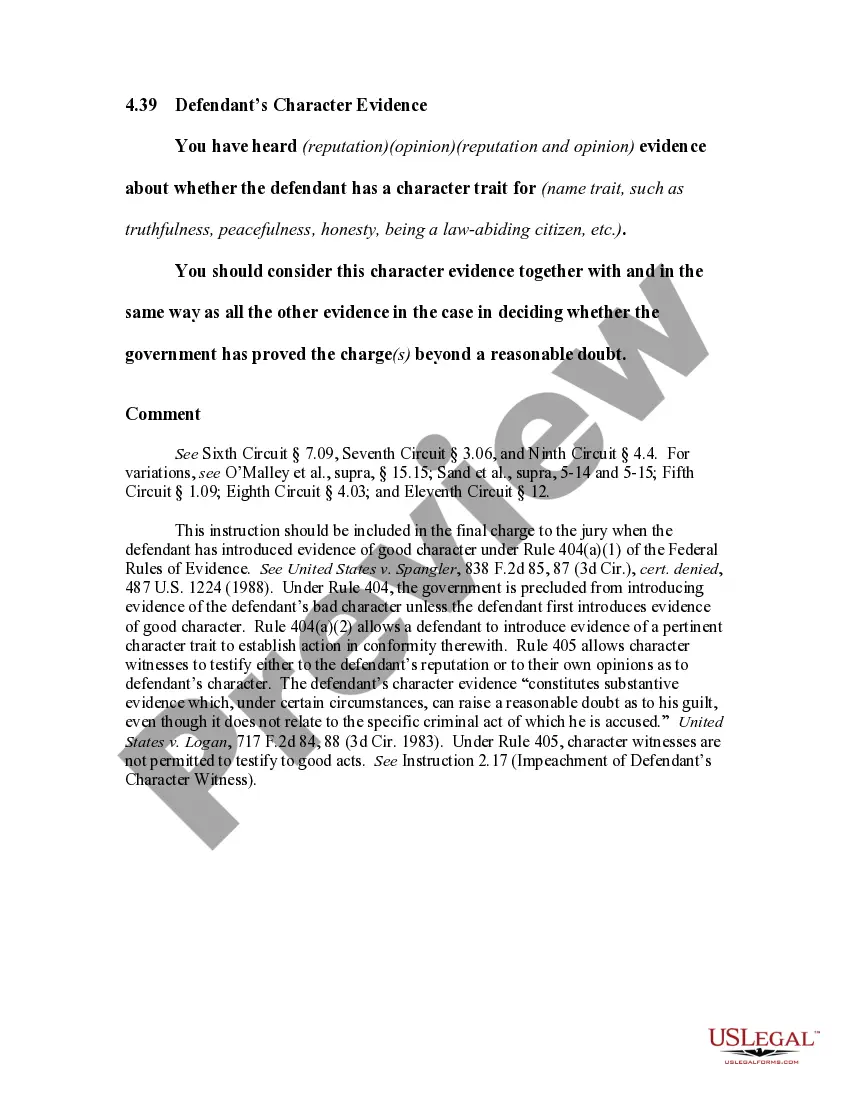
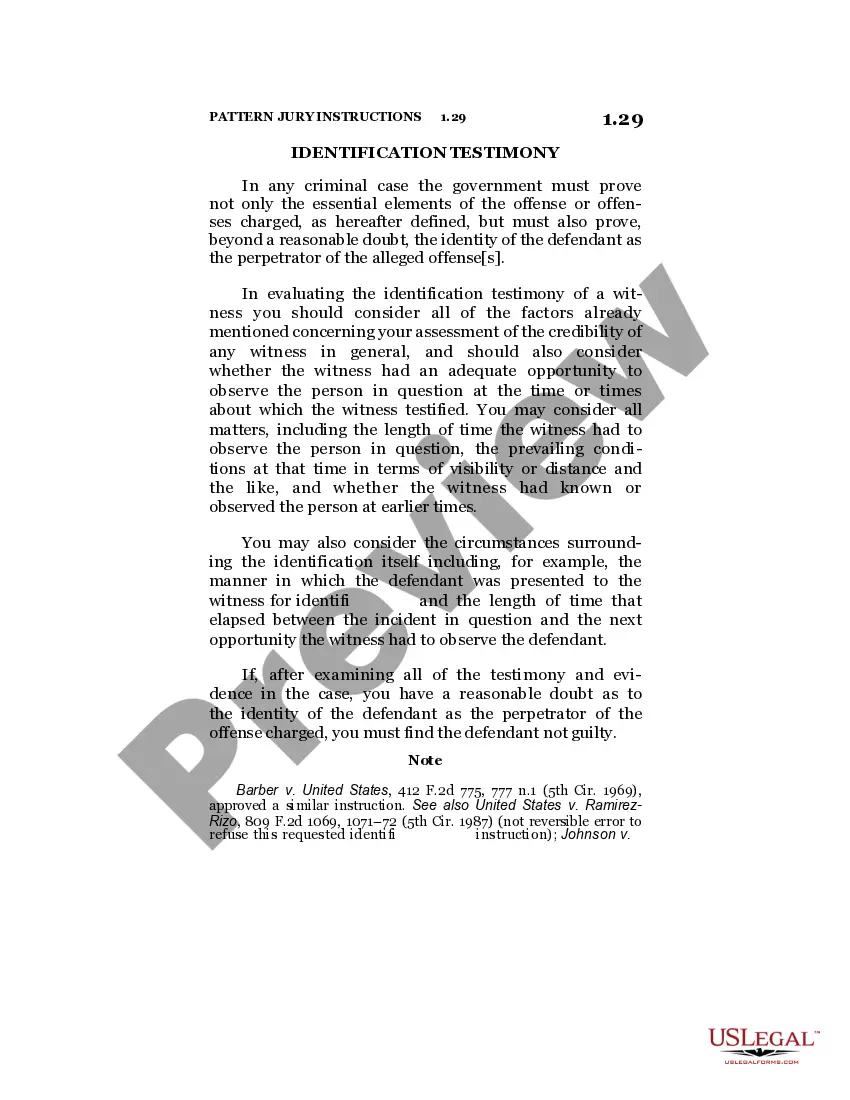
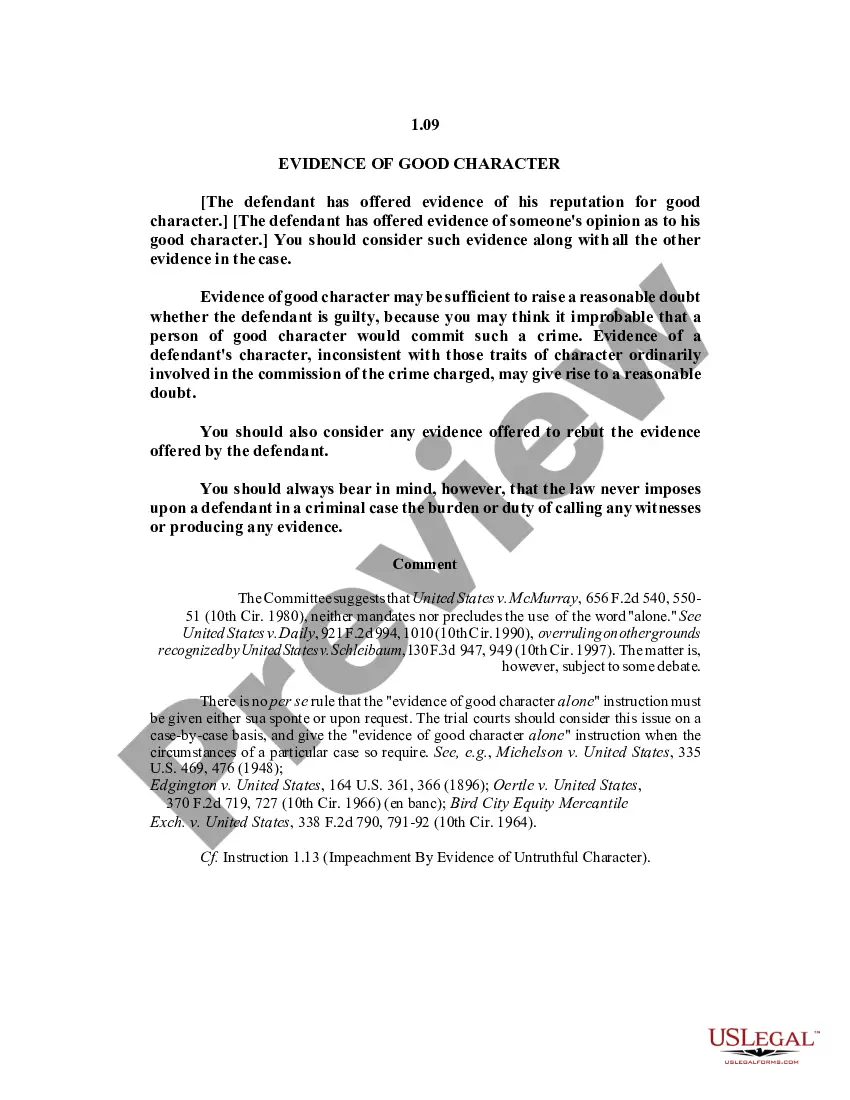
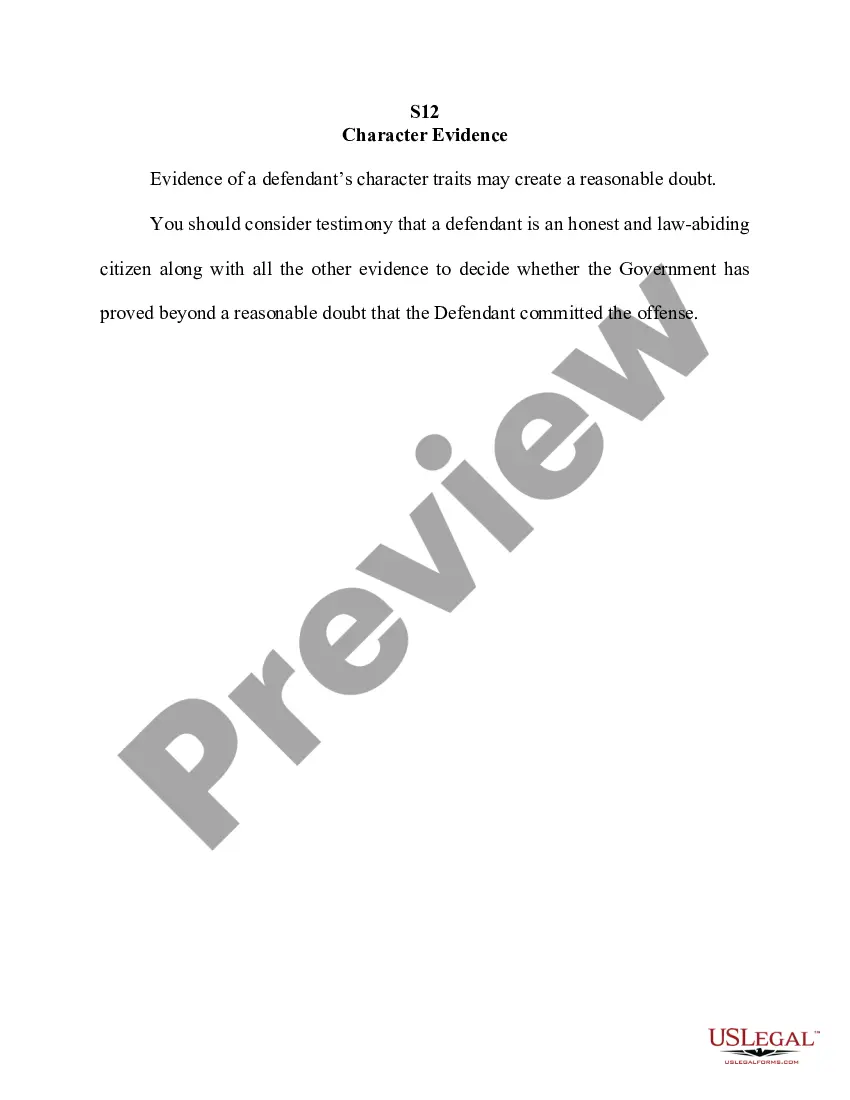
The Character Evidence form is used in legal situations to present information about a defendant's moral character, which can influence a jury's perception of their guilt or innocence. This form serves as a template that outlines how to properly introduce character evidence, distinguishing it from other types of evidence that may not consider a person's good character. It helps ensure that a defendantâs reputation for honesty and integrity is properly considered within the context of their case.
Main sections of this form
- Definition of character evidence and its applicability.
- Guidance on introducing opinion testimony regarding a defendant's reputation.
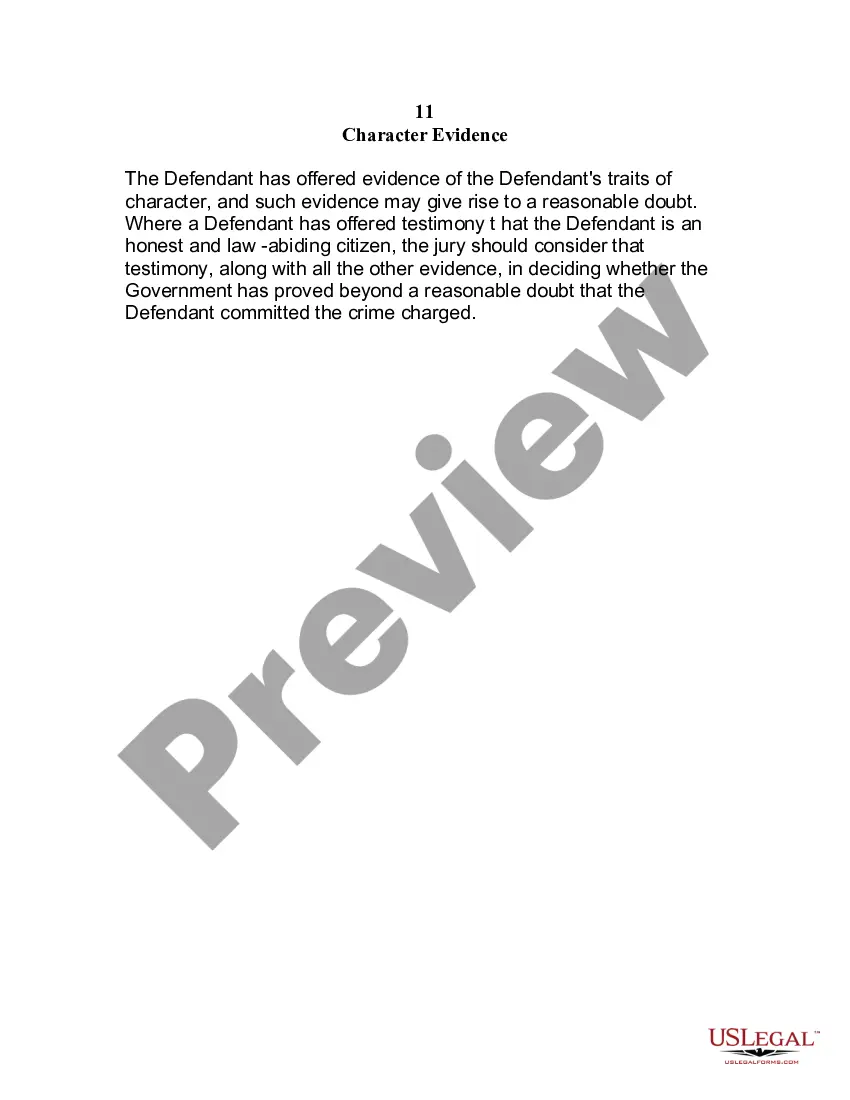
- Instructions for the jury on how to interpret character evidence with the rest of the case.
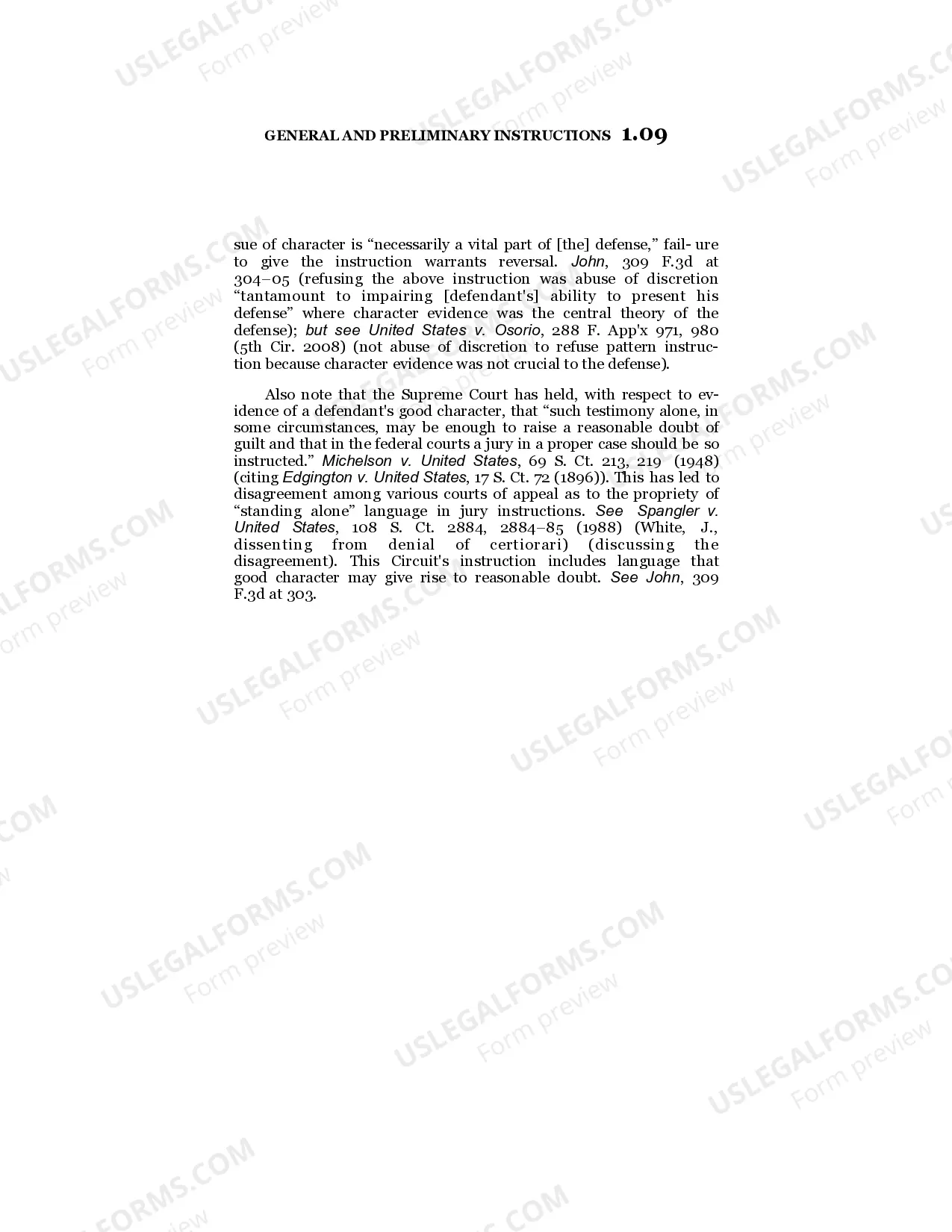
- Important case law references that underpin the use of character evidence.

Common use cases
This form is necessary in circumstances where a defendant wishes to introduce evidence regarding their character to support their defense. It may be used in criminal trials where demonstrating good character traits can potentially establish reasonable doubt about the defendant's guilt.
Who needs this form
- Defendants in a criminal trial.
- Legal representatives or attorneys handling a defendant's case.
- Individuals seeking to understand how character evidence can affect court proceedings.
Instructions for completing this form
- Identify the defendant and describe their relevant character traits.
- Provide written testimony or affidavits from witnesses regarding the defendant's reputation.
- Ensure that the character evidence is introduced at the appropriate stage of the trial.
- Cross-reference with case law to support the admissibility of the evidence.
Notarization requirements for this form
Notarization is generally not required for this form. However, certain states or situations might demand it. You can complete notarization online through US Legal Forms, powered by Notarize, using a verified video call available anytime.
Get your form ready online
Our built-in tools help you complete, sign, share, and store your documents in one place.
Make edits, fill in missing information, and update formatting in US Legal Forms—just like you would in MS Word.
Download a copy, print it, send it by email, or mail it via USPS—whatever works best for your next step.
Sign and collect signatures with our SignNow integration. Send to multiple recipients, set reminders, and more. Go Premium to unlock E-Sign.
If this form requires notarization, complete it online through a secure video call—no need to meet a notary in person or wait for an appointment.
We protect your documents and personal data by following strict security and privacy standards.

Make edits, fill in missing information, and update formatting in US Legal Forms—just like you would in MS Word.

Download a copy, print it, send it by email, or mail it via USPS—whatever works best for your next step.

Sign and collect signatures with our SignNow integration. Send to multiple recipients, set reminders, and more. Go Premium to unlock E-Sign.

If this form requires notarization, complete it online through a secure video call—no need to meet a notary in person or wait for an appointment.

We protect your documents and personal data by following strict security and privacy standards.
Mistakes to watch out for
- Failing to provide sufficient evidence to support claims of good character.
- Introducing character evidence after the initial phase of the trial where it may not be admissible.
- Neglecting to properly reference relevant case law that could bolster the defense.
Benefits of using this form online
- Convenient access to a legally vetted template drafted by licensed attorneys.
- Easy to edit and fill out according to specific case requirements.
- Reliable resource that ensures compliance with legal standards.
Legal use & context
- The Character Evidence form can significantly impact the outcome of a trial when properly utilized.
- Character evidence must be relevant to the charges presented against the defendant.
- Courts vary in their interpretation of character evidence, so understanding local jurisdiction is essential.
Summary of main points
- The Character Evidence form helps present a defendant's character qualities in court.
- This evidence is critical for establishing reasonable doubt regarding the charges.
- Proper usage requires understanding court rules and the specifics of the case.
Looking for another form?
Form popularity
FAQ
The Basic Rule ? In all cases in which evidence of character or a trait of character of a person is admissible, proof may be made by testimony as to reputation or by testimony in the form of an opinion. On cross-examination, inquiry is allowable into relevant specific instances of conduct.
The general rule: CHARACTER EVIDENCE IS NOT ADMISSIBLE. More particularly, character evidence is generally not admissible when offered for the purposes of proving conduct in conformity with the character trait offered.
(a) Character evidence generally. ? Evidence of a person's character or a trait of his character is not admissible for the purpose of proving that he acted in conformity therewith on a particular occasion, except: (1) Character of accused.
There are essentially three types of evidence that show a person's character: specific acts by the person, lay opinion about the person, and the person's reputation in the community. The admissibility of these different types of character evidence depends on the theory for which the evidence is offered.
A defendant is entitled to a direction on both limbs as of right when they have 'absolute good character', meaning that they have no previous convictions or cautions recorded against them and no other reprehensible conduct alleged, admitted or proven (see: R v Hunter).
For example, in a fraud case, the criminal defendant is may call witnesses to testify that he's an honest person. In a trial for a violent crime such as homicide, battery, or assault, he may bring witnesses to testify that he's a peaceful person. Note, though, that the character evidence still must be relevant.