Instructions Prior to Closing Arguments
What is this form?
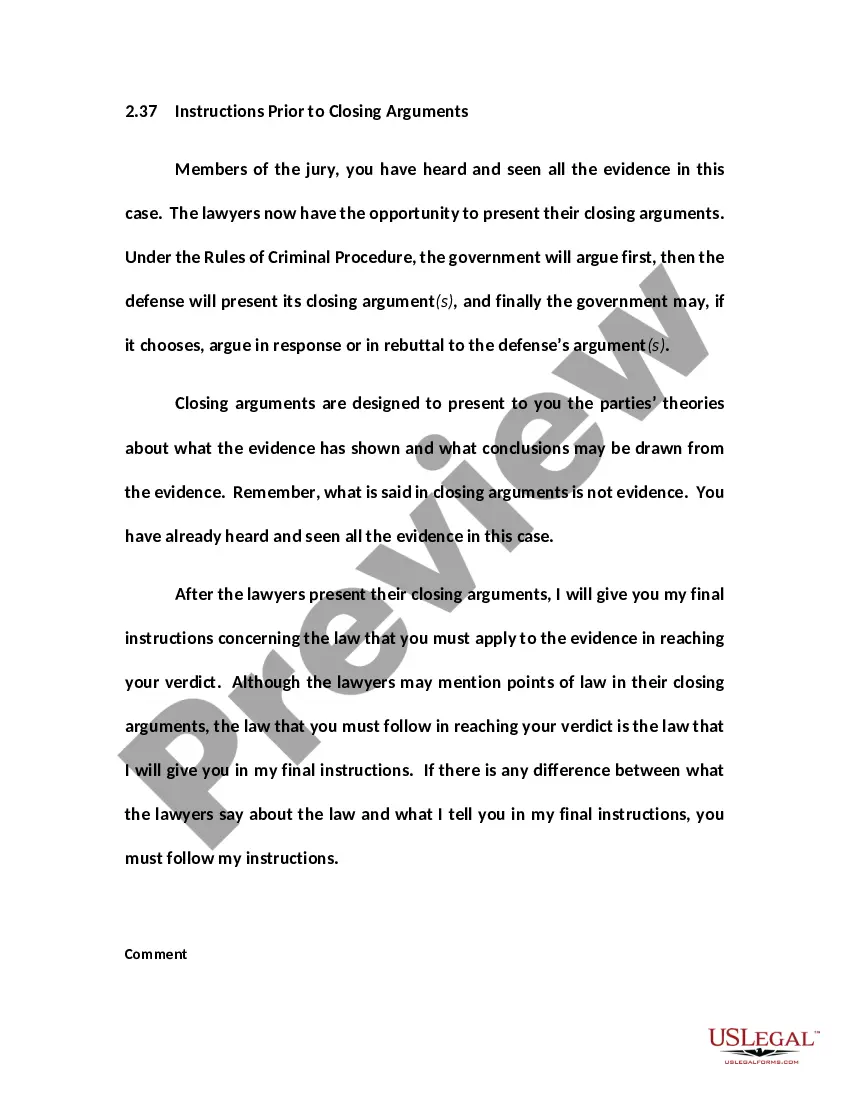
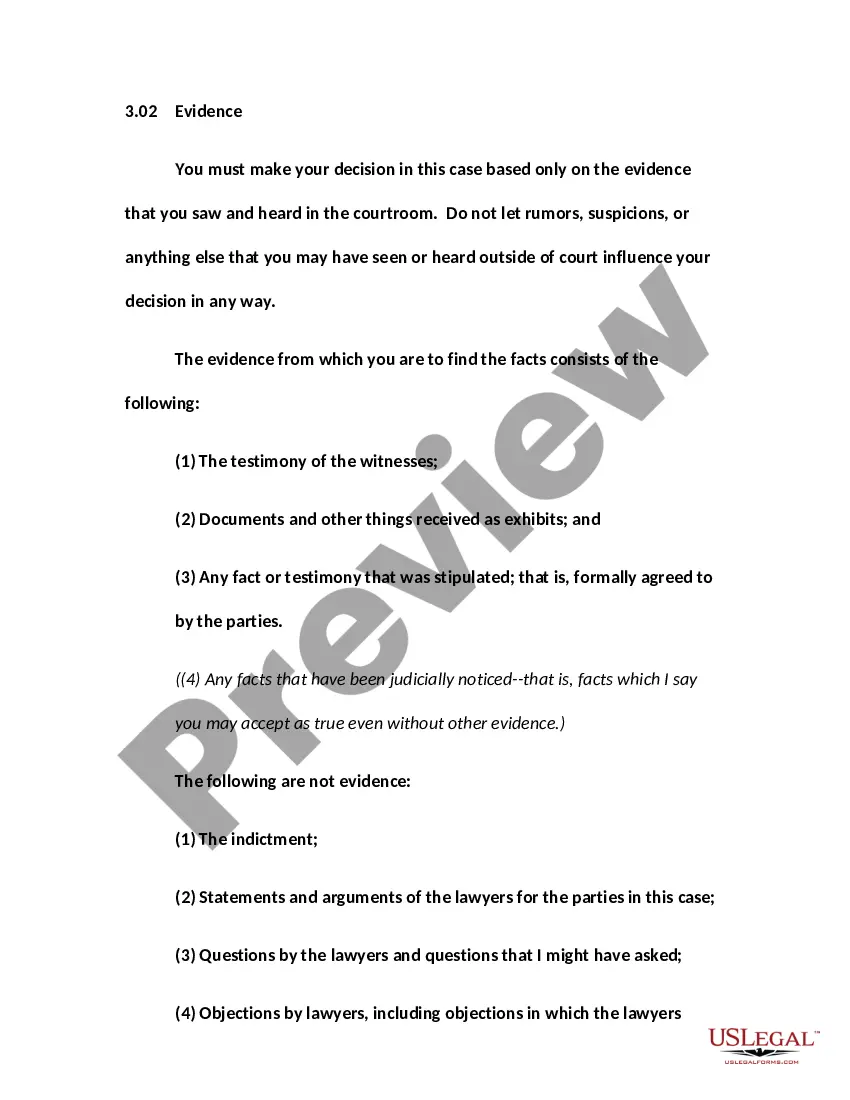
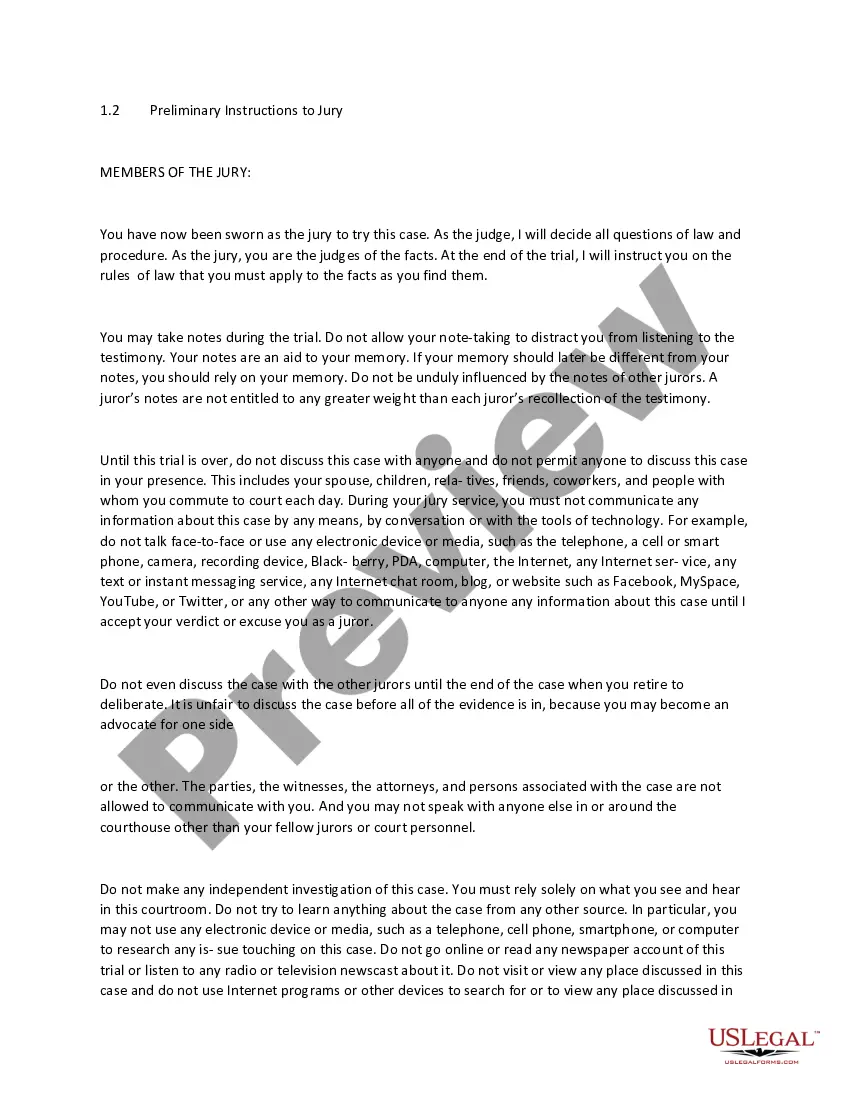
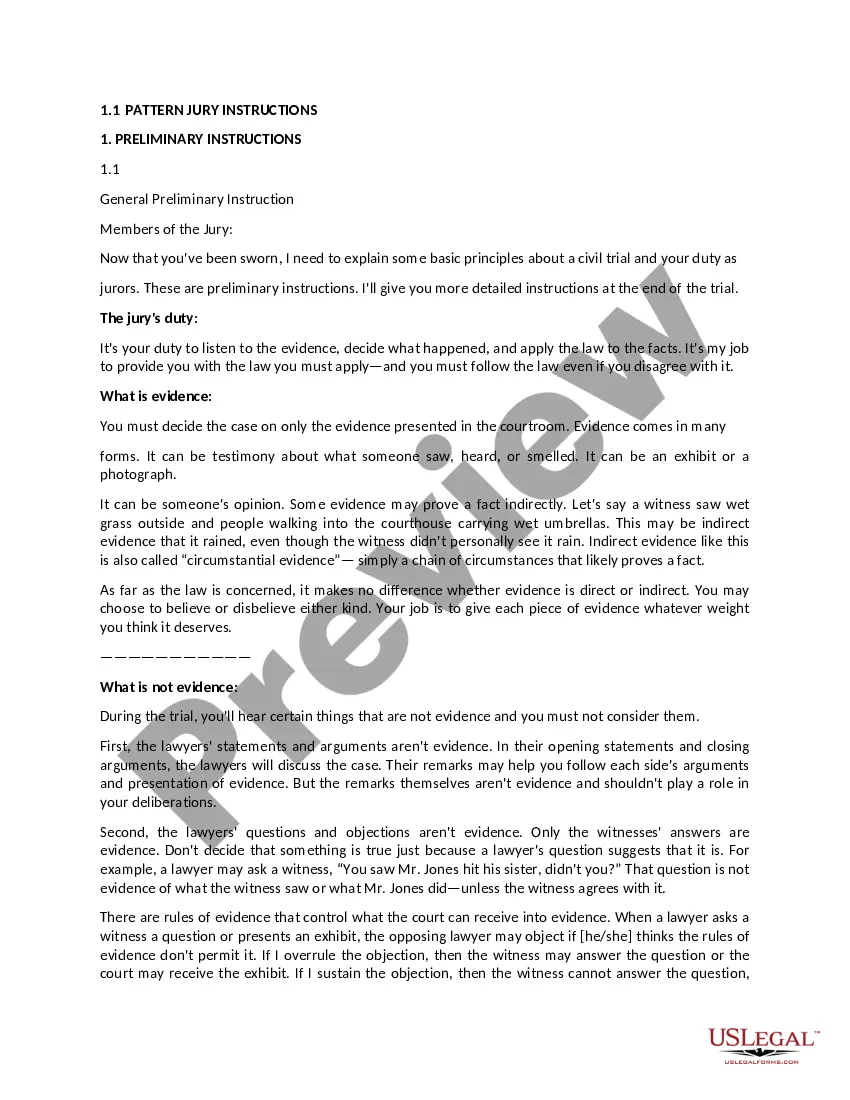
The Instructions Prior to Closing Arguments form is designed to guide jurors through the closing arguments in a criminal trial. It clarifies the roles of the prosecution and defense during this phase, emphasizing that closing statements are not considered evidence. This form differs from other jury instructions by focusing specifically on the process and expectations related to closing arguments, ensuring jurors understand their responsibilities in reaching a verdict based on the evidence presented prior to these arguments.
Key parts of this document
- Overview of evidence presentation and the purpose of closing arguments.
- Order of arguments: government presents first, followed by defense, with optional rebuttal from the government.
- Clarification that statements during closing arguments are not evidence.
- Instructions on the prioritization of the judge's final legal instructions over lawyersâ comments on the law.
- Notes on potential modifications if final instructions are given before closing arguments.

When to use this document
This form should be used during criminal trials when a jury has received all the evidence and is preparing to hear closing arguments. It is essential for cases where the jury needs clear guidance on how to interpret the arguments presented by both parties. Using this form ensures that jurors are properly instructed on their roles and the legal standards they must follow to deliver a fair verdict.
Who needs this form
- Judges presiding over criminal trials who wish to provide clear guidelines to juries.
- Legal professionals involved in the criminal justice system who need to ensure juror understanding of the closing argument phase.
- Jurors seeking clarification on their duties during the closing arguments.
Instructions for completing this form
- Familiarize yourself with the evidence presented in the trial.
- Understand the order of arguments: government first, then defense, followed by optional rebuttal.
- Recognize that comments during closing arguments are not evidence.
- Focus on the final legal instructions provided by the judge after closing arguments.
- Consider modifying the instructions if you provide final instructions before closing arguments.
Is notarization required?
This form does not typically require notarization unless specified by local law. It serves as a set of instructions for jurors and does not require formal validation through notarization.
Get your form ready online
Our built-in tools help you complete, sign, share, and store your documents in one place.
Make edits, fill in missing information, and update formatting in US Legal Forms—just like you would in MS Word.
Download a copy, print it, send it by email, or mail it via USPS—whatever works best for your next step.
Sign and collect signatures with our SignNow integration. Send to multiple recipients, set reminders, and more. Go Premium to unlock E-Sign.
If this form requires notarization, complete it online through a secure video call—no need to meet a notary in person or wait for an appointment.
We protect your documents and personal data by following strict security and privacy standards.

Make edits, fill in missing information, and update formatting in US Legal Forms—just like you would in MS Word.

Download a copy, print it, send it by email, or mail it via USPS—whatever works best for your next step.

Sign and collect signatures with our SignNow integration. Send to multiple recipients, set reminders, and more. Go Premium to unlock E-Sign.

If this form requires notarization, complete it online through a secure video call—no need to meet a notary in person or wait for an appointment.

We protect your documents and personal data by following strict security and privacy standards.
Typical mistakes to avoid
- Confusing closing arguments with evidence presentation.
- Not following the prescribed order of arguments.
- Misunderstanding the importance of the judge's final instructions over lawyer comments.
Advantages of online completion
- Easy access to standardized instructions, saving time for judges and legal professionals.
- Immediate download capabilities ensure quick distribution before trials.
- Reliability in providing clear legal guidance in crucial trial phases.
Legal use & context
- This form establishes clear communication of procedural rules to jurors.
- Helps ensure that jurors understand their role and the legal framework they must adhere to.
- Facilitates a fair trial process by providing structured guidelines for closing arguments.
Looking for another form?
Form popularity
FAQ
How to Give an Effective Closing Argument - YouTube YouTube Start of suggested clip End of suggested clip It would be best as you stand before the jury. If you're just yourself look that jury in the eye.MoreIt would be best as you stand before the jury. If you're just yourself look that jury in the eye. Identify which jurors you need to concentrate on more than others. And be yourself carry the theme
Closing arguments are the opportunity for each party to remind jurors about key evidence presented and to persuade them to adopt an interpretation favorable to their position.
Conclusion. To summarize, your team's closing argument should start by telling your story, including references to evidence presented at trial. Your closing argument should then give some arguments about why the judge should believe your story, and not your opponent's.
The lawyers' closing arguments or summations discuss the evidence and properly drawn inferences. The lawyers cannot talk about issues outside the case or about evidence that was not presented.
To summarize, your team's closing argument should start by telling your story, including references to evidence presented at trial. Your closing argument should then give some arguments about why the judge should believe your story, and not your opponent's.
Closing argument is the lawyer's final opportunity in a trial to tell the judge and/or jury why they should win the case. They do so by explaining how the evidence supports their theory of the case, and by clarifying for the jury any issues that they must resolve in order to render a verdict.
As explained above, the closing argument is the time when the parties may forcefully argue their cases. The parties may summarize the evidence, point out discrepancies, and extensively argue how the law applies in their favor. Rather than tell a story, the closing argument is just that ? an argument.