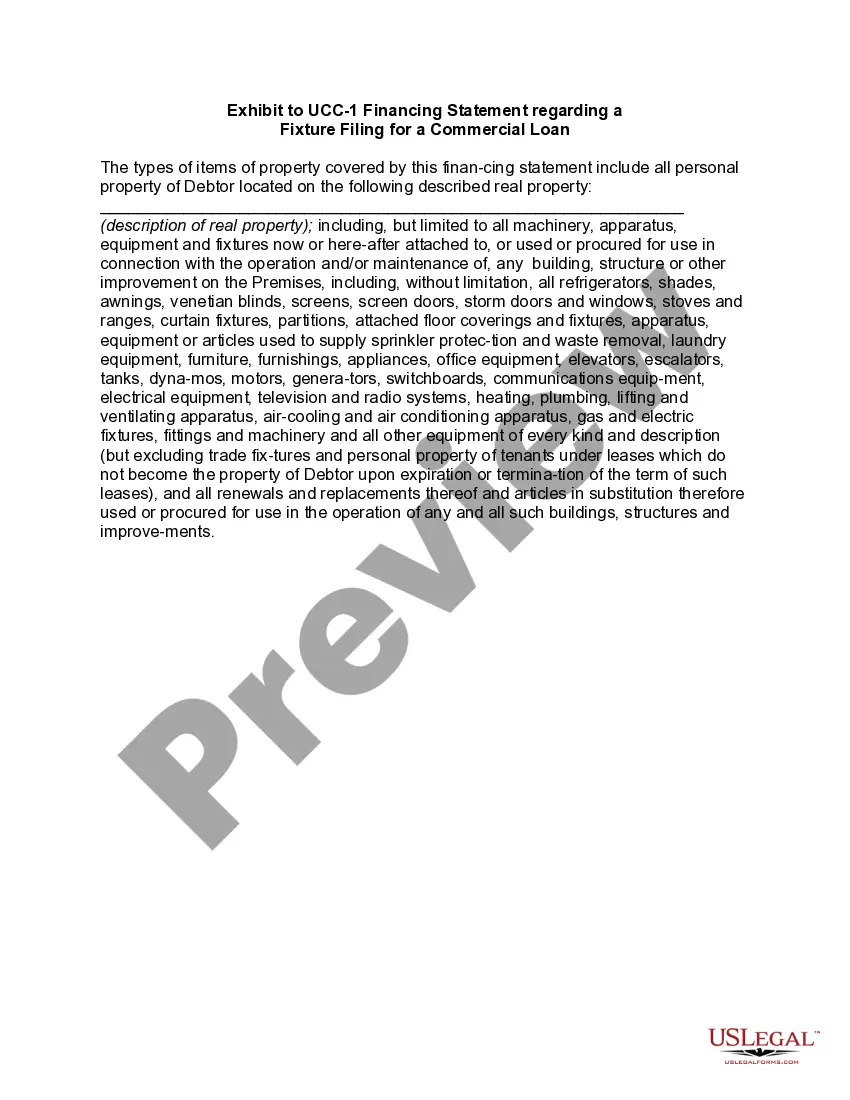
Exhibit to UCC-1 Financing Statement regarding a Fixture Filing for a Commercial Loan
What is this form?
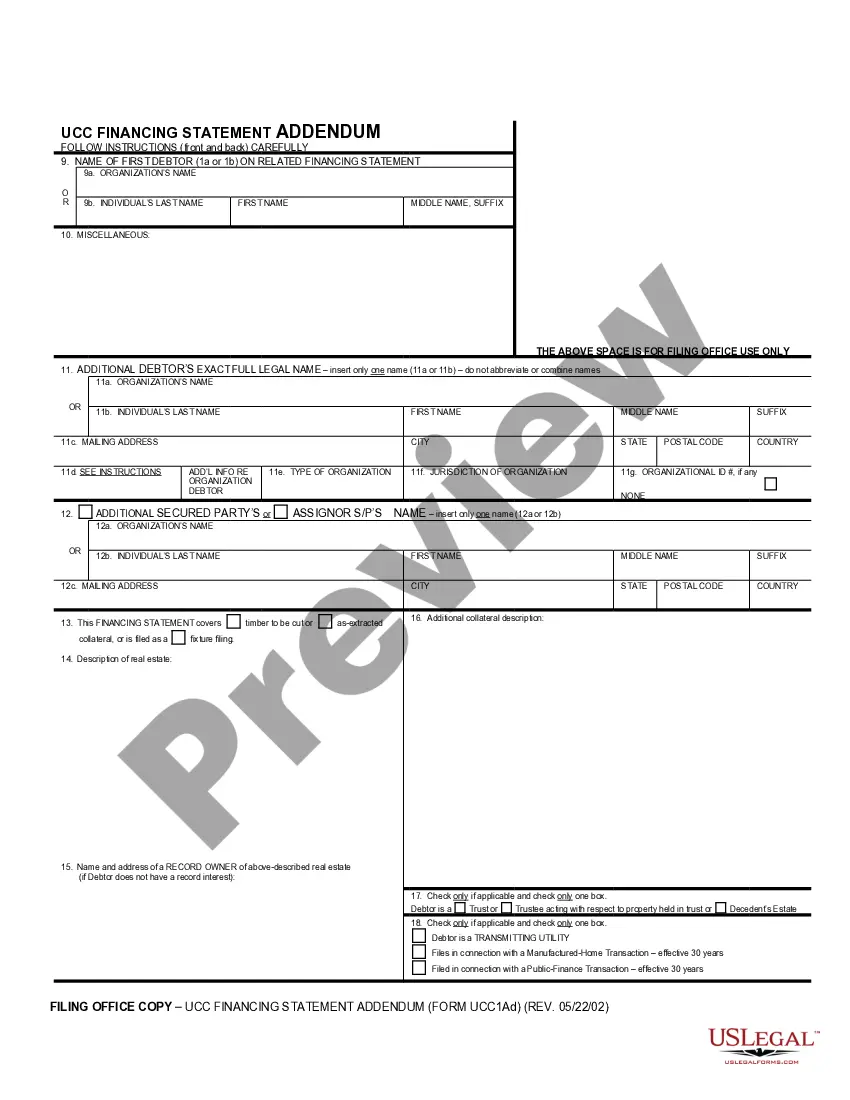
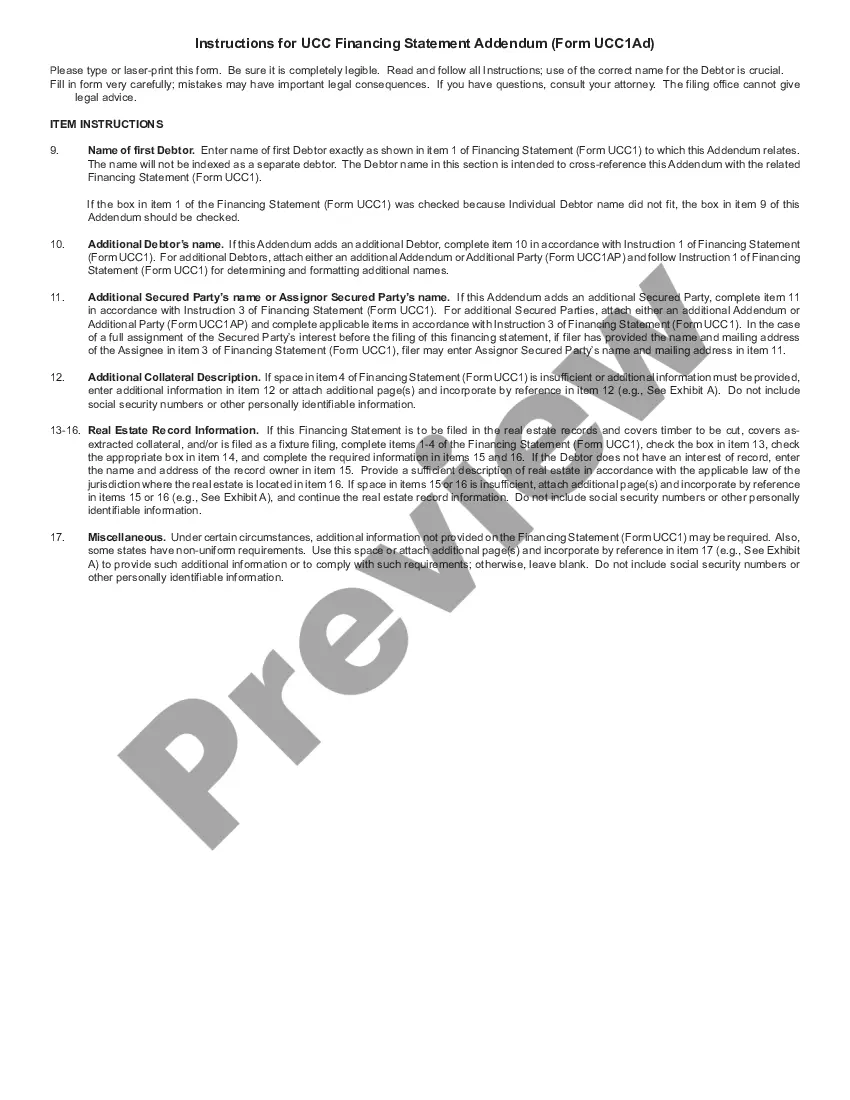
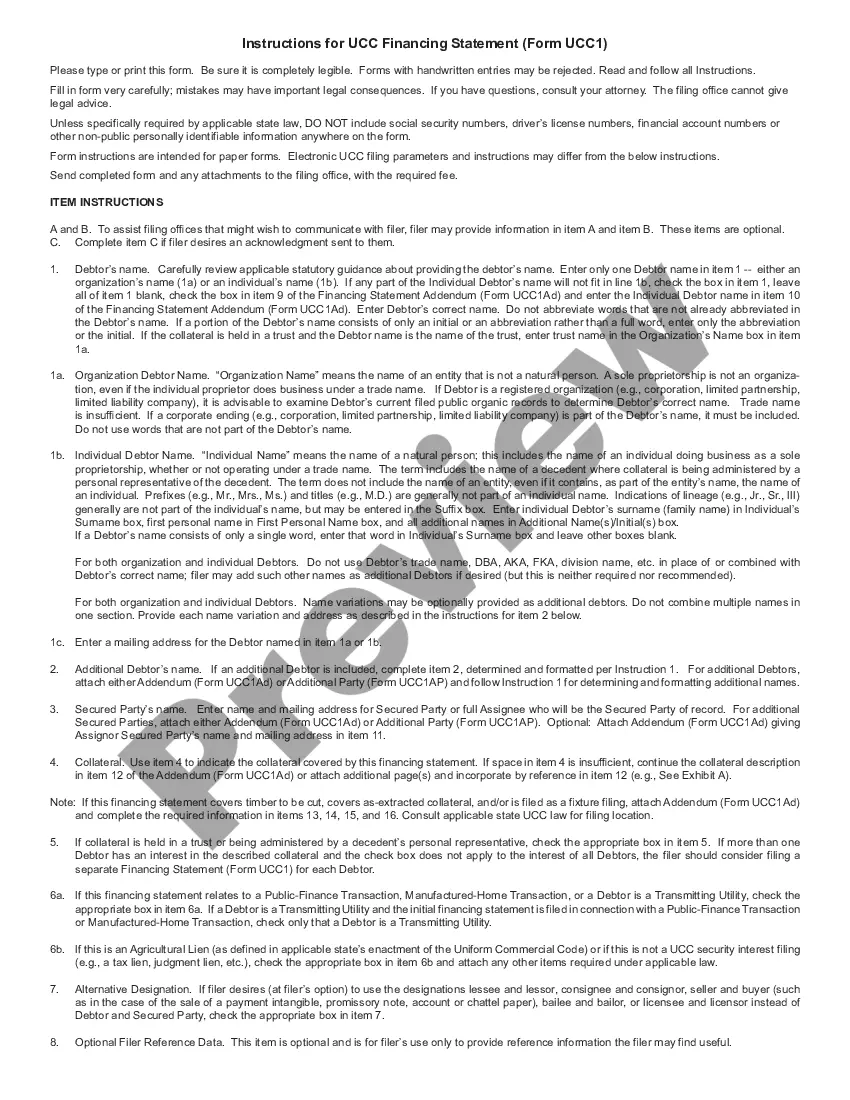
The Exhibit to UCC-1 Financing Statement regarding a Fixture Filing for a Commercial Loan is a legal document used to establish a security interest in certain personal property and fixtures attached to real property. This form serves as a detailed exhibit for the UCC-1 Financing Statement, ensuring that lenders can secure their interests in the personal property of the debtor, which is essential for commercial loans. It differs from other financing statements by specifically addressing fixtures that are affixed to real estate.
Key parts of this document
- Description of the real property where the personal property is located.
- Listing of specific types of personal property covered by the financing statement, including machinery and equipment.
- Exclusions for certain types of property, such as trade fixtures and tenant property.
When to use this form
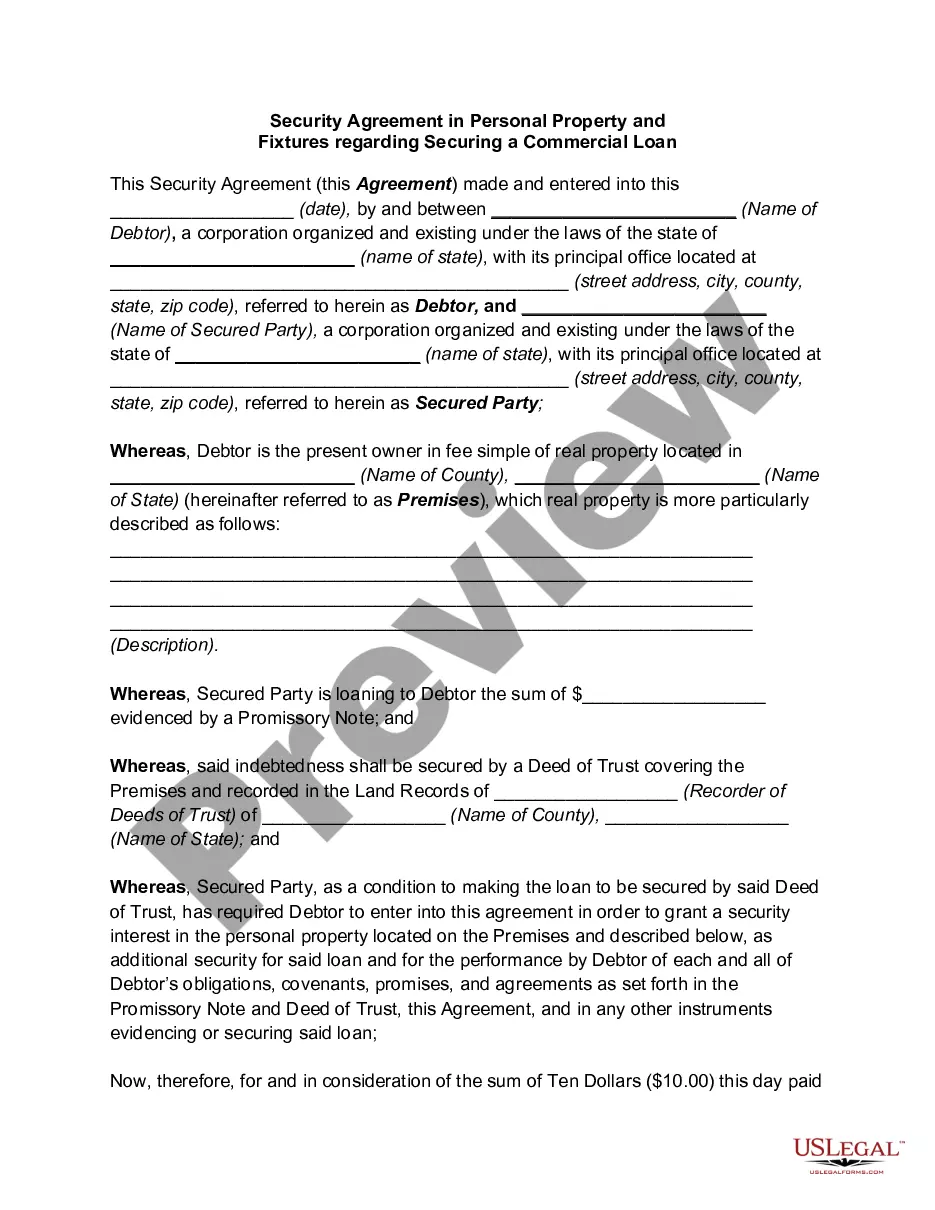
This form is used when a lender wants to secure a loan with a debtor's personal property or fixtures that are part of or attached to a commercial property. It is commonly used in situations where businesses require financing and need to provide collateral to ensure loan repayment. This helps protect the lender's investment and clarifies the assets to be seized if the borrower defaults.
Who can use this document
- Lenders extending loans to commercial entities.
- Business owners requiring financing with collateral.
- Attorneys representing clients in commercial financing transactions.
Instructions for completing this form
- Identify the parties involved: the debtor and the lender.
- Provide a detailed description of the real property.
- List all personal property and fixtures included in the financing statement.
- Complete any exclusions as necessary.
- Sign and date the form where required.
Does this form need to be notarized?
This form does not typically require notarization unless specified by local law. However, some lenders may choose to have it notarized as an additional security measure.
Get your form ready online
Our built-in tools help you complete, sign, share, and store your documents in one place.
Make edits, fill in missing information, and update formatting in US Legal Forms—just like you would in MS Word.
Download a copy, print it, send it by email, or mail it via USPS—whatever works best for your next step.
Sign and collect signatures with our SignNow integration. Send to multiple recipients, set reminders, and more. Go Premium to unlock E-Sign.
If this form requires notarization, complete it online through a secure video call—no need to meet a notary in person or wait for an appointment.
We protect your documents and personal data by following strict security and privacy standards.

Make edits, fill in missing information, and update formatting in US Legal Forms—just like you would in MS Word.

Download a copy, print it, send it by email, or mail it via USPS—whatever works best for your next step.

Sign and collect signatures with our SignNow integration. Send to multiple recipients, set reminders, and more. Go Premium to unlock E-Sign.

If this form requires notarization, complete it online through a secure video call—no need to meet a notary in person or wait for an appointment.

We protect your documents and personal data by following strict security and privacy standards.
Avoid these common issues
- Failing to provide a thorough description of the real property.
- Not listing all relevant fixtures and personal property.
- Ignoring state-specific requirements or terminology.
Advantages of online completion
- Convenience of downloading and completing the form at your own pace.
- Editability allows for precise customization to fit specific needs.
- Reliable templates drafted by licensed attorneys ensure legal compliance.
Legal use & context
- This form helps establish a legally enforceable security interest in personal property.
- Ensures that the lender's rights are protected under UCC regulations.
- Consider state-specific UCC rules when using this form to confirm enforceability.
Main things to remember
- This form secures a lender's interest in a debtor's personal property for a commercial loan.
- Includes a detailed description of property and exclusions.
- Is crucial in legal and financial contexts to protect both lenders and borrowers.
Looking for another form?
Form popularity
FAQ
The UCC-1 Financing Statement is filed to protect a lender's or creditor's security interest by giving public notice that there is a right to take possession of and sell certain assets for repayment of a specific debt with a certain debtor.
A filing on a fixture is a standard UCC-1 financing statement recorded with a secretary of state. It includes the fixture in the description of the collateral. It's important to know it doesn't attach a lien to real estate; you have a subordinate interest to the property owner and other creditors.
Searching Secretary of State Records Online. Locate the correct secretary of state's website. UCC financing statement forms must be filed in the state where the borrower is located. Most states have online directories of UCC filings available on the secretary of state's website.
When is a UCC-1 Filed? UCC-1 filings typically happen when a loan is first originated. If the borrower has loans from more than one lender, the first lender to file the UCC-1 is first in line for the borrower's assets. This motivates lenders to file a UCC-1 as soon as a loan is made.
The financing statement is generally filed with the office of the state secretary of state, in the state where the debtor is located - for an individual, the state where the debtor resides, for most kinds of business organizations the state of incorporation or organization.
You should file a UCC-1 Financing Statement with the secretary of state's office in the state where the debtor is incorporated or located. If the collateral is real property, then you should also file a UCC-1 with the county recorder's office in the county where the debtor's real property is located.
The financing statement is generally filed with the office of the state secretary of state, in the state where the debtor is located - for an individual, the state where the debtor resides, for most kinds of business organizations the state of incorporation or organization.
A creditor files a UCC-1 to provide notice to interested parties that he or she has a security interest in a debtor's personal property. This personal property is being used as collateral in some type of secured transaction, usually a loan or a lease.