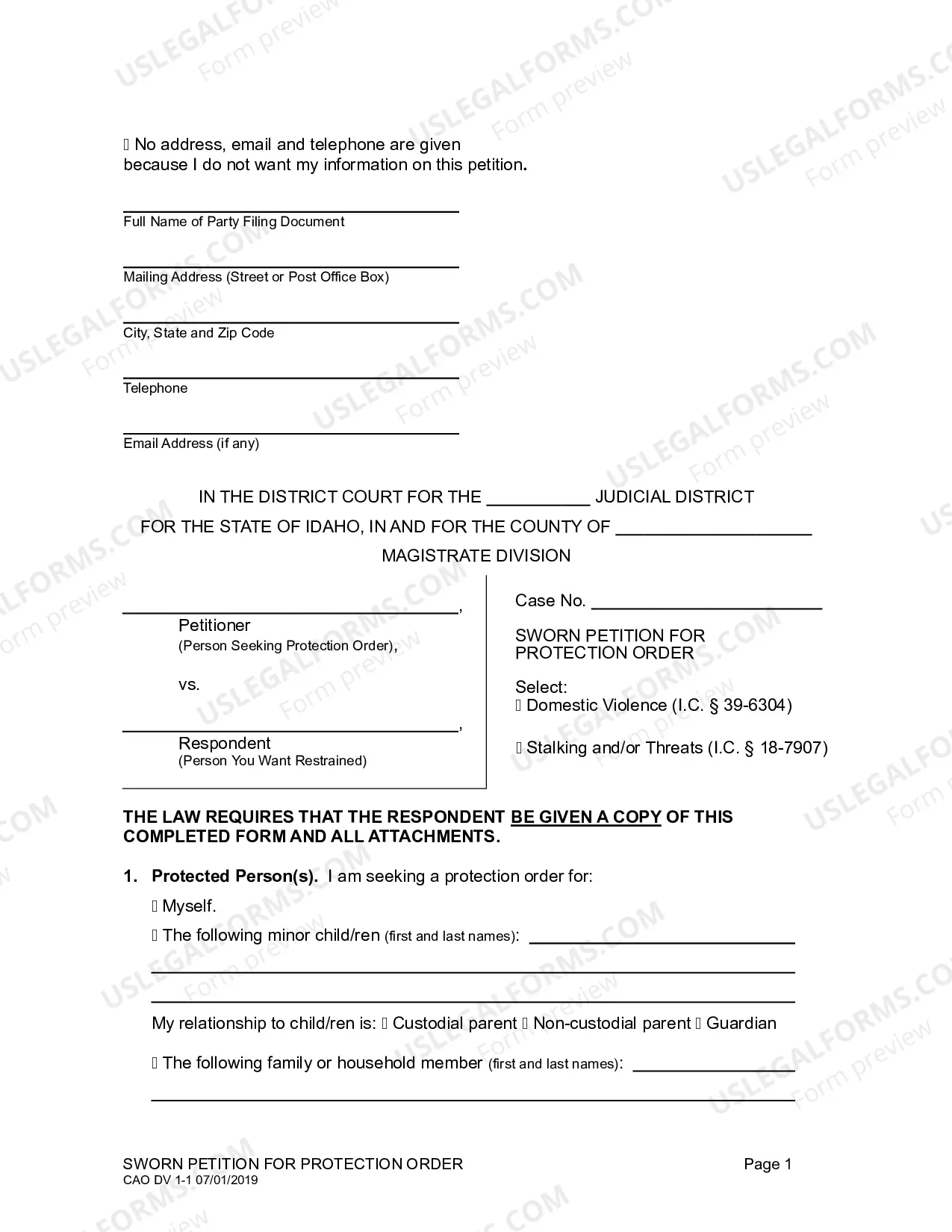
Security Agreement in Inventory, Accounts Receivable, Chattel Paper, and Instruments
About this form
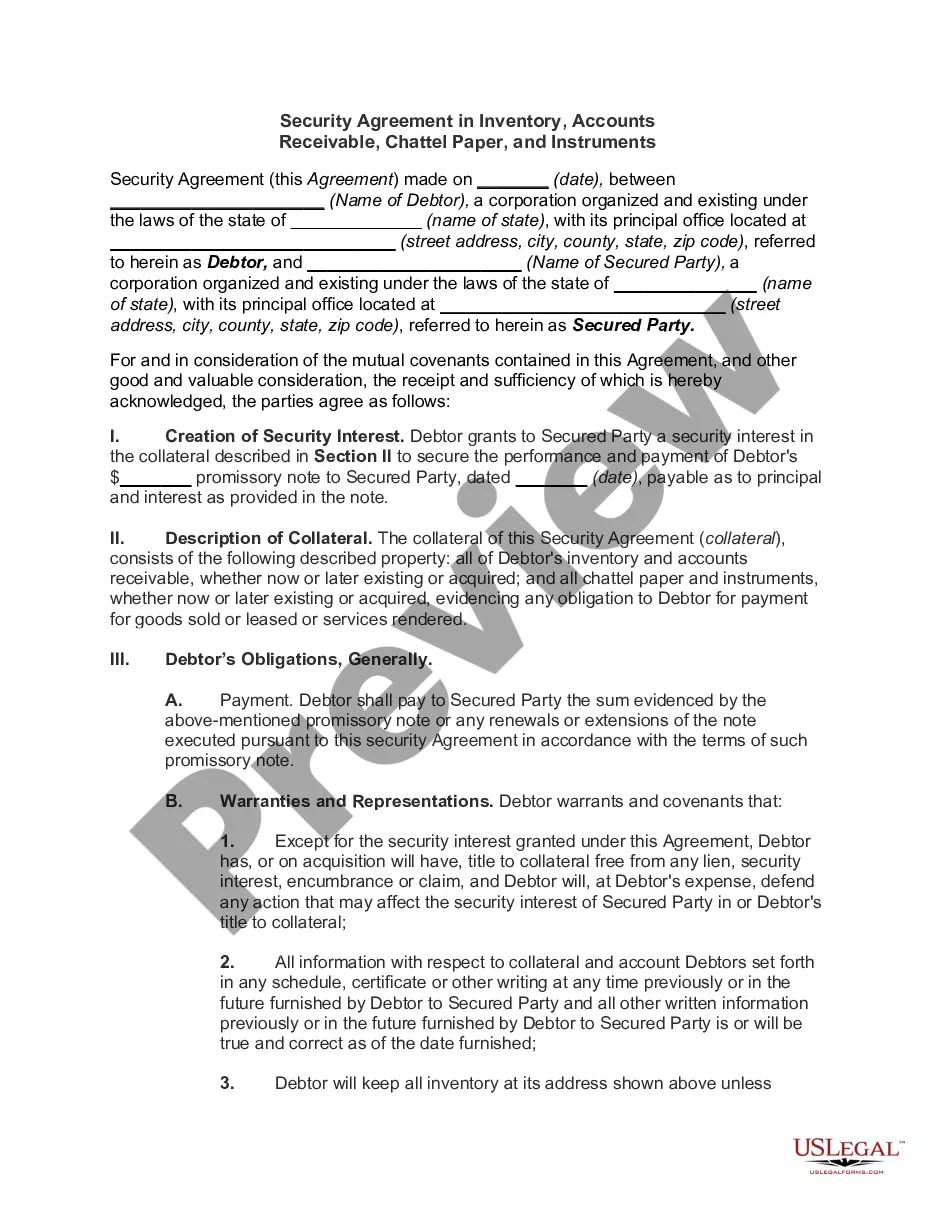
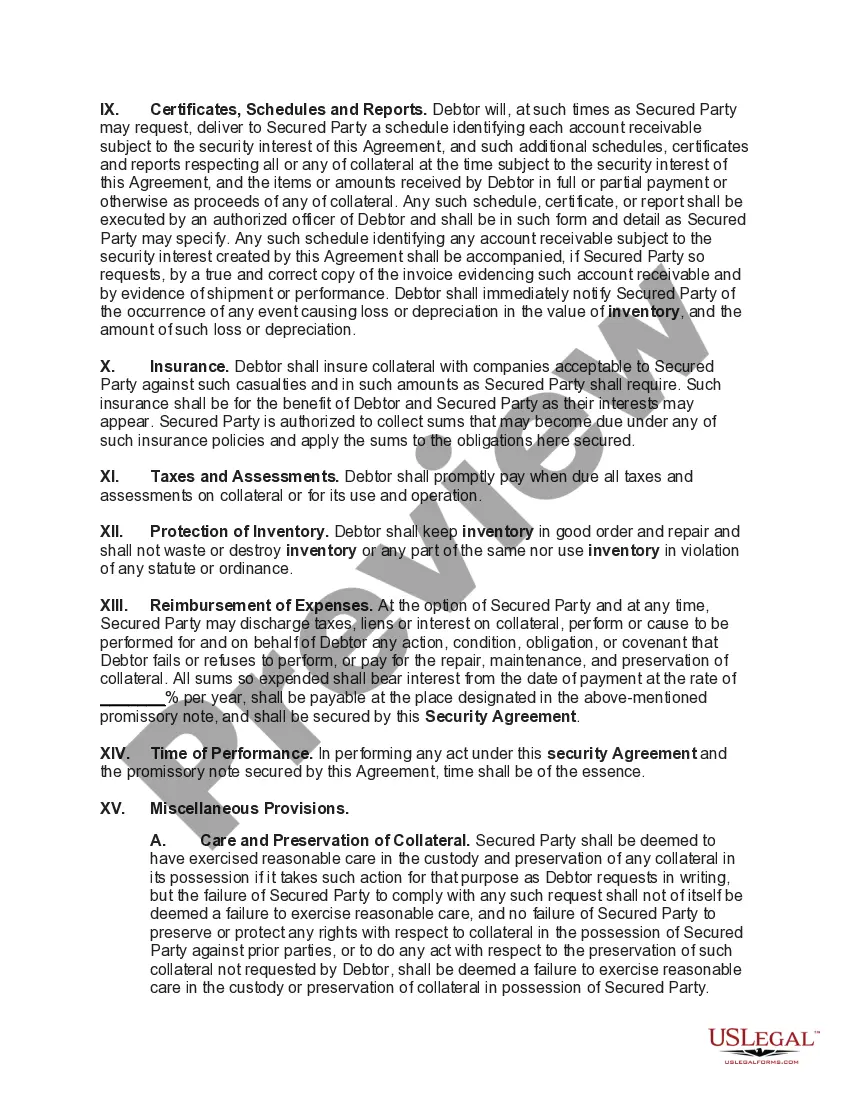
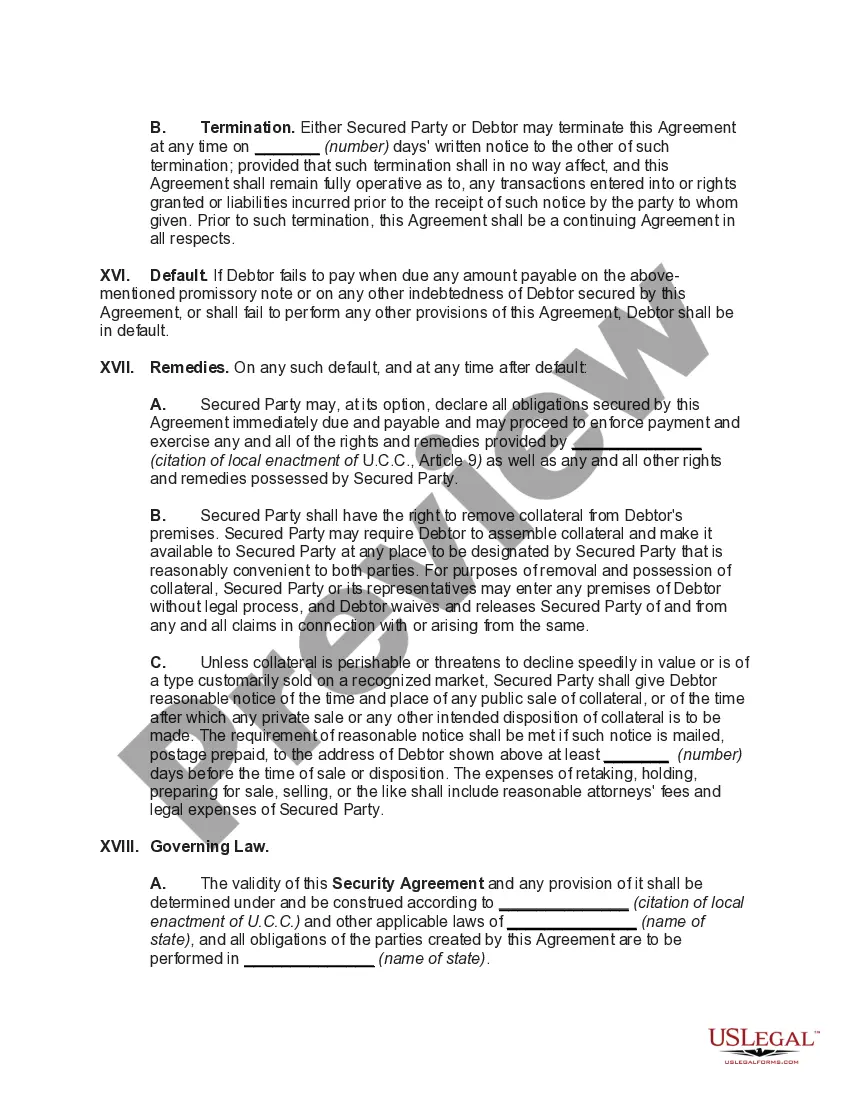
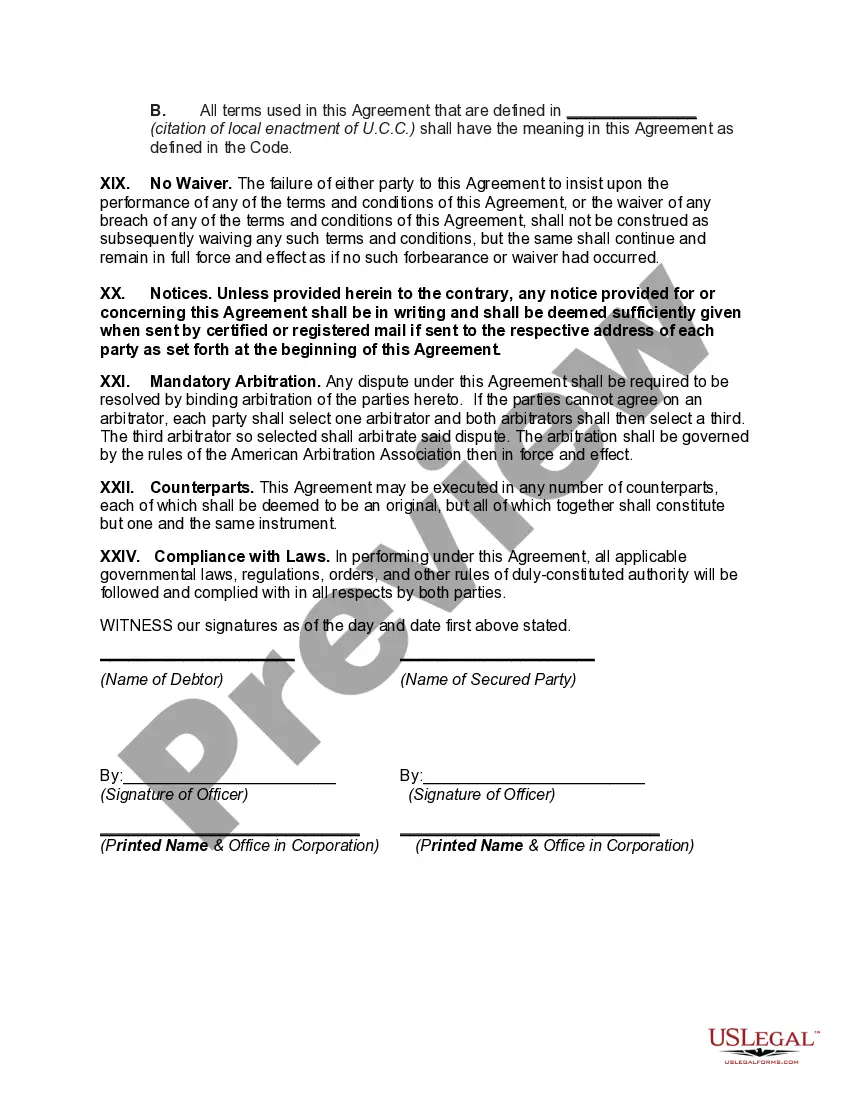
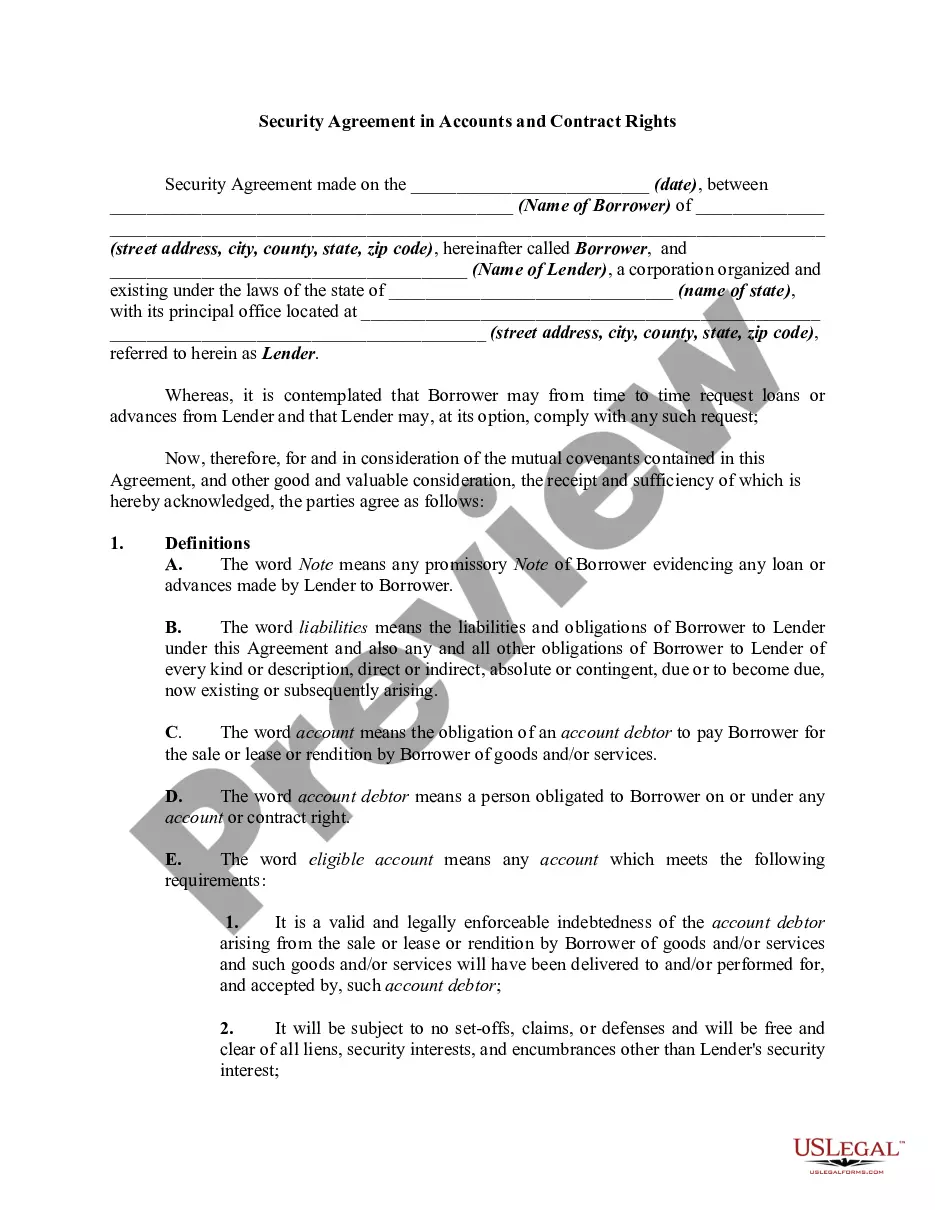
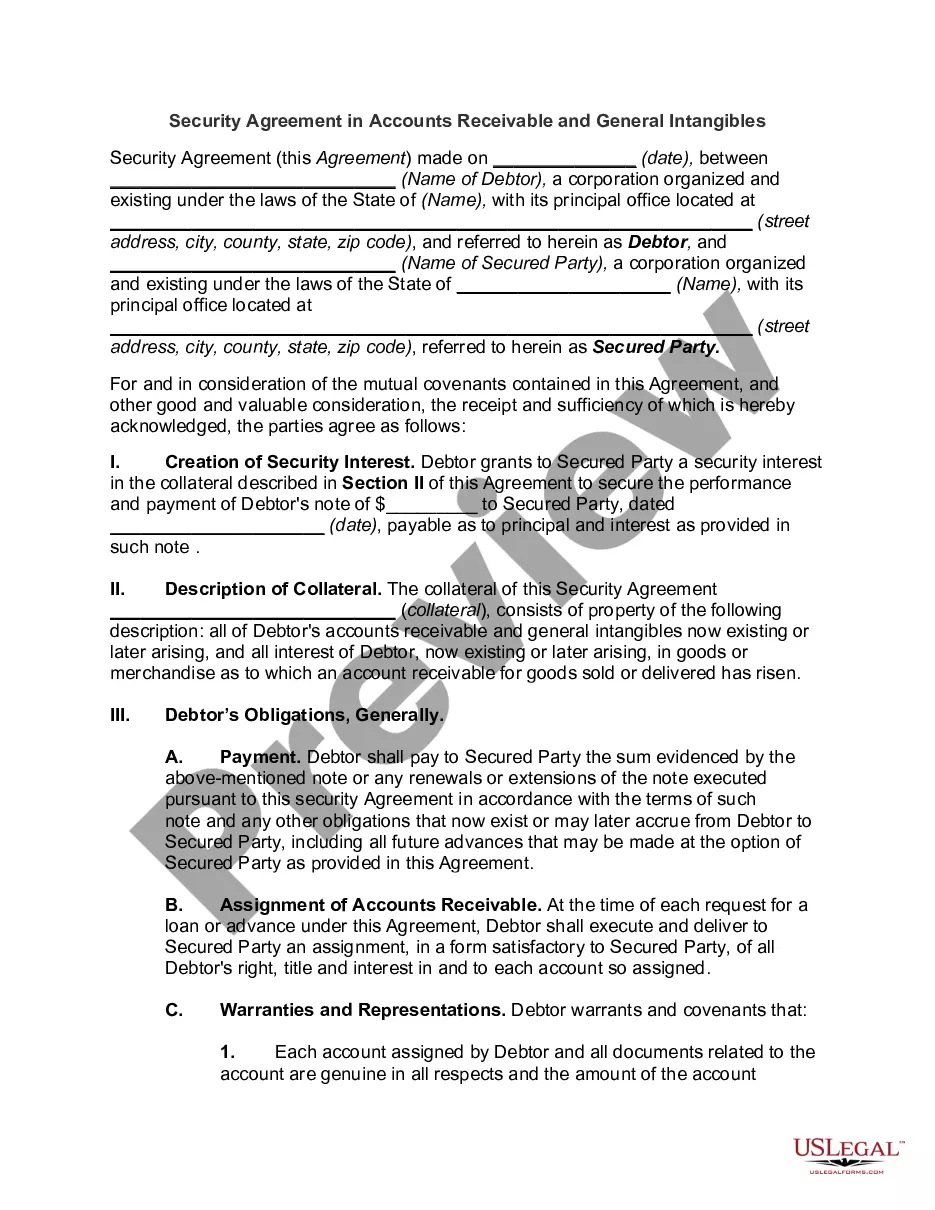
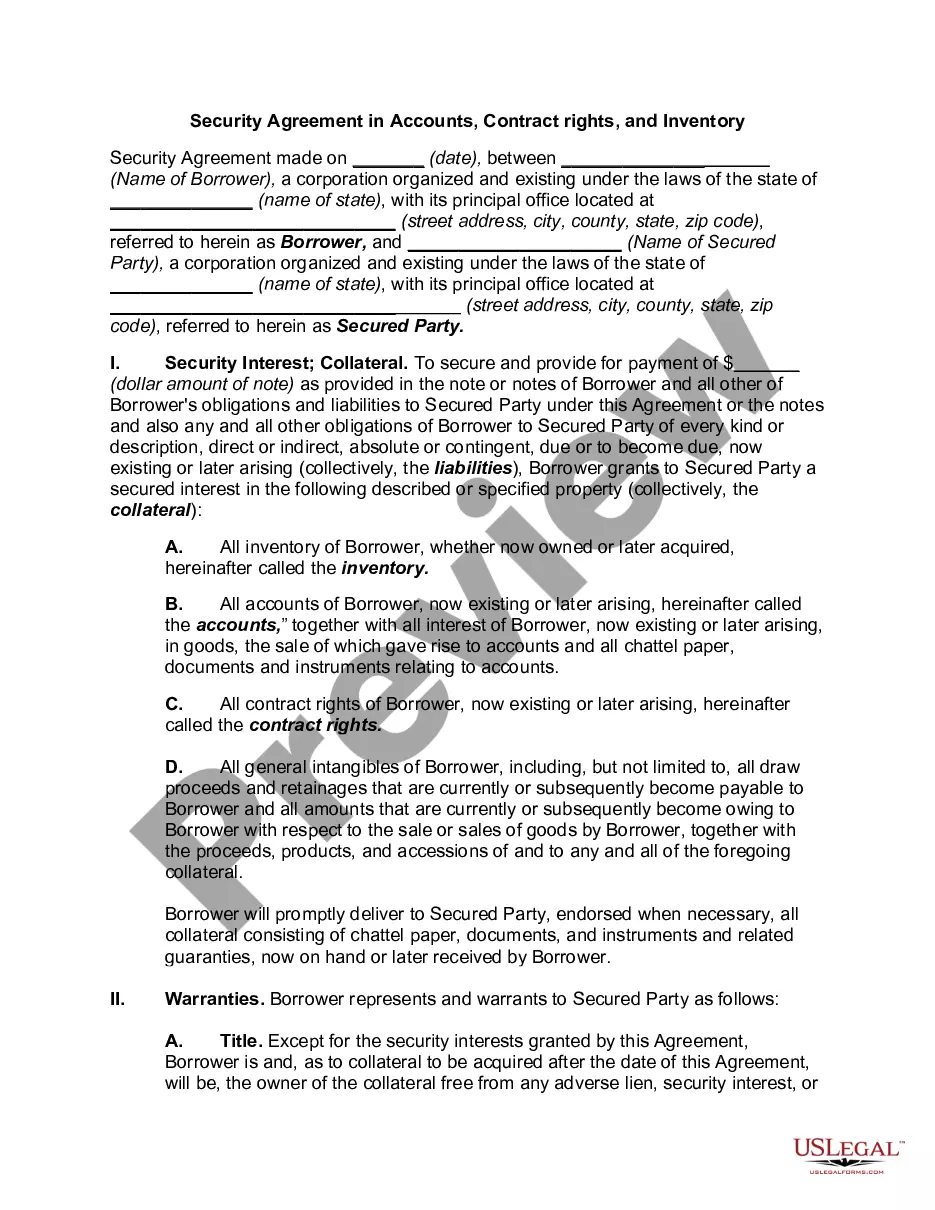
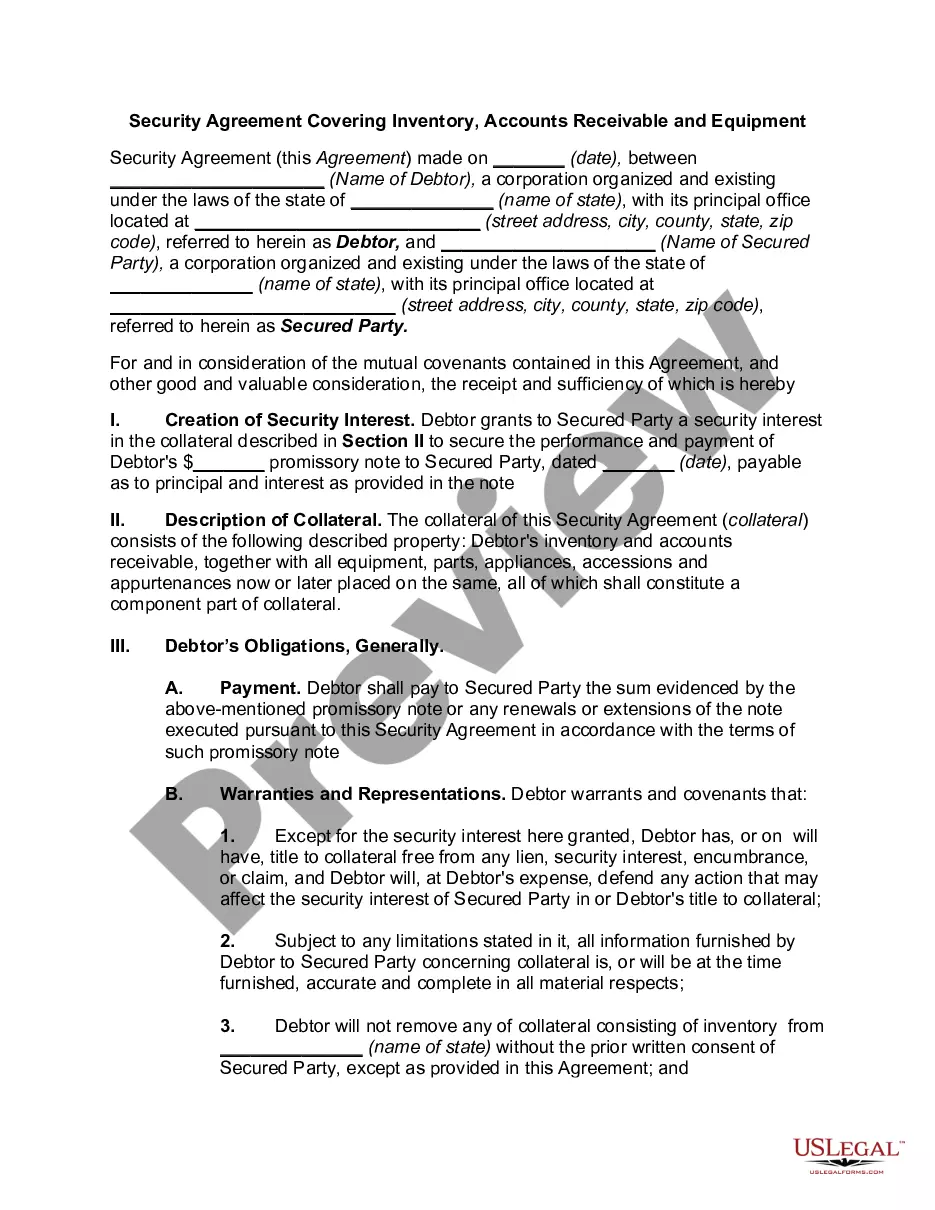
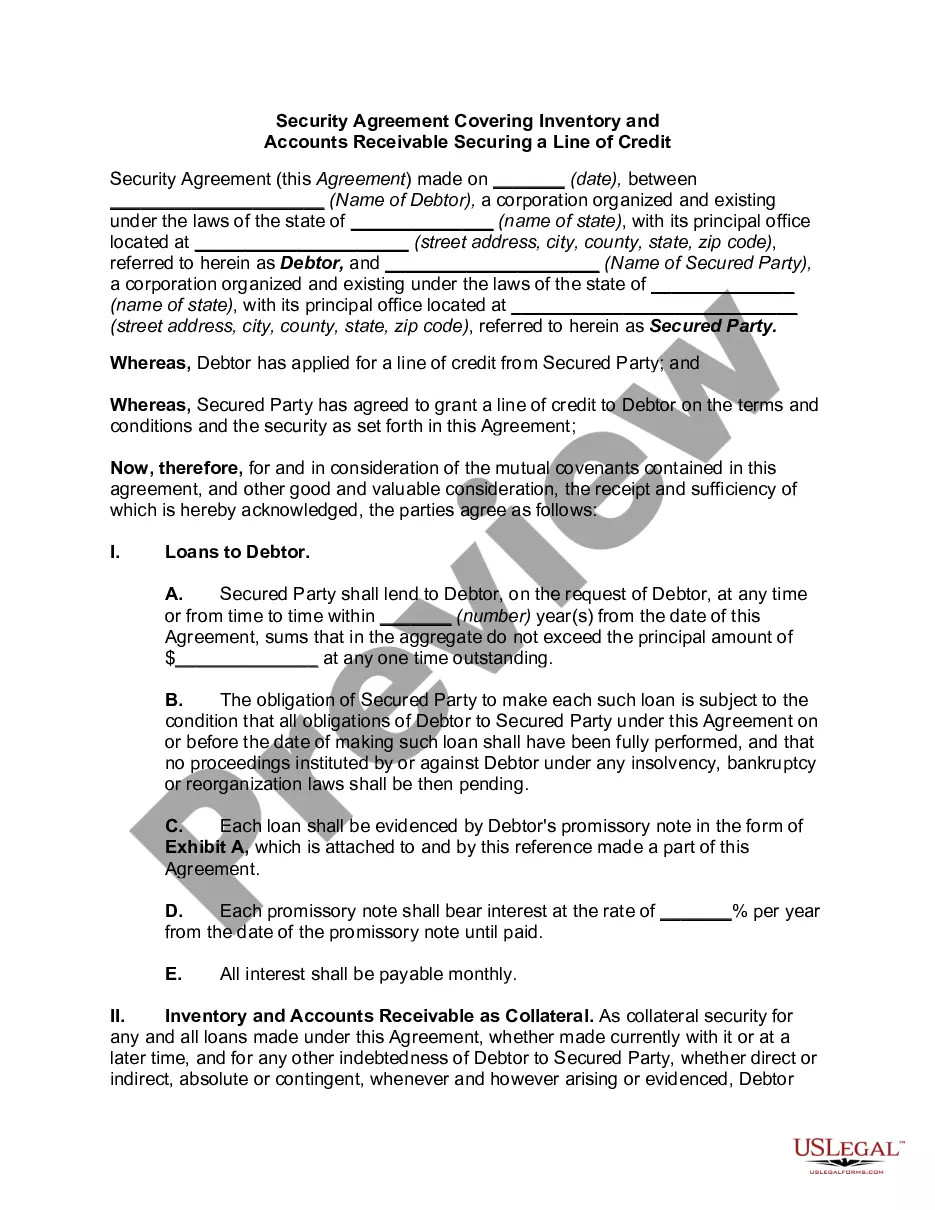
A security agreement in inventory, accounts receivable, chattel paper, and instruments is a legal document that establishes a secured transaction. This agreement allows a lender (the secured party) to claim specific collateral owned by the borrower if they default on a loan. The agreement defines the collateral, which may include the borrower's inventory, accounts receivable, and other tangible or intangible assets. Unlike unsecured agreements, this document provides concrete protection to the lender's interests by explicitly detailing the collateral that secures the obligation.
Key parts of this document
- Creation of security interest: Establishes the lender's rights over specified collateral.
- Description of collateral: Clearly identifies the inventory, accounts receivable, and other assets that are secured.
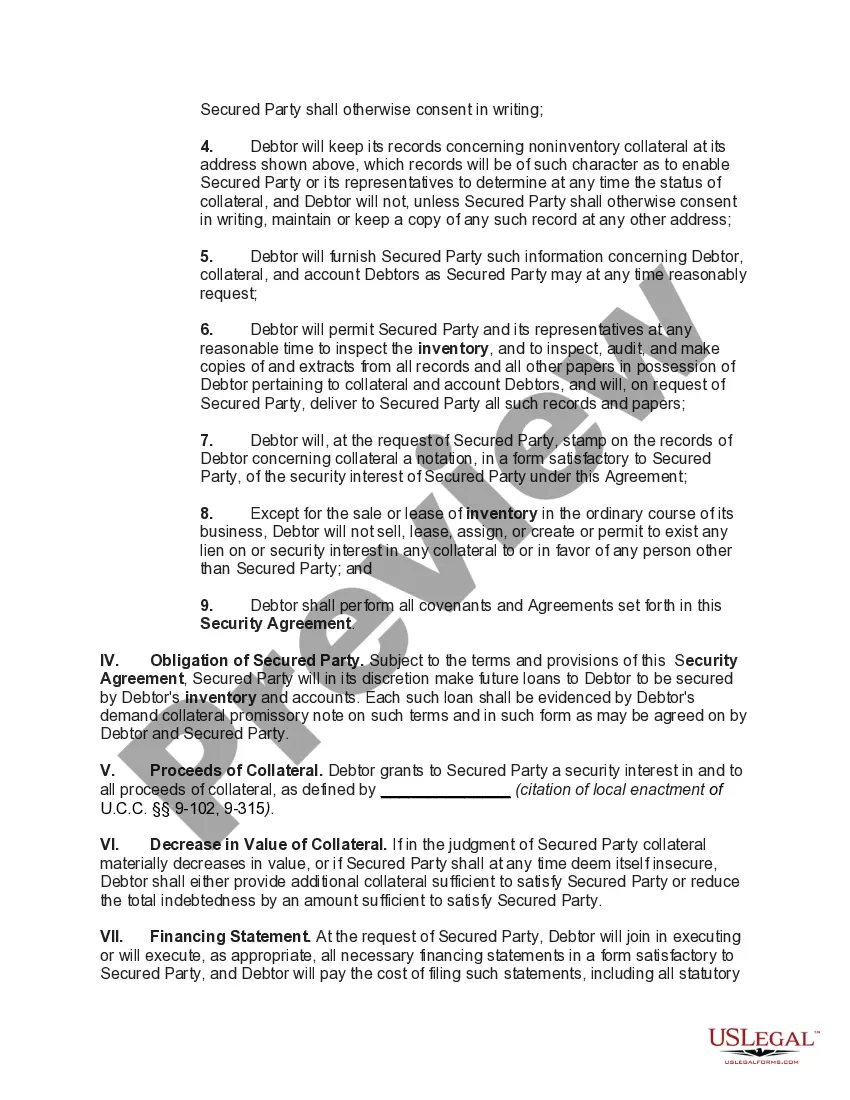
- Debtor's obligations: Outlines the responsibilities of the borrower, including payments and maintaining collateral.
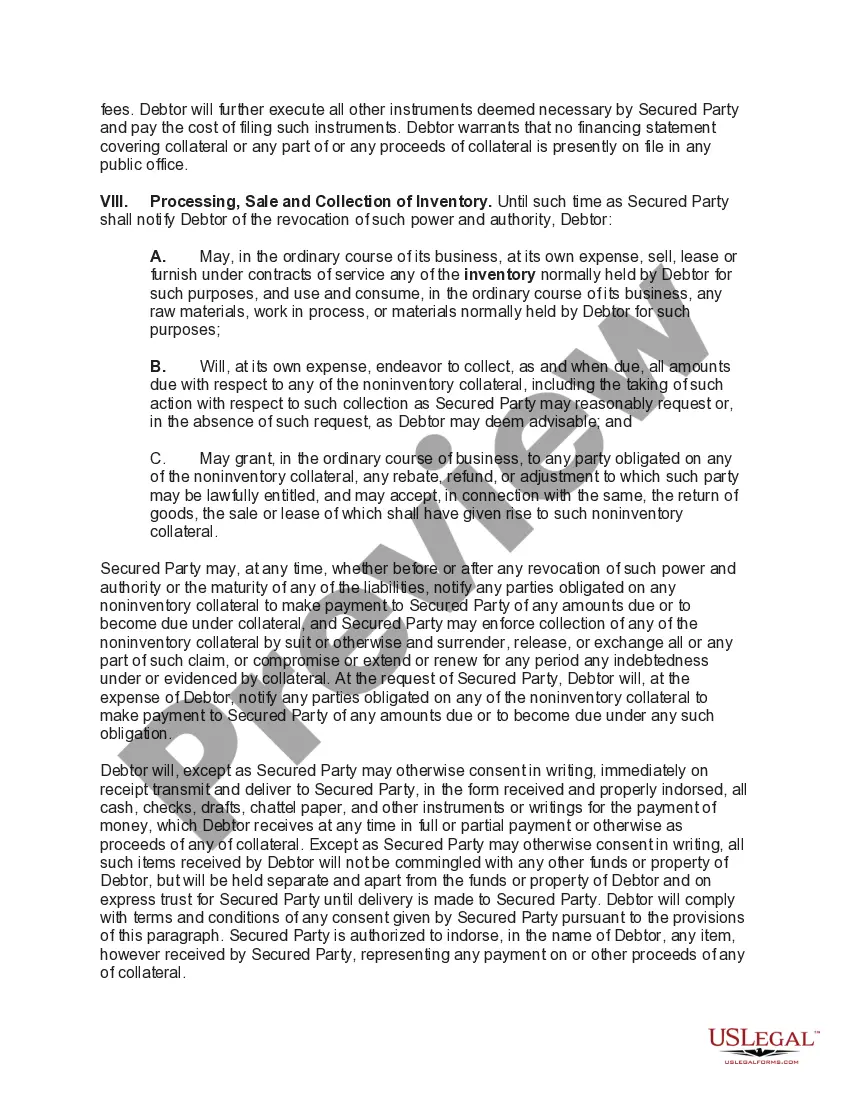
- Proceeds of collateral: Details how the lender can claim proceeds from the collateral in case of default.
- Remedies: Specifies actions the lender can take if the borrower defaults on the agreement.
Common use cases
This form is commonly used in scenarios where a business seeks financing and the lender requires collateral to secure the loan. It is essential when a company has significant inventory or accounts receivable it can pledge to ensure repayment. This agreement protects the lender's investment by allowing them to claim specified assets if the borrower fails to meet their financial obligations.
Who needs this form
This form is suitable for:
- Businesses seeking loans secured by their inventory and accounts receivable.
- Lenders requiring security interests in tangible or intangible property before providing financing.
- Corporations looking to formalize their obligations and rights regarding the pledged collateral.
Completing this form step by step
- Identify the parties involved: Provide the names and addresses of both the debtor and the secured party.
- Specify the collateral: Clearly outline the inventory, accounts receivable, and any other assets being pledged as collateral.
- Include relevant dates: Fill in the date of the agreement and any specific dates related to the obligations.
- Detail the repayment terms: Enter the amount owed and terms outlined in the promissory note secured by this agreement.
- Gather necessary signatures: Ensure appropriate officers from both parties sign and date the document to validate it.
Notarization guidance
This form does not typically require notarization unless specified by local law. However, it is advisable to check state-specific regulations to ensure compliance.
Get your form ready online
Our built-in tools help you complete, sign, share, and store your documents in one place.
Make edits, fill in missing information, and update formatting in US Legal Forms—just like you would in MS Word.
Download a copy, print it, send it by email, or mail it via USPS—whatever works best for your next step.
Sign and collect signatures with our SignNow integration. Send to multiple recipients, set reminders, and more. Go Premium to unlock E-Sign.
If this form requires notarization, complete it online through a secure video call—no need to meet a notary in person or wait for an appointment.
We protect your documents and personal data by following strict security and privacy standards.

Make edits, fill in missing information, and update formatting in US Legal Forms—just like you would in MS Word.

Download a copy, print it, send it by email, or mail it via USPS—whatever works best for your next step.

Sign and collect signatures with our SignNow integration. Send to multiple recipients, set reminders, and more. Go Premium to unlock E-Sign.

If this form requires notarization, complete it online through a secure video call—no need to meet a notary in person or wait for an appointment.

We protect your documents and personal data by following strict security and privacy standards.
Common mistakes
- Failing to accurately describe the collateral can lead to disputes about pledged assets.
- Not completing all required fields, such as dates and payment terms.
- Neglecting to have the agreement signed by authorized personnel, which may invalidate the document.
Benefits of completing this form online
- Convenience: Download the form instantly and complete it at your own pace.
- Editability: Easily customize the form to meet specific needs and circumstances.
- Reliability: The form is drafted by licensed attorneys, ensuring compliance with applicable laws.
Looking for another form?
Form popularity
FAQ
Examples: A common example of tangible chattel paper is a car loan agreement. When a person buys a car on credit, they sign a promissory note promising to pay back the loan, and the lender retains a security interest in the car until the loan is paid off.
"'Chattel paper' means a writing or writings which evidence both a mone- tary obligation and a security interest in or a lease of specific goods." UCC § 9-105 (1) (b).
Chattel paper is a record (paper or electronic) that demonstrates both ?a monetary obligation and a security interest either in certain goods or in a lease on certain goods.?Uniform Commercial Code, Section 9-102(11). The paper represents a valuable asset and can itself be used as collateral.
Certain specific requirements are required for the security agreement to form the foundation for a valid security interest, namely 1) it must be signed, 2) it must clearly state that a security interest is intended, and 3) it must contain a sufficient description of the collateral subject to the security interest.
Tangible chattel paper is sometimes delivered to the assignee, and sometimes left in the hands of the assignor for collection. Subsection (a) allows the assignee to perfect its security interest by filing in the latter case. Alternatively, the assignee may perfect by taking possession.
Common examples of chattel paper include a promissory note coupled with a security agreement, or a motor vehicle financing agreement that includes both a payment obligation and a security interest in the financed vehicle.
Chattel paper refers to a document used in secured transactions to sell property on credit while retaining some interest in the property. Chattel paper must show: A monetary obligation from Party A to Party B, and. A security interest or other interest retained in the property by Party B.
A chattel loan is secured with the movable item, or chattel, that is used to purchase the loan. The lender holds an ownership interest on the chattel. Mobile or manufactured homes, where the homeowner buys the residential unit but not the land that it occupies, are often financed with chattel mortgages.