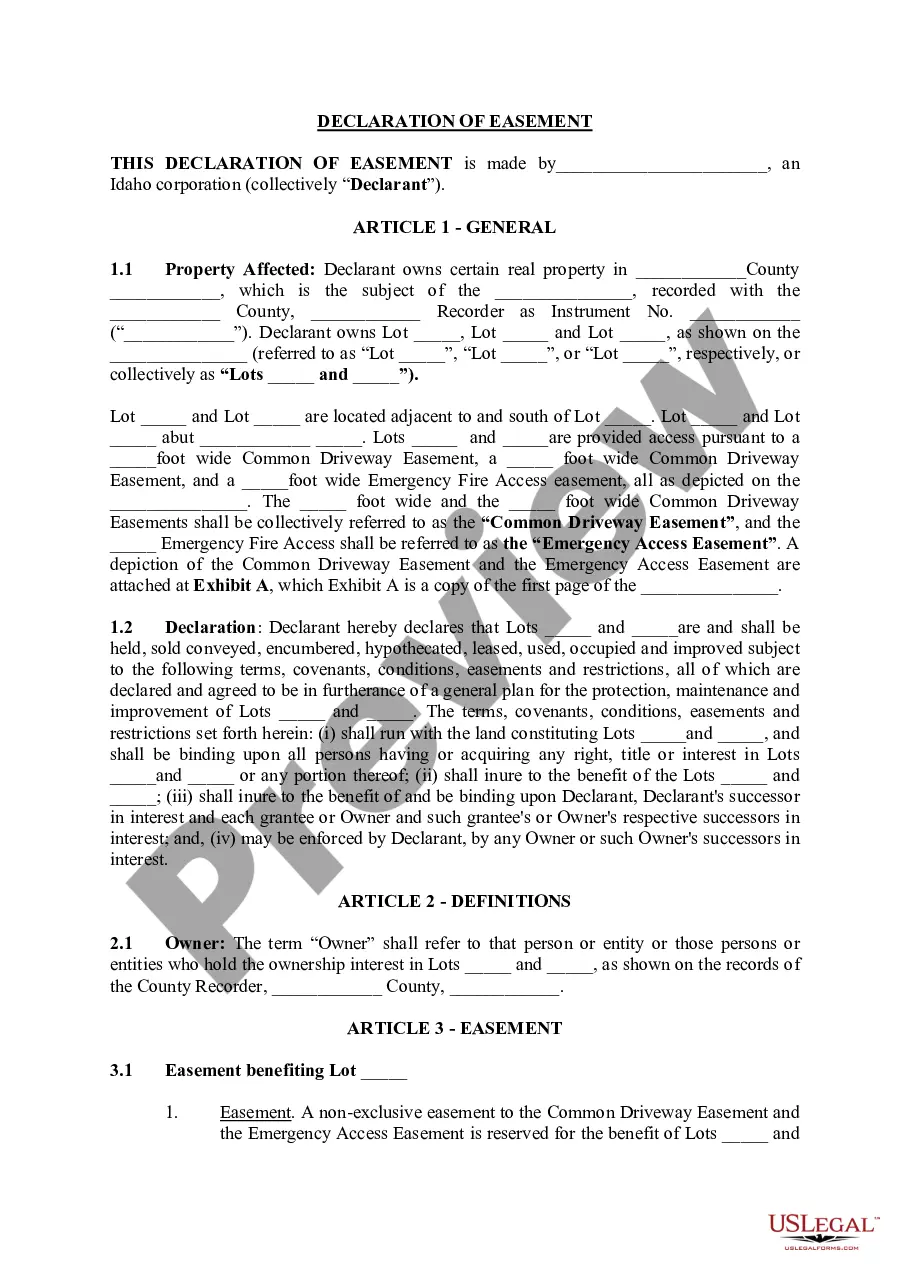
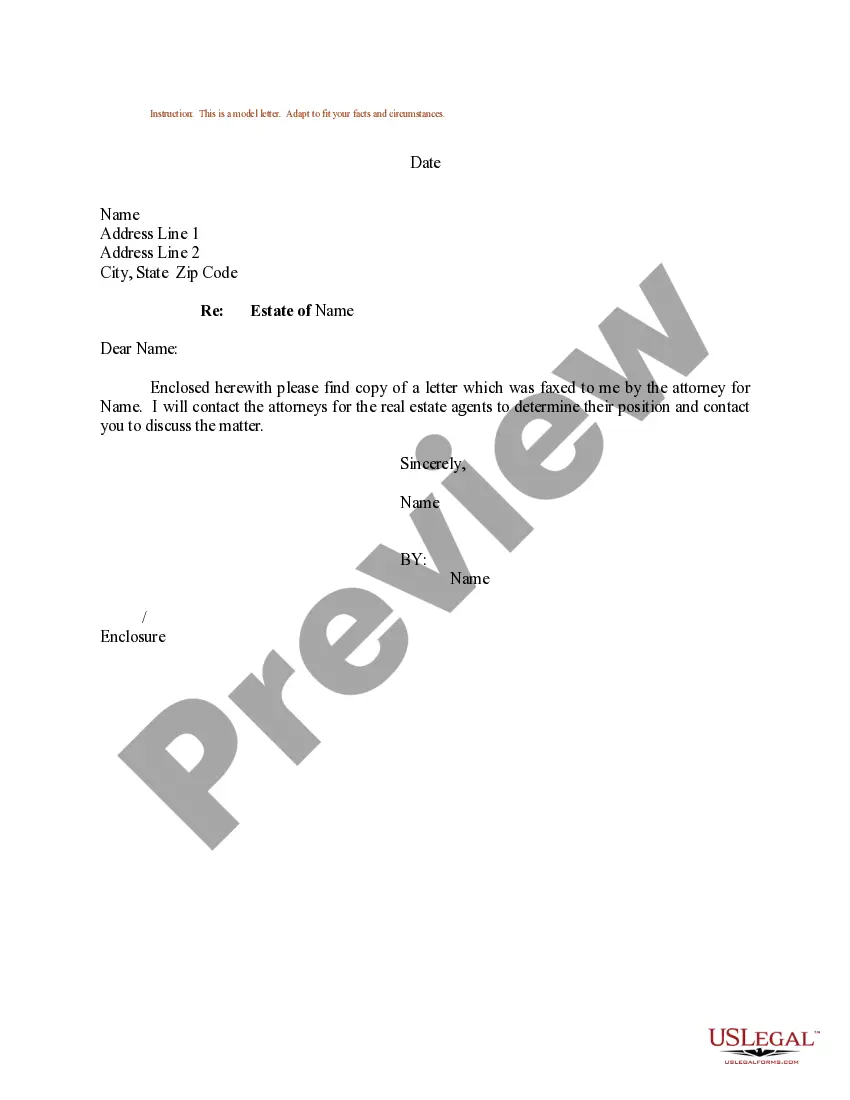
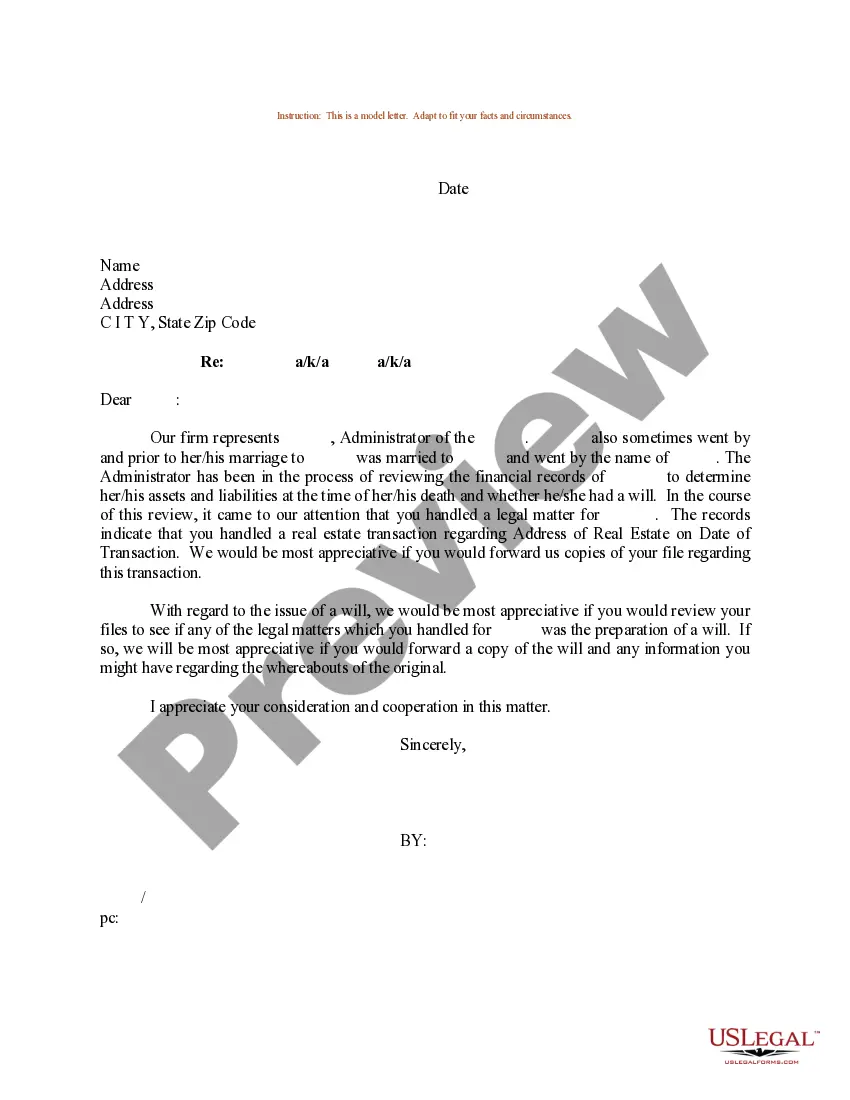
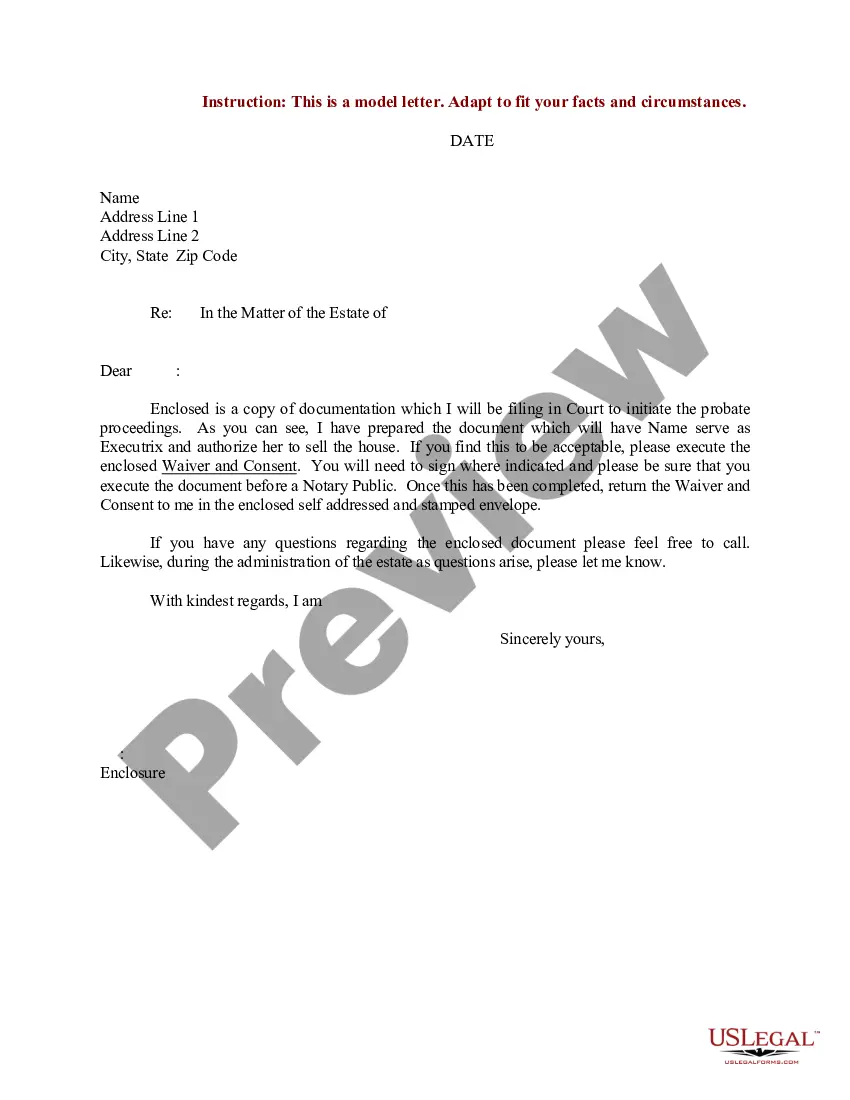
Sample Letter for Estate - Correspondence from Attorney
What this document covers
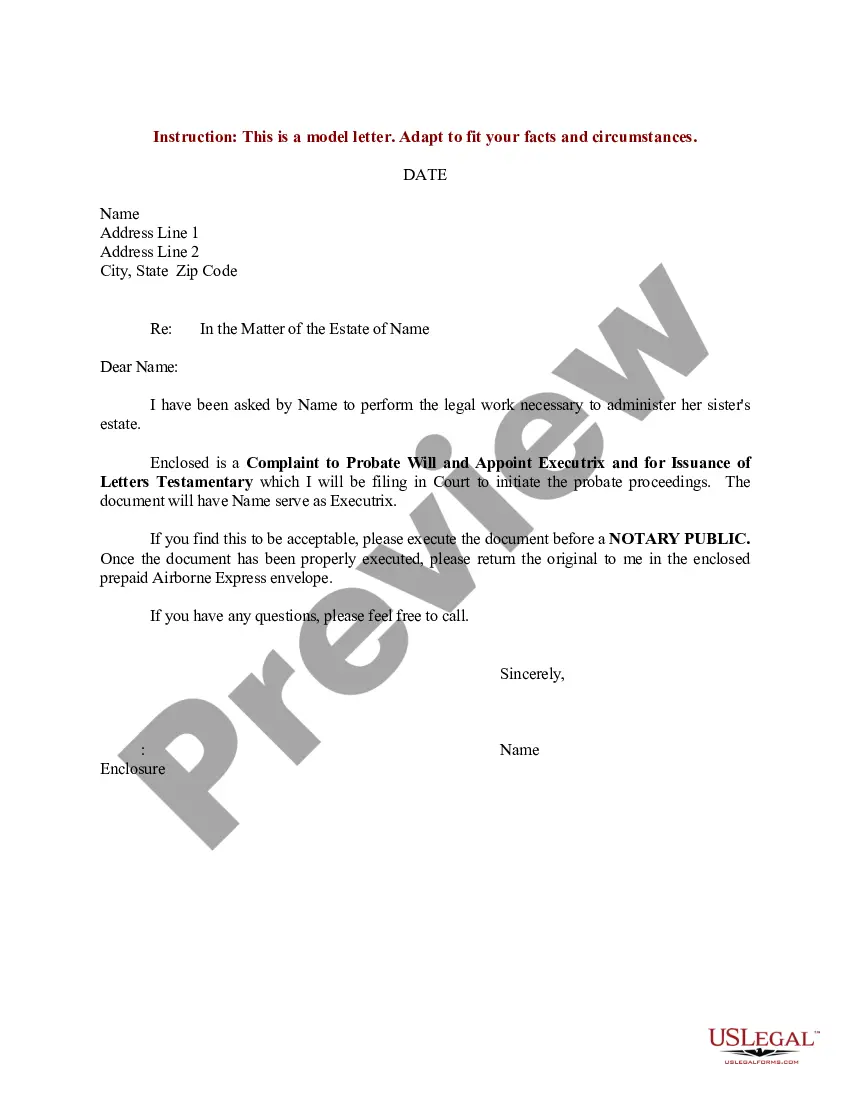
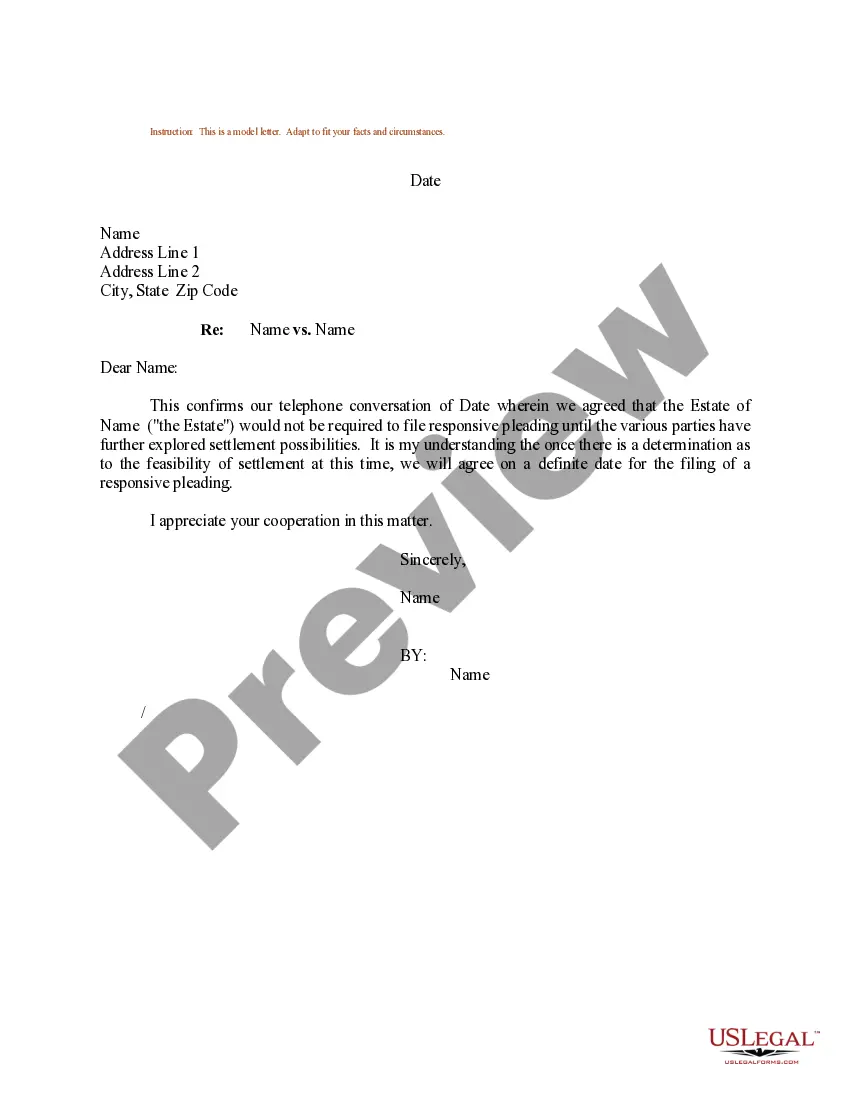
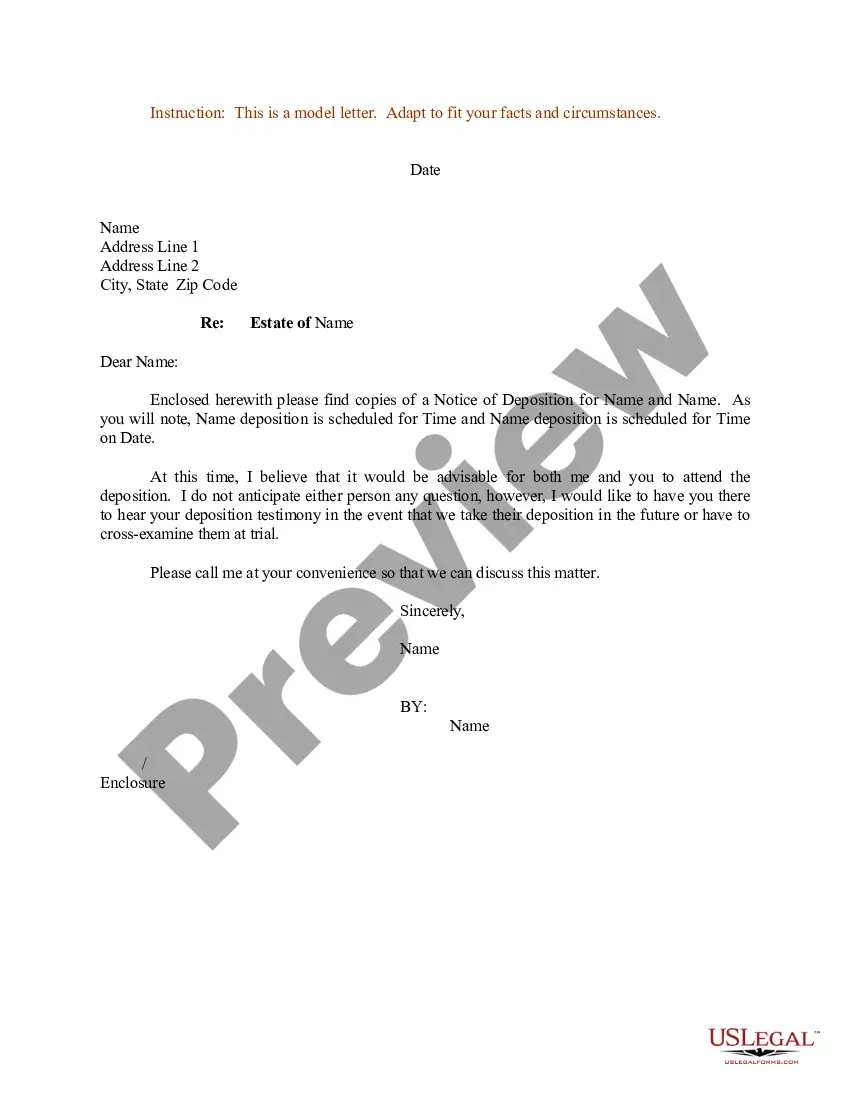
This Sample Letter for Estate is a template correspondence drafted by an attorney, designed to communicate essential information regarding an estate matter. This letter can be used to provide updates, address concerns, or request information pertaining to an estate, making it different from other forms which may focus solely on legal declarations or requests.
Main sections of this form
- Date: The date the letter is being sent.
- Recipient's Information: Includes the name and address of the person receiving the letter.
- Subject Line: Clearly states the context, such as âRe: Estate of [Name].â
- Salutation: A formal greeting to the recipient.
- Body: Contains the main content of the letter, addressing specific details about the estate.
When to use this form
This form is suitable for situations where an attorney needs to communicate important information regarding an estate, such as notifying heirs, updating them on the progress of the estate administration, or addressing any pending issues that require their attention. It can also be helpful when responding to inquiries or clarifying any misunderstandings related to the estate.
Who this form is for
- Attorneys managing estate matters.
- Personal representatives or executors of an estate.
- Individuals who need a formal way to communicate with heirs or beneficiaries.
Instructions for completing this form
- Fill in the current date at the top of the letter.
- Enter the recipient's name and address details accurately.
- Specify the subject line, clearly indicating the estate being referenced.
- Include a professional salutation addressed to the recipient.
- Compose the body of the letter, detailing the necessary information about the estate.
Does this form need to be notarized?
This form does not typically require notarization unless specified by local law. Ensure that any additional requirements specific to your jurisdiction are met to maintain the letter's validity.
Get your form ready online
Our built-in tools help you complete, sign, share, and store your documents in one place.
Make edits, fill in missing information, and update formatting in US Legal Forms—just like you would in MS Word.
Download a copy, print it, send it by email, or mail it via USPS—whatever works best for your next step.
Sign and collect signatures with our SignNow integration. Send to multiple recipients, set reminders, and more. Go Premium to unlock E-Sign.
If this form requires notarization, complete it online through a secure video call—no need to meet a notary in person or wait for an appointment.
We protect your documents and personal data by following strict security and privacy standards.

Make edits, fill in missing information, and update formatting in US Legal Forms—just like you would in MS Word.

Download a copy, print it, send it by email, or mail it via USPS—whatever works best for your next step.

Sign and collect signatures with our SignNow integration. Send to multiple recipients, set reminders, and more. Go Premium to unlock E-Sign.

If this form requires notarization, complete it online through a secure video call—no need to meet a notary in person or wait for an appointment.

We protect your documents and personal data by following strict security and privacy standards.
Avoid these common issues
- Forgetting to include all necessary recipient information.
- Leaving out the subject line for clarity.
- Not proofreading for grammatical errors or unclear language.
Benefits of using this form online
- Convenience of downloading and using a professionally drafted template.
- Editability allows for personalization to fit specific situations.
- Reliability of using a form prepared by licensed attorneys familiar with estate matters.
Key takeaways
- The Sample Letter for Estate is essential for formal communication regarding estate matters.
- Clear structure and components ensure all necessary information is included.
- Users should consider the specific requirements of their jurisdiction when completing the form.
- Utilizing this form can help prevent legal miscommunications and ensure clarity.
Looking for another form?







Form popularity
FAQ
A grant of probate is issued to the executor/s named in the will, whereas a grant of letters of administration is issued to the next of kin of someone who died without a will.This document will allow whoever is dealing with the estate to close bank accounts, cash in investments and sell or transfer property.
You can present this letter to the court, banks and other organizations as proof of your role. Only an executor can obtain the letter of testamentary. You need to take the deceased's Last Will and Testament as well as his or her death certificate to your local probate officer or court in order to obtain the document.
The fee for applying for probate or letters of administration depends on the value of the estate. You won't pay a fee if the value of the estate is less than £5,000. If the estate is valued at A£5,000 or more the fee is A£215. This is the same for both post and online applications.
Completion of the executor or administrator appointment takes about six to eight weeks once the executor files the petition or the court makes a selection.
Identify persons the executor should notify of your death. Include family members, close friends and business associates, including your attorney. Provide contact information for each person, as well as any final message or instructions to be given. Describe your important estate documents and their exact location.
Letters of Administration are granted by a Surrogate Court or probate registry to appoint appropriate people to deal with a deceased person's estate where property will pass under Intestacy Rules or where there are no executors living (and willing and able to act) having been validly appointed under the deceased's will
An executor letter authorizes a person or organization to act on behalf of a decedent's estate as an executor.It's also called "letters of testamentary" or "letters of administration" in some jurisdictions.
The simple answer is that once you have a grant of probate or letter of administration in hand, it usually takes between six and twelve months to transfer all the funds, assets and property in an estate.The Department for Work and Pensions needs to investigate the estate. The estate is bankrupt.
Give the letter a personal touch and address each of your heirs and beneficiaries personally. Tell them any last wishes you may have or any hopes you have for their future. Write as clearly as possible. Use specific details and avoid using shorthand.