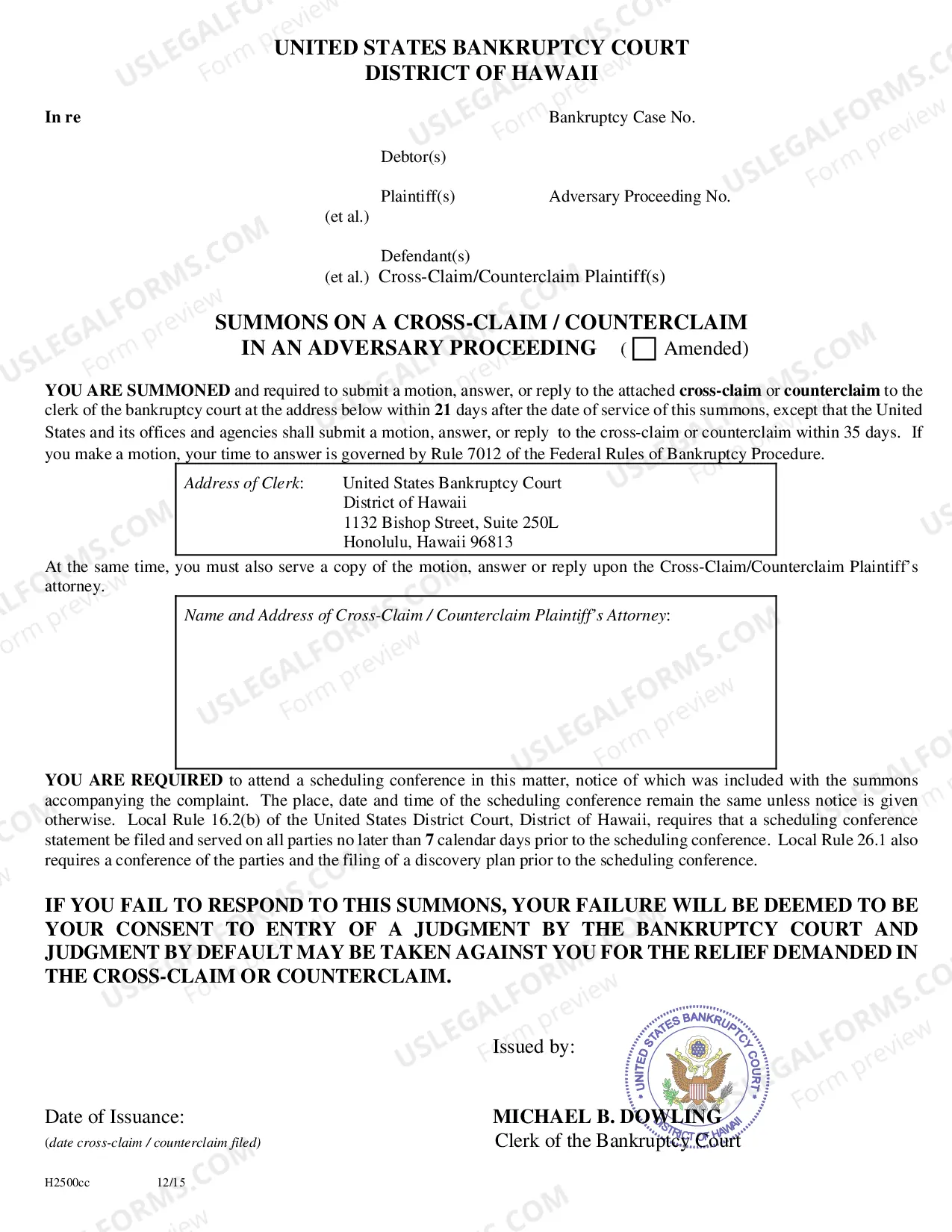
Overdraft Agreement with Bank
Overview of this form
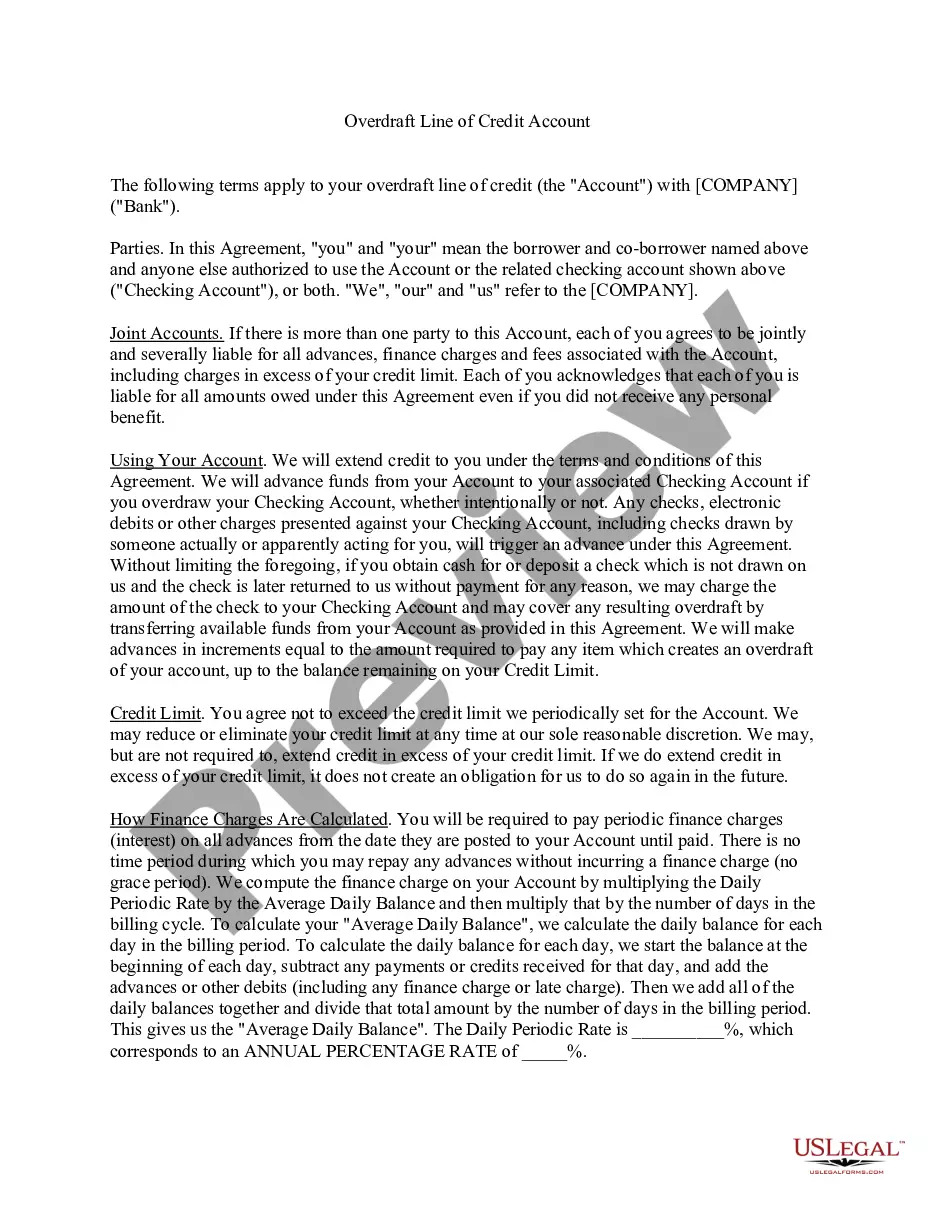
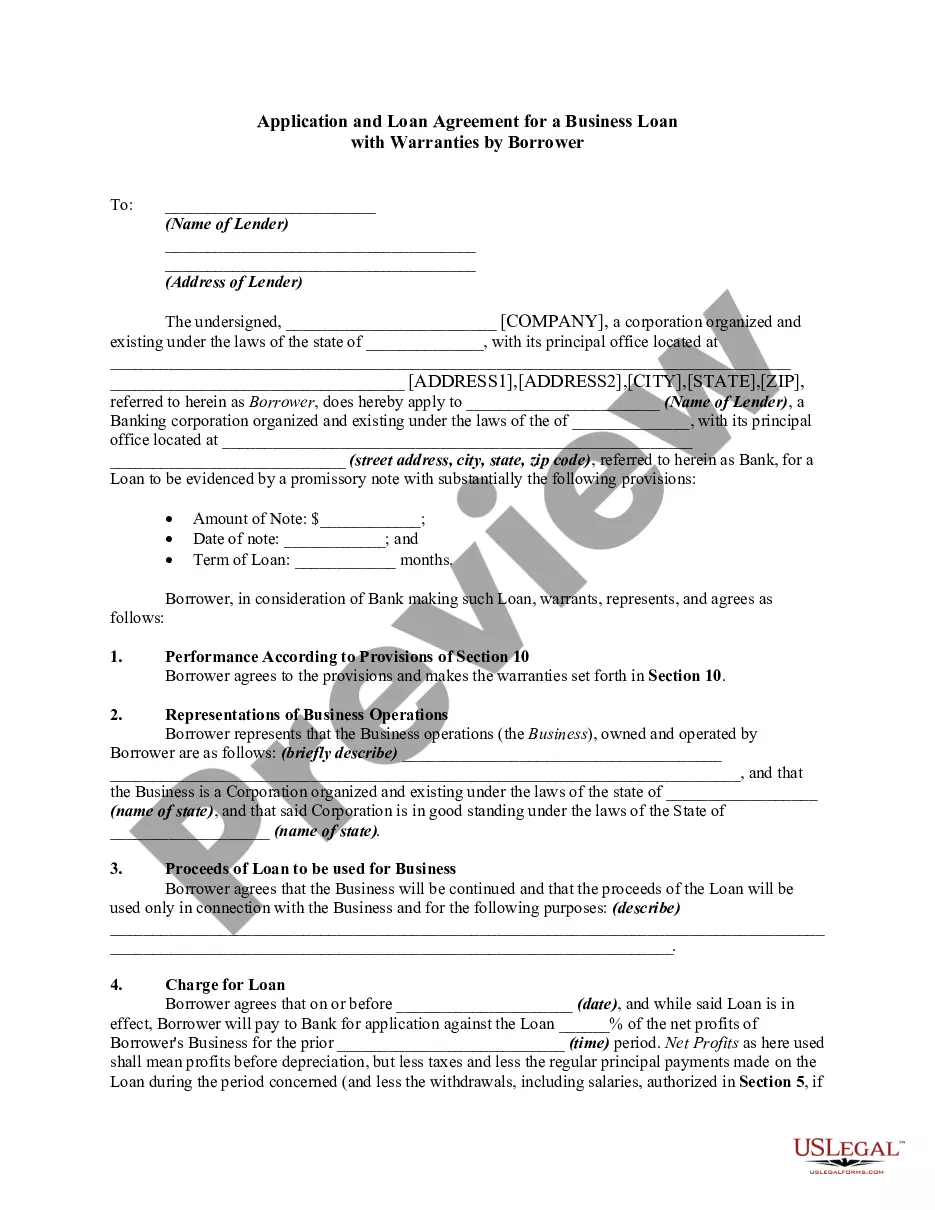
The Overdraft Agreement with Bank is a legal document that outlines the terms under which a bank extends a line of credit to a customer when their checking account balance falls below zero. This agreement activates automatically, allowing the bank to cover transactions that would otherwise overdraft the account. Unlike standard loan agreements, this form specifically caters to situations where customers may unintentionally overdraw their accounts, providing financial flexibility and protection against bounced checks and declined transactions.
Key parts of this document
- Parties involved: Defines the roles of the borrower and co-borrower in the agreement.
- Credit limit: Establishes the maximum amount of credit available to the borrower.
- Finance charges: Outlines how interest is calculated on the borrowed amount.
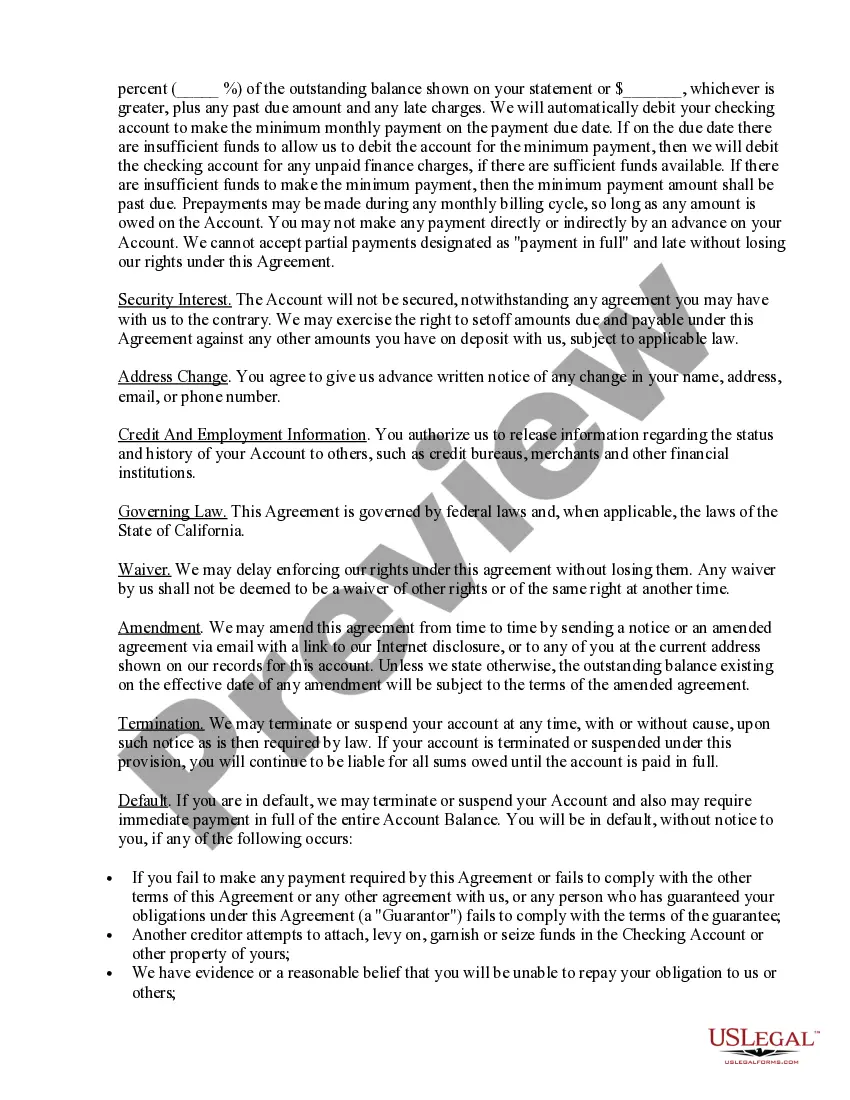
- Payments: Details the minimum payment requirements and conditions for additional payments.
- Security interest: Clarifies that the account is unsecured and describes rights regarding setoff of amounts due.
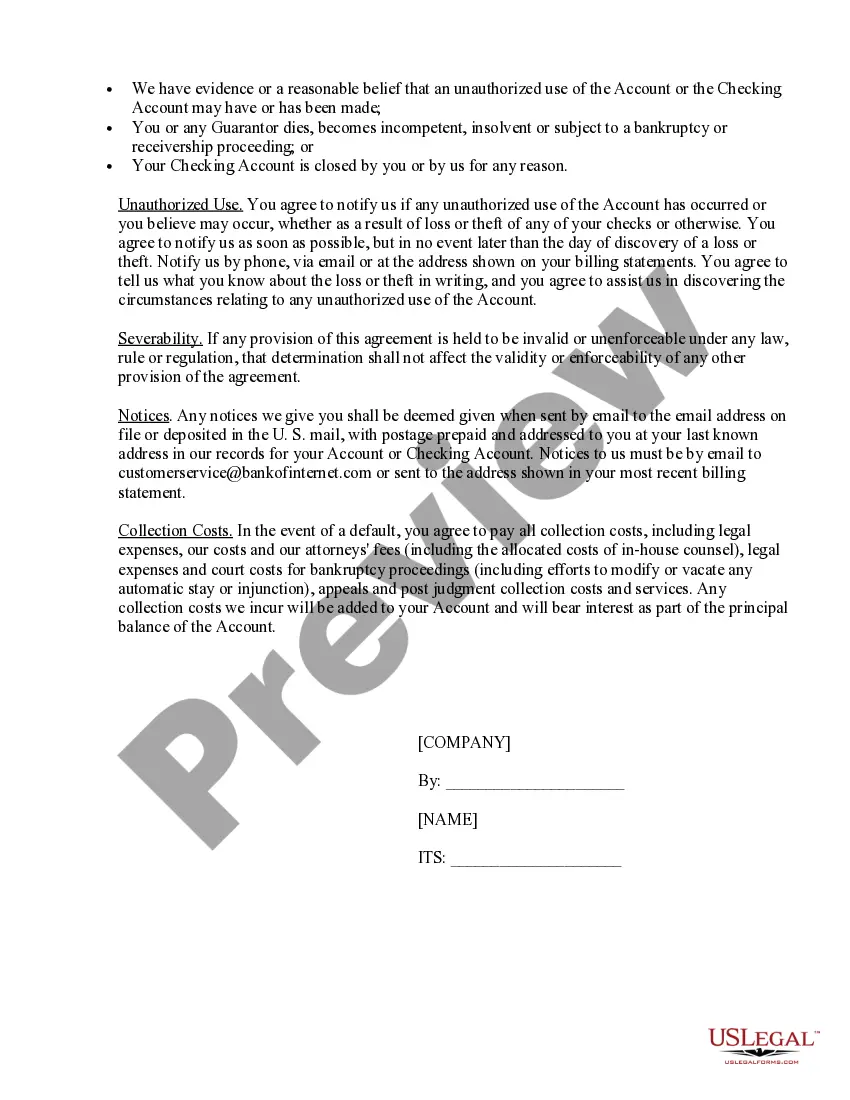
- Termination: Specifies the conditions under which the agreement may be terminated or suspended.
Common use cases
Use the Overdraft Agreement when you wish to establish a line of credit that provides coverage for overdrafts on your checking account. It is beneficial for individuals who frequently write checks or make electronic payments that might exceed their account balance. This agreement helps prevent financial setbacks such as returned checks and associated fees, allowing for greater financial security in managing day-to-day expenses.
Who this form is for
- Individuals with a checking account who may require overdraft protection.
- Borrowers who need a flexible line of credit to manage occasional cash shortages.
- Joint account holders who wish to secure an overdraft line that covers all authorized users.
- Customers of banks offering an overdraft line of credit as part of their services.
Steps to complete this form
- Identify the parties involved: Enter the names and information of the borrower and co-borrower.
- Specify the credit limit: Indicate the maximum amount of credit the bank will extend.
- Fill in payment details: Insert the percentage or minimum amount required for monthly payments.
- Review and acknowledge provisions: Ensure you understand all terms, including finance charges and repayment conditions.
- Sign and date the form: All parties must provide a signature to validate the agreement.
Does this document require notarization?
In most cases, this form does not require notarization. However, some jurisdictions or signing circumstances might. US Legal Forms offers online notarization powered by Notarize, accessible 24/7 for a quick, remote process.
Get your form ready online
Our built-in tools help you complete, sign, share, and store your documents in one place.
Make edits, fill in missing information, and update formatting in US Legal Forms—just like you would in MS Word.
Download a copy, print it, send it by email, or mail it via USPS—whatever works best for your next step.
Sign and collect signatures with our SignNow integration. Send to multiple recipients, set reminders, and more. Go Premium to unlock E-Sign.
If this form requires notarization, complete it online through a secure video call—no need to meet a notary in person or wait for an appointment.
We protect your documents and personal data by following strict security and privacy standards.

Make edits, fill in missing information, and update formatting in US Legal Forms—just like you would in MS Word.

Download a copy, print it, send it by email, or mail it via USPS—whatever works best for your next step.

Sign and collect signatures with our SignNow integration. Send to multiple recipients, set reminders, and more. Go Premium to unlock E-Sign.

If this form requires notarization, complete it online through a secure video call—no need to meet a notary in person or wait for an appointment.

We protect your documents and personal data by following strict security and privacy standards.
Typical mistakes to avoid
- Not reading the terms carefully: Failing to understand finance charges and payment obligations.
- Exceeding the credit limit: Ignoring the specified credit limit may lead to unexpected fees.
- Missing signatures: All required parties must sign the document for it to be valid.
- Neglecting notification of changes: Not informing the bank about changes in contact information can lead to missed communications.
Advantages of online completion
- Immediate access: Download the agreement instantly for quick implementation.
- Convenient editing: Easily fill in and modify the document to fit your specific needs.
- Saved templates: Store the completed agreement for future reference or modifications.
- Trustworthy source: Form templates are drafted by licensed attorneys, ensuring legal compliance.
Legal use & context
- This agreement is legally binding as it outlines the terms and conditions under which credit is extended.
- Understand that failing to comply with the repayment terms may lead to account termination or additional fees.
- It's essential to keep the bank informed of any changes in personal information to avoid complications.
What to keep in mind
- The Overdraft Agreement with Bank offers credit protection for checking account overdrafts.
- Understanding the terms, including finance charges and credit limits, is crucial.
- This form is essential for individuals who want structured overdraft protection.
Looking for another form?



Form popularity
FAQ
If you don't pay your overdrafts back in a predetermined amount of time, your bank can turn over your account to a collection agency. This collection action can affect your credit score and get reported to the three main credit agencies: Equifax, Experian, and TransUnion.
It is legal for financial institutions to charge overdraft fees in instances when there isn't enough money in a bank account to cover a transaction. However, some transactions (such as those using a debit card) require that the account holder agree to the overdraft fees before they can be charged.
Your bank might offer you an overdraft line of credit that you can draw against. Say you have a checking account and the bank grants you a $1,000 overdraft limit. That means you can spend all the money in your account, plus up to $1,000 more before the bank will block any further transactions.
An overdraft occurs when you don't have enough money in your bank account to cover a payment or withdrawal. Overdraft protection is a financial product that allows you to cover the amount of the transaction when you go into overdraft. These transactions can include: debit purchases.
It is legal for financial institutions to charge overdraft fees in instances when there isn't enough money in a bank account to cover a transaction. However, some transactions (such as those using a debit card) require that the account holder agree to the overdraft fees before they can be charged.
You can't get in trouble for overdrawing your account, especially if it rarely happens to you. You may encounter some difficulty if you are always overdrawn or just don't bring your balance up to date. Your bank may close your account and may send you to collections until you repay the balance.
If you don't know about an overdrawn account or ignore it, the bank could eventually take legal action against you. The amount your account is overdrawn is a legal debt you owe, which means the bank can sue you and use legal remedies such as wage garnishment to get the money.
You cannot be arrested or go to jail simply for being past-due on credit card debt or student loan debt, for instance.