Sample Letter for Divorce or Separation - Request to Account for Property
What this document covers
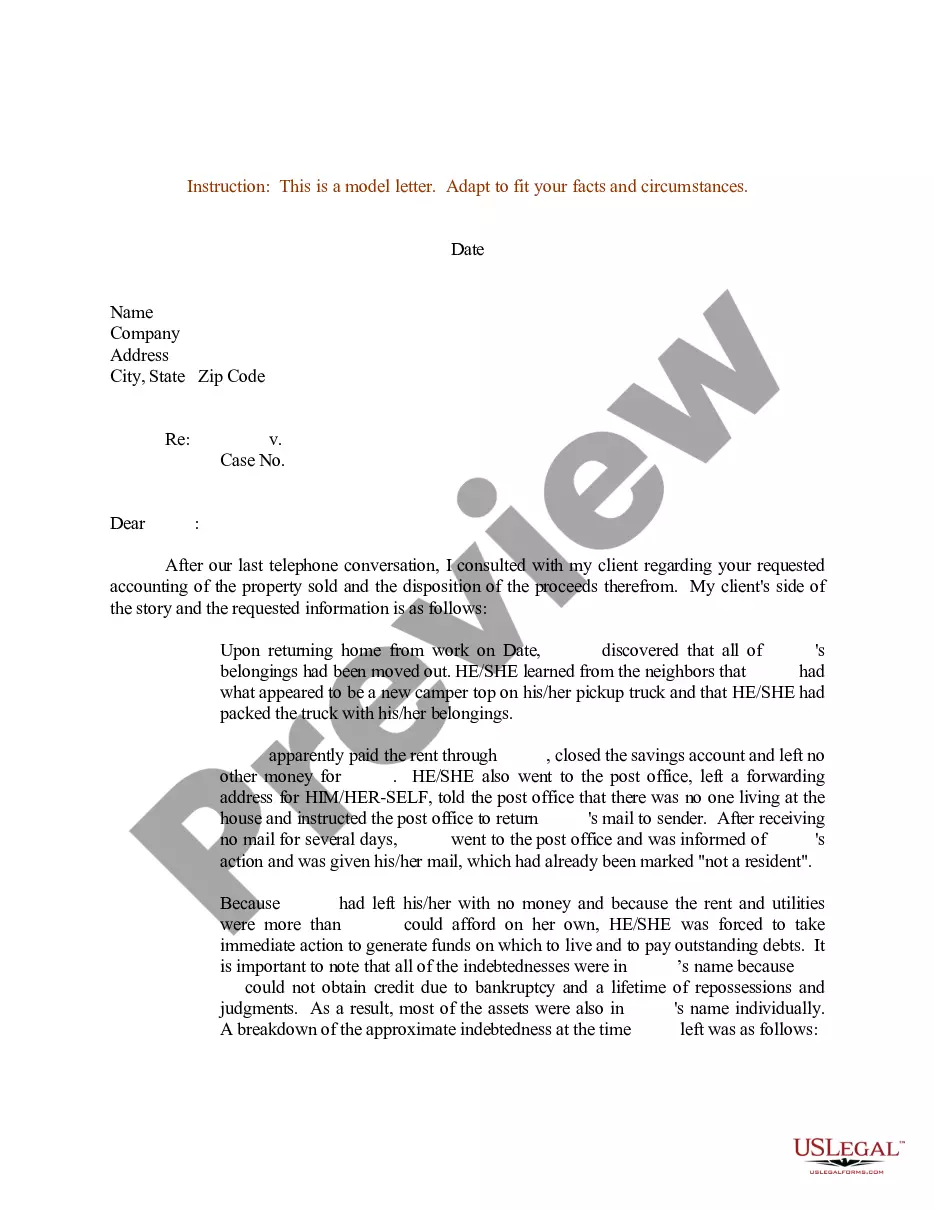
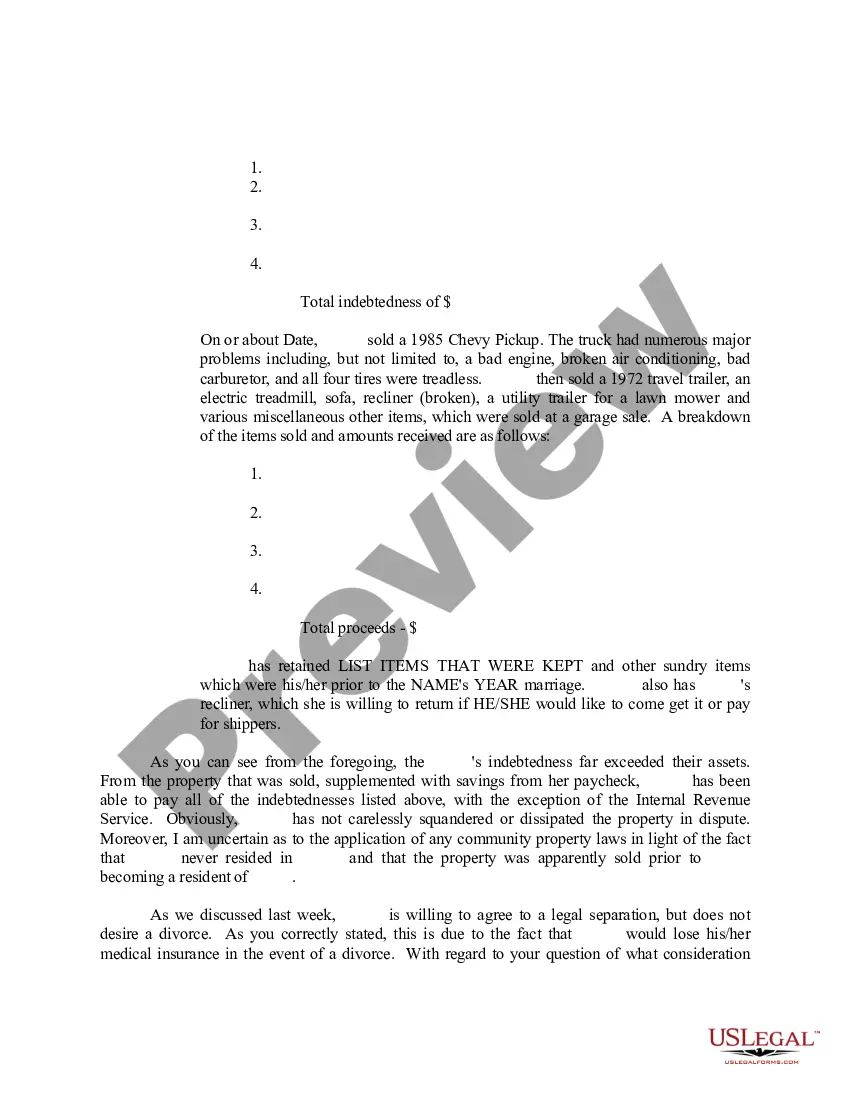
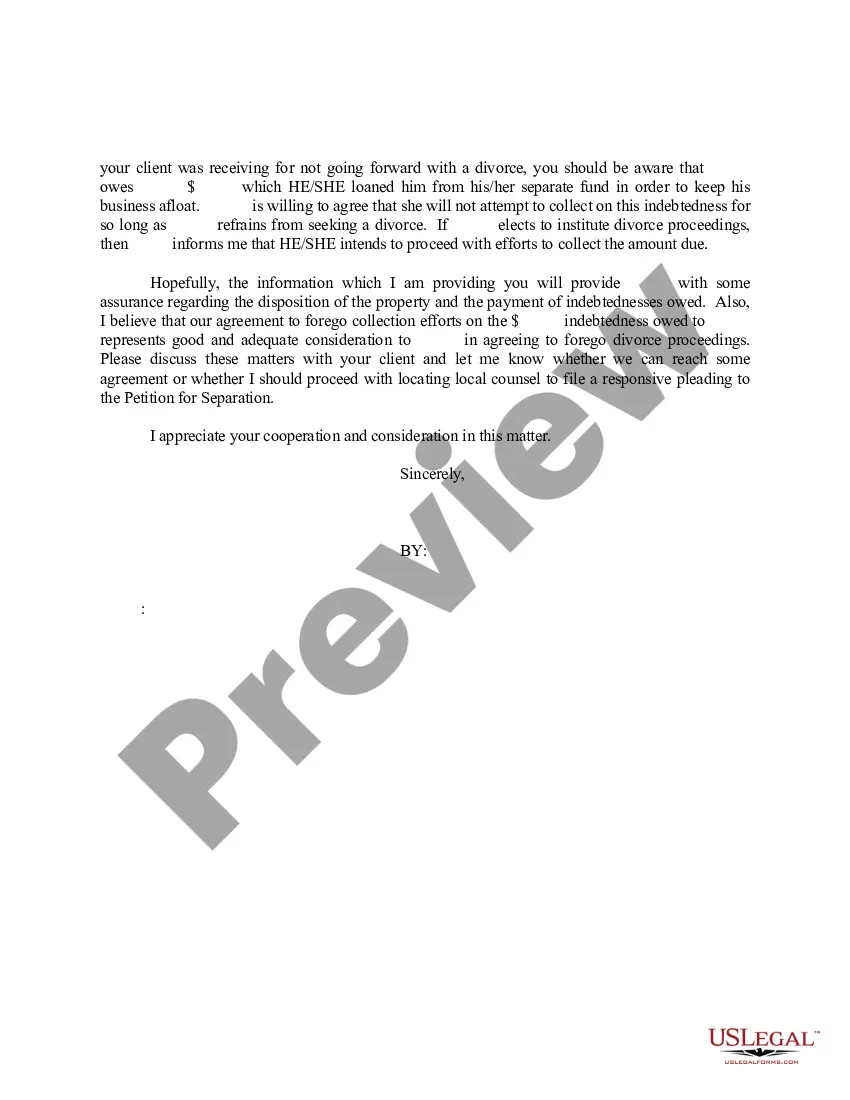
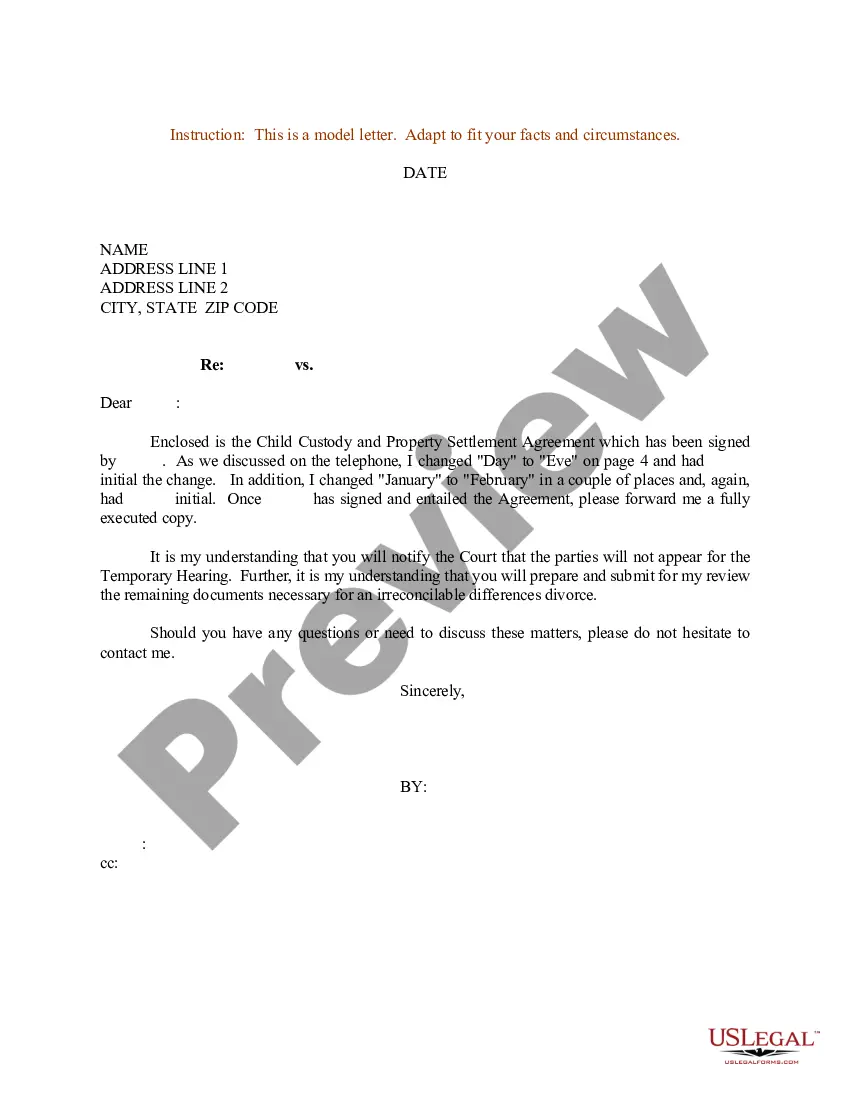
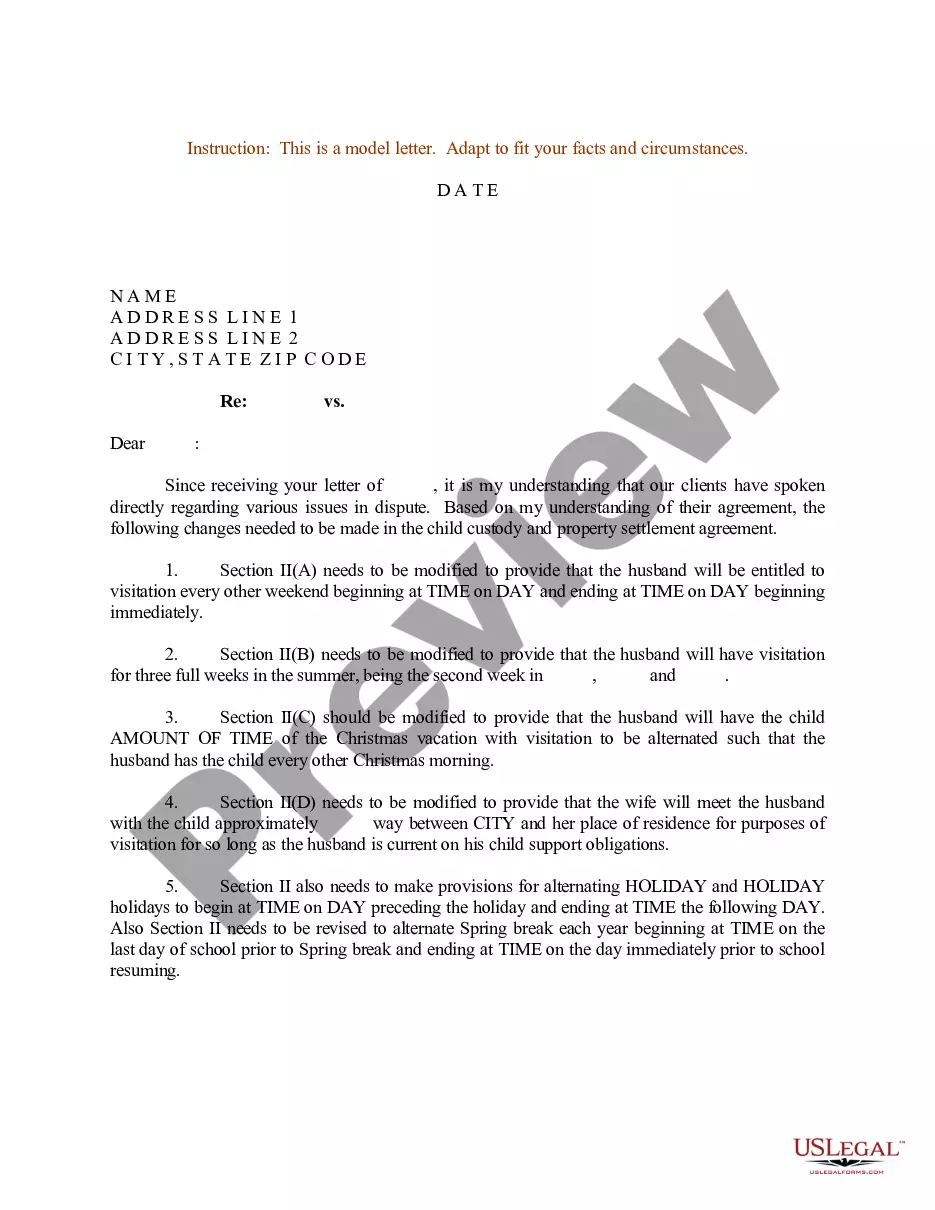
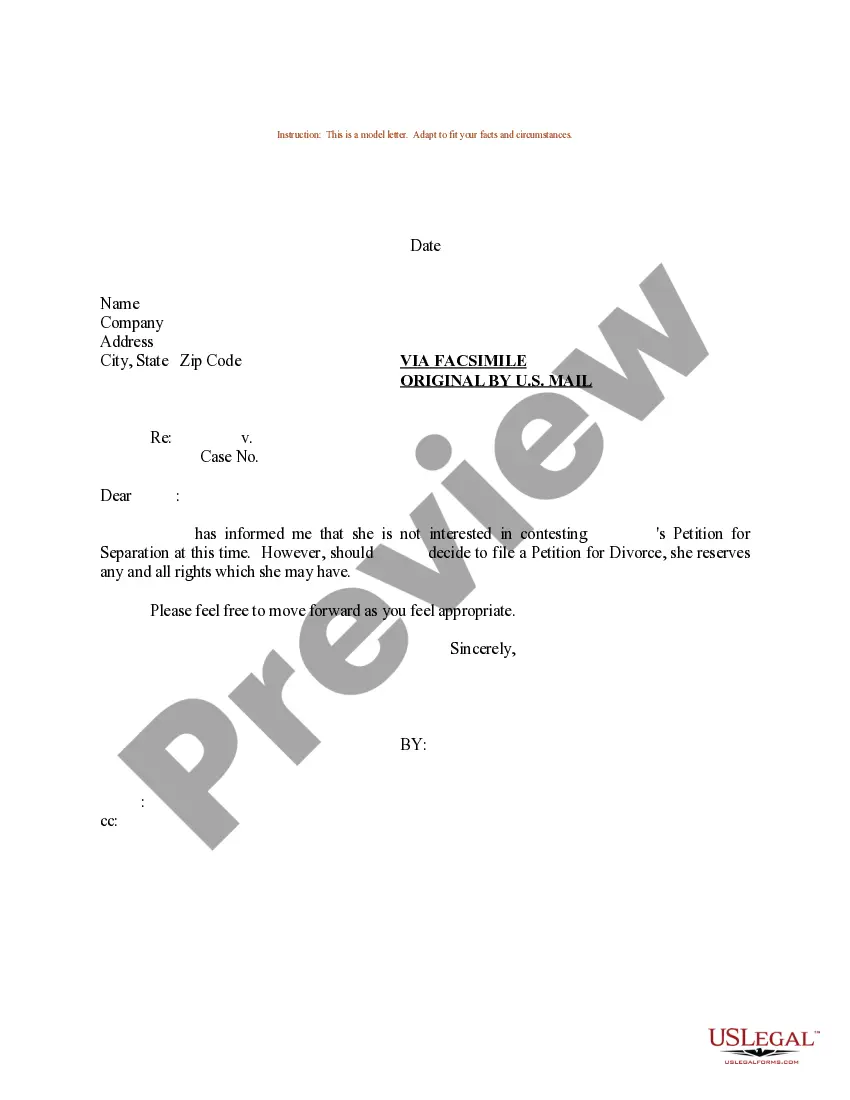
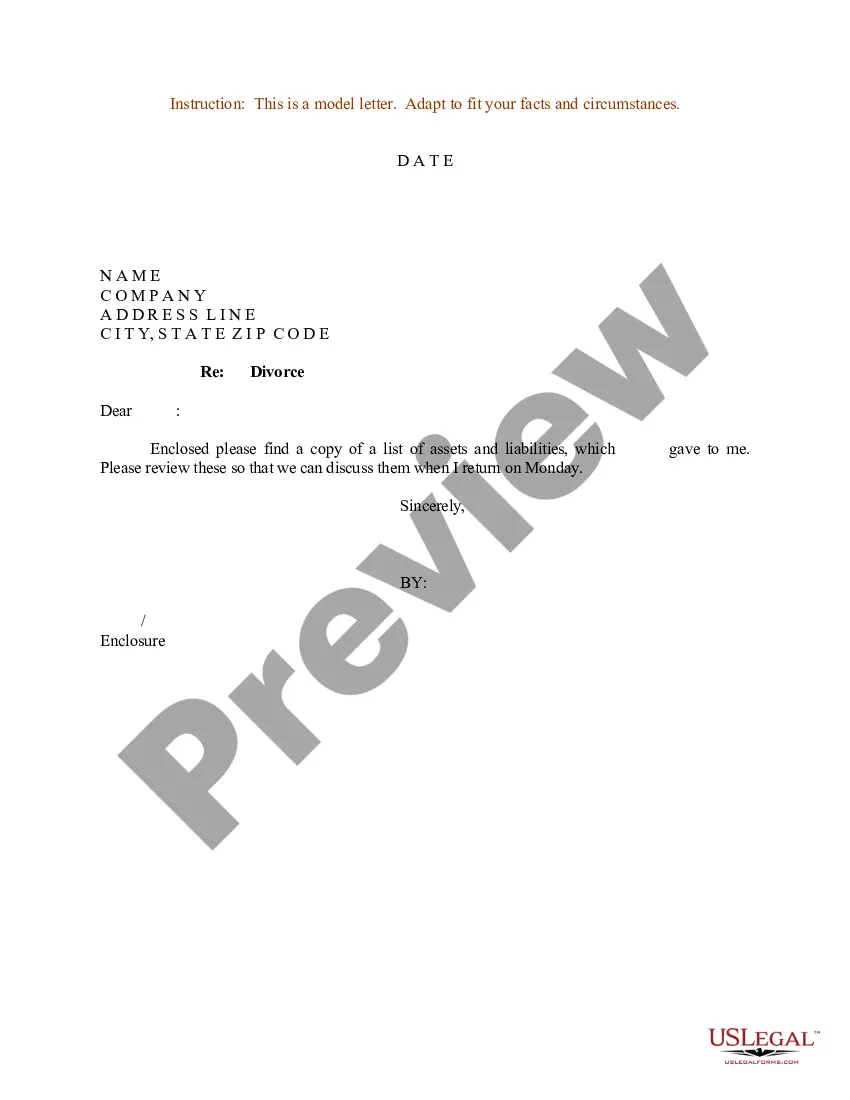
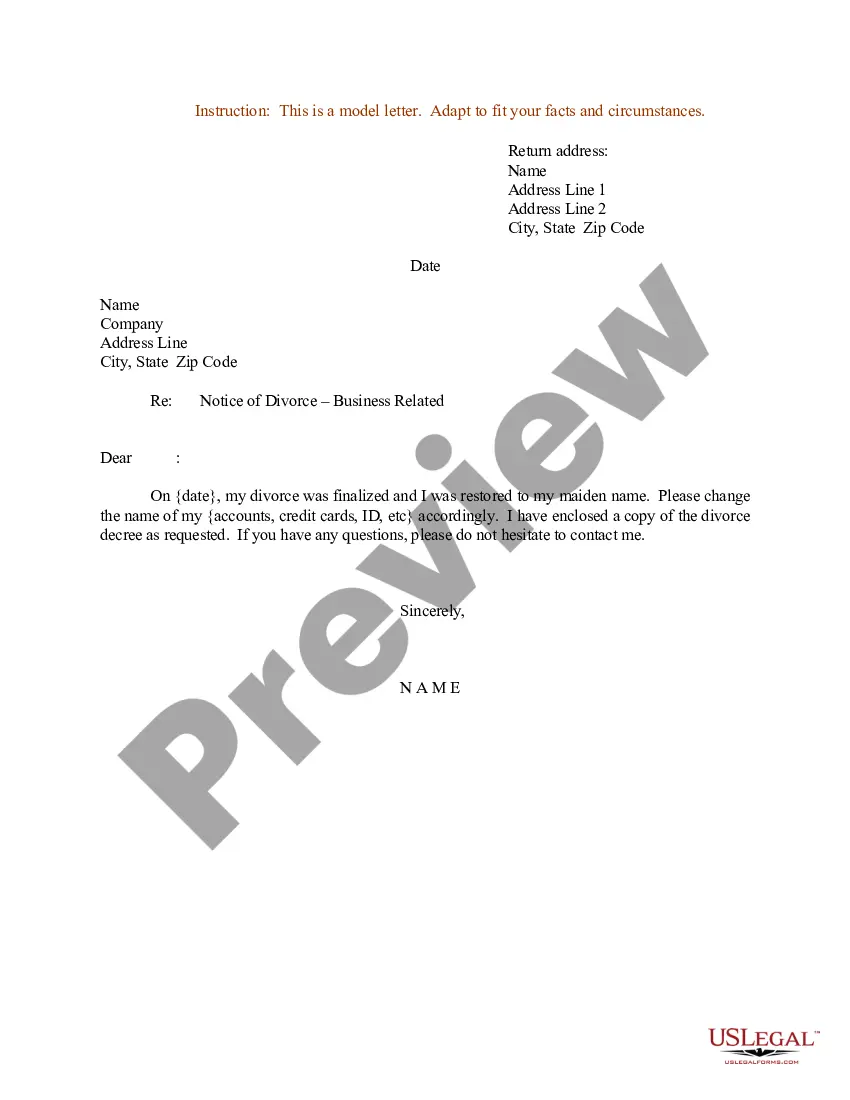
The Sample Letter for Divorce or Separation - Request to Account for Property is a template letter designed to request a detailed accounting of property during divorce or separation proceedings. This letter distinguishes itself by focusing specifically on the assets involved, which may not be covered in standard divorce agreements. It facilitates communication and ensures transparency between parties regarding the division of property.
Key parts of this document
- Date: The date the letter is drafted.
- Recipient's information: Name, company (if applicable), and address of the intended recipient.
- Request statement: A clear request for a detailed accounting of shared properties.
- Signatory's name: The person writing the letter signs here for authenticity.
Common use cases
This form is useful in situations when one party in a divorce or separation needs to formally request an accounting of property from the other party. It can be used when there is a lack of transparency about the division of assets or when previous agreements need clarification.
Who can use this document
- Individuals undergoing a divorce or separation.
- Parties who need to clarify property ownership and division.
- Those seeking to ensure fair treatment regarding property assets.
How to complete this form
- Enter the current date at the top of the letter.
- Fill in the recipient's name, address, and any relevant company information.
- Clearly state your request for an accounting of property in the main body of the letter.
- Include any additional information or context that may assist the recipient.
- Sign the letter with your name at the end to validate the request.
Does this document require notarization?
In most cases, this form does not require notarization. However, some jurisdictions or signing circumstances might. US Legal Forms offers online notarization powered by Notarize, accessible 24/7 for a quick, remote process.
Get your form ready online
Our built-in tools help you complete, sign, share, and store your documents in one place.
Make edits, fill in missing information, and update formatting in US Legal Forms—just like you would in MS Word.
Download a copy, print it, send it by email, or mail it via USPS—whatever works best for your next step.
Sign and collect signatures with our SignNow integration. Send to multiple recipients, set reminders, and more. Go Premium to unlock E-Sign.
If this form requires notarization, complete it online through a secure video call—no need to meet a notary in person or wait for an appointment.
We protect your documents and personal data by following strict security and privacy standards.

Make edits, fill in missing information, and update formatting in US Legal Forms—just like you would in MS Word.

Download a copy, print it, send it by email, or mail it via USPS—whatever works best for your next step.

Sign and collect signatures with our SignNow integration. Send to multiple recipients, set reminders, and more. Go Premium to unlock E-Sign.

If this form requires notarization, complete it online through a secure video call—no need to meet a notary in person or wait for an appointment.

We protect your documents and personal data by following strict security and privacy standards.
Typical mistakes to avoid
- Failing to include the date, which can lead to confusion about the timeline.
- Omitting the recipient's correct details, resulting in delivery issues.
- Not being specific about the types of property being requested, which can lead to incomplete responses.
Advantages of online completion
- Convenience of accessing and filling out the form from anywhere.
- Editable format allows you to personalize the content as needed.
- Provides a reliable template drafted by licensed attorneys, ensuring legal validity.
Looking for another form?

Form popularity
FAQ
A fair settlement should include ample parenting time for each parent. An equitable visitation agreement may not give parents equal custodial time, but it should provide for frequent and continuing contact with each parent.
Your divorce settlement agreement should cover everything that is important to you, including custody of your children, child support payments, alimony, and the separation of your property, such as your family home, vehicles, and other assets.
#1. Start with the Basics. #2. Include the Details. #3. Confirm Your Agreement. #4. Identify and Divide Assets and Debts. #5. Create a Parenting Plan for Custody and Visitation. #6. Agree on Child Support and Spousal Support (Alimony) #7. Polishing Your Agreement. Conclusion.
Notify the employee of their termination date. State the reason(s) for termination. Explain their compensation and benefits going forward. Notify them of any company property they must return. Remind them of signed agreements. Include HR contact information.
Because California law views both spouses as one party rather than two, marital assets and debts are split 50/50 between the couple, unless they can agree on another arrangement.
A property settlement is an arrangement made between parties to divide assets, liabilities and financial resources when a couple separate. A property settlement can be made with or without the court's assistance.
Some people wonder if they can save even more by money by writing their own settlement agreement and not seeking the help of a divorce attorney at all. While there is no legal requirement that you have a lawyer draft your settlement agreement, it is certainly a good idea to do so.
When the court grants a divorce, property will be divided equitably (not always equally) between the two spouses. This is decided under the Equitable Distribution Law. During the divorce both spouses have to tell the court about their income and any debts they owe.
Write a rough draft, taking care to keep the tone of the letter calm and respectful. Explain why you would like a divorce, and do not write anything that would lead him to believe there is a chance of reconciliation. Keep the letter short and to the point. Set the letter aside for a few days.