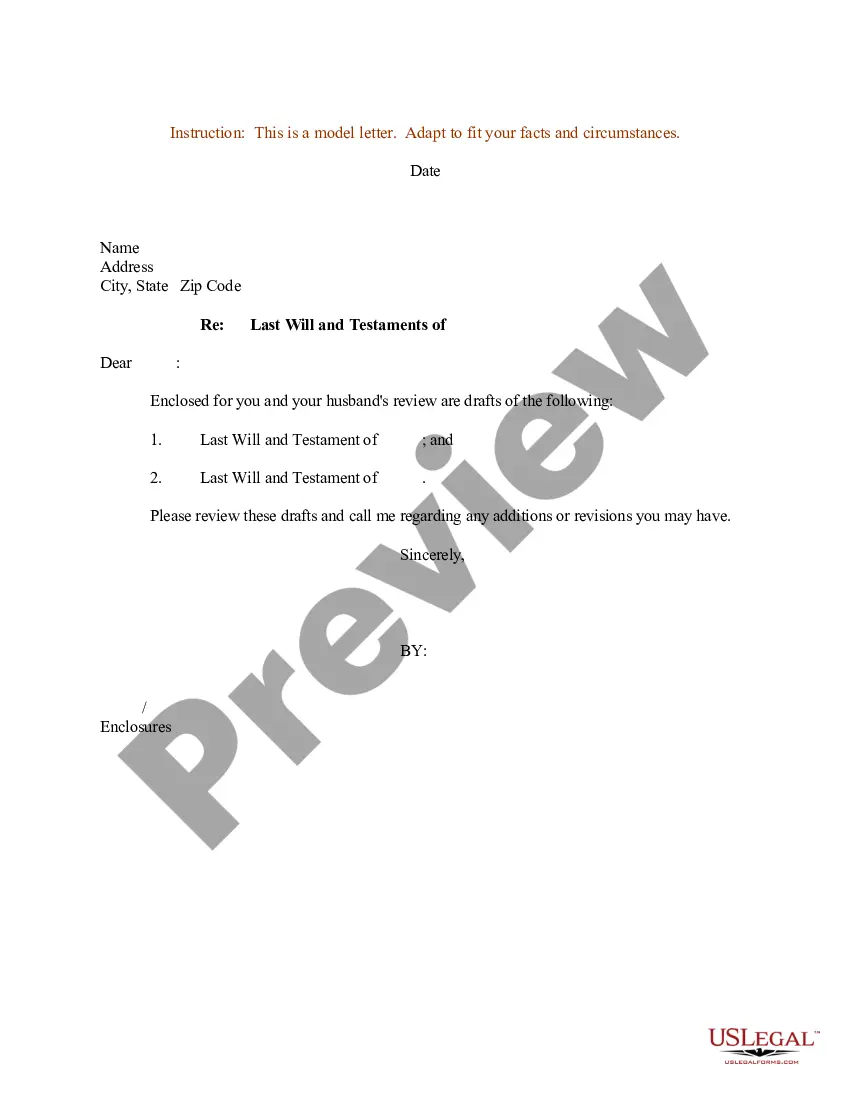
Sample Letter transmitting Last Will and Testaments - Drafts
Understanding this form
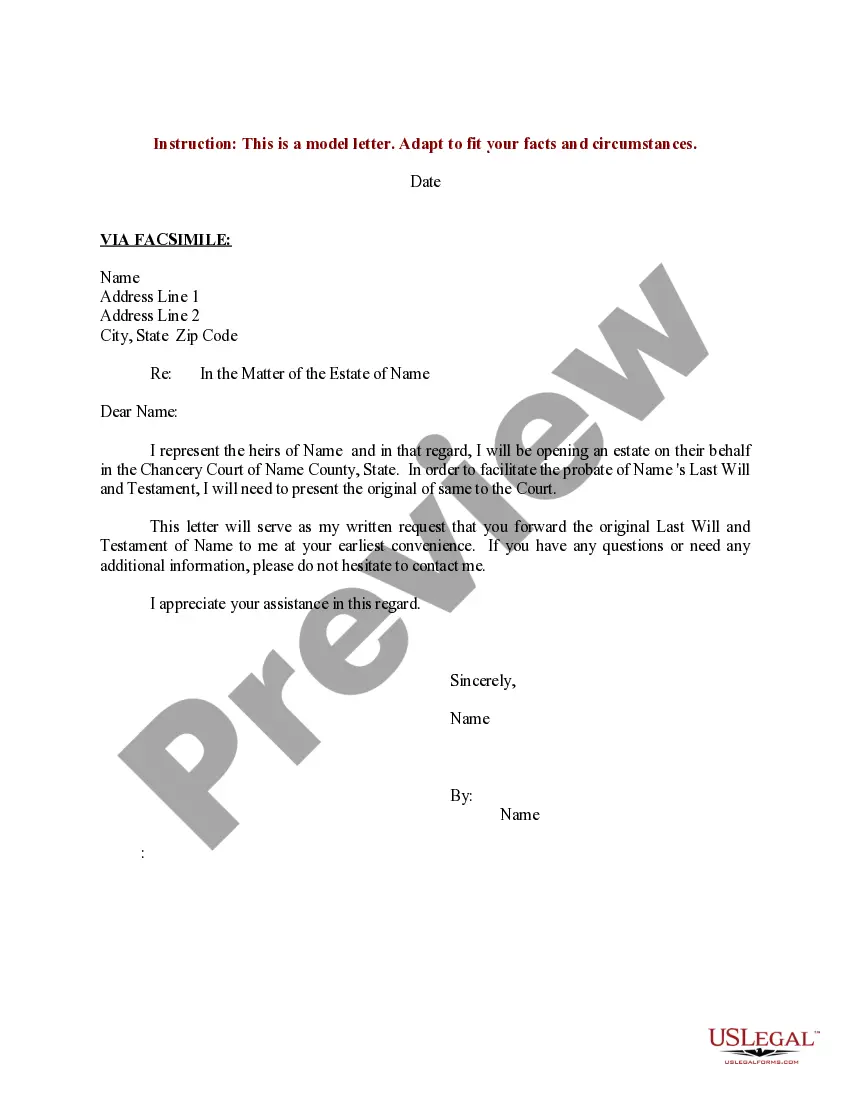
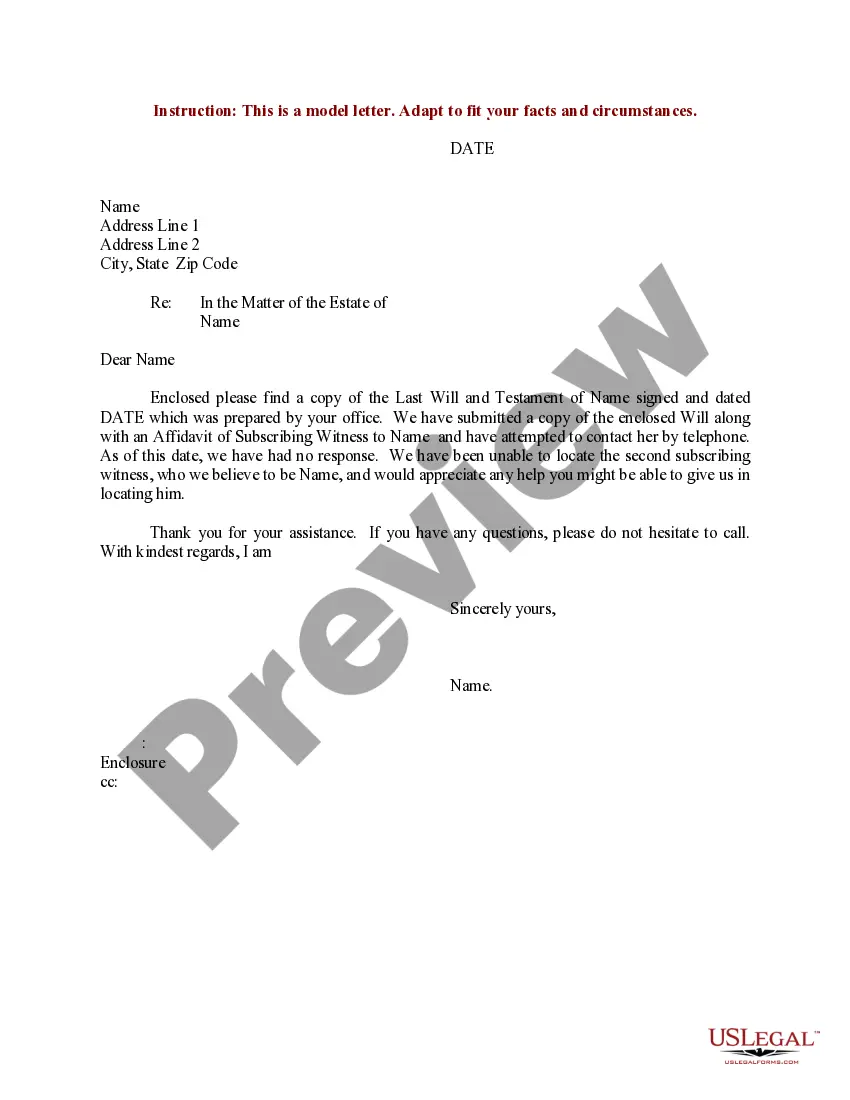
The Sample Letter transmitting Last Will and Testaments - Drafts is a template designed to assist individuals in formally sending their will documents to beneficiaries or relevant parties. This letter serves as a cover note that provides clarity on the accompanying documents, differentiating it from the will itself by focusing on the delivery and intention behind sharing the will.
Main sections of this form
- Date of transmission
- Sender's name and address
- Recipient's name and address
- Introductory statement referencing the Last Will and Testament
- Closing remarks and acknowledgement of will receipt
Common use cases
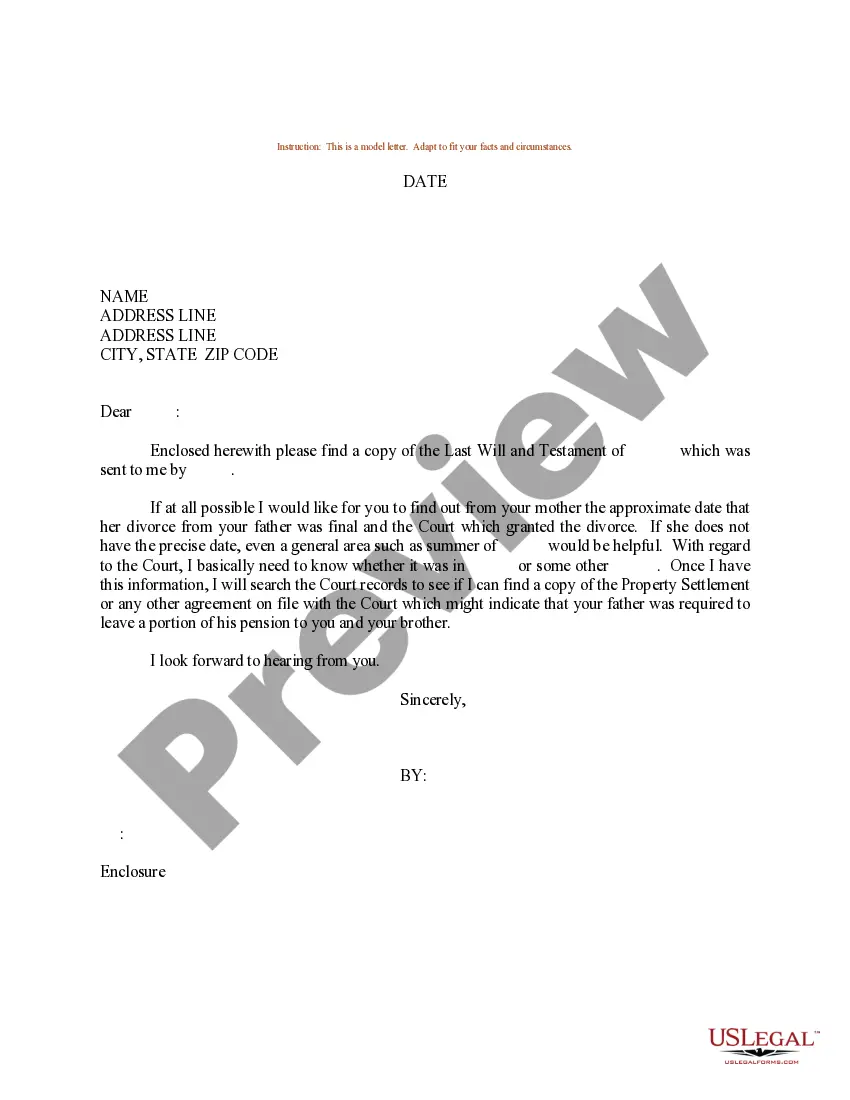
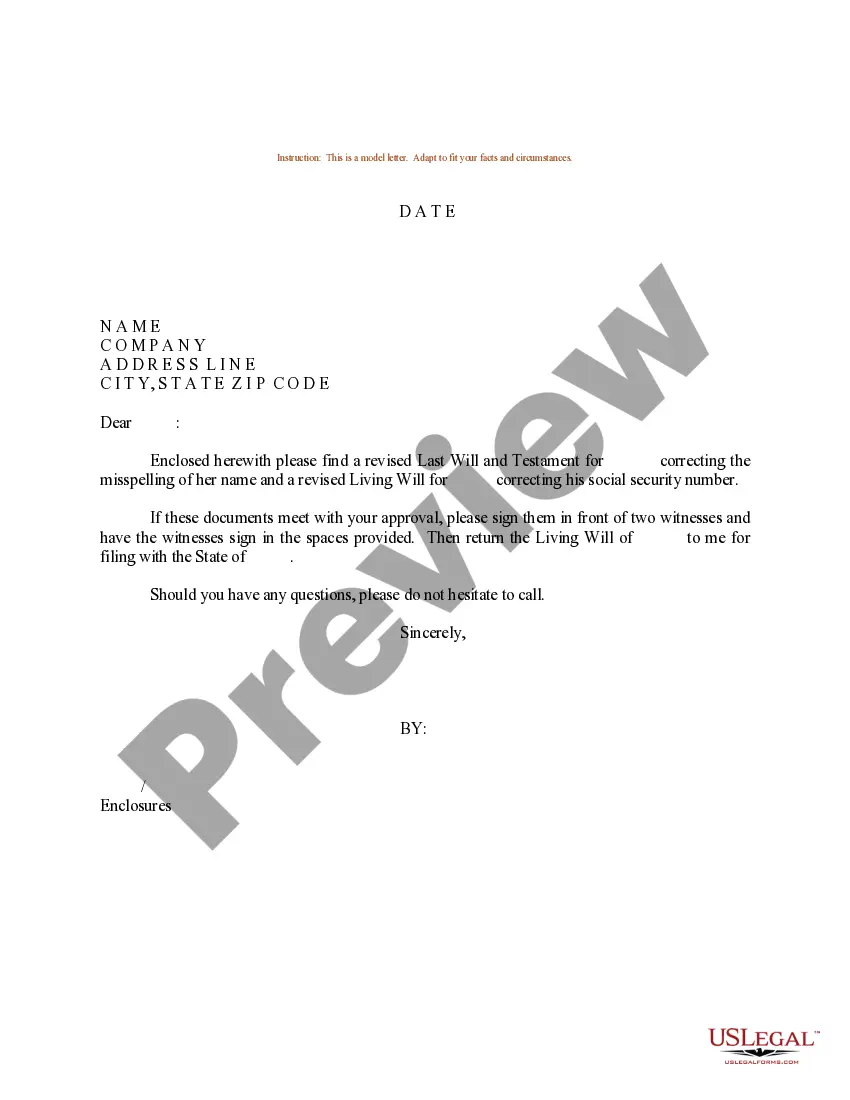
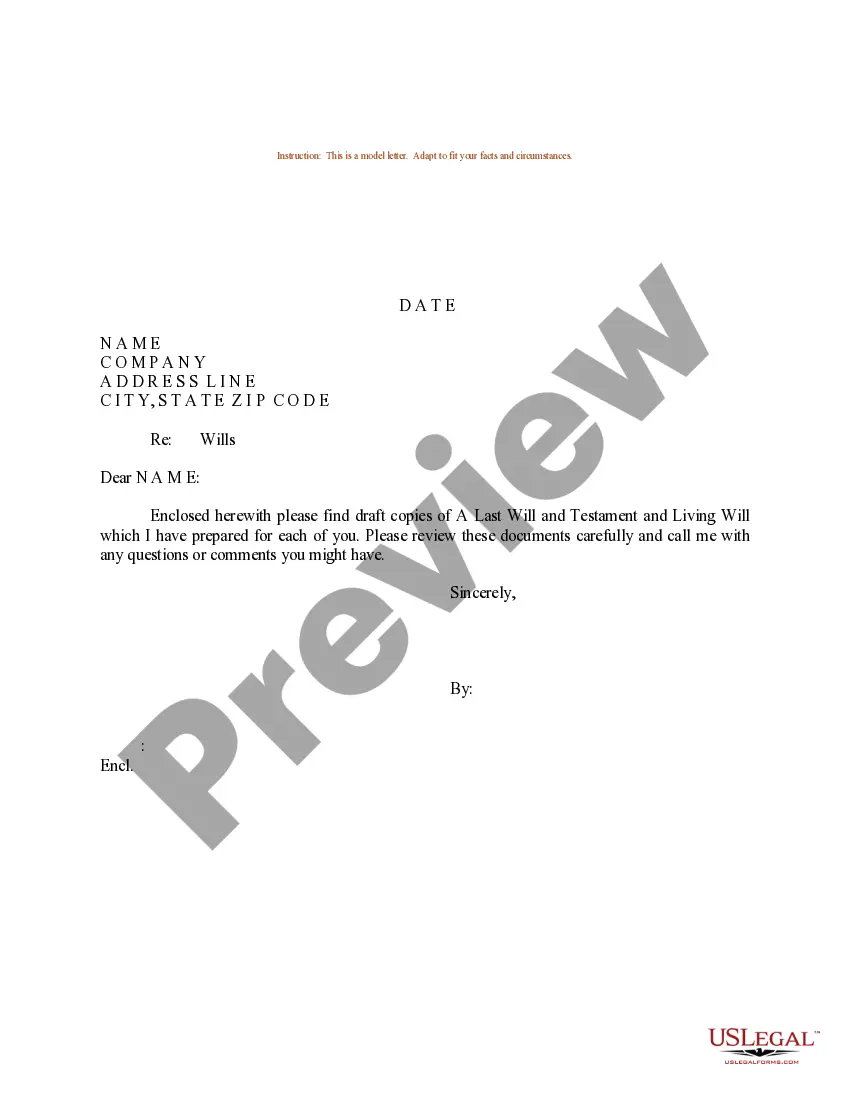
This form is used when a person wishes to send their Last Will and Testament to designated beneficiaries or important parties involved in the will's execution. It is particularly helpful when the will is being executed, and there is a need to formally inform or provide the content of the will to the parties named therein.
Who this form is for
- Individuals who have created a Last Will and Testament
- Executors or personal representatives responsible for communicating the will
- Beneficiaries named in the will who need official notice of the will's content
Instructions for completing this form
- Identify and enter the date on which you are sending the letter.
- Fill in your name and full address in the designated sender's section.
- Include the recipient's name and address to direct the letter correctly.
- Draft an introductory statement clarifying that the attached documents include your Last Will and Testament.
- Conclude with a statement acknowledging the importance of the will and any next steps if applicable.
Notarization guidance
This form does not typically require notarization to be legally valid. However, some jurisdictions or document types may still require it. US Legal Forms provides secure online notarization powered by Notarize, available 24/7 for added convenience.
Get your form ready online
Our built-in tools help you complete, sign, share, and store your documents in one place.
Make edits, fill in missing information, and update formatting in US Legal Forms—just like you would in MS Word.
Download a copy, print it, send it by email, or mail it via USPS—whatever works best for your next step.
Sign and collect signatures with our SignNow integration. Send to multiple recipients, set reminders, and more. Go Premium to unlock E-Sign.
If this form requires notarization, complete it online through a secure video call—no need to meet a notary in person or wait for an appointment.
We protect your documents and personal data by following strict security and privacy standards.

Make edits, fill in missing information, and update formatting in US Legal Forms—just like you would in MS Word.

Download a copy, print it, send it by email, or mail it via USPS—whatever works best for your next step.

Sign and collect signatures with our SignNow integration. Send to multiple recipients, set reminders, and more. Go Premium to unlock E-Sign.

If this form requires notarization, complete it online through a secure video call—no need to meet a notary in person or wait for an appointment.

We protect your documents and personal data by following strict security and privacy standards.
Mistakes to watch out for
- Failing to include the date of transmission.
- Not verifying the recipient's address.
- Overlooking the importance of a clear introductory statement.
- Neglecting to provide a formal closing, which can lead to confusion.
Advantages of online completion
- Convenient downloadable format that can be easily edited as needed.
- Access to reliable templates drafted by licensed attorneys.
- Ability to customize the document for specific jurisdictions and needs.
Looking for another form?

Form popularity
FAQ
Property in a living trust. One of the ways to avoid probate is to set up a living trust. Retirement plan proceeds, including money from a pension, IRA, or 401(k) Stocks and bonds held in beneficiary. Proceeds from a payable-on-death bank account.
While you can write your own last will and testament, it's very important to follow your state's requirements. If the court finds it invalid, someone other than your chosen executor could handle your estate and distribute your assets differently than you intended.
You can either download a template (many are free) and write your Will at your own pace offline using your word processor, or tell us your wishes in our online questionnaire and let us write it for you.
Yes, handwritten or holographic wills are valid in California.
In most situations, a will template is an easy and inexpensive way to make sure your wishes are known and carried out. Most people can get everything they need by using a will template, with little cost or hassle.
Bank accounts. Brokerage or investment accounts. Retirement accounts and pension plans. A life insurance policy.
Include personal identifying information. Include a statement about your age and mental status. Designate an executor. Decide who will take care of your children. Choose your beneficiaries. List your funeral details. Sign and date your Last Will and Testament.
Create the initial document. Start by titling the document Last Will and Testament" and including your full legal name and address. Designate an executor. Appoint a guardian. Name the beneficiaries. Designate the assets. Ask witnesses to sign your will. Store your will in a safe place.
Property in a living trust. One of the ways to avoid probate is to set up a living trust. Retirement plan proceeds, including money from a pension, IRA, or 401(k) Stocks and bonds held in beneficiary. Proceeds from a payable-on-death bank account.