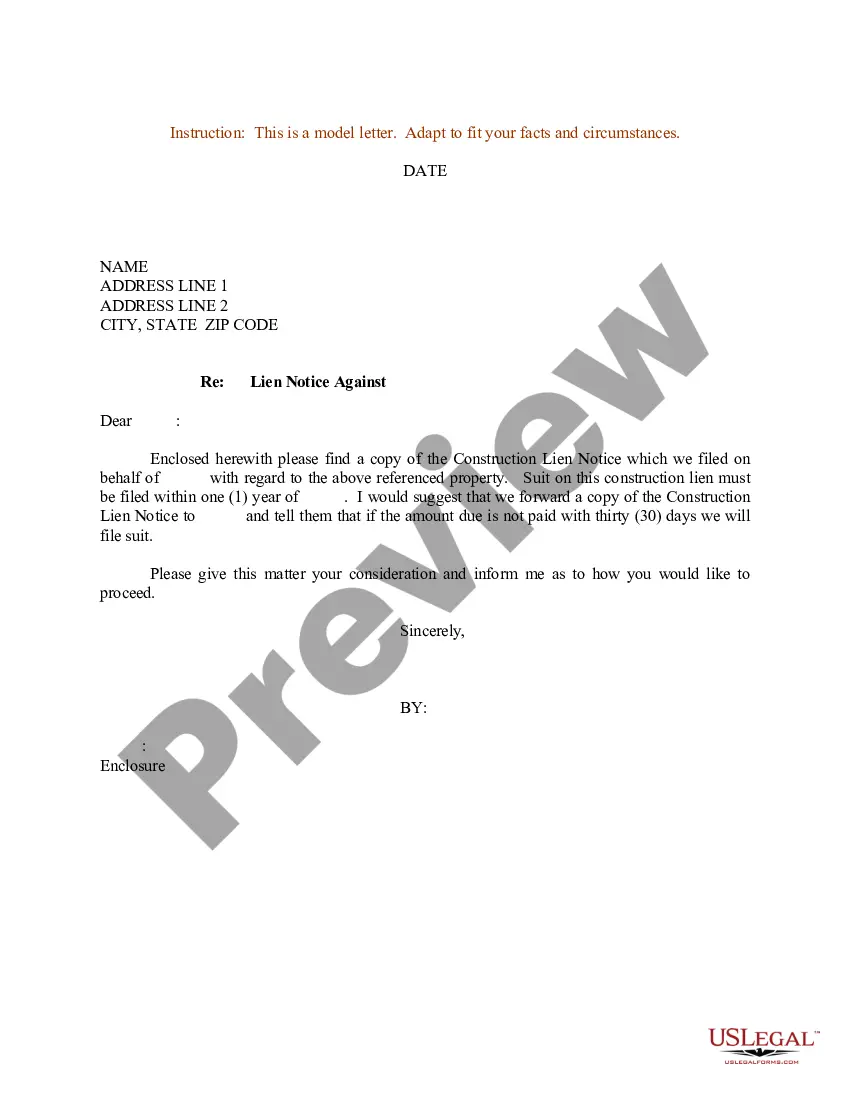
Sample Letter for Construction Lien Notice
About this form
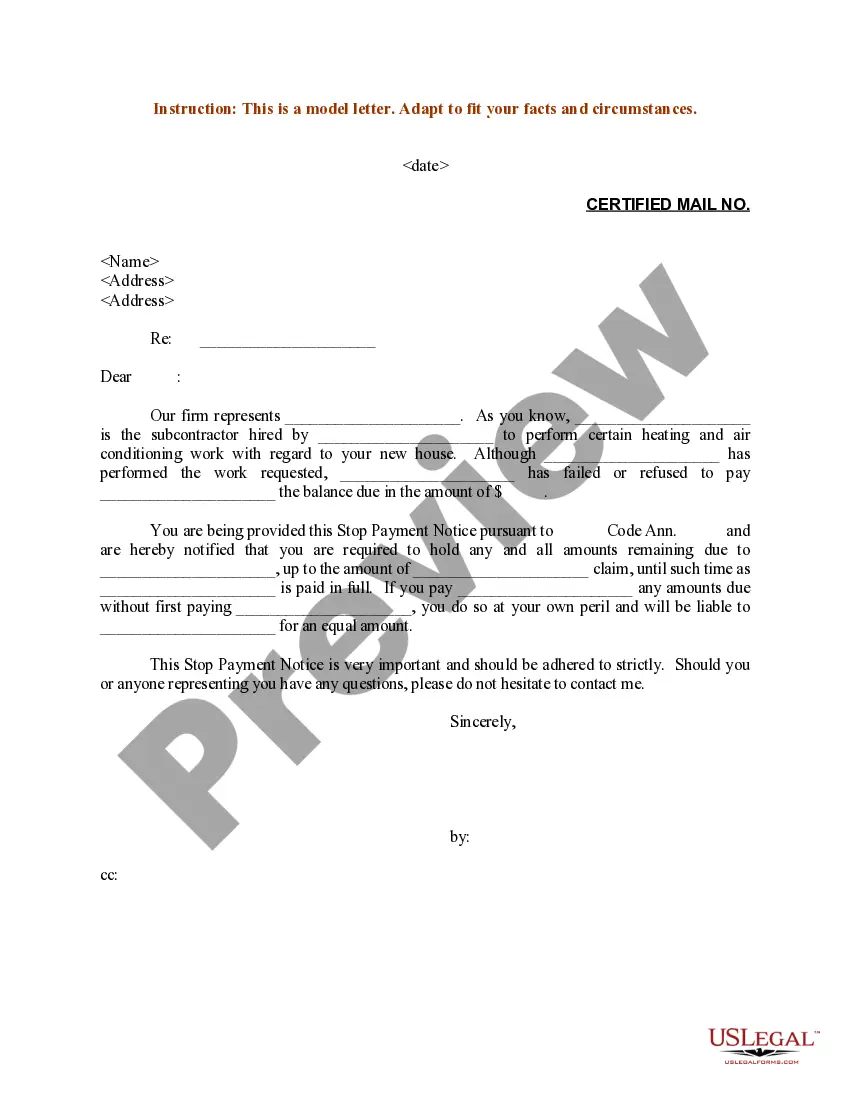
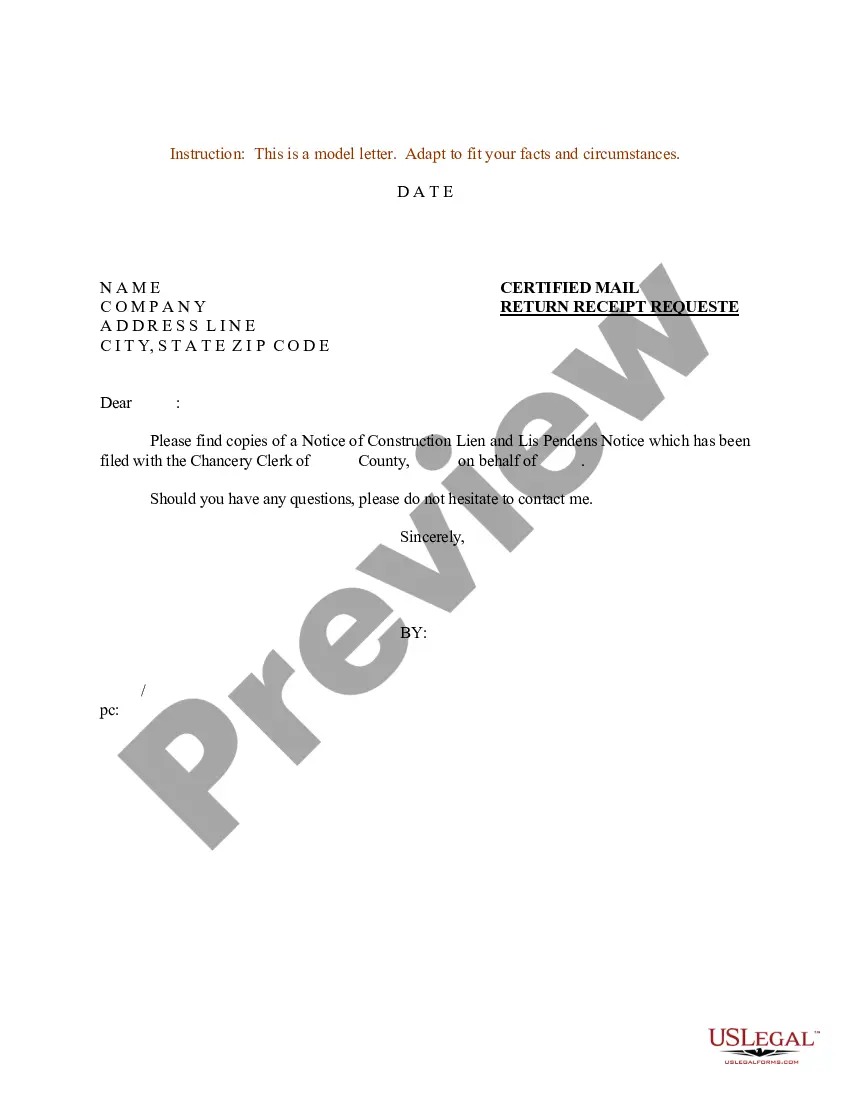
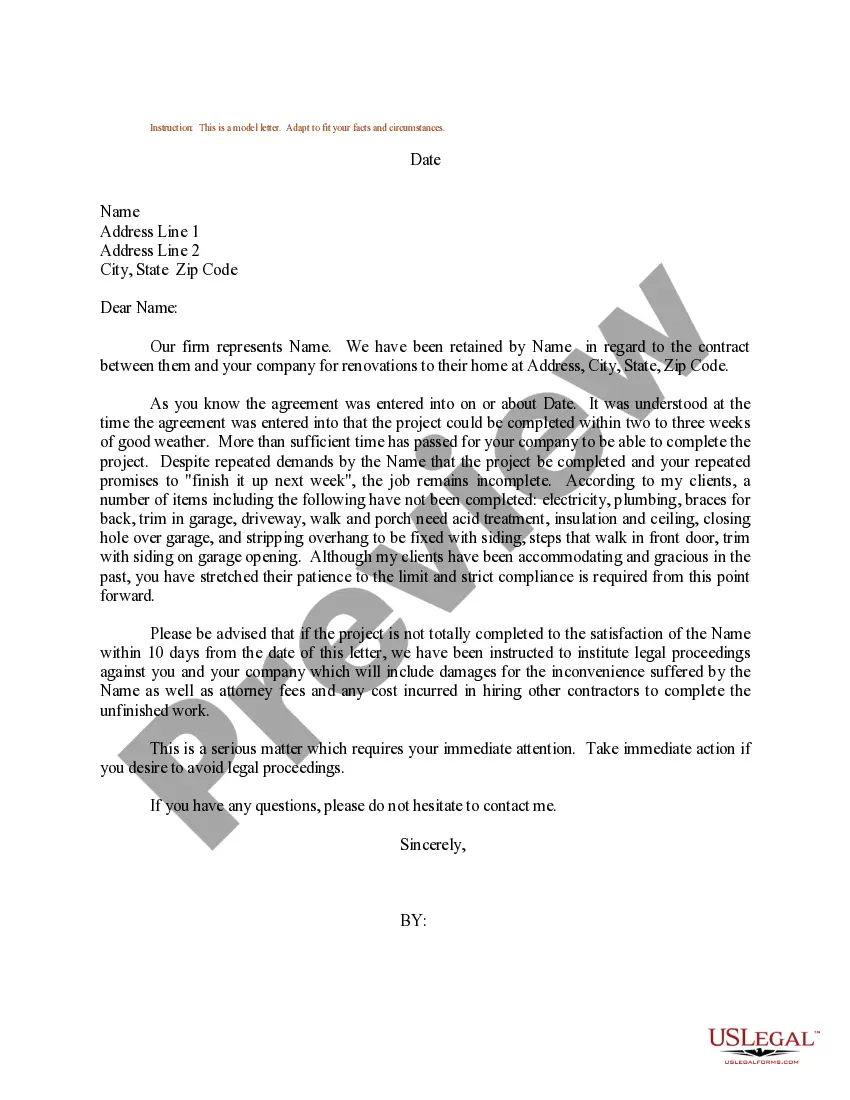
The Sample Letter for Construction Lien Notice is a template designed to serve as a formal written notification regarding a construction lien. This letter specifically outlines the materials or services that were provided and not compensated, distinguishing it from other notices by its clear intent to inform parties of potential lien actions based on outstanding payments.
Main sections of this form
- Date of the notice
- Recipient's name and address details
- Description of the services or materials provided
- Statement of non-payment
- Legal basis for the lien


When to use this document
This form should be used when a contractor, subcontractor, or supplier has not received payment for services rendered or materials provided in connection with a construction project. It is an essential step in the lien process, notifying the property owner or relevant parties of the unpaid amounts and the right to file a lien against the property if payment is not made.
Who needs this form
- Contractors seeking payment for services
- Subcontractors involved in construction projects
- Suppliers providing materials for building or renovation
- Property owners who need to modify or respond to lien notices
How to complete this form
- Enter the date at the top of the letter.
- Fill in the recipient's name and address information accurately.
- Clearly describe the services rendered or materials delivered.
- State the amount owed and the reason for non-payment.
- Sign and date the letter before sending it.
Is notarization required?
This form usually doesn’t need to be notarized. However, local laws or specific transactions may require it. Our online notarization service, powered by Notarize, lets you complete it remotely through a secure video session, available 24/7.
Get your form ready online
Our built-in tools help you complete, sign, share, and store your documents in one place.
Make edits, fill in missing information, and update formatting in US Legal Forms—just like you would in MS Word.
Download a copy, print it, send it by email, or mail it via USPS—whatever works best for your next step.
Sign and collect signatures with our SignNow integration. Send to multiple recipients, set reminders, and more. Go Premium to unlock E-Sign.
If this form requires notarization, complete it online through a secure video call—no need to meet a notary in person or wait for an appointment.
We protect your documents and personal data by following strict security and privacy standards.

Make edits, fill in missing information, and update formatting in US Legal Forms—just like you would in MS Word.

Download a copy, print it, send it by email, or mail it via USPS—whatever works best for your next step.

Sign and collect signatures with our SignNow integration. Send to multiple recipients, set reminders, and more. Go Premium to unlock E-Sign.

If this form requires notarization, complete it online through a secure video call—no need to meet a notary in person or wait for an appointment.

We protect your documents and personal data by following strict security and privacy standards.
Common mistakes
- Failing to include the correct recipient information.
- Not specifying the exact amount owed.
- Leaving out the details of the services or materials in question.
- Neglecting to sign the document.
Why use this form online
- Convenience of downloading and editing the form at any time.
- Immediate access to legal documentation drafted by licensed attorneys.
- Ability to customize the form to fit individual circumstances.
- Time-saving when compared to drafting a letter from scratch.
Looking for another form?


Form popularity
FAQ
Someone who is owed money is generally not able to just put a lien on property without first securing a judgment. Securing a judgment requires the creditor to sue the debtor. This may be through circuit court in many jurisdictions. If under a certain dollar amount, this suit may be through the small claims court.
A mortgage creates a lien on your property that gives the lender the right to foreclose and sell the home to satisfy the debt. A deed of trust (sometimes called a trust deed) is also a document that gives the lender the right to sell the property to satisfy the debt should you fail to pay back the loan.
A property lien is a legal claim to specific assets that have been granted by the courts. A creditor must file and receive approval for a property lien through a county records office or state agency. Each jurisdiction has its own rules and regulations governing property liens.
The Indian Contract Act, 1872 classifies the Right of Lien into two types: Particular Lien and General Lien.
Unpaid taxes: If you fail to pay your income or property taxes, the IRS or county may issue a tax lien against the house. Owed child support: Unpaid child or spousal support, if ruled necessary by a court, can result in a property lien.
The short answer to that question is usually no. If somebody owes you money you could sue them, you could obtain a judgment, you can obtain what's called a "judgment lien" and once you get the judgment lien, you can have the court record that against their property including the real estate.
A judicial lien is created when a court grants a creditor an interest in the debtor's property, after a court judgment.The lien is the first step by the judgment creditor in a process that will culminate in a sale of the attached property, to satisfy the judgment debt.
Voluntary and Involuntary Liens. Creditors, such as a mortgage or car lender, can ask borrowers to put up the purchased property as collateral as part of the condition of the loan. Creditors With Involuntary Liens. Judgment Liens. Other Types of Involuntary Liens.