Request to Include Landlord in Tenants Liability Insurance
What is this form?
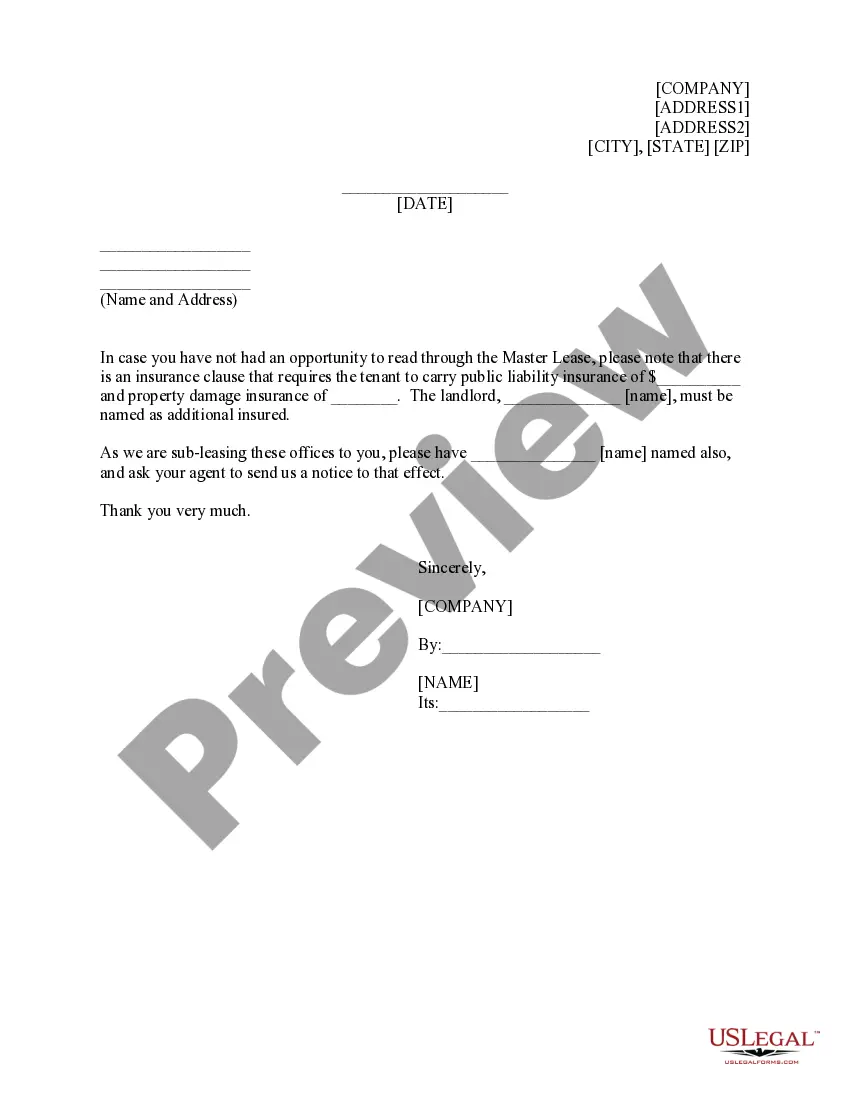
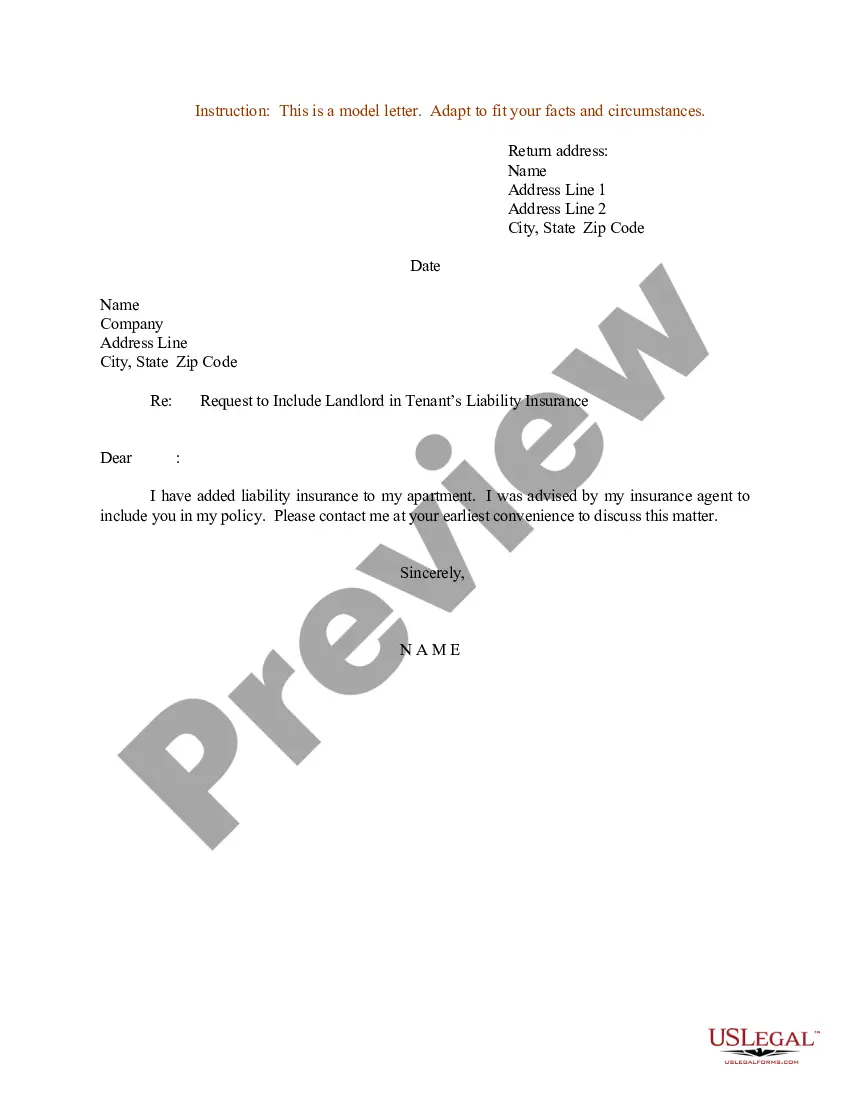
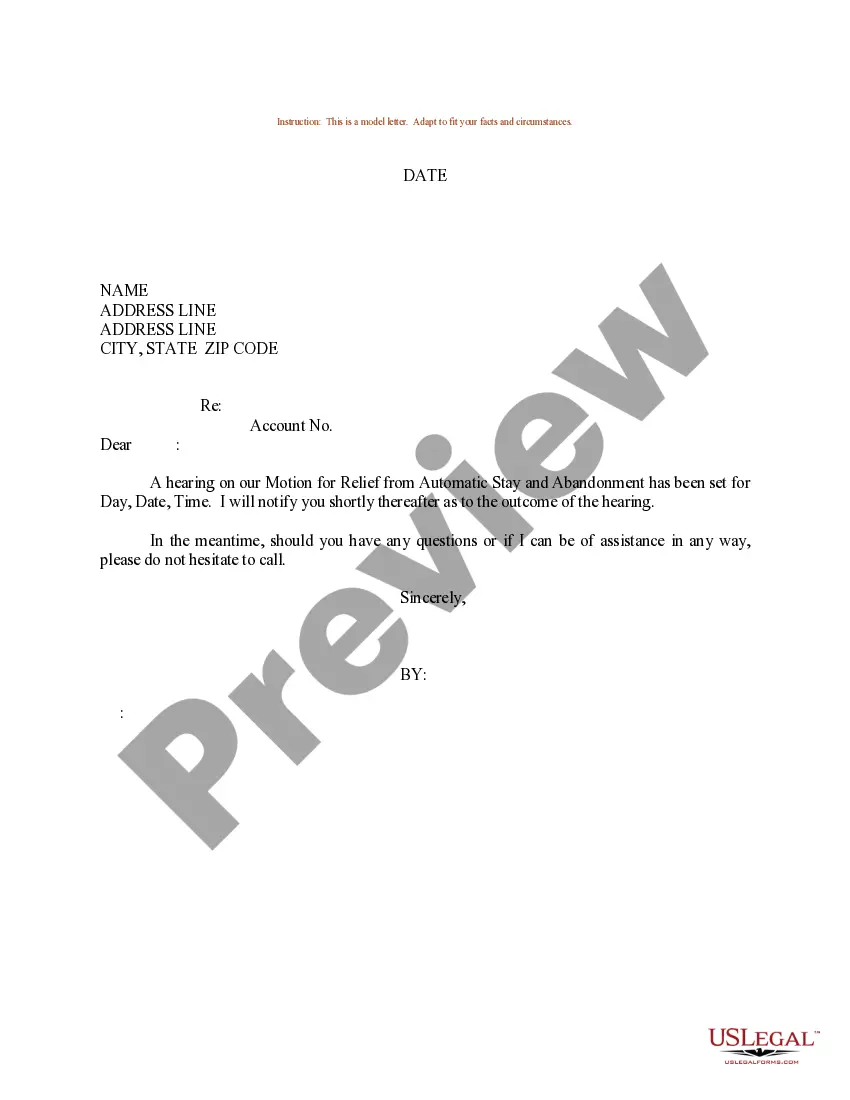
The Request to Include Landlord in Tenants Liability Insurance form is used by tenants to request that their landlord be added as an additional insured party on their liability insurance policy. This form ensures that landlords are protected against potential liabilities arising from tenant activities, while also fulfilling requirements stipulated in most rental agreements. Unlike standard insurance policy requests, this form specifically addresses the inclusion of the landlord in the tenant's liability insurance, which is crucial for compliance and risk management.
Key parts of this document
- Address of the tenant and landlord.
- Date of the request.
- Insurance requirements from the Master Lease.
- Name of the landlord to be included in the insurance policy.
- Signature of the company representative.
When to use this document
Use this form when you enter a lease agreement that requires you to carry liability insurance. If your lease specifies that your landlord must be added as an additional insured, this form is necessary to formalize that request. It is particularly useful when sub-leasing, ensuring that both your interests and those of the landlord are protected.
Who should use this form
- Tenants entering into a rental or sublease agreement.
- Landlords who require tenants to hold liability insurance.
- Property managers overseeing multiple rental units.
Completing this form step by step
- Enter your address and the landlord's address at the top of the form.
- Include the date you are making the request.
- List the insurance requirements as specified in your Master Lease.
- Provide the name of the landlord to be insured.
- Sign the form, including your name and position within your company.
Does this form need to be notarized?
Notarization is not commonly needed for this form. However, certain documents or local rules may make it necessary. Our notarization service, powered by Notarize, allows you to finalize it securely online anytime, day or night.
Get your form ready online
Our built-in tools help you complete, sign, share, and store your documents in one place.
Make edits, fill in missing information, and update formatting in US Legal Forms—just like you would in MS Word.
Download a copy, print it, send it by email, or mail it via USPS—whatever works best for your next step.
Sign and collect signatures with our SignNow integration. Send to multiple recipients, set reminders, and more. Go Premium to unlock E-Sign.
If this form requires notarization, complete it online through a secure video call—no need to meet a notary in person or wait for an appointment.
We protect your documents and personal data by following strict security and privacy standards.

Make edits, fill in missing information, and update formatting in US Legal Forms—just like you would in MS Word.

Download a copy, print it, send it by email, or mail it via USPS—whatever works best for your next step.

Sign and collect signatures with our SignNow integration. Send to multiple recipients, set reminders, and more. Go Premium to unlock E-Sign.

If this form requires notarization, complete it online through a secure video call—no need to meet a notary in person or wait for an appointment.

We protect your documents and personal data by following strict security and privacy standards.
Typical mistakes to avoid
- Failing to include the landlord's correct name, which may lead to processing delays.
- Not specifying the required amounts of liability and property damage insurance.
- Omitting your signature or title, rendering the form incomplete.
Benefits of completing this form online
- Convenient access to download and complete the form at any time.
- Edit and customize the template easily to fit your specific needs.
- Reliable legal drafting by licensed attorneys to ensure compliance.
Looking for another form?
Form popularity
FAQ
Your landlord shouldn't be listed on your renters insurance policy as an additional insured. Having an additional insured on your renters insurance means that you would be paying to cover them and their personal property too.
On average, renters insurance in Wisconsin costs $108 per year. However, the company you buy insurance from can affect your rates by as much as $49 annually.
Landlords may not advertise or rent condemned property. Landlords must disclose housing code violations they have been notified of but have not corrected. They must also reveal structural defects, a lack of hot or cold running water, serious plumbing, or electrical problems, and other hazards.
Is renters insurance required in Wisconsin? No, there is no federal law that requires tenants to carry renters insurance; however, some landlords may require proof of renters insurance as part of the lease agreement.
Renters insurance protects your belongings from loss, damage, or destruction following things like burglaries, fires, tornadoes and other covered events. Plus, renters insurance also protects your liability (and your money) if someone is injured at your rental home or apartment.
Key Takeaways. Homeowners insurance covers the actual building you live in (and associated structures such as garages). With renter's insurance, the landlord will be expected to have coverage on the building, while your insurance will cover your personal property.
Florida law does not require tenants to have renters insurance in the state, but you, as a landlord, are permitted to require this type of insurance. Some landlords choose to require renters insurance to protect their personal property while also ensuring that tenants will not try to make claims through the landlord.
Liability coverage can help protect you if a guest is injured at your place, or if you accidentally damage someone else's property. If you can't stay at home because of a covered event, like a fire, additional living expenses coverage can help pay for things like your hotel stay.