Identity Theft Checklist for Minors
Understanding this form
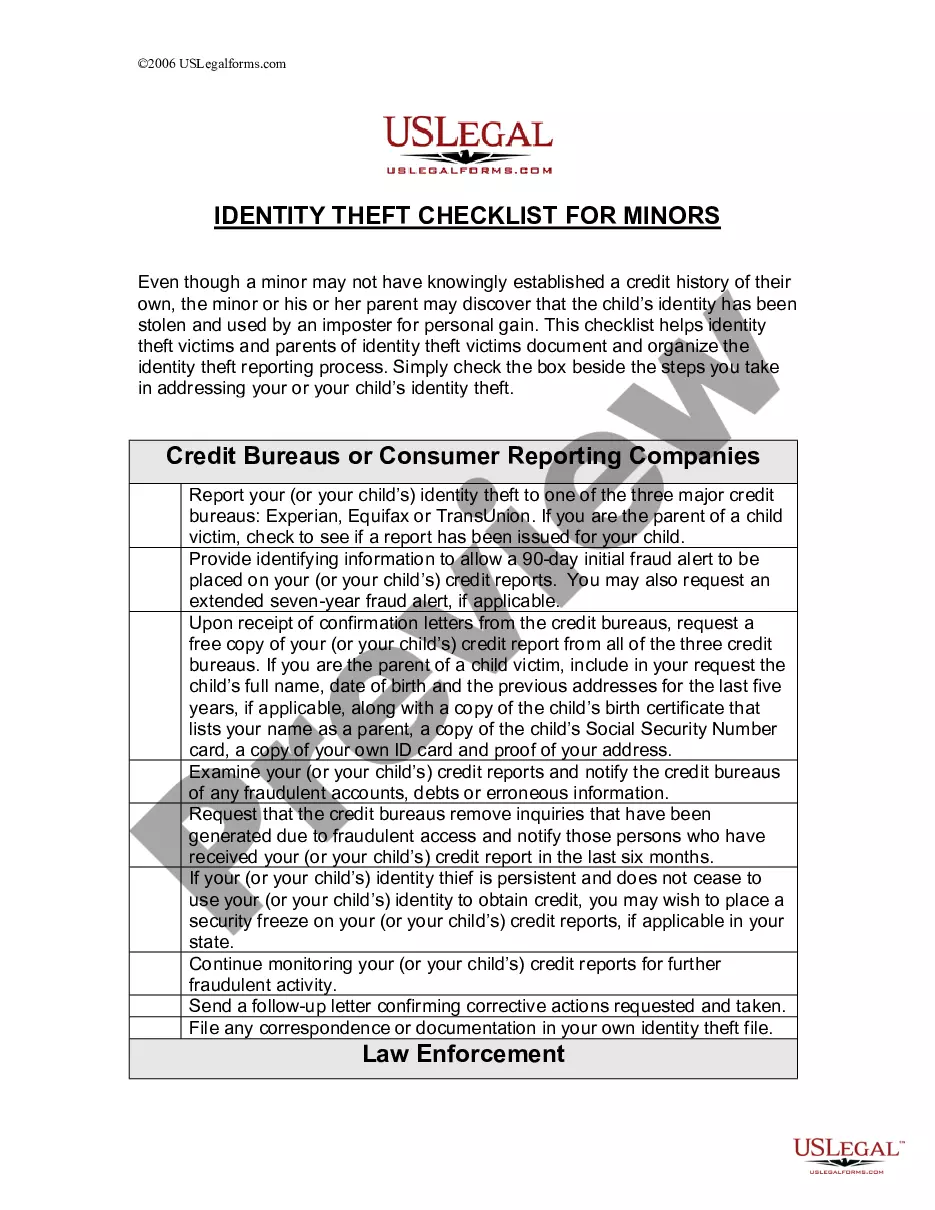
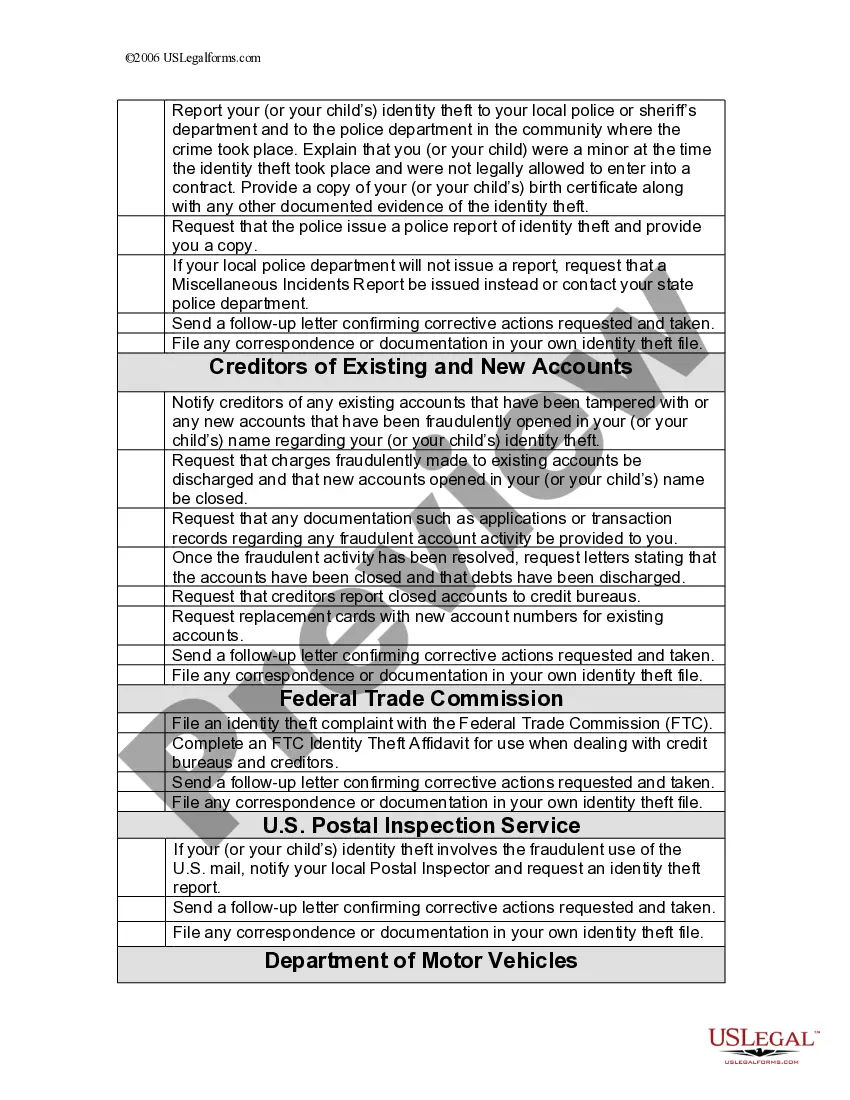
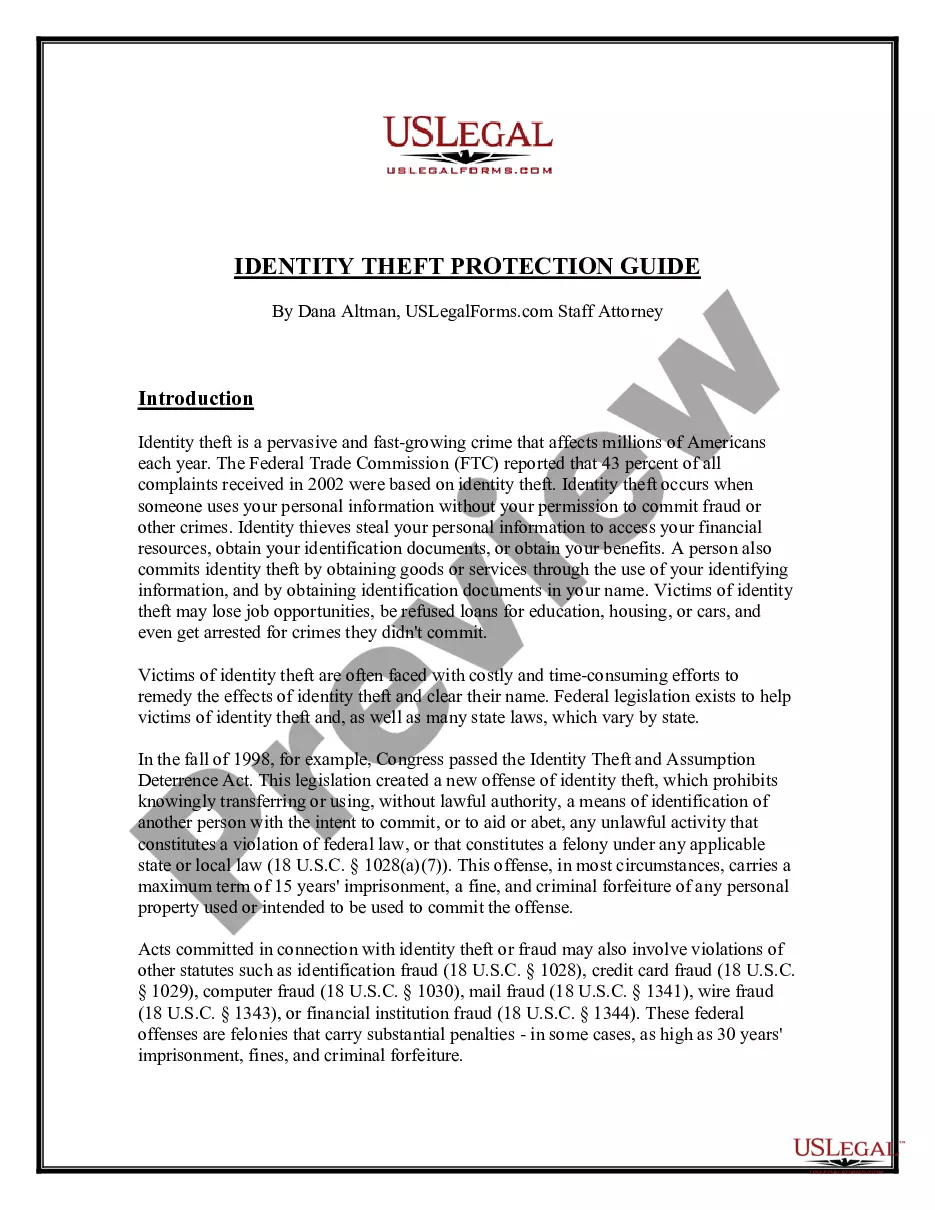
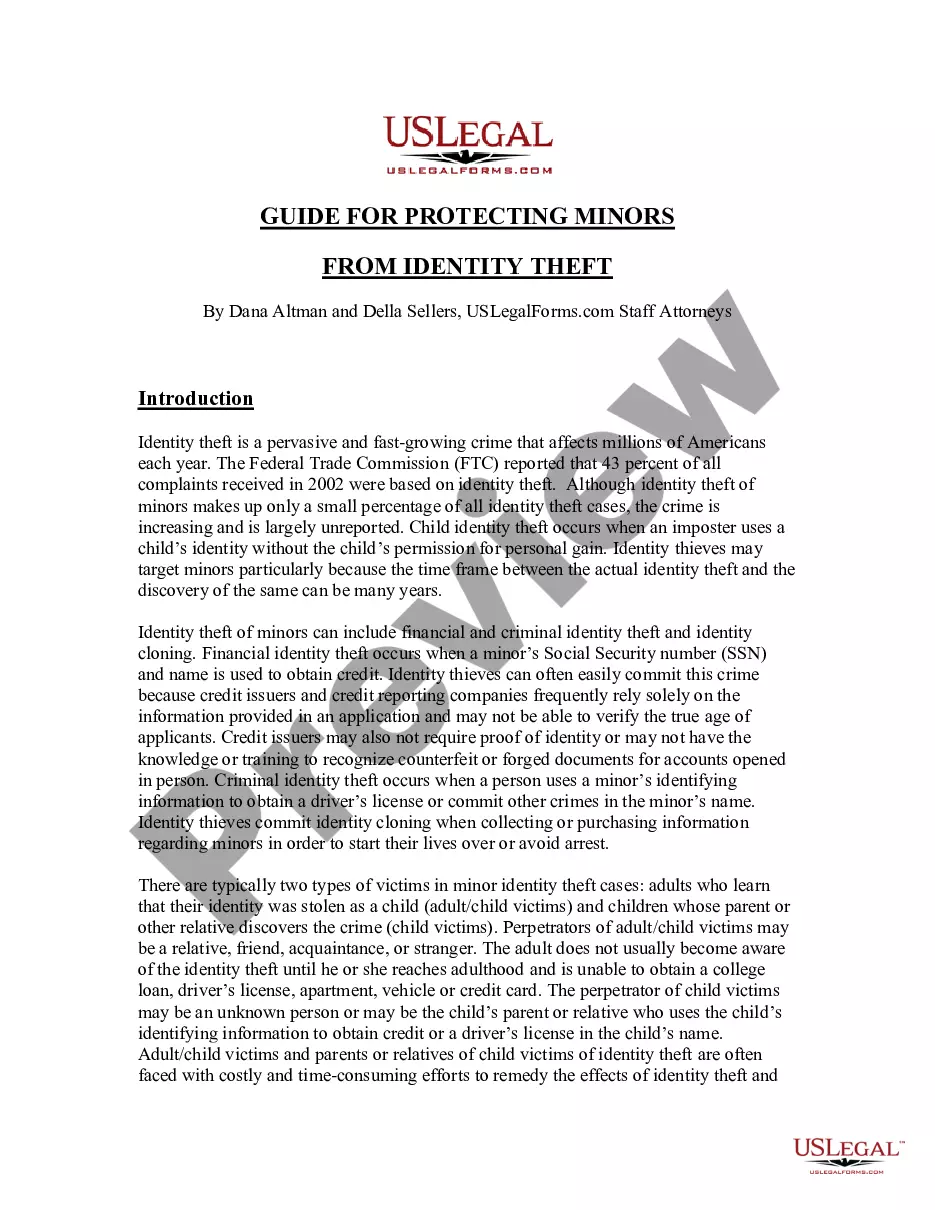
The Identity Theft Checklist for Minors is a comprehensive tool designed for minors and their parents to document and manage the identity theft reporting process. This form simplifies the steps needed to communicate with creditors, law enforcement, and credit reporting agencies, ensuring protection against unauthorized use of a child's identity. Unlike other identity theft forms, this checklist is specifically tailored to address situations involving minors, making it an essential resource for families affected by identity theft.
Key components of this form
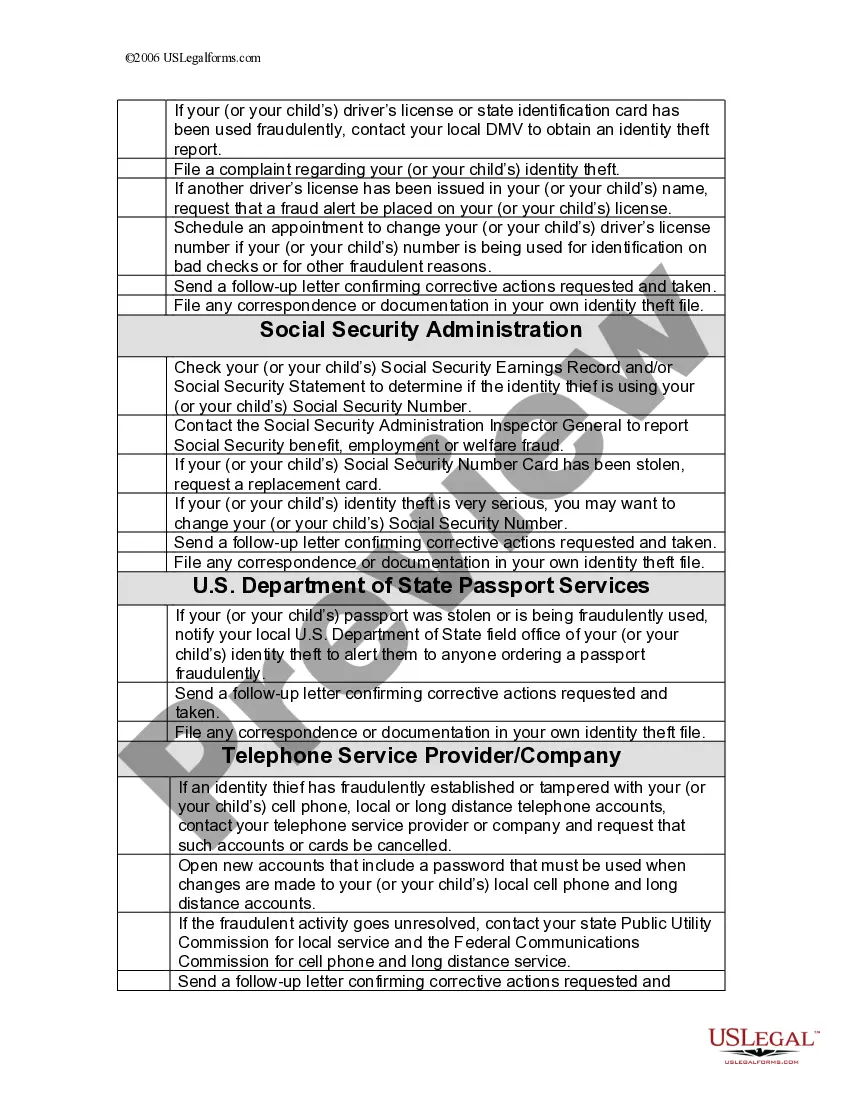
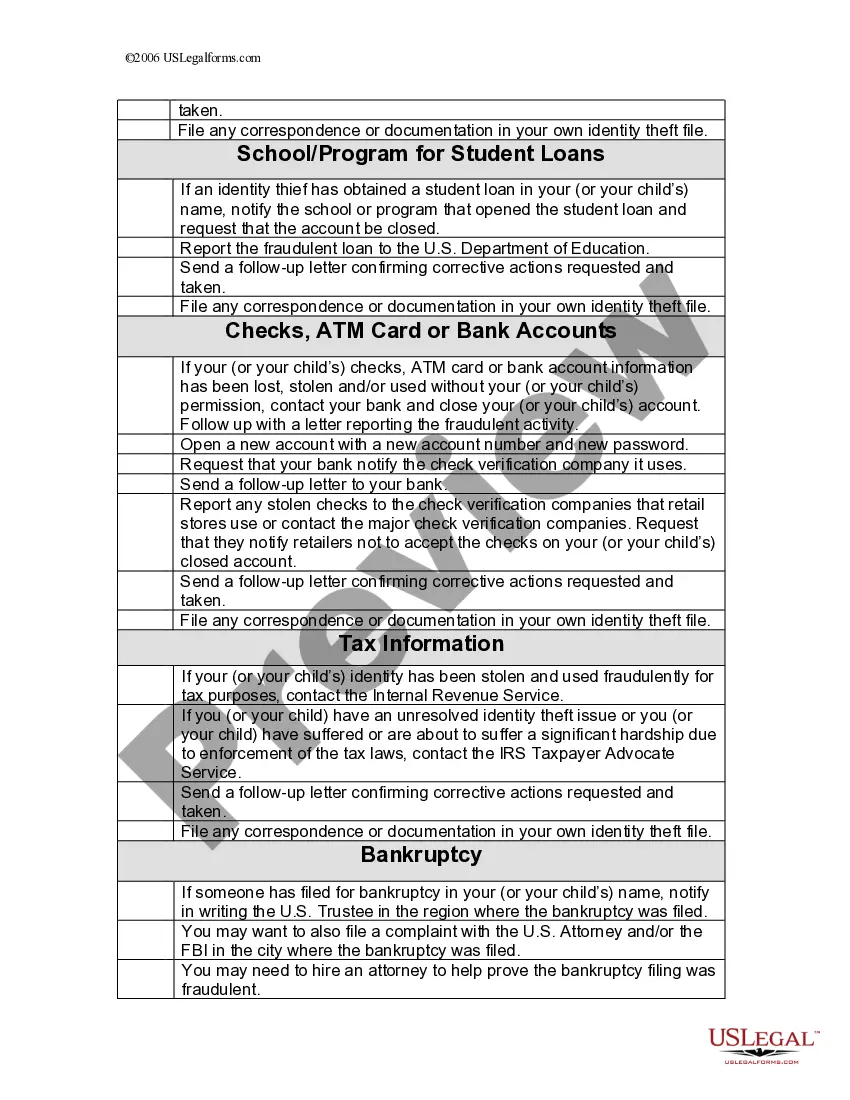
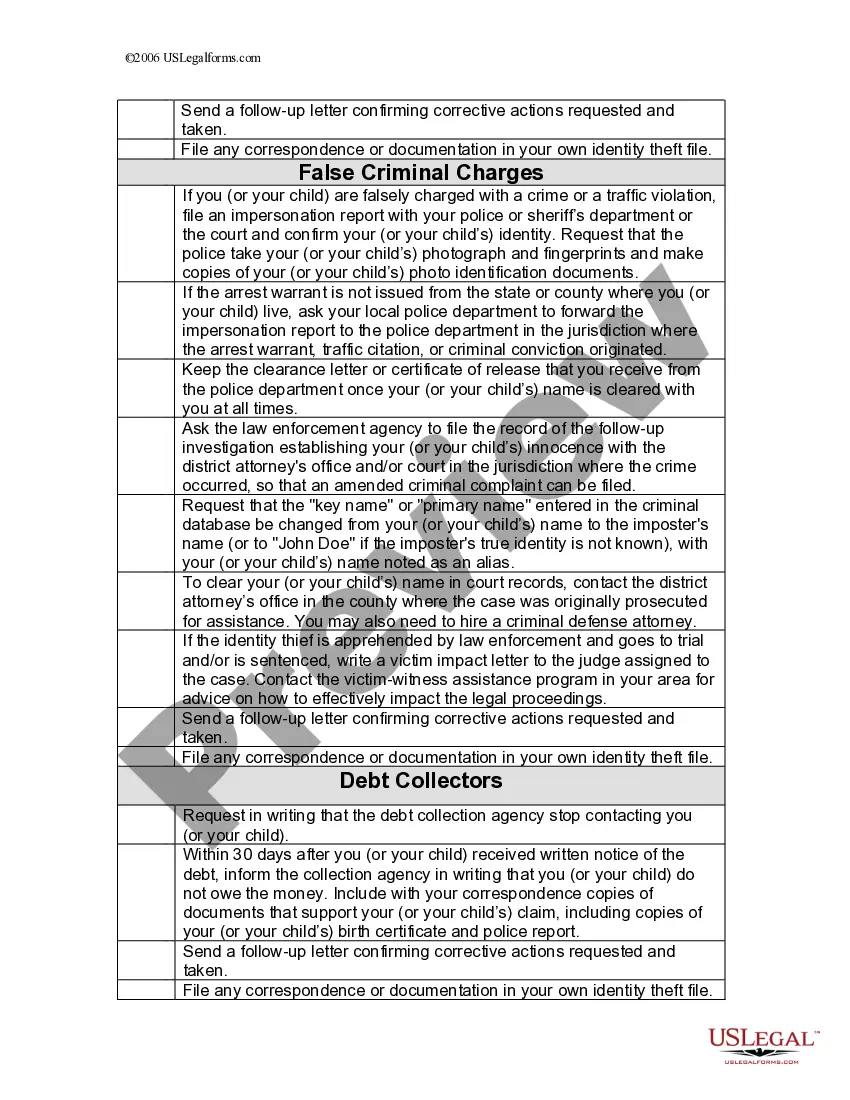
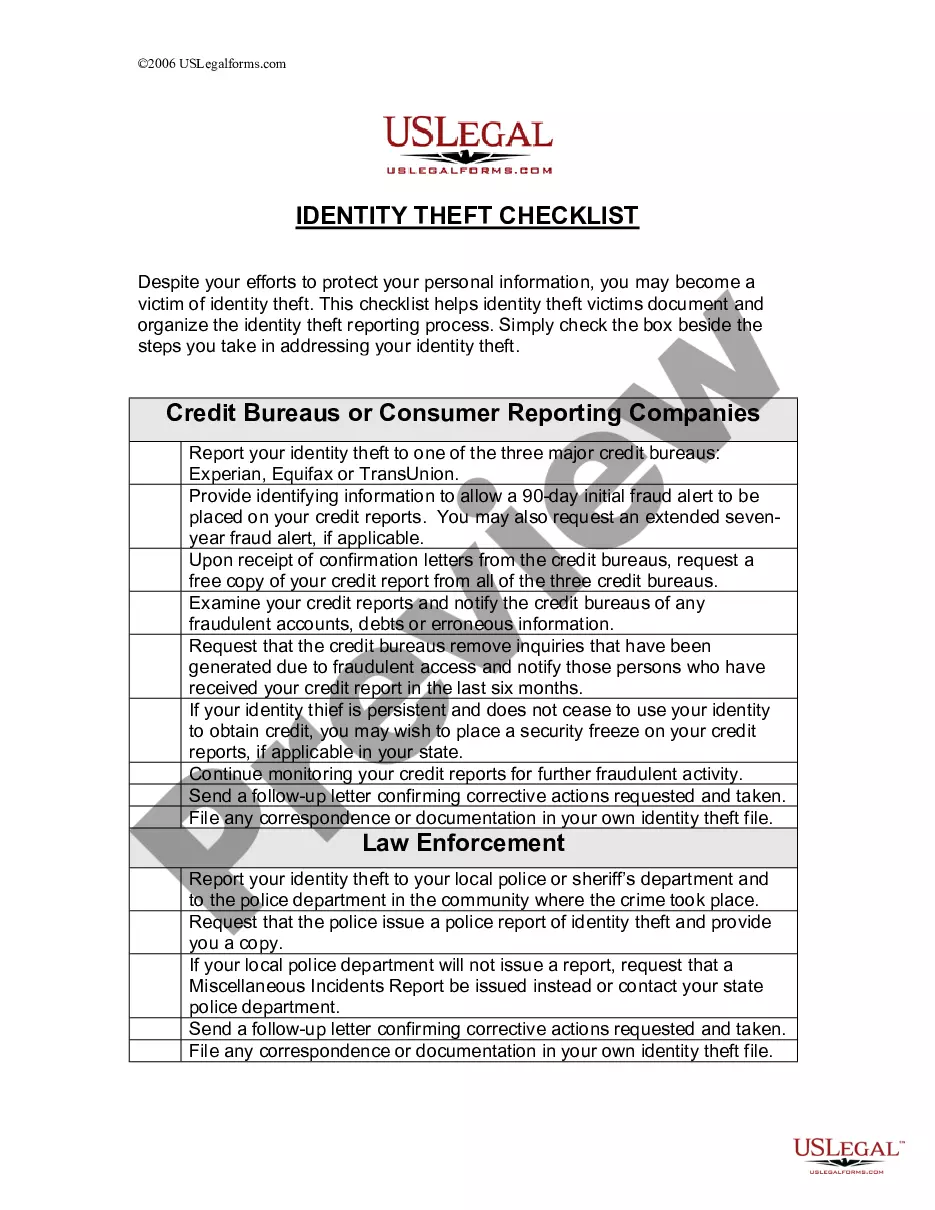
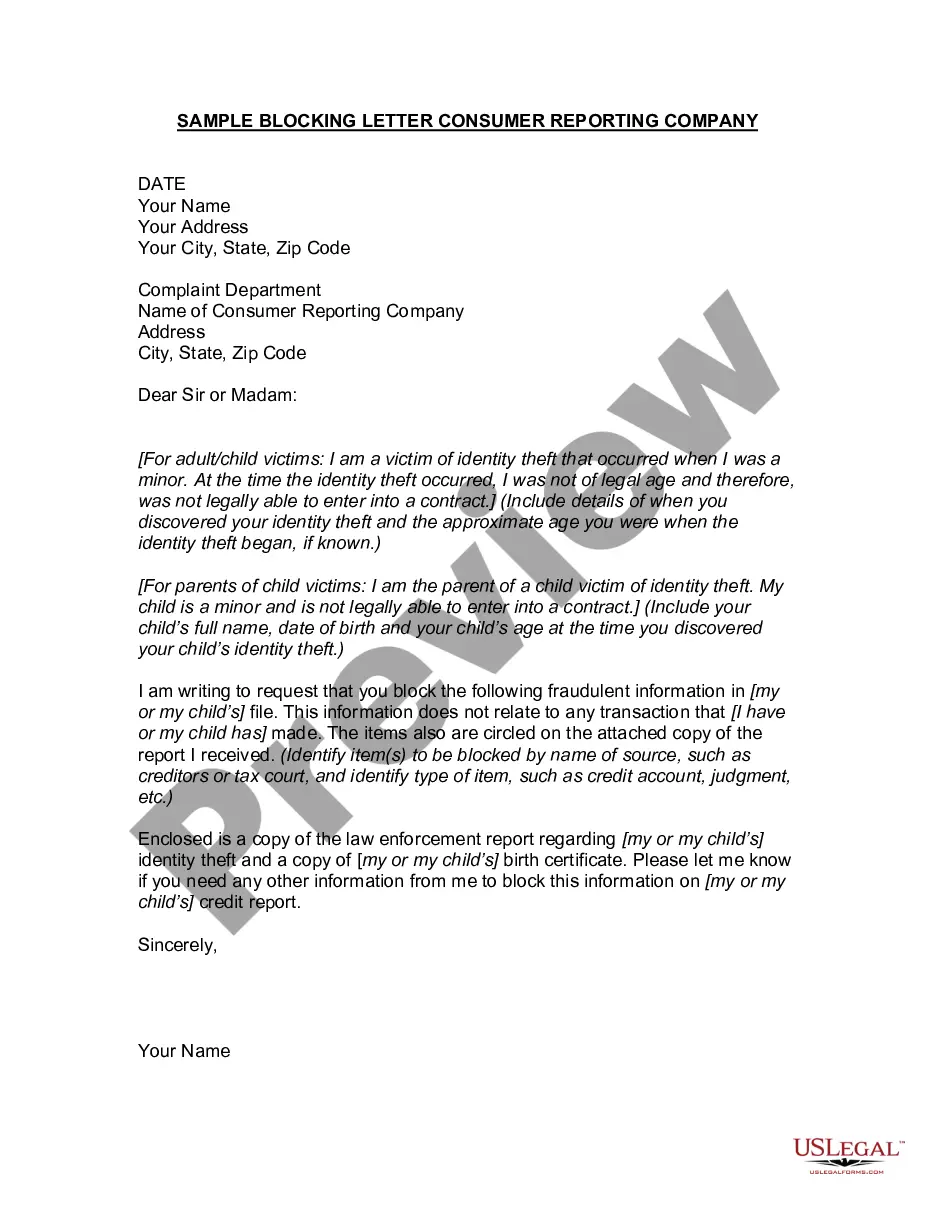
- Guidelines for notifying credit bureaus, creditors, and law enforcement.
- Steps for placing fraud alerts and monitoring credit reports.
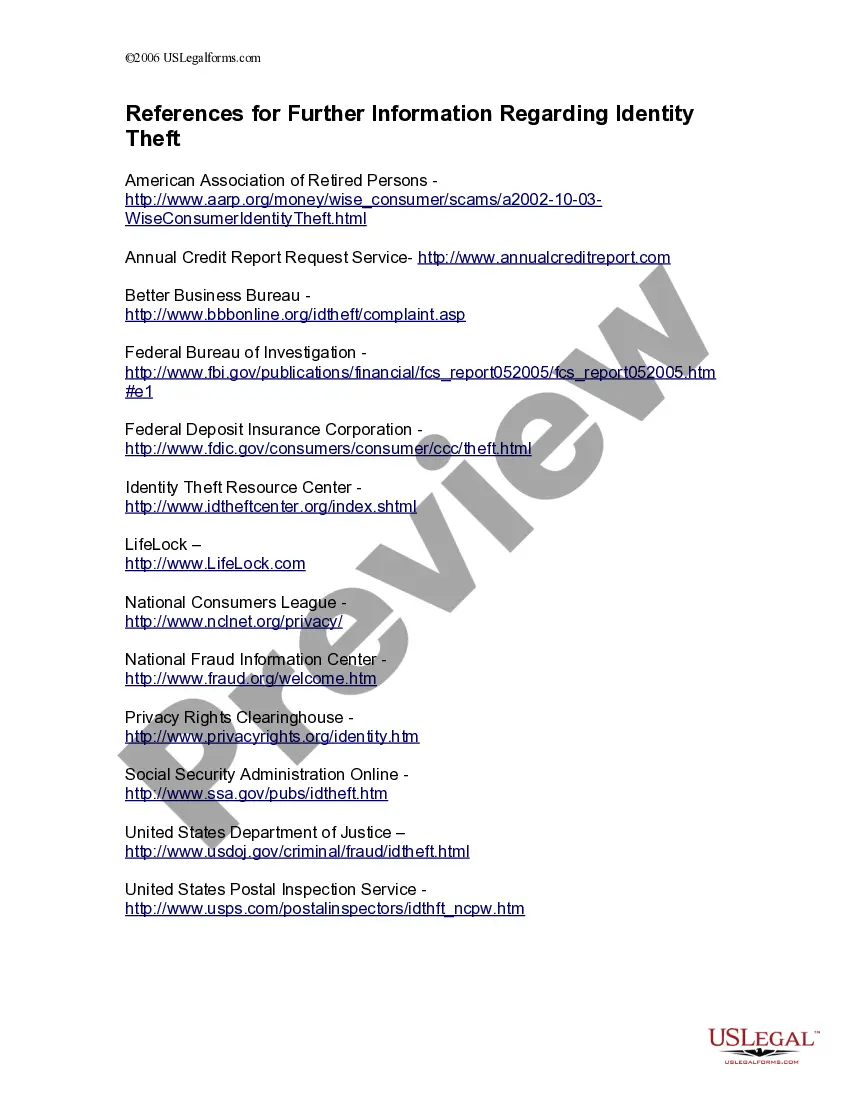
- Instructions for filing identity theft complaints with relevant agencies.
- Sections for documenting communications and actions taken.
- Advice on dealing with potential fraudulent accounts or debts.

Situations where this form applies
This form is useful in various scenarios, such as when a parent discovers that their childâs identity has been compromised or when a minor finds out that their personal information is being used fraudulently. It serves as a critical guide for taking immediate action to mitigate the effects of identity theft and to prevent further unauthorized use of the minor's identity.
Intended users of this form
The following individuals should use the Identity Theft Checklist for Minors:
- Parents or guardians of minors whose identity has been stolen.
- Minors who are aware that their personal information has been misused.
- Families looking to organize their response to identity theft incidents.
Completing this form step by step
- Identify all affected parties and gather necessary documentation, such as the minor's birth certificate and social security number.
- Follow the checklist by marking each action taken, such as notifying credit bureaus or contacting law enforcement.
- Request reports from credit bureaus and creditors regarding any fraudulent use of the minor's identity.
- Maintain a record of all communications and actions for future reference.
- Review and update your actions regularly to ensure no further unauthorized activities occur.
Notarization guidance
Notarization is not commonly needed for this form. However, certain documents or local rules may make it necessary. Our notarization service, powered by Notarize, allows you to finalize it securely online anytime, day or night.
Get your form ready online
Our built-in tools help you complete, sign, share, and store your documents in one place.
Make edits, fill in missing information, and update formatting in US Legal Forms—just like you would in MS Word.
Download a copy, print it, send it by email, or mail it via USPS—whatever works best for your next step.
Sign and collect signatures with our SignNow integration. Send to multiple recipients, set reminders, and more. Go Premium to unlock E-Sign.
If this form requires notarization, complete it online through a secure video call—no need to meet a notary in person or wait for an appointment.
We protect your documents and personal data by following strict security and privacy standards.

Make edits, fill in missing information, and update formatting in US Legal Forms—just like you would in MS Word.

Download a copy, print it, send it by email, or mail it via USPS—whatever works best for your next step.

Sign and collect signatures with our SignNow integration. Send to multiple recipients, set reminders, and more. Go Premium to unlock E-Sign.

If this form requires notarization, complete it online through a secure video call—no need to meet a notary in person or wait for an appointment.

We protect your documents and personal data by following strict security and privacy standards.
Mistakes to watch out for
- Failing to notify all three major credit bureaus.
- Not keeping copies of correspondence sent or received.
- Delaying reporting to law enforcement or not obtaining a police report.
- Overlooking the need to place fraud alerts or security freezes on credit reports.
Why use this form online
- Immediate access to a structured checklist specifically designed for minors.
- Convenient download option for offline use and record-keeping.
- Easy to customize and fill out based on specific incidents of identity theft.
- Reliable guidance from licensed attorneys ensures compliance with legal standards.
Key takeaways
- The Identity Theft Checklist for Minors is essential for documenting and managing cases of identity theft involving minors.
- It provides a step-by-step guide for communicating with various agencies and creditors.
- Timely action is critical in mitigating the risks associated with identity theft.
- Families should keep thorough records of all steps taken to resolve identity theft issues.
Looking for another form?
Form popularity
FAQ
Identity thieves can also use your identity when they commit other crimes, such as entering (or exiting) a country illegally, trafficking drugs, smuggling other substances, committing cyber crimes, laundering money and much more. In fact, they can use your identity to commit almost any crime imaginable in your name.
First, you need to check with the Social Security Administration once a year to make sure no one is using your child's SSN. Secondly, you need to check your child's credit report (free Equifax -1-800-525-6285; Experian-1-888-397-3742; TransUnion-1-800-680-7289.)
If your child is a victim of identity theft Contact the fraud departments of companies where accounts were opened in your child's name. Ask them to close the account and send you a letter of confirmation. You may need to provide a copy of your child's birth certificate and a police report.
Your child receives phone calls or letters from collection agencies. Your child is mailed a credit card in his or her own name (and you didn't add the child as an authorized user to any of your existing credit card accounts).
First, you need to check with the Social Security Administration once a year to make sure no one is using your child's SSN. Secondly, you need to check your child's credit report (free Equifax -1-800-525-6285; Experian-1-888-397-3742; TransUnion-1-800-680-7289.)
Contact the Federal Trade Commission (FTC) to report the ID theft and get a recovery plan. Contact your local law enforcement and get a police report. Contact the fraud departments of companies where accounts were opened in your child's name.
What is child identity theft? Adults are not the only targets of identity theft. In fact, children under the age of 18 can also become victims. Child identity theft happens when someone uses a minor child's personal information, such as name and Social Security number, usually to obtain credit or employment.
A child's identity is very attractive to thieves. It's also a relatively easy crime to commit; a thief could pair any name and birth date with a stolen Social Security number, essentially creating a false identity.
First, you need to check with the Social Security Administration once a year to make sure no one is using your child's SSN. Secondly, you need to check your child's credit report (free Equifax -1-800-525-6285; Experian-1-888-397-3742; TransUnion-1-800-680-7289.) You can also report fraud to them.