South Carolina Declaration of Easements, Covenants and Restrictions
What is this form?
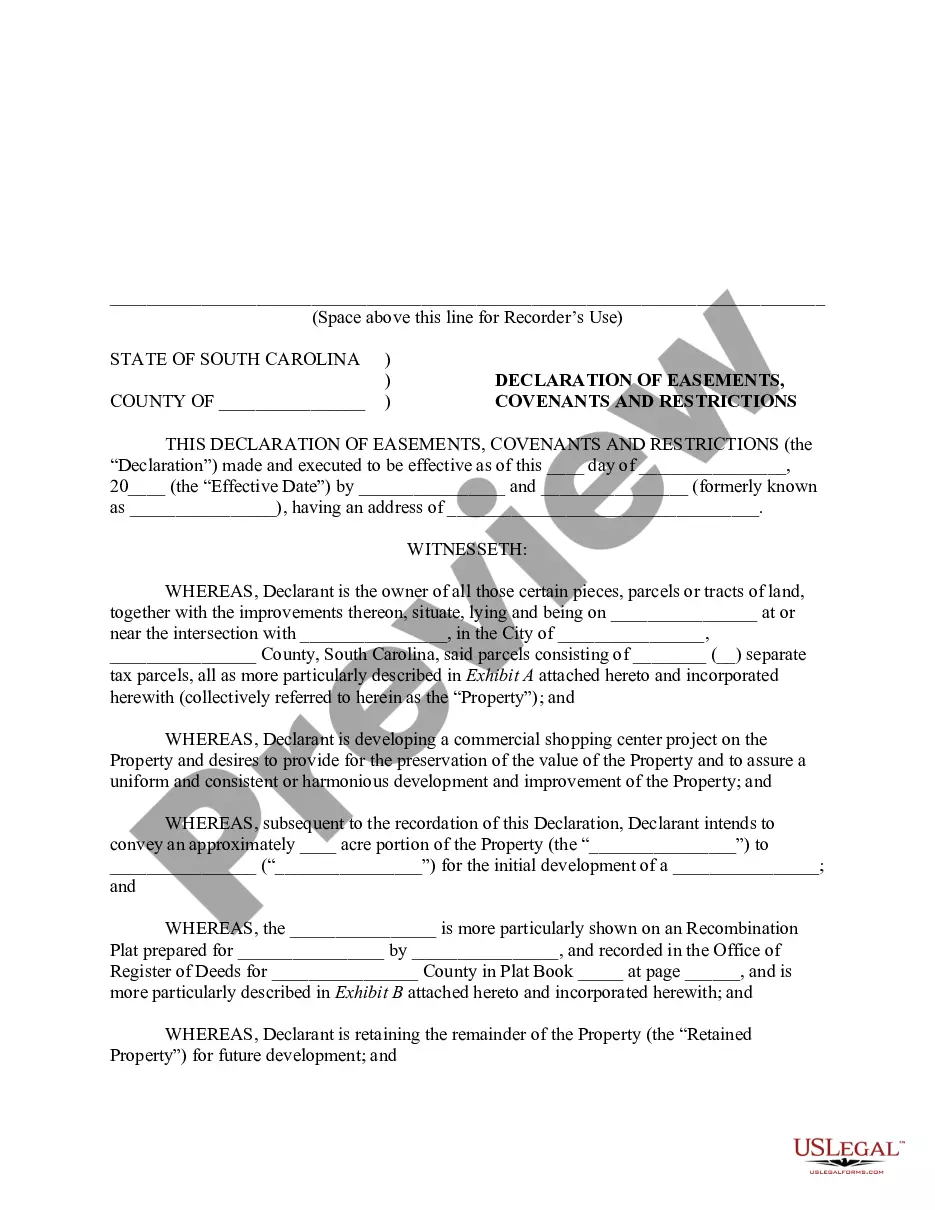
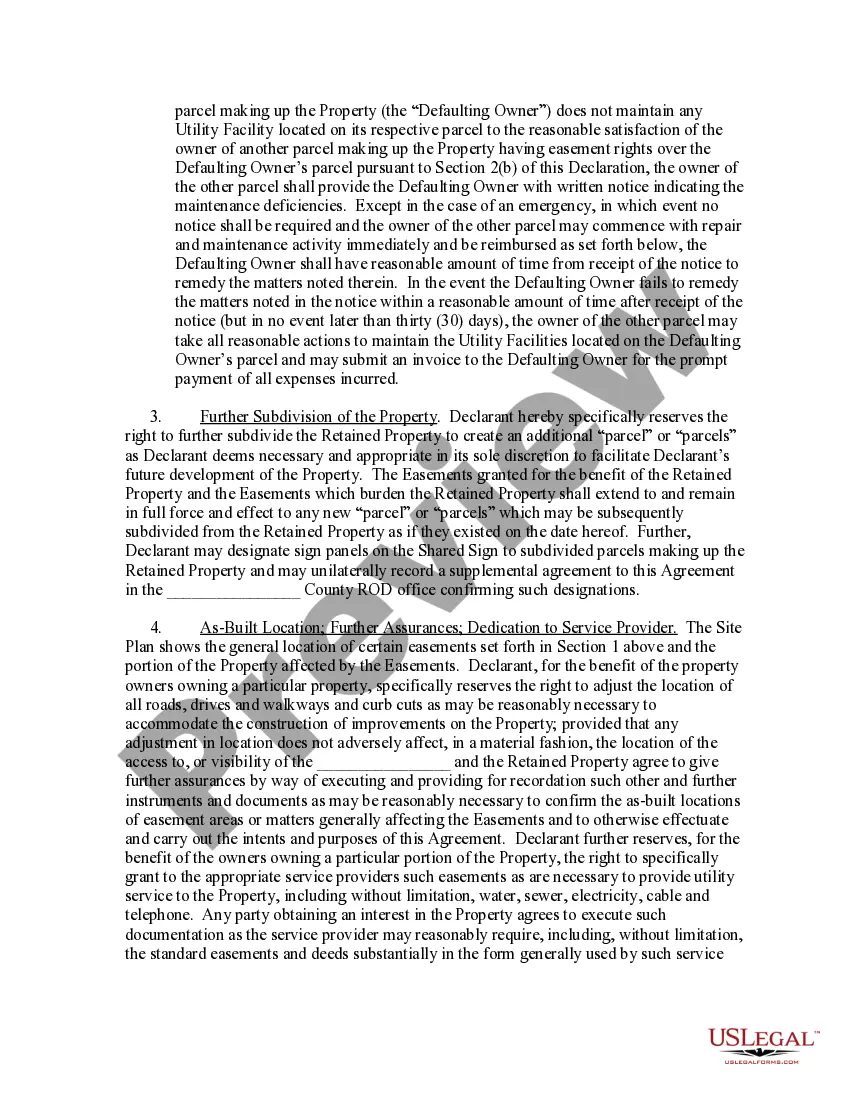
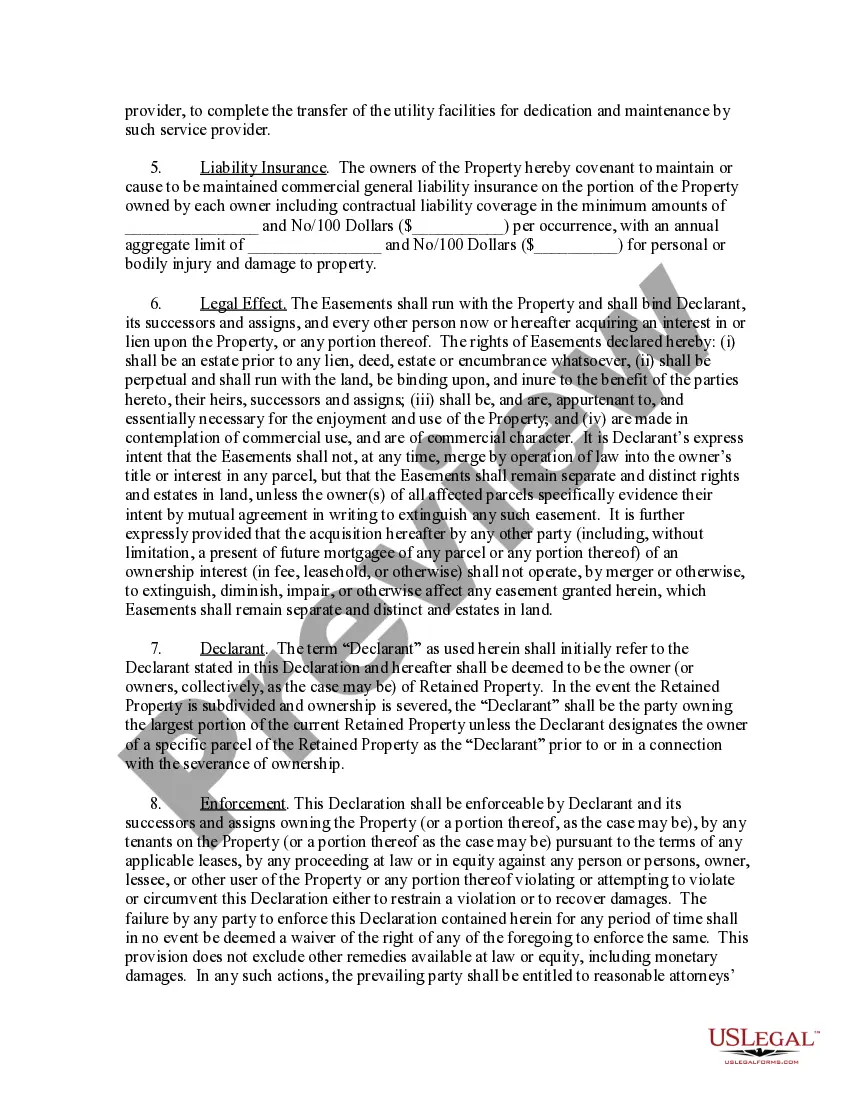
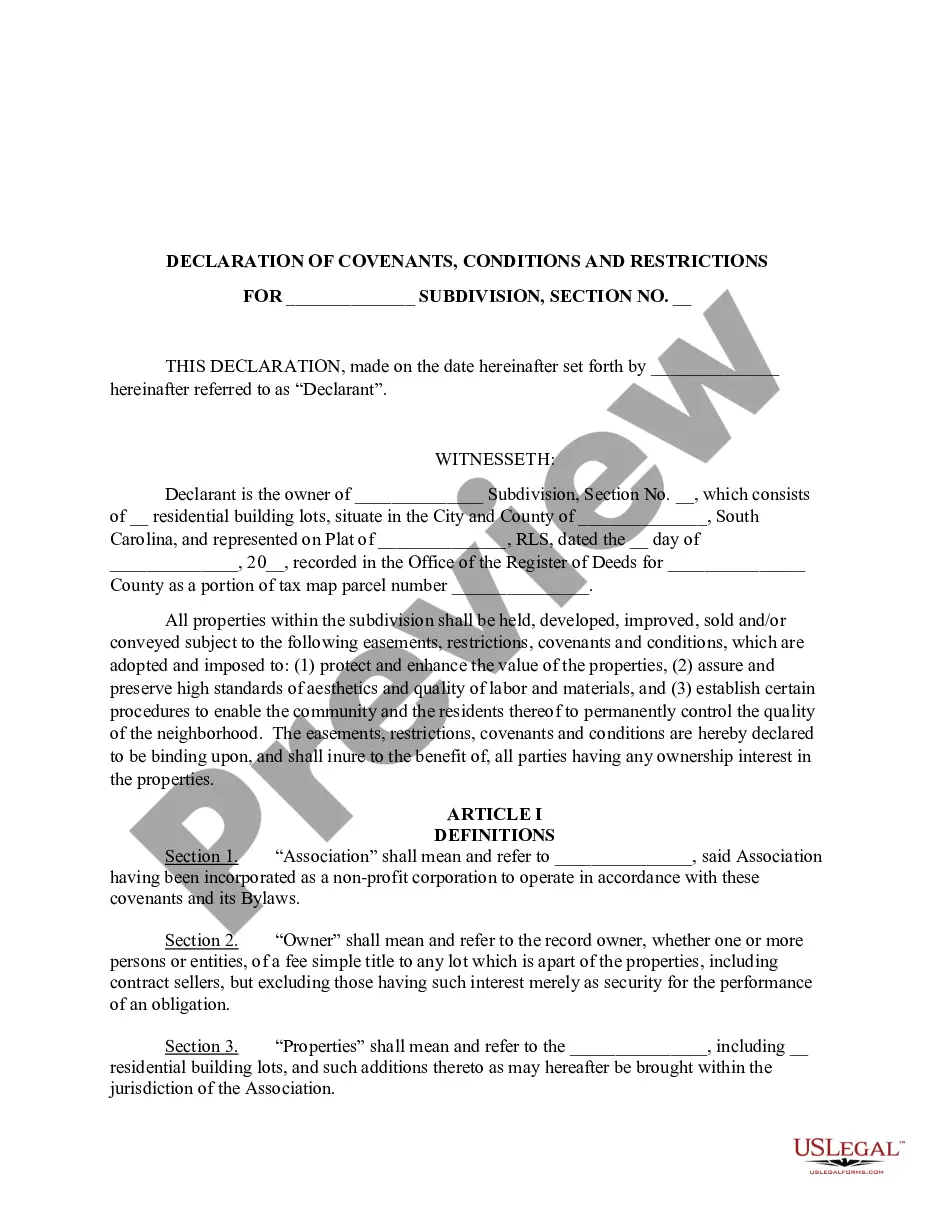
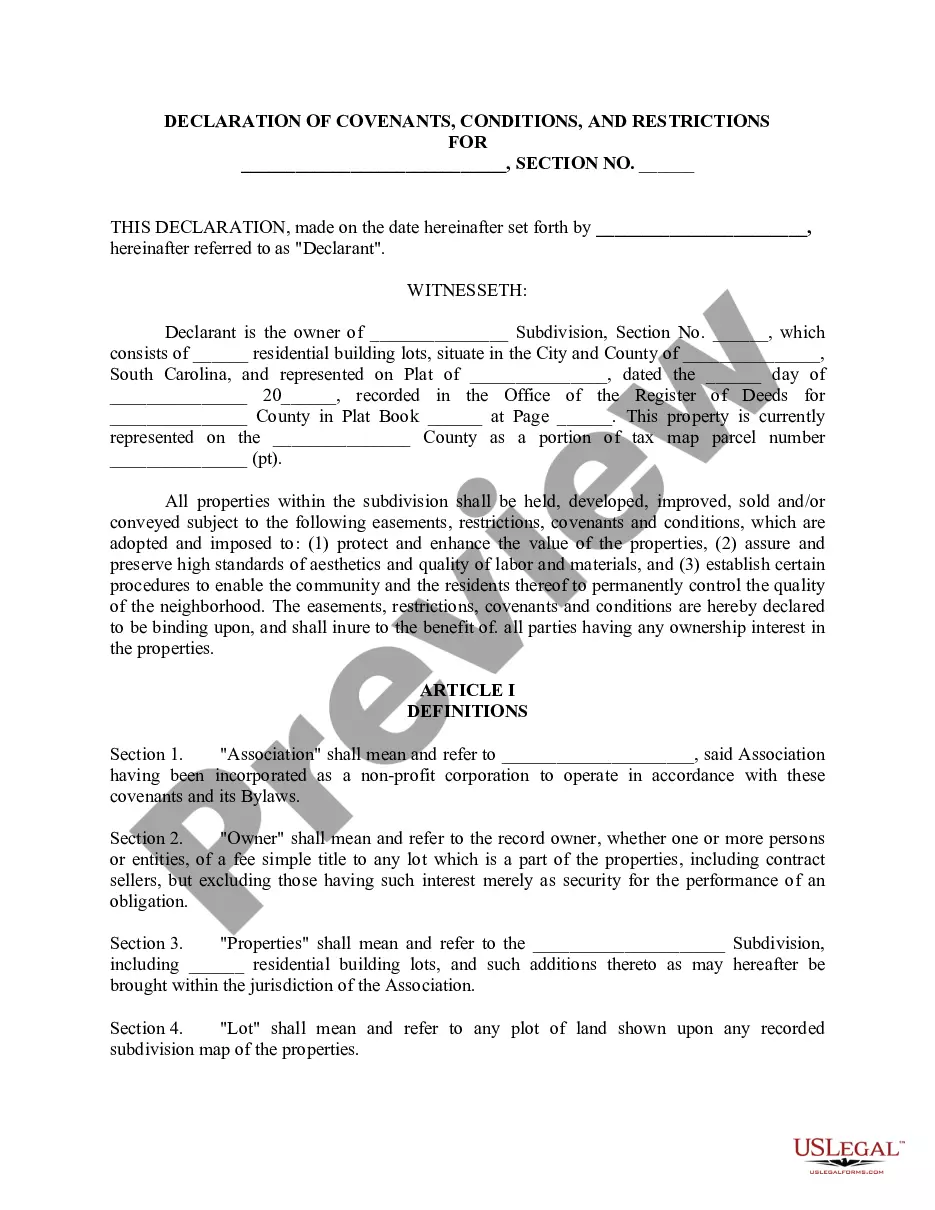
The Declaration of Easements, Covenants and Restrictions is a legal document that establishes easements and restrictions on land use. It primarily outlines the rights granted to individuals to cross or use another person's property under specific conditions, ensuring that the property is used in a manner that maintains its value and promotes harmonious development. This form is essential for property owners developing commercial real estate projects, as it clearly defines how the land can be utilized and what obligations apply regarding maintenance and operations.
Key parts of this document
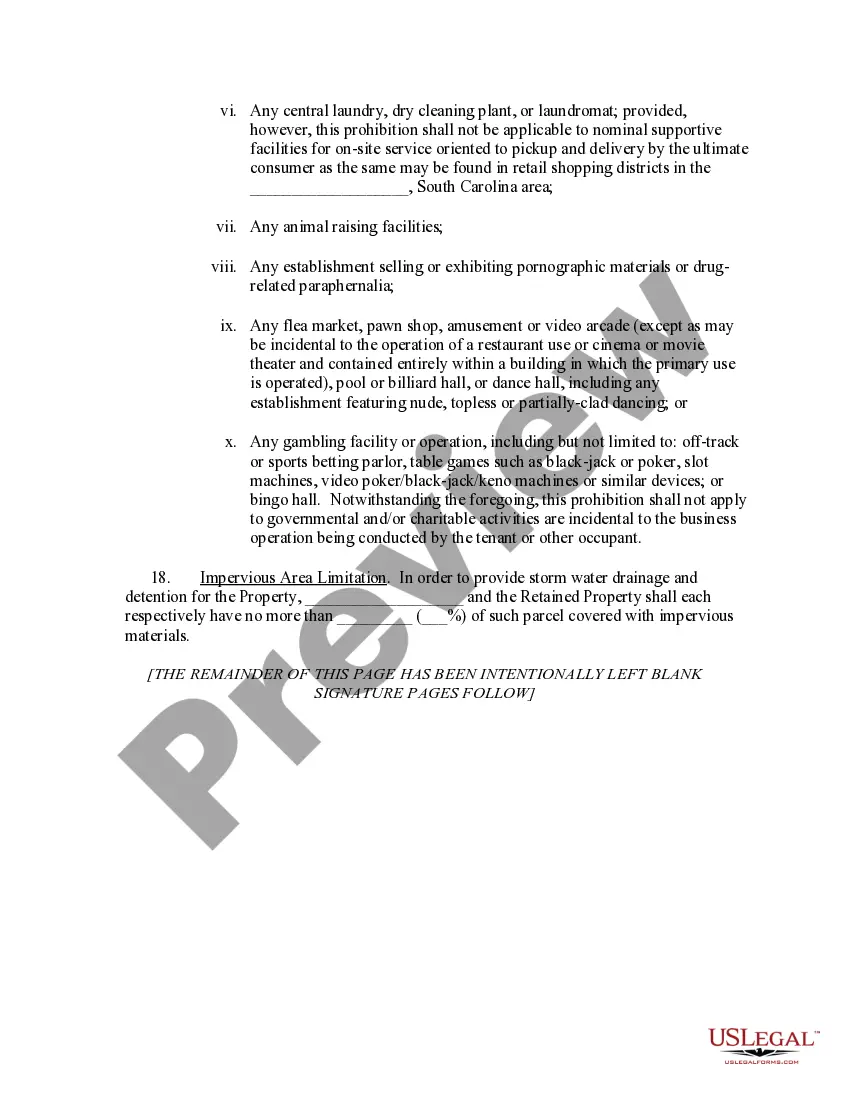
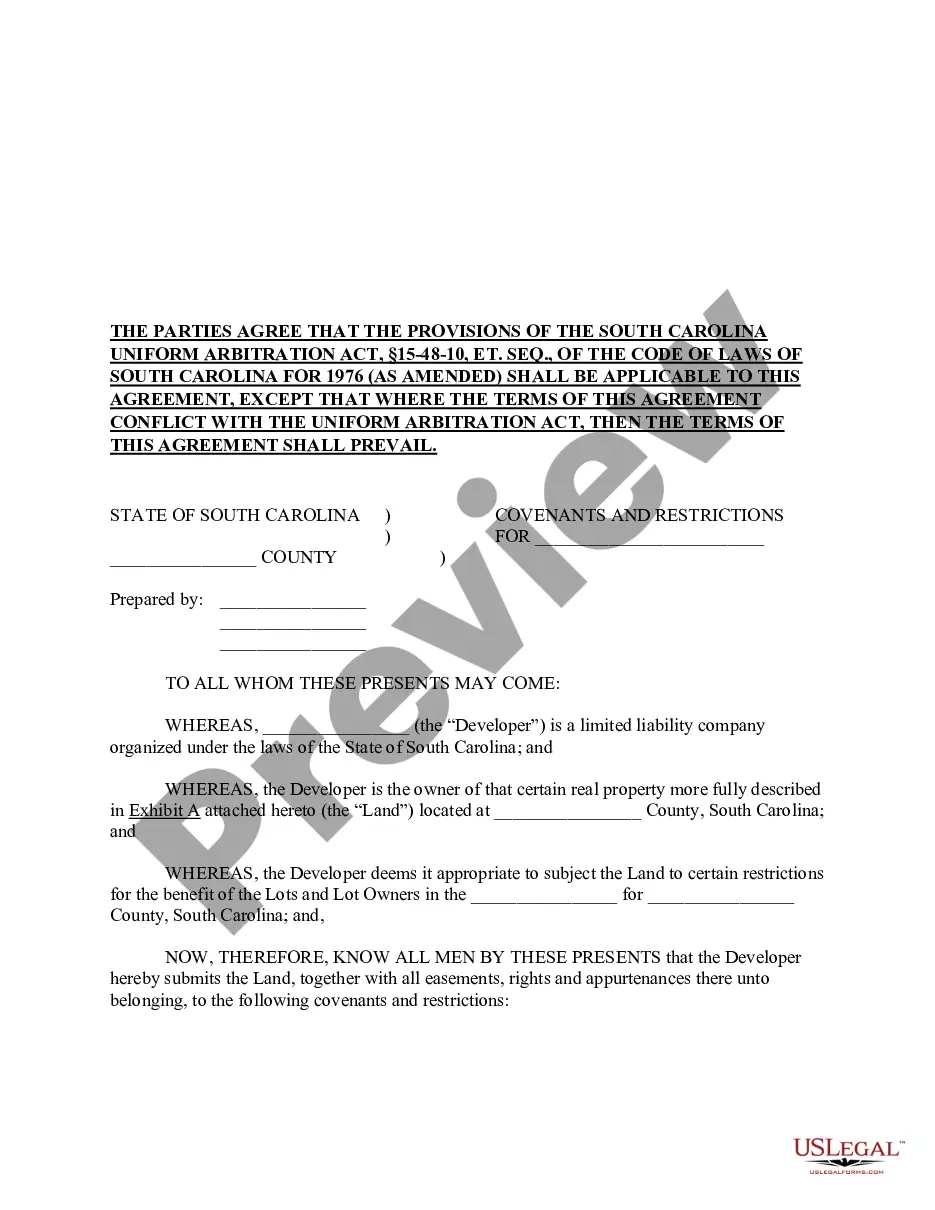
- Identification of the Declarant and property involved.
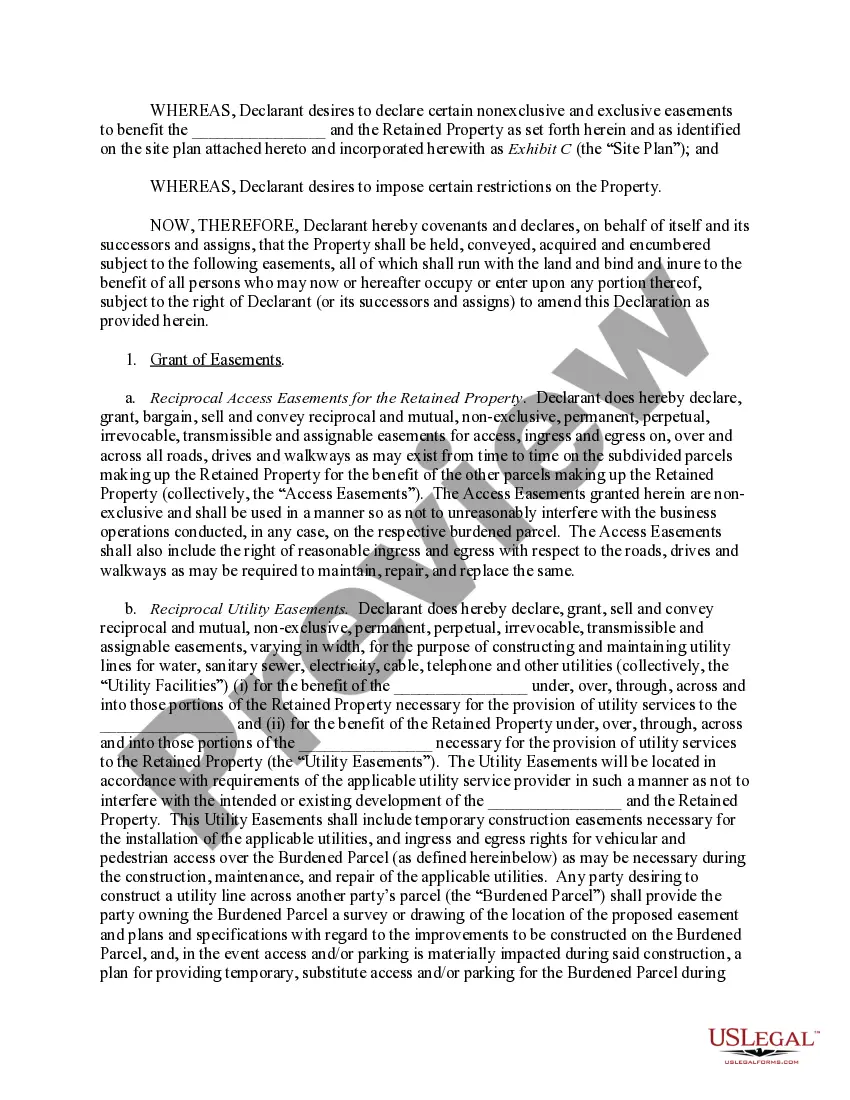
- Details of easements granted for access and utility maintenance.
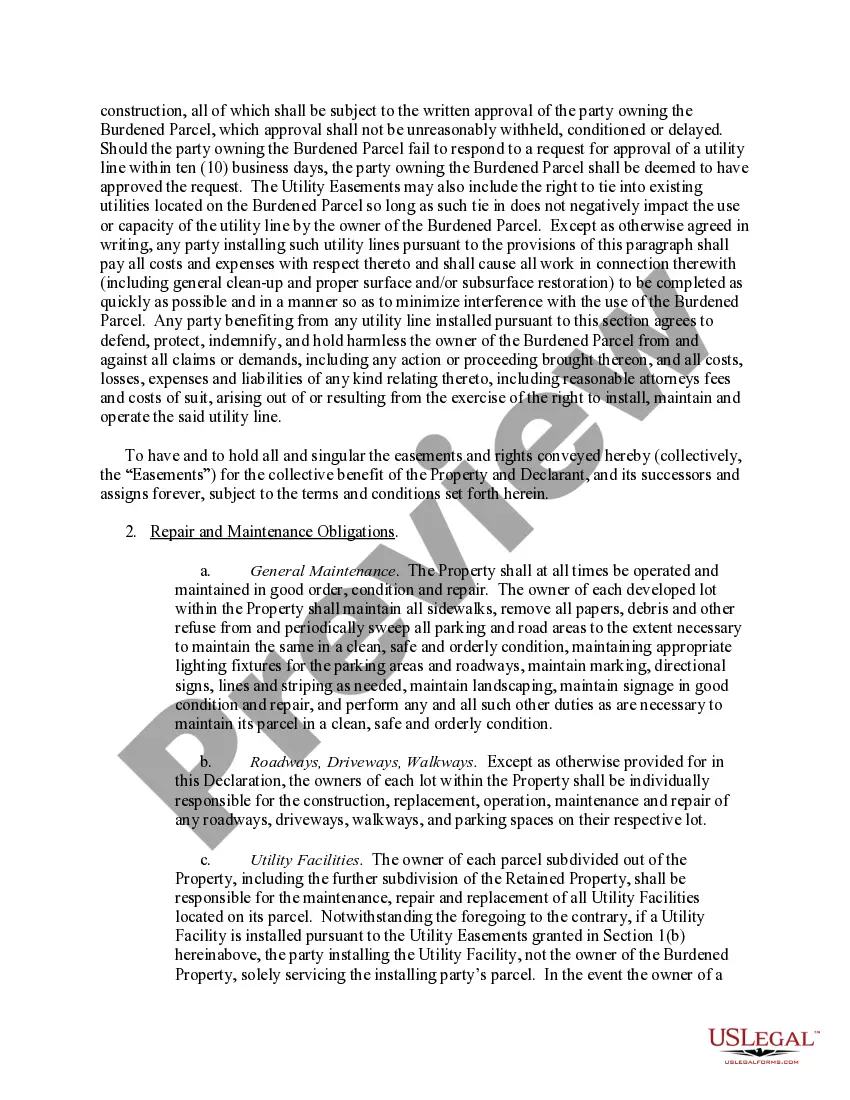
- Maintenance obligations for property owners concerning common areas.
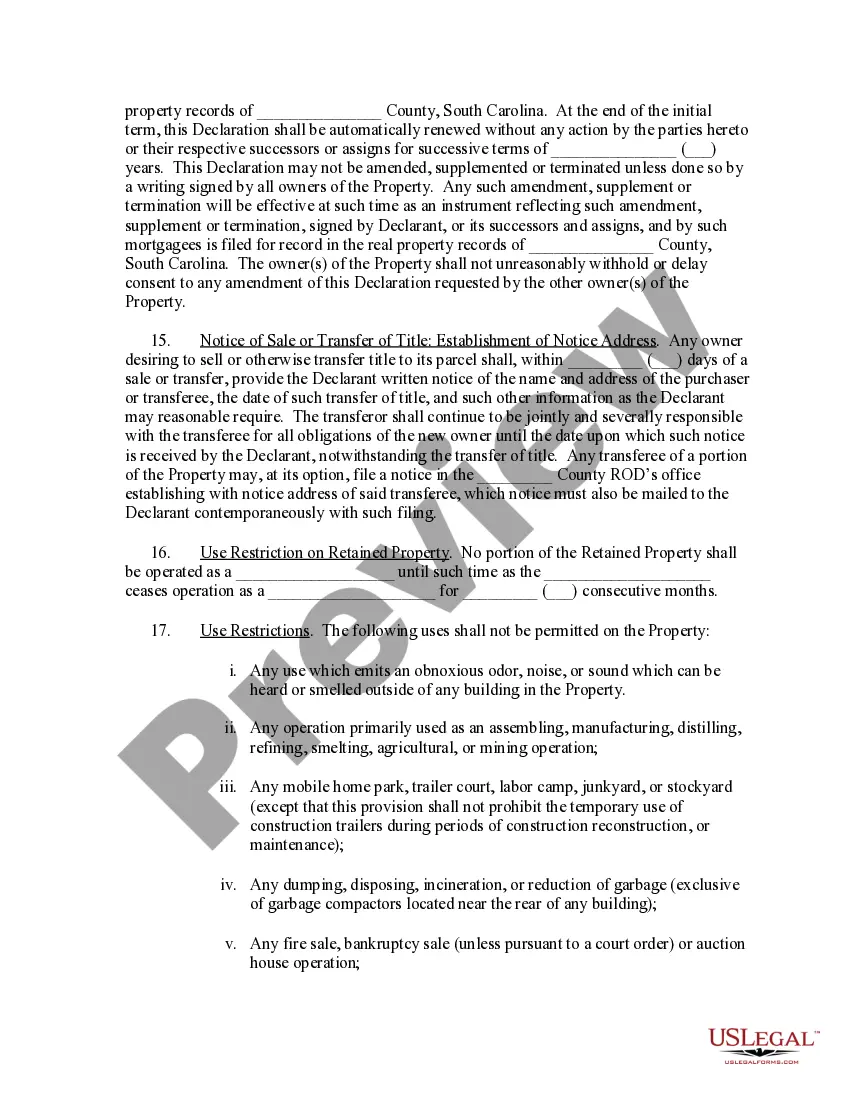
- Use restrictions to ensure compliance with intended commercial activities.
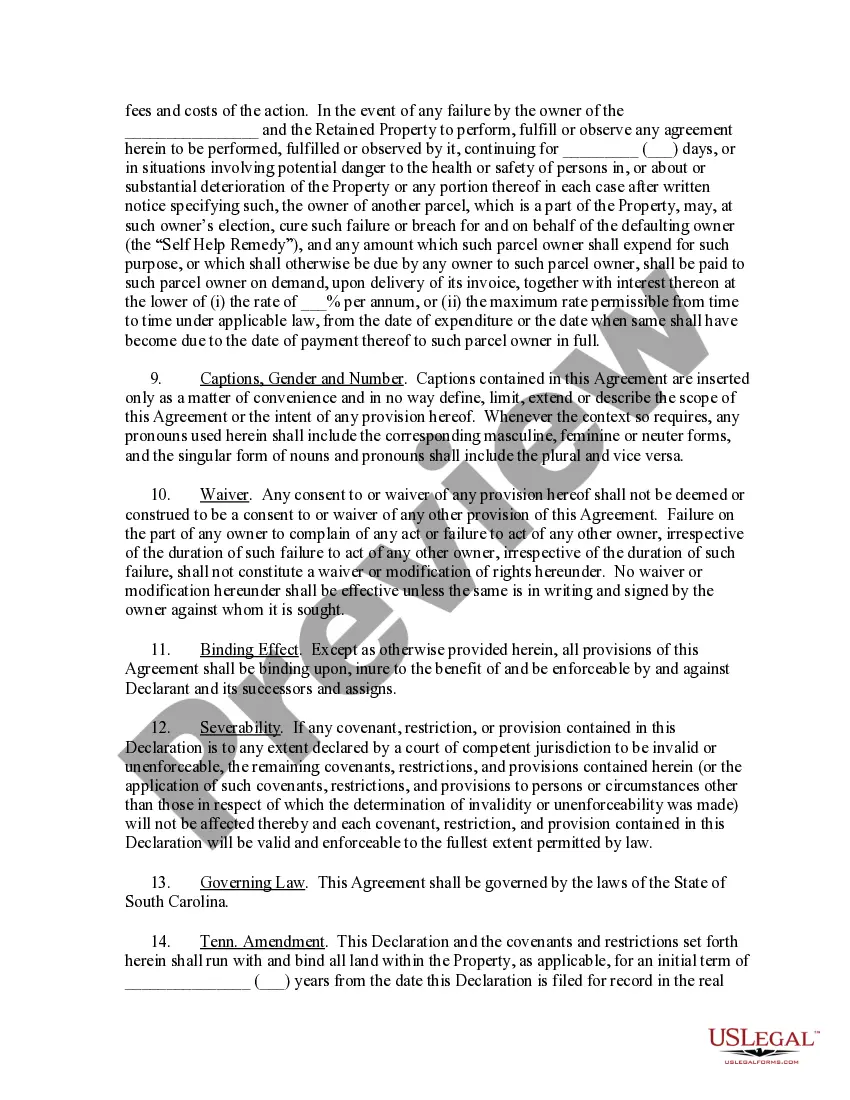
- Legal provisions regarding enforcement and amendments to the declaration.

When this form is needed
This form is typically used when a property owner wants to create a unified plan for multiple parcels of land, particularly in commercial developments. It is necessary when establishing easements for accessing shared facilities and utilities, ensuring that all parties understand their rights and responsibilities concerning the property's use and maintenance.
Who this form is for
- Property developers planning commercial projects.
- Landowners looking to formalize easement arrangements.
- Real estate attorneys assisting clients with property development.
- Investors seeking to clarify usage rights among multiple properties.
Steps to complete this form
- Identify and enter the names of the Declarant and their addresses.
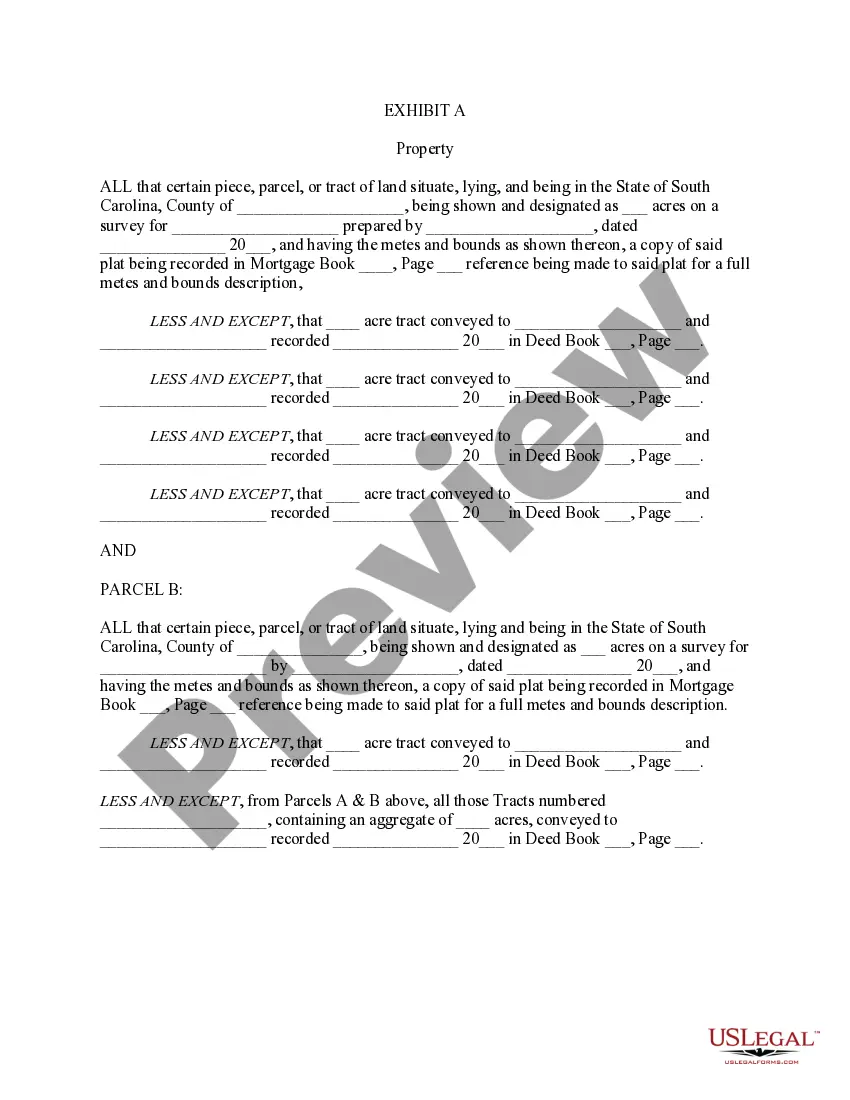
- Clearly describe the property involved, including tax parcel numbers and any exhibits attached.
- Specify the terms of the easements being granted, including access and utility easements.
- Outline maintenance responsibilities and restrictions on property use.
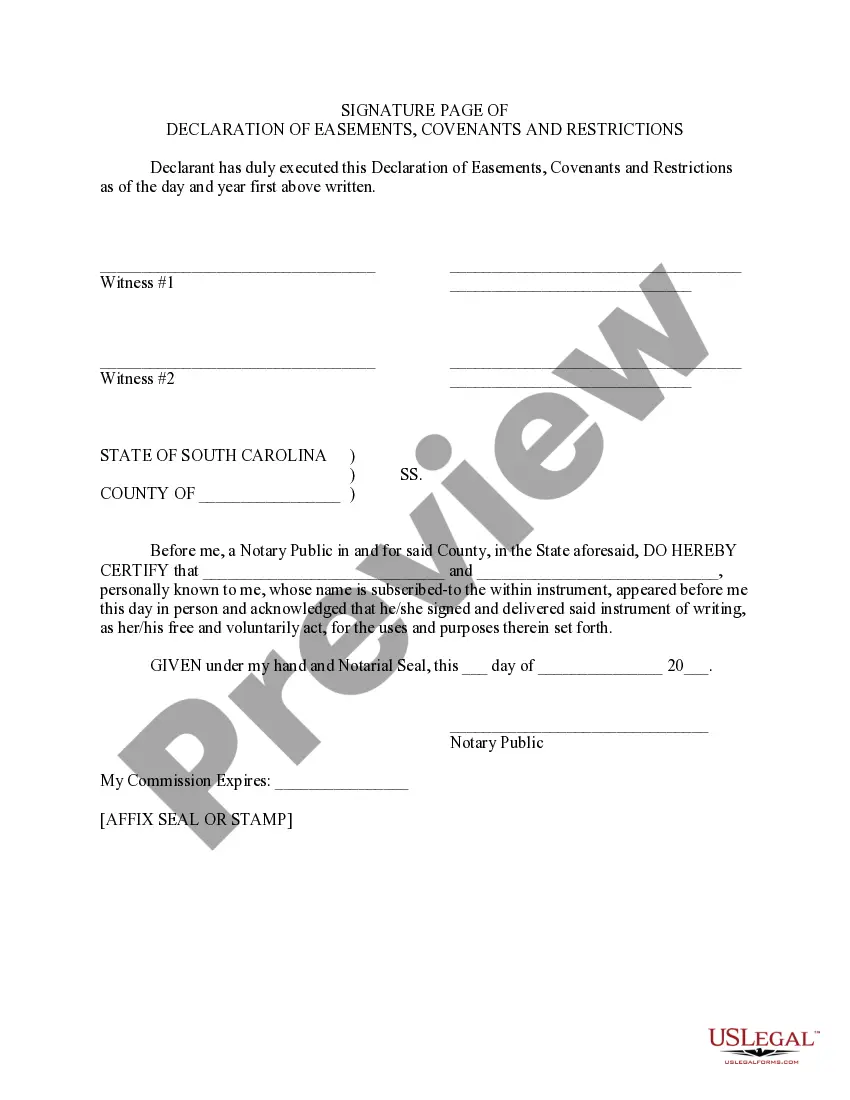
- Provide signatures of the Declarant and witnesses, and consider notarization if required.
Does this form need to be notarized?
Yes, this form must be notarized to be legally valid. US Legal Forms offers integrated online notarization services, allowing you to complete the process via secure video calls at your convenience, ensuring your document is legally binding without the need to travel.
Get your form ready online
Our built-in tools help you complete, sign, share, and store your documents in one place.
Make edits, fill in missing information, and update formatting in US Legal Forms—just like you would in MS Word.
Download a copy, print it, send it by email, or mail it via USPS—whatever works best for your next step.
Sign and collect signatures with our SignNow integration. Send to multiple recipients, set reminders, and more. Go Premium to unlock E-Sign.
If this form requires notarization, complete it online through a secure video call—no need to meet a notary in person or wait for an appointment.
We protect your documents and personal data by following strict security and privacy standards.

Make edits, fill in missing information, and update formatting in US Legal Forms—just like you would in MS Word.

Download a copy, print it, send it by email, or mail it via USPS—whatever works best for your next step.

Sign and collect signatures with our SignNow integration. Send to multiple recipients, set reminders, and more. Go Premium to unlock E-Sign.

If this form requires notarization, complete it online through a secure video call—no need to meet a notary in person or wait for an appointment.

We protect your documents and personal data by following strict security and privacy standards.
Avoid these common issues
- Failing to clearly define the property boundaries and easement areas.
- Not including all necessary signatures or witnesses.
- Overlooking local laws that may impose additional requirements.
- Neglecting to update the declaration when ownership changes.
Why use this form online
- Convenient access to customizable templates tailored to your needs.
- Editable forms that allow for quick adjustments as circumstances change.
- Reliable storage of completed documents for future reference.
- Legal assurance that forms are drafted to meet specific state requirements.
Legal use & context
- This form is legally binding and protects the rights of all parties involved.
- It clarifies expectations for property use, maintenance, and responsibility.
- Enforcement can be sought in court if any terms of the declaration are violated.
Looking for another form?
Form popularity
FAQ
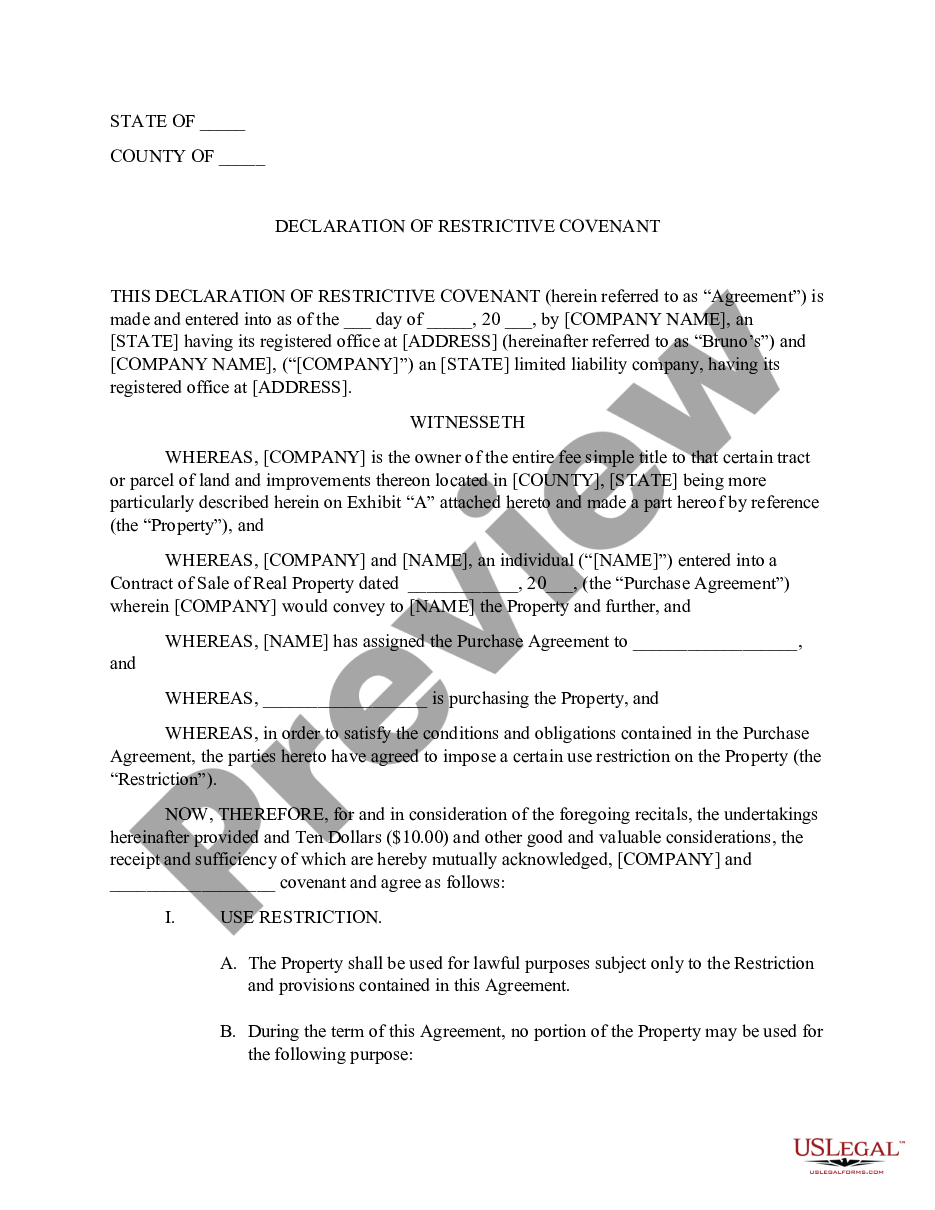
While an easement provides a right to use someone else's land, a restrictive covenant places limits on how an owner can use his or her own property. This is an example of a restrictive covenant.
Commonly, CC&Rs have a declared term of existence, after which they expire naturally. The positive side of having covenants with fixed terms of life is that subsequent property owners are not burdened with restrictions that have become arcane, dated, or no longer desirable.
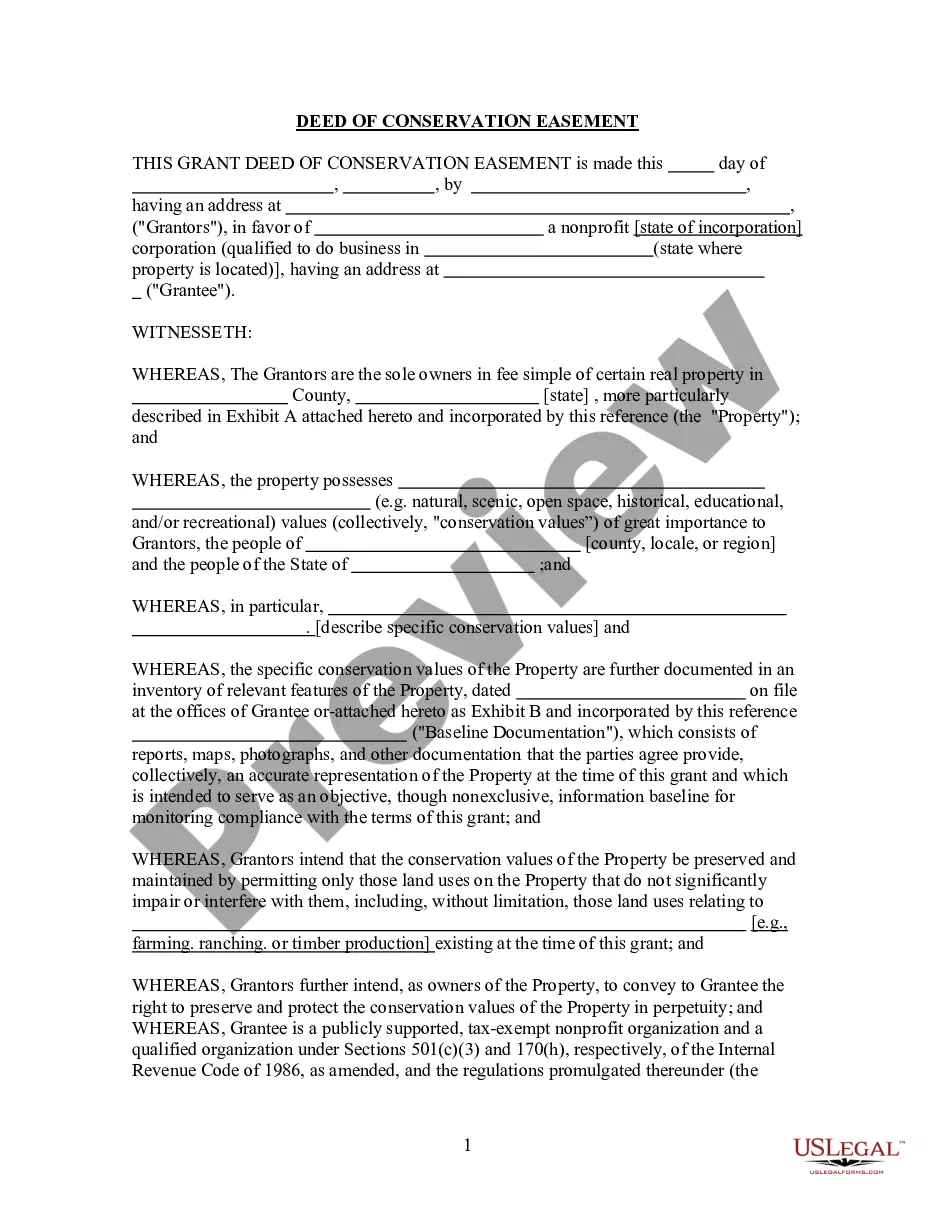
Restrictions on the land are called 'covenants' or 'easements' and can be placed to ensure that it is not used in certain ways or that buildings conform to certain requirements.An easement is the legal term for a right, which someone other than the owner, has over the use of the land for a specific purpose.
The Declaration of CC&Rs is the legal document that lays out the guidelines for the planned community. The CC&Rs are usually recorded in the land records in the county where the property is located and are legally binding.
An easement is a nonpossessory right in the land of another.An equitable servitude can be specifically enforced by ordering action to be taken and the promise kept; breach of a real covenant would only result in monetary damages.
Easements are generally affirmative in nature- thus, they confer the right to use the servient land in some specific manner. Covenants. Covenants are written agreements in which the grantor promises to take or not take a certain action with respect to the land.Other covenants expire when the property is transferred.
A restrictive covenant is an agreement that restricts a company or other party to a contract from engaging in certain actions. For example, a restrictive covenant entered into with a public company might limit the amount of dividends the firm can pay its shareholders.
Restrictions on the land are called 'covenants' or 'easements' and can be placed to ensure that it is not used in certain ways or that buildings conform to certain requirements.An easement is the legal term for a right, which someone other than the owner, has over the use of the land for a specific purpose.
Protective covenant. A part of an indenture or loan agreement that limits certain actions a company may take during the term of the loan to protect the lender's interests.