Oregon Checklist Settlement Approval w Minors
Overview of this form
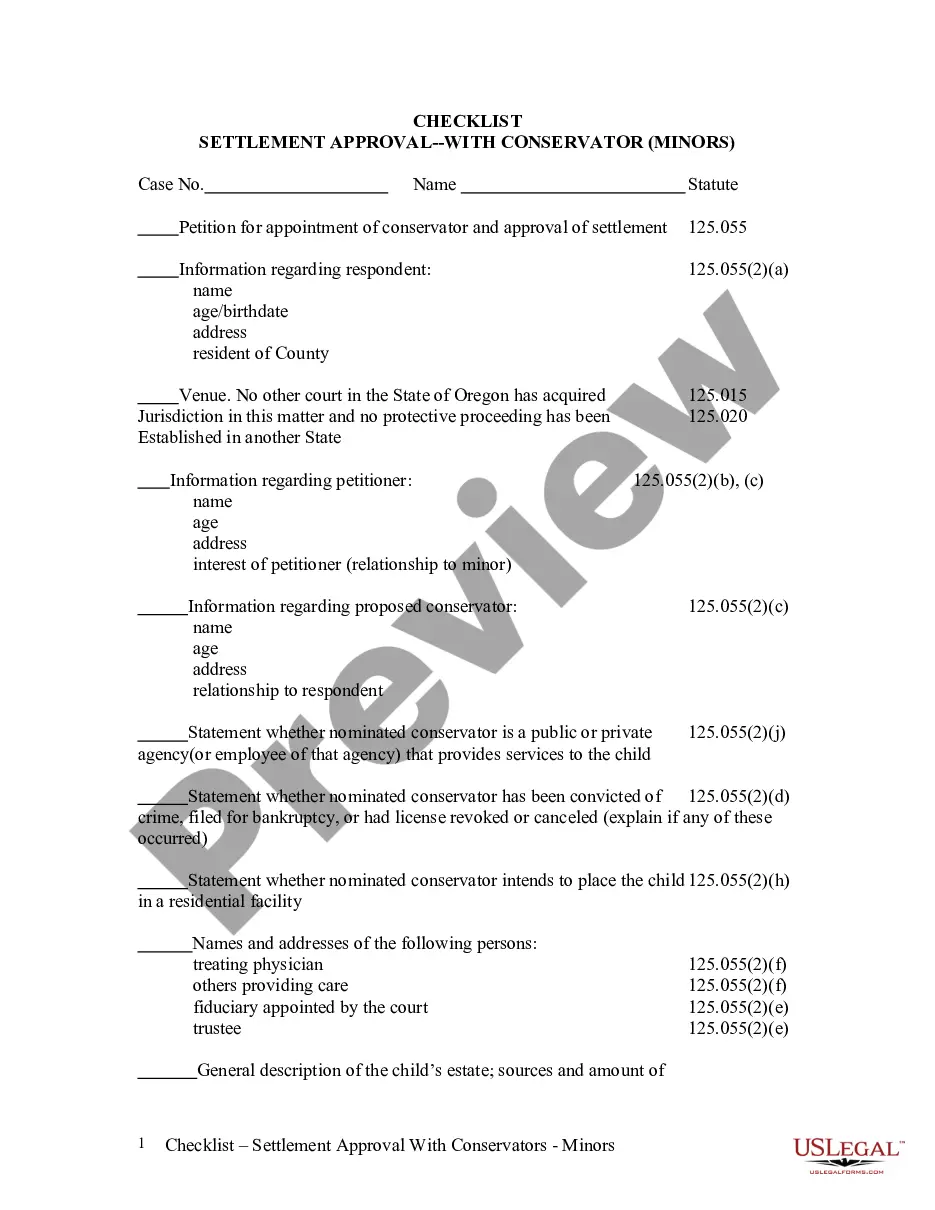
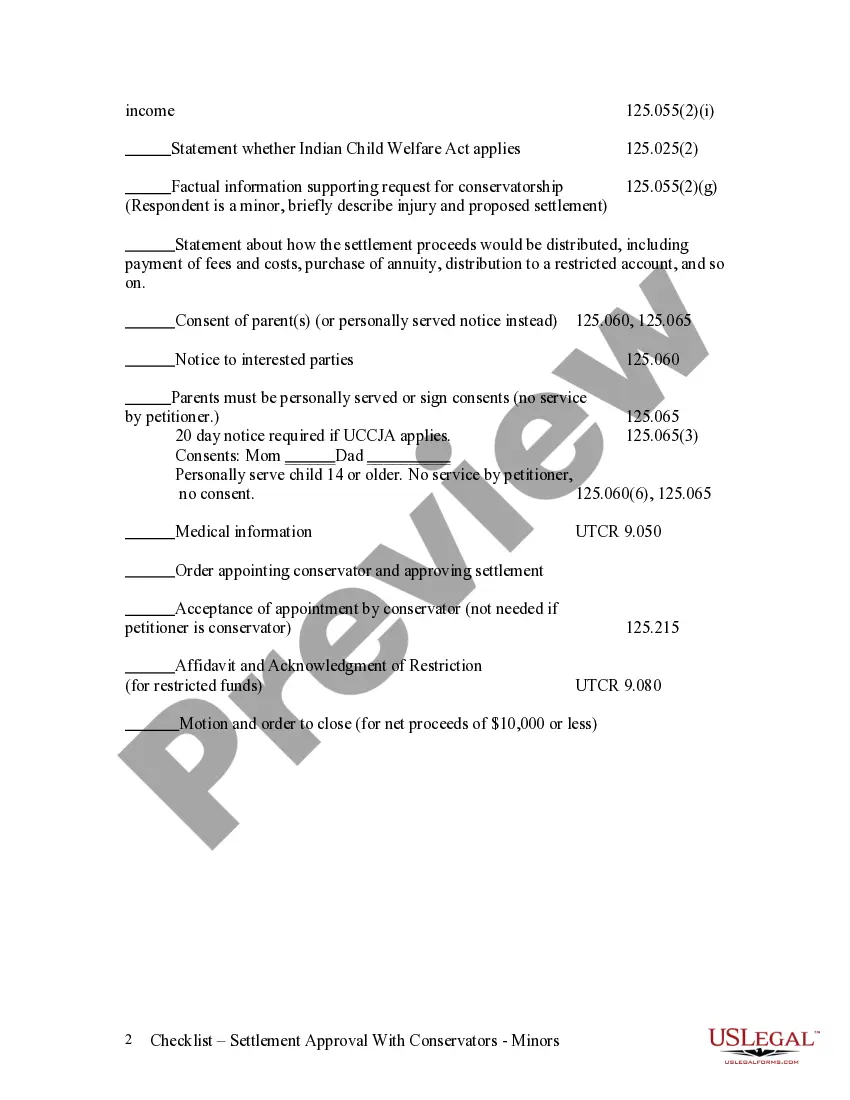
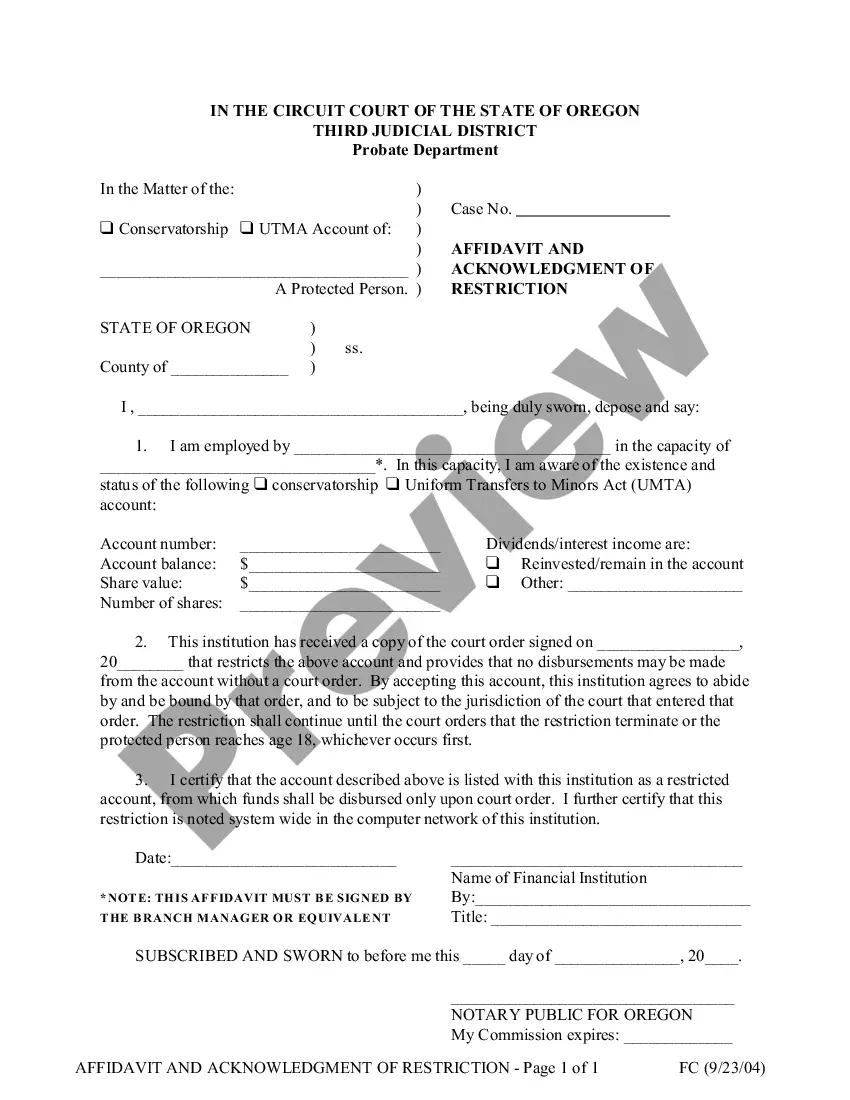
The Checklist Settlement Approval with Minors is a legal form designed for use in civil litigation cases in Oregon. This form facilitates the appointment of a conservator for a minor following a settlement agreement. It outlines essential information regarding the minor, their caregivers, and the conditions of the settlement, ensuring that the minorâs rights and best interests are protected. Unlike other forms, this specific checklist is tailored to cases involving minors, where additional safeguards are necessary for their well-being.
Form components explained
- Case information: Includes case number and details regarding the parties involved.
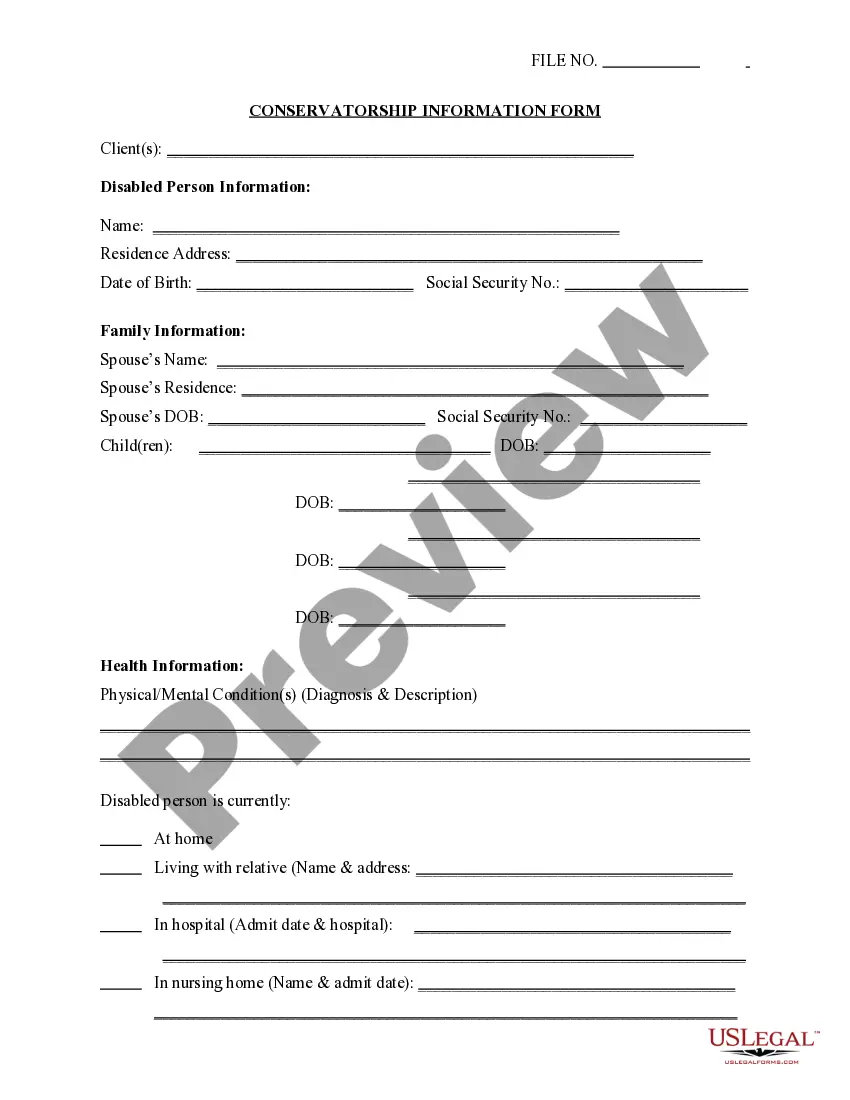
- Information about the minor: Basic details such as name, age, and residence are required.
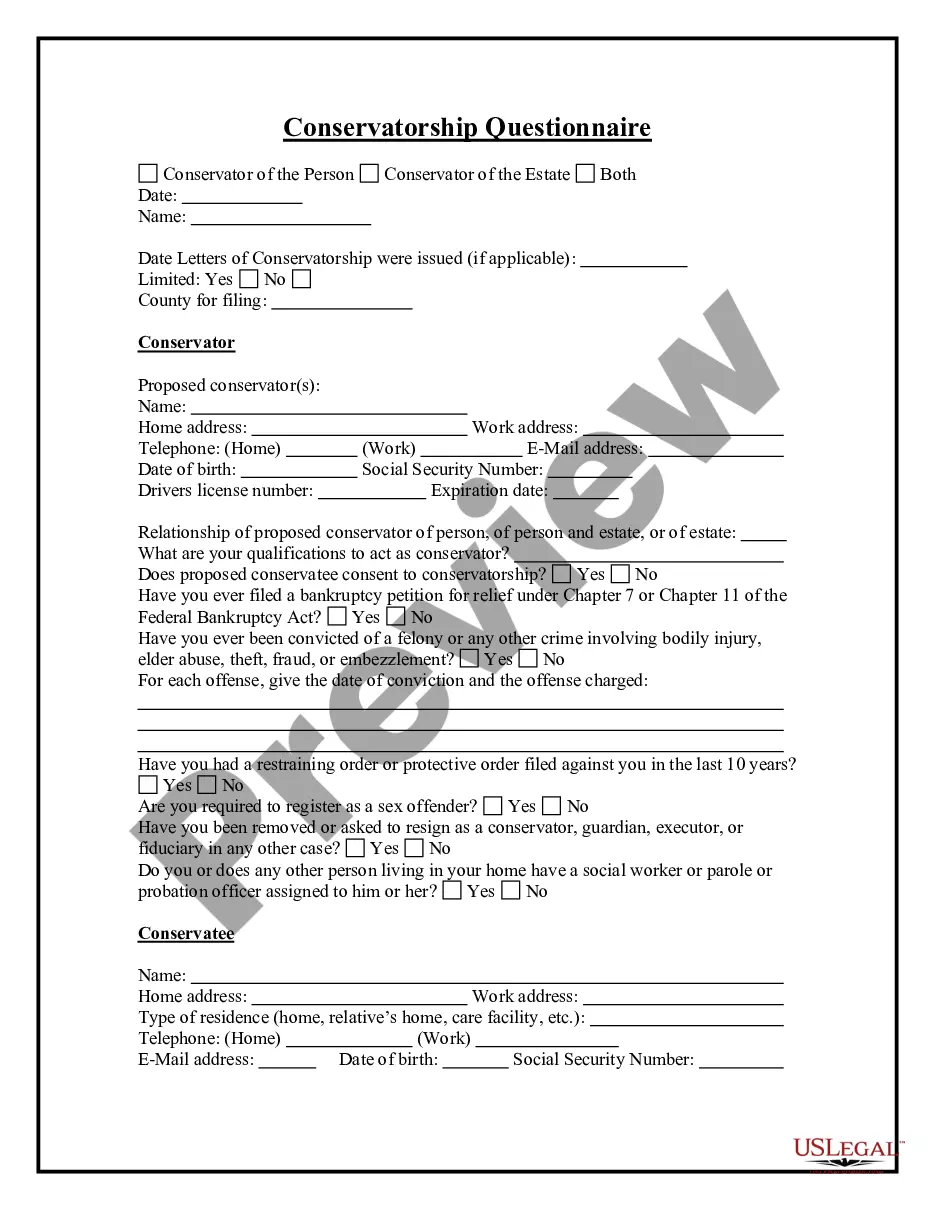
- Details of the petitioner: Information regarding the individual requesting conservatorship.
- Nominated conservator: Must provide information about their background and intentions for the minor's care.
- Settlement proceeds distribution: Explains how funds will be allocated and managed.
- Consent requirements: Details on obtaining parental consent and notifying interested parties.
Common use cases
This form should be used when a minor is involved in a legal settlement, particularly where court approval is required for the appointment of a conservator. It is applicable in situations such as personal injury cases, where the minor is set to receive settlement funds. Completing this checklist ensures that all necessary legal requirements are met for the conservatorship process.
Who should use this form
This form is intended for the following individuals:
- Parents or legal guardians of a minor who is a beneficiary of a settlement.
- Attorneys representing minors in civil litigation cases.
- Appointed conservators who manage the settlement funds on behalf of the minor.
- Anyone involved in seeking legal approval for the management of the minor's financial interests.
How to complete this form
- Gather necessary information: Collect personal details of the minor, petitioner, and nominated conservator.
- Complete the case information section: Enter the case number and relevant details about the parties.
- Fill in the consent section: Ensure that parental consent is obtained and documented accurately.
- Detail the settlement proceeds: Clearly outline how the funds will be distributed and managed.
- File the completed form: Submit the form to the appropriate Oregon court for approval, along with any required documentation.
Does this document require notarization?
This form does not typically require notarization unless specified by local law. However, it is essential to follow the specific requirements outlined by Oregon courts regarding the submission of consent and other verifying documents.
Get your form ready online
Our built-in tools help you complete, sign, share, and store your documents in one place.
Make edits, fill in missing information, and update formatting in US Legal Forms—just like you would in MS Word.
Download a copy, print it, send it by email, or mail it via USPS—whatever works best for your next step.
Sign and collect signatures with our SignNow integration. Send to multiple recipients, set reminders, and more. Go Premium to unlock E-Sign.
If this form requires notarization, complete it online through a secure video call—no need to meet a notary in person or wait for an appointment.
We protect your documents and personal data by following strict security and privacy standards.

Make edits, fill in missing information, and update formatting in US Legal Forms—just like you would in MS Word.

Download a copy, print it, send it by email, or mail it via USPS—whatever works best for your next step.

Sign and collect signatures with our SignNow integration. Send to multiple recipients, set reminders, and more. Go Premium to unlock E-Sign.

If this form requires notarization, complete it online through a secure video call—no need to meet a notary in person or wait for an appointment.

We protect your documents and personal data by following strict security and privacy standards.
Common mistakes
- Forgetting to obtain parental consent before filing the form.
- Incomplete or inaccurate information regarding the nominated conservator.
- Not clearly specifying how the settlement proceeds will be allocated.
- Failing to notify all interested parties as required by law.
Benefits of completing this form online
- Convenience: Access and complete the form from anywhere at any time.
- Editability: Easily make changes to the document before final submission.
- Reliability: Use templates drafted by licensed attorneys to ensure legal compliance.
Looking for another form?



Form popularity
FAQ
When a child under the age of eighteen receives money or other property of value - such as an inheritance from an estate, proceeds from a life insurance policy, a settlement of a personal injury claim, or a wrongful death settlement - the probate court must approve the settlement of the minor's claim or right to
When the defendant and the plaintiff in a lawsuit agree to settle a claim with a structured settlement, the parties negotiate a cash amount payable by the defendant in exchange for the plaintiff dropping the lawsuit. The money is distributed as a series of periodic payments, typically funded through an annuity.
On the low end, an injury case might settle for only a few thousand dollars. But many personal injury cases settle for much more. An average personal injury settlement amount is anywhere between $3,000 and $75,000.
How long does it take to get money from a settlement? On average, the typical settlement can take up to six weeks for processing. This is due to a number of factors and may vary from one case to another.
Structured settlements are financial arrangements that protect money that has been offered to a minor as compensation for personal injury and wrongful death cases. This money ensures regular, tax-free payments for a child's future.
In a traditional personal injury settlement arrangement, when the child turns 18, they can go down to the bank with their ID and withdraw all of the money. In some cases this amount can be worth hundreds of thousands of dollars.
What Will Happen To My Child's Compensation? Compensation awarded in child injury cases is normally kept in a protected account until the child turns 18.The court will hold any compensation that's awarded to your child until they turn 18: at this point they will then receive their settlement as well as any interest.